wayground logo

Free Printable Worksheets

Font size

S
M
L
XL
Worksheets

Mid Year Benchmark-6th Review

Total questions: 174

Worksheet time: 3hrs 54mins
Name
Class
Date
1.
The sun and everything that revolves around it.
a)
solar system
b)
galaxy
c)
universe
d)
rotation
2.
How are stars DIFFERENT from planets?
a)
Stars are solid and rocky.
b)
Stars are made of frozen gases.
c)
Stars do not move.
d)
Stars revolve around the Sun.
3.
A large body made of gas or rock that orbits around a star.
a)
planet
b)
moon
c)
star
d)
super nova
4.
A rocky body that orbits around a planet.
a)
moon
b)
star
c)
axis
d)
Sun
5.
Why do planets orbit the sun (and not float around in space)?
a)
the moons are keeping them in place
b)
They were hit by an asteroid
c)
they were hit by a comet
d)
the sun's gravity keeps them in place
6.

From smallest to the largest

a)

universe, solar system, galaxy

b)

galaxy, solar system, universe

c)

solar system, universe, galaxy

d)

solar system, galaxy, universe

7.

A ..... is a large celestial body that is composed of gas and emits light.

a)

planet

b)

galaxy

c)

star

d)

moon

8.

A ..... is a large collection of stars, gas, and dust

a)

moon

b)

star

c)

planet

d)

galaxy

9.

The ....... is space and all the matter and energy in it.

a)

universe

b)

moons only

c)

starts only

d)

planets only

10.

The four planets that orbit farthest from the sun are called gas giant planets. They are

a)

Jupiter, Saturn, Uranus, and Venus

b)

Jupiter, Saturn, Uranus, and Neptune.

c)

Jupiter, Saturn, Earth, and Mars

d)

Mars, Saturn, Uranus, and Neptune.

11.

How are dwarf planets different from the 'Elite 8' planets?

a)

Dwarf planets orbit the Sun, planets do not.

b)

Dwarf planets have more mass than planets.

c)

Dwarf planets have not cleared the neighborhood around their orbit, planets have.

12.

What is the period of revolution?

a)

How long it takes a moon to orbit the Sun.

b)

How long it takes a moon to rotate once.

c)

How long it is 'day' on a planet.

d)

How long it takes a planet to revolve around the Sun once.

13.

What is the length of Earth's period of revolution?

a)

24 hours

b)

30 - 31 days

c)

365.25 days

d)

6 months

14.

What is the period of rotation?

a)

The amount of time it takes the Sun to rotate around the galaxy.

b)

The amount of time it takes a celestial body to rotate around its axis once.

c)

The amount of time it takes to get to Mars from Earth.

d)

The amount of time it takes to the Moon to orbit the Earth.

15.
What are the 4 terrestrial planets?
a)
Jupiter, Saturn, Uranus, Neptune
b)
Mercury, Venus, Earth, Mars
c)
Earth, Venus, Neptune, Mercury
d)
Neptune, Venus, Saturn, Mercury
16.
What are three characteristics the outer planets have in common?
a)
They are made of rock, close to the sun and have a short year.
b)
They are made of rock, have 1-2 moons and are made of metal.
c)
First four planets, have many moons and rings.
d)
Made of gas, many moons and rings.
17.
A new planet has been recently discovered!  It is small, rocky and only has one moon.  What type of planet would it be classified as?
a)
Terrestrial 
b)
Gas Giant
18.
Planets that would fall into Group 1 on this chart would most likley be:
a)
Terrestrial 
b)
Gas Giants
19.
What are the reasons for the season?
a)
Earth's tilt & rotation
b)
Earth's tilt & revolution
c)
Earth's rotation & rovolution
d)
Earth's tilt & resolution
20.
The sun and everything that revolves around it.
a)
solar system
b)
galaxy
c)
universe
d)
rotation
21.
How are stars DIFFERENT from planets?
a)
Stars are solid and rocky.
b)
Stars are made of frozen gases.
c)
Stars do not move.
d)
Stars revolve around the Sun.
22.
A large body made of gas or rock that orbits around a star.
a)
planet
b)
moon
c)
star
d)
super nova
23.
A rocky body that orbits around a planet.
a)
moon
b)
star
c)
axis
d)
Sun
24.
Why do planets orbit the sun (and not float around in space)?
a)
the moons are keeping them in place
b)
They were hit by an asteroid
c)
they were hit by a comet
d)
the sun's gravity keeps them in place
25.

From smallest to the largest

a)

universe, solar system, galaxy

b)

galaxy, solar system, universe

c)

solar system, universe, galaxy

d)

solar system, galaxy, universe

26.

A ..... is a large celestial body that is composed of gas and emits light.

a)

planet

b)

galaxy

c)

star

d)

moon

27.

A ..... is a large collection of stars, gas, and dust

a)

moon

b)

star

c)

planet

d)

galaxy

28.

The ....... is space and all the matter and energy in it.

a)

universe

b)

moons only

c)

starts only

d)

planets only

29.

The four planets that orbit farthest from the sun are called gas giant planets. They are

a)

Jupiter, Saturn, Uranus, and Venus

b)

Jupiter, Saturn, Uranus, and Neptune.

c)

Jupiter, Saturn, Earth, and Mars

d)

Mars, Saturn, Uranus, and Neptune.

30.

How are dwarf planets different from the 'Elite 8' planets?

a)

Dwarf planets orbit the Sun, planets do not.

b)

Dwarf planets have more mass than planets.

c)

Dwarf planets have not cleared the neighborhood around their orbit, planets have.

31.

What is the period of revolution?

a)

How long it takes a moon to orbit the Sun.

b)

How long it takes a moon to rotate once.

c)

How long it is 'day' on a planet.

d)

How long it takes a planet to revolve around the Sun once.

32.

What is the length of Earth's period of revolution?

a)

24 hours

b)

30 - 31 days

c)

365.25 days

d)

6 months

33.

What is the period of rotation?

a)

The amount of time it takes the Sun to rotate around the galaxy.

b)

The amount of time it takes a celestial body to rotate around its axis once.

c)

The amount of time it takes to get to Mars from Earth.

d)

The amount of time it takes to the Moon to orbit the Earth.

34.

How long is Earth's period of rotation?

a)

60 minutes

b)

365.25 days

c)

30 - 31 days

d)

24 hours

35.

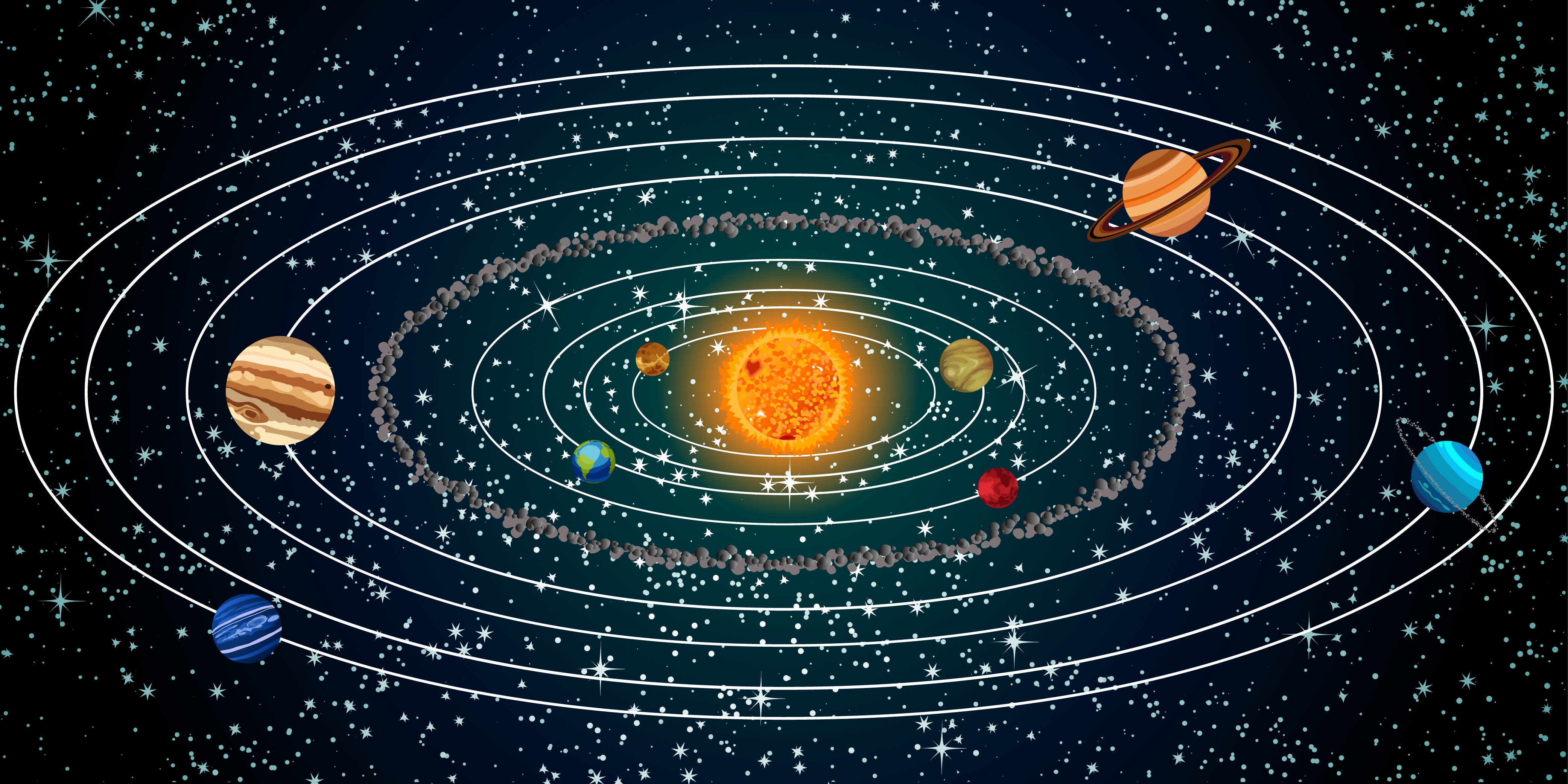
Kepler's first law states that the orbits of the planets are in the shape of a/an...

a)

perfect circle

b)

ellipse

c)

spiral

36.

What does the Heliocentric system look like?

a)
b)
c)
d)
37.
Made of very dense rock and metal that is very different from the rocks that make up the inner planets.
a)
asteroid
b)
meteoroid
c)
comet
d)
meteor
38.
Found in the Oort Cloud
a)
asteroid
b)
meteoroid
c)
comet
d)
meteor
39.
Often called shooting stars.
a)
asteroid
b)
meteoroid
c)
comet
d)
meteor
40.
Made of rocks that are very similar to the rocks that make up the inner planets. 
a)
asteroids
b)
meteoroids
c)
comets
d)
meteors
41.
What force keeps the planets orbiting around the sun?
a)
Gravity
b)
Magnets
c)
Friction
d)
Light Energy
42.
What are the planets Jupiter, Saturn, Uranus and Neptune made of? 
a)
Gas
b)
Rock
c)
Ice
d)
Dust
43.
What are the 4 terrestrial planets?
a)
Jupiter, Saturn, Uranus, Neptune
b)
Mercury, Venus, Earth, Mars
c)
Earth, Venus, Neptune, Mercury
d)
Neptune, Venus, Saturn, Mercury
44.
What are three characteristics the outer planets have in common?
a)
They are made of rock, close to the sun and have a short year.
b)
They are made of rock, have 1-2 moons and are made of metal.
c)
First four planets, have many moons and rings.
d)
Made of gas, many moons and rings.
45.
A new planet has been recently discovered!  It is small, rocky and only has one moon.  What type of planet would it be classified as?
a)
Terrestrial 
b)
Gas Giant
46.
Planets that would fall into Group 1 on this chart would most likley be:
a)
Terrestrial 
b)
Gas Giants
47.
What are the reasons for the season?
a)
Earth's tilt & rotation
b)
Earth's tilt & revolution
c)
Earth's rotation & rovolution
d)
Earth's tilt & resolution
48.
What causes there to be longer number of hours of light during the summer
a)
Earth tilt's away from the sun in summer
b)
Earth's revolves slower in summer
c)
Earth tilts toward the sun in summer
d)
Earth is closer to the sun
49.
Why is the Equator warmest?
a)
Because it is closest to the sun.
b)
Because it receives the most direct sunlight
c)
Because no clouds form here.
d)
Because it is far from the sun
50.
What season is depicted in the picture?
a)
summer
b)
winter
c)
fall 
d)
spring
51.
Which season is taking place in the Northern Hemisphere in Position 1?
a)
Winter
b)
Spring
c)
Summer
d)
Fall
52.
Changes in the moon's appearance are
a)
phases
b)
eclipses
c)
stages
d)
cycle
53.

What causes the moon's phases

a)

Where you are standing on Earth

b)

the amount of sunlight reflected onto the moon from the sun

c)

The tilt of Earth

d)

how fast the moon is moving

54.
Define Waxing
a)
Moon is increasing and light part appears to be growing
b)
Completely illuminated
c)
dark side is facing earth
d)
Moon is decreasing and light part appears to be shrinking
55.
How many phases does the moon go through?
a)
4
b)
8
c)
10
d)
16
56.
As the moon's shape appears to get smaller, we say that the moon is _.
a)
swelling
b)
waxing
c)
waning
d)
disappearing
57.
The cycle of the moon lasts about a _.
a)
day
b)
year
c)
week
d)
month
58.
If the last full moon was on April 4th, when can you expect to see the next full moon? 
a)
April 29th
b)
July 4th
c)
May 4th
d)
September 12th
59.

It takes about _____ for the earth to complete one rotation.

a)

28 days

b)

24 hours

c)

365 hours

d)

365 days

60.
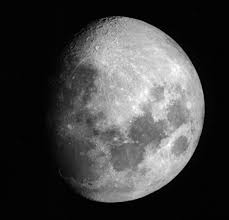
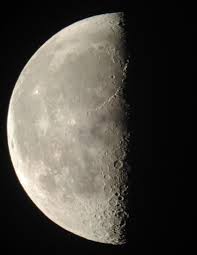
Name the moon phase
a)
waning crescent
b)
waxing crescent
c)
waning gibbous
d)
waxing gibbous
61.
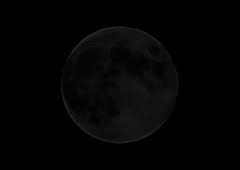
Name the moon phase
a)
First Quarter
b)
Last Quarter
c)
New Moon
d)
Full Moon
62.
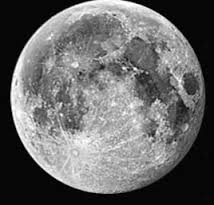
Name the moon phase
a)
First Quarter
b)
Last Quarter
c)
New Moon
d)
Full Moon
63.
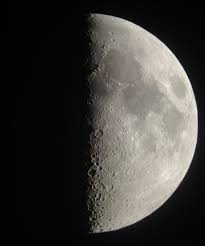
Name the moon phase
a)
First Quarter
b)
Last Quarter
c)
New Moon
d)
Full Moon
64.
Name the moon phase
a)
waning crescent
b)
waxing crescent
c)
waning gibbous
d)
waxing gibbous
65.
A[n] ___________ tide occurs when the sun, Earth, and the moon are nearly in a line. 
a)
spring
b)
high
c)
low
d)
neap
66.
What is a difference between spring and neap tides?
a)
Spring tides occur when the earth and sun are IN LINE with the new or full moon. 
b)
Spring tides occur when moon in 3rd or 1st quarter phases
c)
Spring tides are LOWER than neap tides
d)
Spring tides occur in Spring and neap tides can occur in any season
67.
Which body has the greater effect on Earth's tides?
a)
Sun
b)
Saturn
c)
Moon 
d)
Venus
68.
What type of tide would this arrangement of earth-moon-sun create?
a)
full moon tide
b)
new moon tide
c)
neap tide
d)
spring tide
69.
What causes tides?
a)
gravity
b)
wind
c)
spring
d)
neap
70.

As the moon revolves around the earth, the water follows the motion and causes...

a)

sea levels

b)

waves and currents

c)

moon phases

d)

high tides and low tides

71.

High tides and low tides each happen _____ times per day.

a)

4

b)

2

c)

1

d)

24

72.

Neap tides happen at _________ and _________ phases of the moon.

a)

first quarter and new moon

b)

last quarter and full moon

c)

waxing and waning

d)

1st quarter and 3rd quarter

73.
Why is the Equator warmest?
a)
Because it is closest to the sun.
b)
Because it receives the most direct sunlight
c)
Because no clouds form here.
d)
Because it is far from the sun
74.

About how many days does it take to moon to go through a complete cycle?

a)

7 days

b)

365 days

c)

29 1/2 days

d)

20 days

75.
When the visible (lit) portion of the moon is increasing, the moon is:
a)
waning
b)
full
c)
waxing
d)
new
76.
Name the moon phase
a)
Waning Crescent
b)
Waxing Crescent
c)
Waning Gibbous
d)
Waxing Gibbous
77.
The 1st Quarter moon is lit on the:
a)
Left Side
b)
Right Side
78.
Name the moon phase
a)
waning crescent
b)
waxing crescent
c)
waning gibbous
d)
waxing gibbous
79.
Name the moon phase
a)
waning crescent
b)
waxing crescent
c)
waning gibbous
d)
waxing gibbous
80.
Name the moon phase
a)
First Quarter
b)
Last Quarter
c)
New Moon
d)
Full Moon
81.
Name the moon phase
a)
First Quarter
b)
Last Quarter
c)
New Moon
d)
Full Moon
82.
Name the moon phase
a)
First Quarter
b)
Last Quarter
c)
New Moon
d)
Full Moon
83.
Name the moon phase
a)
First Quarter
b)
Last Quarter
c)
New Moon
d)
Full Moon
84.

The moon ____________ around the Earth.

a)

revolves

b)

rotates

c)

up

d)

down

85.

Why can we see the moon?

a)

The light from Earth

b)

The light from the Sun

c)

The light from the Stars

d)

The lights on the moon.

86.

What fruit best describes the moon's shape?

a)

Apple

b)

Orange

c)

Banana

d)

Lemon

87.
Approximately what percentage of Earth's water is SALT water?
a)
97 %
b)
71%
c)
30%
d)
3%
88.

Where is most of the freshwater found on Earth?

a)

lakes

b)

glaciers

c)

oceans

d)

rivers

89.

Where is most of the freshwater found on Earth?

a)

lakes

b)

glaciers

c)

oceans

d)

rivers

90.

Most water evaporates from the ocean's surface.

a)

True

b)

False

91.

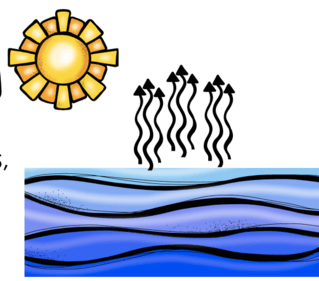
When water is heated and turns into a gas.

a)

Condensation

b)

Evaporation

92.

When water loses energy, forms water droplets and clouds.

a)

Condensation

b)

Evaporation

93.

How does the water RETURN to the Earth's Surface?

a)

Precipitation (rain, snow, sleet, hail)

b)

Groundwater

c)

Runoff

d)

Evaporation

94.

When water lands on Earth's surface and flows to the lowest part.

a)

Precipitation (rain, snow, sleet, hail)

b)

Groundwater

c)

Runoff

d)

Evaporation

95.

Which are examples of precipitation?

a)

rain

b)

snow

c)

runoff

d)

sleet

e)

hail

96.

When water soaks and is stored in the ground

a)

Precipitation (rain, snow, sleet, hail)

b)

Groundwater

c)

Runoff

d)

Evaporation

97.

What part of the water cycle is this?

a)

Precipitation (rain, snow, sleet, hail)

b)

Groundwater

c)

Runoff

d)

Water used by plants and animals

98.
Precipitation happens when clouds of water droplets are too ______________.
a)
cold
b)
light
c)
heavy
d)
hot
99.
When water condenses, the water vapor in the air gets ___________ and changes back into liquid.
a)
cold
b)
hot
c)
warm
d)
solid
100.

What is the water cycle?

a)

the 3 forms of water

b)

the movement of water on, above, or below the surface of the Earth

c)

when water melts

d)

when clouds form

101.

What is the water cycle?

a)

the 3 forms of water

b)

the movement of water on, above, or below the surface of the Earth

c)

when water melts

d)

when clouds form

102.
What part of the water cycle does this picture show?
a)
condensation
b)
precipitation
c)
evaporation
103.
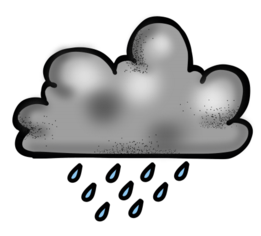
What part of the water cycle does this picture show?
a)
condensation
b)
precipitation
c)
evaporation
104.

What are fossils?

a)

dead animals and plants

b)

evidence of early life preserved in rocks

c)

sedimentary rocks

105.

How do fossils form?

a)

animal dies, gets buried in sediment, minerals seep into the hard parts.

b)

animal dies, get buried in sediment, minerals chemically change the fur and muscles.

106.

What can fossils tell us about the past? (check all that apply)

a)

Tell us how animals have changed

b)

Tell us what Earth's climate or weather was like in the past

c)

Tell us how long Earth has existed

d)

Tell us about the Earth's landforms in the past

e)

Tell us how plants or animals started

107.
a)
Warm Front
b)
High Air Pressure
c)
Cold Front
d)
High Temperatures
108.
a)
Warm Front
b)
High Air Pressure
c)
Cold Front
d)
High Temperatures
109.
a)
Low Clouds
b)
Low Temperatures
c)
Light Wind
d)
Low Air Pressure
110.
a)
High Air Pressure
b)
High Temperatures
c)
Heavy Rain
d)
Hail
111.
a)
High Pressure
b)
Warm Front
c)
Cold Front
d)
Mountains
112.
High Pressure is associated with this type of weather...
a)
Cloudy/Overcast Weather
b)
Cold Weather
c)
Warm Weather
d)
Fair Weather
113.
Low Pressure is associated with this type of weather...
a)
Cloudy/Overcast Weather
b)
Cold Weather
c)
Warm Weather
d)
Fair Weather
114.
Which city is experiencing thunderstorms?
a)
Denver
b)
New York 
c)
Miami 
d)
Boise
115.
Which city is currently experiencing a snow storm?
a)
Seattle
b)
Los Angeles
c)
Chicago
d)
New York
116.
Which city has the highest the highest temperature?
a)
Dallas
b)
Chicago
c)
Los Angeles
d)
Miami
117.
Which city has partly cloudy skies?
a)
Boise
b)
New York
c)
Atlanta 
d)
Dallas
118.
A cold front is approaching Minneapolis. What will happen to the air temperature?
a)
stay the same
b)
increase
c)
decrease
119.

Scientists use many ___________ to find weather patterns and forecast how weather will change.

a)

tools

b)

books

120.

They use tools that ____________ wind speed and direction, precipitation, air pressure, and temperature.

a)

change

b)

measure

121.

Knowing what the temperature will be helps people decide what to _____________.

a)

wear

b)

eat

122.

A ___________________ studies weather and predicts upcoming changes in the weather.

a)

meteorologist

b)

astronaut

123.

What instrument is used to measure temperature?

a)

Thermometer

b)

Rain Gauge

c)

Wind Sock

124.

What does the following weather symbol represent?

a)

Sunny with clear skies

b)

Partly cloudy

c)

Overcast

125.

What does the following weather symbol represent?

a)

Sunny with clear skies

b)

Partly cloudy

c)

Overcast

126.

What does this image represent?

a)

sunny

b)

Thunderstorms

c)

Rain

d)

Partly cloudy

127.

What does this weather symbol mean?

a)

Rain

b)

Thunderstorm

c)

Partly Cloudy

d)

Sunny

128.

According to this weather forecast, what day will be windy?

a)

Tuesday

b)

Thursday

c)

Friday

d)

Sunday

129.

According to this weather forecast, what day will be windy?

a)

Tuesday

b)

Thursday

c)

Friday

d)

Sunday

130.

According to this weather forecast, what days will be sunny?

a)

Monday

b)

Wednesday

c)

Friday

d)

Saturday

131.

_____________ is precipitation in the form of large balls of ice that fall from thunderstorms.

a)

Rain

b)

Air

c)

Sun

d)

Hail

132.

When we see many _________ it is possible that rain appears!!!

a)

tress

b)

lights

c)

sun

d)

clouds

133.

Today is_________

a)

sunny and hot

b)

sunny and cold

c)

windy and cold

d)

windy and hot

134.

Today is_________

a)

sunny and hot

b)

sunny and cold

c)

hot and cloudy

d)

hot and cold

135.

What type of weather is this ?

a)

Windy

b)

Stormy

c)

Sunny

d)

Cold

136.

What type of weather is this ?

a)

Sun

b)

Rainy

c)

Sunny

d)

Cold

137.

What type of weather is this ?

a)

Rainy

b)

Sunny

c)

Cold

d)

Cloudy

138.

What type of weather is this ?

a)

Rainy

b)

Sunny

c)

Cold

d)

Cloudy

139.
Which thermometers temperature is about  25° Celcius?
a)
Blue
b)
Green
c)
Blue
d)
Blue and Green
140.
What is the temperature on this thermometer in Celsius degrees?
a)
 32° Fahrenheit       
b)
 0° Celsius       
c)
 0° Fahrenheit       
d)
 40° Fahrenheit       
141.
What is the temperature on this thermometer?
a)
 85° Fahrenheit       
b)
 80° Fahrenheit       
c)
 90° Fahrenheit       
d)
 95° Fahrenheit       
142.

Wow! It was a huge storm last night. This tool is showing 10 cm.

a)

thermometer

b)

anemometer

c)

hydrometer

d)

rain gauge

143.

A student recorded 15 °C in their notebook. What tool did they use to make this observation?

a)

thermometer

b)

barometer

c)

rain gauge

d)

anemometer

144.

What is the name of a person who forecasts weather?

a)

weather person

b)

geologist

c)

meteorlogist

d)

scientist

145.
A rain gauge measures what?
a)
Air pressure
b)
Wind speed
wind speed
c)
Amount of rain fall
d)
Wind direction
146.
A weather predication is a 
a)
fortune
b)
guess
c)
forecast
d)
opinion
147.
This weather instrument is an...
a)
wind vane
b)
anemometer
c)
barometer
d)
thermometer
148.
What is the name of this tool?
a)
Barometer
b)
Hygrometer
c)
Rain Gauge
d)
Thermometer
149.
What does a barometer measure? 
a)
measures high and low pressure in the air
b)
measures humidity in the air
c)
measures speed of the wind 
d)
measures the amount of rain that has fallen
150.
What is the name of this weather tool and what does it measure? 
a)
Rain Gauge and the amount of water that is in the air
b)
Rain Gauge and the amount of rain that has fallen
c)
Hygrometer and the amount of rain that has fallen
d)
Hygrometer and the amount of water that is in the air
151.
What is the name the name of this weather tool? 
a)
Rain Gauge
b)
Telescope
c)
Wind Vane
d)
Anemometer
152.
What tool is used to determine wind direction? 
a)
Barometer
b)
Hygrometer
c)
Anemeometer
d)
Wind Vane
153.
What tool is used to measure wind speed? 
a)
Wind Vane
b)
Anemometer
c)
Thermometer
d)
Barometer
154.
The Law of Superposition helps scientists to determine what?
a)
The absolute age of rock layers
b)
The age of fossils
c)
The relative age of rock layers
d)
the super powers of rocks
155.
According to the law of superposition, the oldest fossils are found 
a)
At the top of the rock layers
b)
Near the bottom of the rock layers
c)
In the middle of the rock layers
d)
Somewhat near the surface
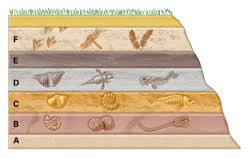
156.
Which rock layer in the diagram seems to be the oldest?
a)
F
b)
E
c)
B
d)
A
157.
This rock was formed by smaller pieces of rock that settled at the bottom of a lake millions of years ago. What type of rock is this?
a)
Sedimentary
b)
Igneous
c)
Metamorphic
158.
The ________ states that layers of sediment were originally deposited horizontally under the action of gravity.
a)
law of superposition
b)
law of horizontality 
c)
uniformitarianism 
d)
unconformities
159.
Which of the following is the oldest?
a)
Layer L
b)
Intrusion D
c)
Intrusion H
d)
Layer E
160.
Which of the following correctly lists the layers in order from oldest to youngest?
a)
A, B, C, D, E
b)
E, B, C, D, A
c)
E, D, C, B, A
d)
C, B, A, D, E
161.
The rock formation labeled "P" is a(n)...
a)
fault
b)
intrusion
c)
inclusion
d)
unconformity
162.
Letter "F" is a....
a)
inclusion
b)
intrusion
c)
fault
d)
unconformity 
163.
In this rock layer diagram there are two unconformities, a fault at E and an intrusion at D. Which unconformity occurred first?  How do you know?
a)
Intrusion D occurred first because the instrusion has been moved by the fault.
b)
The fault occurred first because it has moved the intrusion D.
c)
Intrusion D occurred first because it can be seen in all of the rock layers.
d)
Fault E occurred first because it is a normal fault.
164.
Which Rock layer or intrusion is the youngest?
a)
A
b)
B
c)
C
d)
D
165.
An archaeologist made the following diagram of a dig site. What can be said about the pottery as compared to the skull found in the site?
a)
The rock layer with the pottery is more recent than the rock layer with the skull.
b)
The rock layer with the skull is more recent than the rock layer with the pottery.
c)
The rock layer with the skull is approximately the same age as the rock layer with the pottery.
d)
The rock layer with the skull has an absolute date of 17,000 years.
166.
How old do Paleontologists believe the Earth is?
a)
2016 years old
b)
3.54 billion years old
c)
4.54 billion years old
d)
4.54 million years old
167.
Relative age of a rock is the number of years that have passed since the rock formed?            
a)
true
b)
false
168.
Look at the diagram, what layer did animal E first show up in?         
a)
Layers #4
b)
Layers #5
c)
Layers #6
d)
Layers #7
169.

The age of rock compared to the ages of other rocks

a)

extrusion

b)

relative age

c)

absolute age

d)

index fossil

170.

the age of rock given the number of years since the rock formed

a)

index fossil

b)

relative age

c)

absolute age

d)

unconformity

171.

fossils of widely distributed organisms that lived during a geologically short period

a)

absolute age

b)

extrusion

c)

unconformity

d)

index fossil

172.

the geologic principle that states that in horizontal layers of sedimentary rock, each layer is older than the rock above it and younger than the rock below it

a)

erosion

b)

absolute age

c)

law of superposition

d)

relative age

173.

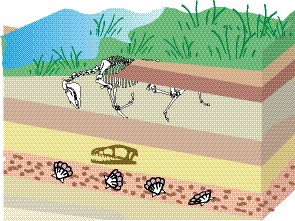
Look at the picture. Which fossil is most likely younger?
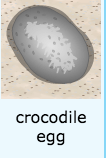
a)
b)
174.

Look at the picture. Which fossil is most likely older?
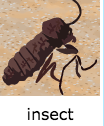
a)
b)