
 Worksheets
Practice
Total questions: 169
Worksheet time: 2hrs 38mins

Animals that live in the desert have adapted to live with little water since the desert gets little rainfall.


Temperate Deciduous Forest
tropical rain forest and temperate grassland

This biome is very hot all year long, found close to the equator, and has high amounts of rain fall.
Rain forest
Deciduous forest
Taiga
desert
This biome has very little rainfall, also extremely cold temperatures for most of the year, and frozen soil makes ponds form.
Deciduous forest
Tundra
rain forest
Grassland
This biome has trees that lose their leafs in the winter, experiences four seasons, and gets enough rain to support the growth of trees.
Rain forest
Taiga
Grassland
Deciduous forest
This biome has extremely cold winters and short summers. They get a decent amount of precipitation but it mostly comes as snow. Pine (coniferous) trees dominate this biome.
Taiga
Desert
Grassland
Tundra

Termites are tiny insects that can cause severe damage to homes and other structures that consist of wood. Termites are an example of what type of factor.
Biotic
Abiotic

The Sun is the source of all energy within an ecosystem. Plants depend on light from the sun in order to perform the process of photosynthesis. Sunlight is an example of what type of factor?
Biotic
Abiotic


What 3 things do plants need for the process of photosynthesis?
Sunlight, oxygen and sugar.
Water, soil and oxygen.
Sunlight, carbon dioxide and water.
Sunlight, soil and water.

Organisms, like bacteria, insects and worms, that break down waste are called ___
carnivore
herbivores
decomposers

What would happen to the bird if the green fish died out?
the bird population would grow
the bird population would die out
the smaller fish will die out
What is the bottom layer of the an energy pyramid?
producer
tertiary consumer
Secondary consumer
primary consumer
What would happen if their were no producers?
Every population would grow larger
Everything would die out
The animals would make their own food

If there was a wildfire in the forest that destroyed the plant life, what would happen to the herbivore population?
Herbivores would decrease due to a lack of food
Herbivores would increase due to an increase of food
Herbivores would not be affected
Herbivores would decrease due to an increase in predators
What happens if a population goes over its carrying capacity?
It will continue to grow
It will eventually decrease due to a lack of resources
It will die immediately
It will get unlimited resources
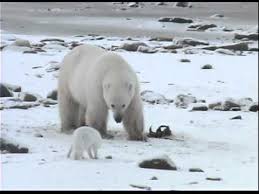
Two arctic fox are fighting with a polar bear for a sea lion carcass. One fox distracts the bear while the other eats. What type of limiting factor is the polar bear?
Predator-Prey Relationships
Competition
Herbivory Effect
Weather
A tick living on a dog
mutualism
commensalism
parasitism
A bird building their nest in a tree.
mutualism
commensalism
parasitism
A tapeworm living in a 6th grade students intestines.
mutualism
commensalism
parasitism
Bees and a flower
mutualism
commensalism
parasitism
The ants and the acacia tree living together and both receiving benefits.
mutualism
commensalism
parasitism
Select all that apply: Which would be considered limiting factors?
A hurricane destroying the gulf coast.
An invasive species like kudzu spreading rapidly.
A severe case of swine flu that slowly kills pigs.
A giant mudslide that traps a herd of elephants.
A grub worm living in the trunk of a dead tree.
Climate is affected by many factors including:
latitude, elevation, and proximity to bodies of water
tides and currents
wind
snow and sleet
Which of the following is NOT a source of nitrates and phosphates into a river?
Fertilizers
Animal waste
Wastewater
Burning fossil fuels


Which of the following ARE considered invasive species to the southeast?
Asian carp
Honeysuckle bush
Kudzu plant
Oak tree population
Azalea bushes
Which of the following ARE effective ways of dealing with invasive species?
Spraying chemicals to treat the area
Attempting a control burn on the area
Setting off dynamite in the area
Planting new non native plants to over take the original invasive species


Which of the following does not belong with conservation?
Reuse
Reduce
Recycle
Return
Remember
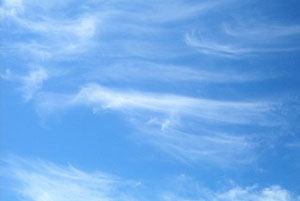
Tommy wakes up one morning and looks in the sky. He finds whispy looking clouds. What type of cloud is he looking at and what weather should he expect?
Cirrus-Fair/ sunny
Cumulus- snowy
Stratus-rainy
Cumulonimbus-sunny
Which are examples of how wind is created?
Uneven heating of the atmosphere
Moving from high to low pressure
Moving from low to high pressure
Continental drifting
Temp at which vapor condenses
Steam
Precipitation
Condensation
Dew point
What creates frontal lifting?
Warm air rising above cold air
Cold air rising above warm air
Warm air sinking below cold air

How does the air in this type of front move?
Warm air slowly moves over cold air
Warm air slowly moves under cold air.
Cold air moves over warm air.
Warm air meets cold air and cannot move
The Coriolis Effect is caused by what?
The wind blowing
Earth's gravity pulling things down
The rotation of the Earth
The pull of the Moon
A low pressure system, which creates precipitation, moves —— upward to combine with —
Warm/cold
Cold/warm
A high pressure system moved air out because…
Cold air sinks to displace warm air
Warm air sinks to displace cold air
Stable air stays in place through convergence.


Which of the following are Non-Renewable energy resources? (Check all that apply.)
coal
wind
solar
nuclear
Which of the following TWO answers were reasons why the Egyptians settled along the Nile River? (2)
The Nile provided travel and trade routes.
The Nile provided dry land.
The Nile's floods provided fertile soil.
The Nile provided salt water for preserving meats.
What was Menes known for? (10)
Finding the tomb of King Tut
Discovering the Rosetta Stone
Writing the first Book of the Dead
Uniting Upper and Lower Egypt into one kingdom
Which of the following events in Egypt happened first?
The Great Pyramids of Giza were constructed.
King Menes unified Upper and Lower Egypt.
The Aryans conquer Egypt.
Settlers form villages along the Nile.
The Nile River flows in which direction making Upper and Lower Egypt upside down?
South to North
East to West
West to East
Memphis or Thebes. Which was the center of production and trade?
(a)
Which was the center of government and religion?
Memphis
Thebes
Cairo
Venice
Which does not match correctly?
Amon-Ra was the sun god
Horus was the afterlife god
Egypt was polytheistic
King Tut unified Upper and Lower Egypt
Which statements match correctly?
Pyramids we’re built during the Old Kingdom
Pharaohs were buried in the Valley of Kings in New Kingdom
The lowest class made up the largest amount of Egyptian population
Nobles, priests, and a vizier could be found in the ruling class.
How could Egyptians move up a social class?
Through hard work.
Through serving 4 years for the Pharaoh
Through earning “noble” status from growing crops
Select all the true statements.
Egyptian writing was called Hieroglyphics
Hieroglyphics were based from picture symbols
Many Hieroglyphics were wrote on clay tablets
Scribes we’re the primary writer of Hieroglyphs
We know about Hieroglyphics today from Egyptian writing found on scrolls and walls
What was Ka in Egyptian belief?
The spirit
Good works
A powerful god
A tomb built for the elite
What organ was left in the body after the mummification process?
Heart
Lungs
Intestine
Liver
Step 1 of the mummification process required the removal of which organs? Select all that apply
Heart
Lungs
Stomach
Liver
Kidneys
In step 2 of mummification, the body was dried out with what and for how long?
Natron salt; 40 days
Flax seed; 70 days
Sand; 25 days
Linen; 40 days
Robbers were more likely to rob mummies tombs and steal funerary objects like jewels and furniture in which kingdom?
Old
Middle
New
Select all that are incorrect statements.
Canonic jars were used to hold and preserve organs
Natron salt was used to absorb body liquids
Egyptians believed the heart was not important in the afterlife.
A sarcophagus provided an air-right container for the body
Which statements are correct?
The biggest pyramids of Giza were built for Khufu
The biggest pyramids of Giza were built for Menes
The sphinx has a head of a man and a body of a lion
The 365 day Egyptian calendar was used for tracking when tornadoes or sandstorms would strike the Sahara.
Which of the following are false?
Queen Hatshepsut claimed leadership after her husband King Tut died.
Queen Hatshepsut thought Egypt should build relationships with places.
Queen Hatshepsut focused on trade and the economy.
Queen Hatshepsut had to hide the fact that she was a woman Pharaoh.
Which of the following could not have been made from trade with Nubia?
Golden statue
Wooden rocking chair
Lion skin rug
Silver eating utensils
Egypt’s trading made culture spread through Egypt. Which are not apart of culture?
Religion
Language
Stories and traditions
Farming techniques
All are correct responses
Nubia was located near…
The Nile
The Sahara
The Sphinx
The Nile Delta
Select all true statements.
Ramses the Great was the longest reigning pharaoh
Ramses the Great was known for Military conquest
King Tut ruled at 10 after a dynasty made him ruler
Howard Carter discovered King Tut’s tomb but robbers had taken a lot of valuables
Ramses is most known for the Trojan Battle which he was outnumbered.


Which geographic feature does not match its correct direction?
Himalayan Mountains/ SW China
Gobi Desert/SE China
Yellow River/ Northern China
Plateau of Tibet/ South- Central China
Which river was known as China’s Sorrow due to massive flooding that killed people?
Yellow
Tigris
Nile
Chang Jiang
Terrace farming allowed farmers to dig into hills and control flood waters for their plants. What did this resemble?
Stair- steps
Deep Ridges
Ziggurat Temples
Garden of Eden
What is the correct order of dynasties that entered China?
Xia- Shang- Zhou- Qin- Han
Shang- Xia- Zhou- Qin- Han
Han- Qin- Zhou- Xia- Shang
Qin-Xia- Shang- Zhou- Han
Choose all true statements.
The people of China felt isolated because of natural barriers.
Chinese writing was found on Turtle Shells during the Shang dynasty
People were told from the gods who should rule due to the Mandate of Heaven in the Zhou dynasty
The Zhou dynasty created woodblock printing which made it easier to pass on news.
Select all true statements.
The Zhou dynasty believed in Feudalism
Nobles gave loyalty to the king
The Warring States period was a time of peace in China
Knights and military protected the nobles
Confucius believed in a focus on family and going back to ways of the ancestors. What was his ideas written in?
The Analects
The Torah
The Bible
The Ramayana
Choose all statements that are incorrect.
Shi Huangdi means powerful ruler
Legalism beliefs state people were bad and needed to be punished
The Great Wall of China is a natural barrier built during the Qin Dynasty
The Han dynasty started the idea of woodblock printing.
The Silk Road covered areas of China, Brazil, Guatemala, and New Jersey
According to Confucianism, which are correct?
Subject obeys ruler
Son obeys father
Wife obeys husband
Younger person obeys older person
Friends are equal status

Choose the answer choice that correctly labels the City-State for symbol B on the map below.
Knossos
Athens
Olympia
Delphi
Sparta
Choose the answer choice that correctly labels the City-State for symbol D on the map below.
Knossos
Athens
Olympia
Delphi
Sparta
Select all true statements
Ancient Greece had mountainous terrain so they had to rely on Maritime trading
Mountainous terrain separated settlements in Greece.
Sparta can be found on the Balkan Peninsula
Athens can be found on the Peloponnesian Peninsula
Athens was named after
Athena goddess of love
Athena goddless of wisdom
Aphrodite goddess of love
Zeus king of all gods
Which statements are true?
Macedonia was located in the northern part of the Balkan Peninsula
Sparta is believed to be descendents of Hercules
Athenian boys focused on Education but the women had little rights
Spartan boys focused on military strength but their women had rights such as owning property and public speaking
Who would say the following: I am a homemaker. I have few rights; I am not even allowed to vote.
Athenian Man
Athenian Woman
Spartan Man
Spartan Woman
Select all false answers.
Slaves were treated harshly in Athens
Women had right such as owning property in Athens
Athens had a direct democracy government.
Sparta's government was an oligarchy
The Persian Wars fought for 20 years between 500-479 BCE. Who was the battle between?
Greece and Persia
Persia and Troy
Athens and Sparta
Macedoinia and Crete
Which of the following events happened first?
King Darius conquers the region of Anatolia.
The Persian Wars ended.
Persians battle the Greeks at the Battle of Thermopylae.
Delian League Forms.
Which of the following are true?
During Marathon, The Athenian people were unprepared, and sent a person on a 26 mile run to Sparta to ask for their aid.
During the Battle of Thermopylae, King Xerxes of Persia was avenging his father King Darius.
The Persians defeated the Athenians at the Battle of Salamis
Athens and Sparta started the Delian League for extra protection from invaders.
The Peloponnesian Wars were fought between Athens and Sparta over misuse of Delian power.
King Phillip's son Alexander the Great was from what place?
Macdeonia
Sparta
Corinth
Asia Minor
Who am I? Greek philosopher during the classical age of Greece. I was taught by Plato. I founded the Lyceum
Aristotle
Socrates
Plato
Gunther
Who am I? I founded a school called the Academy.
Plato
Aristotle
Socrates
Randy Orton
Select all true statements.
Hellenistic culture is the spreading of European ideas through trade routes.
The first Olympic games took place in 776 BCE and were held in Olympia, Greece.
Mount Olympus is where the gods lived.
Homer was a poet that wrote the Mahabharatta and Ramyana

What is the name of this building?
The Colosseum
The Parthenon
The Acropolis
The Citidell

The building is dedicated to. . .
Zeus
Poseidon
Athena
Apollo
Ancient Rome was a small city-state along the ______ river.
Tiber
Nile
Mediterranean
Tigris
Rome was located on the...
Italian Peninsula
Coast of Carthage
South of the Mediterranean Sea
Between the Tigris and Euphrates Rivers
Which was NOT a reason for Rome's economical growth?
Mild, sunny climate and fertile farmland
Merchants could ship goods along Tiber River.
Mediterranean Sea provided easy way to trade with other people.
The mountains made it easy to see who was coming to trade.
Which of the following did NOT lead to Rome's political growth.
location of Mediterannean Sea made it easy for ships to launch and conquer distant lands.
Seven hills of Rome offered defense against enemies.
Mountain ranges helped protect from invasion
Trading ties with other nations declined Rome's political power.
A form of government where people rule themselves through elected representatives.
republic
democracy
oligarchy
dictatorship
Wealthy land owners who held property, money, and high positions.
Patricians
Plebians
Slaves
Kshatriyas
Farmers, merchants, laborers, and soldiers that made up 90 percent of Rome's population.
Plebians
Patricians
Slaves
Minutemen
Had no rights at all and worked on rich farms.
Slaves
Plebians
Patricians
Nobles
Why were the twelve tables passed?
To ensure that judges would rule fairly in trial for crimes.
To make sure Patricians were treated the best in courts.
To make sure only Plebians seen the laws displayed in the Agora.
To teach the children of Israel right from wrong.
The branch of government which made laws, included senate (served for life), and had the assembly made up of Plebians.
Legislative
Executive
Judicial
Tyrany
The branch of government that was led by two consuls. They directed the army and government.
Executive branch
Legislative branch
Judicial branch
Hammurabi's code
This government was made up of eight judges who served for a year at a time.
Judicial branch
Legislative branch
Executive branch
Olive branch
What did checks and balances do?
It allowed Romans to deposit their money into the local banks.
It prevented one branch of government from having too much power.
It was a way for all people to see the laws displayed.
It was a way for judges to see how prisoners were doing in jail.
Rome battled Carthage (Africa) in what war that lasted for 100 years?
Punic Wars
Persian Wars
Trojan Wars
Peloponessian Wars
After Sulla died, this Roman general took power in 46 BCE.
Julius Caesar
Octavian
Augustus
Marc Antony
Julius Caesar was assassinated because he named himself what?
Dictator for life
The GOAT
The greatest general ever
He created the Pax Romana
What was the 200 year period of peace called?
Pax Romana
Roman Empire
Byzantine Empire
Peace Time
Which of the following did Rome NOT invent
columns
arches
aqueducts
Colosseum
An easy way to decipher Roman gods from Greek ones are that Roman gods are named after..
plants
planets
animals
trees
_______________ was born in 1 BCE and was considered the Son of God.
Jesus Christ
Buddha
Hammurabi
Nebuchadnezzar
Who divided Rome into Eastern(Byzantine) and Western (Roman)empires?
Diocletian
Nero
Constatine
Jesus

Which position is Rome on the map?
A
B
F
E

Which position is Constantinople on the map?
A
B
C
D
Julius Caesar was a ____________ that demanded to be a ______________.
dictator; general of a military
slave; free
judge; superior to all judges
military general; dictator for life
The sacred text of Christianity is a book called the
Bible
Torah
Koran
Ramandah
Aqueducts were used for...
carrying fresh water to areas far away from natural resources.
protecting the Romans from foreign invaders
harvesting crops such as corn, potatoes, and barley.
paintings that artisans did.

