
 Worksheets
1st Nine Weeks Exam(8th)
Total questions: 160
Worksheet time: 2hrs 12mins
SC.7.N.1.2
Scientists frequently repeat the experiments of others scientists. Why is this important in science?
a. Scientists often ask each other for help in performing experiments.
b. Replication of experiments helps to confirm and verify results.
c. Scientists frequently perform other scientists’ experiments in order to practice their technique.
d. Repeating experiments is an effective way to make sure a laboratory is in optimal condition.
a
b
c
d
SC.7.N.1.2
Cara read an article on why repetition and replication are so important, but she did not understand the difference between them. Which of the following best explains the two terms?
a. Repetition is when a scientist repeats an experiment; replication is when a scientist conducts an experiment on genetic material.
b. Repetition is when a scientist does the same experiment a number of times; replication is when other scientists reproduce a scientist’s experiment.
c. Repetition is when a scientist publishes in more than one scientific periodical; replication is when another scientist reproduces another scientist’s results.
d. Repetition is when a scientist commits an error in an experiment the first time and must repeat it; replication is when a scientist repeats an experiment to make sure it is valid.
a
b
c
d
SC.6.N.1.2
Experiments are often repeated many times by the same or different scientists. What is the most important reason more than one scientist should conduct an investigation using the same methods?
a. If the results are the same, replication of the investigation helps to confirm the results.
b. The competition makes the scientists work more carefully.
c. More than one scientist is interested in the problem.
d. Different scientists might perform the experiment differently.
a
b
c
d
What is the BEST reason you always repeat an experiment?
Make sure your data is consistent and accurate
Make sure your data supports your prediction
Make sure your experiment is easy to do
Make sure your experiment has lots of data
When doing an experiment Mrs. Blackman says you should always take careful notes. You were sick and tired of Mrs. Blackman telling you what to do so you didn't take careful notes. In the end Mrs. Blackman is always right and your experiment was a disaster. What do you think went wrong with your experiment since you didn't take careful notes?
Mrs. Blackman gave you a bad grade
You have to take detailed notes so that your experiment can be repeated
Detailed notes let others know that you did an experiment
Detailed notes are important so that you can change data
Replication is when one scientist
copies another scientist's experiment.
laughs at another scientist's experiment.
repeats their own experiment several times.
clones another scientist.
Repetition is when one scientist
copies another scientist's experiment.
bumps into another scientists.
repeats their own experiment several times.
clones a T. rex.

The variable that is being measured or observed is called the _______________. Hint: this is the variable that is the result or effect
independent variable
dependent variable
control variable
What is a constant/control in an experiment?
Things that do not change in a experiment. It's the variable that stays the same. You can have many variables stay the same.
It's the variables that the scientist changes in the experiment
It's the variables that are being measured in an experiment

What step does every scientific experiment begin with?
hypothesis
question/problem
procedures
conclusion
The relationship between mass and volume is referred to as...
density
solubility
malleability
electrical conductivity
The ability of a substance to dissolve is referred to as...
density
solubility
malleability
electrical conductivity
A change in the form of a substance that does not change its identity is referred to as a...
Physical property
Chemical property
Physical change
Chemical change
A characteristic that can be observed or measured such as color, state, or hardness is referred to as a...
Physical property
Chemical property
Physical change
Chemical change
If you poured three liquids (that do not mix completely) into a cup, how could you tell which one is the densest liquid?
The liquid that is floating on top is the densest liquid.
The liquid that settles to the bottom is the densest liquid.
The liquid with the deep red color is the densest liquid.
There is no way to tell which liquid is densest from the description.
Which of the following is NOT an example of a physical change?


What kinds of changes in substances are always physical changes?
changes of state from solid to liquid to gas and back
changes that result in new substances being formed
changes that alter the identity of the substances
changes that alter the density of the substances
When the temperature of matter increases the particles (usually)...
speed up and move closer
speed up and move farther apart
slow down and move closer together
slow down and move farther apart
A force is ____.
a push or pull that can cause movement
a magnet
when someone does not work

This is an example of _____.
magnetism
gravity
work


If the net force is equal to zero, the forces acting on the object are
balanced
unbalanced
A force has both strength and _____.
power
direction
color
balance


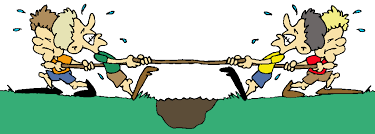
Which of the following objects will experience an unbalanced force?
A bike rider on a smooth and level road, pedaling at a constant rate.
A train pulling on another train, each with the same amount of force.
A chair sitting on the floor with balanced forces acting in opposite directions.
A ball rolling across the floor with friction acting in the opposite direction.


Fast
Slow

Fast
Slow
Stopped

Who's Faster?
Barkus
Arctica

Why did Arctica lose the race?
She stopped
She ran too slow

Speeding Up
Slowing Down

Speeding Up
Slowing Down


what is a force?
a push or a pull
change in displacement
change in direction
The forces that need two objects to be in contact with each other are called.......
contact forces
non-contact forces
electric forces
magnetic forces
select the examples of contact forces.(tick mark the answers)
normal reaction
tension
friction force
gravitational force
Applied Force
select the non contact forces.(tick mark your answers)
gravitational force
electric force
magnetic force
friction force

what kind of force is shown in this picture?
gravitation force
electric force
magnetic force
friction force

what kind of force is represented in the picture by
fgravitation force
electric force
magnetic force
friction force

what is the force acting in the ropes of the swing?
tension
normal reaction
friction
gravitation

what force is applied on the book by the table.(represented by R)
normal reaction
friction force
magnetic force

what is the force used to attract the scarp iron?
magnetic force
tension
electric force
friction

what is the force shown in the picture?
magnetic force
electric force
applied force

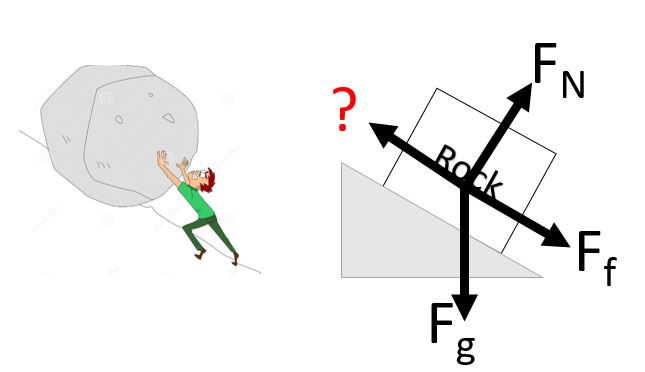
Rina’s mother asked her to help move some items from the hall closet to the garage. One item she wanted to move was a large box of old school books. Rina tried to lift the box, but could not pick it up. What force was Rina NOT able to overcome?
frictional force
gravitational force
applied force
normal force

Look at the illustration below of a block sitting on a table-top. The magnified view illustrates a force that exists between the two objects.
Which type of force is demonstrated in the magnified view?
normal force
applied force
gravitational force
frictional force



An Orange falls off a tree and lands on the ground. What force caused the orange to fall?
friction
heat
gravity
wind

The repelling or attracting force between a magnet and a ferromagnetic material (like iron).
Magnetic Force
Electrical Force
Gravity
A forces applied when the objects involved are in direct contact.
Contact forces
Normal forces
Non-contact forces
Generated between two bodies in contact with each other by rubbing between them.
Push or pull
Tension
Elasticity
Friction
Is the force usually exerted by a surface on an object that is resisting against it.
Friction
Normal force
Elasticity
Tension
Is the force of attraction that causes an apple to fall to the ground
Tension force
Applied force
Gravitational force
Normal force

Which sentence below describes a contact force?
A baseball bat hits a baseball
A book falls to the floor
A leaf floats in the air and falls to the ground.
A magnetic force pulls a paper clip toward a magnet
The force of pushing a chair across the floor of a room
Normal force
Applied Force
Gravitational Force
Spring Force

What force is F1 (downward force)
Friction force
Gravitational Force
Normal Force
Applied force

What force is F4 (leftward force)
Friction force
Gravitational Force
Normal Force
Applied force

What will happen as the magnet moves closer to the metal objects?
A forces applied when the objects involved are in not in direct contact with each other.
Contact forces
Normal forces
Non-contact forces

The students in Mrs. Hoffman’s class played tug-of-war. The girls pulled in one direction with a force of
150 N. The boys pulled in the opposite direction with a force of 100 N. Who won the game and why did they win?
The boys won because they applied a stronger force to the rope.
The boys and the girls tied because they applied equal forces to the rope.
The girls won because they applied a stronger force to the rope.
Too much force was applied, the rope broke.
The pace an object travels in a certain amount of time
speed
acceleration
Velocity
motion
What two things do you need to find speed (select both)
distance
time
velocity
direction
SI unit for speed
Mph
m/s or km/h
newtons
pounds
Increase rate of speed over time
Acceleration
Velocity
speed
fast


Motion is measured as _____
rate.
velocity
feet
mph

A series of steps used by scientists to solve a problem or answer a question.
scientific method
recipe
data collection
metric system

A testable explanation to a problem that has not yet been tested.
data
theory
hypothesis
fact

This variable in an experiment is the one being changed by the scientist.
dependent variable
independent variable
data
control group

Dependent variable means
the scientist controls what to test
educated guess
ask a question
what is being measured

The dependent variable in an experiment is what you ________________.
Change
Measure
Ignore
Manipulate

Which of the following is classified as nonliving?
made of one or more cells
responds to external stimuli
reproduce only with a host cell
obtain and use energy
A sour taste is a characteristic of:
acids
bases
neutral
pH scale
Which is a characteristic of a base?
tastes sour
found mostly in foods
feels slippery
turn litmus paper red
pH is the measure of the concentration of ______.
Acids
H+ ion
OH- ion
Bases
According to Arrhenius, what is the definition of an ACID?
a substance that contains hydroxide and ionizes to produce OH-
a substance that contains hydrogen and ionizes to produce H+
a substance that contains hydrogen and ionizes to produce OH-
a substance that contains hydroxide and ionizes to produce H+
According to Bronsted-Lowry, what is the definition of an BASE?
a substance that donates a hydrogen (H+) ion
a substance that donates a hydroxide (OH-) ion
a substance that accepts a hydrogen (H+) ion
a substance that accepts a hydroxide (OH-) ion
A substance that is 3 on the pH scale would be a(n):
acid
base
neutral
solute
Taste bitter
acids
bases
neutral
pH paper
Taste sour
acids
bases
neutral
pH scale

According to the pH scale, which item is a stronger base than soap?
baking soda
ammonia solution
tomato
bleach
Which is the correct set of acid properties?
sour taste, corrosive, change litmus from red to blue
sour taste, corrosive, change litmus from blue to red
sweet taste, slippery, change litmus from blue to red
sour taste, slippery, change litmus from blue to red
Which of the following is an acid?
soap
baking soda
orange juice
pure water
Ammonia has a pH of 11. Ammonia is __________.
an acid
a base
an element
a metal
Tastes sour
acid
base
neutral
both acids & bases
Tastes bitter.
Acids
Bases
None of the following
Acids & Bases
A substance that is 3 on the pH scale would be a(n):
acid
base
neutral
solute
Which of the following is the strongest acid?
soap - 10
HCL - 0
blood - 7.45
soft drink - 3

Milk is a very weak acid. What might its pH value be?
6.5
7.8
4.2
12.2
Stronger acids have a pH closer to...
7
0
14
9
Weaker bases have a pH closer to...
8
0
14
4
A pH level of 7 indicates
acid
base
neutral
none of the following

