
 Worksheets
7th Grade Accelerated science review
Total questions: 163
Worksheet time: 3hrs 53mins

Which type of cell does the picture show?
Animal Cell
Plant Cell
Bacteria Cell
Protist Cell

Identify which type of cell this picture is showing.
Animal
Plant
Bacteria
Protist

What is the purple structure in the cell?
Cytoplasm
Nucleus
Cell wall
Flagellum
What is a major difference between plant and animal cells?
Plant cells are always at least 10 times larger
plant cells are always green
plant cells are surrounded by cell walls and animal cells are not.
animal cells have mitochondria and plants cells do not
animal cells have a nucleus and plant cells do not
What structures can be present in a plant cell, but not in an animal cell?
cell membrane
mitochondria
nucleus
cell wall
chloroplast


What major energy transformation occurs during photosynthesis?
Thermal --> Chemical
Kinetic --> Radiant
Chemical --> Radiant
Light --> chemical


Which of the following is the best description of the process shown in the image below?
Water, oxygen, and light are inputs while carbon dioxide and glucose are outputs.
Water, oxygen, carbon dioxide, and light are inputs and glucose is the output.
Water, carbon dioxide, and light are inputs while oxygen and glucose are outputs.
Glucose, oxygen, and light are inputs while carbon dioxide and water are outputs.

Which cells are from multicellular organisms? You can select more than one.
a
b
c
d

What part of the cell is the arrow pointing to?
cell membrane
mitochondria
nucleus
cytoplasm
vacuole

What part of the cell is the arrow pointing to?
cell membrane
mitochondria
nucleus
cytoplasm
vacuole

What part of the cell is the arrow pointing to?
cell membrane
mitochondria
nucleus
cytoplasm
vacuole

What part of the cell is the arrow pointing to?
cell wall
mitochondria
nucleus
cytoplasm
vacuole

What part of the cell is the arrow pointing to?
cell wall
mitochondria
nucleus
chloroplast
vacuole

What part of the cell is the arrow pointing to?
cell wall
mitochondrion
nucleus
chloroplast
large vacuole


A student writes the following observations about aluminum in his notebook: Please select all the physical changes
It will bend.
It will not rust.
It will melt at 661 degrees
It conducts electricity and heat.
It is shiny and reflects light.


The graph below shows the solubility of two different chemical compounds. Compared to copper sulfate, approximately how many more grams of potassium bromide would dissolve at 90°C?
20
40
60
80
Which of the following will cause a lump of sugar to dissolve faster?
chopping it into pieces
adding more sugar
stop stirring the water
adding cold water

A mixture of salt, sand, and water is thoroughly stirred. It is then filtered through a filter paper as shown in the diagram below. Which substance(s) pass through the filter?
salt and sand
sand and water
water and salt
water only
Which of the following processes can separate dissolved salt from water?
filtration
evaporation
stirring
sedimentation

The elements fluorine, chlorine, bromine, and iodine are all found in the same group (17) on the table. These elements are grouped together because they
are metals
have the same atomic mass
react in similar ways
are noble gases

Water (H2O) is not found on the Periodic Table of the Elements because water is
an atom
a mixture
a liquid
a compound
A student mistakenly dumped iron filings and sand into a beaker of salt that the teacher needed for a salt water fish tank. Check all that needs to be done to separate all the substances back to original.
use a magnet to separate iron filings
evaporate the water to separate the water from the salt
filter salt from water using a coffee filter
filter the salt water from the sand using a coffee filter
add water to make a solution of salt water and sand mixture

Figure A shows a beaker containing water, sand, and salt. The salt is totally dissolved in the water. Figure B shows the contents of the beaker being poured through filter paper in a funnel over a flask. Figure C shows the same flask after sitting at room temperature for 15 days. After 15 days, the flask contains only solid salt particles. Why are the contents of the flask in figure B are classified as a mixture.
because it is the physical combination of two or more substances. Can be separated by filtration and settling.
because it is the chemical combination of two or more elements. Cannot be physical separated.

What does each sphere represent?
different elements
compounds
chemical bonds
Elements that are metals are
C
Cu
Ag
Zn
P
Which elements will react the most similar?
C
F
O
Cl
Ar
In which state of matter do the particles spread apart and fill all the space available to them?
solid
liquid
gas
In which state of matter are particles packed tightly together in fixed positions?
solid
liquid
gas

Find the volume of this piece of brass.
50.0 g
10.0 cm
6.0 cm3
12.0 cm3

What is the volume of the fish?
18 cm3
6 cm3
38 cm3


What is the mass on the triple beam balance?
345.5 g
304.5 g
700.5 g
304.5


If you cut a wooden block in half, each half would have
a) Half the density of the original piece
b) Twice the density of the original piece
c) The same density as the original piece
d) No density at all
Half the density of the original piece
twice the density of the original piece
The same density as the original piece
No density at all
A candle floats in water but sinks in alcohol. This is because
The candle is less dense than the alcohol but more dense than the water
The candle is more dense than the alcohol but less dense than the water
The water is more dense than the candle but less dense than the alcohol
The candle is less dense than both the water and alcohol
The density of hot water
Is greater than the density of cold water
Is less than the density of cold water
The same as the density of cold water
Depends on the volume of water
The density of hot and cold water are different mainly because
The molecules in hot water move slower and are slightly closer together
The molecules in hot water are larger
The molecules in hot water move faster and are slightly further apart
The molecules in cold water move faster and are further apart

What is the sequence of the energy transformations represented in the diagram?
mechanical →chemical →solar
solar →electrical →mechanical
mechanical →electrical →solar
solar →chemical →electrical

The diagram shows a boulder rolling down a hill into a valley and then up the opposite hill. At which position does the boulder have the greatest kinetic energy?
A
B
C
D
The diagram shows a boulder rolling down a hill into a valley and then up the opposite hill. At which position does the boulder have the greatest potential energy?
A
B
C
D
Compared to the particles in a hardened lava sample, the particles in a liquid lava sample
have a lower temperature
are moving faster
have less kinetic energy
are closer together

The diagram shows a home with a solar heating system. What is the original source of energy for this heating system?
heated water
heated air
sunlight
water pump
Which energy source is considered nonrenewable?
moving water
wind
fossil fuel
biomass
What state of energy is demonstrated by a skier speeding downhill?
kinetic
nuclear
potential
light

The diagram shows a cross section of a waterfall. Points A, B, C, and D represent locations in the stream. At which location does the water have the greatest kinetic energy?
A
B
C
D

The illustration shows an example of energy changing forms. Which changes in energy form are illustrated in the diagram?
electrical → sound → light and mechanical
mechanical → light → sound and electrical
sound → mechanical → light and electrical
light → electrical → mechanical and sound

The diagram shows a pinwheel rotating above a lit candle. The arrows indicate the direction of airflow. Which energy transformation is best shown in this diagram?
heat to mechanical
mechanical to light
sound to heat
heat to sound

The diagram shows a student using a spring scale to pull a wooden block up a ramp that is resting on a stack of books. Which change would require more force to pull the wooden block up the ramp?
Have the student use two hands.
Reduce the mass of the wooden block.
Restack the books so the thinnest book is on the bottom.
Glue sandpaper to the surface of the ramp.
The gravitational force between the Moon and Earth depends on
their masses, only
their masses and how far apart they are
their diameters, only
their diameters and how far apart they are

The diagram shows a spinning water sprinkler. Water comes through a hose and is sprayed by the sprinkler. Which principle best explains why the sprinkler spins?
Every action has an equal and opposite reaction.
Solid substances are usually more dense than liquid substances.
Energy is released when water condenses.
Most substances expand when heated and contract when cooled.

Four machines that convert electrical energy to mechanical energy were tested for fuel efficiency. The results of the test are shown in the chart. Which machine produced the most heat energy?
A
B
C
D

Which graph shows an object slowing down?
1
2
3
4

The diagrams below show smooth blocks of wood being pushed across the same surface. The mass of the block and amount of force applied are labeled in each diagram. In which diagram would the block of wood have the greatest acceleration?
1
2
3
4

The graph shows the distance traveled by four cars, A, B, C, and D, over a period of time. The average speed of a moving object can be determined by using the equation below. Which car traveled at an average speed of 20 kilometers per hour? s = d /t
A
B
C
D

A person uses a bow to shoot an arrow at a target. In which diagram does the bow and arrow have the greatest amount of potential energy?
1
2
3
4


The diagram shows a metal spoon in a glass of water. Which process causes the metal spoon to appear split or broken?
absorption
refraction
convection
reflection

The diagram below shows a glass containing a liquid and ice cubes. Which process causes water droplets to form on the outside of the glass?
evaporation
condensation
freezing
melting
A wet shirt is put on a clothesline to dry on a sunny day. The shirt dries because water molecules
gain heat energy and condense
lose heat energy and condense
gain heat energy and evaporate
lose heat energy and evaporate

The drawings below represent four different forms of electromagnetic energy. Which diagram represents electromagnetic energy with the shortest wavelength?
A
C
B
D

Which diagram best represents light being reflected after striking the flat surface of a mirror?
1
2
3
4
Energy from the Sun reaches Earth mainly by the process of
conduction
reflection
convection
radiation
A common characteristic of sound waves is that they
are created by vibrations
travel fastest through empty space
travel in straight lines toward the source
move at the speed of light

The diagram shows the relative wavelengths for several types of electromagnetic energy. Which type of electromagnetic energy has a shorter wavelength than ultraviolet waves?
visible light
x rays
microwaves
infrared light
Which graph correctly shows the effect of heat energy on the motion of molecules of matter?


The picture below shows a ringing bell inside a vacuum jar. As air is pumped from the vacuum jar, the sound level of the ringing bell will decrease until it can no longer be heard. This happens because air must be present in the jar in order for
sound to be transferred
the rubber to seal the jar
electricity to flow through the wires
the bell clanger to vibrate

Which graph best represents the relative distance between the particles of most substances in their solid, liquid, and gas states?
1
2
3
4
How is heat energy transferred within the liquid water in the pond?
compound formation
chemical reactions
convection currents
nuclear reactions

Base on diagram, which shows two insulated Styrofoam cups of water connected by an aluminum bar. The thermometers show the temperature of the water in cup A and cup B at the beginning of a heat-flow experiment. Over the next 15 minutes, which changes would most likely occur?
The temperature in cup A will decrease and the temperature in cup B will increase.
The temperature in cup A will decrease and the temperature in cup B will decrease.
The temperature in cup A will increase and the temperature in cup B will increase.
The temperature in cup A will increase and the temperature in cup B will decrease.
Base on diagram, which shows two insulated Styrofoam cups of water connected by an aluminum bar. The thermometers show the temperature of the water in cup A and cup B at the beginning of a heat-flow experiment. Which process is most responsible for the temperature changes that will take place?
radiation of heat from the water in the cups to the thermometers
conduction of heat through the aluminum bar
radiation of heat from the water in the cups into the air
conduction of heat through the air to the water in the cups

The diagram below represents several forms of electromagnetic energy. Which feature best distinguishes one form of electromagnetic energy from another?
color
wavelength
surface temperature
distance traveled

The diagram shows water being heated in a flask. The flask has a rubber stopper with a glass tube extending through it. The current level of the water in the glass tube is indicated. The temperature of the water is 25°C. If heating continues, the water in the glass tube will most likely
turn into a solid
move into the flask
become more dense
rise higher in the tube

Which diagram best represents molecules of matter in the solid phase?
1
2
3
4

The diagram below shows what occurs when a ray of light strikes and enters a pond. Which property of light is illustrated when the ray enters the pond?
refraction
absorption
reflection
emission

The diagram represents four processes, labeled A, B, C, and D, that occur when water changes phase. Which process is represented by B?
condensing
evaporating
freezing
melting
The diagram represents four processes, labeled A, B, C, and D, that occur when water changes phase. Which process is represented by C?
condensing
evaporating
freezing
melting
The diagram represents four processes, labeled A, B, C, and D, that occur when water changes phase. Which process is represented by A?
condensing
evaporating
freezing
melting
The diagram represents four processes, labeled A, B, C, and D, that occur when water changes phase. Which two processes increase the motion of the molecules?
A and B
C and D
B and C
D and A

An experiment is performed on plants to see how different liquids affect plant growth. Each plant in the experiment is given a different liquid; water, apple juice, or milk. Each plant has the same amount of soil, sunlight, and listens to the same music. In this investigation, the dependent variable is ...
The type of plant
The amount of sunlight
The growth of the plants
The type of liquid
How much water does a plant need to grow?
Which are the constants?
The type of plant
How much water you use
Location of plant
How much the plant grows
How long you grow the plant


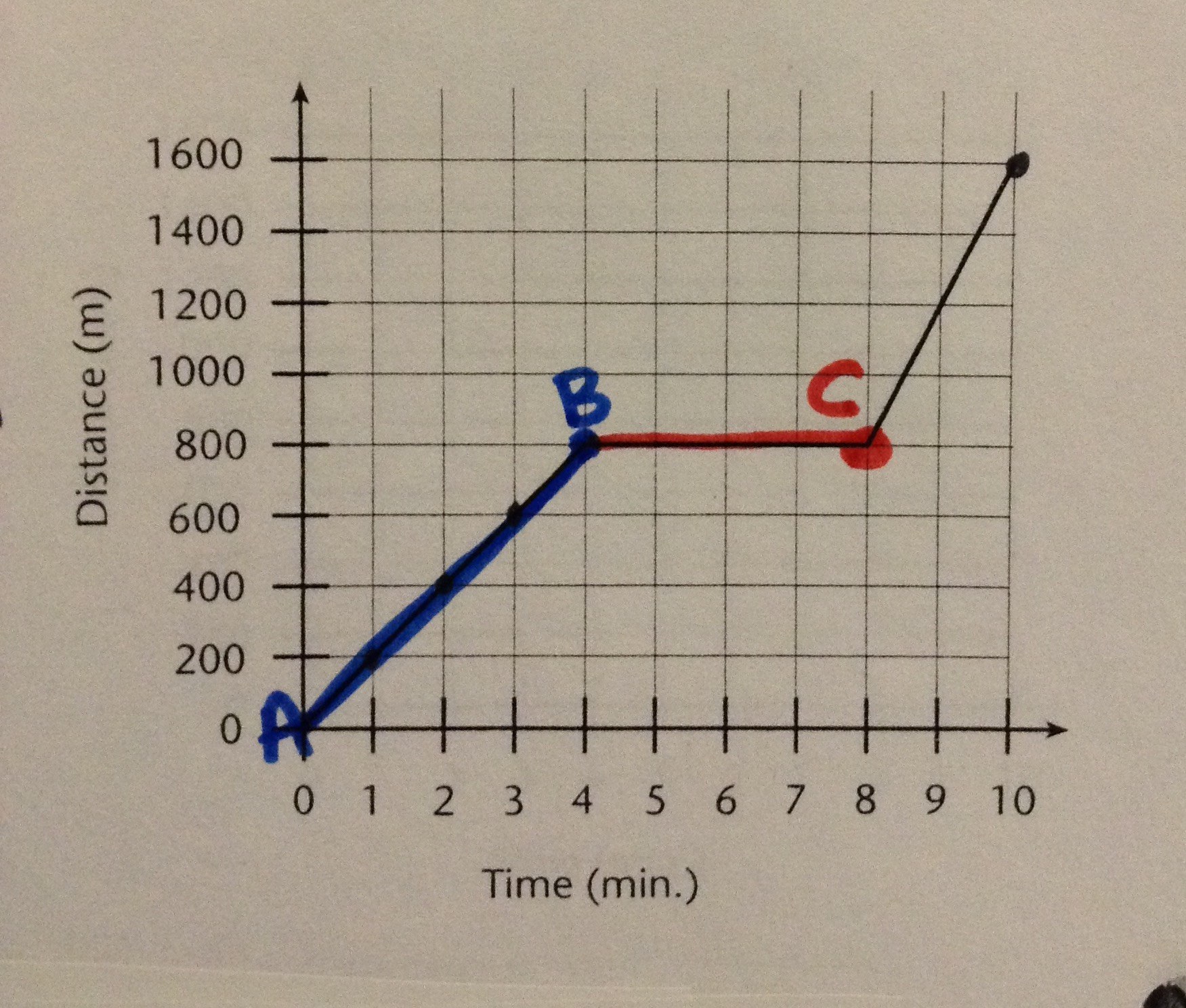
What is occurring from point A to point B?
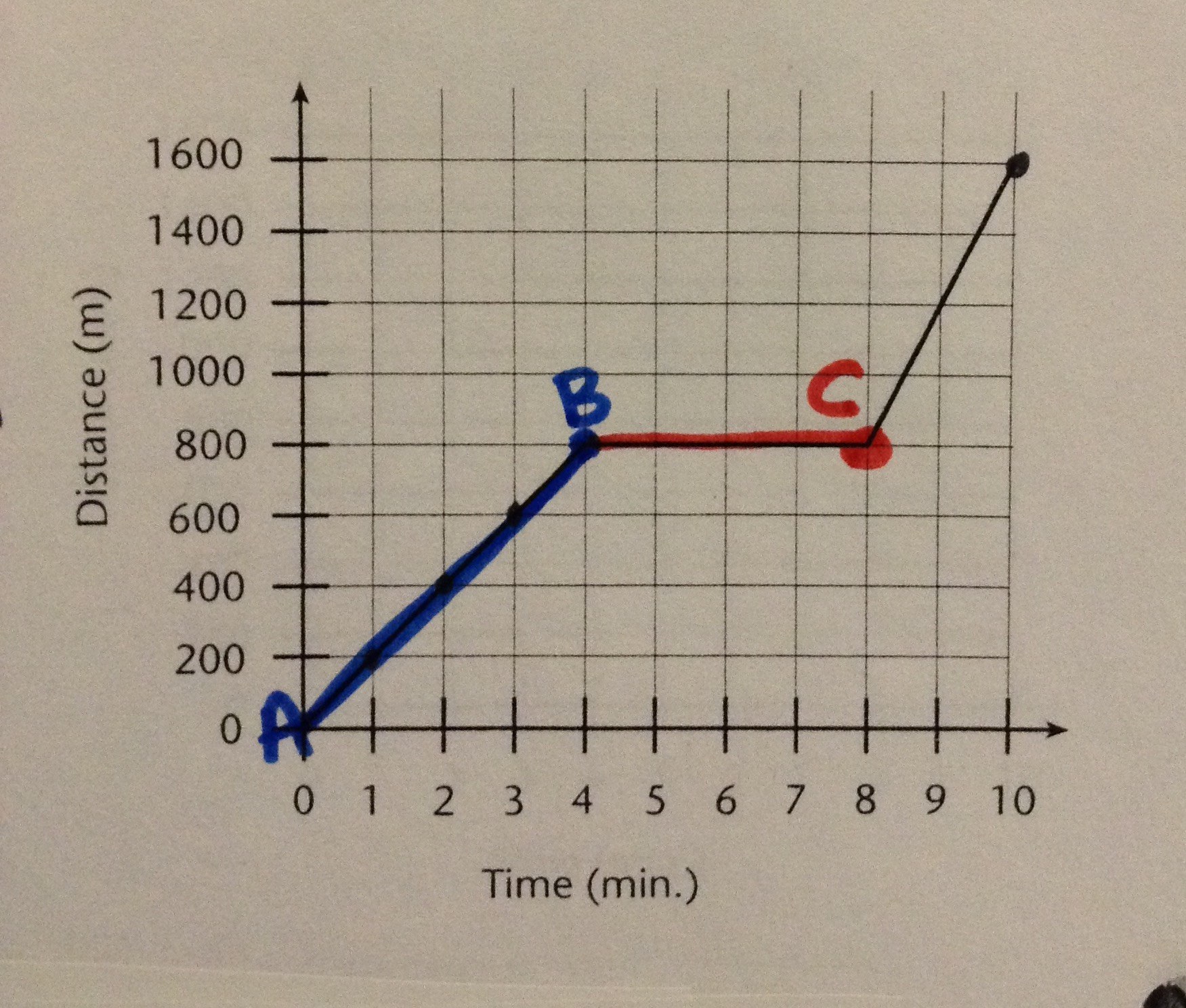
What was occurring from point B to point C?


asexual reproduction
sexual reproduction
sporulation
regeneration
if a body cell has 24 chromosomes how many will it have at the end of cell division.
6
12
24
48
In multicellular organisms, why does cell division occur?
Growth of cells
Repair of cells
Create new organism
In unicellular organisms, why does cell division occur?
Growth of cells
Repair of cells
Create new organism
How many offspring cells are created from cell division?
1
2
3
4


If a dog muscle cell has 10 chromosomes, how many chromosomes does a each new cell have after cell division is complete?
5
20
55
10
Which of the following is true about human chromosomes?
Body cells have 46 and sex cells have 23.
Body cells have 23 and sex cells have 46.
Body cells have 48 and sex cells have 24.
Body cells have 47 and sex cells have 23.


Two brown eyed parents (Bb) have a baby. What is the chance the baby is blue eyed? Brown is Dominant (B) and Blue is (b) recessive
0 %
25%
50%
75%
DNA is most closely associated with the
cytoplasm
chromosomes
cell membrane
cell wall
The chromosomes are found in the
cytoplasm
cell membrane
nucleus
cell wall
A change in the structure of DNA in the egg cell could result in a
new trait
bud
spore
clone
In squirrels gray (G) is dominant over black (g) fur color. If a Gg squirrel is crossed with a gg squirrel,
what is the probability that the offspring will have black fur?
0 %
25 %
50 %
100 %
What is a change in an organism that allows for it to survive in its environment?
homologous
vestigial
survival
adaptation


Which two systems work together to cause body motion?
A and B
A and C
C and D
B and F
Which system exchanges oxygen for carbon dioxide?
B
C
G
D
E

Which systems work together to provide oxygen for all body cells and tissues?
A and G
C and D
C and E
B and G
Which process releases energy from digested food?
photosynthesis
cellular respiration
vitamin production
Fertilization
Which sequence represents the correct levels of organization for multicellular organisms?
cell → tissue → organ → organ system
tissue → organ → cell → organ system
organ system → organ → cell → tissue
cell → organ → tissue → organ system

Insulin and glucagon are hormones that affect blood sugar levels. The diagram below shows the feedback system used by the human body to increase and decrease blood sugar levels. This feedback system is one way that the human body
circulates gases
maintains equilibrium (homeostasis)
destroys viruses
transports nutrients

