wayground logo

Free Printable Worksheets

Font size

S
M
L
XL
Worksheets

Physical and Earth Science

Total questions: 155

Worksheet time: 2hrs 57mins

Name
Class
Date
1.
The amount of matter in an object is a measure of the object's ________________.
a)
volume
b)
density
c)
mass
d)
solubility
2.
What is the volume of the rock? The water level is displaced from 20 mL to 23 mL with the rock.
a)
3 mL
b)
23 mL
c)
20 mL
d)
43 mL
3.
What would be the best way to measure the volume of a small rock?
a)
L x W x H with a ruler
b)
Put on triple beam balance
c)
Mass ÷ Volume
d)
Displacement method using graduated cylinder
4.
Which of the following is not a characteristic property of matter?
a)
Density
b)
Mass
c)
Phase/State
d)
Solubility
5.
What is the formula for calculating density?
a)
Mass ∗ Volume
b)
Volume ∗ Mass
c)
Mass ÷ Volume
d)
Volume ÷ Mass
6.
Which statement is true?
a)
Oil is the most dense substance.
b)
Corn syrup is less dense than water.
c)
Oil is less dense than water.
d)
Oil and corn syrup have the same density but different masses.
7.
What is the most dense metal?
a)
Aluminum 
2.7 g/cm3
b)
Steel
7.14 g/cm3
c)
Nylon
1.2 g/cm3
d)
Copper 
8.14 g/cm3
8.
The boiling point of water is ______________.
a)
0° C
b)
50° C
c)
200° C
d)
100° C
9.
When a gas turns into a liquid, it is called ___________________.
a)
Condensation
b)
Evaporation
c)
Melting
d)
Freezing
10.

Matter that light travels through.

a)

matter

b)

stuff

c)

medium

d)

space

11.

Allows ALL light to pass through

a)

transparent

b)

translucent

c)

opaque

d)

clear

12.

The bending of light that make matter APPEAR to change shape or size.

a)

reflect

b)

refract

c)

disperse

d)

echo

13.

A transparent object that bends light into rainbow colors.

a)

prism

b)

mirror

c)

convex lens

d)

concave lens

14.

Does not allow any light to pass through

a)

transparent

b)

translucent

c)

opaque

d)

clear

15.

Light waves bounce off at many of angles because the surface is uneven.

a)

reflection

b)

refraction

c)

dispersion

d)

echo

16.
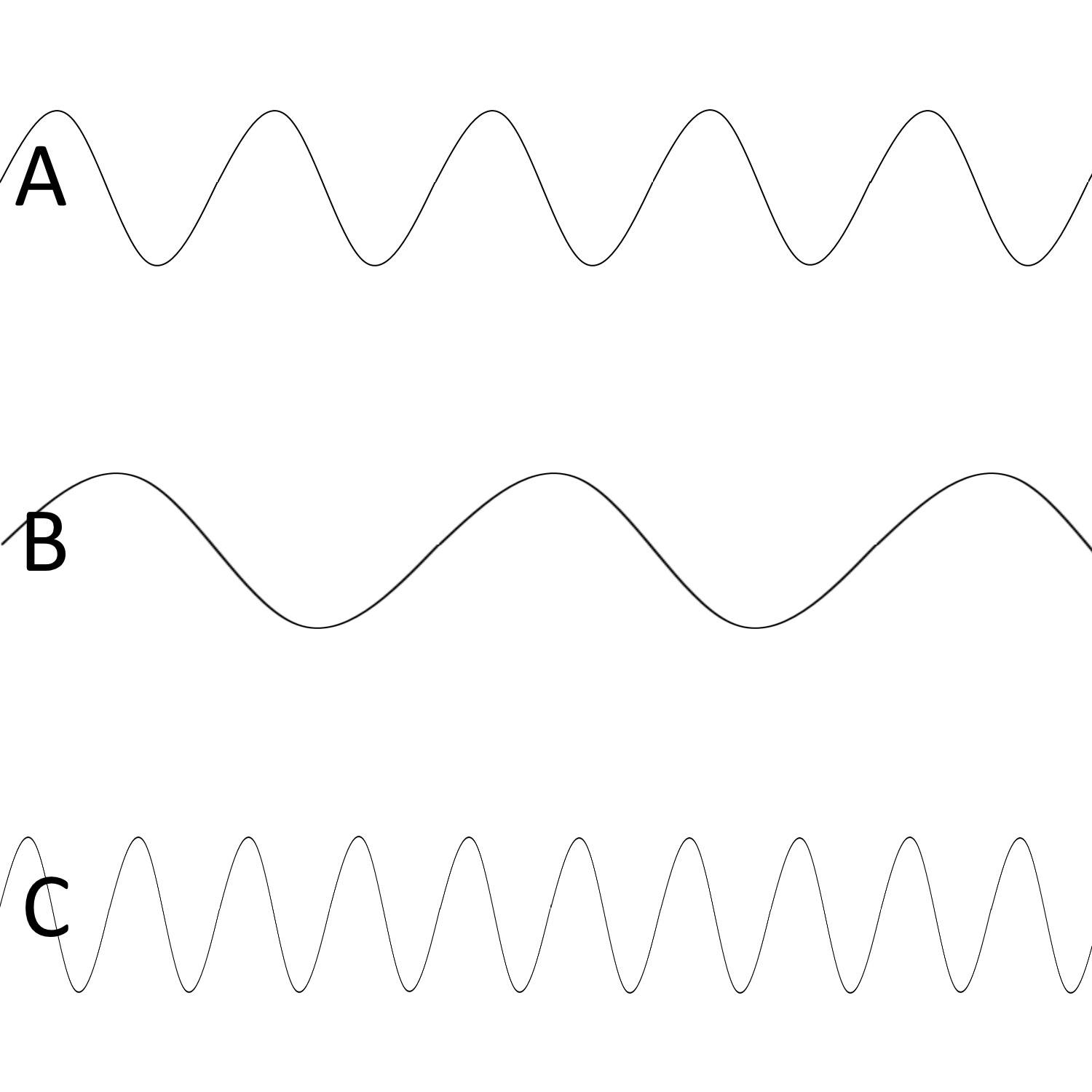
Which wave has the largest frequency?
a)
A
b)
B
c)
C
d)
None (same frequency)
17.
Which wave has the largest wavelength?
a)
A
b)
B
c)
C
d)
None (same wavelength)
18.

Which particle is a wave of light?

a)

proton

b)

neutron

c)

electron

d)

photon

19.
Which type of light has the lowest energy of this group?
a)
Radio
b)
Microwave
c)
Infrared
d)
Ultraviolet
20.
Which type of light has the largest wavelength of this group?
a)
X-rays
b)
Microwave
c)
Infrared
d)
Ultraviolet
21.
When an electron absorbs a photon of light, it also...
a)
gains positive charge
b)
gains negative charge
c)
increases energy level
d)
decreases energy level
22.

Radio waves and _______ are used in communication

a)

Microwaves

b)

Gamma rays

c)

Visible light

d)

Ultraviolet

23.

The vertical (up and down) columns in the Periodic Table are called

a)

groups

b)

towers

c)

periods

d)

atomic numbers

24.
The Modern Periodic Table of Elements is arranged by
a)
atomic mass
b)
atomic number
c)
valence electrons
d)
number of isotopes
25.
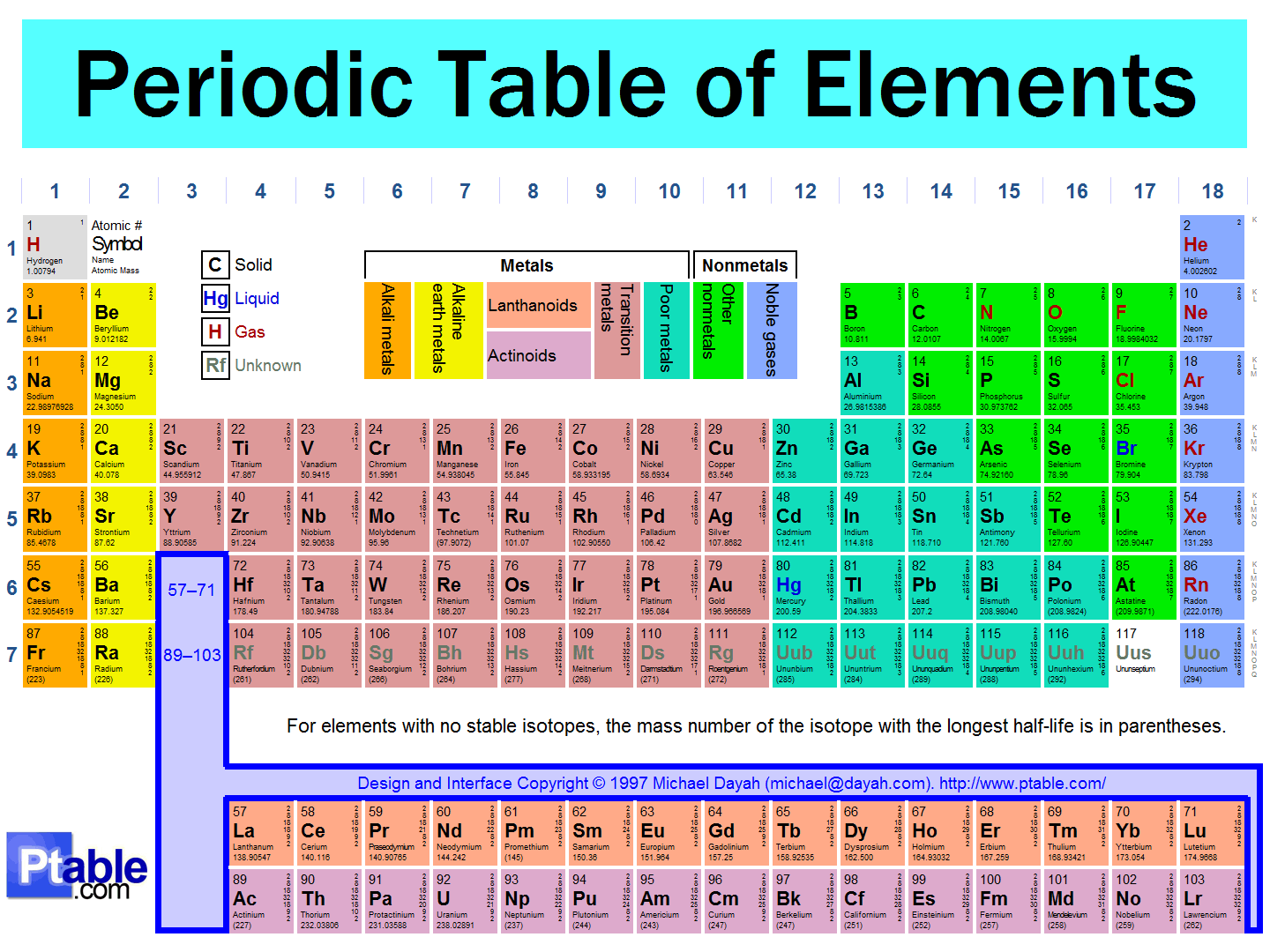
Sodium (Na) is found in period 
a)
3
b)
2
c)
4
d)
1
26.
The atomic number tells you what?  READ THE ANSWERS CAREFULLY
a)
only the number of electrons
b)
 only the number of protons
c)
only the number of neutrons
d)
the number of both electrons and protons in an atom.
27.
What does the atomic mass tell you? 
a)
Basically,the number of electrons and protons
b)
The number of neutrons
c)
Basically, the number of protons and neutrons
d)
The number of protons.
28.
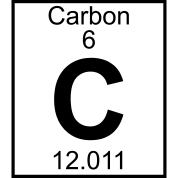
What does the 6 represent?
a)
atomic mass
b)
atomic number
c)
element name
d)
chemical symbol 
29.
What does 12.011 represent?
a)
atomic mass
b)
atomic number
c)
element name
d)
chemical symbol 
30.
What does the C represent?
a)
atomic mass
b)
atomic number
c)
element name
d)
chemical symbol 
31.

The horizontal (side to side) rows in the Periodic Table are called

a)

groups

b)

families

c)

periods

d)

atomic numbers

32.

What period is Lead (Pb) in?

a)

6

b)

4

c)

Metals

d)

4A

33.

What group or family is lead in?

a)

6

b)

4

c)

Metal

d)

4A

34.

What category is silicon (Si) a part of?

a)

Metal

b)

Nonmetal

c)

Metalloid

d)

Halogens

35.

What Element is in period 4, group 5A?

a)

Antimony

b)

Arsenic

c)

Tin

d)

Germanium

36.

How many electrons does Barium (Ba) have?

a)

13

b)

2

c)

71

d)

56

37.

How many neutrons does Bromine (Br) have?

a)

35

b)

80

c)

45

d)

7

38.

What is group name of the most reactive metals?

a)

Noble gases

b)

Halogens

c)

Alkali metals

d)

Alkaline earth metals

39.

Subatomic particles with a negative charge

a)

Electrons

b)

Neutrons

c)

Protons

d)

Quarks

40.
Subatomic particles with a positive charge
a)
neutrons
b)
atomic mass
c)
protons
d)
isotopes
41.
Measure mainly of the nuclear particles: protons + neutrons
a)
Subatomic Particles
b)
Atomic Number
c)
Atomic Mass
d)
Gluons
42.
Subatomic particles that are neutral in charge
a)
Neutrons
b)
Protons
c)
Nucleus 
d)
Electrons
43.
Atoms of the same element with a different number of neutrons
a)
Ion
b)
Gluons
c)
Isotope
d)
Quarks
44.
A tiny but very dense, positively charged portion of the atom that holds most of the atomic mass
a)
Electron Shells
b)
Orbitals
c)
Electron Cloud
d)
Nucleus
45.
Arrangement of elements organized by atomic number
a)
Electron Cloud 
b)
Periodic Table 
c)
Electron Configuration
d)
None of these
46.
Discovered the nucleus of the atom through the Gold Foil Experiment
a)
Rutherford
b)
Chadwick
c)
Thomson
d)
Dalton
47.
Discovered the electron within the atom
a)
Thomson
b)
Chadwick 
c)
Schrodinger & Heisenberg
d)
Dalton
48.
What is the approximate percentage of the Earth that is illuminated by the Sun at any given time?
a)
90%
b)
10%
c)
25%
d)
50%
49.
What moon phase is this picture?
a)
This is the full moon phase.
b)
This is the waxing gibbous moon phase.
c)
This is the waning gibbous moon phase.
d)
This is the first quarter moon phase.
50.
What moon phase is this picture?
a)
This is the waning crescent phase.
b)
This is the waxing gibbous phase.
c)
This is the waning gibbous phase.
d)
This is the new moon phase.
51.
What is this moon phase?
a)
This is the waxing gibbous moon phase.
b)
This is the last quarter moon phase.
c)
This is the first quarter moon phase.
d)
This is the new moon phase.  
52.
What moon phase is this picture?
a)
This is the new moon phase.
b)
This is the waxing crescent moon phase.
c)
This is the waxing gibbous moon phase.
d)
This is the waning crescent moon phase.
53.
What moon phase is this image?
a)
This is the full moon phase.
b)
This is the last quarter moon phase.
c)
This is the waxing gibbous moon.
d)
This is the new moon phase.
54.
Calculate the net force of the object in the image shown.
a)
20N
b)
35N
c)
5N
d)
25N
55.
Which direction will the object move?
a)
Right
b)
Left
c)
Up
d)
Down
56.
If a force causes an object to move, it's considered a(n) __________________ force.
a)
Balanced
b)
Unbalanced
c)
Massive
d)
Strong
57.
Students are playing tug-of-war. If group B pulls the rope to the right with a force of 400 N and group A pulls the rope to the left with a force of 250 N, what will happen to the ribbon in the middle of the rope?
a)
The ribbon will move to the left and group A will win the tug-of-war.
b)
The ribbon will move to the left and group B will win the tug-of-war.
c)
The ribbon will move to the right and group B will win the tug-of-war.
d)
The ribbon will move to the right and group A will win the tug-of-war.
58.
An airplane is travelling North through the sky at a constant speed when turbulence causes it to take a different route, changing its direction. Explain the forces at work on this plane.
a)
Unbalanced, because the plane is moving forward, not backwards
b)
Unbalanced, because the speed is constant and there is a change in direction
c)
Balanced, because the plane is not falling to a lower altitude
d)
Unbalanced, because the plane is in motion
59.
The roller coaster car begins at point W.  At what point along the track will the car have the greatest amount of kinetic energy?
a)
W
b)
X
c)
Y
d)
Z
60.
Calculate the Acceleration.
a)
8
b)
1
c)
.125
d)
5
61.
What is the net force?
a)
65 N left
b)
65 N right
c)
35 N left
d)
35 N right
62.
What is the net force?
a)
5.5 N left
b)
5.5 N right
c)
2.5 N left
d)
2.5 N right
63.
Space and all the matter and energy in it.
a)
Space
b)
Solar System 
c)
Universe
d)
Sun
64.
The sun and all of the planets and other bodies that travel around it. 
a)
Universe 
b)
Galaxy 
c)
Star
d)
Solar System 
65.
A relatively large spherical body that orbits a star.
a)
Star 
b)
Planet
c)
Moon 
66.
A large celestial body that is composed of gas and that emits light.
a)
star
b)
black hole
c)
element 
d)
big bang
67.
 A large cloud of gas and dust in interstellar space; a region in Space where stars are born.
a)
Protostar 
b)
Nebula
c)
Galaxy 
d)
Star
68.
 The actual brightness of an object such as a star
a)
Luminosity 
b)
Apparent Magnitude 
c)
Brightness 
d)
Light Year
69.
The most commonly accepted theory that explains the beginning of our known universe is the -
a)
Theory of Evolution
b)
Big Bang Theory
c)
Cell Theory
d)
Blackhole theory
70.
Light Years are a measure of - 
a)
time
b)
speed
c)
distance
d)
light
71.
Proxima Centauri is the closest star to Earth after the Sun and is located 4.3 light years away from Earth. How long does it take light from Proxima Centauri to reach Earth?
a)
1 year
b)
4.3 years
c)
43 years
d)
10 trillion years
72.
What does the Big Bang theory suggest?
a)
The universe was just there
b)
The Milky Way is the only solar system
c)
The universe is continually expanding
d)
The universe started as a point, expanded, and will return to a point
73.
What process takes place inside a star to generate energy?
a)
Nuclear fission
b)
Hydrogen Creation
c)
Nuclear fusion
d)
Helium forming
74.
________ holds all of the planets in orbit around the sun.
a)
Gravity
b)
String
c)
Bill Nye
d)
Duct tape
75.
What category on the H-R diagram has the majority or the most stars?
a)
Super giants
b)
White Dwarfs
c)
Giants
d)
Main Sequence
76.
Apparent (magnitude) brightness is affected by a star's distance from Earth.
a)
False
b)
True
77.
Which property of a star is the brightness of a star at a standard distance?
a)
Apparent (magnitude) brightness
b)
Absolute (magnitude) brightness
c)
Luminosity
d)
Size of the star
78.
All stars are formed from a  __________?
a)
giant
b)
black hole
c)
white dwarf
d)
nebula
79.
Very hot stars are what color? 
a)
Blue
b)
Yellow
c)
Red
d)
Orange
80.
A plot of the surface temperatures of stars compared to their absolute magnitude is called
a)
an H-R diagram
b)
constellation map
c)
a graph
d)
spectrum.
81.
What is the color of the coolest stars?
a)
blue
b)
yellow
c)
red
d)
orange
82.
What H-R Category does our sun belong to?
a)
Supergiant
b)
Main sequence
c)
White dwarf
d)
black dwarf
83.
Put the stars in order from coolest to hottest.
a)
Blue, White, Yellow, Orange, Red
b)
Red, Orange, Yellow, White, Blue
c)
Red, Orange, Yellow, Blue, White
d)
Red, Yellow, Orange, White, Blue
84.
Label part 1
a)
#1 Core
b)
#1 Radiation zone
c)
#1 Convection zone
d)
#1 Photosphere
85.
Label part 6
a)
#6 Prominences
b)
#6 Corona
c)
#6 Sunspots
d)
#6 Photosphere
86.
Label part 5
a)
#5 Chromosphere
b)
#5 Radiation zone
c)
#5 Convection zone
d)
#5 Photosphere
87.
Label Part 2
a)
#2 Core
b)
#2 Radiation zone
c)
#2 Convection zone
d)
#2 Corona
88.
Nuclear fusion is when
a)
the nuclei of two atoms join to produce lots of energy
b)
the nuclus of a large atom splits to release lots of energy
89.
Nuclear fission is when
a)
the nuclei of two atoms join to produce lots of energy
b)
the nucleus of one large atom splits, releasing lots of energy
90.
Energy is created in the core when two _____________ atoms join together to form a ______________ atom.
a)
helium, hydrogen
b)
carbon, hydrogen
c)
nitrogen, helium
d)
hydrogen, helium
91.
The middle layer of the sun's interior that contains very tightly packed gas is called the _____________.
a)
photosphere
b)
chromosphere
c)
radiation zone
d)
convection zone
92.
When we look at the sun, what layer are we viewing?
a)
photosphere
b)
chromosphere
c)
corona
d)
convection zone
93.
What layer can be seen here?
a)
chromosphere
b)
corona
c)
photosphere
d)
core
94.
What is the sun mostly made up of
a)
Helium
b)
Core
c)
Carbon
d)
Hydrogen
95.
Molecules spread out and move FAST!
a)
solid
b)
gas
c)
liquid
96.
Molecules are tightly packed together
a)
solid
b)
liquid
c)
gas
97.
The 3 State of Matter are?
a)
Idaho, Texas, and Florida
b)
Matter, Mass, and Weight
c)
Solids, Liquids, and Gas
d)
Steel, Copper, and Brass
98.
If an ice cube is left out in  room it will change from one state of matter to another.  Which is the correct order of State of Matter that the ice cube will go through?
a)
Gas, Solid, Liquid
b)
Liquid, Solid, Gas
c)
Liquid, Gas, Solid
d)
Solid, Liquid, Gas
99.
What is the study of matter and how it changes?
a)
matter
b)
chemistry
c)
substance
d)
properties
100.
What is reactability?
a)
the ability of a substance to undergo a chemical reaction, either by itself or with other materials
b)
the ability of a substance to undergo a physical change either by itself or with other materials
101.
Which of the following is an example of MATTER?
a)
light
b)
air
c)
gravity
d)
sound
102.
Which box has a higher density?  
a)
Box A
b)
Box B
c)
cannot be determined
d)
they are the same
103.

The temperature at which a gas turns into a liquid

a)

Melting point

b)

Freeing point

c)

Boiling point

d)

Condensation point

104.

The temperature at which a substance changes from a liquid to a gas

a)

Melting point

b)

Boiling point

c)

Freezing point

d)

Condensation point

105.

What is water in a gas form called?

a)

Water vapor

b)

Ice

c)

liquid water

d)

Kool-aid

106.
The theory that explains the formation of the solar system is called ____.
a)
Nebulis Theory
b)
Nebular Theory
c)
Big Bang Theory
d)
Big Nebulan Theory
107.
What caused the nebula to collapse and start spinning?
a)
Supernova
b)
Asteroid collision
c)
Big Bang
d)
Nearby star exploded
108.
What is the period of rotation?
a)
How long it takes a planet to orbit the sun
b)
How fast a planet orbits the sun
c)
How fast a planet spins
d)
How elliptical a planet's orbit is
109.
What is  the period of revolution?
a)
How long it takes a planet to orbit the sun
b)
How long it takes a planet to spin around
c)
How fast a planet spins
d)
How elliptical a planet's orbit is
110.
What is the shape of a planet's orbit?
a)
circular
b)
elliptical
c)
spherical
d)
round
111.
Nebulae are primarily composed of what element?
a)
Hydrogen
b)
Helium
c)
Other hard elements
d)
Zinc
112.
A giant sphere of glowing gases is a ___________
a)
Galaxy
b)
Light-year
c)
Star
d)
Magnitude
113.
The __________ has planets, moons, comets, and asteroids.
a)
solar system
b)
earth
c)
rotation
d)
United States
114.
the planets of the solar system formed as 
a)
the center of the gas cloud cooled
b)
planetesimals flattened into a rotating disk
c)
planetesimals collided into one another
d)
the sun absorbed extra gas and dust from the solar system
115.
How long ago was our sun formed?
a)
10 million years ago
b)
5 million years ago
c)
4.5 billion years ago
d)
2 billion years ago
116.
As a nebula collapses it also begins:
a)
Expand
b)
Rotate
c)
Shake
d)
Turn to ice
117.
What forms in the very center of the accretion disk?
a)
A protosun
b)
A planet
c)
A protoplanet
d)
A planetesimal
118.
The planetesimals keep:
a)
Colliding and breaking apart
b)
Colliding and sticking together
c)
Colliding and bouncing around
d)
Breaking down into smaller pieces
119.
What percentage of the nebula will the Sun accumulate?
a)
99%
b)
1%
c)
50%
d)
75%
120.
What materials could not survive the heat where the rocky planets were formed?
a)
Gamma Rays
b)
Plasma
c)
Ice and Gas
d)
Rocks
121.
Mars’s volcanoes are larger than those of Earth because Mars
a)
is so close to the sun.
b)
is a much older planet.
c)
has a thicker lava flow.
d)
has no moving tectonic plates.
122.
Which of the following planets experiences a runaway greenhouse effect?
a)
Venus
b)
Mars
c)
Mercury
d)
Earth
123.
The factors that contribute to Mercury’s daily temperature fluctuation of about 600°C are the planet’s slow rotation and
a)
its close proximity to the sun.
b)
its dense atmosphere.
c)
its heavy, rocky, waterless terrain.
124.
Which of the following planets is similar to Uranus in terms of its size and mass?
a)
Pluto
b)
Jupiter
c)
Neptune
d)
Saturn
125.
The least dense planet in the solar system is
a)
Jupiter
b)
Saturn
c)
Neptune
d)
Earth
126.
Which of the following planets has the most complex ring system?
a)
Neptune
b)
Saturn
c)
Jupiter
d)
Uranus
127.
Which of the following separates the outer planets from the inner planets?
a)
Asteroid Belt
b)
Great Red Spot
c)
Kuiper Belt
128.
Jupiter’s Great Red Spot is a
a)
Vast Canyon
b)
Raging storm
c)
Frozen ocean
d)
Massive volcano
129.
The asteroid belt can be found between which two planets?
a)
Earth and Mars
b)
Venus and Earth
c)
Saturn and Uranus
d)
Mars and Jupiter
130.
The largest planet in the solar system; has alternating light and dark bands
a)
Jupiter
b)
Uranus
c)
The Sun
d)
Saturn
131.
A large planet with a deep and massive gaseous atmosphere; less dense than a terrestrial planet
a)
Inner Planet
b)
Gas Giant
c)
Terrestrial Planet
d)
Super Big Planet
132.

They are terrestrial and have rocky surfaces.

a)

Inner Planets

b)

Outer Planets

c)

Both

133.

They revolve around the Sun.

a)

Inner Planets

b)

Outer Planets

c)

Both

134.

They have rings.

a)

Inner Planets

b)

Outer Planets

c)

Both

135.
Ice melting
a)
Chemical Change
b)
Physical Change
136.
Water freezing
a)
Chemical Change
b)
Physical Change
137.
Wood burned in a fireplace
a)
Chemical Change
b)
Physical Change
138.
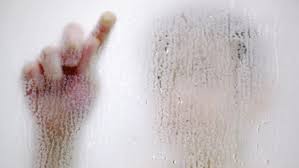
Students observed as small drops of water collected on the outside of a glass.
Which statement BEST describes why the water vapor in the air formed liquid water on the outside of the glass?
a)
The humidity outside the glass turns the vapor to liquid water.
b)
The water vapor pulls the water from inside the glass to outside the glass.
c)
The temperature of the water inside the glass is colder than the air outside the glass.
d)
The temperature of the water inside the glass is warmer than the air outside the glass.
139.
A student is creating a potting soil mix. She combines 100 grams of sand, 200 grams of soil, and 200 grams of pebbles to make her potting soil. What is the mass of the potting soil?
a)
100 grams 
b)
200 grams
c)
300 grams
d)
500 grams
140.
What is anything that has mass and takes up space?
a)
matter
b)
substance
c)
chemistry
d)
property
141.
The Law of Conservation of Mass tells us matter can't  ______________.
a)
change color
b)
change state of matter
c)
be created or destroyed
d)
change temperature
142.
Which of these scientific tools is essential for testing the Law of Conservation of matter? 
a)
Spring Scale 
b)
Metric Ruler 
c)
Balance 
d)
Graduated Cylinder 
143.
__________________________  is when gas cools and turns back into a liquid. 
a)
Concentration
b)
Coordination
c)
Condition
d)
Condensation
144.

The weight of a pencil is about

a)

5 g

b)

50 g

c)

500 g

d)

5 kg

145.

A 2 liter of Sprite weighs about

a)

2 g

b)

20 g

c)

200 g

d)

2 kg

146.
Hydrochloric acid reacts with potassium hydroxide to produce a salt, water,and heat.
a)
Chemical Change
b)
Physical Change
147.
A pellet of sodium is sliced in two
a)
Chemical change
b)
Physical Change
148.
Iron rusts.
a)
Chemical change
b)
Physical Change
149.

What energy transformation occurs as bioluminescent algae glow in the ocean?

a)

Radiant --> Chemical

b)

Thermal --> Radiant

c)

Chemical --> Radiant

d)

Thermal --> Chemical

150.

What energy transformation occurs in the chameleon as it quickly launches its tongue to catch an insect?

a)

Radiant --> Chemical

b)

Thermal --> Chemical

c)

Chemical --> Mechanical

d)

Mechanical --> Chemical

151.

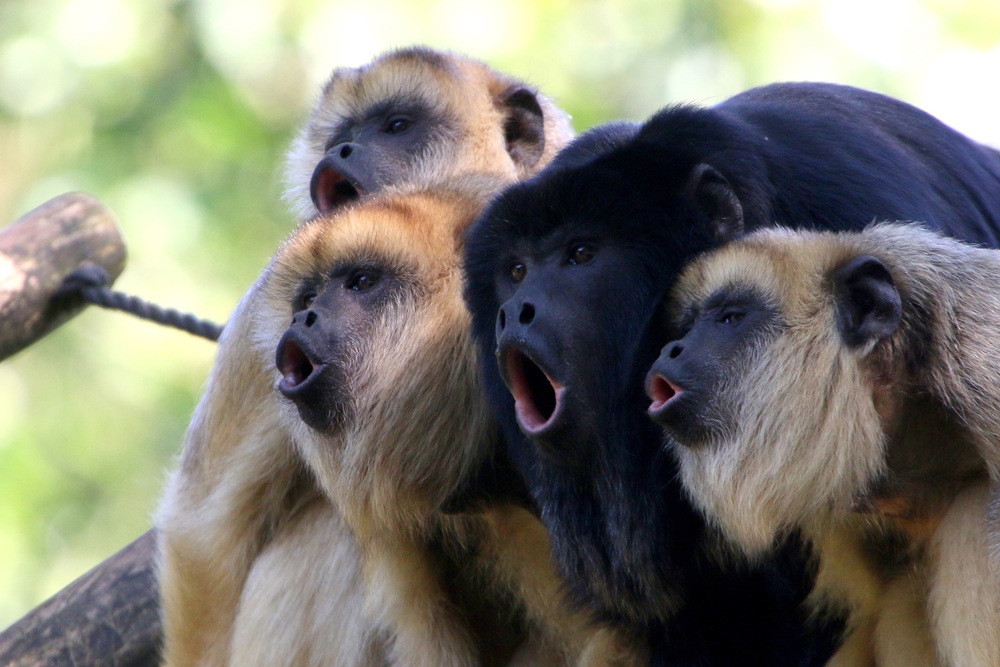
What energy transformation occurs as howler monkeys loudly call to each other in the forest?

a)

Chemical --> Mechanical --> Sound

b)

Chemical --> Sound --> Thermal

c)

Sound --> Chemical --> Radiant

d)

Mechanical --> Chemical --> Sound

152.

What energy transformation occurs as as an elephant walks through the savanna?

a)

Thermal --> Chemical + Mechanical

b)

Mechanical --> Chemical + Thermal

c)

Radiant --> Chemical + Mechanical

d)

Chemical --> Mechanical + Thermal

153.

What energy transformation occurs during photosynthesis?

a)

Chemical --> Radiant

b)

Thermal --> Chemical

c)

Radiant --> Chemical

d)

Mechanical --> Thermal

154.

What happens to chemical energy as it is used by cells to perform various functions?

a)

It is often broken into smaller pieces

b)

It is usually converted into other types of energy

c)

It is typically released as a waste product in the form of a gas

d)

It disappears as it is crushed and destroyed

155.

What do sound energy, radiant energy, and thermal energy all have in common?

a)

They're all forms of kinetic energy

b)

They're all made of similar atoms and molecules

c)

They're all made by plants during photosynthesis

d)

All of these choices