
 Worksheets
Biology: Variation and Classification
Total questions: 167
Worksheet time: 2hrs 6mins
Which type of data would student height be categorized as?
Categorical
Continuous
Discontinuous
Normal
Student eye colour could be considered what type of data
Discontinuous
Independent
Continuous
Colours
What characteristic does "survival of the fittest" need for survival of a species.
Genetic Variation
Speed
Beak shape
Biodiversity

Darwin found the following finches on the Galapagos islands. What best describes why they have different beaks?
Genetic variation has made it possible for birds to feed on different forms of food due to their beak shape.
Genetic variation has made it possible for larger eyes on the birds to see.
Genetic variation has made it possible for the birds to camouflage themselves on the island.
Genetic has made it possible for the birds to feed at different times of the day due to competition.
Success of an organism to survive is determined by which characteristic.
Dominates environment
Useful to humans
Surviving harsh conditions
Passing genes onto offspring
Which characteristic will help a crop to survive a sudden disease.
Spraying pesticides
Clone of other similar plants
Genetic Variation due to genetic engineering
Genetic modified to grow in sunlight
What is the purpose of the biological classification system?
Organize living things based on their mates.
Organize living things based on similarities.
Organize living things based on where they live.
Organize living things based on their behaviors.
Cats, dogs, humans, wales, birds and bats all have the same bones in their arms, wings and fins. How do we use this to support the "Theory of Evolution?"
Evidence they evolved from a common ancestor.
Evidence they evolved separately from each other.
Evidence they all evolved on different continents.
Evidence they all came from the same mom.
Natural selection requires which of the following?
Variations in DNA
Competition
Survival of the Fittest
High allele frequency
What is the term for a feature that allows an organism to survive better in its environemtn?
variation
adaptation
homologous structure
vestigial structure

What is the variation shown here?
height of flight
types of beaks
habitat
size
Based on the picture, what are these birds competing over?
food
water
shelter
predators
Tulips, daisies, sunflowers, apple trees, maple trees
mosses
ferns
conifers
flowering plants
Spruce, Ginkgo, Fir, and Pine trees
mosses
ferns
conifers
flowering plants
The process by which plants make food
Photosynthesis
phototropism
embryo
seeds
Mosses and ferns are seedless so they reproduce by
cones
flowers
spores
pollen

This group of plants has true roots and stems. They reproduce with spores under their fronds.
mosses
ferns
conifers
algae
Which group does NOT have roots?
mosses
ferns
conifers
flowering plants
Which two groups that reproduced by making seeds?
Flowering plants
Algae
Ferns
Conifers
What is variation in species?
The offspring is identical to their parents
The offspring and parents do not have any identical features
The offspring is slightly different with their parents
What is continuous variation?
A feature shows small distinct conditions in the individuals in a population.
A feature may be varied by only a small amount from one individual to another in a population.
What is discontinuous variation?
A feature shows small distinct conditions in the individuals in a population.
A feature may be varied by only a small amount from one individual to another in a population.
Height, body mass and foot length are the examples of ______
Continuous variation
Discontinuous variation
Blood type, gender and eye colour are the examples of ______
Continuous variation
Discontinuous variation
Which variation is affected by the envronment?
Continuous variation
Discontinuous variation
Conversely, not all of today’s living species were alive in the past. Evidence of this is also found in the form of __________.
Rocks
Bones
Fossils
Soil
An inability to adapt to environmental changes can lead to death of all members of a species. This is called _______________________.
Expatriation
Examination
Extermination
Extinction
Differences that are passed from parent to offspring
Variation
Inherited Variation
Adaptation
Competition
Group of individuals in the same species from the same area
Variation
Evolution
Species
Population
Evolution is....
Process by which individuals are better suited to their environment survive and reproduce most successfully
The existence within a species or other group of organisms of differences in form, function, or behavior, especially when hereditary
Change in an organism over time; process by which modern organisms have descended from ancient organisms
A symbiotic relationship between or among living things that fight for limited resources, such as food, space, shelter, mates, ecological status, etc.
Individuals that are better suited to their environment survive and reproduce most successfully- then they pass on their beneficial genes
Competition
Adaptation
Survival of the Fittest
Fitness
Adaptations are...
the ability of an organism to survive and reproduce in its environment
A symbiotic relationship between or among living things that fight for limited resources, such as food, space, shelter, mates, ecological status, etc.
Change in an organism over time; process by which modern organisms have descended from ancient organisms
Inherited characteristics that increases an organism's chance of survival
Process by which individuals are better suited to their environment survive and reproduce most successfully
Evolution
Variation
Natural Selection
Competition
Variation is..
Process by which individuals are better suited to their environment survive and reproduce most successfully
The existence within a species or other group of organisms of differences in form, function, or behavior, especially when hereditary
Inherited characteristics that increase an organism's chance of survival
A symbiotic relationship between or among living things that fight for limited resources, such as food, space, shelter, mates, ecological status, etc.
Select all of the cell types that have DNA that is bound in a nuclear membrane.
animal cell
plant cell
prokaryotic cell
protist cell
The scientific name for a human is Homo sapiens. Select the two levels of classification this name represents.
family
order
species
phylum
genus
Group of organisms that all share the same characteristics.
Family
Species
Order
Kingdom
A species is a group of organisms with the same ...............
colour
size
features
appearance
Organisms that belong to the same species can .......... with each other.
interact
fight
breed
When organisms of the same species breed together they will have ......................
sons and daughters
offspring
children
When organisms of the same species breed together, their offspring, sometimes, belong to an other species.
True
False
Organisms that belong to different species cannot usually breed with each other
True
False
Occasionally two organisms form different species do breed with each other. Their offspring are ................... of the two species.
hybrids
mixture
combination
The term biodiversity refers to
the variety of species on Earth
the extinction of the dinosaurs.
habitat destruction, invasive exotic species, and poaching.
the fact that 40 percent of prescription
drugs come from living things
External supporting and protective framework of an organism
Exoskeleton
Endoskeleton
animal that does not have a backbone
Vertebrate
Invertebrate
Notochord
Exoskeleton
organism, such as a frog, toad, and salamander, that spends part of its life in water and part on land
Arthropod
Echinoderm
Amphibian
Chordate
Which of the following is NOT an invertebrate?
Amphibians
Spiders
Shrimp
Jellyfish
small, flat plate that forms part of an animal’s external covering
Exoskeleton
Chordate
Scale
Notochord
Which animal is NOT cold-blooded?
a fish
a mammal
a reptile
an amphibian
Animals that have backbones.
vertebrates
invertebrates
insects
jellyfish
Cold-blooded animals body temperature changes, whereas warm-blooded animals body temperature stays constant.
True
False
Choose the animal that is a vertebrate.
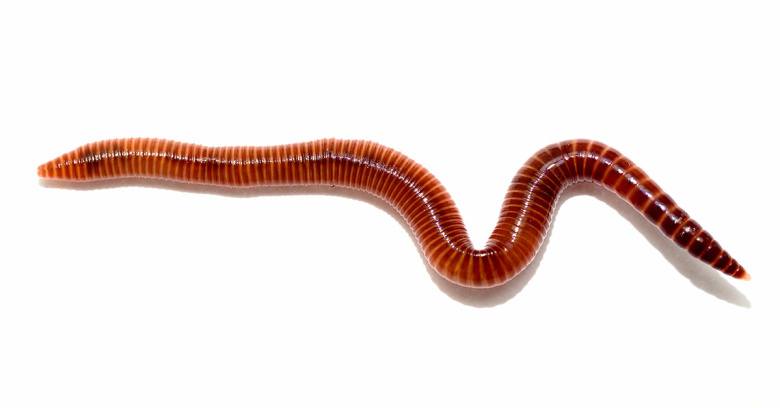
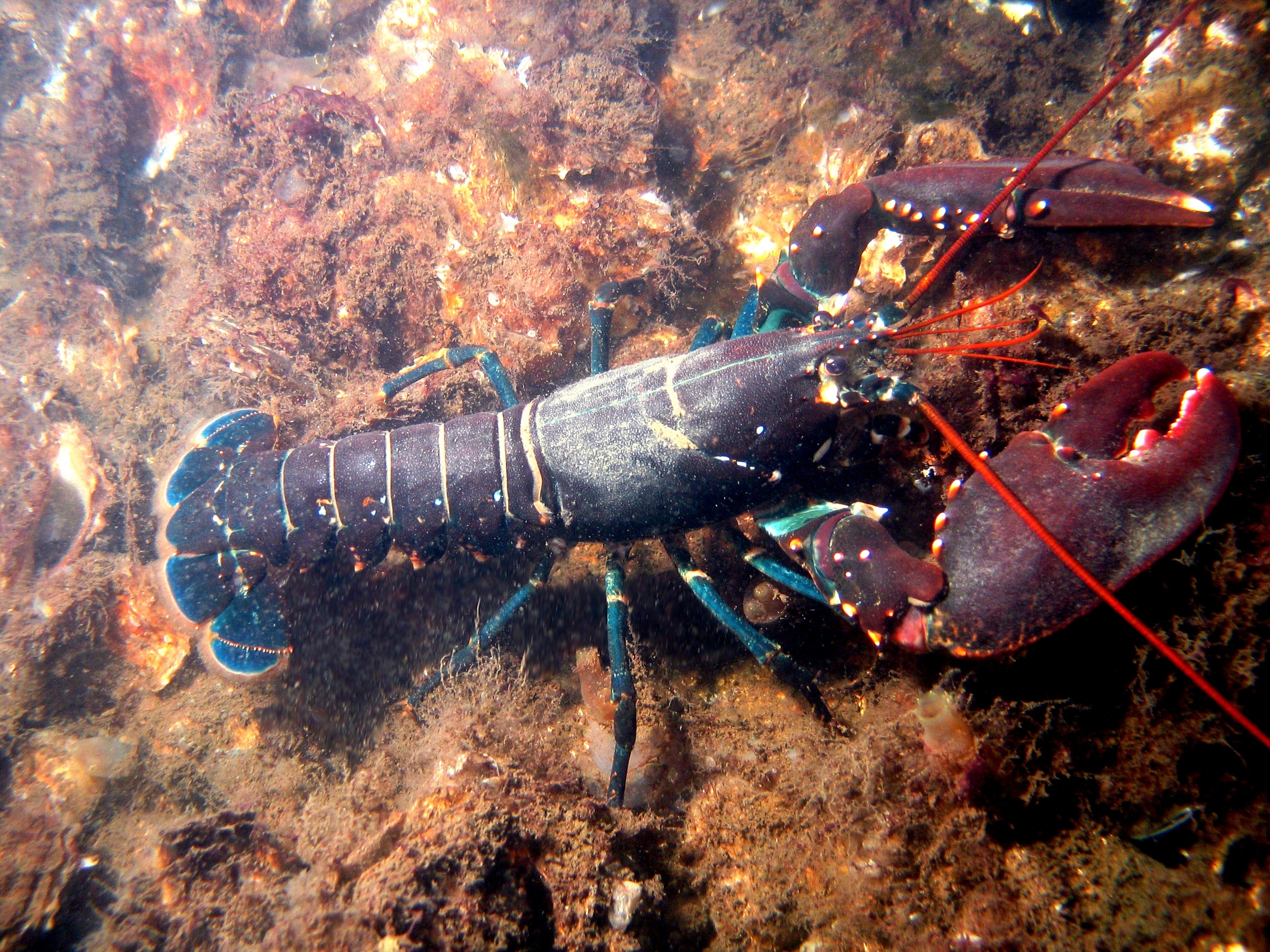
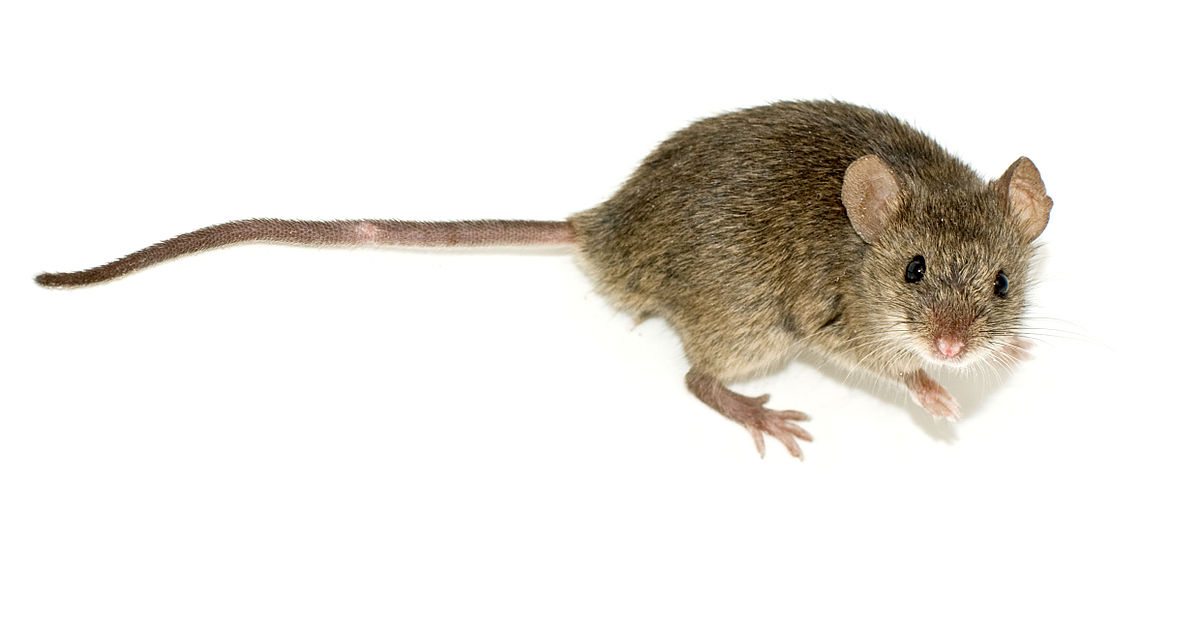
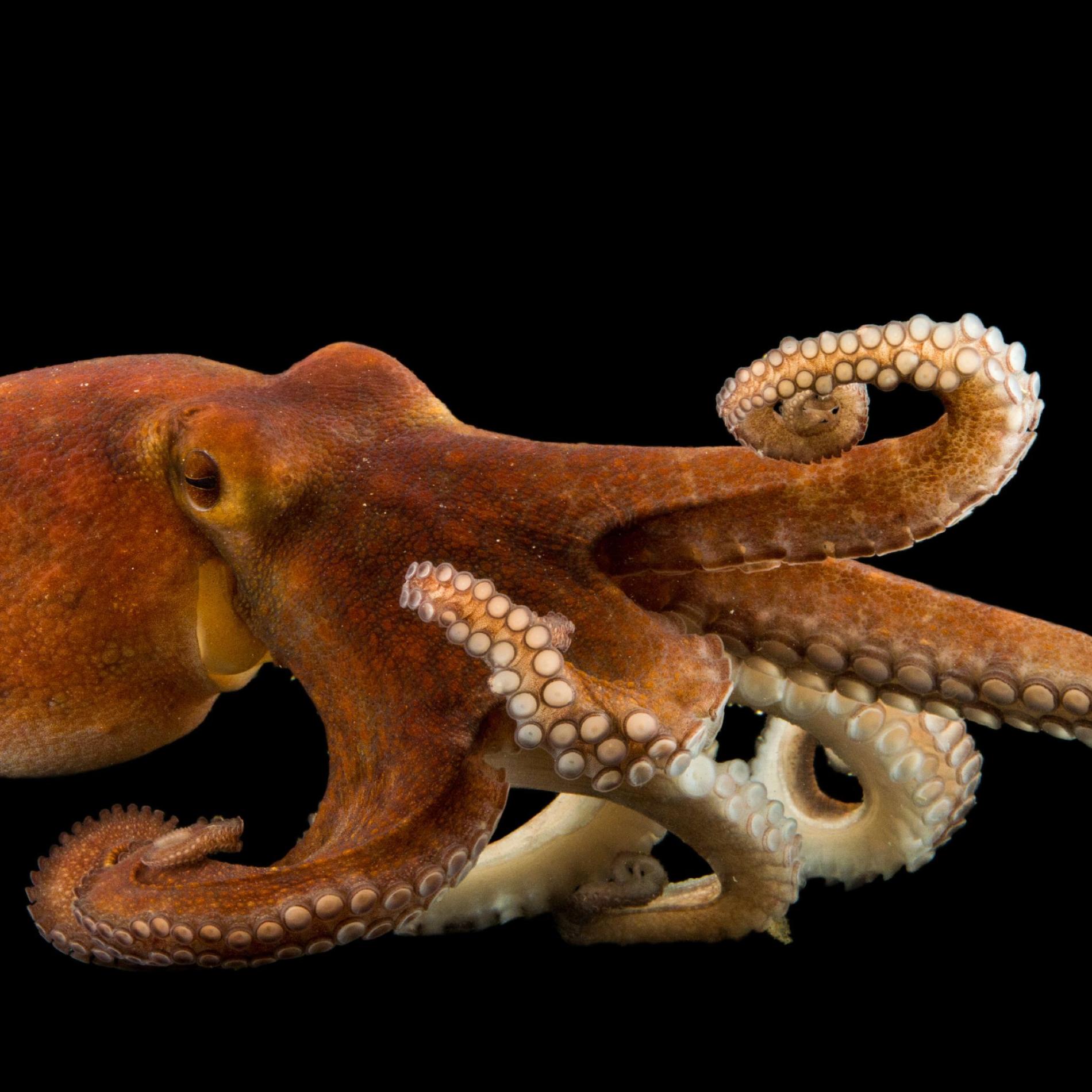
What is the similarity between salamander and clownfish ?
Both are covered with moist skin
Both are poikilothermic
Both undergo internal fertilisation
Both live on land
Which of the following animals are warm-blooded?
Tortoise, snake, frog
Snake, bat, turtle
Bat, pigeon, deer
Whale, snake, frog
An animal that has moist skin and no scales.
amphibian
mammal
reptile
fish
Which of the following vertebrates carries out external fertilisation ?
Turtle
Snake
Whale
Frog
What does invertebrate mean?
Animals without a backbone
Animals that change their form
Animals with a backbone
Animals that lay eggs
An animal has fur and feeds milk to its young. How should this animal be classified?
As an invertebrate
As an amphibian
As a mammal
As a reptile
How do scientists classify humans?
As vertebrates and as amphibians
As invertebrates and as mammals
As vertebrates and as mammals
As vascular and as mammals

A student develops a model for grouping animals that she observes in a park.
What are MOST LIKELY the names of the animal groups?
fish and reptiles
reptiles and birds
fish and mammals
reptiles and amphibians

A student draws three animals.
Which characteristics can the student use to classify the animals?
no backbone, live in water, lay eggs
backbone, live on land, breathe with lungs
no backbone, scales on skin, breathe with gills
backbone, smooth skin, breathe with gills and lungs

A student sorts animals into groups. He draws the animals in one group.
Which animal should the student remove from this group?
fox
bear
hawk
mouse
Which features can a scientist use to identify an amphibian? Select 3
has a backbone
has no backbone
has smooth, moist skin
has scales or plates on skin
breathes first with gills and then with lungs
A student finds the following animals in his garden: frog, snake, snail, and lizard.
He classifies the snail in one group and the other animals in a second group.
Which are the student's groups?
amphibians, reptiles
invertebrates, reptiles
invertebrates, vertebrates
animals with gills, animals with lungs
Animal 1: backbone/feathers/warm-blooded
Animal 2: backbone/scales/gills/cold-blooded
Animal 3: cold-blooded
Animal 4: backbone/hair
In which animal group are humans classified?
birds
amphibians
mammals
reptiles
Which one of these organisms is a reptile?
Hawk
Grasshopper
Mushroom
Crocodile

Reptiles
Invertebrates
Amphibians
Mammals
Mammals are one of the classifications. Mammals are known for:
Having feathers.
Having fur and feeding their young milk.
Laying eggs.
Having no spine.
Fish are known for:
Living entirely underwater.
Having fur.
Having feathers.
Feeding their young with milk.
An animal that's body temperature is controlled by the outside temperature is called:
cold blooded
warm blooded
An animal that can control its own body temperature is called:
cold blooded
warm blooded
Which of the following animals are cold-blooded?
Tortoise, snake, frog
Snake, bat, turtle
Bat, pigeon, deer
Whale, snake, frog
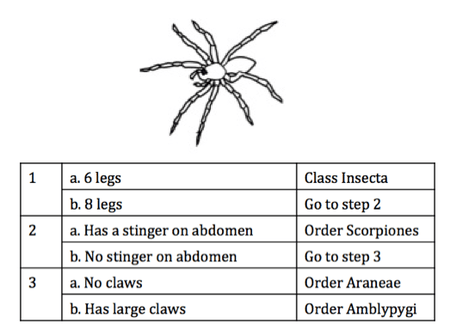

arachnids and insects?
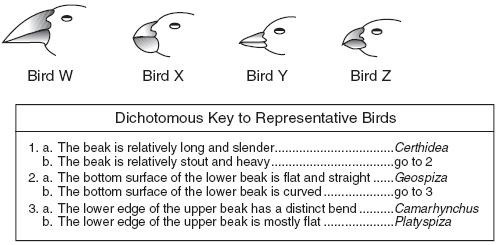
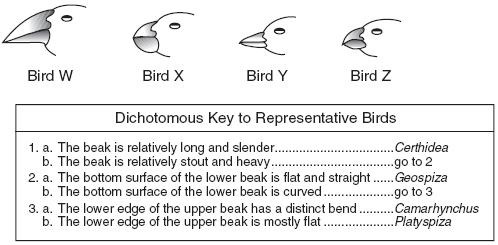




arachnids and insects?

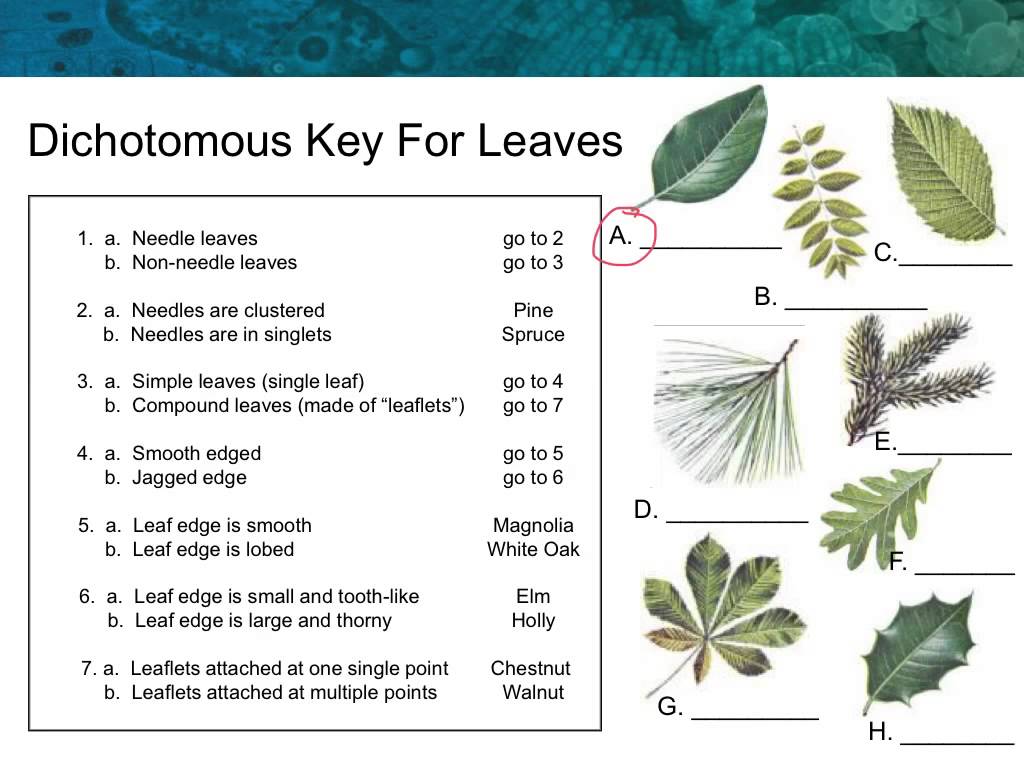
Which leaf is shown in the drawing?
Magnolia
Redbud
Sweetgum
None of the above

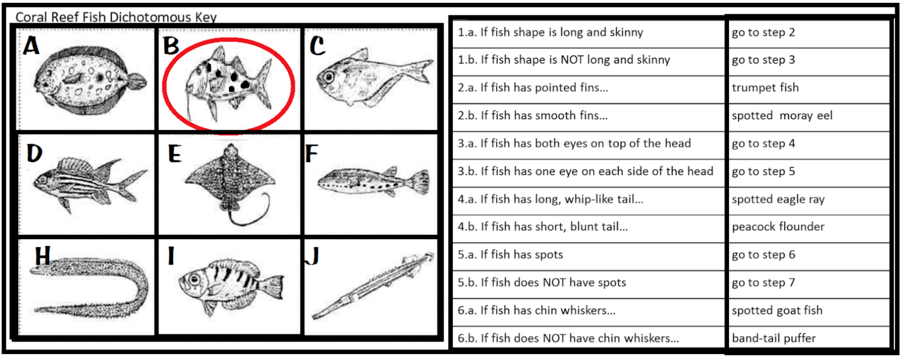
What type of characteristics are used to make a dichotomous key?
Characteristics that make an organism different from any other organism. (type of beaks, claws, root systems)
Characteristics like age of an organism
Where the organism lives
How many organisms live in the environment

What are chromosomes?
Long strands of DNA that contain lots of genes.
Different versions of a gene.
The basic unit of heredity; controls a specific trait.
A characteristic passed from parent to offspring
The differences that occur from a mixture of genes

What is a gene?
Long strands of DNA that contain lots of genes.
Different versions of a gene.
The basic unit of heredity; controls a specific trait.
A characteristic passed from parent to offspring
The differences that occur from a mixture of genes

What is an inherited trait?
Long strands of DNA that contain lots of genes.
Different versions of a gene.
The basic unit of heredity; controls a specific trait.
A characteristic passed from parent to offspring
The differences that occur from a mixture of genes

What is genetic variation?
Long strands of DNA that contain lots of genes.
Different versions of a gene.
The basic unit of heredity; controls a specific trait.
A characteristic passed from parent to offspring
The differences that occur from a mixture of genes

The offspring of sexually reproducing organisms have genes that are _____________ from that of their parents.
different
same
dominant
recessive

In sexually reproducing organisms, each parent contributes _____________ of the genes acquired by the offspring.
an eighth
a quarter
a half
three quarters

When someone says that a daughter looks just like her mother, is it possible that the daughter is an exact copy of her mother?
No, because a daughter gets all of her alleles from her father.
Yes, because a daughter gets alleles from her mother.
No, because a daughter receives half of her genetic make up from her father.
Yes, because humans can practice asexual reproduction under certain circumstances.
Why does sexual reproduction produce diverse offspring?
The cells of the offspring lack DNA.
The offspring all grow at different rates.
The offspring have a unique combination of DNA from its parents.
The offspring are spores.
___________ reproduction has the advantage of increasing genetic variation.
Sexual
Asexual
Fission
Budding
Selective breeding is...
a process to create an organism with desired traits from parents with those desired traits
natural method of producing offspring with desired traits
creating a new species
making organisms reproduce during times of stress
An example of selective breeding is
a dog breeder mating 2 dogs to make more dogs
a farmer grows bees to pollinate the plants on his farm
a person pollinates 2 white rose plants to only create white roses
One problem with selective breeding is
creating a new species
gene variety is lost
new food sources
Problems with selective breeding include
Better animals
Increased meat production
Animals can have bad health problems
more diversity
Which is NOT a result of selective breeding?
Large seedless watermelons that consumer demand
Bright oranges that are all about the same size
An insect that matches the color of the environment
A dog that has been bred to have short hair
The purpose of selective breeding is to
get bigger animals
get smaller animals
create animals with desirable traits
create animals with bad traits

When selective breeding food crops what might a farmer select for? (Select all that apply.)
The plant the produced the most grain
The plant the produced the largest sized grain
The plant that was the most disease resistant
The plant that was the smallest
The smelliest plant
Which of these is the first step in selective breeding flowers.
Repeat the process only with the offspring with the desired traits
watch the seeds grow
Choose plants that have the desired trait to pollinate
chose which trait is desirable
Which of these is the second step in selective breeding flowers.
Choose which trait is desirable
Watch the seeds grow
Choose plants that have the desired trait to pollinate
Repeat the process only with the offspring with the desired traits.
Which of these is the third step in selective breeding flowers.
Choose which trait is desirable
Watch the seeds grow
Choose plants that have the desired trait to pollinate
Repeat the process only with the offspring with the desired traits.
A mutation
is always bad for an organism
is always good for an organism
is a change in an organism's DNA
never changes an organism
"Survival of the fittest" describes which theory
Natural selection
Selective breeding

Natural selection is where ___________ decides which traits should be passed on.
nature
a human
traits
evolution

How can farmers best use selective breeding to increase apple production?
By limiting the number of trees growing so they can have more space.
By choosing trees that are the largest in size.
By increasing the amount of water and fertilizer the trees receive.
By choosing trees that consistently have the most apples.

Problems with animals that are selectively bred include:
Being more disease resistant
Producing more meat
Being more likely to suffer from genetic disease
Being more genetically diverse
What is a goal of selective breeding?
I. To increase the value of species to humans
II. To produce species that resist disease
III. To produce species with specific traits
I and II
II and III
I and III
I, II, and III
How do you "win" at natural selection?
survive
go extinct
survive & reproduce
What word describes a trait that helps an organism survive in its environment?
natural selection
mutation
camouflage
adaptation
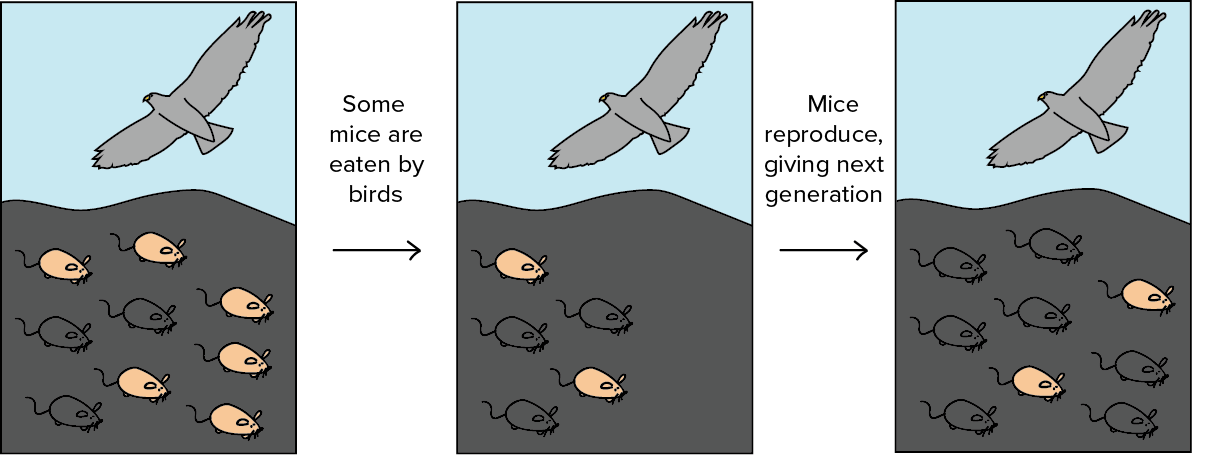
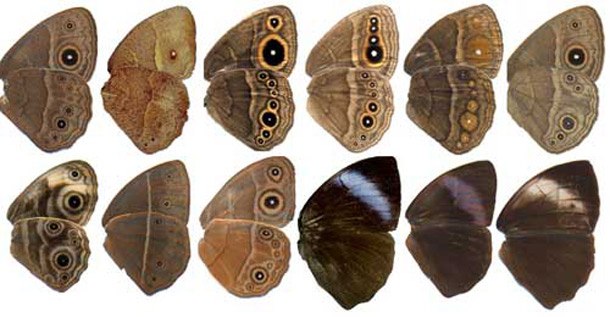
Natural selection results in change in a population's _____________ traits over time.
inherited
acquired
Individuals undergo evolution.
True
False

Charles Darwin observed that finches of different species on the Galápagos Islands have many similar physical characteristics, this supports the hypothesis that these finches
are twins
acquired traits through use and disuse.
all eat the same type of food.
descended from a common ancestor.
Would Natural Selection occur?
A lizard is born with a mutated tail that allows it to fall off when grabbed by a predator. This allows it to survive longer and pass the trait on to its offspring.
Yes
No
Would Natural Selection occur?
Over many generations, birds' beaks chance as a result in a change to their primary food source.
Yes
No
Would Natural Selection likely occur?
A bird living in a forest ecosystem is born with bright purple and red feathers.
Yes
No
Would Natural Selection likely occur?
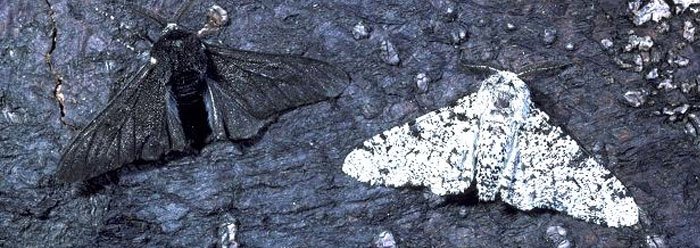
Pepper moths change from white to black because of an increased amount of soot on trees?
Yes
No
When the environment changes more quickly than a species can adapt, the species may become:
Cold
Overdeveloped
Overpopulated
Extinct
What theory proposes that organisms with traits better suited to their environment are more likely to survive and reproduce?
Acquired Characteristics
Embryology
Survival of the Smartest
Natural Selection
A fox with thicker fur than average would have a survival advantage over other foxes if:
There is more competition for food in the fox population.
The air temperature significantly decreases in winter.
A drought occurs, limiting the amount of water available.
A new disease appears that infects the foxes.
The fur of the snowshoe rabbit changes to a lighter color in the winter. This allows the rabbit to blend in with its surroundings. This change is an example of:
Adaptation
Extinction
Competition
Succession
Due to genetic inheritance, members of a species can be slightly different from another in their traits. This is known as...
Variation
Overproduction
Competition
Evolution
What is evolution?
A gradual change in a species over a very long period time.
One animal turning into a completely different animal.
Change in a habitat over time.
A trait that enhances survival.
Animals may fight, make threatening sounds,and act aggressively toward members of the same species. These behaviors usually occur as the result of:
Adaptation
Evolution
Competition
Variation
The finches on the Galapagos island were similar in form except for variations of their beaks. Darwin observed that these variations were useful for:
Attracting a mate.
Gathering food.
Defending territory.
Building nests.
The movements of individuals into or out of a population provides a source of _______ to a population.
Mutation
Camoflage
Variation
Punctuated Equilibrium
Organisms producing more offspring than are likely to survive in order to help ensure that at least some survive until adulthood is known as:
Variation
Overproduction
Competition
Evolution

