
 Worksheets
NYSSLS Earth & Space Science Midterm Review
Total questions: 169
Worksheet time: 3hrs 1mins
Big Bang theory is supported by evidence showing that most galaxies are moving away from Earth. What is this observation called?
Blueshift
Parallax
Redshift
Reflection
When astronomers observe the Cosmic Microwave Background (CMB), what do they conclude about the early universe?
It formed in many separate regions
It was cold and mostly empty
It was hot, dense, and uniform
It was filled with heavy elements
According to Hubble’s Law, galaxies that are farther from Earth are moving…
Slower than closer galaxies
At the same speed
Faster than closer galaxies
Toward Earth
What primarily determines how long a star will live and how it will evolve?
Color
Density
Mass
Size of its planets
High-mass stars have shorter lifespans because they…
Rotate too quickly
Produce less energy
Burn fuel faster at higher temperatures
Do not undergo fusion
Which process powers stars like the Sun by combining lighter elements into heavier ones?
Fission
Fusion
Radioactive decay
Combustion
Why does fusion stop when a high-mass star begins forming iron in its core?
Iron blocks gravity
Iron is unstable
Iron fusion requires energy instead of releasing it
Iron instantly explodes
What usually remains after a low-mass star like the Sun finishes its life cycle?
Black hole
Supernova
White dwarf
Neutron star
Where does nuclear fusion occur in the Sun?
Photosphere
Core
Convective zone
Corona
Why are sunspots darker than their surroundings?
They contain dust
They are cooler than surrounding regions
They block sunlight
They reflect less light
What causes absorption lines to appear in a star’s spectrum?
Elements emitting extra light
Light bending in space
Elements absorbing specific wavelengths
Background radiation interference
A galaxy moving away from Earth will show spectral lines shifted toward…
Blue wavelengths
Green wavelengths
Red wavelengths
Ultraviolet wavelengths
Infrared telescopes are useful because they can…
Travel faster through space
See through dust clouds
Detect only visible stars
Block microwave radiation
Why do astronomers place telescopes in space instead of only on Earth’s surface?
To avoid gravity
To reduce maintenance costs
Because Earth’s atmosphere blocks many wavelengths
Because telescopes cannot work on land
Which observation best supports that the universe is expanding?
Changing star colors
Increasing galaxy brightness
Redshift patterns in distant galaxies
Irregular galaxy shapes
Stars on the left side of the H–R diagram appear blue. What does this color indicate about their temperature?
They are the coolest type of stars
They are medium-temperature stars
They are the hottest type of stars
Their temperature constantly changes
A star that is very bright but relatively cool is most likely classified as a:
White dwarf
Main sequence star
Red giant
Neutron star
Why do most stars appear along the main sequence on the H–R diagram?
They are all the same age
They share a relationship between temperature and luminosity
They are located the same distance from Earth
They are all about to explode
Which statement best explains why blue main-sequence stars have short lifespans?
They rotate too slowly
They reflect most of their light
They burn fuel very quickly due to high mass and temperature
They do not undergo nuclear fusion
Why are space telescopes needed to study X-rays and ultraviolet light from space?
Ground telescopes cannot detect any light at all
The Moon blocks most high-energy light
Earth’s atmosphere absorbs many high-energy wavelengths
Stars do not emit these wavelengths
In nuclear fusion, energy is released when:
Heavy elements split into smaller ones
Light elements combine to form heavier ones
Atoms freeze into solids
Electrons collide with planets
Why is the breakeven point important in fusion research?
It shows when fusion becomes self-sustaining and produces more energy than it consumes
It marks the beginning of the experiment
Which condition is necessary for nuclear fusion to occur?
Very low temperatures and pressures
Rapid spinning of the star
Extremely high temperatures and pressures
The presence of liquid water
What happens to gravitational force when two objects move closer together?
It stays the same
It becomes weaker
It increases significantly
It disappears
Why do planets near the Sun orbit faster than planets farther away?
They have less mass
The Sun pulls on them more strongly
Their orbits are circular
Their atmospheres slow them down
According to Kepler’s First Law, planetary orbits are:
Perfect circles
Spirals
Elliptical, with the Sun at one focus
Random paths
Kepler’s Second Law states that a planet moves fastest when it is:
Farthest from the Sun
Closest to the Sun
Passing another planet
Crossing the equator
What does Kepler’s Third Law describe?
Why planets rotate
The relationship between orbital distance and orbital period
The tilt of a planet’s axis
Why eclipses occur
A satellite in a low-Earth orbit travels faster than one farther away because:
Low-orbit satellites have more fuel
They are pulled by less gravity
Stronger gravity requires higher orbital speed
Their orbits are longer
Which statement best describes white dwarfs?
Cool and bright because they are huge
Hot but dim because they are very small
Cold and dark with no energy
Bright because they are newly formed
The Moon formed after Earth differentiated into layers because its rocks closely match Earth’s mantle material. Which hypothesis best explains this?
The capture hypothesis
The giant impact hypothesis
The accretion hypothesis
The tidal stripping hypothesis
The Moon reflects sunlight rather than producing its own. What causes the different shapes we see during the month?
Changes in the Sun’s brightness
Portions of the Moon’s lit side becoming visible as it orbits Earth
Earth blocking sunlight throughout the month
The Moon rotating faster at some points in its orbit
A full Moon occurs when:
The Moon is between Earth and the Sun
Earth is between the Sun and the Moon
The Moon is at right angles to Earth and the Sun
The Moon is positioned above Earth’s North Pole
Why do eclipses not occur every month even though the Moon orbits Earth every 29.5 days?
The Moon rotates too quickly
The Moon’s orbit is tilted relative to Earth’s orbit
Earth revolves too slowly
The Sun’s gravity prevents alignment
Which event can only occur during the new moon phase?
Lunar eclipse
Solar eclipse
Spring tides
Neap tides
A lunar eclipse happens when:
The Moon moves into Earth’s shadow
The Sun moves between Earth and the Moon
The Moon blocks sunlight from reaching Earth
The Moon moves closer to the Sun
What primarily causes Earth’s ocean tides?
Winds moving surface water
Differences in seawater density
Gravitational pull of the Moon
Energy from ocean currents
Why are there usually two high tides each day at most coastal locations?
Water flows faster at night
The Moon rotates around Earth twice daily
Earth’s rotation and gravitational bulges create two tide areas
The Sun blocks one tide
Spring tides occur when:
The Sun and Moon pull at right angles
The gravitational pull of the Sun is canceled out
Earth is closest to the Moon
The Sun, Moon, and Earth are aligned
Neap tides occur when:
The Moon is at full phase
The Sun and Moon pull at right angles
Earth is at perihelion
The Moon is closest to Earth
What is the main cause of seasons on Earth?
Changing Earth–Sun distance
Earth’s axial tilt affecting Sun angle and daylight length
Changes in Earth’s spin speed
Shifts in solar energy output
When the Northern Hemisphere is tilted toward the Sun:
It receives less direct sunlight and shorter days
It experiences winter
It receives more direct sunlight and longer days
The Southern Hemisphere has summer
If Earth’s axial tilt increased from 23.5∘ to 28∘ , what would most likely happen?
Seasons would weaken
Seasons would disappear
Summers and winters would become more extreme
All places would receive equal daylight
If Earth’s tilt decreased toward 0∘ , which outcome is most accurate?
Polar regions would become warm year-round
Seasonal differences would weaken significantly
Earth would rotate faster
The Sun would always be overhead everywhere
Which observation best supports that the Moon’s orbit is elliptical?
The Moon changes color during the month
The Moon sometimes rises at midnight
The Moon’s distance from Earth varies over time
The Moon has craters
Alfred Wegener proposed that Earth’s continents were once connected as one large landmass called what?
Gondwana
Pangaea
Eurasia
Laurasia
Fossils of Mesosaurus found on both Africa and South America supported continental drift because the reptile could not have:
Survived in cold ocean water
Walked across land bridges
Swum across an ocean
Lived in multiple climates
Which observation best supports the idea that continents once fit together?
Identical ocean currents
Matching climate zones
Similar languages
Coastlines fitting like puzzle pieces
Why was Wegener’s hypothesis initially rejected by many scientists?
He had no fossil evidence
He could not identify a mechanism that moved continents
He believed continents moved only during earthquakes
He ignored rock layer data
At an oceanic-continental convergent boundary, what usually happens?
Continental crust subducts beneath oceanic crust
Plates move sideways without subducting
Oceanic crust subducts and volcanoes form on land
New crust forms at the boundary
What major feature forms when two continental plates collide?
Deep-sea trench
Rift valley
Folded mountain range
Island arc
At a mid-ocean ridge, which pattern do scientists observe?
The oldest crust is at the ridge
Crust is destroyed at the ridge
The youngest crust is at the ridge and ages outward
Crust thickness stays the same everywhere
The mirrored magnetic stripes on both sides of mid-ocean ridges show that:
Earth’s magnetic field never changes
Continents do not move
Seafloor spreading occurs symmetrically
Volcanoes only occur at ridges
Which statement best explains Iceland’s unique tectonic setting?
It sits entirely on a transform fault
It is where two continental plates collide
It forms where a divergent boundary crosses a hotspot
It is located on the oldest crust
Hotspot chains such as Hawaii demonstrate plate motion because:
The youngest volcano is found farthest from the hotspot
The oldest volcano is directly above the hotspot
All volcanoes form at subduction zones only
Volcano ages increase with distance from the hotspot
Why do glacial scratches found in Africa support continental drift?
Africa has always had a cold climate
They show glaciers once existed where climates are now warm
Glaciers form only near plate boundaries
Scratches can form only underwater
What type of igneous rock makes up most of the oceanic crust at mid-ocean ridges?
Granite
Obsidian
Basalt
Rhyolite
Which statement best describes the density of typical oceanic crust compared to continental crust?
Oceanic crust is less dense than continental
Both have the same density
Oceanic crust is more dense than continental
Density changes only during earthquakes
Approximately how deep is the boundary between Earth’s mantle and outer core?
100 km
700 km
2900 km
6400 km
What general relationship exists between a planet’s distance from the Sun and its period of revolution?
Closer planets take longer to orbit
Distance does not affect orbital period
More distant planets take longer to orbit
All planets orbit in the same amount of time
Radiometric dating is based on the predictable decay of unstable atoms. What is the term for the time it takes for half of a radioactive sample to decay?
Absolute age
Half-life
Decay constant
Isotope ratio
Radioactive dating is reliable because radioactive isotopes decay…
faster in hot environments
slower under high pressure
at a constant and measurable rate
only in sedimentary rocks
Which isotope is most useful for dating very old volcanic rocks that are millions or billions of years old?
Carbon-14
Uranium-235
Potassium-40
Nitrogen-14
Why is Carbon-14 NOT useful for dating rocks that formed billions of years ago?
It only forms in volcanoes
It has too short of a half-life
It does not decay at all
It only decays in space
A rock sample contains 25 percent of its original parent isotope. How many half-lives have passed?
1
2
3
4
Earth is approximately how old according to radiometric dating?
600 million years old
1.2 billion years old
4.6 billion years old
10 billion years old
Large asteroid impacts produce circular craters because…
the asteroid always hits straight down
Earth reshapes the crater afterward
energy spreads outward in all directions
craters form only in soft rock
Which observation best links an impact crater to a mass extinction event?
The crater is located near the equator
A sudden loss of species occurs at the same age as the crater
The crater contains volcanic ash
Dinosaurs lived nearby
Why do scientists need multiple lines of evidence to reconstruct Earth’s history?
Much of the rock record has been destroyed or altered
All fossils decay too quickly
Radiometric dating is unreliable
Crater evidence does not exist today
Why are the Moon and Mars especially useful for studying early solar system history?
They formed earlier than Earth
They have stronger gravity
They lack erosion and plate tectonics
They contain more fossils
Surfaces on the Moon that have many craters compared with nearby areas are…
younger
older
recently resurfaced
created by volcanoes
Why do Moon rocks help scientists understand early Earth?
Moon rocks are made from completely different materials
The Moon has preserved ancient rocks that Earth destroyed
Moon rocks cannot be dated
The Moon formed billions of years after Earth
Which statement best explains why impact evidence is powerful when reconstructing Earth’s past?
Impacts leave physical, chemical, and fossil clues
Impacts only affect small regions
Impact craters form every year
Impacts erase fossil records
Why is there relatively little visible meteorite crater evidence on Earth?
Earth has never experienced major impacts
Impacts only occur in oceans
Weathering, erosion, and plate tectonics remove craters
Craters form only on other planets
Iron meteorites come from the cores of early planetary bodies. What does this suggest about their composition?
Mostly silicon and oxygen
Mostly water and ice
Mostly iron and nickel
Mostly carbon and hydrogen
Earth formed in the inner solar system where only dense materials condensed. What was the major result of this environment?
Earth formed mostly from ice and gas
Earth developed a large metallic core and rocky crust
Earth became similar to Jupiter in composition
Earth formed without any metals
Which property increases with depth inside Earth and helps explain changes in material behavior?
Volume
Density
Reflectivity
Magnetism
Why is Earth’s inner core solid even though it is hotter than the outer core?
It contains different elements
It loses heat faster
Extreme pressure prevents melting
It receives less radioactive heat
What process in the outer core is most responsible for generating Earth’s magnetic field?
Radiation from the mantle
Seismic wave reflection
Circulation of molten iron and nickel
Rotation of the solid inner core
Why can tectonic plates move instead of staying fixed?
They float on liquid magma
Gravity pulls them toward the equator
They slide over the plastic-like asthenosphere
Winds in the atmosphere push them
How do convection currents in the mantle contribute to plate motion?
They increase plate density
They cool the lithosphere rapidly
They drag plates as hot material rises and cool material sinks
They create ocean tides
Which surface feature is directly linked to convection-driven plate motion?
River deltas
Seafloor spreading ridges
Sand dunes
Glacial grooves
What makes the rock cycle different from a simple, one-way sequence?
Rocks only change at boundaries
Rocks always change in the same order
Rocks can change along many different pathways
Sedimentary rocks never change type
A rock breaks apart at the surface and fragments are carried downstream. Which processes occurred?
Melting then crystallization
Compaction then cementation
Weathering then erosion
Metamorphism then foliation
Which condition produces metamorphic rock instead of igneous rock?
Rapid cooling at the surface
Burial and melting
Deposition and cementation
Heat and pressure without melting
What is the name of the rigid outer layer made of crust plus the upper mantle?
Asthenosphere
Lithosphere
Mesosphere
Florian discovers a rock that is broken into pieces. Each piece has several bands. Which type of rock does Florian predict these pieces will change into when subjected to heat and pressure?
igneous
magma
sedimentary
metamorphic
What happens when magma cools during the rock cycle?
Igneous rock is formed.
Metamorphic rock is melted.
Sediments form sedimentary rock.
Metamorphic rock forms sediments.

This image shows a model of the rock cycle. At point R, rocks melt underground to form magma. Which is another process that contributes to the formation of rock at point R?
compacting of sediments on the mountain
cooling as the lava runs down the mountain
weathering of the mountain from the environment
eroding of different rocks at the base of the mountain
What is a fault?
a place on Earth where earthquakes cannot occur
a fracture in Earth where movement has occurred
the place on Earth’s surface where structures move during an earthquake
another name for an earthquake
What is an earthquake’s epicenter?
the place on the surface directly above the focus
a spot halfway between the focus and the surface
the spot below the focus
any spot along the nearest fault
A seismogram shows that P waves travel
at the same speed as surface waves
more slowly than S waves.
at the same speed as S waves
faster than S waves.
An earthquake’s magnitude is a measure of the
size of seismic waves it produces.
amount of shaking it produces.
size of surface waves it produces.
damage it causes.
A tsunami can occur when there is vertical movement at a fault under
a mountain range.
the San Andreas Fault.
the ocean floor.
a small inland lake.
Earth’s thin, rocky outer layer is its
core
mantle
crust
outer core
Earth’s inner core is solid because of
the composition of its rock.
its great diameter.
extreme cold.
immense pressure.
The continental crust is made largely of
gneiss
granite
basalt
limestone
Which wave can travel through solids only?
P - Primary
S - Secondary
Surface

How do scientists know that the outer core is a liquid?
P waves do not travel through the outer core but S waves do.
S waves do not travel through the outer core but P waves do.
P waves and S waves do not travel through the outer core.
P waves and S waves travel through the outer core.

If something that makes light is moving AWAY from you, it spreads the wavelengths of light out. This application of the Doppler effect is known as ___.
blue shift
green shift
red shift
black shift

Galaxies that are REDSHIFTED are:
actually BLUE
really NEAR earth
invisible or not visible
moving AWAY from us.

Most distant galaxies show a RED SHIFT. This is considered EVIDENCE that the universe is ___.
getting cooler
expanding
condensing into a small point
swirling around

When hydrogen is "fused" together on the Sun, what new element is created?
Helium
Carbon Dioxide
Oxygen
Light
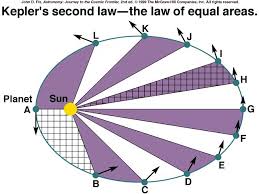


The force that causes objects with mass to attract to one another:
Weight
Gravity
Mass
Magnetism

The gravitational attraction between two objects would increase if both masses are –
increased, and the distance between them is increased.
increased, and the distance between them is decreased.
decreased, and the distance between them is decreased.
decreased, and the distance between them is increased.
Which Planet is a Jovian Planet?
Saturn
Earth
Mars
Venus
Mercury, Venus, Earth, and Mars are known as what type of planets?
Terrestrial Planets
Jovian Planets
Alien
Space
Craters on the moon were mostly formed by
earthquakes
volcanic action inside the moon
meteorite impact on the moon
people shooting at the moon
The revolution of the moon orbiting the Earth is ____________ days.
27.3
31
7
14

4. Identify the phase of the moon that is shown
new moon
third quarter
waxing crescent
full moon

Astral eclipse
Lunar eclipse
Solar eclipse
medial eclipse

Solar eclipse
Lunar eclipse
Transit eclipse
Earth eclipse
Determine the tide that each region would be experiencing:
High tide
Low tide
Determine the tide that each region would be experiencing:
High tide
Low tide
Most coastlines around the world experience (a) high tides a day on most days.


Which of the following best describes the tilt of the earth during the spring and fall equinoxes?
The earth is tilted away from the sun (Northern hemisphere)
The earth is tilted neither toward or away from the sun (tilt is side to side)
The earth is tilted toward the sun (Northern hemisphere)
The earth is not tilted during spring and fall


Which diagram represents the sun in summer (direct heat energy)?
Diagram A
Diagram B
neither diagram
both diagrams
Which diagram best represents the tilt of Earth's axis that causes the Northern Hemisphere seasons shown? (Diagrams are not drawn to scale.)


This type of Boundary results when plates separate
Divergent
Convergent
Transform

This types of boundary results when plates slide past each other
Transform
Divergent
Convergent
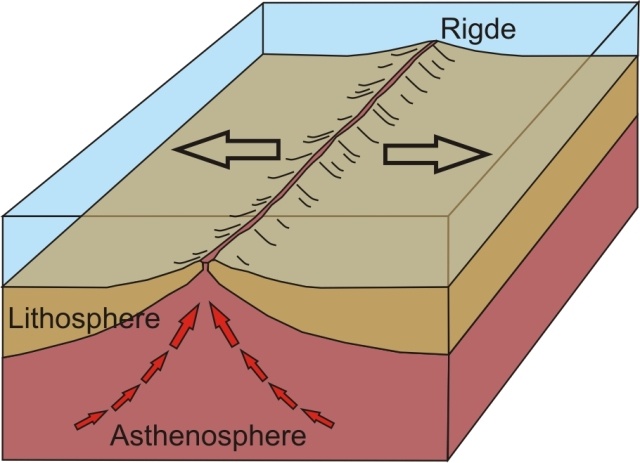
Mid Ocean ridges are formed by ___________________________ plate boundaries
Convergent
Divergent
Transform

Type of plate boundary and crustal feature?
divergent, rift valley
convergent, ocean trench and volcanic mountains
transform, fault lines
convergent, trenches and volcanic islands

What two crustal features occur near every subduction zone?
Volcanoes and Trenches
Rift Valleys and Mid Ocean Ridges
Volcanoes and Rift Valleys
Mid Ocean Ridges and Trenches


How many grams of Carbon-14 will remain after 17,100 years?
32 g
16 g
8 g
4 g

Which disintigration product is represented on the graph?
206Pb
87Sr
40Ar
14N

How many half-lives have passed if 12.5% 14C remains?
1 Half-life
2 Half-lives
3 Half-lives
4 Half-lives

What percentage of Rubidium-87 will remain after 4 half-lives?
25%
12.5%
6.25%
3.125%

Based on the graph, we could conclude:
The larger the impactor, the ___________ the crater
larger
smaller
more round
messier
The moon's gravity is much stronger than Earth's gravity.
True
False

If an object is less dense it will.....
sink
float
Which layer is the thinnest?
crust
mantle
outer core
inner core

Base your answer on the diagram of Earth shown. Letters B, C, and D represent layers of Earth. Letter Q represents a location on Earth's surface. Which letter best represents Earth's mantle?
Q
B
D
C
The interior of Earth between a depth of 5200 kilometers and 6300 kilometers is inferred to be composed mostly of
silicon and iron
silicon and oxygen
iron and lead
iron and nickel

The diagram shows the cutaway views of the inferred interior layers of the planets Mercury and Venus.
What is the reason for the development of the interior layers of these two planets?
Impact events added the mantle rock above the cores.
Heat from the Sun melted the surface rocks to form the mantles above the cores.
Gravity separated the cores and mantles due to their density differences.
Rapid heat loss caused the cores to solidify before the mantles
As depth within the Earth's interior increases, the
density, temperature, and pressure decrease
density, temperature, and pressure increase
density and temperature decrease, but pressure increases
density decreases, but temperature and pressure increase
Where do most earthquakes occur?
At the Earth's poles
In the middle of continents
Along tectonic plate boundaries
In the ocean depths
What is the tool used to measure earthquakes?
Seismograph
Barometer
Thermometer
Anemometer
What are Shadow zones?
Areas where seismic waves are not detected
Regions with high seismic activity
Zones with constant daylight
Areas with frequent volcanic eruptions
Where will the most damage in an earthquake occur?
At the epicenter
Far from the epicenter
In open fields
In well-constructed buildings
Which of the following is a characteristic of shadow zones?
They are areas where seismic waves are not detected.
They are regions with high seismic activity.
They are zones with constant volcanic eruptions.
They are areas with frequent earthquakes.


