wayground logo

Free Printable Worksheets

Font size

S
M
L
XL
Worksheets

Unit 1 and 2 Final Exam Review

Total questions: 170

Worksheet time: 2hrs 9mins

Name
Class
Date
1.

The information you collect while doing your experiment is called

a)

conclusions

b)

data

c)

hypotheses

d)

procedures

2.

The _________________________ answers the problem you are trying to solve in an experiment and explains the results to others.

a)

procedure

b)

hypothesis

c)

conclusion

d)

data

3.

Something that you keep the same in an experiment is called a(n) _________________________.

a)

variable

b)

control

c)

procedure

d)

conclusion

4.

How many independent variables should you have in an experiment?

a)

two

b)

as many as possible

c)

four

d)

one

5.

A(n) ___________________________ is what you can learn about an object by using your 5 senses.

a)

Qualitative Observation

b)

Quantitative Observation

c)

Inference

d)

Hypothesis

6.

The trees outside of the school have large, green leaves growing on them. Is this a Qualitative Observation, Quantitative Observation, or an Inference

a)

Qualitative Observation

b)

Quantitative Observation

c)

Inference

7.

Mr. Wells is probably not in school today because his is sick. Is this a Qualitative Observation, Quantitative Observation, or an Inference

a)

Qualitative Observation

b)

Quantitative Observation

c)

Inference

8.

Which are part of the scientific method?

a)

Identify the Problem

b)

Perform an Experiment

c)

Form a Hypothesis

d)

Collect lots of money

e)

Communicate the Results

9.

In what format should a hypothesis be written?

a)

This is correct because....

b)

If...then....becasue

c)

When you do this.........

d)

ooooo..... who text me in the middle of class

10.

What is an independent variable?

a)

What a scientist changes in an experiment to test their hypothesis

b)

What scientist measure to see if it responded to a change

c)

What happens when you do an experiment

d)

What you keep the same throughout all experimental groups

11.

What is an dependent variable?

a)

What a scientist changes in an experiment to test their hypothesis

b)

What scientist measure to see if it responded to a change

c)

What happens when you do an experiment

d)

What you keep the same throughout all experimental groups

12.

What is a control?

a)

What a scientist changes in an experiment to test their hypothesis

b)

What scientist measure to see if it responded to a change

c)

What happens when you do an experiment

d)

What you keep the same throughout all experimental groups

13.

At what temperature did bread mold the slowest?

a)

20

b)

40

c)

60

d)

80

14.

At what temperature did bread mold the fastest?

a)

100

b)

40

c)

60

d)

20

15.

As temperature increases, the time for the bread to mold

a)

Increases

b)

Decreases

16.
Why do scientists use the scientific method?
a)
To make sure they get credit for their discoveries.
b)
To make sure their results are valid and can be performed by other scientists.
c)
So that other scientist don't get mad at them
17.
True or False: Your hypothesis can never be wrong.
a)
True
b)
False
18.
If plants are exposed to sunlight, then they will grow taller.
What part of the scientific method is this an example of?
a)
Procedure
b)
Hypothesis
c)
Question
d)
Results
19.
The summary at the end of an experiment that explains the results. 
a)
conclusion
b)
procedures
c)
materials
d)
hypothesis
20.
What step does every scientific experiment begin with?
a)
hypothesis
b)
question/problem
c)
procedures
d)
conclusion
21.
What are the materials in your scientific method? 
a)
your favorite markers and lucky eraser
b)
everything you will need to complete your experiment
c)
a hypothesis
d)
step by step directions to complete an experiment
22.
The variable that is being measured or observed is called the _______________. Hint: this is the variable that is the result or effect 
a)
independent variable
b)
dependent variable
c)
control variable
23.
Why do we want to test one variable at a time?
a)
Because it is hard to setup a data table with more
b)
To know what is causing the changes. This helps us understand cause and effect.
c)
It is what has always been done
24.
Should experiments be repeated over and over to see if the results are the same each time?
a)
yes
b)
no
25.

The part of the experiment that remains unaffected by the independent variable. Used to compare dependent variable to.

a)

constants

b)

control group

c)

independent

d)

dependent

26.
Convert 300 meters to centimeters:
a)
3000 cm
b)
0.3 cm
c)
30,000 cm
d)
3 cn
27.
1000 grams = _____ kilograms
a)
0.0001
b)
1,000,000
c)
10
d)
1
28.
The metric unit for mass is 
a)
newton
b)
kilogram
c)
joule
d)
g/ml
29.
Which lists metric units, in order, from smallest to largest?
a)
milligram, centigram, gram
b)
kilogram, gram, centigram
c)
decagram, hectogram, milligram
d)
kilogram, hectogram, decagram
30.
7,000 g = ____ kg
a)
70
b)
700
c)
7
d)
0.07
31.
There are ___ meters in 25 kilometers (km)
a)
250 m
b)
2500 m
c)
25000 m
d)
.025 m
32.
When Joselyn went to the store she bought 2.7kg of salt water taffy.  What would Joselyn do to find out how many grams she bought?
a)
Divide by 1000
b)
Multiply by 1000
c)
Divide by 100
d)
Multiply by 100
33.
The base unit for length is the
a)
second
b)
gram
c)
meter
d)
liter
34.
 The Metric system is based on units of__.
a)
1's
b)
5's
c)
10's
d)
15's
35.
What does 10= ?
a)
100,000
b)
10 x 5
c)
50
d)
500
36.
The best unit of measure for distance from this classroom to the cafeteria would be....
a)
centimeters
b)
millimeters
c)
meters
d)
Kilometers
37.
What would be the best unit of measurement to measure the length of a toothbrush?
a)
millimeters
b)
meters
c)
centimeters
d)
kilometers
38.
A hippo's mass would most likely be described using with units?
a)
kilometers
b)
milligrams
c)
kilograms
d)
triple beam balance
39.

Which of the following statements about how minerals are used is FALSE?

a)

Aluminum is frequently used in batteries, ammunition, glass, and ceramics.

b)

Desirable properties of metals are combined in ores.

c)

Nonmetals are used for many purposes around the world.

d)

Rubies are nonmetallic minerals prized for their beauty.

40.

Ore minerals can form in all of the following places EXCEPT

a)

at the surface of an area that was once covered by water

b)

at the bottom of a water body

c)

in fractures within rocks

d)

in a bed of hot, flowing lava

41.

Sand, gravel, and granite are examples of

a)

metallic minerals

b)

metallic elements

c)

nonmetallic minerals

d)

aluminum

42.

Which of the following describes a metallic mineral?

a)

silver

b)

a mineral that conducts electricity, has a shiny surface, and is opaque

c)

copper

d)

all of the above

43.

A company is likely to mine a site if the site

a)

is rich in minerals

b)

contains gold

c)

contains minerals that can be extracted economically

d)

does not contain gangue minerals

44.

Which of the following minerals is NOT available commercially

a)

ore minerals

b)

gangue minerals

c)

metallic minerals

d)

nonmetallic minerals

45.

___ are pure substances that cannot be broken down into simpler substances by ordinary chemical means.

a)

Minerals

b)

Compounds

c)

Crystals

d)

Elements

46.

Which of the following statements about minerals is FALSE?

a)

Minerals have a crystalline structure.

b)

Humans can create minerals to suit specific needs.

c)

Minerals are inorganic materials.

d)

Minerals cannot be liquids or gases.

47.

The following are steps a mining company is likely to follow. One step is premature (listed too soon). Which step is listed too soon?

a)

Step 1: Search for suitable mining sites.

b)

Step 2: Make a geological map of the potential site.

c)

Step 3: Take rock samples at the site.

d)

Step 4: Start mining.

48.

Which of the following would be the most economical method for subsurface mining a deposit of salt?

a)

room-and-pillar mining

b)

longwall minng

c)

solution mining

d)

quarrying

49.

In longwall mining,

a)

a network of entries is cut into seams of ore deposits

b)

ore is mined downward, layer by layer

c)

a shearer is moved back and forth across the face of the seam

d)

hot water is injected into the ore to dissolve the ore, and then air bubbles lift the ore to the surface

50.

Open pits called _______ are used to mine stone and gravel.

a)

overburdens

b)

cyanide heaps

c)

solar evaporation ponds

d)

quarries

51.

A technology that was developed in the 1850s and that used water cannons to remove gold from ancient riverbeds covered with soil is called

a)

solar evaporation

b)

hydraulic mining

c)

placer minng

d)

open-pit mining

52.

_____________ often form at bends in a river where the water flows more slowly and heavier materials are likely to settle out.

a)

Dredges

b)

Placer deposits

c)

Seams

d)

Fans

53.

Flux and slag occur in the process of

a)

smelting

b)

undersea mining

c)

placer mining

d)

hydraulic mining

54.

Which phrase best describes hydraulic mining performed int California goldfields in the 1850s?

a)

great success

b)

environmental disaster

c)

environmentally friendly

d)

clean process

55.

Which of the following mining methods would most likely be used to mine salt?

a)

room-and-pillar mining

b)

quarrying

c)

solar evaporation

d)

open-pit mining

56.

……………….. are examples of metallic minerals.

a)

Iron

b)

Copper

c)

Bauxite

d)

All of the above

57.

Non-metallic minerals lack the properties of metallic minerals.

a)

True

b)

False

58.

Minerals have a definite…………………….

a)

chemical composition

b)

crystalline structure

c)

both a and b are wrong options

d)

both a and b are right options

59.

A mineral always contains certain elements in definite proportions. This is referring to its

a)

streak

b)

definite chemical composition

c)

luster

d)

inorganic

60.

The property of a mineral splitting evenly along a flat surface is

a)

luster

b)

streak

c)

cleavage

d)

fracture

61.

The color of a mineral's powder left behind after it is scratched on a piece of unglazed tile is its

a)

color

b)

cleavage

c)

luster

d)

streak

62.

Because a mineral has a definite volume and shape, it is known as a

a)

solid

b)

liquid

c)

gas

d)

luster

63.

What term means that a mineral CANNOT form from materials that were once part of a living thing?

a)

solid

b)

naturally occuring

c)

inorganic

d)

luster

64.

How does a streak test help identify different minerals?

a)

minerals that leave a clear streak are usually gold

b)

if a mineral scratches a piece of tile, it is harder than the tile

c)

the streak left behind by a mineral helps classify the luster

d)

sometimes the streak can be a different color than the mineral's surface color

65.

The mass of an object in a given space is known as its

a)

color

b)

luster

c)

density

d)

fracture

66.

Earthy, shiny, waxy, metallic, and pearly are terms used to describe a mineral's luster. What might a scientist observe about a mineral that would help the scientist classify the luster as metallic?

a)

the mineral does not get scratched by any minerals and it is high on the hardness scale

b)

the mineral is very shiny and reflects a lot of light

c)

the mineral is very dull and does not reflect much light

d)

the mineral is transparent and looks like glass

67.

A substance that is formed by processes that occur in the natural world is

a)

solid

b)

definite chemical composition

c)

fracture

d)

naturally occuring

68.

How a mineral breaks apart when it does NOT split evenly is known as

a)

cleavage

b)

fracture

c)

luster

d)

solid

69.

How a mineral reflects light from its surface is known as

a)

streak

b)

element

c)

fracture

d)

luster

70.
Which of the following is NOT an alternative energy source?
a)
fossil fuels
b)
geothermal
c)
hydroelectric
d)
wind 
71.
Biofuel is...
a)
 Energy that comes from harnessing the movement of the air
b)
Energy that comes from the Sun
c)
A source of non- renewable energy
d)
Fuel from plant material
72.
Hot water is pumped up from deep inside Earth and is used to heat homes or to generate electricity. This describes...
a)
biofuels
b)
hydroelectric energy
c)
geothermal energy
d)
hot water heating
73.
As water flows through a dam, a generator is turned and creates enough electricity for thousands of homes. This describes...
a)
biofuels
b)
hydroelectric energy
c)
geothermal energy.
d)
potential energy
74.
What are two advantages of geothermal energy?
a)
cheap and non-renewable
b)
expensive and heavy pollution
c)
cheap and little pollution
d)
cheap and does no harm to anything
75.
Generators are used to produce electricity from all of these sources EXCEPT _____.
a)
solar
b)
wind
c)
tidal
d)
nuclear
76.
One problem with ____ energy is that it produces radioactive waste. 
a)
nuclear
b)
solar
c)
tidal
d)
geothermal
77.
Oil, natural gas and coal are called ________resources because they are not easy to replace.
a)
fossil fuels
b)
cheap
c)
natural resources
d)
nonrenewable
78.
Which alternative energy source does this information describe?
a)
Hydroelectricity
b)
Solar energy
c)
Biofuels
d)
Wind
79.
Which of the following is a fossil fuel?
a)
Wind
b)
Coal
c)
Solar
d)
Biomass
80.
Fossil fuels are a major source of air pollution and therefore, a major contributor to _____________________!
a)
ozone depletion
b)
global warming
c)
skin cancer
d)
none of the above
81.
Corn, wheat, and soybeans can be made into a substance called ethanol. In some places, ethanol is part of a mixture used to power cars and trucks. What type of alternative energy resource is ethanol?
a)
non-renewable
b)
Geothermal
c)
Biofuel
d)
Solar
82.
What is one of the biggest disadvantages to wind turbines?
a)
They're big
b)
They can interfere with bird migration
c)
They're expensive
d)
It takes a long time to put one up and then maintain it
83.
Why are fossil fuels more widely used than solar energy?
a)
Solar energy is harder to find
b)
Fossil fuels are much cheaper
c)
Fossil fuels are more abundant
d)
The sun's energy can never be harnessed
84.
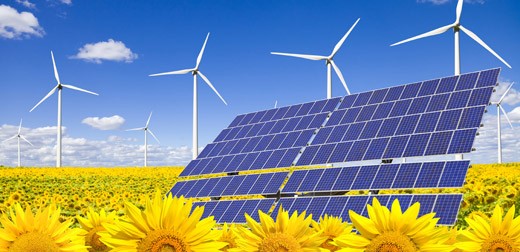
The purpose of the panels is to change solar energy into ____________.
a)
light energy
b)
electrical energy
c)
chemical energy
d)
mechanical energy
85.
Biomass comes from
a)
Plants like corn
b)
Animal Fats
c)
Algae
d)
All of the above
86.
Which of the methods of generating electricity does NOT use alternative energy resources? 
a)
Burning natural gas in a power plant
b)
Turbines spinning in dam
c)
Solar panels taking in light energy 
d)
Drilling wells to reach hot rocks deep inside the earth 
87.
Energy stored by plants hundreds of millions of years ago that are buried underground are the energy we find in...
a)
electricity
b)
fossil fuels
c)
natural gas
d)
geothermal
88.
Which of these is an alternative fuel source?
a)
coal
b)
oil
c)
gas
d)
hydrogen
89.
Which of these is a disadvantage of hydrogen fuel cells
a)
produces pollution
b)
expensive and flammable
c)
heavy and weak
d)
large and unattractive
90.
A hydroelectric power plant generates electricity by using the energy of which of the following?
a)
Blowing wind
b)
Organic material
c)
Moving water
d)
Earth’s core
91.
All of the following are considered alternative energy sources EXCEPT –
a)
Wind
b)
Coal
c)
Biofuel
d)
Solar
92.
Which alternative energy source is generated beneath Earth’s crust and can be used to heat buildings?
a)
Hydroelectric energy
b)
Geothermal energy
c)
Wind energy
d)
Solar energy
93.
Biofuel is...
a)
 Energy that comes from harnessing the movement of the air
b)
Energy that comes from the Sun
c)
A source of non- renewable energy
d)
Fuel from plant material
94.

As water flows through a dam, a generator is turned and creates enough electricity for thousands of homes. This describes...

a)

solar energy

b)

hydroelectric energy

c)

geothermal energy.

d)

potential energy

95.
Oil, natural gas and coal are called ________resources because they are not easy to replace.
a)
fossil fuels
b)
cheap
c)
natural resources
d)
nonrenewable
96.

Fossil fuels are a major source of air pollution and therefore, a major contributor to _____________________!

a)

ozone hole

b)

global warming

c)

skin cancer

d)

radiation

97.
Why are fossil fuels more widely used than solar energy?
a)
Solar energy is harder to find
b)
Fossil fuels are much cheaper
c)
Fossil fuels are more abundant
d)
The sun's energy can never be harnessed
98.
Which of the methods of generating electricity does NOT use alternative energy resources? 
a)
Burning natural gas in a power plant
b)
Turbines spinning in dam
c)
Solar panels taking in light energy 
d)
Drilling wells to reach hot rocks deep inside the earth 
99.

Wind energy is

a)

generated from moving water

b)

moving air that generates electricity

c)

comes from plant material

d)

comes from inside the earth

100.

Alternative energy is

a)

Generated by natural resources and is renewable

b)

man made

c)

nonrenewable

d)

a resource that will run out

101.
Energy from the sun is called
a)
Biofuels
b)
Solar
c)
Geothermal
d)
Hydroelectric
102.

Nonrenewable resources

a)

are man-made resources

b)

cannot be replaced quickly

c)

can be replaced in a short amount of time

d)

never run out

103.

Solar Energy is...

a)

Energy that comes from harnessing the movement of the air

b)

Energy that comes from the Sun

c)

Energy that comes from the interior of the Earth

d)

Fuel from plant material

104.

Renewable resources:

a)

are man-made resources

b)

cause a lot of pollution

c)

cannot be replaced

d)

reduce dependence on foreign countries to supply
105.
__________ is an energy resource that WILL NOT run out in the next several hundred years. 
a)
Renewable Energy Resource
b)
Nonrenewable Energy Resource
106.
__________ is an energy resource that WILL run out in the next several hundred years.
a)
Renewable Energy Resource
b)
Nonrenewable Energy Resource
107.

What problems are caused by using fossil fuels?

a)

Air pollution, oil spills and global warming

b)

radiation and skin cancer

c)

radiation and genetic disorders

d)

water pollution and poisoning

108.
A type of energy that is renewable because it uses the sun's energy is
a)
nuclear energy
b)
biomass energy
c)
solar energy
d)
geothermal energy
109.
A type of energy that is made by splitting uranium atoms is
a)
solar energy
b)
nuclear energy
c)
biomass energy
d)
water energy 
110.
A problem with wind energy is that 
a)
Birds and bats may be threatened
b)
Too much wind is produced
c)
it is nonrenewable
d)
not predictable
111.
A problem with solar energy is that it is
a)
nonrenewable
b)
costly to build 
c)
too hot
d)
used too much
112.
A problem with geothermal energy is that it 
a)
is too hot
b)
is non-polluting
c)
is available only in the ocean
d)
is available only in certain locations
113.
A con of nuclear energy is that
a)
it is too expensive
b)
it does not produce much power
c)
it has toxic wastes
d)
it uses too many workers
114.

Wind

a)

Renewable (Alternative)

b)

Nonrenewable

115.

Which of the following is a form of renewable energy?

a)

A backpack that produces energy from walking

b)

A knee brace that harvests kinetic energy

c)

A gym powered by its runners

d)

All are correct

116.

What did researchers at the World Resources Institute (WRI) define as the biggest barrier to producing renewable energy in the developing world?

a)

A lack of knowledge about relevant data and methodologies

b)

A lack of renewable energy policy

c)

A lack of access to modern forms of electricity

d)

A lack of funding

117.

It has no legs to dance, it has no lungs to breathe, it has no life to live or die, and yet it does all three. What is it?

4 lines
118.

Should we ban the use of the chemical?

The chemical that

• is a key ingredient in most pesticides

• contributes to environmental hazards, such as acid rain, the greenhouse effect, and soil erosion

• helps to spread pollutants that are present in all contaminated rivers, lakes, and oceans

• is used in vast quantities by every industry on Earth

• can produce painful burns to exposed skin

• causes severe illness or death in either very low or very high concentrations in the body

• is legally discarded as waste by individuals, businesses, and industries

• has been studied extensively by scientists throughout the world


a)

Yes, we should immediately

b)

No way, it's necessary

c)

Don't ban, but we need to control it

119.

Which country developed the first windmill?

a)

China

b)

Japan

c)

USA

d)

Canada

120.

Finish this sentence: in just one hour, the sunlight which falls on the earth produces enough energy to power the whole world for ...

a)

an hour

b)

20 days

c)

6 months

d)

a year

121.

What type of supermarket bag is more eco-friendly, paper or plastic?

a)

plastic

b)

paper

c)

none of them

122.

Hybrid cars are slower and less safe than conventional cars.

a)

True

b)

False

123.

Approximately how much global electricity output is produced from renewable sources?

a)

30%

b)

20%

c)

10%

d)

5%

124.

Which of the following is an alternative material for making paper?

a)

panda excrement

b)

hemp

c)

sheepskin

d)

All of the above

125.

What is biomass?

a)

Energy from green leaves

b)

Energy from microorganism

c)

Energy from waste of animals and plants

d)

Energy from atomic fission

126.

One problem with ____ energy is that it produces radioactive waste.

a)

hydro

b)

nuclear

c)

solar

d)

geothermal

127.
What city is located at 32 degrees south and 150 degrees east?
a)
Shanghai
b)
Sydney
c)
Durban
d)
Calcutta 
128.
What city is located at 32 degrees south and 150 degrees east?
a)
Shanghai
b)
Sydney
c)
Durban
d)
Calcutta 
129.
Which city is located at 38 degrees north and 120 degrees west?
a)
San Fransisco 
b)
New York
c)
New Orleans
d)
London
130.
Which continent is located completely north of the Equator and west of the Prime Meridian?
a)
Asia
b)
Europe
c)
North America 
d)
South America
131.
Which continent is completely south of the Equator and east of the Prime Meridian?
a)
Antartica 
b)
South America
c)
North America 
d)
Australia 
132.
What are the coordinates for the city of New Orleans? 
a)
30 degrees north and 90 degrees west
b)
60 degrees north and 30 degrees east
c)
30 degrees north and 120 degrees east
d)
35 degrees north and 70 degrees west
133.
What are the coordinates for the city of Leningrad? 
a)
28 degrees north and 88 degrees east
b)
55 degrees north and 1 degree east
c)
28 degrees north and 88 degrees east
d)
60 degrees north and 30 degrees east
134.
If you were at 30 degrees south and 60 degrees west, which continent would you be in?
a)
Europe
b)
Africa
c)
South America
d)
Australia 
135.
If you were located at 30 degrees south and 90 degress east, what ocean would you be in?
a)
Indian Ocean
b)
Atlantic Ocean
c)
Arctic Ocean
d)
Pacific Ocean
136.
To locate the exact places on Earth, one must look at: 
a)
latitude lines only
b)
the intersecting lines of latitude and longitude
c)
longitude lines only
d)
a neighboring area to describe the location
137.
Lines of latitude and longitude are measured in:
a)
degrees of a circle
b)
north and south only
c)
east and west only
d)
degrees of a compass
138.
Latitude on a globe run from: 
a)
north to south
b)
north to west
c)
east to south
d)
east to west
139.
Which lines run on a globe from east to west? 
a)
longitude lines
b)
latitude lines
c)
north pole
d)
south pole
140.
When measuring lines of latitude, always start with this line, which represents zero:
a)
North Pole
b)
The Prime Meridian 
c)
The Equator 
d)
South Pole
141.
When measuring lines of longitude, always start with this line, which represents zero:
a)
The Equator
b)
The Prime Meridian 
c)
The North Pole
d)
The South Pole
142.
On a globe, or map, the Equator is:
a)
The Horizontal, center line
b)
The Vertical, center line
c)
30 degree line
d)
The North Pole
143.
On a globe, or map, the Prime Meridian is:
a)
The 180 Degree Line
b)
The Horizontal Center Line
c)
The South Pole
d)
The Vertical Center Line
144.
Coordinates can be written like this:
a)
20 degrees south, 140 degrees west
b)
40 degrees north, 120 degrees west
c)
20 degrees south, 160 degrees east
d)
all of the above
145.
What are coordinates? 
a)
a degree only 
b)
two sets of degrees and cardinal directions 
c)
two degrees only
d)
a cardinal direction only
146.
Which continent is located at 60 degrees north and 120 degrees west?
a)
Asia 
b)
North America
c)
Europe
d)
Africa
147.
What ocean would you be in if you were at 30 degrees south and 150 degrees west?
a)
The Atlantic Ocean
b)
The Arctic Ocean
c)
The Pacific Ocean
d)
The Indian Ocean
148.

Latitude and Longitude are measured in

a)

degrees

b)

inches

c)

miles

d)

kilometers

149.
Lines of Latitude can be measured up to what degree?
a)
150 degrees
b)
180 degrees
c)
90 degrees
d)
100 degrees
150.
Lines of Longitude run from the _____ to the ______.
a)
East, West
b)
North, South
c)
South, East
d)
North, West
151.
Lines of ______ measure how far from the equator a place is located?
a)
Longitude
b)
Latitude
152.
The invisible line at 0 degrees latitude is called the ________. 
a)
International Date Line
b)
Prime Meridian
c)
Equator
d)
Arctic Circle
153.
The invisible line at 0 degrees longitude is called the _________.
a)
International Date Line
b)
Prime Meridian
c)
Equator
d)
Antarctic Circle
154.
Latitude lines run from the _____ to the  _______.
a)
West, East
b)
North, South
c)
North, East
d)
South, West
155.

The equator divides the Earth into what two hemispheres?

a)

Eastern and Southern

b)

Northern and Southern

c)

Western and Eastern

d)

Northern and Western

156.
The Prime Meridian separates the Earth into what two hemispheres?
a)
Northern and Southern
b)
Western and Eastern
c)
Northern and Eastern
d)
Southern and Western
157.
Lines of latitude are also called  __________.
a)
hemispheres
b)
Parallels
c)
Meridians
d)
Tropics
158.
Lines of longitude are also called  ____________.
a)
Hemispheres
b)
Meridians
c)
parallels
d)
International Date Lines
159.
Which of the following is not a type of fossil fuel? 
a)
Coal
b)
Light
c)
Petroleum
d)
Natural Gas
160.
What are fossil fuels?
a)
Dinosaur bones
b)
Resources made from once living organisms 
c)
Combination of different rocks
d)
Gas Stations
161.
Why do we depend on fossil fuels? 
a)
Electricity, transportation, and heating
b)
Food
c)
Sunlight
d)
Growing, building muscle, calcium
162.
How does coal form?
a)
Pressure builds in wetlands
b)
Pressure builds in trees
c)
Pressure builds in peat bogs
d)
Forms at the North Pole
163.
How does petroleum form
a)
build up of layers of trees and leaves
b)
build up of once-living aquatic organisms underneath pressure and heat. 
c)
Build up of different rocks
d)
It's formed from gasses in the air
164.
How does natural gas form? 
a)
lower pressures and temperatures
b)
the hydrosphere layer
c)
deepest sediment where there are higher pressures and temperatures 
d)
In the atmosphere 
165.
Where did the energy for fossil fuels come from?
a)
Animals
b)
Plants
c)
Sun
d)
Chemosynthesis
166.
Why is burning fossil fuels harmful? 
a)
then we won't have any fossil fuels if we burn them all
b)
They can get extremely hot
c)
Increases the amount of greenhouse gases in the air
d)
this would destroy fossils
167.
What is a greenhouse gas?
a)
a gas created from a plant
b)
gas that causes the atmosphere to get warmer
c)
a green colored gas
d)
a gas that kills you right away
168.
Drilling and transporting fossil fuels causes damage to natural habitats and can lead to land and water pollution. 
a)
True
b)
False
169.
Which greenhouse gas is produced most by the automobile industry? 
a)
Hydrogen
b)
Sulfur
c)
Methane
d)
Carbon Dioxide
170.
A ranking of a minerals from softest to hardest
a)
streak test
b)
luster test
c)
Mohs hardness scale
d)
fracture