wayground logo

Free Printable Worksheets

Font size

S
M
L
XL
Worksheets

Final Review Day

Total questions: 166

Worksheet time: 2hrs 13mins

Name
Class
Date
1.

What is the sun?

a)

The sun is a fireball.

b)

The sun is a planet.

c)

The sun is a star.

d)

The sun is a animal.

2.
Day and night is caused by the _____________ of earth on its axis.
a)
revolution
b)
orbit
c)
rotation
3.
The spinning of an object on its axis is called______
a)
orbit
b)
rotation
c)
revolution
d)
tide
4.
As the Earth travels around the sun, this tilt causes different areas of the Earth’s surface to get different amounts of daylight at different times of the year. The angle of the Sun’s rays to the surface also causes areas to have more or less of the Sun’s energy. This causes the ________.
a)
months
b)
day and night
c)
seasons
d)
years
5.
Movement of Earth around the sun.
a)
Rotation
b)
Revolution
6.
The moon seems to change shape from day to day in a cycle that lasts about a month as it goes through _.
a)
revolutions
b)
phases
c)
rotations
d)
eclipses
7.
What is at the center of the Solar System?
a)
Earth
b)
Moon
c)
Sun
d)
Mars
8.
The Sun provides what to the Earth?
a)
 Energy
b)
Water
c)
Shelter
d)
Food
9.
Rotation causes which of the following? 
a)
day/night
b)
seasons
10.
Revolution causes what?
a)
day/night
b)
seasons
11.
The change in direction of Earth's axis is what?
a)
rotation
b)
nutation
c)
revolution
d)
precession
12.
Nutation is the change in the ___________ of Earth's axis?
a)
degree/tilt
b)
direction
13.
What is barycenter?
a)
a change in the tilt/degree of Earth's axis 
b)
a change in the direction of Earth's axis
c)
the earth orbiting around the sun 
d)
point b/w 2+ objects where they balance/orbit each other
14.
How long does it take Earth to complete one revolution around the sun?
a)
24 hrs
b)
1 year
15.
According to Kepler’s discoveries, planets orbit around the Sun:
a)
in an oval shape.
b)
in perfect circles.
c)
in an ellipse.
d)
in a rectangular shape.
16.
What did Kepler discover about planets and their orbital speed?
a)
Planets closest to the Sun will orbit with the fastest orbital speed.
b)
Planets with the greatest mass will orbit the Sun with the fastest orbital speed.
c)
Planets furthest from the Sun will orbit with the fastest orbital speed.
d)
Planets with the least mass will orbit the Sun with the fastest orbital speed.
17.

Compaction and cementation leads to what type of rock?

a)

Rock cycle

b)

Igneous

c)

Metaphoric

d)

Sedimentary

18.

Heat and pressure forms what?

a)

Igneous

b)

Metamorphic

c)

Rock Cycle

d)

Stress

19.

Pieces of solid material that have been deposited on the Earth’s surface are called

a)

Heat

b)

Pressure

c)

Sediments

d)

Sand

20.

What is organic matter?

a)

Sediments

b)

Rocks

c)

Dead plants, fungi, bacteria

d)

Magma

22.

Magma is _______ and forms ___________ igneous rocks.

a)

above ground, extrusive

b)

above ground, intrusive

c)

underground, extrusive

d)

underground, intrusive

22.

Magma is _______ and forms ___________ igneous rocks.

a)

above ground, extrusive

b)

above ground, intrusive

c)

underground, extrusive

d)

underground, intrusive

23.

Lava is ___________ and forms _________ igneous rocks.

a)

Above ground, intrusive

b)

Above ground, extrusive

c)

Underground, intrusive

d)

Underground, extrusive

24.

Why is the soil texture important?

a)

Because it matches the temperature

b)

Because it affects how plants grow

c)

Because the animals want to know

d)

Because if affects human health

25.

What an important factor in erosion?

a)

Gravity

b)

Water

c)

Wind

d)

All

26.

What is Plate Tectonics?

a)

movement of the Earth in space

b)

movement of the oceans against Earth's land

c)

movement of the Earth around the sun

d)

movement of the pieces of Earth's crust

27.

What are plates?

a)

pieces of the Earth's moon

b)

pieces of rock and dust floating in space

c)

pieces of the Earth's core

d)

pieces of Earth's crust

28.

What is the inner-most layer of Earth?

a)

inner core

b)

outer core

c)

mantle

d)

crust

29.

What is the outer-most layer of Earth?

a)

inner core

b)

outer core

c)

mantle

d)

crust

30.

What layer of Earth is made of magma?

a)

inner core

b)

outer core

c)

mantle

d)

crust

31.
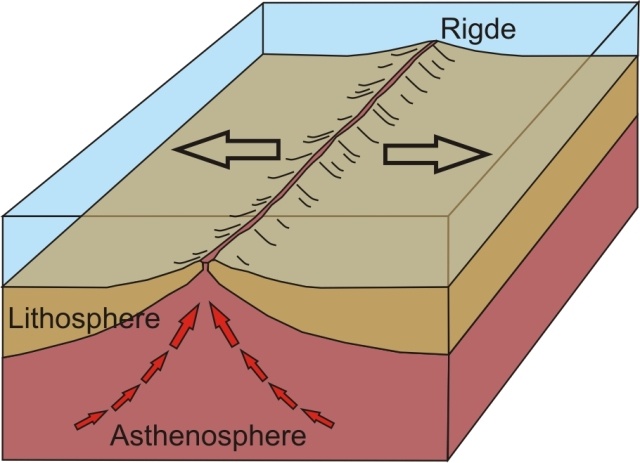
What kind of plate boundary is shown here?
a)
divergent
b)
convergent
c)
transform
d)
subducting
32.
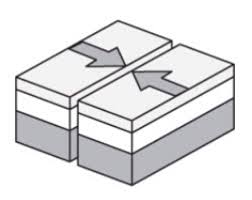
What kind of plate boundary is shown here?
a)
divergent
b)
convergent
c)
transform
d)
submergent
33.
What kind of plate boundary is shown here?
a)
divergent
b)
convergent
c)
transform
d)
strike slip
34.
What geologic feature/event you be most likely to find at a transform boundary?
a)
Earthquakes
b)
Volcanoes
c)
Mountains
d)
Rift Valleys
35.
A subduction zone is formed...
a)
when one tectonic plate sinks below another
b)
at every type of convergent plate boundary
c)
at every type of divergent plate boundary
d)
at transform boundaries
36.
Name the boundary
a)
convergent boundary
b)
divergent boundary
c)
transform boundary
d)
sergent boundary
37.
Name the boundary
a)
convergent boundary
b)
divergent boundary
c)
transform boundary
d)
sergent boundary
38.
The area where two or more plates meet is called a __________________.
a)
fault
b)
plate boundary
c)
plate edge
d)
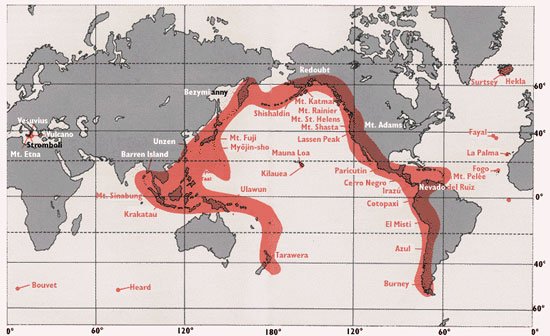
ring of fire
39.
Which of the following is the name of the ancient supercontinent formed 28 Million Years ago.
a)
Pangea
b)
Gondwanda
c)
Laurasia
d)
Neverland
40.
Which of the following is NOT evidence to support the theory of plate tectonics?
a)
Fossils
b)
Mountains
c)
Glaciers
d)
Sand Erosion
41.
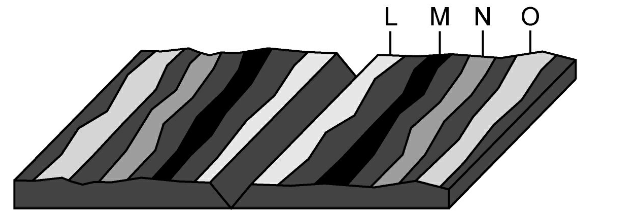
Where would the oldest rock be found?
a)
L
b)
M
c)
N
d)
O
42.
How is it possible for new crust to be formed without increasing the surface area of the Earth?
a)
Crust is destroyed at the same time it is created
b)
New crust is underwater where it sinks
c)
New crust breaks more easily than old crust
43.
This is the name for the chain of volcanos around the edge of the Pacific Plate.
a)
Circle of Fire
b)
Ring of Lava
c)
Ring of Fire
d)
Circle of Magma
44.
What is the shaking of the Earth’s crust caused by a release of energy?
a)
Earthquake
b)
Epicenter
c)
Fault
d)
Plate
45.
Where is the point at which the first movement occurs during an earthquake?
a)
Epicenter
b)
Focus
c)
Fault
d)
Plate
46.
Where is the point on the Earth’s surface directly above the focus of an earthquake?
a)
Epicenter
b)
Fault
c)
Hypocenter
d)
Tremor
47.
Which type of wave is the first to arrive after an earthquake occurs?
a)
P Wave
b)
Rayleigh Wave
c)
S Wave
d)
Shear Wave
48.
P Waves can move through which of the following?
a)
Gas
b)
Liquid
c)
Solid
d)
All of these
49.
S Waves can move through which of the following?
a)
Gas
b)
Liquid
c)
Solid
d)
All of these
50.
What is an instrument that detects and records waves produced by earthquakes? (This piece of equipment can measure the magnitude of an earthquake.)
a)
Epicenter
b)
Fault
c)
Seismogram
d)
Seismograph
51.
Which scale measures the intensity of the ground movement?
a)
Mercalli Scale
b)
Richter Scale
c)
Seismogram Scale
d)
Bernoulli Scale
52.
Which scale rates earthquakes based on the amount of damage done?
a)
Mercalli Scale
b)
Richter Scale
c)
Seismogram Scale
d)
Bernoulli Scale
53.
What is a smaller earthquake that follows a larger earthquake?
a)
Aftershock
b)
Liquefaction
c)
Seismic Gap
d)
Tsunami
54.
What is a large ocean wave that results from an underwater earthquake, landslide, or volcanic eruption?
a)
Aftershock
b)
Liquefaction
c)
Seismic Gap
d)
Tsunami
55.
The natural chemical or physical processes that breaks down rock on Earth's surface.
a)
weathering
b)
erosion
c)
deposition
d)
jackhammering
56.
The process by which water, ice, wind or gravity moves weathered rock and soil from one place to another.
a)
weathering
b)
erosion
c)
deposition
d)
dumptruck
57.
This type of weathering occurs when rock is physically broken down into smaller pieces of rock.
a)
mechanical weathering
b)
chemical weathering
c)
erosion weathering
d)
deposition
58.
This type of weathering occurs when rocks weaken then break down due to chemical changes in the composition of the rock.
a)
mechanical weathering
b)
chemical weathering
c)
erosion weathering
d)
deposition
59.
These rocks were broken apart from the continuous freeze/thaw of water in the cracks of the rocks. This is an example of:
a)
ice wedging
b)
acid rain
c)
permeability
d)
abrasion
60.
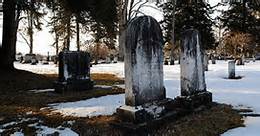
These gravestones have slowly broken down and turned a blackish color due to the action of:
a)
ice wedging
b)
abrasion
c)
acid rain
d)
mechanical weathering
61.
How is mechanical weathering different from chemical weathering?
a)
Chemical weathering happens over much shorter time frame than mechanical weathering.
b)
Chemical weathering changes the chemical composition of rocks; mechanical weathering does not.
c)
Chemical weathering occurs only in tropical climates; mechanical weathering occurs only in cool climates.
d)
Chemical weathering occurs only in the mountains; mechanical weathering occurs only on flat land.
62.
Weeds growing into the cracks in a sidewalk and the sidewalk begins to crumble is an example of:
a)
mechanical weathering
b)
chemical weathering
63.
The MAIN  thing Decomposers do for the the soil is the following:
a)
Store moisture
b)
Burrow deep in the soil
c)
Make space for air and water
d)
Break down and digest dead organisms
64.
Decayed organic material in soil is called______.
a)
Litter
b)
Silt
c)
Humus
d)
Clay
65.
Soil layers are called horizons because...
a)
The layers are all different
b)
The layers are vertical
c)
The layers are horizontal
d)
The layers are above one another
66.
A huge undersea earthquake off the Alaskan coastline could produce what natural hazard? 
a)
Tsunami 
b)
Cyclone 
c)
Hurricane 
d)
Drought 
67.
In Georgia and much of the southeastern United States, heavy rainfall often comes from _____________ and tropical storms.
a)
ice caps melting
b)
the Ice Age
c)
hurricanes
d)
April showers
68.
Which is the BEST way you can help prepare for natural disasters?
a)
Watch your pets for any unusual behavior.
b)
Always carry a pint of water with you.
c)
Keep the windows of your house closed at all times.
d)
Make an emergency supply kit with your family.
69.
Rock underground suddenly breaks along a fault causing tectonic movement, causing what natural hazard? 
a)
Volcanic Eruption 
b)
Cyclone
c)
Earthquake
d)
Hurricane
70.
Landslide may be triggered by rain or ground shaking due to earthquakes.
a)
TRUE
b)
FALSE
71.
A disaster when there is no rain for a long time and everything is dry.
a)
flood
b)
drought
c)
evacuate
d)
hurricane
72.
A disaster when there is air that spins around very quickly in the shape of a funnel.
a)
drought
b)
tornado
c)
flood
d)
earthquake
73.
A disaster when there is a lot of water and it covers the streets and can go into houses and stores.
a)
tornado
b)
thunder
c)
flood
d)
drought
74.
Study the graph below.  Where is most of the Earth's water located?
a)
Rivers and Lakes
b)
Glaciers and Icecaps
c)
oceans
d)
groundwater
75.
Which of the following is caused by the gravitational pull of the moon and sun?
a)
ocean waves
b)
ocean tides
c)
ocean currents
76.
Certain stages of the water cycle are most likely occurring under certain weather conditions.  Which stage is most likely going to occur on a warm, sunny day?
a)
precipitation
b)
condensation
c)
evaporation
77.
What is the water cycle?
a)
the 3 forms of water
b)
the movement of water on, above, or below the surface of the Earth
c)
when water melts
d)
when clouds form
78.
What is the energy source for the water cycle?
a)
the sun
b)
the earth
c)
water
d)
the moon
79.
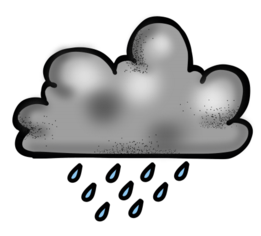
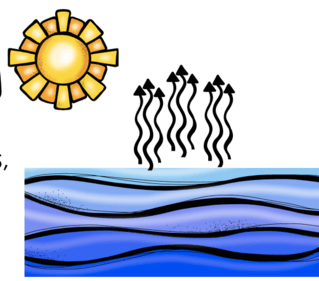
What part of the water cycle does this picture show?
a)
condensation
b)
precipitation
c)
evaporation
80.
What part of the water cycle does this picture show?
a)
condensation
b)
precipitation
c)
evaporation
81.
What is evaporation?
a)
The part of the water cycle when the sun heats up water, turning it from a liquid into water vapor or steam. It rises from the ground into the air.
b)
The part of the water cycle when the water vapor in the air gets cold. The water turns back into a liquid and forms clouds.
c)
The part of the water cycle when clouds get heavy and can no longer hold the liquid water. This causes the water to fall from the sky to the earth as rain, snow, sleet, or hail.
82.
Water Table is
a)
The level of ground water beneath us
b)
The amount of water above ground
c)
Where waste water goes
83.
Sediment's are
a)
little bits of particles in the water
b)
The rocks at the bottom of a lake/pond
c)
 The collection of particles in a small body of water
84.
Point source pollution
a)
When the cause of the pollution can be determined
b)
When the source of pollution cant be determined
85.
Non-Point pollution
a)
Is when you cant identify the cause of pollution
b)
When you can identify the source of pollution
86.

Which is not an example of freshwater?

a)

lake

b)

river

c)

swamp

d)

ocean

e)

marsh

87.
Where is most of the freshwater found on Earth?
a)
lakes
b)
glaciers
c)
oceans
d)
rivers
88.
Approximately what percentage of the water on Earth is freshwater?
a)
0.1%
b)
3%
c)
50%
d)
97%
89.
Which gas in our atmosphere is most abundant?
a)
Argon
b)
Oxygen
c)
Nitrogen
d)
Carbon Dioxide
90.
What is the percentage of oxygen in Earth's atmosphere?
a)
1%
b)
21%
c)
78%
d)
90%
91.
In which layer of the atmosphere does weather occur?
a)
Mesosphere
b)
Thermosphere
c)
Stratosphere
d)
Troposphere
92.
What decreases as you go up in the atmosphere?
a)
Altitude
b)
Atmosphere
c)
Meteors
d)
Air Pressure
93.
What is the outer most main layer of Earth's atmosphere?
a)
Thermosphere
b)
Troposphere
c)
Stratosphere
d)
Mesosphere
94.
The layers of the atmosphere are classified according to changes in _________.
a)
altitude
b)
density
c)
composition
d)
temperature
95.
The diagram represents solar energy that is absorbed by Earth's land and water surfaces and is changed into heat that radiates back into the atmosphere.What is this process called?
a)
ozone
b)
radiation
c)
greenhouse effect
d)
evaporation
96.
What absorbs ultraviolet rays in the atmosphere?
a)
troposphere
b)
stratosphere
c)
ozone layer
d)
greenhouse gases
97.

What is the greenhouse effect?

a)

The warming of a planet due to trapped heat.

b)

The cooling of Earth due to air pollution.

c)

The heating of a solid, such as a rock.

98.
Why does too much carbon dioxide in the atmosphere cause climate change?
a)
It cools down our planet.
b)
It blocks out UV rays.
c)
It traps heat and warms up our planet.
d)
It lets sunlight escape.
99.
Which of these activities reduce greenhouse gas production? 
a)
Turning off lights when leaving a room
b)
Leaving the video game system on when your done playing
c)
Leaving chargers and non essential appliances plugged in when not in use
100.

The main human activity that adds to an individual's carbon footprint.

a)

usage of alternative energies (wind, solar, etc)

b)

respiration and growth

c)

photosynthesis by plants

d)

usage of fossil fuels for energy

101.
The ozone layer is damaged by
a)
CFCs
b)
Increase in greenhouse gases
c)
Increased global temperatures
d)
Sulfuric and nitric acids
102.
Choose the correct order of the layers of the atmosphere (from closest to farthest from earth’s surface). 
a)
a)Troposphere, mesosphere, stratosphere, thermosphere 
b)
a)Thermosphere, mesosphere, stratosphere, thermosphere 
c)
a)Troposphere, stratosphere, mesosphere, thermosphere 
d)
a)Stratosphere, troposphere, mesosphere, thermosphere 
103.
These can be any gas in the atmosphere that absorbs and emits radiation. 
a)
Greenhouse gases
b)
Fertilizers
c)
Pollutants
d)
Filtrators 
104.
This weather tool measures wind speed 
a)
thermometer
b)
barometer
c)
anemometer
d)
psychrometer
105.
Which weather tool measures air pressure?
a)
thermometer
b)
barometer
c)
anemometer
d)
psychrometer
106.
Humidity is the...
a)
Amount of Water Vapor in the Air
b)
Amount of Wind in the Air
c)
Amount of Precipitation in the Air
d)
Amount of Pressure in the Air
107.
Because the earth is spinning on its axis, the global winds appear to curve. This is known as the __________ ________.
a)
Coriolis Effect
b)
Greenhouse Effect
c)
Climate Effect
d)
Atmosphere Effect
108.
Where does a hurricane form?
a)
Over a cold body of water
b)
Over a warm body of water
c)
Over cold land
d)
Over warm land
109.
What kind of weather is usually associated with a low pressure system?
a)
Sunny weather
b)
Precipitation (rain, snow, etc.)
110.
What kind of weather is usually associated with a high pressure system?
a)
Sunny weather
b)
Precipitation (rain, snow, etc.)
111.
The blanket of gases that surrounds the Earth
a)
Lithosphere
b)
Atmosphere
c)
Hydrosphere
d)
Green House Effect
112.
What measures temperature?
a)
barometer
b)
anemometer
c)
thermometer
d)
psychrometer
113.
What types of air masses form over oceans?
a)
Maritime
b)
Continental
c)
Polar
d)
Tropical
114.
A wet and cold air mass would be a...
a)
Maritime polar
b)
Continental polar
c)
Maritime tropical
d)
Continental tropical
115.
Where would you find a tropical maritime air mass?
a)
over the ocean, near the equator
b)
over the ocean, near the poles
c)
over a continent, near the equator
d)
over a continent, near the poles
116.
Air travels
a)
from high pressure to low pressure
b)
from low pressure to high pressue
117.
rapidly moving cold air  mass runs into a warm air mass the cold air slides under the warm air. This is called a  .....
a)
cold front
b)
warm front
c)
stationary front
118.
When a warm air mass gently slides on top of a cold air mass, and you have drizzly rain and then warmer weather, what type of front is it?
a)
warm front
b)
cold front
c)
occluded front
d)
stationary front
119.
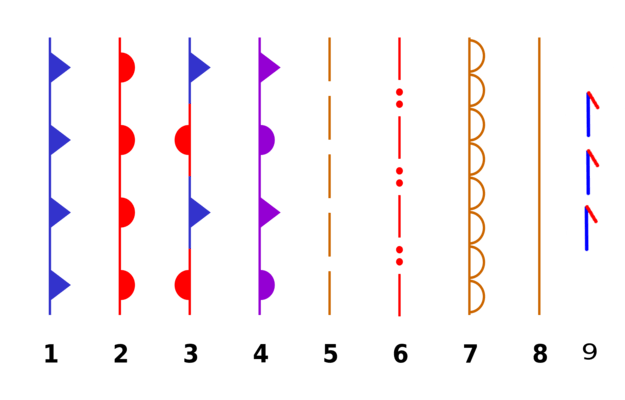
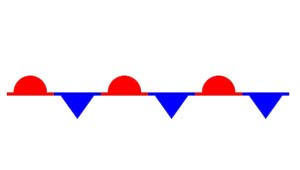
What does symbol # 3 mean?
a)
stationary front
b)
occluded front
c)
warm front
d)
cold front
120.
A front is
a)
where warm air is cooling at earth's surface
b)
a line where hot and cold air are separating
c)
a line where two different air masses meet
d)
where cold air is rising and forming rain clouds
121.
What symbol is this?
a)
warm front
b)
cold front
c)
stationary front
d)
occluded front
122.
LABEL THE FOLLOWING FRONTS AND/OR WEATHER MAP SYMBOLS.
a)
 warm front
b)
cold front
c)
stationary front
d)
occluded front  
123.
This type of weathering occurs when rocks weaken then break down due to chemical changes in the composition of the rock.
a)
mechanical weathering
b)
chemical weathering
c)
erosion weathering
d)
deposition
124.
What does every food chain start with? (Even if it's not drawn or written there!)
a)
producers
b)
sun
c)
consumer
d)
decomposers
125.
An organism that needs to eat other organisms to obtain energy is known as a:
a)
Autotroph
b)
Producer
c)
Consumer
d)
Mutualist
126.
Consumer that eats plants
a)
heterotroph
b)
herbivore
c)
producer
d)
community
127.
What does a food web represent?
a)
All connections of energy flow throughout all organisms in a habitat.
b)
The specific ways that mutualism is carried out.
c)
A single pathway or energy flow between organisms. 
d)
How carnivores get their food. 
128.
relationship in which two species live closely together
a)
resource
b)
mutualism
c)
succession
d)
symbiosis
129.
Where an organism lives
a)
habitat
b)
niche 
c)
heterotrogh
d)
biosphere
130.
What is the term for each step in the transfer of energy and matter within a biological community?
a)
energy path
b)
food web
c)
trophic level
d)
food pyramid
131.
An illustration that uses arrows to show the MANY possible directions in which matter and energy can pass through the organisms in an ecosystem.
a)
Food chain
b)
Food web
c)
Energy Pyramid
d)
Succession Map
132.
The nonliving aspects of an ecosystem.
a)
Abiotic factors
b)
Biotic factors
133.
The living portions of the ecosystem.
a)
Biotic factors
b)
Abiotic factors
134.
A collection of organisms that make up a community as well as all of the nonliving aspects of the environment.
a)
Population
b)
Community
c)
Habitat
d)
Ecosystem
135.
As you move upward, from level to level, in an energy pyramid, energy _____.
a)
increases
b)
decreases
c)
stays the same
d)
increases exponentially
136.
What are the Abiotic factors in this image? 
a)
water, sunlight, dirt, air
b)
birds and plants
c)
birds, water, dirt
d)
plants, water
137.
Which of the following is not an abiotic factor?
a)
sun
b)
temperature
c)
soil
d)
grass
138.
Which of the following is not a biotic factor?
a)
mushroom
b)
air
c)
elephant
d)
coyote
139.
Is a deer an abiotic or biotic factor? 
a)
abiotic
b)
biotic
140.
Is sunlight an abiotic or biotic factor? 
a)
abiotic
b)
biotic
141.
Limiting factors are sometimes helpful because they can keep the population from getting too large.
a)
True
b)
False
142.
Food, water, sunlight, shelter, and space are resources that are often __________.
a)
limiting factors
b)
wet
c)
messy
d)
found in rocks
143.
A group of the same type of organisms living in the same place at the same time.
a)
threatened species
b)
populations
c)
community
d)
limiting factor
144.
What does biodiversity mean?
a)
Only one species in an area.
b)
The different amount of species in an area
c)
All abiotic life
d)
Nitrogen fixation
145.
What is a vertabrate?
a)
An animal that has a spinal cord or backbone
b)
An animal that has lungs
c)
A human that can play Soccer
d)
An animal that has bones
146.
What is a invertabrate?
a)
An animal lacking a backbone
b)
An animal that has a spinal cord
c)
A person that has a jaw
d)
An animal or person that has lungs
147.

Which biome is the least biodiverse?

a)

Grasslands

b)

Taiga

c)

Tundra

d)

Rainforest

148.

the breaking of habitats into smaller pieces is called...

a)

habitat division

b)

habitat pollution

c)

habitat corruption

d)

habitat fragmentation

149.
an organism that has been introduced into an ecosystem and creates competition for resources with the organisms that live there
a)
native species
b)
succession
c)
invasive species
d)
evolution
150.
Which of the following is NOT a way to help protect biodiversity?
a)
Endangered Species Act
b)
Promote Habitat Protection
c)
Eliminate all hunting and predators that could endanger a species.
d)
Create sanctuaries for endangered species
151.
Which of the following is NOT an example of a biome?
a)
Desert
b)
Marine
c)
Freshwater
d)
Waterpark
152.
The kangaroo rat is able to get all of the water it needs through it's food and therefore, never needs to drink liquid. This animal has adapted to survive in which biome?
a)
Forest
b)
Tundra
c)
Desert
d)
Grassland
153.
Which biome is characterized by low temperatures and low amounts of rainfall?
a)
Tundra
b)
Desert
c)
Temperate Deciduous Forest
d)
Tropical Rainforest
154.
Which biome, because of its climate, has the largest number of species of plants and animals?
a)
Tundra
b)
Rainforest
c)
Desert
d)
Pineforest
155.
What biome? 
a)
Savannah
b)
Temperate Rainforest
c)
Taiga
d)
Desert
156.
Which of these describes the rainforest?
a)
populated by squirrels, bears and pine trees
b)
relatively few trees
c)
generally close to the equator
d)
short, mild, dry summers
157.
The rainforest has the greatest variety of different organisms that live there. In other words, the rainforest has the greatest ______.
a)
speciation
b)
biodiversity
c)
climate
d)
succession
158.
What biome?
a)
Mountains
b)
Tundra
c)
Tropical Rainforest
d)
Temperate Forest
159.
The taiga
a)
a cold, treeless, desert-like biome found near the North and South Poles
b)
found mostly in Africa
c)
a forest biome dominated by coniferous trees, such as pine, fir, and spruce
d)
a dry, rocky biome found in the central part of South America.
160.
 As you travel from the North Pole toward the equator, you would expect to see
a)
tropical rain forests, then deserts, then taiga.
b)
temperate deciduous forests, then taiga, then tropical rain forests.
c)
tundra, then grasslands, then tropical rain forests.
d)
taiga, then desert, then tundra.
161.
We live in this biome....which incidentally is the only biome with 4 seasons
a)
tundra
b)
temperate deciduous forest
c)
grasslands
d)
desert
162.
What is the average, year-to-year conditions of weather in an area?
a)
Biome
b)
Air Mass
c)
Climate
d)
Precipitation
163.
Which of the following habitats probably has the greatest number of plant and animal species?
a)
the African savannah
b)
a rainforest in Brazil
c)
a temperate forest in China
d)
a temperate grassland in Kansas
164.
Which biome receives between 0 and 25 centimeters of precipitation each year, has a temperature range from -27 to 5 degrees Celsius, has frozen soil, and is home to hares, caribou, and wolves?
a)
desert
b)
mountain
c)
savannah
d)
tundra
165.
Which biome contains large populations of grazing herbivores, few species of birds, and deep, rich soil?
a)
taiga
b)
tundra
c)
deciduous forest
d)
grassland
166.
Areas defined by their geographical location and ecological similarity are called?
a)
ecozones
b)
biotopes
c)
biomes
d)
biodomes