
 Worksheets
Quiz 4 - Ionization, Types of Bonds, Naming Compounds
Total questions: 161
Worksheet time: 3hrs 9mins
Valence electrons are those that are
closest to the nucleus.
freely floating between atoms.
in the outermost energy level of the atom.
unable to become involved in chemical bonding.
Which of the following is not a way that ions can form?
gaining electrons
gaining protons
losing electrons
All of the above are ways that ions can form.
Oxygen has six valence electrons. When forming an ion, oxygen will
lose six electrons and have a charge of +6.
lose six electrons and have a charge of -6.
gain two electrons and have a charge is +2.
gain two electrons and have a charge of -2.
Look at the periodic table. What should be the charge on the ion formed by calcium?
+1
+2
-1
-2
Atoms that have gained electrons form
cations.
anions.
negions.
positrons.
Most elements are most stable when their outermost energy levels contain ________ electrons.
2
6
8
18
Look at the Periodic table. Which of the following elements would you expect to form an ion that has the same charge as the oxide ion?
calcium
boron
sulfur
chlorine
Which of the following elements is an exception to the octet rule?
helium
oxygen
chlorine
magnesium
Which of the following tend to gain electrons when forming ions?
metalloids
metals
nonmetals
cations
Anions have
gained electrons.
lost electrons.
gained protons.
lost protons.
Which of the following groups on the Periodic Table will only form ions with positive charges?
Group 2
Group 15
Group 17
Group 18
Atoms are electrically neutral when
They have a minimal charge.
They have a balanced number of protons and neutrons.
They have a balanced number of protons and electrons.
They have no valance electrons.
If an electron is removed, an ion becomes
An atom
Positive
Negative
Neutral
If an ion gains an electron, it becomes
Positive
Stable
Atomic
Negative
Cations have what type of charge?
Positive
Negative
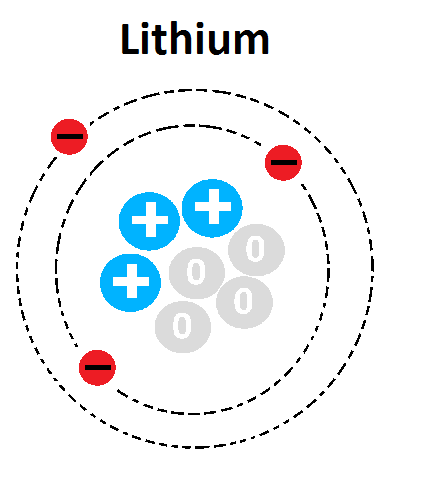
What is the mass number of this atom?
1
3
4
7
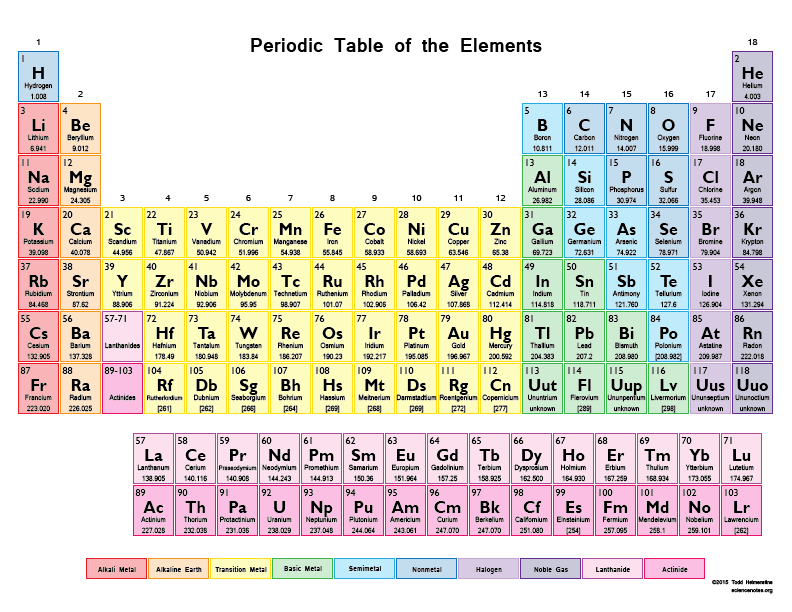
What is the atomic number of Barium, Ba? (enlarge the periodic table)
20
38
56
88
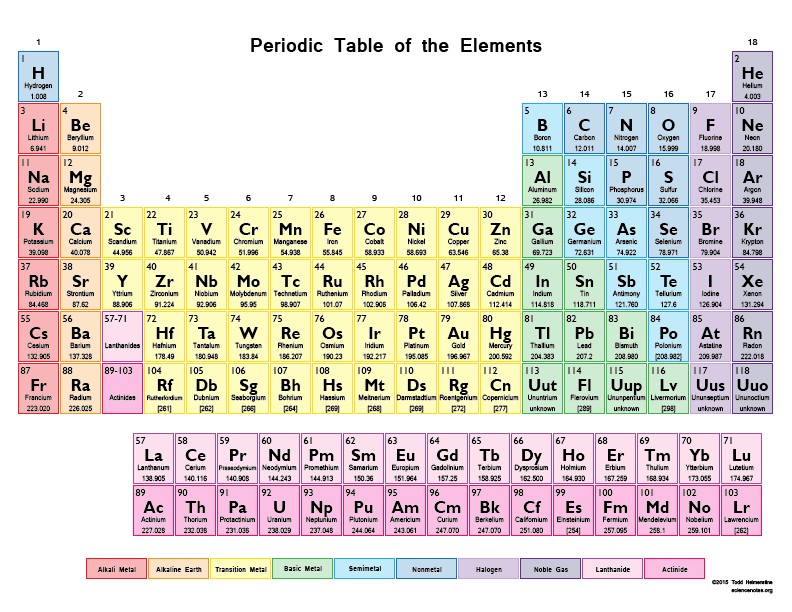
How many protons are in a sodium atom, Na? (tap to enlarge the periodic table)
Sodium has 1 proton.
Sodium has 3 protons.
Sodium has 11 protons
Atoms of the same element which have a different number of neutrons are called _________________.
ions
isotopes
quarks
molecules
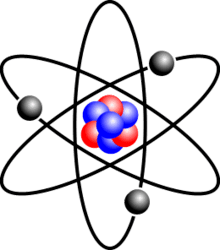
Which subatomic particle has a negative charge in the atom?
proton
neutron
electron
quark
ALL atoms of the same element have:
same number of proton
same number of nucleon
different number of neutron
different number of electron
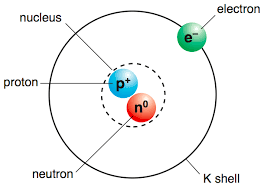

What is the charge on a lithium atom that loses 1 electron?
+1
0
-1
-2

What is the atomic number of Fe? (click to see image)
26
55.845
56
30
Valence electrons are in the...
Innermost energy level of the atom.
Middle energy level of the atom.
Outermost energy level of the atom.
energy levels of the atom.
How many valence electrons does Helium have?
1
2
3
4
5


What is the charge of a sodium ion?
+2
+1
-1
-2


How many electrons would a Nitrogen ion gain/lose? If it has 5 valence electrons.
lose 5
gain 5
lose 3
gain 3
What is a negative ion called?
anion
cation
covalent
isotope
What is the ion formed from Sulfur? If it has 6 valence electrons.
S+2
S-2
S+6
S-6
How many electrons would a Calcium ion gain/lose? If it has 2 valence electrons.
lose 1
gain 1
lose 2
gain 2
If an atom loses electrons, the charge will be positive.
true
false
A Bromine ion gains 1 electron, which of the following is the correct symbol for a Bromine ion?
Br-1
Br+1
Br+7
Br-7
An atom with 2 protons, 3 neutrons, and 4 electrons has a charge of ____.
+2
-2
+3
0
If an element has 3 valence electrons, what charge will likely form on its ion ?
+3
+5
-3
-5

Which of the following types of elements can exist in monatomic form?
alkali metals
transition metals
halogens
noble gases
Bonds formed by transferring electrons from one atom to another are
ionic
metallic
non polar covalent
covalent
Bonds formed by sharing electrons between atoms are
ionic
metallic
covalent
dipole-dipole
A compound is made of two nonmetals. It is
ionic
metallic
covalent
A compound forms between a metal and a nonmetal. It is
ionic
metallic
covalent
A compound that is a poor conductor and has low melting and boiling points is most likely
ionic
metallic
covalent
Which compound would have a very low melting point?
sodium chloride
copper (II) sulfate
sulfur dioxide
aluminum
Which solid would be a good conductor?
sodium chloride
copper (II) sulfate
glucose
aluminum
An interaction that holds two atoms together called?
Chemical Bond
Covalent Bond
Ionic Bond
Metallic Bond
Valence electrons are
neutral (no charge)
found in the outer most energy level of the atom
equal to the number of protons


2. Ionic Bonding involves:
The transfer of protons
The transfer of neutrons
The transfer of electrons
None Of the above
Ionic bonding is between a
nonmetal and nonmetal
metal and nonmetal
metal and metal
Depends on the situation
5. What happens when the sodium atom loses an electron?
It become negatively charged
It become positively charged
none

Which bond does this picture best represent?
Metallic bond
ionic bond
covalent bond
James Bond
Which type of bond occurs between non metals?
covalent bonds
ionic bonds
metallic bonds
all types of bonds
The most electronegative element is
Chlorine
Fluorine
Iodine
Sodium
What do atoms that form positive ions tend to do?
tend to lose electrons
tend to lose protons
tend to gain electrons
tend to gain protons

What elements generally compose a covalent bond?
metal and nonmetal
2 or more nonmetals
metal
none of the above
Magnesium Bromide is a (an) ________ compound
metallic
covalent
ionic
organic
How is the bond in F2 different from the bond in KCl ?
F2 is covalent and KCl is ionic
F2 is ionic and KCl is covalent
F2 is ionic and KCl is ionic
F2 is ionic and KCl is ionic
When naming COVALENT/MOLECULAR compounds, you use ______ to indicate the amount of each element in the name.
prefixes
coefficients
subscripts
superscripts
Phosphorous trichloride
PCl3
P3Cl
P3Cl3
PCl
The formula for the ionic compound of magnesium and nitrogen would be
MgN2
MgN
Mg3N2
MgN3
What is the formula for magnesium phosphide?
Mg3P2
Mg2P3
Mg2PO4
Mg3(PO4)2
What is the chemical name for NI3 ?
Nitrogen hydroxide
Nitrogen trinitride
Nitrogen triiodide
Triiodide mononitrogen
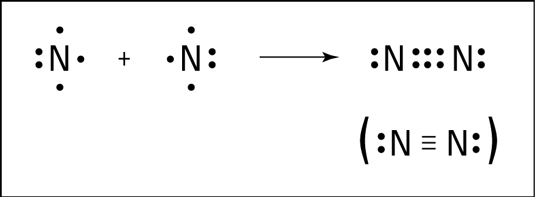
what is the name of CCl4?
carbon tetrachloride
monocarbon tetrachloride
tetracarbon monochloride
carbon chloride
What is the name of the compound SO2
Monosulfate oxide
Sulfur Dioxide
Monosulfur dioxide
What is the name of the compound P2O5
Pentaphosphorus dioxide
Phoshphide dioxide
Diphosphorus pentoxide
What is the name for MgF2 ?
magnesium fluoride
manganese Phosphide
magnesium(III) fluoride
magnesium fluoride(II)
Name Al2S3
Aluminum sulfide
Dialuminum trisulfide
ammonium sulfide
aluminum (II) sulfice
Name the compound CuO
copper (II) oxide
copper oxide
copper (I) oxide
carbon uranium oxide
Ionic or covalent?
CaCl2
ionic
covalent
Ionic or covalent?
CH4
covalent
ionic
Ionic or covalent?
NH4Cl
ionic
covalent
Ionic or covalent?
NH3
ionic
covalent

The correct name for LiCl is _______.
lithium monochloride
lithium(I) chloride
monolithium chloride
lithium chloride
monolithium monochloride

The correct name for FeO is _____.
iron oxide
iron (II) oxide
iron (III) oxide
iron (IV) oxide
iron (I) oxide

The symbol for the rubidium ion is
Rb2+
R+
R2+
Ru
Rb+
Which of the following is not the correct
combination of compound name and its formula?
hydrobromic acid; HBr
calcium sulfate; CaSO4
beryllium oxide; BeO
nickel(II) peroxide; Ni2O
ammonium chromate; (NH4)2CrO4
Titanium(IV) oxide has the formula
Ti4O
TiO4
Ti(IV)O
TiO2
Ti4O2
Which of the following formulas is
incorrect?
CaNO3
MgS
AlBr3
Li2O
NaOH
The correct name for P2O5 is
phosphorus(II) oxide
phosphorus(V) oxide
diphosphorus oxide
diphosphorus pentoxide
phosphorus pentoxide
The carbonate ion has the formula CO32–.
Which of the following is the correct formula
for sodium carbonate?
Na(CO3)2
Na2(CO3)2
Na2CO3
Na3(CO)2
NaCO3
The substance ClO3– is best described as
a molecule
a polyatomic ion
a polyatomic molecule
a mixture
Potassium chlorate has the formula
KCl
KClO
KClO2
KClO3
KClO4
The name for Al(OH)3 is
aluminum(III) hydroxide
aluminum trihydroxide
aluminum hydroxide
monaluminum trihydroxide
aluminum(I) hydroxide


SiCl6
Monosilicon hexachloride
Silicon hexachloride
Silicon heptachloride
Monosilicon heptachloride
What is the chemical formula for dinitrogen heptachloride?
N2Cl7
2N7Cl
2NCl7
N2Cl5
CS2
monocarbon disulfide
carbon bisulfide
carbon disulfide
carbon disulfer
monocarbon sulfide
SCl6
sulfur hexachloride
monosulfur hexachloride
sulfide hexachloride
sulfur heptachloride
sulfur chloride
P4H7
tetraphosphorus heptahydrogide
phosphorus heptahydride
tetraphosphorus heptahydride
tetraphosphorus hexahydride
tetraphosphorus heptahydrogen
P3N5
phosphorus pentanitride
triphosphorus pentanitrogen
triphosphide pentanitrogen
triphosphorus pentanitride
phosphorus nitride
Chemical reactions occur around us every day. Combustion of hydrocarbons releases the carbon stored in fossil fuels (e.g. coal, oil, natural gases) into the atmosphere as carbon dioxide gas. Which of the following equations represent this process?
C4H10+ O2→CO2+ H2O
CO2+ H2O → C6H12O6+ O2
CaCO3+ HNO3 →Ca(NO3)2+ H2O + CO2
NaHCO3+ HC2H3O2 → NaC2H3O2+ H2O + CO2
Which type of reaction is represented by the following equation?
2KClO3 → 2KCl + 3O2
synthesis
decomposition
single displacement
double displacement
What is the molecular formula of a compound that has an empirical formula of C2H5 and a molecular mass of 87 grams/mole?
Hint: The molecular formula should have a molar mass = sum(atomic mass for each element x # atoms in the chemical formula), Empirical formulas are the simplest representation of a chemical formula. For example, H2O2 would be the molecular formula of Hydrogen Peroxide, but it would have an Empirical Formula of HO. For H2O2, Its molar mass would be 2(1.01 g/mol) + 2 (15.999 g/mol) ≈ 34.01 g/mol
C2H5
C4H10
C6H15
C8H20
Element X is more reactive than lithium and magnesium but less reactive than potassium. Which element is most likely to be X?
Na
Rb
Ca
Be
Aluminum reacts with a certain nonmetallic element to form a compound with the general formula AlX; where element X is a diatomic gas at room temperature. What is element X?
Oxygen
Fluorine
Nitrogen
Chlorine

