
 Worksheets
Bonding Review
Total questions: 159
Worksheet time: 3hrs 38mins
Sea of electrons
Metallic Bonding
Ionic Bonding
Covalent Bonding
valence electrons exist as a "sea of electrons" around positive ions pulling ions close together
Metallic bond
Ionic bond
Covalent Bond
Shares electrons in order to fill an energy level
Metallic bond
Ionic bond
Covalent Bond
Attraction of oppositely charged ions
metallic
covalent
Ionic
Generally occurs between metal and nonmetal
Metallic
Ionic
Covalent
Molecules
Metallic Bond
Ionic Bond
Covalent Bond
Completes the octet
Metallic bond
Ionic bond only
Covalent bond only
Ionic and Covalent bonds
Electrons are shared equally
ionic bond
Polar covalent bond
Nonpolar covalent bond
Electrons are shared unequally
ionic bond
Polar covalent bond
Nonpolar covalent bond
Water
Metal
Ionic compound
Polar molecule
Nonpolar molecule
molecules with partial charges
Ionic compound
Polar molecule
Nonpolar molecule
molecules with NO partial charges
Metal
Ionic compound
Polar molecule
Nonpolar molecule
molecules that are attracted to each other because of partial charges
Ionic compound
Polar molecule
Nonpolar molecule
Forms large crystals with an ordered arrangement of oppositely charged ions
Metallic
Ionic
Covalent
Ion that has more protons than electrons
Positive ion
Negative ion
Ion that has more electrons than protons
Positive ion
Negative ion
Conducts electricity
Metallic
Ionic
Covalent
Any state at room temperature Low melting point
metals
ionic compounds
molecular compounds (covalent bonds)
Malleable
metallic
ionic
covalent
crystal structure
metals
ionic compounds
molecular compounds (covalent bonds)
Luster (shiny)
metals
ionic compounds
molecular compounds (covalent bonds)
Occurs between metal atoms.
Metallic Bonding
Ionic Bonding
Covalent Bonding
high melting point
ionic compounds
molecular compounds (covalent bonds)
conduct electricity when dissolved in water
ionic compounds
molecular compounds (covalent bonds)
metals
Poor conductors of electricity even when dissolved in water
metals
ionic compounds
molecular compounds (covalent bonds)
Which of the following compounds is formed by ionic bonding?
C₂H₆
CO₂
Na₂O
F₂
Which statement correctly describes what happens to Li and Cl atoms when they bond?
Li loses 1 valence electron and becomes a negative ion, Cl gains 1 valence electron and becomes a positive ion.
Li loses 1 valence electron and becomes a positive ion, Cl gains 1 valence electron and becomes a negative ion.
Li gains 1 valence electron and becomes a negative ion, Cl loses 1 valence electron and becomes a positive ion.
Li gains 1 valence electron and becomes a positive ion, Cl loses 1 valence electron and becomes a negative ion.
When lithium and oxygen bond together
Li forms a positive ion, O forms a negative ion.
Li forms a negative ion, O forms a positive ion.
Li and O share electrons.
Li forms an anion, and O forms a cation.
Which atom will form an anion when forming an ionic bond?
Sr
Li
Ca
O
When an atom of hydrogen and an atom of fluorine bond together
the H will be partially positive, because it has a higher electronegativity than F.
the H will be partially negative, because it has a higher electronegativity than F.
the F will be partially positive, because it has a higher electronegativity than H.
the F will be partially negative, because it has a higher electronegativity than H.
Which of the following molecules has the most polar bond between the bonded atoms, in term of greatest END?
HF
HCl
HBr
HI
Which of the following compounds is formed by covalent bonding?
Na2S
AlCl3
CH4
LiCl
Which of the following molecules contains a nonpolar covalent bond?
H2O
HF
F2
NH3
Which of the following molecules contains a polar covalent bond?
H2
PH3
F2
NH3
Using electronegativity differences, predict the type of bond present between the following: a. sodium and fluorine b. chlorine and hydrogen c. carbon and sulfur d. carbon and fluorine e. phosphorus and oxygen f. hydrogen and fluorine g. copper and sulfur h. iodine and bromine
The question asks to predict the type of bond (ionic, covalent, or polar covalent) based on electronegativity differences for pairs of elements.
The question asks to predict the type of bond (metallic, ionic, or covalent) based on electronegativity differences for pairs of elements.
The question asks to predict the type of bond (hydrogen, ionic, or covalent) based on electronegativity differences for pairs of elements.
The question asks to predict the type of bond (van der Waals, ionic, or covalent) based on electronegativity differences for pairs of elements.
Identify the following bonds as polar covalent or nonpolar covalent—giving the END. For polar covalent bonds, label the δ+ and δ- ends of the molecule.
H—H
nonpolar covalent
H—C
polar covalent
H—Cl
polar covalent
P—Cl
polar covalent
Cl—Cl
nonpolar covalent
Match the following to form true statements:
When solid, ionic compounds
cannot conduct electricity
When melted ionic compounds
can conduct electricity
Ionic compounds have
high melting and high boiling points
There are many strong bonds
between ions in an ionic compound.
Elements in group 1 of the periodic table form ions
with a charge of 1+

Calculate ΔEN for Pb-S
1.1
-0.6
0.6
4.4
Calculate ΔEN for Pb-S
1.1
-0.6
0.6
4.4
Match the following
valence electron
energy level of an electron
covalent
sharing of electron pairs
ionic
transfer of electrons
reactivity
ability to undergo chemical reactions
oxidation state
charge of an atom

What is a covalent bond?
A bond between atoms where electrons are shared.
A bond between atoms where one atom gains an electron and another loses an electron.
A bond where electrons dance in a 123 pattern.
A bond between two atoms where they send each other special BFF messages.
What part of the atom makes a bond?
Electrons
Protons
Neutrons
Any subatomic particle
8. Predict what type of bond would form between Mg and Cl.
Ionic
Covalent
Metallic
Polar Covalent
13. How many valence electrons do elements in the group 14 contain?
3
4
13
14
10. If an atom loses two electrons what charge will it have?
+2
-2
+1
-1
MgCl2, this compound has ...
ionic bond
covalent bond
CH4, this compound has ...
ionic bond
covalent bond
What type of bond would form between Li and O?
Polar Covalent
Non-Polar Covalent
Ionic
Valence electrons are found
in the innermost energy level of an atom
in the middle energy levels of an atom
in the outermost energy levels of an atom

Cl2
Ionic Bond
Covalent Bond
NaO
Ionic Bond
Covalent Bond
NH3
Ionic Bond
Covalent Bond
The electrons in a POLAR covalent bond are shared...
Evenly
Unevenly
Electrons are not shared
None of the Above
The electrons in a NONPOLAR covalent bond are shared...
Evenly
Unevenly
Electrons are not shared
None of the Above
Electronegativity is...
The ability for an atom to ATTRACT electrons
the ability of an atom to LOSE electrons
the energy required to remove an electron from an atom
how easy it is to make friends.

Which element is MORE electronegative?
O
Be
What is the difference in electronegativity for HBr?
0.7
1.9
2.0
2.8
What must the difference in electronegativity between two atoms be in order for the bond between them to be nonpolar covalent?
less than 0.4
greater than 1.7
between 0.4 and 1.7
exactly 0
Electronegativity _______ across a period and ______ down a group.
increases, increases
increases, decreases
decreases, increases
decreases, decreases
What are the intermolecular attractions that form ionic compounds?
Covalent bonds
Hydrogen bonds
Ionic bonds
Van der Waals forces
What are the intermolecular attractions that occur amongst molecules?
Covalent bonds
Ionic bonds
Hydrogen bonds
Metallic bonds
What does the prefix 'Inter' mean?
A) Within
B) Between
C) Inside
D) Outside
Fill in the blank: Forces between different substances are called ________ forces.
intermolecular
intramolecular
gravitational
nuclear
What is the measure of the ability of an atom in a bond to attract electrons called?
Ionization Energy
Electronegativity
Atomic Radius
Electron Affinity
The properties of a compound are very different from the properties of the elements that make up the compound.
True
False
When a chemical reaction occurs, what happens with the valence electrons?
They are destroyed
They are transferred or shared
They remain unchanged
They disappear
Fill in the blank: The chemical formula NaCl consists of 1 atom of sodium and 1 atom of ____.
chlorine
oxygen
hydrogen
nitrogen
What is the chemical formula for ammonia?
NH3
H2O
CO2
O2
What is the chemical formula for aluminum sulfate?
A) Al2(SO4)3
B) Al2O3
C) Al(SO4)2
D) AlSO4
According to the Octet Rule, atoms will gain, lose, or share electrons in order to have how many electrons in their outer energy shell?
6
7
8
9
What is the valence electron count of Sodium (Na) in the formation of NaCl?
1
2
7
8
What happens to Sodium (Na) when it loses 1 valence electron in the formation of NaCl?
It becomes unstable
Its outermost energy level becomes full and it becomes stable
It gains another electron
It forms a covalent bond
What are intramolecular forces
Forces within a molecule
Forces between two or more molecules
Forces of the opposition
Forces of your allies
What is a compound?
Two or more atoms of the same element combined
Two or more elements physically combined
Two or more elements chemically combined
Two or more cheeses on a sandwich
All compounds are molecules, but not all molecules are compounds
True
False
A chemical formula tells us>>>>>
in what order atoms are joined together
absolutely nothing
the way to bake a cake
what elements and how many of each are in a unit of compound
Elements form compounds to be ___________
unstable
ordinary
stable
different
To be stable, an atom follows the ________ in order to have ____ electrons in their outer energy shell
octet, 6
octet, 8
duplo, 2
duplo 8
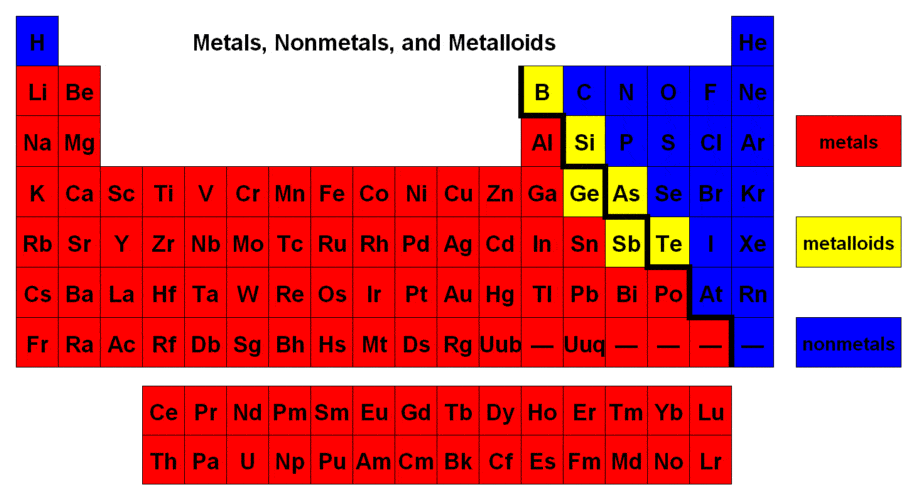
When forming a covalent bond, a non-metal atom:
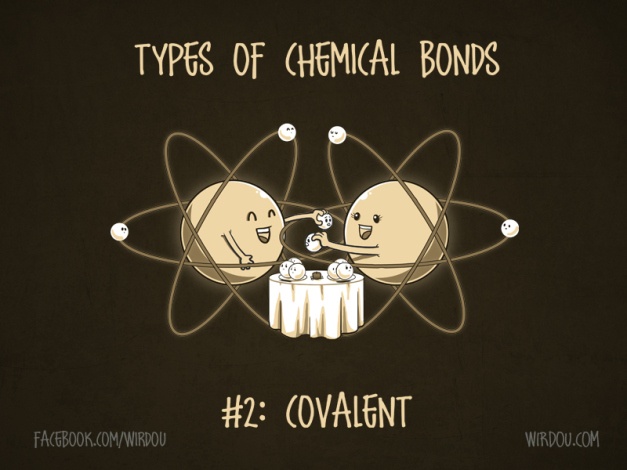
What type of energy is stored in a bond?
potential energy
kinetic energy
thermal energy
Why do atoms bond?
to become more stable
to get 8 valence electrons
to gain more neurons
to gain more protons
when a bond is formed?
energy is released
energy is absorbed
exothermic
stability increases
When a bond is BROKEN
energy is absorbed
energy is released
endothermic
stability decreases
Why is there a transfer of electrons in ionic compounds?
because the electronegativity difference is greater than 1.7
because the electronegativity difference is greater than 1.0
because the electronegativity difference is between 0.0 - 0.4
because the electronegativity difference is between 0.5 - 1.7
H2
ionic
covalent
CH4
ionic
covalent
CaCl2
ionic
covalent
What type of energy is stored in a bond?
chemical
potential
kinetic
thermal
C2O5
Covalent
Ionic
CCl4
Covalent
Ionic
PI3
Covalent
Ionic
PI5
Covalent
Ionic
S2Cl2
Covalent
Ionic
S2F10
Covalent
Ionic
CO
Covalent
Ionic
F10O9
Covalent
Ionic
FN
Covalent
Ionic
I2Cl
Covalent
Ionic
NaBr
Covalent
Ionic
MgCl2
Covalent
Ionic
K2Te
Covalent
Ionic
Na3N
Covalent
Ionic
Li2S
Covalent
Ionic
MnS2
Covalent
Ionic
Mg3P2
Covalent
Ionic
CaCN
Covalent
Ionic
RbOH
Covalent
Ionic
AlPO4
Covalent
Ionic

This could be the dot diagram of
Mg
Cl
C
O
What is the goal of the Lewis Dot Structure?
To determine the electron position.
To show the element's valence electrons & bonding capabilities.
To find the atomic mass of an element.
To search for the number of electrons in an individual atom.
How many valence electrons should Lithium have in its Lewis dot model?
1
2
3
4
How many valence electrons should Oxygen have in its Lewis dot model?
5
6
7
8
How many valence electrons should Magnesium have in its Lewis dot model?
1
2
3
4

This is a correct dot diagram for nitrogen (N)
true
false

This is a correct dot diagram for carbon (C)
true
false

This is a correct dot diagram for neon (Ne)
true
false
Which of these is incorrect?


How many electrons should Boron have around its Lewis dot model?
1
2
3
4


a substance in an excellent conductor of electricity in a solution. The chemical bonds in this substance are most likely?
ionic, because the valence electrons are mobile
ionic, because the valence electrons are stationary
covalent, because the valence electrons are stationary
metallic, because the valence electrons are stationary

