wayground logo

Free Printable Worksheets

Font size

S
M
L
XL
Worksheets

Physical Science First Semester Review

Total questions: 172

Worksheet time: 3hrs 48mins
Name
Class
Date
1.
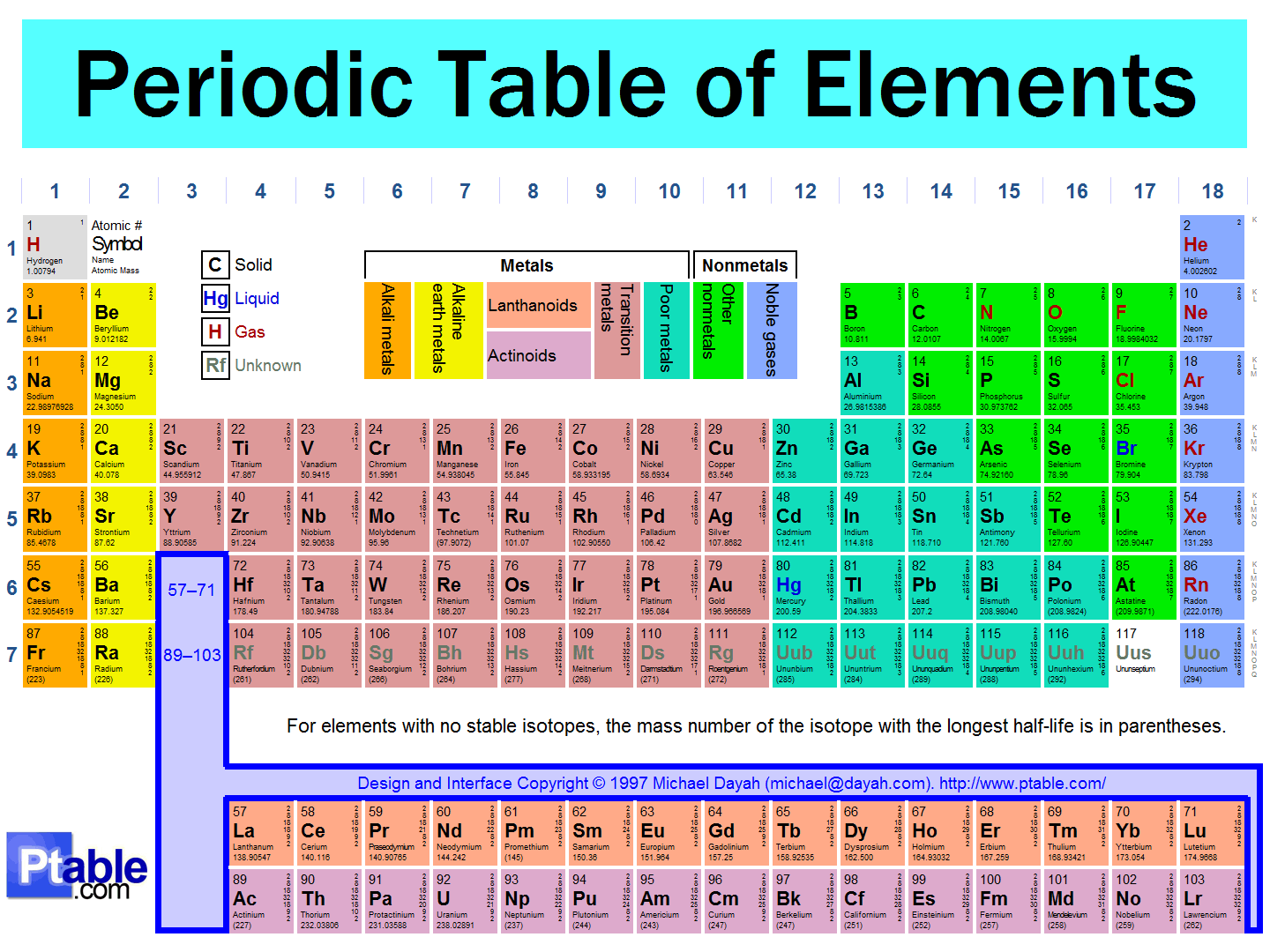
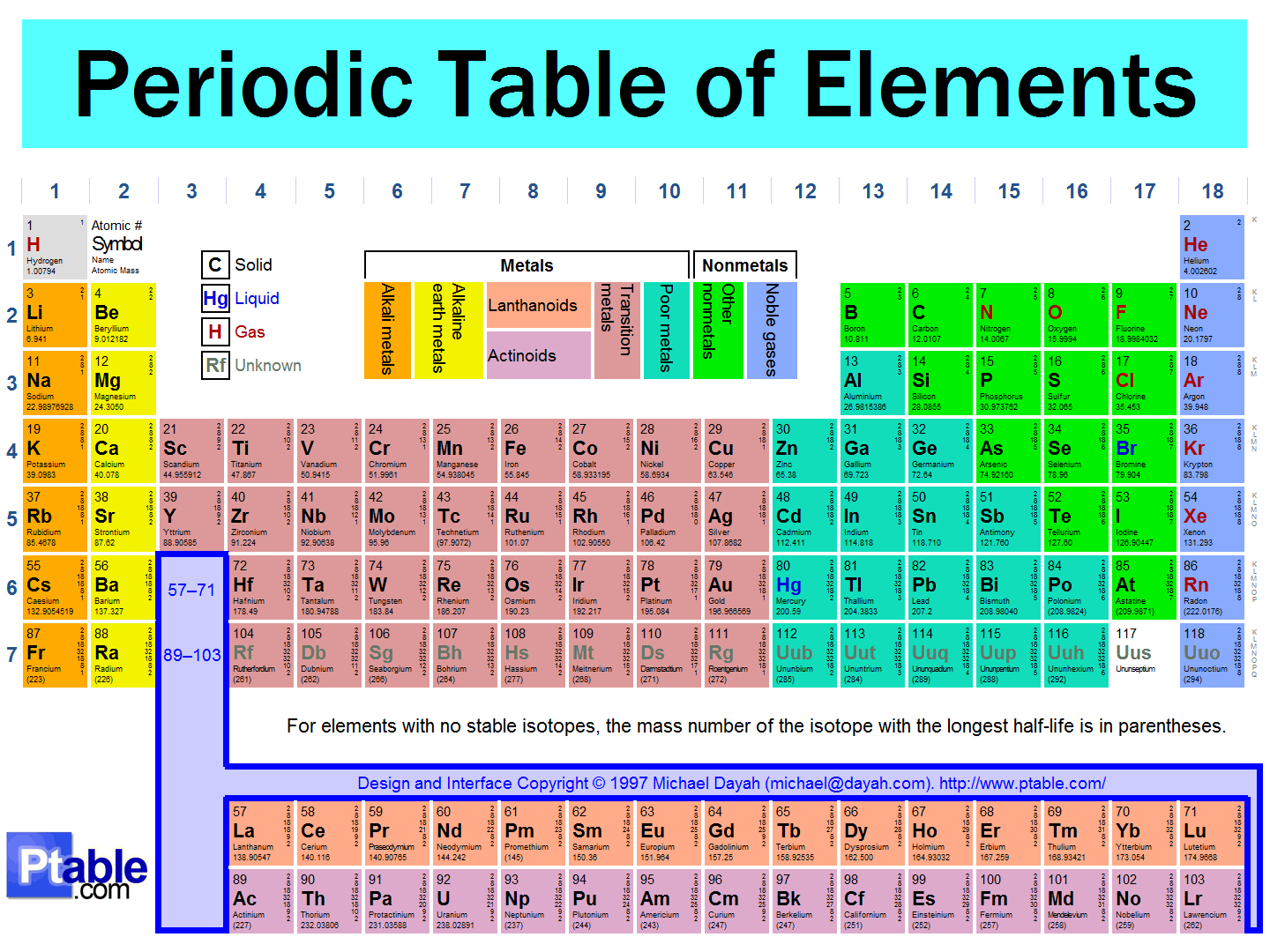
The horizontal row on the periodic table is called a
a)
group
b)
family
c)
period
d)
atomic number
2.
A vertical column is called...
a)
group
b)
tower
c)
period
d)
crew
3.
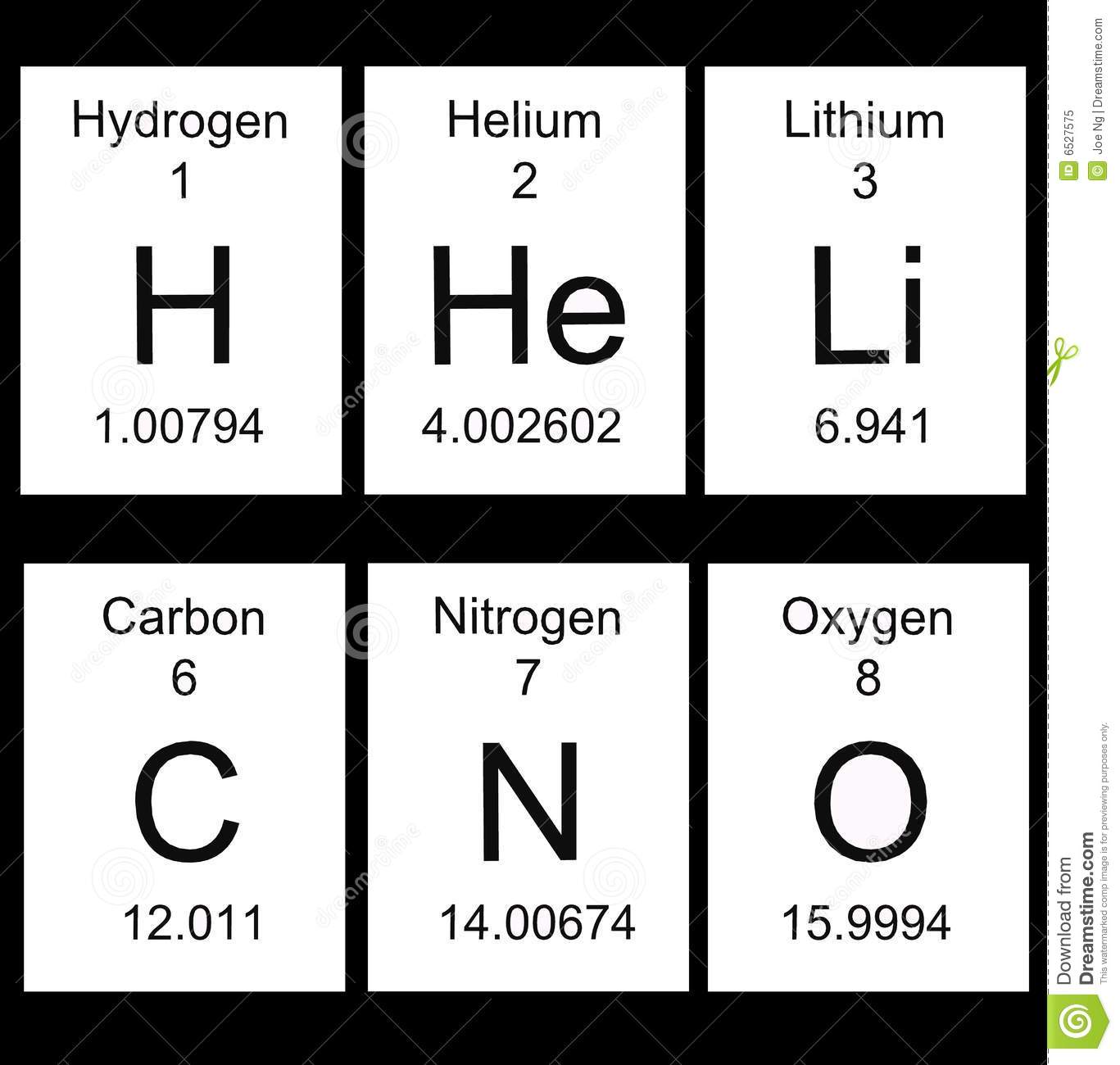
The number at the bottom of each square on the periodic table is the ...
a)
atomic number
b)
atomic mass
c)
chemical symbol
d)
element name
4.
The number at the top of each square on the periodic table is the ...
a)
atomic number
b)
atomic mass
c)
Chemical Symbol
d)
Element Name
5.
What is the chemical symbol for Lithium?
a)
H
b)
He
c)
Li
d)
N
6.
Most of the elements on the periodic table are classified as _____.
a)
Metals
b)
Nonmetals
c)
Metalloids
d)
Periods
7.
This class of elements are sometimes called "semiconductors."
a)
Metals
b)
Nonmetals
c)
Metalloids
d)
Groups
8.
A ___________ is an arrangement of elements in columns
a)
columns
b)
rows
c)
periodic table
d)
electron shell
9.
The atomic number tells you what?
a)
number of electrons
b)
number of protons
c)
number of neutrons
d)
both electrons and protons in an atom.
10.
Which group of the periodic table is composed of inert (not reactive)  gases?
a)
alkali metals
b)
alkaline earth metals
c)
halogens
d)
noble gases
11.
Elements which are shiny, conduct electricity and heat are called
a)
metal
b)
nonmetal
c)
metalloid
d)
nonexistent
12.
The atoms along the staircase are called 
a)
metals
b)
nonmetals
c)
metalloids
d)
noble gases
13.
Which is a halogen?
a)
Helium
b)
Chlorine
c)
Oxygen
d)
Neptune
14.
Which is an alkali metal?
a)
Magnesium
b)
Iron
c)
Sodium
d)
Europium
15.
A proton is....
a)
A negatively charged subatomic particle
b)
A positively charged subatomic particle
c)
A neutrally charged subatomic particle
d)
The only subatomic particle located in the nucleus
16.
A neutron has a charge of
a)
+2
b)
No charge
c)
-1
d)
+1
17.
The positive particles of an atom are 
a)
electrons 
b)
positrons 
c)
neutrons 
d)
protons 
18.
An atoms overall charge is 
a)
positive 
b)
depends on its mood 
c)
neutral 
d)
negative 
19.
If an atom has 3 electrons, how many protons does it have?
a)
1
b)
2
c)
4
d)
3
20.
The subatomic particle with a negative charge is the
a)
electron
b)
proton
c)
neutron
d)
nucleus 
21.
What is the atomic number?
a)
the number of protons
b)
the number of protons and neutrons
c)
the number of neutrons
d)
the number of protons and electrons
22.
What is the mass number?
a)
the number of protons
b)
the number of protons and neutrons
c)
the number of neutrons
d)
the number of protons and electrons
23.
Ions are: 
a)
atoms with a positive or negative charge
b)
atoms with no charge
c)
atoms with ONLY a positive charge
d)
atoms with ONLY a negative charge
24.
How many neutrons does the isotope of lithium have?
a)
8
b)
3
c)
4
d)
5
25.
Two atoms of the same element but with different mass numbers are called________
a)
electrons
b)
isotopes
c)
variables
d)
electron cloud
26.
How many protons does this isotope of titanium have?
a)
48
b)
22
c)
26
d)
70
27.
What is the atomic mass of Neon?
a)
10
b)
20.18
c)
10.18
d)
20.18
28.
What subatomic particles would you find in the nucleus of an atom?
a)
Protons only
b)
Protons and Neutrons
c)
Neutrons and Electrons
d)
Protons and Electrons 
29.
Which subatomic particles contribute the most to the mass of an atom?
a)
Protons, Neutrons, Electrons
b)
Protons only
c)
Protons and Electrons
d)
Protons and Neutrons
30.
If an atom has 12 positively charged subatomic particles, which of the following must it also have to be considered a neutral atom?
a)
12 neutrons
b)
12 electrons
c)
12 protons
d)
24 protons and neutrons
31.
An atom has 10 protons, 15 neutrons and 10 electrons what is its mass number.
a)
20
b)
10
c)
5
d)
25
32.
An element with a mass number of 11 and an atomic number of 5 has how many neutrons?
a)
11
b)
5
c)
6
d)
16
33.
Which letter represents a proton?
a)
A
b)
B
c)
C
d)
D
34.
Which letter represents a neutron?
a)
A
b)
B
c)
C
d)
D
35.
Which letter represents an electron?
a)
A
b)
B
c)
C
d)
D
36.
Which letter represents the nucleus?
a)
A
b)
B
c)
D
d)
E
37.
What is the atomic mass of the atom pictured? 
a)
9
b)
10
c)
18
d)
19
38.
What is the atomic number of the atom pictured? 
a)
9
b)
10
c)
18
d)
19
39.
What is the element name of the atom pictured? 
a)
Fluorine
b)
Neon
c)
Argon
d)
Potassium
40.
Naming a compound of two non-metals requires us to use..
a)
Prefixes
b)
Roman Numerals
c)
Nothing, just name it
41.
All compounds made up of two elements must end with...
a)
-ide
b)
-ate
c)
-ite
42.
What is the name of the compound SO2
a)
Monosulfate oxide
b)
Sulfur Dioxide
c)
Monosulfur dioxide
43.
What is the name of the compound CCl4
a)
Carbon Tetrachloride
b)
Monocarbon Tetrachloride
c)
Carbon Carbon Tetraiodide
44.
What is the name of the compound P2O5
a)
Pentaphosphorus dioxide
b)
Phoshphide dioxide
c)
Diphosphorus pentoxide
45.
What is the name of the compound CoCl2
a)
cobalt (II) chloride
b)
monocobalt dichloride
c)
Chlorous cobalt
46.
What is the name of the compound Ni(ClO3)2
a)
nickel (II) chlorate
b)
nickel (I) chlorite
c)
Nickel dichlorate
47.
What is the name of the compound HgCl2
a)
mercury (II) chloride
b)
mercury chlorite
c)
Monomercury dichloride
48.
What is the name of the compound KClO3
a)
potassium chlorate
b)
potassium chlorine
c)
Potassium chlorine trioxygen
49.
Na2S
a)
sodium sulfide
b)
disodium monosulfide
c)
sodium sulfur
d)
sodium(I) sulfide
50.
Is the formula for barium carbonate BaCO3? If not, what would the right formula be?
a)
It is correct
b)
It is not. It should be BaCO
c)
It is not. It should be Ba2CO3
d)
Its is not. It should be Ba3CO2
51.
Is the formula for chromium(II) nitride, CrN2? If not, what would the formula be?
a)
It is correct
b)
Is not. It should be Cr2N
c)
Is not. It should be Cr3N2
d)
Is not. It should be CrN2
52.
LiOH
a)
lithium hydrogen oxide
b)
lithium hydroxide
c)
lithium monohydroxide
d)
lithium oxide
53.
boron trichloride
a)
BCl3
b)
BClO3
c)
BaCl2
d)
B3Cl
54.
Is the formula for magnesium hydroxide, MgOH2?. If not, what should the formula be?
a)
Mg(OH)2
b)
MgOH
c)
MgO2H2
d)
Mg2OH
55.
chromiun(III) chloride
a)
CrCl
b)
CrCl3
c)
Cr3Cl
d)
ClCr3
56.

Name Al2O3

a)

aluminum (II) oxide

b)

aluminum hydroxide

c)

aluminum oxide

d)

aluminum (III) oxide

57.
What is the formula for copper(I) sulfate?
a)
Cu(SO3)
b)
Cu(SO4)
c)
Cu2(SO3)
d)
Cu2(SO4)
58.
What is the formula for magnesium phosphide?
a)
Mg3P2
b)
Mg2P3
c)
Mg2(PO3)
d)
Mg3(PO3)2
59.
Which of these combinations is an ionic compound made of?
a)
Metal and Metal
b)
Nonmetal and Nonmetal
c)
Metal and Nonmetal
d)
Cation and Cation
60.
Phosphorous trichloride
a)
PCl3
b)
P3Cl
c)
P3Cl3
d)
PCl
61.
Zn3P2
a)
Zinc Phosphide
b)
Zinc (II) Phosphide
c)
Trizinc Diphosphide
d)
Zinc Phosphate
62.
NF3
a)
Nitrogen Trifluoride
b)
Nitrogen Fluoride
c)
Nitrogen (III) Fluoride
d)
Nitrogen and Fluorine
63.
4Si + S8 --> 2Si2S4
a)
Synthesis
b)
Decomposition
c)
Single displacement
d)
Double displacement
64.
3Ca + 2AlCl3 --> 3CaCl2 + 2Al
a)
Synthesis
b)
Decomposition
c)
Single diplacement
d)
Double displacement
65.
3KOH + H3PO4 --> K3PO4 + 3H2O
a)
Synthesis 
b)
Decomposition
c)
Single displacement
d)
Double displacement
66.
2Pb(NO3)2 --> 2PbO + 4NO2 + O2
a)
Synthesis 
b)
Decomposition
c)
Single displacement
d)
Combustion
67.
3Mg + N2 --> Mg3N2
a)
Synthesis 
b)
Decomposition
c)
Single displacement
d)
Combustion
68.
2NO2 --> N2 + 2O2
a)
Synthesis
b)
Decomposition
c)
Single displacement
d)
Combustion
69.
2Fe + 3H2SO4 --> Fe2(SO4)3 + 2H2
a)
Synthesis 
b)
Decomposition
c)
Single displacement
d)
Combustion
70.
P4 + 3O--> 2P2O3
a)
Synthesis 
b)
Decomposition
c)
Single displacement
d)
Combustion
71.
Which chemical reaction breaks down into 2 substances?
a)
Double Replacement
b)
Single Replacement
c)
Synthesis
d)
Decomposition
72.
Which chemical reaction switches 2 elements?
a)
Double Replacement
b)
Single Replacement
c)
Combustion
d)
Decomposition
73.
A + B = AB
a)
Double Replacement
b)
Synthesis
c)
Combustion
d)
Decomposition
74.
AB + CD = AD + CB
a)
Double Replacement
b)
Single Replacement
c)
Combustion
d)
Decomposition
75.
A + BC = B + AC
a)
Single Replacement
b)
Combustion
c)
Double Replacement
d)
Synthesis
76.
Which chemical reaction takes place when 2 substances react to form a single product?
a)
Decomposition
b)
Double Replacement
c)
Single Replacement
d)
Synthesis
77.
AB = A + B
a)
Decomposition
b)
Single Replacement
c)
Combustion
d)
Synthesis
78.
Fe + H2SO4 --> Fe2(SO4)3 + H2
a)
Synthesis (combination)
b)
Decomposition
c)
Single replacement
d)
Combustion
79.
Is this equation balanced?
a)
yes
b)
no
c)
Not enough information
80.
Is this equation balanced?
a)
yes
b)
no
c)
Not enough information
81.
Balance this equation
_Al +_HCl --> _H+_AlCl3
a)
2, 6, 3, 2
b)
it is already balanced
c)
4, 12, 3, 4
d)
2, 1, 4, 5
82.
Balance this equation-
__P+ __O--> __P2O3
a)
it is already balanced
b)
2, 1, 3
c)
1, 2, 3
d)
1, 3, 2
83.
Balance this equation.
_CH4 + _O--> _CO+ _H2O
a)
1,2,1,1
b)
2,1,2,1
c)
1,2,1,2
d)
0,2,0,2
84.
Balance this equation.
_CF+ _Br-- _CBr+ _F2
a)
2,1,2,1
b)
1,2,2,1
c)
1,2,1,2
d)
2,2,2,2
85.
Balance this equation
_N+ _H--> _NH3
a)
1,2,3
b)
1,3,2
c)
1,1,2
d)
2,1,1
86.
Balance this equation.
_Mg + _Cl--> _MgCl2
a)
1, 2,1
b)
already balanced
c)
2,1,1
d)
1,1,2
87.
Balance this equation.
_SnO+_H2-->_Sn +_H2O
a)
1,1,2,1
b)
1,2,1,1
c)
1,2,1,2
d)
1,2,2,1
88.
Balance this equation
_Zn+_HCl-->_ZnCl+_H2
a)
1,1,2,1
b)
1,1,1,2
c)
1,2,1,1
d)
2,1,1,1
89.
What is the little number after an element in a chemical equation called.
Example: H2
a)
Coefficient 
b)
Subscript
c)
Atom
d)
Equation
90.
What is the arrow in a chemical equation...
H2 + O --> H2O
a)
Reactants
b)
Products 
c)
Yields 
d)
Chemical Equation 
91.
At the end of chemical reactions, what is the total mass of the reactants compared to the total mass of the products?
a)
the product is doubled
b)
the product is half the mass of the reactants
c)
the mass is the same
d)
the mass changes depending on the reaction
92.
What is a coefficient?
a)
The small number on the right of the chemical symbol.
b)
The large number to the left of a formula.
93.
When balancing equations a ____ can be placed to the left of a formula of a substance to make the equations balanced
a)
charge
b)
subscript
c)
random number
d)
coefficient
94.
How many atoms of aluminum are on each side of the following equation: 4Al + 3O--> 2AlO3
a)
2
b)
6
c)
1
d)
4
95.
What is the chemical symbol for the element hydrogen
a)
H
b)
He
c)
h
d)
he
96.
What is the chemical symbol for the element Silicon
a)
S
b)
Si
c)
si
d)
Sl
97.
What is the chemical symbol for the element Carbon
a)
ca
b)
co2
c)
C
d)
Cd
98.
What is the chemical symbol for the element Aluminum
a)
A
b)
AL
c)
Al
d)
al
99.

metals are good conductors of

a)

heat

b)

electricty

c)

both heat and electricity

d)

i don't know😥😥

100.

non metals are

a)

dull

b)

shiny

c)

ductile

d)

malleable

101.

metalloids conduct heat exactly like metals

a)

true

b)

false

102.

nonmetals are found in the_________the periodic table

a)

left side

b)

right side

c)

the zigzag line

d)

i don't know😫😫😫

103.

__________ can be hammered i different shapes

a)

nonmetals

b)

metalloids

c)

metal

104.

the element neon is a _____

a)

metal

b)

nonmetal

c)

metalloid

105.

semiconductors are____

a)

metal

b)

nonmetal

c)

metalloids

106.
Which of the following is a physical characteristic of a metal?
a)
texture
b)
malleable
c)
brittle
d)
semi-conductor
107.
Which of the following is a physical characteristic of a nonmetal?
a)
texture
b)
malleable
c)
brittle
d)
semi-conductor
108.
Which of the following is a physical characteristic of a metalloid?
a)
texture
b)
malleable
c)
brittle
d)
semi-conductor
109.
An element has properties of BOTH metals and nonmetals. WHERE would it be found in the periodic table? 
a)
To the right 
b)
To the left 
c)
on the zig zag line
110.
If a student observes a silvery solid that is malleable, good conductor, and ductile it is a...
a)
nonmetal 
b)
metal 
c)
metalloid
111.
Elements in the DARK gray area can best be described as -
a)
Malleable
b)
Brittle
c)
Dull
d)
Poor conductors
112.
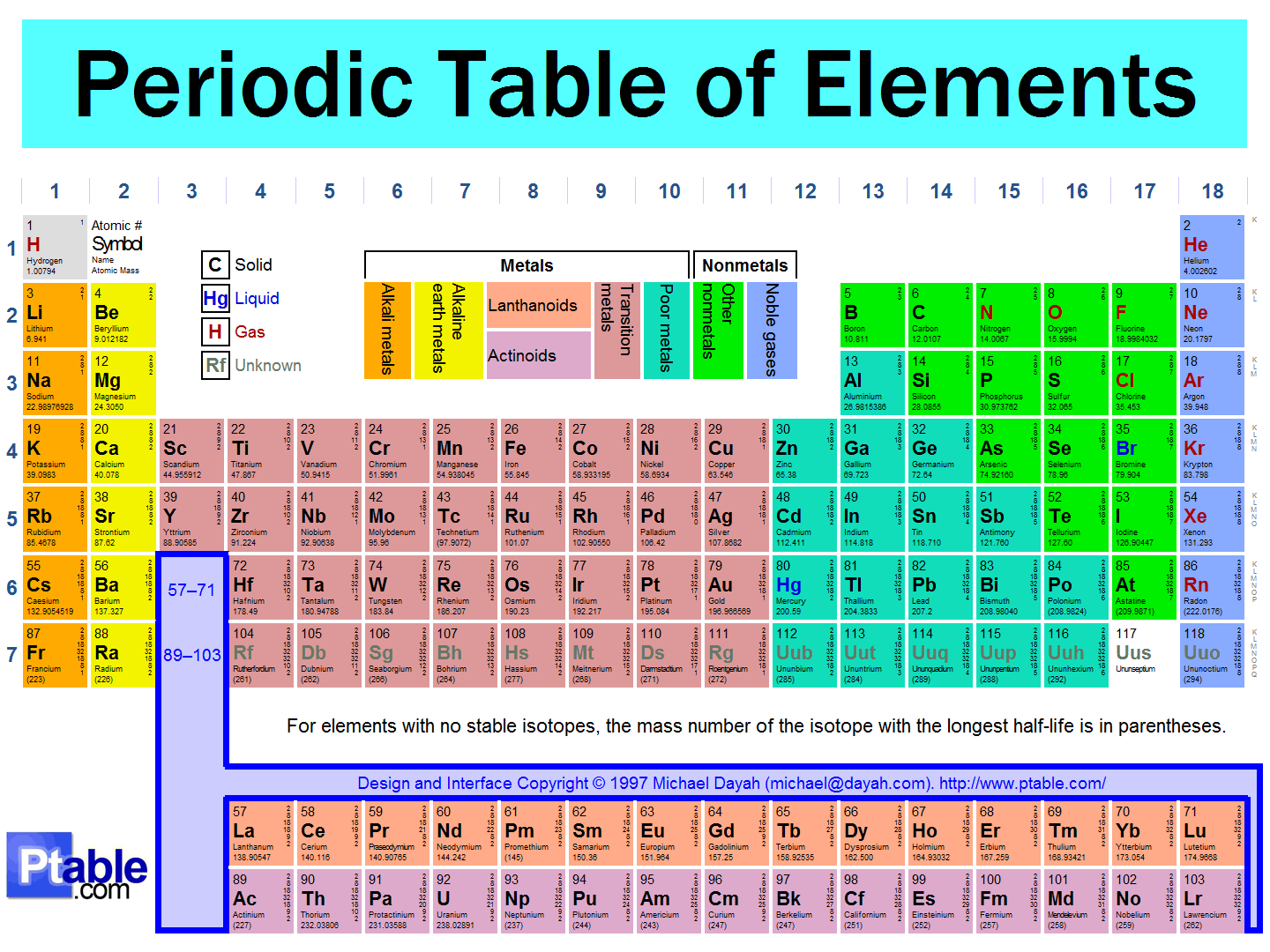
Look at the periodic table that is provided. Where would metals be located? 
a)
to the left of the table in blue
b)
to the right of the table in pink
c)
in the zigzag line in yellow
113.
Look at the periodic table that is provided. Where would nonmetals be located? 
a)
to the left of the table in blue
b)
to the right of the table in pink
c)
in the zigzag line in yellow
114.
What element is in Group 18, Period 1
a)
Ar (argon) 
b)
H (Hydrogen) 
c)
Be (beryllium) 
d)
He (helium)
115.
What element is in Group 2, Period 4
a)
Ca (calcium) 
b)
Br (bromine) 
c)
Be (beryllium) 
d)
He (helium)
116.
What element is in Group 15, Period 6
a)
Ca (calcium) 
b)
Bi (bismuth) 
c)
P (phosphorus) 
d)
C (carbon)
117.

Ionic compounds are made of cations and anions.

a)

True

b)

False

118.

Metals form cations.

a)

True

b)

False

119.

Which is a property of an ionic compound?

a)

High melting and boiling point

b)

Good electric conductor

c)

Poor insulator

d)

Malleable

120.

Which is a property of ionic compounds?

a)

hard and brittle

b)

ductile

c)

in solids, good conductor of electricity

d)

poor insulators

121.

What is not a property of metals?

a)

Malleable

b)

ductile

c)

good heat conductor

d)

poor electrical conductor

122.

Metals tend to

a)

lose electrons

b)

gain electrons

c)

share electrons

123.

When metals bond with nonmetals they form what type of bonds?

a)

covalent

b)

ionic

c)

metallic

d)

special

124.
To change a solid to a liquid, what do you add?
a)
heat
b)
water
c)
cold
d)
mass
125.
Which state of matter has a definite shape?
a)
solid
b)
liquid 
c)
gas
d)
plasma
126.
Which state of matter take up ALL the space inside a container? 
a)
solid
b)
liquid
c)
gas
d)
all of the above
127.
What is happening in the statement below?
The ice cube melted.
a)
Matter is changing from a liquid to a solid.
b)
Matter is changing from a liquid to a gas.
c)
Matter is changing from a solid to a liquid.
d)
Matter is changing from a gas to a liquid.
128.
This picture is an example of a ____________.
a)
solid
b)
liquid
c)
gas
d)
plasma
129.
This is an example of a _________.
a)
solid
b)
liquid
c)
gas
d)
plasma
130.
When heat is added to a solid, it ______________.
a)
freezes
b)
evaporates
c)
melts
d)
condenses
131.
When heat is added to a liquid, it ______________.
a)
freezes
b)
evaporates
c)
melts
d)
condenses
132.
Liquids and gases are similar because __________________________.
a)
they both take the shape of their container
b)
they both have their own shape
c)
liquids pour and gases don't
d)
liquids take the shape of the container but gases have their own shape
133.
a)
This picture is showing a liquid to solid state change.
b)
This picture is showing a gas to a liquid state change
c)
This picture is showing a solid to liquid state change.
d)
This picture is showing a liquid to a gas state change
134.
The drops of water that appear on the outside of a glass of cold juice on a warm day are an example of?
a)
Sublimation: A solid turning into a gas.
b)
Condensation: A gas changing to a liquid.
c)
Evaporation: A liquid changing to a gas.
d)
Deposition: A gas changing to a solid.
135.
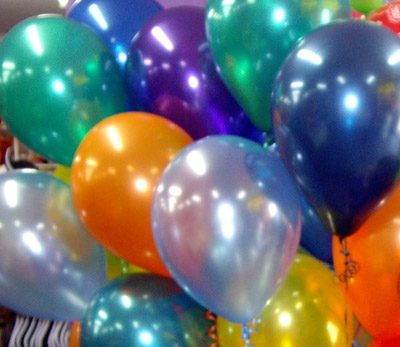
The picture shows examples of:
a)
solids
b)
gases
c)
liquids
d)
plasmas
136.
Which form of matter takes the shape of a container like this juice?
a)
liquid
b)
solid
c)
plasma
d)
gas
137.
Which form of matter has a definite shape like this picture?
a)
liquid
b)
solid
c)
gas
d)
plasma
138.
The picture shows examples of...
a)
solids
b)
liquids
c)
oil
d)
gases
139.
All these are examples of ....
a)
liquids
b)
gases
c)
solids
d)
water
140.
What are 3 of the states of matter?
a)
solids, liquids, and gases
b)
solids, liquids, and solids
c)
liquids, gases, and density
d)
density, volume, and mass
141.
A substance that has a definite shape and volume.
a)
evaporation
b)
gas
c)
liquid
d)
solid
142.
Anything that has mass and takes up space is called ______.
a)
atom
b)
compound
c)
matter
d)
molecule
143.
Electrically charged state of matter similar to a gas.
a)
temperature
b)
liquid
c)
plasma
d)
gas
144.
Adding HEAT to matter causes its particles to:
a)
move faster and farther apart
b)
Move slower and farther apart
c)
Move faster and closer together
d)
Move slower and closer together
145.
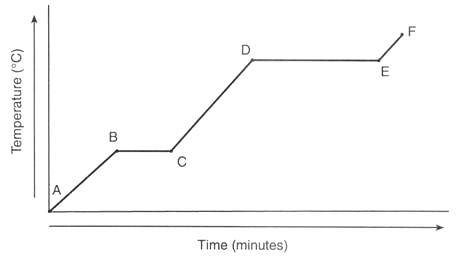
Describe the substance between letters A and B. 
a)
Solid
b)
Liquid
c)
Melting
d)
Evaporating
146.
Describe the substance between letters C and D. 
a)
Gas
b)
Liquid
c)
Melting
d)
Evaporating
147.
Describe the substance between letters D and E. 
a)
Gas
b)
Liquid
c)
Melting
d)
Evaporating
148.
Describe the substance between letters E and F. 
a)
Gas
b)
Liquid
c)
Melting
d)
Evaporating
149.
Looking at the heating curve above, What is occurring at letter B?
a)
Ice is melting to form liquid water.
b)
Liquid water is becoming warmer.
c)
Liquid water is boiling to form steam.
d)
Steam is becoming warmer
150.
True or false: melting and freezing occur at the same temperature.
a)
True
b)
False
151.
This type of graph is called a:
a)
Phase diagram
b)
Heating curve
c)
State of matter
d)
Temperature chart
152.
A substance's heating curve is shown in the graph.  What is its boiling point?
a)
100 C
b)
60 C
c)
80 C
d)
20 C
153.

The freezing point of the sample is

a)

-60 ºC

b)

-100 ºC

c)

60 ºC

d)

100 ºC

154.

The boiling point of the sample is

a)

-60 °C

b)

-100 °C

c)

60 °C

d)

100 °C

155.

The condensing point of the sample is

a)

-60 °C

b)

-100 °C

c)

60 °C

d)

100 °C

156.
If you increase the pressure of a constant volume of gas, what will happen to the temperature?
a)
Increase
b)
Decrease
c)
Stay the same
d)
It will Blow Up
157.
What will happen to the volume of a gas under constant temperature if the pressure increases?
a)
Increase
b)
Decrease
c)
Nothing
d)
Explosion!
158.
How are pressure and volume related?
a)
Directly
b)
Indirectly
c)
They aren't related
159.
If a balloon is cooled what will happen to the volume?
a)
Volume will increase
b)
Volume will decrease
c)
Volume will not change
160.
Gas molecules can easily be compressed  because ___________. 
a)
gas molecules are soft
b)
gas molecules are far apart
c)
gas molecules follow the shape of the container
161.
Which container will have lower pressure?
a)
left
b)
right
c)
they both have the same pressure
162.
You decide to make a balloon animal. As the balloon is being twisted, it increases the pressure inside of the balloon. What happens to the volume?
a)
It increases
b)
It decreases
c)
It stays the same
163.
You go camping and roast marshmallows over a campfire. What happens to the volume of the air bubbles inside the marshmallows? 
a)
It increased
b)
It decreased
c)
It stayed the same
164.
A balloon will pop in the atmosphere because..
a)
Pressure goes down volume goes up
b)
Pressure goes up volume goes down
c)
temperature goes down volume goes up
d)
volume goes down temperature goes down
165.
Which of the following would increase the (gas) pressure of a system? 
a)
Increase the Temperature 
b)
Decrease the volume 
c)
Pump in more gas 
d)
All of these
166.
How could you make the stopper pop out of the flask?
a)
Decrease pressure
b)
Decrease temperature
c)
Increase volume
d)
Increase temperature
167.
How could you "re-inflate" the balloon?
a)
Heat the balloon up 
b)
Cool the balloon down
c)
Remove some helium
d)
Ask the balloon to re-inflate
168.

What variable is held constant in the diagram?

a)

Volume

b)

Moles

c)

Pressure

d)

No constant

169.

What relationship can be interpreted from the diagram?

a)

As volume decreases, pressure decreases

b)

As pressure increases, volume increases

c)

As moles increase, temperature increases

d)

As pressure increases, volume decreases

170.
Pick the best answer to explain all properties of gases....
a)
They're fluids 
Can be compressed
Little space between particles 
b)
They're solids 
Can be compressed
Lots of space between particles 
c)
They're fluids 
Cannot be compressed
Lots of space between particles 
d)
They're fluids 
Can be compressed
Lots of space between particles 
171.
What 2 variables are used in a Hot Air Balloon? 
[Hint:  Space and Heat]
a)
Pressure and Volume
b)
Volume and Temperature
c)
Temperature and Pressure
d)
Pressure, Temperature and Volume 
172.
Why does a car get low tire pressure in the COLD...what two variables are to blame? 
a)
Pressure and Temperature
b)
Temperature and Volume
c)
Volume and Pressure
d)
Temperature and Weight