wayground logo

Free Printable Worksheets

Font size

S
M
L
XL
Worksheets

PS Final Exam Review

Total questions: 167

Worksheet time: 2hrs 23mins

Name
Class
Date
1.

Distance

a)

Total length of the path travelled

b)

How far an object is from its starting point

c)

Location of an object relative to a defined zero point

2.

Displacement

a)

Total length of the path travelled

b)

How far an object is from its starting point

c)

Location of an object relative to a defined zero point

3.
Object C had an initial position of 2 m and a final position of 10 m. The displacement of object C can be shown with this equation: Displacement = final position - initial position
What was the displacement of object C?
a)
+6 m
b)
+8 m
c)
-4 m
d)
-2 m
4.
Object B had an initial position of 12 m and a final position of 7 m. The displacement of object C can be shown with this equation: Displacement = final position - initial position
What was the displacement of object B?
a)
+5 m
b)
- 6 m
c)
-5 m
d)
+6 m
5.

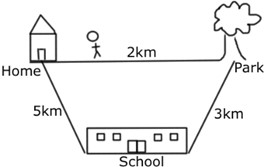
Jerry walked from home to school, then from the school to the park. What is his total distance?

a)

2 km

b)

5 km

c)

8 km

d)

10 km

6.
Ivan walks 10 meters west to the water fountain, then runs 2 meters east to his class to avoid a lockout. His displacement would be:
a)
8 meters
b)
8 meters, east
c)
8 meters, west
d)
12 meters
7.
Ronaldo runs across a soccer field, moving 10 meters north, then 8 meters west. His displacement would be:
a)
10.2 m, NW
b)
12.8 m, NW
c)
15.4 m, NW
d)
18.0 m, NW
8.
You are riding your bike at 9 km/h. Ten minutes later, your speed is 6 km/h.
a)
Acceleration occurred because speed increased.
b)
Acceleration occurred because speed decreased.
c)
Acceleration occurred because you changed directions.
9.

At what speed would a car have to move in order to travel 20 kilometers in 2 hours.

a)

5 km/hr

b)

10 km/hr

c)

20 km/hr

d)

40 km/hr

10.
When you know both the speed and direction of an object's motion, you know the
a)
average speed of the object
b)
acceleration of the object
c)
distance the object has traveled
d)
velocity of the object
11.
A car accelerates from a standstill to 70 m/s in 10 seconds.  What is the acceleration?
a)
0.7m/s2
b)
7m/s2
c)
14m/s2
d)
none of the above
12.

A bus travels from El Paso, Texas, to Chihuahua, Mexico, in 5.2 h with an average velocity of 73 km/h t the south. What is the bus's displacement?

a)

73 km to the south

b)

370 km to the south

c)

380 km to the south

d)

14 km/h to the south

13.

A man hikes 6.6 km north along a straight path with an average velocity of 4.2 km/h to the north. He rests at a bench for 15 min. Then, he hikes 3.8 km north with an average velocity of 5.1 km/h to the north. How long does the total hike last?

a)

2.0 h

b)

2.2 h

c)

2.3 h

d)

2.6 h

14.

During which of the following time periods did the object travel at a constant velocity?

a)

0 s - 5 s

b)

0 s - 15 s

c)

15 s - 20 s

d)

20 s - 25 s

15.

A cheetah runs at a steady velocity of 60 km/h (16.7 m/s). Over a period of 5.0 s, the cheetah increases its pace to 95 km/h (26.4 m/s). What is the average acceleration of the cheetah over this period?

a)

1.9 m/s2

b)

3.5 m/s2

c)

7.0 m/s2

d)

9.7 m/s2

16.

An elevator accelerates uniformly from rest to a speed of 2.5 m/s in 12 s. What is the distance the elevator travels during this time?

a)

1.3 m

b)

4.8 m

c)

14 m

d)

15 m

17.

A clown throws a juggling pin upward with an initial velocity of 10.5 m/s. How long will the pin take to return to its starting point?

a)

0.934 s

b)

1.07 s

c)

1.87 s

d)

2.14 s

18.

A child on a tricycle starts from rest, uniformly accelerating at a rate of 0.35 m/s2. What is the velocity of the tricycle after it has traveled 750 cm?

a)

0.72 m/s

b)

2.3 m/s

c)

2.6 m/s

d)

5.2 m/s

19.

In describing the motion of an object it is often helpful to identify a ______________, which allows you to describe its motion relative to that of another object.

a)

acceleration

b)

average velocity

c)

frame of reference

d)

instantaneous velocity

20.

A train engineer drives a train 235 km north along a straight track. Then he drives the train back south 126 km. Finally, he drives north again 45.0 km to his final destination. What is the engineer's total displacement?

a)

64.0 km to the north

b)

109 km to the south

c)

154 km to the north

d)

190 km to the south

21.

What are the three main groups of the periodic table?

a)

groups

b)

metal

c)

nonmetals

d)

metalloids

e)

periods

22.

What are the vertical columns on the periodic called?

a)

groups

b)

periods

c)

nonmetals

d)

metals

e)

metalloids

23.

What are the horizontal rows on the periodic table called?

a)

periods

b)

groups

c)

metals

d)

nonmetals

e)

metalloids

24.
The atom with the largest atomic radius in Group 18 is - 
a)
Ar
b)
He
c)
Kr
d)
Rn
25.
As you move down a group, atomic radius increases because - 
a)
you add more and more neutrons
b)
you add more and more protons
c)
you add more and more shells (energy levels)
d)
you add more atomic mass
26.
The atom with the largest atomic radius in Period 4 (row 4) is - 
a)
K
b)
Kr
c)
Fe
d)
Fe
27.
Francium (Fr) has the lowest ionization energy in Group 1 because - 
a)
it has the smallest number of valence electrons
b)
it has the greatest atomic mass
c)
it has the greatest number of protons, so it attracts its electrons the strongest
d)
its 1 valence electron is very far from the nucleus, so little energy is needed to remove it
28.

Select the element with the largest atomic radius

a)

Potassium

b)

Scandium

c)

Gallium

d)

Arsenic

29.

Select the sequence that correctly orders from smallest to largest atomic radius

a)

Sn, Y, Ru

b)

Cu, Ga, Br

c)

Al, S, Na

d)

F, N, Li

30.

Where on the periodic table can nonmetals be found?

a)

Top

b)

Bottom

c)

Left

d)

Right

31.

Select the group that is the most reactive metals

a)

Transition Metals

b)

Alkali Earth Metals

c)

Alkali Metals

d)

Halogens

32.

Select the element Alkali Earth Metal found in Period 4

a)

Calcium

b)

Potassium

c)

Titantium

d)

Krypton

33.

Select the element that is a metalloid

a)

Gallium

b)

Boron

c)

Oxygen

d)

Magnesium

34.

Select the element below that is least reactive

a)

Hydrogen

b)

Chlorine

c)

Lithium

d)

Neon

35.

Select the element with the highest electronegativity

a)

Chlorine

b)

Silicon

c)

Argon

d)

Magnesium

36.

Select the element that has 3 valence electrons

a)

Calcium

b)

Sodium

c)

Aluminum

d)

Sulfur

37.

Select the element that is a nonmetal

a)

Copper

b)

Lead

c)

Hydrogen

d)

Sodium

38.

What element is found in Group 5 period 4?

a)

Zirconium

b)

Magnesium

c)

Strontium

d)

Vanadium

39.

Select all elements that are metals

a)

Thallium

b)

Hydrogen

c)

Sulfur

d)

Argon

e)

Chromium

40.

What group contains elements with 7 valence electrons

a)

Noble Gasses

b)

Alkali Earth Metals

c)

Halogens

d)

Transition Metals

41.

Which element is most likely to lose an electron?

a)

Zinc

b)

Arsenic

c)

Bromine

d)

Potassium

42.

Zinc is in period 4. What group is it in?

a)

12

b)

13

c)

14

d)

15

43.

What family is on the far right of the periodic table?

a)

alkali metals

b)

transition metals

c)

actinoids

d)

noble gases

44.

What family is on the far left of the periodic table?

a)

noble gases

b)

alkali metals

c)

transition metals

d)

actinoids

45.

Which two elements would have similar properties?

a)

Ar - Argon and Xe - Xenon

b)

Og - Oganesson and Lu - Lutetium

c)

He - Helium and Lu - Lutetium

d)

Ar - Argon and Se - Selenium

46.

What two elements have the same number of energy shells?

a)

He - Helium and Ne - Neon

b)

Na - Sodium and K - Potassium

c)

Be - Berylium and Mg - Magnesium

d)

Na - Sodium and Mg - Magnesium

47.

Which element is more reactive?

a)

Cs - Cesium

b)

Ca - Calcium

c)

C - Carbon

d)

He - Helium

48.

Elements in a .................. have similar chemical properties.

a)

period

b)

group

c)

row

49.

Name this group: These metals are the most reactive.

a)
b)
c)
d)
50.

Locate Lanthanides and Actinides.

a)
b)
c)
d)
51.
Which is an electron?
a)
A
b)
B
c)
C
52.

How many electrons go in the first shell (ring) ?

a)

6

b)

8

c)

4

d)

2

53.

This is a Bohr Diagram of Aluminum. How many valence electrons does Aluminum have?

a)

3

b)

4

c)

5

54.

How many valence electrons does Lithium (Li) have?

a)

8

b)

1

c)

5

d)

2

55.

How many valence electrons does Bromine (Br) have?

a)

5

b)

6

c)

7

d)

8

56.
What is a valence electron?
a)
an electron that is found in the outermost shell of an atom. 
b)
an electron found in the innermost shell of an atom.
c)
an electron found in the middle shell.
57.

Which of these is incorrect?

a)
b)
58.
This could be the dot diagram of 
a)
Ne
b)
Si
c)
Al
d)
Be
59.

Which element is this?

a)

Nickel

b)

Neon

c)

Sodium

d)

Nitrogen

60.

When an atom gains a valence electron, it becomes a(n) _____________ ion.

a)

positive

b)

negative

c)

neutral

61.

When an atom loses a valence electron, it becomes a(n) _____________ ion.

a)

positive

b)

negative

c)

neutral

62.
What charge will an Oxygen ion have? 
a)
+1
b)
-1
c)
+2
d)
-2
63.
If an element has 3 valence electrons, what charge will likely form on its ion ?
a)
+3
b)
+5
c)
-3
d)
-5
64.
Which of the following has a -3 charge?
a)
Boron
b)
Fluorine
c)
Nitrogen
d)
Neon
65.
charge of lithium ion
a)
-2
b)
-1
c)
+1
d)
+2
66.
charge of beryllium ion
a)
-2
b)
-1
c)
+1
d)
+2
67.
Anions are...
a)
Positive
b)
Negative
c)
Neutral
d)
Crying
68.
What is the ionic symbol for Krypton?
a)
Kr
b)
Kr+
c)
Kr-
d)
Kr-2
69.
Ionic bonds form between two ions that have...
a)
ionic compounds
b)
negative charges
c)
positive charges
d)
opposite charges
70.
Which is most likely to form a negative ion...
a)

an element from Group 7

b)
a metal
c)
an element from Group 1
d)
an element with atoms that have eight valence electrons
71.

Calcium Oxide, CaO

a)

Covalent Bond

b)

Ionic Bond

72.

Why do ionic bonds form?

a)

so the number of protons equals the number of electrons

b)

to fill the outermost energy level to make the atom stable

c)

so an atom can become unstable

73.

if NONMETALS are more likely to GAIN electrons, they will form ...

a)

anions

b)

neutral atoms

c)

cations

74.

In the chemical formula for an ionic compound, which item is written first?

a)

positive ion (cation)

b)

negative ion (anion)

c)

subscript

d)

it's alphabetical

75.

The transfer of Valence electrons from a metal to a non metal is known as

a)

Covalent Bonding

b)

Metallic bonding

c)

Molecular bonding

d)

Ionic Bonding

76.

What two types of atoms make a covalent bond?

a)

2 non-metals

b)

1 metal and 1 non-metal

c)

2 metals

77.

What type of bond involves the sharing of electrons between atoms?

a)

covalent bond

b)

ionic bond

c)

metallic bond

d)

transfer bond

78.

Identify the following compound as ionic or covalent: SO2

a)

ionic

b)

covalent

79.

Identify the following compound as ionic or covalent: Ca(OH)2

a)

ionic

b)

covalent

80.

When naming covalent compounds,

a)

roman numerals are needed but no prefixes required

b)

both roman numerals or prefixes are not required

c)

both roman numerals and prefixes must be included

d)

prefixes are needed but roman numerals are not required

81.
SiCl4
a)
silicon tetrachloride
b)
silicon quadchloride
c)
monosilicon tetrachloride
d)
silicon chloride
82.
What is the name of N2O3
a)
Nitrogen trioxide
b)
Dinitrogen oxide
c)
Dinitrogen trioxide
d)
Nitrogen oxide
83.
What is the OFFICIAL name for H2O
a)
Hydrogen Oxide
b)
Oxygen Dinitride
c)
Agua
d)
Dihydrogen Monoxide
84.
A covalent compound made of one sulfur and two oxygen atoms would be named
a)
sulfur dioxide.
b)
sulfur oxide.
c)
disulfur oxide.
d)
sulfide oxygen.
85.

Select the correct formula for the

COVALENT COMPOUND

diphosphorus trioxide

a)

PO

b)

P3O2

c)

PO2

d)

P2O3

86.

Select the correct formula for the

COVALENT COMPOUND

carbon tetrachloride

a)

CCl

b)

CCl2

c)

C4Cl2

d)

CCl4

87.
How do the following two elements bond together?
Na1+  F1-         
a)
NaF
b)
NaF3
c)
Na3F
d)
Na1F2
88.

Properties of metals are

a)

Thermal conductivity

b)

softness

c)

durability

d)

low boiling point

89.

For an ionic compound formula, write

a)

Metal first

b)

Non-Metal first

c)

Cation first

d)

Anion first

90.

Which two elements would NOT form an ionic bond?

a)

calcium and lithium

b)

calcium and oxygen

c)

lithium and oxygen

d)

calcium and carbon

91.
the starting materials in a chemical reaction
a)
Products
b)
Reactants
c)
Starters
d)
Enders
92.
The substances listed on the right side of a chemical equation are the
a)
Yields
b)
Reactants
c)
Products
d)
Precipitates
93.

The process by which one or more substances change to produce one or more different substances

a)

Chemical Process

b)

Reactant

c)

Chemical Reaction

94.
In the equation,          2Mg + O2 ---> 2MgO, which are the reactants?
a)
Mg and O
b)
MgO
c)
Mg and MgO
d)
O and MgO
95.

6CO2+ 6H2O  C6H12O6 + 6O26CO_2+\ 6H_2O\ \rightarrow\ C_6H_{12}O_{6\ }+\ 6O_2  

The carbon atoms are balanced with ____ on each side of the reaction.

a)

1

b)

6

c)

2

96.

Determine whether the following equations is balanced or unbalanced. H4 + O2 ---> 2H2O

a)

Balanced

b)

Unbalanced

97.

Determine whether the following equation is balanced or unbalanced. H2 + Br2 ---> 2HBr

a)

Balanced

b)

Unbalanced

98.

Determine whether the following equation is balanced or unbalanced. 2Fe + 3Cl2 ---> FeCl3

a)

Balanced

b)

Unbalanced

99.
The law of conservation of mass states that....
a)
Matter can be made
b)
Matter can be destroyed
c)
Matter can neither be made or destroyed
d)
Matter can evaporate
100.
How many atoms of aluminum are on each side of the following equation: 4Al + 3O--> 2AlO3
a)
2
b)
6
c)
1
d)
4
101.

Which Option is Correctly Balanced?

a)

Hg + O2 --> Hg2O2

b)

2 Hg + 2O2 --> Hg2O2

c)

2 Hg + O2 --> Hg2O2

d)

Hg + 2 O2 --> Hg2O2

102.

What are the coefficients that will balance the skeleton equation below?

__Na + __F₂ → __NaF

a)

1, 2, 1

b)

2, 1, 2

c)

1,1,1

d)

2,2,2

103.

What are the coefficients that will balance the skeleton equation below?

__Na + __MgF₂ → __NaF + __Mg

a)

2,1,1,2

b)

1,2,1,2,

c)

2, 1, 2, 1

d)

1,2,2,1

104.

compound ---> element + element

a)

synthesis

b)

decomposition

c)

combustion

d)

single replacement

105.

What reaction has the following general formula:

A + CD --> C + AD

a)

Combination

b)

Decomposition

c)

Single Replacement

d)

Double Replacement

e)

Combustion

106.

What reaction has the following general formula:

AB + CD --> CB + AD

a)

Combination

b)

Decomposition

c)

Single Replacement

d)

Double Replacement

e)

Combustion

107.

What reaction has the following general formula:
CxHy + O2 >CO2 + H2OC_xH_y\ +\ O_2\ ->CO_{2\ }+\ H_2O  

a)

Combination

b)

Decomposition

c)

Single Replacement

d)

Double Replacement

e)

Combustion

108.

What type of reaction is the following:
BaCl2+2KI > 2KCl + BaI2BaCl_2+2KI\ ->\ 2KCl\ +\ BaI_2  

a)

Combination

b)

Decomposition

c)

Single Replacement

d)

Double Replacement

e)

Combustion

109.

What type of reaction is the following:
2KI > 2K + I22KI\ ->\ 2K\ +\ I_2  

a)

Combination

b)

Decomposition

c)

Single Replacement

d)

Double Replacement

e)

Combustion

110.

What type of reaction is the following:
Zn + 2HCl > ZnCl2+H2Zn\ +\ 2HCl\ ->\ ZnCl_2+H_2

a)

Combination

b)

Decomposition

c)

Single Replacement

d)

Double Replacement

e)

Combustion

111.
Which scientist contributed that atoms were the tiniest part of matter that could not be broken down?
a)
Democritus
b)
Dalton
c)
Thomson
d)
Rutherford
112.
Which scientist discovered that electrons surround the nucleus in specific orbits around the nucleus in energy levels?
a)
Thomson
b)
Dalton
c)
Bohr
d)
Rutherford
113.
Which subatomic particles have the same mass and are both found in the nucleus of an atom?
a)
proton and neutron
b)
proton and electron
c)
neutron and electron
d)
protons only
114.
Which has more mass, a proton or an electron?
a)
proton
b)
electron
c)
they have the same mass
115.
Which has more mass, a neutron or an electron?
a)
neutron
b)
electron
c)
they have the same mass
116.
Which has more mass, a proton or a neutron?
a)
neutron
b)
proton
c)
they have the same mass
117.
Isotopes of an element have a different              number.
a)
mass
b)
atomic
118.
Isotopes differ because they have a different number of which subatomic particle?             
a)
protons
b)
neutrons
c)
electrons
119.
How many protons are in an atom of Carbon.
a)
6
b)
12
c)
10
d)
3
120.
How many neutrons are in an atom of Carbon.
a)
6
b)
12
c)
10
d)
3
121.
How many electrons are in an atom of Carbon.
a)
6
b)
12
c)
10
d)
3
122.
How many protons are in an atom of Nickel. 
a)
28
b)
31
c)
25
d)
30
123.
How many neutrons are in an atom of Nickel. 
a)
28
b)
31
c)
42
d)
30
124.
How many electrons are in an atom of Nickel. 
a)
28
b)
31
c)
42
d)
30
125.
How many protons are in an atom of Sodium.
a)
11
b)
10
c)
12
d)
20
126.
How many neutrons are in an atom of Sodium.
a)
11
b)
10
c)
12
d)
20
127.
How many electrons are in an atom of Sodium.
a)
11
b)
10
c)
12
d)
20
128.
How many protons are in an atom of Chlorine.
a)
17
b)
18
c)
35
d)
30
129.
How many neutrons are in an atom of Chlorine.
a)
17
b)
18
c)
35
d)
30
130.
How many electrons are in an atom of Chlorine.
a)
17
b)
18
c)
35
d)
30
131.
How many protons are in an atom of Manganese.
a)
25
b)
30
c)
60
d)
38
132.
How many neutrons are in an atom of Manganese.
a)
25
b)
30
c)
60
d)
38
133.
How many electrons are in an atom of Manganese.
a)
25
b)
30
c)
60
d)
38
134.
If an atom has 19 protons, what element is it? 
a)
Potassium
b)
Calcium
c)
Scandium
d)
Magnesium
135.
If an atom has 72 protons, what element is it? 
a)
Hafnium
b)
Tantalum
c)
Yttrium
d)
Zirconium
136.
If an atom has 46 electrons what element is it? 
a)
Palladium
b)
Rhodium
c)
Nickel
d)
Silver
137.
the simplest form of matter that has a unique set of properties;  cannot be broken down into simpler substances by chemical means
a)
Element
b)
Compound
c)
Atom
d)
Isotope
138.
a substance that contains two or more elements chemically combined in a fixed proportion
a)
Element
b)
Compound
c)
Atom
d)
Isotope
139.
the smallest particle of an element that retains its identity in a chemical reaction
a)
Element
b)
Compound
c)
Atom
d)
Isotope
140.
atoms of the same element that have the same atomic number but different atomic masses due to a different number of neutrons
a)
Element
b)
Compound
c)
Atom
d)
Isotope
141.
a positively charged subatomic particle found in the nucleus of an atom
a)
Proton
b)
Neutron
c)
electron
d)
Nucleus
142.
a subatomic particle with no charge and a mass of 1 amu; found in the nucleus of an atom
a)
Proton
b)
Neutron
c)
electron
d)
Nucleus
143.
the dense central portion of an atom, composed of protons and neutrons
a)
Proton
b)
Neutron
c)
electron
d)
Nucleus
144.
a negatively charged subatomic particle
a)
Proton
b)
Neutron
c)
electron
d)
Nucleus
145.
the weighted average of the masses of the isotopes of an element
a)
Atomic Mass
b)
Mass Number
c)
Atomic Mass Uni
d)
Atomic Number
146.
the total number of protons and neutrons in the nucleus of an atom
a)
Atomic Mass
b)
Mass Number
c)
Atomic Mass Unit
d)
Atomic Number
147.
a unit of mass equal to one twelfth the mass of a carbon-12 atom
a)
Atomic Mass
b)
Mass Number
c)
Atomic Mass Unit
d)
Atomic Number
148.
the number of protons in the nucleus of an atom of an element
a)
Atomic Mass
b)
Mass Number
c)
Atomic Mass Unit
d)
Atomic Number
149.
After each half-life, twice the amount of the existing atoms have decayed into atoms of a new element.
a)
True
b)
False
150.
An unstable nucleus loses energy by emitting radiation during the process of radioactive decay.
a)
True
b)
False
151.
A Geiger-Counter may be used to detect radiation.
a)
True
b)
False
152.
What is the resulting isotope if Radium-226 undergoes alpha decay?
a)
Radon-222
b)
Thorium-222
c)
Thorium-230
d)
Radon-230
153.
What is the resulting isotope if Lead-210 undergoes beta decay?
a)
Bismuth-210
b)
Thallium-210
c)
Bismuth-211
d)
Lead-211
154.
The radioisotope  radon-222 has a half-life of 3.8 days.  How much of an initial 20.0 g sample of radon-222 would remain after 15.2 days
a)
5.00 g
b)
12.5 g
c)
1.25 g
d)
2.50 g
155.
If a radioisotope undergoes beta emission,
a)
the atomic number changes
b)
the number of neutrons remains constant
c)
the isotope loses a proton
d)
 the mass number changes
156.

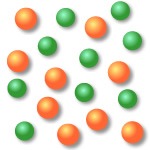
This picture represents a:

a)

Element

b)

Compound

c)

Mixture of Elements

d)

Mixture of Compounds

157.

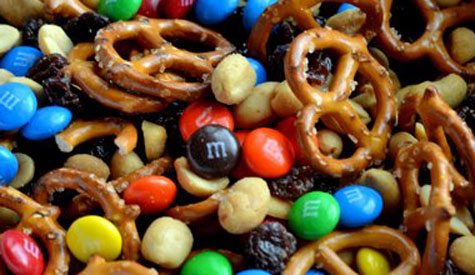
What type of mixture is this?

a)

homogenous mixture

b)

chemical

c)

heterogeneous mixture

d)

solid mixture

158.

A substance with two or more elements that are combined in a fixed proportion is called a:

a)

heterogeneous mixture

b)

compound

c)

element

d)

homogeneous mixture

159.

A substance in which all the atoms are the same type.

a)

heterogeneous mixture

b)

homogeneous mixture

c)

compound

d)

element

160.

A mixture that contains two or more substances blended evenly throughout

a)

heterogeneous mixture

b)

homogeneous mixture

c)

compound

d)

element

161.

This picture represents which of the following?

a)

element

b)

compound

c)

mixture of elements

d)

mixture of compounds

162.

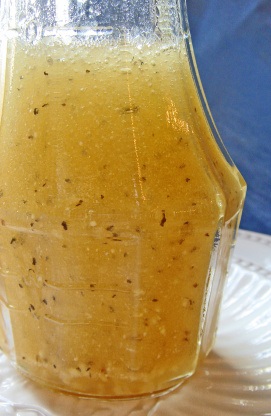
Italian Salad Dressing is a . . .

a)

heterogeneous mixture

b)

homogeneous mixture

c)

pure Substance

d)

compound

163.

A mixture that is NOT evenly distributed is called a:

a)

compound

b)

homogeneous mixture

c)

heterogeneous mixture

d)

pure substance

164.
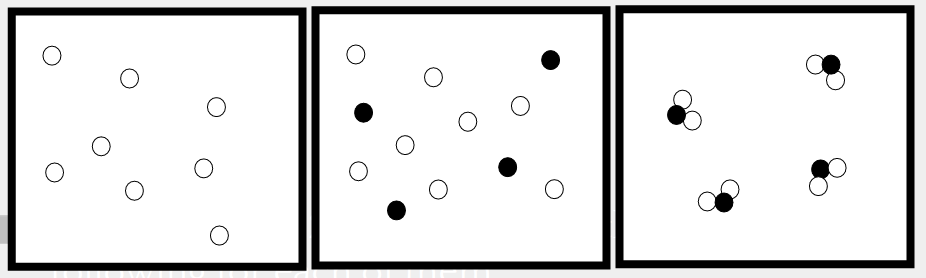
Which one of these pictures represents a mixture? 
a)
1
b)
2
c)
3
d)
1, 2 and 3
165.
Which one of these pictures represents a pure substance? 
a)
1 and 2
b)
1 and 3
c)
2 and 3
d)
1, 2 and 3
166.

O2 is an example of:

a)

Element

b)

Compound

c)

Homogeneous Mixture

d)

Heterogeneous Mixture

167.

A metal alloy is a(n):

a)

homogeneous mixture

b)

heterogeneous mixture

c)

element

d)

compound