wayground logo

Free Printable Worksheets

Font size

S
M
L
XL
Worksheets

Unit 4 Quizizz

Total questions: 175

Worksheet time: 3hrs 52mins

Name
Class
Date
1.
This is a picture of
a)
Cell wall
b)
Cell membrane
c)
chloroplast
d)
mitochondria
2.
How does a cell maintain homeostasis?
a)
Regulates what enters and leaves the cell
b)
Flexibility
c)
Protective barrier
d)
Structure and support
3.
The cell membrane is selectively permeable, which means...
a)
All materials can enter and leave the cell
b)
Certain things can enter while others cannot
c)
The cell manually sorts through all materials
d)
Only certain cells can interact with the cell.
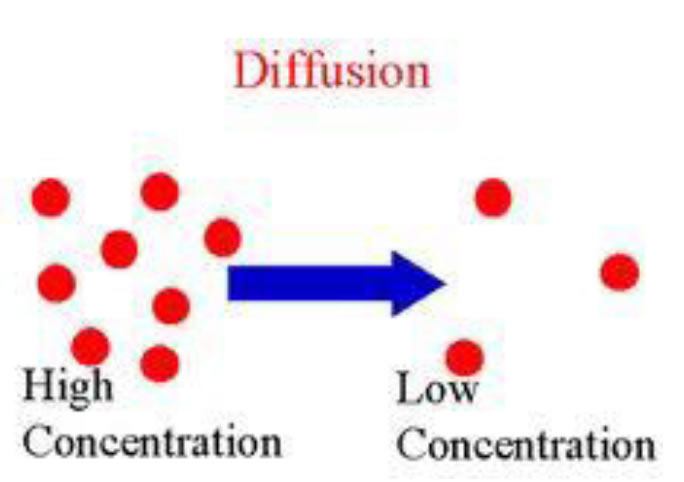
4.
A can of air freshener is sprayed in the opposite side of the room.  Ten minutes later you start to smell the scent.  This is an example of 
a)
diffusion
b)
active transport
c)
endocytosis
d)
osmosis
5.
Controlling what goes into or out of the cell without energy is called
a)
active transport
b)
endocytosis
c)
passive transport
d)
exocytosis
6.
What is it called when molecules move across the cell membrane from an area of high concentration to an area of low concentration through a carrier protein?
a)
Diffusion
b)
Osmosis
c)
Active Transport
d)
Facilitated Diffusion
7.
What is the name of the process in which molecules move from an area of high concentration to an area of low concentration across a selectively permeable membrane?
a)
Diffusion
b)
Osmosis
c)
Active Transport
d)
Facilitated Diffusion 
8.
When molecules are spread evenly across the cell membrane, ______________________ is reached.
a)
difference
b)
transportation
c)
equilibrium
d)
solution
9.
What is homeostasis?
a)
How the body releases oxygen
b)
Passive transportation 
c)
How the body regulates itself for survival
d)
Active transport
10.
What is the difference between active and passive transport?
a)
Active does not need energy and passive uses ATP (energy)
b)
Active uses ATP (energy) and passive does not need energy
c)
Active stores transport proteins and passive releases 
d)
Active uses hormones and passive does not 
11.
Against the concentration gradient
low to high
uses energy/ATP
a)
facilitated diffusion
b)
osmosis
c)
active transport
d)
simple diffusion
12.
Most active transport proteins use energy from the breakdown of:
a)
nucleus
b)
cell membrane
c)
ATP
d)
mitochondria
13.
The movement of molecules against a concentration gradient
a)
simple diffusion
b)
facilitated diffusion
c)
active transport
d)
osmosis
14.
A molecule that diffuses down a concentration gradient goes from an area of ______ concentration into an area of ______ concentration.
a)
high, low
b)
low, high
c)
passive, active
d)
active, passive
15.
The difference in the concentration of a substance from one location to another is called 
a)
diffusion
b)
osmosis
c)
concentration gradient
d)
passive transport
16.
This picture represents what type of cell transport?
a)
endocytosis
b)
exocytosis
c)
osmosis
d)
passive transport
17.
ALL living cells have this in common
a)
Nucleus
b)
Cell Membrane
c)
Cell Wall
d)
Mitochondria
18.
Movement of particles from high to low concentration. 
a)
Passive Transport
b)
Active Transport
19.
Solutes move with the concentration gradient, therefore no energy is used. 
a)
Passive Transport
b)
Active Transport
20.
What is it called when molecules move across the cell membrane from an area of high concentration to an area of low concentration through a carrier protein?
a)
Diffusion
b)
Osmosis
c)
Active Transport
d)
Facilitated Diffusion
21.
A cell will _____________________ in a hypertonic solution.
a)
swell
b)
shrink
c)
will not change
d)
will explode
22.
A cell will __________________ in a hypotonic solution.
a)
swell and perhaps burst (lyse)
b)
shrink
c)
the size of the cell will not change
d)
the size of the cell will change from large to small and from small to large
23.
Why does diffusion NOT require ATP?
a)
Because the molecules involved have high kinetic energy
b)
Because the molecules involved are charged
c)
Because the molecules involved already have ATP
d)
Because the molecules involved have low, to no kinetic energy
24.
Active transport requires ______, moves materials from __________________, and goes _______ the concentration gradient.
a)
No energy, low to high, against
b)
ATP, high to low, with
c)
ATP, low to high, with
d)
ATP, low to high, against
25.

Spraying Axe body spray in a corner of the room and someone on the opposite corner smells it is an example of what?

a)

Osmosis

b)

Facilitated diffusion

c)

Active transport

d)

Diffusion

26.
Mutations are a change in what?
a)
DNA
b)
tRNA
c)
genotype
d)
phenotype
27.
Why are advantageous traits more likely to be passed onto offspring?
a)
Because they are more likely to survive and reproduce.
b)
Because they come from dominant alleles.
c)
Because they come from recessive alleles.
d)
Because the trait is an acquired phenotype.
28.

What word describes a trait that helps an organism survive in its environment?

a)

natural selection

b)

mutation

c)

camouflage

d)

adaptation

29.
The differences among a species, like different bird beaks, are called
a)
genes.
b)
variations.
c)
traits.
d)
theories.
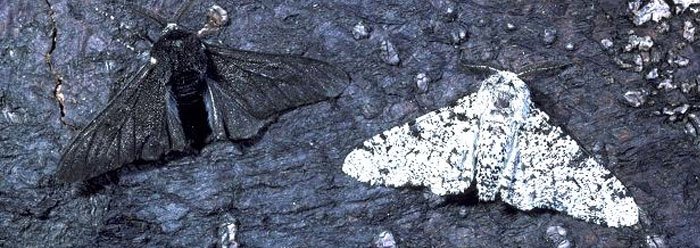
30.
The trees these moths used to live on were white, but have been covered in soot from coal factories. Which moth will be more successful in this environment?
a)
Dark moth
b)
Light moth
c)
Both will be equally successful
d)
Neither will be successful
31.
Since the 1800s humans have stopped burning coal, and the trees have returned to their original color. Which moth will be more successful in this environment?
a)
Dark moth
b)
Light moth
c)
Both will be equally successful
d)
Neither will be successful
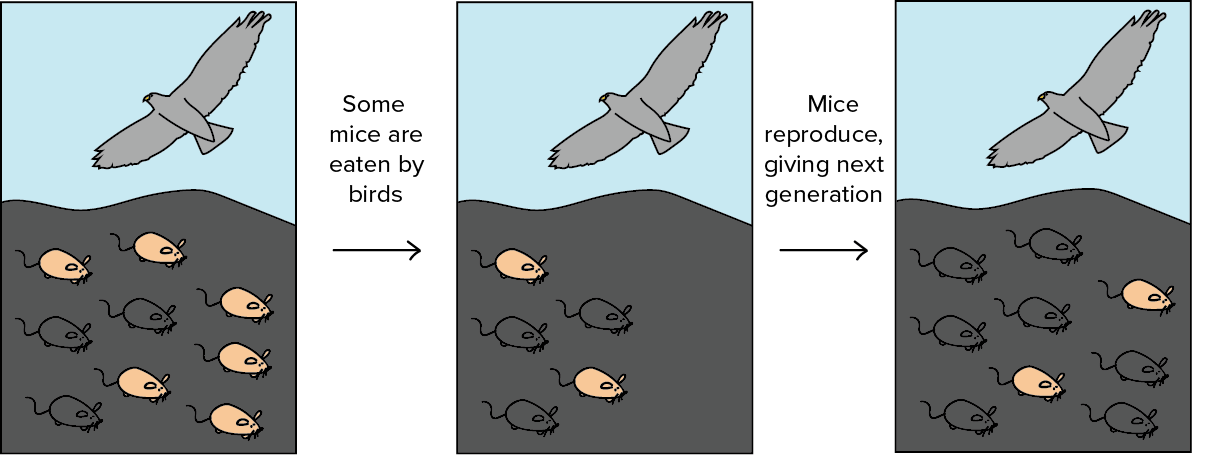
32.
What process is being shown in this image?
a)
Variation
b)
Natural Selection
c)
Selective Breeding
d)
Homeostasis
33.
Why is the mouse population changing over time?
a)
The light mice can reproduce more successfully than the dark mice
b)
The hawks eat more dark mice than light mice because the dark mice taste better
c)
The hawks eat more light mice than dark mice because they can see the light mice more easily
d)
The hawks eat more dark mice than light mice because they can see the dark mice more easily
34.
Which best describes the role of mutations in natural selection?
a)
Mutations help an organism to better survive in their environment
b)
An organism may acquire a helpful mutation by interacting with the environment
c)
A mutation may result in an adaptive trait that makes an organism more likely to survive and reproduce
d)
Organisms with certain traits are more likely to win competitions for mutations
35.
a bird that can easily outcompete other birds for food and that can produce many eggs has a high
a)
life expectancy
b)
mutation rate
c)
fitness
d)
adaptability
36.
a measure of how commonly a particular allele occurs in a population is known as the 
a)
gene pool
b)
allele frequency
c)
mutation rate
d)
phenotype
37.

Provided is a table of organisms and some data on their characteristics. Based on the information in the table, which organism is likely to produce offspring with the greatest genetic diversity?

a)

Black Mold

b)

Bell tree dahlia

c)

Spruce

d)

HYdra

38.
During natural selection, the organisms with the best adaptations..
a)
survive better in their environment
b)
have higher fitness
c)
pass down their traits more often
d)
All of these are correct
39.
A mutation caused a cat's claws to be longer than normal - it can hunt better now. The mutation will most likely...
a)
will NOT be passed on to the next generation
b)
will NOT have any survival value
c)
will occur in a different population
d)
will be passed on to the next generation
40.

What can we do to reduce the rate of development of antibiotic resistant strains of bacteria

a)

Always finish a course of antibiotics

b)

Only take antibiotics when they are really needed

c)

Reduce the amount of antibiotics given to animals in the farming industry

d)

all of the above

41.

Why are advantageous traits more likely to be passed onto offspring?

a)

Because the organisms that have them are more likely to survive and reproduce.

b)

Because they come from dominant alleles.

c)

Because they come from recessive alleles.

d)

Because the trait is an acquired phenotype.

42.

a rabbit that can easily out-compete other rabbits for food and that can produce many offspring has a high

a)

life expectancy

b)

mutation rate

c)

fitness

d)

adaptability

43.

Why was Methicillin introduced as a way to treat Staph infections, according to the graph?

a)

the bacteria became resistant to Methicillin

b)

the bacteria became resistant to Penicillin

c)

Penicillin was too expensive

d)

Methicillin effectively killed all hospital acquired Staph bacteria

44.

Genetic drift is more likely to happen in...

a)

aquatic populations

b)

small populations

c)

terrestrial populations

d)

older populations

45.

Which of the following is an example of the bottleneck effect?

a)

Cheetah populations reach their lowest levels with reduced diversity and as they rebound are so genetically similar they appear to be inbred.

b)

Affected individuals with blue skin can trace their ancestry back to one of the first settlers in the region.

c)

The environment of a fox population changes and over time foxes who are white survive and pass on their genes to their offspring.

d)

Humans choose two dogs they like the characteristics of and breed them together.

46.

Genetic drift is change in the allele frequency of a population due to...

a)

random chance

b)

natural selection

c)

non-random mating (sexual selection)

d)

artificial selection

47.

This mechanism of evolution occurs when populations migrate (immigrate, emmigrate).

a)

Extinction

b)

Gene flow

c)

Genetic drift

d)

Natural Selection

48.

What type of genetic drift is most common after a natural disaster which results in a drastic reduction in population size?

a)

Bottleneck Effect

b)

Founders Effect

c)

Gene Flow

d)

Sexual Selection

49.

What type of genetic drift is characterized by a small subgroup of a population leaving and forming a new population?

a)

Gene Flow

b)

Bottleneck Effect

c)

Sexual Selection

d)

Founders Effect

50.

What are the two types of genetic drift?

a)

Founders Effect

b)

Gene Flow

c)

Sexual Selection

d)

Bottleneck effect

51.
A virus killed most of the seals in the North Sea (e.g. dropped the population from    8000 to 800).  In an effort to help preserve the species, scientists caught 20 of the   remaining seals and used them to start a new population in the northwest Pacific   Ocean.  Which of the following statements would accurately describe the new   population?  
a)
The new seal population is genetically less diverse than the original population 
b)
The new seal population is genetically more diverse than the original population
c)
There is equal genetic variety compared  to the original population 
d)
None of the answers
52.

Genetic drift and natural selection are mechanisms that create a change in an organism and support the process of _______________.

a)

cellular respiration

b)

reproduction

c)

protein synthesis

d)

evolution

53.
The model below shows a how populations of organisms can change. Which of the   following concepts is best illustrated by this demonstration?                                          
a)
 Evolution of a predatory species
b)
Genetic drift 
c)
 Environmentally induced genetic mutations 
d)
Gene flow 
54.
Which of the following is true?
a)
Gene pool frequencies do not change as a result of migration in or out of a population.
b)
Gene flow occurs only as a result of isolation of a small population.
c)
Gene flow can cause new alleles to enter a population's gene pool.
d)
Gene flow is due the the selection of the most favorable traits.
55.
Which of the following cannot introduce new alleles into a population's gene pool?
a)
Mutataion
b)
Natural selection
c)
Gene Flow
d)
All of the above introduce new alleles into the population
56.
A mutation occurs in a particular animal and quickly begins to increase in frequency throughout the population.  Which of the following are you most likely to conclude?
a)
The mutation makes the animal grow larger
b)
The mutation does not confer any benefit or harm to the animal
c)
The mutation makes the animal more susceptible to predators
d)
The mutation increase the probability that the animal will reproduce.
57.
Why is genetic variation so important?
a)
It makes sure that populations will not go extinct
b)
It makes sure that natural selection can occur
c)
It causes evolution
d)
All of these are correct
58.
Sickle Cell disease is caused by a genetic mutation that provides protection from Malaria, but can cause fatal circulatory issues. What can we say about this mutation?
a)
The mutation is neither harmful or beneficial.
b)
The mutation can be harmful or beneficial depending on the environment.
c)
The mutation is always beneficial. 
d)
The mutation cannot produce a harmful effect.
59.
Mutations will help species survive over time by increasing genetic variation within that species because, ___________________________.
a)
the species is more able to adapt to environmental changes
b)
the species will then develop into the perfect clone race
c)
it will male them faster and faster and faster
d)
they will be immune from radiation sickness
60.

In Genetic Drift, both Genetic Bottleneck and the Founder Effect, the end result is

a)

less genetic diversity withing a population

b)

a smaller population size

c)

a new gene pool created by random chance

d)

a population of organisms that are best fit for their environment

61.

Which of the following is a specific example of the Founders Effect.

a)

Typhoon Haiyan killing over 500 water buffalo in the Philippines resulting in a smaller population and genetic diversity in water buffalo.

b)

A catastrophe kills many individuals in a population, leaving a small number of individuals with less DNA differences.

c)

Paul Karason has the characteristic of blue skin because his ancestors established a society in Kentucky where the genetic mutation was prominent.

d)

Organisms better adapted to their environment tend to survive and produce more offspring.

62.
What type of symbiosis?
*
Snapping Shrimp have poor and depend on their goby fish roommate to give the danger signal when predators come and guide them
back home if they wander too far.   
*
  Goby fish who don't have a place to hide are quickly eaten. They find a Snapping Shrimp roommate who digs a hole for both to live in.
a)
commensalism
b)
mutualism
c)
parasitism
d)
predation
63.
What type of symbiosis?
  * Hummingbirds feed on nectar from flowers.
 * 
Flowers are pollinated by hummingbirds as they move from flower to flower.
a)
commensalism
b)
mutualism
c)
parasitism
d)
predation
64.
What type of symbiosis?
*
The tick lives on dog and feeds on its blood and tissue.
*
  The dog gets skin irritation and can pick up diseases carried by tick.
a)
commensalism
b)
mutualism
c)
parasitism
d)
predfation
65.
What type of symbiosis?
*
  The Red-Chested cuckoo birds find an unattended robin nest, push out the robin eggs, and lay their eggs in the robin’s nest, and leave.
*
 Robin babies die and robin parents feed  and take care of the cuckoo babies.
a)
commensalism
b)
mutualism
c)
parasitism
d)
predation
66.
What type of symbiosis?
*Mycorrhizal fungi invade and live in or among roots cells of many plants. The plant provides nutrients to the fungi.
*
The Mycorrhizal fungi help the host plant absorb inorganic nitrogen and phosphorus from the soil. Some mycorrhizal  fungi also secrete antibiotics which may help protect their host from invasion by parasitic fungi and bacteria.
a)
commensalism
b)
mutualism
c)
parasitism
d)
predation
67.
What type of symbiosis?
*
 Mycorrhizal fungi invade and live in or among roots cells of many plants. The plant provides nutrients to the fungi.
*
  The Mycorrhizal fungi help the host plant absorb inorganic nitrogen and phosphorus from the soil. Some mycorrhizal  fungi also secrete antibiotics which may help protect their host from invasion by parasitic fungi and bacteria.
a)
commensalism
b)
mutualism
c)
parasitism
d)
predation
68.
What type of symbiosis?
*
Remora use suckers to attach temporarily to large marine animals such as sharks, manta rays, whales, turtles, or large fish.
*
The shark provides free transportation, protection, and dropped food and feces which the remora feeds on. The host is not injured.
a)
commensalism
b)
mutualism
c)
parasitism
d)
predation
69.
What type of symbiosis?
*
Fungi form lichens by living in a close relationship with an algae. The fungus provides a protective home for the algae,  and gathers mineral nutrients from rainwater and from dissolving the rock underneath.
*
The algae gathers energy from the sun using photosynthesis. Both organisms share their nutrients with each other. 
a)
commensalism
b)
mutualism
c)
parasitism
d)
predation
70.
What type of symbiosis?
*
Honeyguide birds find a bee hive, then chatter loudly to attract the Honey badger. They fly toward the hive making sure the badger is following. 
*
Upon arrival at the bee hive, the badger tears open the hive and feasts on the honey. Then the Honeyguide bird feeds on the remaining wax and larvae.
a)
commensalism
b)
mutualism
c)
parasitism
d)
predation
71.
What type of symbiosis?
*
  Skunk Cabbage plants attract flies in cool weather by making heat and provide food to the flies that come. 
*
  Flies move from one Skunk Cabbage plant to the next feeding and transferring pollen as they go.
a)
commensalism
b)
mutualism
c)
parasititsm
d)
predation
72.
What type of symbiosis?
*
  Human intestine provides food for bacteria that live inside digestive system
*
Beneficial bacteria live in the intestine of humans and help digest cellulose from plants which humans don’t have the enzymes to break down. 
a)
commensalism
b)
mutualism
c)
parasititsm
d)
predation
73.
What type of symbiosis?
*
Kudzu vines grow by climbing, and wrapping around trees.   
*
Kundzu covered trees die as they are smothered and break under the weight of the growing Kudzu vines.
a)
commensalism
b)
mutualism
c)
parasitism
d)
predation
74.
What type of symbiosis?
*
Hermit crabs find shells left by snails that have died and move in.
*
  Snails die and leave behind their shells.
a)
commensalism
b)
mutualism
c)
parasitism
d)
predation
75.
What type of symbiosis?
*
Gall Insects lays their eggs in the leaves or branches of Oak trees causing a lump to form.
*
Oak trees provide shelter and food to the insect larvae, but are not harmed.
a)
commensalism
b)
mutualism
c)
parasitism
d)
predation
76.
What type of symbiosis?
*
Skunks often live in burrows that have  been dug and abandoned by woodchucks.
*
Woodchucks abandon holes which are later used by skunks.
a)
commensalism
b)
mutualism
c)
parasitism
d)
predation
77.
What type of symbiosis?
*
The plover picks and eats scraps of meat from the crocodile’s teeth.
*
The crocodile gets a free teeth-cleaning!
a)
commensalism
b)
mutualism
c)
parasitism
d)
predation
78.
What type of symbiosis?
*
The Cattle Egret forages in pastures and fields among livestock such as cattle and horses feeding on the insects stirred up by the movement of the grazing animals.
 *The cows and horses are not bothered by the cattle egrets.
a)
commensalism
b)
mutualism
c)
parasitism
d)
predation
79.
What type of symbiosis?
*
Hookworms can enter the body, live off of the host’s blood.
*
The host can suffer from blood loss, anemia and iron deficiency. 
a)
commensalism
b)
mutualism
c)
parasitism
d)
predation
80.
Which of the following symbiotic relationships is considered parasitic? 
a)
ticks feeding on a dog 
b)
bees transporting pollen from flowers
c)
pilotfish swimming under sharks
d)
birds eating the insects from the back of a hippopotamus
81.
A lichen is a combination of fungus and algae that lives on the sides of trees, rocks, and other materials.  The fungus provides the algae with water and minerals and the algae uses the water and minerals to make food for both organisms.  What type of relationship does the lichen represent?
a)
commensalsim
b)
mutualism
c)
parasitism
d)
predation
82.
What does symbiosis mean?
a)
living separately, no relationship between 2 species
b)
living together, close relationship between 2 species
c)
Living separately, long distance relationship between 2 species
d)
When one species kills and eats another
83.
A bird living on a tree is an example of
a)
commensalism
b)
mutualism
c)
parasitism
d)
predation
84.
Which of the following is NOT considered to be a symbiotic relationship?
a)
A mother bear caring for her cub
b)
Worms living in a cow’s intestine
c)
A bacterial infection
d)
A viral attack on your immune system
85.
After being introduced in the 1930's, the fire ant became established in the southern United States. One biological way to control fire ants might be to introduce organisms that are
a)
mutualistic with the fire ant queen
b)
nurtured by fire ant workers
c)
preyed on by fire ants
d)
parasitic to fire ant larvae
86.
Which Hardy-Weinberg equation represents the genotype frequencies in a population?
a)
p + q = 1
b)
p2 + 2pq + q2 = 1
c)
p2 + pq2 + q2 = 1
d)
p + 2pq + q3 = 1
87.
Which Hardy-Weinberg factor represents the frequency of heterozygous individuals in a population?
a)
p2
b)
2pq
c)
q2
d)
p2 + 2pq
88.
What do you call all of the genes in a population?
a)
Gene pool
b)
Relative Frequency
c)
Genetic Drift
d)
Allele pool
89.
Which of the following is NOT a condition for Hardy-Weinberg Equilibrium?
a)
No mutations
b)
Random Mating
c)
No natural selection
d)
No offspring
90.
A few deer wander out of their native woods into a completely new park where no deer had ever been before. They go on to create an entirely new population.
a)
Genetic Drift
b)
Natural Selection
c)
Non-random mating
d)
Mutation
91.
Genetic drift is likely to be seen in a population
a)
That has a low mutation rate
b)
In which natural selection is occurring
c)
That is very small
d)
For which environmental conditions are changing
92.
When a population is in Hardy-Weinberg equilibrium,  what is NOT happening to the species?
a)
Survival
b)
Reproduction
c)
Death
d)
Evolution
93.
What does the Hardy-Weinberg equilibrium measure?
a)
changes in allele frequencies
b)
numbers of mutations
c)
goodness of fit
d)
genetic diversity
94.
Which of the following is not an assumption required for Hardy-Weinberg equilibrium?
a)
Random mating
b)
No mutations
c)
Population size must fluctate
d)
No gene flow
95.
In the Hardy-Weinberg Equation, q2 is the frequency of what?
a)
The recessive allele 
b)
the dominant allele
c)
the recessive genotype
d)
the dominant genotype
96.
The Hardy-Weinberg Model is...
a)
available at local hobby stores and retailers throughout the Greater Tazewell area.
b)
a mathematical tool that biologists can use to predict allele frequencies and determine whether or not evolution is occurring within a population.
c)
always occurring within individual organisms in nature.
d)
only useful in the lab and cannot be practically applied to real-world populations of organisms.  
97.
What is the best explanation for a population being described as an evolutionary unit?
a)
Population can evolve, not individuals
b)
Natural selection only involves individuals, not populations
c)
Genetic changes only occur in populations
d)
A population's gene pool remains the same throughout time
98.
How well an organism survives and reproduces in its environment can be described as its
a)
fitness
b)
homologies
c)
common descent
d)
analogies
99.
What point on the graph represents the carrying capacity?
a)
A
b)
B
c)
C
d)
D
100.
When a population grows past the ecosystem's carrying capacity, what happens to the population?
a)
Continues to grow
b)
The population starts to die off to return to carrying capcity
c)
The population will go extinct due to lack of resources
d)
The population grows then finds a new carrying capacity
101.
Plants and animals that are not native to a habitat and will likely show exponential growth
a)
predators
b)
biological magnification
c)
invasive species
d)
prey
102.
If a disease destroying barley plants in a field swept through an ecosystem, what would happen to the barley eating bird population in the the field ?
a)
The bird population would stay the same
b)
The bird population would infinitely increase
c)
The bird population would decrease
103.
Which has NOT been a major cause of the population explosion?
a)
modern preventive medicine
b)
increase in life expectancy
c)
improved sanitation
d)
increase in recycling and reusing prodcuts
104.
Genetic diversity is
a)
the diversity of genes within a species
b)
diversity among species in an ecosystem
c)
diversity of ecological niches within a given ecosystem
105.
The ears of this fox are an example of...
a)
A behavioral adaptation
b)
Poor breeding
c)
A physical adaptation
d)
Plastic surgery gone horribly wrong
106.
An example of a homologous structure 
a)
human arm and bird wing
b)
rat appendix  and human appendix
c)
wing of butterfly and bird wing
107.
An example of an analogous structure includes:
a)
wing of a butterfly and bird wing
b)
bird wing and human arm
c)
rat appendix and human appendix
108.
Charles Darwin’s observation that finches of different species on the Galápagos Islands have many similar physical characteristics supports the hypothesis that these finches 
 
a)
have the ability to interbreed.
b)
acquired traits through use and disuse.
c)
all eat the same type of food.
d)
descended from a common ancestor.
109.
An example of a physical adaptation is...
a)
a turtle hiding inside its shell
b)
The spikes on a porcupine fish
c)
a rabbit burrowing underground
d)
a viper biting when threatened
110.
What growth pattern describes a population whose growth rate slows or stops following a period of exponential growth?
a)
logistic growth
b)
population growth
c)
exponential growth
d)
predator-prey cycle
111.
How will competition affect the carrying capacity of an ecosystem for the animal in competition?
a)
Decrease
b)
Increase
c)
Will show not affect
d)
Competition does not exist in nature
112.
In a forest ecosystem, which of the following is the best example of a limiting factor for a rabbit population?
a)
Squirrel Population
b)
Sunlight
c)
Grass available
d)
Rabbits have no limiting factors
113.
Competition, disease, predation, and parasitism are considered ___________ ____________ limiting factors
a)
Density-dependent
b)
Density-independent
114.
Which statement is most accurate based on the graph?
a)
The zebra and lions do not affect each other
b)
when lions population increases, so does the zebra population
c)
When the zebra population increases, it causes the lion population to also increase
d)
when zebra populations go down, the zebra population goes up. 
115.
Food, water, sunlight, shelter, and space are resources that are often __________.
a)
limiting factors
b)
not found in ecosystems
c)
non-limiting factors
d)
Biotic
116.
Logistic growth is representative of a population in an environment with ________________ resources.
a)
limited
b)
plenty of
c)
no resources 
d)
biotic
117.
What is the term for each step in the transfer of energy and matter within a biological community?
a)
energy path
b)
food web
c)
trophic level
d)
food pyramid
118.
A collection of organisms that make up a community as well as all of the nonliving aspects of the environment.
a)
Population
b)
Community
c)
Habitat
d)
Ecosystem
119.

Abiotic is:

a)

all of the nonliving parts of an ecosystem

b)

all of the living parts of an ecosystem

c)

all the parts of an ecosystem

120.

Biotic is:

a)

all of the non-living parts of a community

b)

all the parts of an ecosystem

c)

all of the living parts of an ecosystem

121.

Population is:

a)

Same type of organisms living together in an area.

b)

Several different organism living together and interacting with each other.

c)

Same type of organism living in different areas.

122.
Look at the picture below.  What type of defense is the animal using to protect itself?
a)
mimicry
b)
grouping
c)
camouflage
d)
migration
123.
The behavior of an animal protecting themselves in order to prevent attack.
a)
migration
b)
hibernation
c)
defense
d)
courtship
124.
What is the primary purpose for these structures?
"
Tentacles that allow an octopus to grab and hold on to its prey."
a)
defense
b)
movement
c)
obtaining resources
d)
mimicry
125.
Using this picture, what defense is this Hawk Moth displaying?
a)
camouflage
b)
emitting smells
c)
mimicry
d)
panting
126.
Which of the following is a behavioral response for the defense of the animal?
a)
Robins fly south during the winterRobins fly south during the winter
b)
Wasps use a stinger when threatened
c)
Worms move out of the light into the dark
d)
Turtles become dormant in the mud in a pond
127.
What is a behavior in which newborn animals recognize and follow the first moving object they see?
a)
courtship
b)
mimicry
c)
imprinting
d)
conditioning
128.
What is a process in which an animal learns that a stimulus and its response to that stimulus will bring about a good or bad result?
a)
conditioning
b)
imprinting
c)
inherited behavior
d)
mimicry
129.
What are behaviors that are passed on from the parent to the offspring and are with the offspring from birth?
a)
inherited behaviors
b)
imprinting
c)
mimicry
d)
camouflage
130.
Why is a spider spinning a web an innate behavior?
a)
It learns how to spin the web from its mother.
b)
It learns how to spin a web through insight learning.  
c)
It is born knowing how to spin a web.
d)
It learns how to spin a web through observational learning.
131.
Which of the following terms is another term for innate?
a)
instinct
b)
learned
c)
trial and error
d)
copying
132.
Getting use to something after being exposed to it for a long period of time is an example of which type of learned behavior?
a)
insight learning
b)
playing
c)
habituation
d)
observational learning
133.
A rabbit is running away from a fox. What is the stimulus for this behavior?
a)
avoiding a predator
b)
food
c)
migration
d)
estivation
134.
Which type of behavior is most likely to occur due to a seasonal change stimulus?
a)
migration
b)
estivation
c)
reproduction
d)
social grooming
135.
Which of the following best describes a social behavior?
a)
One monkey grooming another.
b)
A predator chasing prey.
c)
An animal defending its territory.
d)
An animal hibernating.
136.
An octopus can change its color to match its surroundings. This is an example of which type of behavior?
a)
camouflage
b)
mimicry
c)
cooperative behavior
d)
estivation
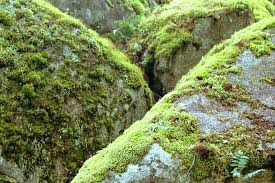
137.
What are examples of pioneer species in a primary succession?
a)
Bushes and Shrubs
b)
Oak trees
c)
Mossess and Lichens 
d)
A rose Bush
138.
What is the goal of the pioneer species in Primary Succession?
a)
To kill the dead materials after a disaster
b)
To rebuild soil
c)
To feed Johnny
d)
To put fresh oxygen into the air
139.
Reaches a climax community quicker because soil is already present
a)
primary succession 
b)
secondary succession
c)
both types of succession
140.
What is an succession?
a)
Series of gradual changes that occur after a disturbance
b)
Changes that only happen when species die
c)
a series of changes that cause a population to increase or decrease
d)
an INSTANT change caused by a disturbance
141.

After a volcanic eruption, lava covers the land. What is the order that plants grow to repopulate the area?

a)

Lichens → Shrubs → Grasses → Trees

b)

Lichens → tree → shrubs→Grasses

c)

Grasses → Lichens → Shrubs → Trees

d)

Lichens → Grasses → Shrubs → Trees

142.

What type of species/community is a redwood forest?

a)

Climax Community

b)

Pioneer Species

c)

Intermediate Species

d)

Tertiary Community

143.

Which of these is an example of a climax community?

a)
b)
c)
d)
144.
Starts with BARE ROCK followed by lichen
a)
primary succession 
b)
secondary succession
c)
both types of succession
145.
The final stable community of plants and animals is called:
a)
pioneer community
b)
farmland
c)
climax community
d)
old field
146.

What is a keystone species?

a)

A species that helps to hold an ecosystem together

b)

A species that lives in or around rocks

c)

Keys and stones have nothing to do with ecology

d)

A keystone isn't a living thing, it's just a stone

147.
A species that is NOT indigenous (native) to an area is called a/an: 
a)
native species
b)
natural species
c)
invasive species
d)
symbiotic species
148.
The particular role (job) of an organism in its environment including types of food it eats, how it obtains its food and how it interacts with other organisms is called a what?
a)
niche
b)
habitat
c)
home
d)
ecosystem
149.
The term biodiversity means:
a)
a wide variety of plants and animals in an ecosystem
b)
only a few types of plants and animals in an ecosystem
c)
an ecosystem composed mostly of plants
d)
an ecosystem composed mostly of animals
150.
What does the graph tell you about biodiversity between 1600 and 1959?
a)
biodiversity has increased
b)
biodiversity has decreased
c)
biodiversity has remained about the same
d)
not enough information to tell
151.
Why do the populations of invasive species grow so quickly? 
a)
invasive species require more energy than other organisms
b)
invasive species are prey to many animals.
c)
invasive species have no natural predators.
d)
invasive species keep the ecosystems in equilibrium.
152.
A species that maintain biodiversity by keeping prey populations controlled are called...
a)
Introduced Species
b)
Apex Predators
c)
Invasive Species
d)
Keystone Species
153.
A sea otter and a sea star are examples of...
a)
invasive species
b)
keystone species
c)
native species 
d)
symbiotic species
154.
Study the graph. In what year were zebra mussels introduced into the Hudson River?
a)
1987
b)
1991
c)
1993
d)
2009
155.
Based on the graph shown, zebra mussels are a/an _____________.
a)
invasive species
b)
keystone species
c)
not enough information to tell
d)
native species
156.
How can you tell that Zebra Mussles are an invasive species from the graph shown?
a)
The population of rotifers goes up after zebra mussels they are introduced.
b)
The population of rotifers goes down after zebra mussels are introduced.
c)
The population of rotifers stays about the same after zebra mussels are introduced.
d)
The population of zebra mussels goes down after they are introduced.
157.
Based on the graph shown, what is the effect of removing a keystone species from an ecosystem?
a)
biodiversity goes up
b)
biodiversity goes down
c)
biodiversity stays about the same
d)
not enough information to tell
158.
Study the graph. Based on the graph shown, sea otters are a/an
a)
invasive species
b)
keystone species
c)
prey of sea urchins
d)
consumer of kelp
159.
Based on the graph shown, how can you tell sea otters are a keystone species?
a)
as the sea otter population decreases, biodiversity increases
b)
as sea otter population increases, biodiversity increases
c)
changes in the sea otter population have little effect on biodiversity 
d)
the sea otter population dereases due to the presence of urchins
160.
Study the graph. Based on the data shown, rainbow smelt are a/an _____________.
a)
invasive species
b)
keystone species
c)
symbiotic species
d)
not enough information to tell
161.

_________ is when individuals permanently move out of / away from an area.

a)

Emmigration

b)

Immigration

c)

Inflow

d)

Outflow

e)

Population growth

162.

___________ is when individuals permanently move into an area.

a)

Emmigration

b)

Immigration

c)

Live births

d)

Transformation

e)

Vacation

163.

A population is __________________.

a)

a group of organisms of the same species, in the same place, at the same time.

b)

a group of organisms of the different species, in the same place, at the same time.

c)

an individual organism of the one species, in the same place, at the same time.

d)

a group of organisms of the same species, in the different place, at the same time.

164.
The number of individuals per unit area is the definition of which?
a)
Population distribution
b)
Population density
c)
Survivorship type 1
d)
Survivorship type 2
165.
What are the problems associated with an area of densely populated individuals.?
a)
Disease spreads more quickly
b)
Competition for food may be higher
c)
Competition for space may be higher
d)
All of the above
166.
exist only in one geographic region
a)
keystone
b)
native
c)
endemic
d)
foundation
167.
two species interact in a way that benefits both
a)
mutualism
b)
amensalism
c)
commensalism
d)
antibiosis
168.
an interaction that benefits one species but has little, if any, effect on the other species
a)
mutualism
b)
amensalism
c)
commensalism
d)
antibiosis
169.
_________ can affect the size of prey populations in a community and determine the places prey can live and feed.
a)
Predators
b)
Ecosystems
c)
Omnivores
d)
Parasites
170.
What are the three primary ways that organisms depend on each other?
a)
predation, herbivory, and parasitism
b)
mutualism, parasitism, and commensalism
c)
symbiosis, predation, mututalism
d)
commensalism, predation, mututalism
171.
Any relationship in which two species live closely together is called ________, which means “living together.”
a)
mutualism
b)
commensalism
c)
symbiosis
d)
predation
172.
This mosquito is demonstrating what type of feeding strategy?
a)
parasitism
b)
commensalism
c)
mutualism
d)
predation
173.
Red-billed oxpeckers are birds that feed on parasites found on an impala. The impala gets rid of parasites and the red-billed oxpeckers get a yummy dinner. This is an example of _______.
a)
commensalism
b)
mutualism
c)
neutralism
d)
competition
174.
Cattle egrets are birds that forage in fields among cattle. The egrets get easy access to food and the cattle don't care if they are there or not.
a)
mutualism
b)
commensalism
c)
competition
d)
parasitism
175.
A species that is NOT native to a particular region is called
a)
natural
b)
invasive
c)
endemic
d)
extraordinary