
 Worksheets
Fall Semester Final Exam: Zoology - Biology Review
Total questions: 180
Worksheet time: 2hrs 23mins
Which answer shows the biological levels of organization in the proper order (smallest to largest)?
Cell – tissue – organ system – organ – organism
Tissue – cell – organ – organ system – organism
Organism – cell – tissue – organ – organ system
Cell – tissue – organ– organ system – organism
Which answer shows the ecological levels of organization in the proper order (smallest to largest)?
Organism – population – community – ecosystem – biome – biosphere
Organism – population – ecosystem – community – biosphere – biome
Organism – population – community – ecosystem – biosphere – biome
Organism – population – ecosystem – biome – community – biosphere
Which vocabulary words tell us how an organism obtains nutrition?
Eukaryote & prokaryote
Mutualism & commensalism
Autotroph & heterotroph
Symbiosis & competition
Which is the correct list of examples of only heterotrophs?
Plants, algae, and some bacteria
Animals, fungi, and many bacteria and protists
Plants, animals, fungi, and protists
Algae and animals
Which type of organism is always found at the beginning of a food chain?
Prokaryote
Eukaryote
Heterotroph
Autotroph
You are looking at a unicellular organism under a microscope. You observe that this organism has a nucleus on the inside around its DNA. What is true of this organism based upon your observations?
It is an autotroph
It is a heterotroph
It is a prokaryote
It is a eukaryote
You find a multicellular living organism in the ocean. What is true of this organism based upon your observations?
It is a prokaryote
It is a eukaryote
Which organisms are always eukaryotes?
Animals, plants, protists, and fungi
Plants, algae, and some bacteria
Animals, fungi, and many bacteria and protists
Archaea and eubacteria
Which is true of how heterotrophs obtain energy?
They can make their own food molecules from resources in their environment
They do photosynthesis or chemosynthesis to obtain energy
They eat or absorb food from other living things
They can convert light energy to chemical energy (food energy)
Which of the following is an example of symbiosis?
Two dogs live in the same house. The older and larger dog steals food from the smaller and younger dog.
Barnacles attach themselves to the skin of whales. The barnacles benefit from being transported to new feeding grounds and are protected from predators by the whale's skin. The whale is not significantly affected by the barnacles.
A hunter finds and kills a deer, providing food for his family.
The orb-weaver spider captures insects such as flies and moths with its meticulously crafted web. It then consumes the prey it has captured.
Which type of symbiosis is this? Orchids grow on the branches or trunks of trees. They obtain support and access to sunlight, water, and nutrients from rain and air, but they do not harm the host tree.
a. Commensalism
b. Mutualism
c. Parasitism
d. This is not an example of symbiosis
Which type of symbiosis is this? Ants protect aphids from predators and provide them with shelter. In return, aphids secrete a sugary substance called honeydew, which the ants feed on.
Commensalism
Mutualism
Parasitism
This is not an example of symbiosis
Which type of symbiosis is this? Fleas infest the fur of dogs, cats, and other animals. They feed on the host's blood, causing itching, skin irritation, and potential allergic reactions.
Commensalism
Mutualism
Parasitism
This is not an example of symbiosis
Which is the correct definition of zoology?
The study of living things
The study of the interactions between living things and their environment
The study of matter and its interactions with other matter and energy
The study of animals
Which other realm of science is zoology included within?
Anatomy & physiology
Biology
Chemistry
Botany
What is another term for zoology?
Animal biology
Botany
Ecology
Histology
What is something that is NOT traditionally studied within zoology?
Anatomy & physiology of animals
Behavior of animals
The ethics of how animals are treated
Ecological importance of animals
Classification of animals
Which list includes only living things?
Bacteria, protists, wood
Fungus, energy, plants
Animals, protists, fungus
Plants, bacteria, fossils
When you taxonomize a living thing, what two things do you do with it?
Test its DNA; determine its age
Dissect it; determine its anatomy and physiology
Group it; place it on a cladogram
Name it; classify it
Who is known as the “Father of Taxonomy?”
Carolus Linnaeus
Gregor Mendel
Charles Darwin
Plato
Aristotle
Who was the first person to attempt to classify living organisms?
Carolus Linnaeus
Gregor Mendel
Charles Darwin
Plato
Aristotle
Who taxonomized animals into 5 levels of groups, starting with kingdom and ending with species?
Carolus Linnaeus
Gregor Mendel
Charles Darwin
Plato
Aristotle
Who taxonomized animals into the groups plants and animals, further classifying animals into two smaller groups based upon the presence of blood?
Carolus Linnaeus
Gregor Mendel
Charles Darwin
Plato
Aristotle
Which would have been an example of a bloodless animal?
Birds
Reptiles
Insects
Amphibians
Mammals
Who developed binominal nomenclature?
Carolus Linnaeus
Gregor Mendel
Charles Darwin
Plato
Aristotle
What is a taxon?
A level of classification within our current taxonomy system
A specific type of organism
The first part of an organism’s scientific name
An adaptation that organisms have that provides them with an advantage in their environment
Which domain includes unicellular prokaryotes that live in and on the human body, in soil, and make us sick?
Protista
Bacteria
Archaea
Eukarya
None of the above
Which domain includes organisms that have a nucleus inside their cells, such as animals or plants?
Protista
Bacteria
Archaea
Eukarya
Which is true of the domains?
There are 6 domains; they are the most specific taxon
There are 6 domains; they are the most general taxon
There are 3 domains; they are the most specific taxon
There are 3 domains; they are the most general taxon
Which is NOT an example of a eukaryote?
Animal
Plant
Fungus
Protist
Bacteria
What is binomial nomenclature?
When members of a species have traits that are more advantageous and pass those traits on to their offspring
A system for scientifically naming organisms with two words
The evolutionary history and relationships between groups of organisms
The science of classifying or grouping organisms
What type of diagram shows hypothesized relationships between organisms based upon physical or genetic characteristics, emphasizing the amount of time that has passed since these populations split?
Cladogram
Phylogenetic tree
Taxonomic system
Dichotomous key
Which embryos develop into a blastocyst with an inner cell mass?
Fish
Sponge
Cnidarian
Echinoderm
Mammal
Which structure of embryonic development has germ layers?
Gastrula
Blastula
Cleavage
Morula
Zygote
When is an embryo classified as a blastula?
When it folds in on itself
When it splits into two cells
When the sperm enters the egg
When it is over 100 cells
When it is between 8 and 32 cells
Which phyla include diploblasts?
Arthropoda and Mollusca
Porifera and Cnidaria
Platyhelminthes and Nematoda
Chordata and Echinodermata
What is the mesoderm?
The opening at the end of the gastrula that becomes the mouth or the anus
The non-living layer in diploblasts between the ectoderm and endoderm
The inner layer of the gastrula
The middle layer of the gastrula
A body cavity filled with fluid
Which group of organisms develops a body cavity in the mesoderm?
Coelomates
Acoelomates
Deuterostomes
Diploblasts
Protostomes
Which group of animals are acoelomates?
Roundworms
Segmented worms
Mollusks
Arthropods
Flatworms
Which class of sponges are glass sponges with strong, lattice-like “skeleton” made of fused silica spicules?
Calcarea
Demospongiae
Hexactinellida
Homoscleromorpha
Which class of sponges have spicules made of calcium carbonate in their “skeleton” and can only survive in shallow, marine waters?
Calcarea
Demospongiae
Hexactinellida
Homoscleromorpha
Which class of sponges are the most diverse class, containing over 90% of sponges?
Calcarea
Demospongiae
Hexactinellida
Homoscleromorpha
Which class of sponges includes encrusting sponges and sponges with small, simple silica spicules?
Calcarea
Demospongiae
Hexactinellida
Homoscleromorpha
Which class of sponges has spongin within their internal “skeleton?”
Calcarea
Demospongiae
Hexactinellida
Homoscleromorpha
What is the proper pathway of water through the body plan of a simple sponge?
Osculum to ostia to spongocoel
Spongocoel to osculum to ostia
Ostia to spongocoel to osculum
Ostia to osculum to spongocoel
Osculum to spongocoel to ostia
Which is the best description of a simple sponge body plan?
An outer and inner layer of cells separated by mesohyl
Thick, layers upon layers of cells on the outside and inside of a soft skeleton
Three layers of cells on the outside, three layers of cells on the inside
An outer and inner layer of cells separated by a third layer of inner cells
Which cell is responsible for the digestion of food in a sponge?
Pinacocyte
Choanocyte
Porocyte
Sclerocyte
Spongocyte
The body plan of every sponge is designed with what primary goal in mind?
Maximize the ability for the sponge to shift or slowly move away from predators and danger
Minimal contact with water to minimize the impact of harmful water conditions
Communication between cells of the nervous system to effectively control the body of the sponge
Efficient water flow through the sponge
Most sponges are filter feeders. What does this mean?
A filter feeder is an organism that preys on other animals for food.
A filter feeder is an organism that produces its own food through photosynthesis.
A filter feeder is an organism that obtains small food particles by straining them from the surrounding water.
A filter feeder is an organism that relies on scavenging for its food.
What is the job of the excretory system of an animal?
To get rid of waste
To sense, understand, and respond to their environment
To break down food and absorb nutrients
To bring oxygen into the body and deliver it to the cells
Which is NOT an option for how sponges reproduce?
Cells on the side or base of the sponge begin to bulge out and form a new sponge
Internal buds form inside the sponge, becoming adult sponges when water conditions are favorable
Two touching sponges can transfer sperm and eggs with each other via their pinacocytes
A sponge releases sperm in the water which enter another sponge, fertilizing the eggs on the inside
Which is true of cnidarians?
They are diploblastic, neither protostomes nor deuterostomes, with radial symmetry
They are diploblastic, neither protostomes nor deuterostomes, with asymmetry
They are diploblastic protostomes with radial symmetry
They are triploblastic deuterostomes with asymmetry
They are triploblastic, neither protostomes nor deuterostomes, with radial symmetry
Where would you not find a living cnidarian?
Freshwater
Cold saltwater
Deep saltwater
On land
Warm saltwater
We have confirmed fossil records of cnidarians from up to...
5,000 years ago
3 million years ago
20 million years ago
580 million years ago
300 billion years ago
Which is true of cnidarians?
They are all sessile
They have true organs
There are more freshwater species than marine species
They are herbivores
They have true tissues
Which is true of cnidarians?
Adult box jellyfish exhibit the medusa body plan
Sea anemones are free-swimming
Adult jellyfish exhibit the polyp body plan
Hydra exhibit the medusa body plan
Which is true of cnidarians?
Jellyfish reproduce sexually as polyps and asexually as medusae
Many cnidarians switch between polyp and medusa body plans throughout their life cycle
A medusoid cnidarian never alternates to a polyp body plan
A polypoid cnidarian never alternates to a medusoid body plan
What is true of the cnidocytes of a cnidarian?
Cnidocytes are used to defend the cnidarian from predators, such as humans
Some cnidarians don’t have cnidocytes, which is why they cannot hurt humans
Cnidocytes electrocute prey
Cnidocytes are used to capture and immobilize prey by stopping its heart and nervous system
Which is true of the medusa body plan of cnidarians?
Medusae are stalk-like, sessile, with the mouth facing up
Medusae are umbrella-like, sessile, with the mouth facing down
Medusae are umbrella-like, free-swimming, with the mouth facing down
Medusae are stalk-like, free-swimming, with the mouth facing up
Which statement about the digestive system of a cnidarian is true?
They have an incomplete digestive system because they have only a mouth and a gastrovascular cavity
They have a complete digestive system with a separate mouth and anus
They have a complete digestive system because they have a mouth and gastrovascular cavity
They have an incomplete digestive system with a separate mouth and anus
How are nutrients passed through the body of a cnidarian?
Nutrients are absorbed from the water by the ectoderm and endoderm
By the nerve net
Through the mesoglea
Through the circulatory system
Through the mesohyl
Which is true of cnidarians?
Cnidarians have a formal respiratory system and obtain oxygen via their gills
Cnidarians do not have a formal respiratory system and obtain oxygen by diffusion
Cnidarians have a formal respiratory system and obtain oxygen via their lungs
Which is true of annelids?
They are triploblastic deuterostomes that are coelomates
They are triploblastic protostomes that are coelomates
They are triploblastic protostomes that are pseudocoelomates
They are diploblastic protostomes that are coelomates
They are diploblastic deuterostomes that are pseudocoelomates
What is the function of the cuticle around an annelid?
The cuticle collects nitrogenous wastes and excretes them
The cuticle is filled with nerve endings that sense touch
The cuticle contains the reproductive organs of a worm and is crucial to mating
The cuticle traps moisture around the worm
What does the name “polychaeta” tell us about worms within that class?
They have a complete digestive tract
They have many bristles
They lack setae
They live within tubes
Which group includes worms with parapodia for moving, breathing, and feeding?
Clitellata
Polychaeta
Oligochaeta
Hirudinea
What is a detritivore?
An organism that consumes dead or decaying organic matter
An organism that primarily feeds on other living organisms for energy
An organism that solely relies on photosynthesis for nutrition
An organism that hunts and preys upon smaller organisms in the ecosystem
What is the proper order or organs in the digestive system of an earthworm?
Mouth – Pharynx – Esophagus – Gizzard – Crop – Intestine – Anus
Mouth – Pharynx – Esophagus – Crop – Gizzard – Intestine – Anus
Mouth – Esophagus – Pharynx – Crop – Gizzard – Intestine – Anus
Mouth – Esophagus – Pharynx – Gizzard – Crop – Intestine – Anus
How do most annelids breathe?
Diffusion
Lungs
Gills
Annelids do not breathe
Which is true of the circulatory system of an annelid?
Annelids have an open circulatory system with blood vessels
Annelids have an open circulatory system that lacks blood vessels
Annelids have a closed circulatory system with blood vessels
Annelids have a closed circulatory system that lacks blood vessels
Which is true of the ventral blood vessel?
It is on the belly of an earthworm; it transports blood to the head
It is on the belly of an earthworm; it transports blood to the tail
It is on the back of an earthworm; it transports blood to the head
It is on the back of an earthworm; it transports blood to the tail
How many aortic arches do earthworms have?
None – earthworms lack aortic arches
One in each segment
2 – one on their back and one on their belly
5 – they wrap around the esophagus
Which group of annelids may have gills that they use for breathing?
Leeches
Earthworms
Polychaetes
Where is the “brain” of an annelid located?
Between the circular muscles and longitudinal muscles
Inside the gizzard
There is a brain in each segment of their body
Above the pharynx
What is the function of the ventral nerve cord?
Sends messages to and from the body segments
Senses touch, chemicals, vibrations, and light
Processes sensory information and coordinates responses
Contracts and relaxes to cause movements
Which is a proper group of mollusks?
Leeches, bristle worms, earthworms
Squid, crabs, sea stars
Earthworms, slugs, chitons
Octopuses, snails, clams
How many species of mollusks have been discovered so far?
Over 100,000
Over 1 million
65,000
15,000
800
Which is true of mollusks?
They are triploblastic deuterostomes that are coelomates
They are triploblastic protostomes that are pseudocoelomates
They are triploblastic protostomes that are coelomates
They are diploblastic protostomes that are coelomates
They are diploblastic deuterostomes that are pseudocoelomates
What is the shell of many mollusks made of?
Chitin
Calcium carbonate
Cartilage
Nitrogenous wastes
What type of symmetry do most mollusks have?
Asymmetry
Radial symmetry
Bilateral symmetry
The group for segmented worms.
Phylum Annelida
Phylum Arthropoda
Phylum Mollusca
Phylum Echinodermata
The group that contains an exoskeleton and jointed appendages.
Phylum Annelida
Phylum Arthropoda
Phylum Mollusca
Phylum Echinodermata
Earthworms, leeches, tubeworms, bristleworms are in
Phylum Annelida
Phylum Arthropoda
Phylum Mollusca
Phylum Echinodermata
Insects, centipedes, and lobsters are in
Phylum Annelida
Phylum Arthropoda
Phylum Mollusca
Phylum Echinodermata
Includes organisms that have two pairs of antennae, skeleton made of calcium carbonate, and live in water.
Class Polychaeta
Subphylum Crustacea
Subphylum Merostomata
Class Gastropoda
Class Bivalvia
Includes horseshoe crabs
Class Polychaeta
Subphylum Crustacea
Subphylum Merostomata
Class Gastropoda
Class Bivalvia
Arthropods that are filter feeders that contain an arm called a cirri.
Copepods
Barnacles
Amphipods
Isopods
Decapods
Crayfish, shrimp, crabs, and lobsters.
Copepods
Barnacles
Amphipods
Isopods
Decapods
Shrimp-like creatures that baleen whales feed on.
Krill
Barnacles
Amphipods
Isopods
Decapods
A hollow body cavity.
Coelom
Hermaphrodite
trochophore
parapodia
setae
The larval form of a marine segmented worm.
Coelom
Hermaphrodite
trochophore
parapodia
setae
Being male and female at the same time.
Coelom
Hermaphrodite
trochophore
parapodia
setae
Feet-like appendages on a bristleworm.
Coelom
Hermaphrodite
trochophore
parapodia
setae
Hair-like (bristle-like) extensions that are used to sting with.
Coelom
Hermaphrodite
trochophore
parapodia
setae
Made up of many lenses (Arthropods)
Compound eye
Chitin
Baleen
Blue blood
Viscera
Makes up the exoskeleton of most arthropods.
Compound eye
Chitin
Baleen
Blue blood
Viscera
The specialized tongue found in gastropods
Radula
Mantle
Apex
Muscular foot is on the stomach
Creates the shell in a mollusk
Radula
Mantle
Apex
Muscular foot is on the stomach

Name this body type.
Medusa
Polyp
Cnidarians are named after __________, the stinging cells found in their tentacles.
cnidocytes
cnidocils
nematocysts
cniliocysts
All animals belong to Domain __________.
Animalia
Eukarya.
Probiotica.
Plantae.
All jellyfish belong to phylum ____________.
Cnidaria
Hydrozoa
Anthozoa
Scyphozoa
All animals in phylum Cnidaria demonstrate _____________.
radial symmetry
asymmetry
bilateral symmetry
pretty symmetry
Animals in the phylum Cnidaria do not have brains. Instead, they have ________ _______ that conduct signals throughout their bodies.
nerve nets
nerve maps
nerve pathways
nerve roads
A jellyfish is covered in an outer layer of cells called the epidermis. Within the epidermis is the ____________, which is the jelly-like interior of the animal.
mesoglea
rhopalium
brachial tentacle
manubrium
"True jellyfish" belong to Class _________.
Scyphozoa
Anthozoa
Hydrozoa
Cubozoa
Hydra and Portuguese Man-of-War belong to Class _____________.
Cubozoa
Hydrozoa
Anthozoa
Scyphozoa
Corals and anemones are part of Class __________
Anthozoa
Hydrozoa
Scyphozoa
Cubozoa
The sponge has no organs, tissues, and no nervous system.
True
False

What type of circulatory system do crustaceans have?
Open
Closed
None
Specialized mouth parts in crustaceans:
Cephalothoraxs
Carapaces
Swimmerets
Maxillipeds

The tail portion of a lobster is called its:
Cheliped
Copepod
Telson
Antennae
How many pairs of walking legs do crustaceans have?
4
5
6
3
Order that includes brine shrimp and fairy shrimp
Anostraca
Diplostraca
Maxillopoda
Isopoda
Decapoda
Class that includes barnacles
Anostraca
Diplostraca
Maxillopoda
Isopoda
Decapoda
Order that includes true shrimp, crabs and lobsters
Anostraca
Diplostraca
Maxillopoda
Isopoda
Decapoda
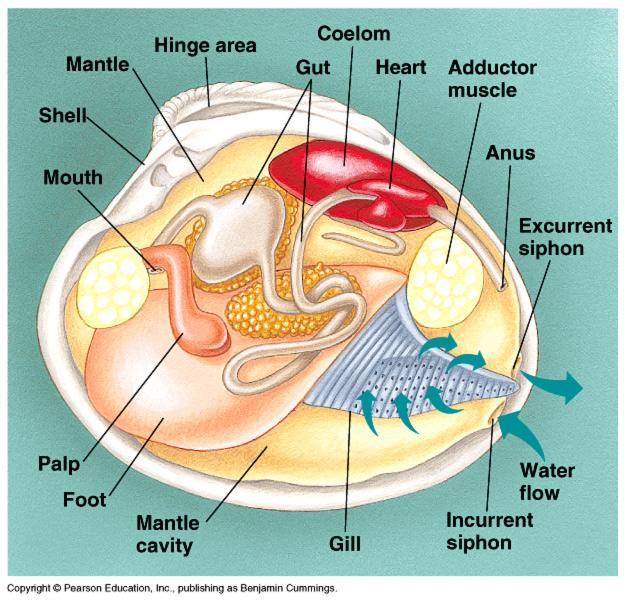


Which class of Mollusks have many species that are sessile?
Gastropods
Bivalves
Cephalopods
Arthropods
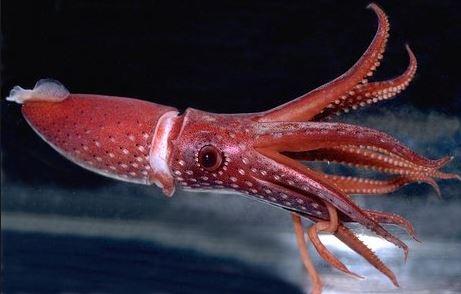
What mollusk group does the picture belong to?
Gastropoda
Bivalvia
Cephalopoda
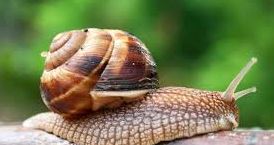
What mollusk group does the picture belong to?
Gastropoda
Bivalvia
Cephalopoda

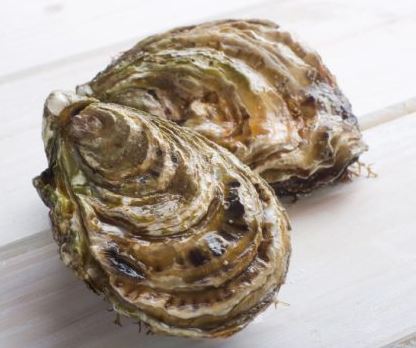
Which group of mollusks does the picture belong to?
Gastropoda
Bivalvia
Cephalopoda
What type of circulatory system do most mollusks have?
Open
Closed
What type of circulatory system do cephalopods have?
Open
Closed
Which class of mollusks can be terrestrial and may or may not have a shell?
Gastropoda
Bivalvia
Cephalopoda
Which class of mollusks are sedentary filter feeders with two shells joined by a hinge?
Gastropoda
Bivalvia
Cephalopoda
Which of these choices is the primary structure used by most mollusks for locomotion and respiration?
Siphon
Mantle
Umbo
Whorl
Chromatophores are used by cephalopods to:
Change color
Produce ink
Catch food
Reproduce
The structure used by most cephalopods in self-defense to confuse predators and escape is:
Ink sac
Hectocotylus
Radula
Mantle
The anterior end of the spider is the ___
cephalothorax
abdomen
Where are the spider's legs attached?
cephalothorax
abdomen
What type of circulatory system do arthropods have?
open
closed
Since the exoskeleton limits the growth of arthropods, they have to shed their exoskeletons and form a new one. This is called ____.
defecating
molting
morphing
excreting
Which of the following are considered to be "true jaws" that chew food?
Mandibles
Maxillae
Maxillipeds
The phylum arthropoda is the largest animal group on the planet.
True
False
How many pairs of legs does a centipede have per body segment?
One
Two
How many pairs of legs does a millipede have per body segment?
One
Two
Centipedes belong to which class?
Chilopoda
Diplopoda
Millipedes belong to which class?
Chilopoda
Diplopoda
Roundworms
Platyhelminthes
Nematoda
Annelida
Flatworms
Platyhelminthes
Nematoda
Annelida
Segmented worms
Platyhelminthes
Nematoda
Annelida
Class of annelids that includes earthworms
Oligochaeta
Hirudinia
Class of annelids that includes leeches
Oligochaeta
Hirudinia
Reproductive structure developed by annelids that is shed to shelter the eggs
Scolex
Proglottid
Clitellum
Setae
Hairlike extensions used by annelids to anchor themselves in their burrow and/or for movement.
Scolex
Proglottid
Clitellum
Setae
Head of a tapeworm
Scolex
Proglottid
Clitellum
Setae
Reproductive unit of a tapeworm
Scolex
Proglottid
Clitellum
Setae
Host of a flatworm or roundworm larva
Intermediate host
Definitive host
Host of an adult flatworm or roundworm
Intermediate host
Definitive host
Class of flatworms that includes planaria
Turbellaria
Trematoda
Cestoda
Class of flatworms that includes flukes
Turbellaria
Trematoda
Cestoda
Class of flatworms that includes tapeworms
Turbellaria
Trematoda
Cestoda
Many flatworms and roundworms have this ecological relationship with other organisms
Mutualism
Commensalism
Parasitism
Predation
Which of these groups does not have a complete gut?
Platyhelminthes
Nematoda
Annelida

