wayground logo

Free Printable Worksheets

Font size

S
M
L
XL
Worksheets

Quiz #14 - Changes and Properties

Total questions: 169

Worksheet time: 14hrs 42mins

Name
Class
Date
1.
What does this scale measure?
a)
weight 
b)
volume
c)
density
2.
How much space an object takes up is the 
a)
mass
b)
volume 
c)
weight 
d)
density
3.
Ability to rust is this type of property:
a)
Physical property
b)
Chemical property
4.
This is an example of a
a)
physical change
b)
chemical change
5.
What type of property is the ability to combust?
a)
Physical property
b)
Chemical property
6.
Flammability is an example of what property?
a)
Chemical property
b)
Physical property
7.
Which of the following is a chemical property?
a)
combustion
b)
texture
c)
volume
d)
magnetism
8.
this is an example of?
a)
physical property
b)
chemical property
9.
The graduated cylinder has a volume of 50 mL.  You drop a tennis ball in the cylinder.  The volume rises to 88 ml.  What is the volume of the tennis ball?
a)
50 mL
b)
80 mL
c)
38 mL
d)
88 mL
10.
What is the formula for density?
a)
density = mass x volume
b)
density = mass / volume
c)
density = mass + volume
d)
density = mass - volume
11.
Which box has a higher density?  
a)
Box A
b)
Box B
c)
cannot be determined
d)
they are the same
12.
By looking at the molecules below, what state of matter is shown?
a)
Solid
b)
Liquid
c)
Gas
d)
Matter
13.
Identify the equipment shown here:
a)
beakers
b)
flasks
c)
decanters
d)
graduated cylinders
14.
What is the volume of the liquid in the cylinder?
a)
40 mL
b)
4.0 mL
c)
44 mL
d)
50 mL
15.
What is measured with a graduated cylinder?
a)
Passage of time
b)
Distance from one thing to another
c)
Weight of an object
d)
Volume of liquid
16.
Which units are used to measure mass?
a)
Grams
b)
Liters
c)
Meter
d)
Second
17.
What is a pan balance used for?
a)
measure length
b)
measure volume 
c)
measure mass 
d)
measure width 
18.
a)
triple beam balance
b)
pan balance
c)
beaker
d)
metric ruler
19.
how tightly or loosely packed the particles are inside of an object is the 
a)
mass
b)
volume
c)
weight
d)
density
20.
How strongly gravity pulls on an object is 
a)
mass
b)
volume
c)
weight
d)
density
21.
how much matter is in an object is the 
a)
mass
b)
volume
c)
weight
d)
density
22.
Which formula can be used to find the volume of a rectangular prism?
a)
length x width
b)
length x width x height
c)
height x length
d)
length + width + height
23.

Density (mass per unit volume): Chemical or Physical Property

a)
Chemical Property
b)
Physical Property
24.
Reacts with Acid: Chemical or Physical Property
a)
Chemical Property
b)
Physical Property
25.

Brittleness (how easily is breaks): Chemical or Physical Property

a)
Chemical Property
b)
Physical Property
26.
Sour Taste: Chemical or Physical Property
a)
Chemical Property
b)
Physical Property
27.
Reacts with Water: Chemical or Physical Property
a)
Chemical Property
b)
Physical Property
28.

Luster (how shiny): Chemical or Physical Property

a)
Chemical Property
b)
Physical Property
29.
a)
Physical Change
b)
Chemical Change
30.

Is this an example of a physical or chemical change?

a)

physical

b)

chemical

31.

Is this an example of a physical or chemical change?

a)

physical

b)

chemical

32.
What two types of measurements make up DENSITY
a)
Mass and Volume
b)
Temperature and Mass
c)
Grams and Centimeters
d)
Volume and Weight
33.

Which box has a higher density?

a)

A

b)

B

c)

They are the same

34.
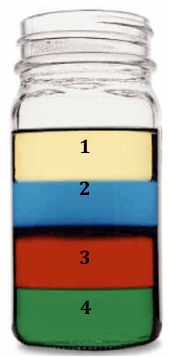
Put the liquids in order from most dense to least dense?
a)
4, 3, 2, 1
b)
1, 2, 3, 4
c)
3, 4, 2, 1, 
d)
4, 3, 1, 2
35.

The ability to burn is known as---

a)

Flammability

b)

Combustion

c)

Density

d)

Exploding

36.

Mass divided by volume is the formula for calculating----

a)

Mass

b)

Volume

c)

Density

d)

Matter

37.

Reactivity (bubbling, fizzing) is a --- property.

a)

Chemical

b)

Physical

38.
Ice melting is an example of a
a)
physical change
b)
chemical change
c)
physical property
d)
chemical property
39.
Physical properties are
a)
properties that can be observed without changing the identity of the substance
b)
properties that describe how a substance changes into a completely different substance
c)
properties that we can only observe with our eyes
d)
properties that we need special tools to observe
40.
Which is an example of a chemical change?
a)
melting ice to make water
b)
baking cake batter to make a cake
c)
putting cheese on bread to make a cheese sandwich
d)
cutting an orange into slices for a snack
41.
Hammering wood together to build a playhouse
a)
Chemical change
b)
Physical change
42.
a copper penny turning greenish after a few years.
a)
Chemical Change
b)
Physical Change
43.
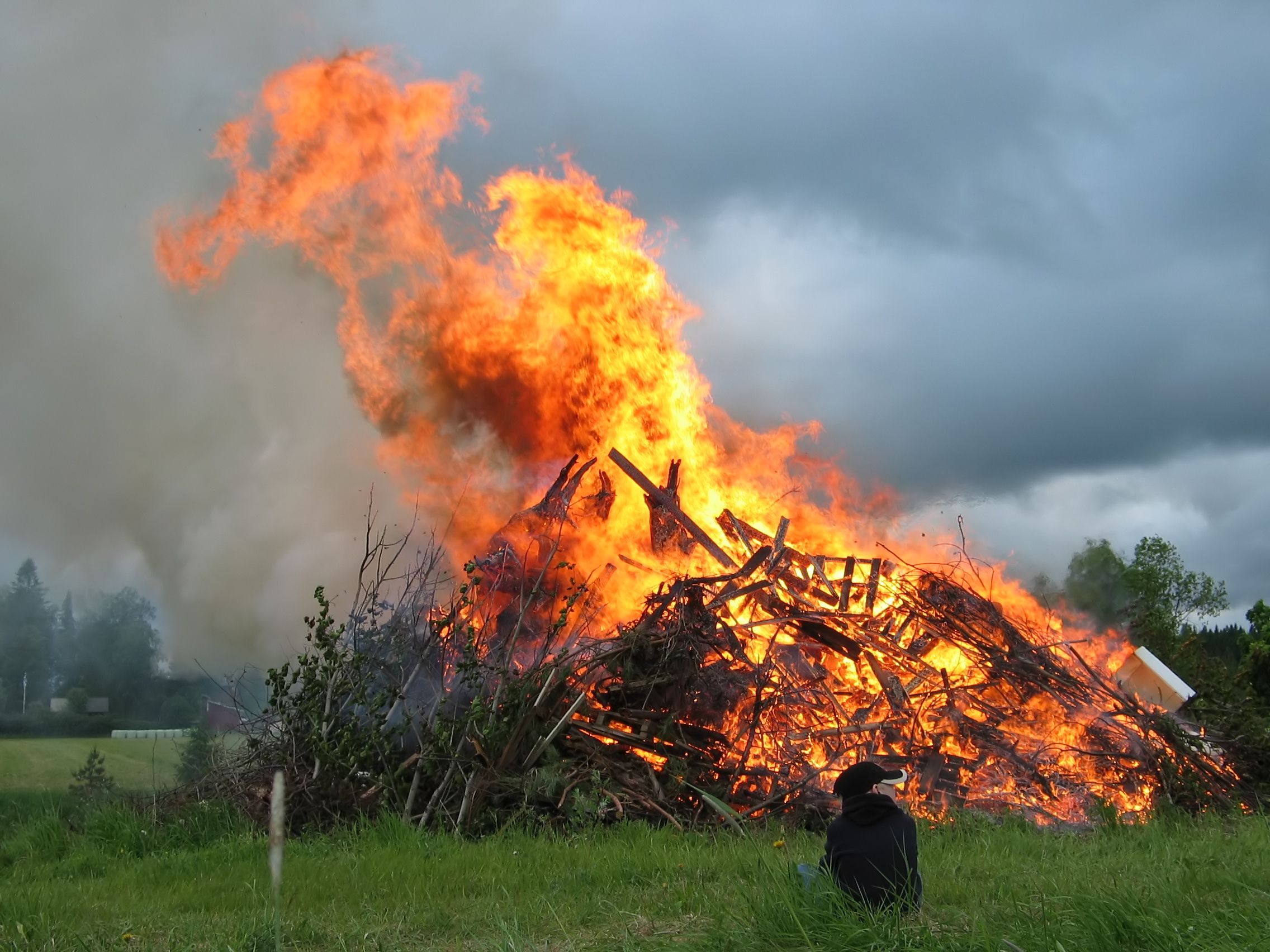
Burning a marshmallow over a campfire
a)
Physical
b)
Chemical
44.

______________________ can only be recognized when substances react or do not react chemically with one another.

a)

Physical properties

b)

Chemical properties

c)

Flammable properties

d)

Colorful properties

45.
Which is an example of a physical property?
a)
ability to react with acid
b)
 state of matter
c)
flammability
d)
ability to react with oxygen
46.
Which of the following is NOT an example of a physical change?
a)
crumpled paper
b)
pencil sharpening
c)
shrunken clothing
d)
rust
47.
Blue Color: Chemical or Physical Property
a)
Chemical Property
b)
Physical Property
48.

Density (mass per unit volume): Chemical or Physical Property

a)
Chemical Property
b)
Physical Property
49.
Flammability (burns): Chemical or Physical Property
a)
Chemical Property
b)
Physical Property
50.

Solubility (ability to dissolve): Chemical or Physical Property

a)
Chemical Property
b)
Physical Property
51.
Reacts with Acid: Chemical or Physical Property
a)
Chemical Property
b)
Physical Property
52.

Brittleness (how easily is breaks): Chemical or Physical Property

a)
Chemical Property
b)
Physical Property
53.
Sour Taste: Chemical or Physical Property
a)
Chemical Property
b)
Physical Property
54.
Melting Point: Chemical or Physical Property
a)
Chemical Property
b)
Physical Property
55.
Reacts with Water: Chemical or Physical Property
a)
Chemical Property
b)
Physical Property
56.
Hardness: Chemical or Physical Property
a)
Chemical Property
b)
Physical Property
57.
Boiling Point: Chemical or Physical Property
a)
Chemical Property
b)
Physical Property
58.

Luster (how shiny): Chemical or Physical Property

a)
Chemical Property
b)
Physical Property
59.
Odor: Chemical or Physical Property
a)
Chemical Property
b)
Physical Property
60.
Reacts with Air: Chemical or Physical Property
a)
Chemical Property
b)
Physical Property
61.

A physical property can be observed __________ a chemical reaction

a)

during

b)

without

62.

A chemical property can be observed __________ a chemical reaction

a)

during

b)

without

63.

Combustion or exploding, is a --- property.

a)

Chemical

b)

Physical

64.

Malleability, the ability to be flattened into thin sheets, is a ---property.

a)

Physical

b)

Chemical

65.
a)
Physical Change
b)
Chemical Change
66.
a)
Physical Change
b)
Chemical Change
67.
a)
Physical Change
b)
Chemical Change
68.
a)
Physical Change
b)
Chemical Change
69.
a)
Physical Change
b)
Chemical Change
70.
a)
Physical Change
b)
Chemical Change
71.
a)
Physical Change
b)
Chemical Change
72.
a)
Physical Change
b)
Chemical Change
73.

What key words, when present in a question about chemical reactions, might indicate a chemical change is occuring? Check all that apply.

a)

Bubbling

b)

Fizzing

c)

Dissolving

d)

Evaporating

74.
Which of the following is a sign that a chemical reaction has occurred?
a)
change in shape
b)
melting
c)
formation of a gas
d)
dissolving
75.
Is melting butter for popcorn a chemical or physical change?
a)
chemical
b)
physical
76.
A change where one or more new substances are created.
a)
Physical Change 
b)
Chemical Change 
77.

Burning wood

a)

physical change

b)

chemical change

78.
Is wood burning a physical or chemical change?
a)
Physical 
b)
Chemical
79.

Is this an example of a physical or chemical change?

a)

physical

b)

chemical

80.

Is this an example of a physical or chemical change?

a)

physical

b)

chemical

81.

Is this an example of a physical or chemical change?

a)

physical

b)

chemical

82.

Is this an example of a physical or chemical change?

a)

physical

b)

chemical

83.

How shiny something is is called?

a)

Luster

b)

Malleiablity

c)

Ductility

d)

Conductivity

84.

Whether something conducts electricity or heat is called

a)

Luster

b)

Malleiablity

c)

Ductility

d)

Conductivity

85.

Being able to shape something into new shapes

a)

Luster

b)

Malleiablity

c)

Ductility

d)

Conductivity

86.
Density: Chemical or Physical Property
a)
Chemical Property
b)
Physical Property
87.
Solubility (dissolves): Chemical or Physical Property
a)
Chemical Property
b)
Physical Property
88.
Reacts with Acid: Chemical or Physical Property
a)
Chemical Property
b)
Physical Property
89.

Decay or Decomposition: Physical or Chemical Property

a)

Chemical Property

b)

Physical Property

90.

mixing baking soda and vinegar

a)

physical change

b)

chemical change

91.

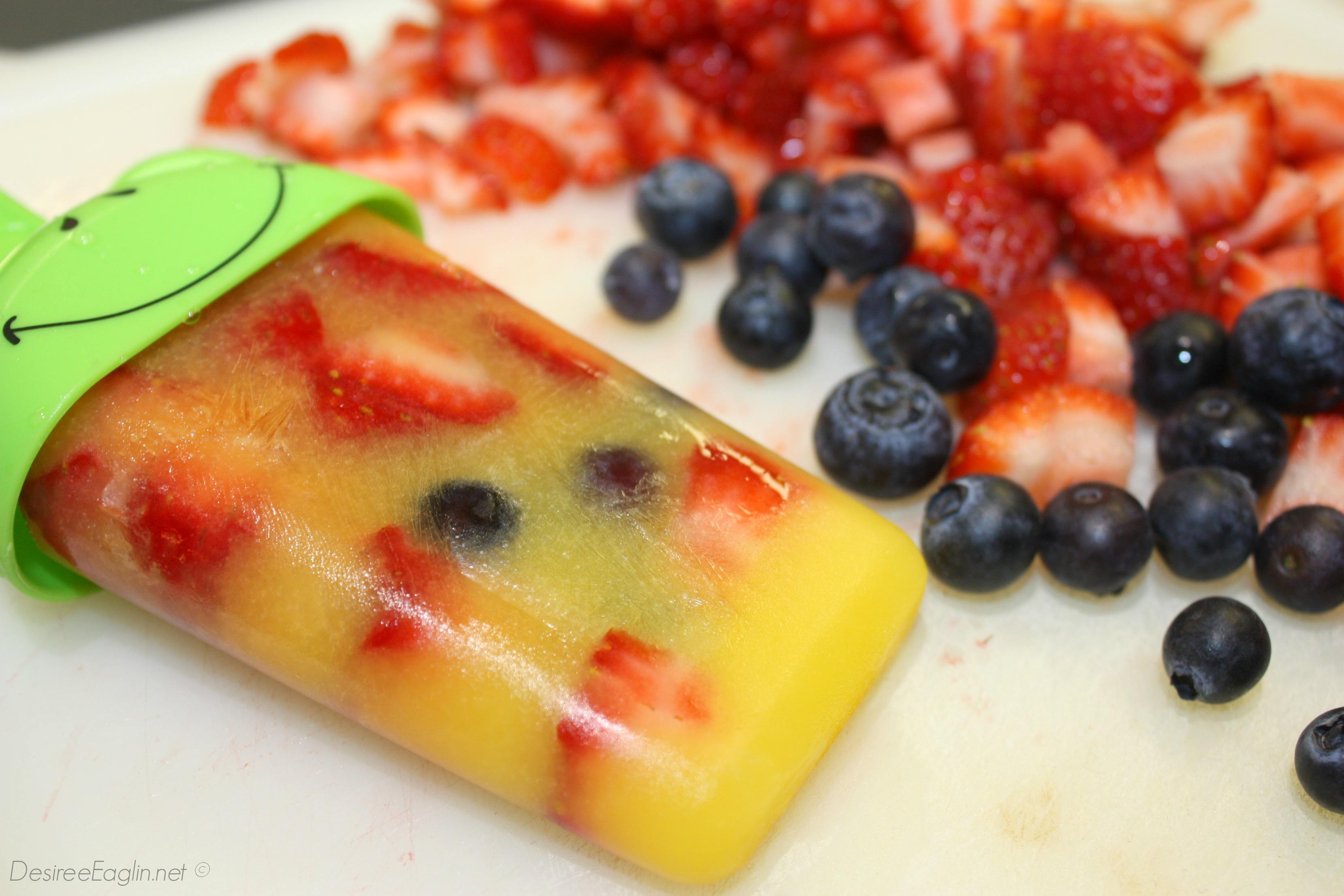
Freezing Juice?

a)

physical Change

b)

chemical Change

92.

Baking Cookies

a)

Physical Change

b)

Chemical Change

93.

Lighting a Match

a)

Physical Change

b)

Chemical Change

94.

Cooking Pancakes

a)

Physical Change

b)

Chemical Change

95.

Crumpling Paper

a)

Physical Change

b)

Chemical Change

96.
An instant ice pack getting cold when the chemicals are able to touch.
a)
Chemical Change
b)
Physical Change
97.
Which is a physical change?
a)
burning match 
b)
vinegar in baking soda 
c)
melting butter
d)
cooking an egg
98.
What is an example of a Chemical change?
a)
Ripped paper 
b)
boiled egg
c)
cracked egg
d)
sugar in water
99.
Is burning wood a chemical or physical change?
a)
chemical
b)
physical
100.
KMnO4
How many atoms of oxygen are in this molecule?
a)
1
b)
2
c)
4
d)
6
101.
Is milk going sour a physical or chemical change?
a)
Physical 
b)
Chemical
102.
Is gatorade powder dissolving in water physical or chemical change?
a)
Physical 
b)
Chemical
103.

How many elements are in this substance: CaCO3

a)

2

b)

3

c)

4

d)

5

104.

How many atoms of each element are in NaCl?

a)

Na=1, Cl=1

b)

Na=2. Cl=2

c)

Na=1, Cl-2

105.

How many atoms are there TOTAL in H2SO4 ?

a)

6

b)

5

c)

7

d)

3

106.

The ______ are numbers found on the lower right-hand side of an element symbol.

a)

Coefficient

b)

Exponent

c)

Multiplier

d)

Subscript

107.
What is a coefficient?
a)
The small number on the right of the chemical symbol.
b)
The large number to the left of a formula.
108.

H2SO4

a)

H = 2, S = 4, O = 4

b)

H = 2, S = 1, O = 4

c)

H = 8, S = 4, O = 4

d)

H = 2, SO = 4

109.

The smallest particle of an element; made of electrons, protons, and neutrons

a)

Atoms

b)

Elements

c)

Molecules

d)

Products

110.

The process by which one or more substances change to produce one or more different substances

a)

Chemical Process

b)

Reactant

c)

Chemical Reaction

111.

A substance produced during a chemical reaction

a)

Product

b)

Reactant

c)

Properties

112.

Physical and chemical characteristics of matter used to describe or identify a substance

a)

Chemical Reaction

b)

Properties

c)

Product

113.

A substance that takes part in and undergoes change during a reaction

a)

Product

b)

Molecule

c)

Reactant

114.

A new substance with unique chemical and physical properties that is formed when two or more elements are chemically bonded during a chemical reaction

a)

Product

b)

Compound

c)

Molecule

d)

Atom

115.

A chemical reaction or process that absorbs heat from the surroundings

a)

Endothermic

b)

Exothermic

116.

A chemical reaction or process that releases heat.

a)

Endothermic

b)

Exothermic

117.
What is an element?
a)
something shiny and hard
b)
something made up of different molecules
c)
something made up of one kind of atom
d)
something made up of different atoms
118.
When a substance can dissolve into another substance, it has
a)
solubility
b)
conductivity
c)
chemical reactivity
d)
melting point
119.

What charge do protons have?

a)

positive

b)

negative

c)

neutral

120.

What charge do electrons have?

a)

positive

b)

negative

c)

neutral

121.

What charge do neutrons have?

a)

positive

b)

negative

c)

neutral

122.

Which subatomic particles are found in the nucleus?

a)

protons

b)

neutrons

c)

electrons

d)

protons and electrons

e)

protons and neutrons

123.

How many protons does an atom of Nitrogen have?

a)

7

b)

14

c)

21

124.

How many electrons does a neutral atom of Nitrogen have?

a)

7

b)

14

c)

21

125.

How many neutrons does an atom of Nitrogen have?

a)

7

b)

14

c)

21

126.

The atomic number is always the number of

a)

protons

b)

neutrons

c)

electrons

127.

To find the number of neutrons....

a)

add the number of electrons and number of protons

b)

subtract the atomic number from the atomic mass

c)

subtract the number of protons from the number of electrons

128.

Which image correctly shows the relative sizes of the subatomic particles?

a)
b)
c)
129.

All matter is made of _________.

a)
energy 
b)
atoms 
c)
electrons 
d)
compounds 
130.
What is at the center of every atom?
a)
An electron
b)
A compound
c)
A molecule
d)
A nucleus
131.
The positively charged particles of an atom are the ________.
a)
electrons
b)
protons
c)
neutrons
d)
protons & neutrons
132.
What does the nucleus of an atom contain?
a)
Electrons and neutrons
b)
Protons and neutrons
c)
Neutrinos and positrons
d)
DNA and RN
133.

Atoms are made up of ________________

a)

energy

b)

electrons

c)

subatomic particles

d)

gasses

134.

The subatomic particles that make up an atom.

a)

solid, liquid, gas

b)

electrons, protons, nucleus

c)

energy, protons, nucleus

d)

electrons, protons, neutrons

135.

__________ are negatively charged particles that are in the orbitals around the nucleus.

a)

protons

b)

nucleus

c)

neutrons

d)

electrons

136.

A proton has a ___________ charge.

a)

positive

b)

negative

c)

neutral

d)

massive.

137.

An electron has a _________ charge

a)

positive

b)

neutral

c)

negative

d)

massive

138.

A neutron has _________ charge or is ________.

a)

negative ... neutral

b)

positive .... neutral

c)

no .... negative

d)

no ... neutral

139.
Which is an electron?
a)
A
b)
B
c)
C
140.

The smallest part of any element. Made up of protons, neutrons and electrons.

a)

Atom

b)

AMU

c)

Ion

d)

Isotope

141.

The negatively charged particles in an atom

a)

Proton

b)

Electron

c)

Neutron

d)

Electron Cloud

142.

Which TWO of the following subatomic particles are inside the nucleus?

a)

protons

b)

electrons

c)

neutrons

d)

There are no subatomic particles in the nucleus of an atom.

143.
The particles with no charge in an atom are the _______.
a)
electrons
b)
neutrons
c)
protons
d)
protons and neutrons
144.

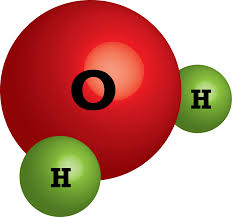
How many atoms of Hydrogen are in H2O

a)

1

b)

2

c)

3

d)

more than 3

145.

How many atoms of Hydrogen are in this compound?

a)

1

b)

2

c)

3

d)

4

146.

All matter is made of _________.

a)
energy 
b)
atoms 
c)
electrons 
d)
compounds 
147.

The subatomic particles that make up an atom.

a)

solid, liquid, gas

b)

electrons, protons, nucleus

c)

energy, protons, nucleus

d)

electrons, protons, neutrons

148.

What is the chemical symbol for Hydrogen

a)

H

b)

He

c)

Hy

d)

Hg

149.

What is this subatomic particle that has positive charge?

a)

Electron

b)

Neutron

c)

Proton

d)

Megatron

150.

What is a substance made of two or more elements that are chemically combined called?

a)

A. element

b)

B. compound

c)

C. mixture

d)

D. solution

151.

Is salt (NaCI) a compound or an element?

a)

Compound

b)

element

152.

What is the definition of a compound?

a)

The smallest part of any substance which can exist on its own

b)

Two or more atoms chemically joined together (can be the same or can be different)

c)

A simple substance in which all the atoms are identical

d)

Two or more different elements chemically joined together

153.
All matter is made of .....
a)
energy 
b)
atoms 
c)
air
d)
chemistry
154.

A substance that cannot be broken down into any other substance by ordinary chemical means is called

a)

a molecule.

b)

a mixture.

c)

an element.

d)

a compound.

155.

Two or more physically combined substances form

a)

a compound.

b)

an acid.

c)

an element.

d)

a mixture.

156.

What is an example of a mixture?

a)

Table salt

b)

Water

c)

Oxygen

d)

Air

157.

A substance that contains only one type of atom is a(n)

a)

compound

b)

element

c)

heterogeneous mixture

d)

homogeneous mixture

158.

A compound is made of ________ atoms.

a)

big

b)

similar

c)

different

159.
Carbon Dioxide is a ______ 
a)
compound 
b)
element 
c)
mixtures 
d)
Battle of Bunker Hill 
160.
Salt is a _________. 
a)
compound 
b)
element 
c)
mixture 
161.
This picture represents which of the following?
a)
element
b)
compound
c)
mixture of elements
d)
mixture of compounds
162.
This picture represents which of the following?
a)
element
b)
compound
c)
mixture
163.
This picture represents which of the following?
a)
element
b)
compound
c)
mixture
164.

The smallest unit of an element is

a)

a compound.

b)

a molecule.

c)

an atom.

d)

a mixture.

165.

The smallest unit of a compound is

a)

an element.

b)

a molecule.

c)

an atom.

d)

a mixture.

166.

True or False: All molecules are compounds.

a)

true

b)

false

167.

True or false: Air is a mixture.

a)

true

b)

false

168.

Which of the following is a mixture?

a)

oxygen

b)

gold

c)

sand

d)

water

169.

Matter is anything that has mass and takes up space.

a)

true

b)

false