wayground logo

Free Printable Worksheets

Font size

S
M
L
XL
Worksheets

Enrichment 4/12 - 8th Science STAAR Review

Total questions: 164

Worksheet time: 2hrs 54mins

Name
Class
Date
1.

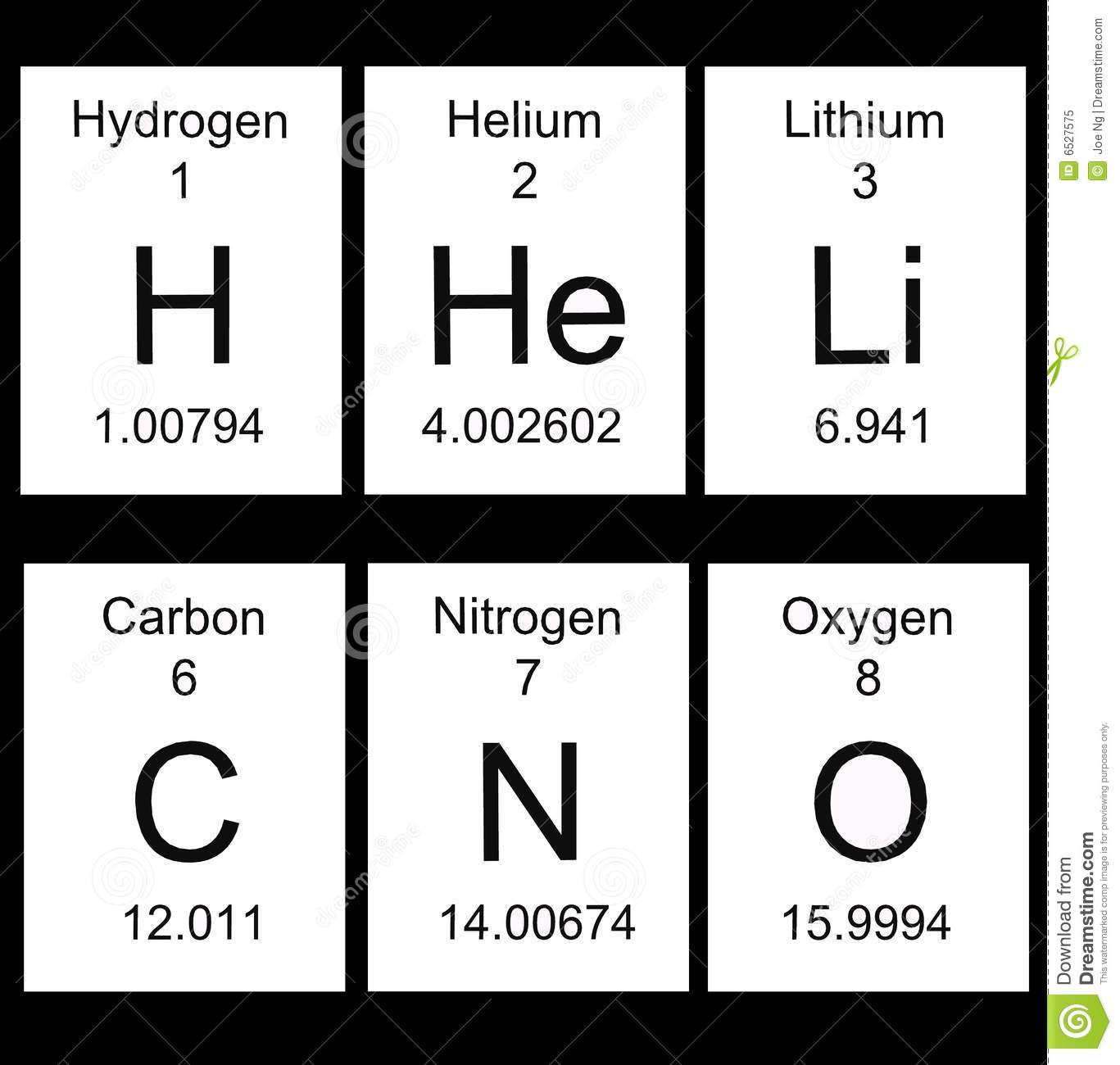
An atom of which element is represented by the model below?

a)

Carbon

b)

Boron

c)

Lithium

d)

Oxygen

2.

Which of the following best describes an electron?

a)

It has no charge and about the same mass as a proton.

b)

It has a negative charge and much less mass than a proton.

c)

It has a positive charge and much more mass than a neutron.

d)

It has a negative charge and about the same mass as a neutron.

3.

Which of these describes a divergent boundary?

a)

Two continental plates moving away from each other, forming a rift valley

b)

Two oceanic plates rubbing against each other, forming a mid-ocean ridge

c)

Two continental plates colliding, forming a mountain range

d)

Two oceanic plates colliding, forming a volcanic arc

4.

Different species of carnivorous animals that share the same habitat in an ecosystem may –

a)

become decomposers

b)

compete for biotic food

c)

produce their own food

d)

mate with each other

5.

A scientist spilled a few drops of dilute hydrochloric acid (HCl) on a lab table. For safety purposes, the scientist sprinkled some baking soda (NaHCO3) onto the spill. Which observation would provide the best evidence that a chemical reaction occurred?

a)

The baking soda and hydrochloric acid combined, and bubbles formed.

b)

The baking soda absorbed the hydrochloric acid.

c)

Some of the baking soda dissolved in the hydrochloric acid.

d)

The hydrochloric acid evaporated, leaving only the baking soda.

6.

Some students measure the acceleration of a wheeled cart being acted on by varying forces. The students record their data in the table shown below. According to the data table, how much force is acting on the cart when the students measure an acceleration of 2.6 m/s?

a)

13 N

b)

7 N

c)

8 N

d)

12 N

7.

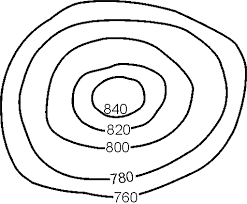
Which topographic map best represents this landform?

a)
b)
8.

What is the primary energy source that drives all weather events, including precipitation, hurricanes, and tornados?

a)

the Sun

b)

the Moon

c)

Earth’s gravity

d)

Earth’s rotation

9.

Based on the key, which type of tree is the sample from?

a)

Ginko

b)

Sweet gum

c)

Horse chestnut

d)

Honey locust

10.
What element is represented in this Bohr Model? 
a)
Carbon
b)
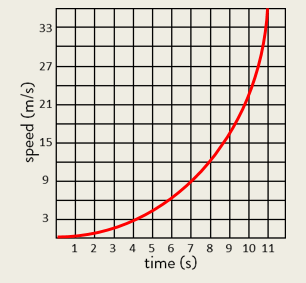
Hydrogen
c)
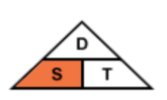
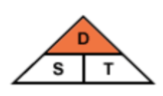
Aluminum
d)
Lithium
11.
Which is an electron?
a)
A
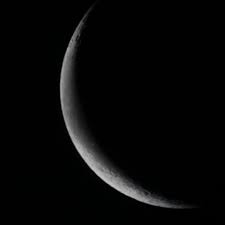
b)
B
c)
C
12.
What is the atomic number?
a)
The number of protons in an element
b)
The number of neutrons in an element
c)
The number of protons and neutrons.
d)
The number of protons and electrons.
13.
What is found in the nucleus of atoms?
a)
Protons and electrons.
b)
Protons, neutrons, and electrons.
c)
Protons and neutrons.
d)
Neutrons and electrons.
14.
How many valence electrons does Sodium (Na) have?
a)
1
b)
2
c)
3
d)
4
15.
Each column in the periodic table is called a 
a)
period
b)
group
c)
cluster
d)
unit
16.
Which is the correct formula for:
 three hydrogen (H)
one sulfur (S)
four oxygen (O)
a)
H3SO4
b)
HSO4
c)
H4S3O
d)
H2O
17.
How many elements are in C6H12O6?
a)
1
b)
2
c)
3
d)
4
18.
 Which is NOT an example of chemical change?
a)
production of gas.
b)
change in color.
c)
change in size.
d)

Produce light

19.
Where are the most nonmetals located on the periodic table?
a)
In the bottom row
b)
On the left side and in the middle
c)
On the right side
d)
In the top row
20.
Jack has a rock. The rock has a mass of 14g and a volume of 2cm3. What is the density of the rock?
a)
7 mL
b)
7 g/cm3
c)
28 g/cm3
d)
1/7 g/cm3
21.
What is the formula for density?
a)
density = mass x volume
b)
density = mass / volume
c)
density = mass + volume
d)
density = mass - volume
22.
Subduction is:
a)
process by which ocean crust is taken into the trenches and back to the mantle
b)
theory that new seafloor is formed when magma is forced upward toward the surface at a mid ocean ridge
c)
plates slide past each other in opposite directions
d)
a gradual movement of the continents across the Earth's surface over time
23.
The path of food energy from the sun to the producer then transferred to a series of consumers is known as a?
a)
Food Web
b)
Food Chain
c)
Energy Line
d)
Energy Transformation
24.
How many producers are in this food web?
a)
1
b)
2
c)
3
d)
4
25.
What season is the Northern Hemisphere experiencing at position 3?
a)
summer
b)
winter
c)
spring
d)
fall
26.
What does the rotation of Earth on its axis cause?
a)
seasons
b)
day and night
c)
equinox
d)
solstice
27.
What type of star is hot and dim?
a)
main sequence
b)
supergiants
c)
giants
d)
white dwarfs
28.
What type of geological feature will form at a convergent boundary in the ocean?
a)
mid ocean ridge
b)
volcanic Islands
c)
fault
d)
mountains
29.
What determines how chemically reactive an element is?
a)
electrons
b)
valence electrons
c)
protons
d)
neutrons
30.
What is the acceleration of a 50 kg object pushed with a force of 500 newtons? To solve this problem you must do - 
a)
500 ÷ 50
b)
50 ÷ 500
c)
500 x 50
31.
The part of a cell that contains the chromosomes (wound up DNA) in eukaryotic cells.
a)
Chloroplasts
b)
Cell Wall
c)
Nucleus
d)
Homeostasis
32.
The genetic code for all of your traits.
a)
Nucleus
b)
DNA
c)
Chloroplast
d)
Recessive gene
33.
The organelle inside a plant cell that converts sunlight into energy.
a)
Chloroplast
b)
Photosynthesis
c)
Parasite
d)
Cell Wall
34.
A cell without a nucleus.
a)
Eukaryotic
b)
Prokaryotic
c)
Heterotroph
35.
Organisms who receive energy from dead or decaying matter.
a)
Prokaryotic
b)
Omnivore
c)
Heterotrophic
d)
Decomposers
36.
Organisms who make their own energy by taking in light or chemicals.
a)
Heterotroph
b)
Phototropism
c)
Autotroph
d)
Heterotroph
37.
What season is the Northern Hemisphere experiencing at position C?
a)
winter
b)
spring
c)
summer
d)
fall
38.
What season is the Southern Hemisphere experiencing at position C?
a)
winter
b)
spring
c)
summer
d)
fall
39.
What is the order of the components of the universe from greatest to least?
a)
galaxy, star, nebula, planet
b)
planet, star, nebula, galaxy
c)
galaxy, nebula, star, planet
d)
nebula, galaxy, star, planet
40.
Which star is the least bright in spectral class M?
a)
Proxima Centauri
b)
the Sun
c)
Betelgeuse
d)
Vega
41.

When we breathe in, oxygen goes into our lungs. The Lungs are part of the:

a)

Muscular System

b)

Respiratory System

c)

Circulatory System

d)

Digestive System

42.

What does the digestive system do?

a)

Breaks down food into nutrients

b)

Pumps blood throughout the body

c)

Helps you breathe

d)

Helps your arms and legs move

43.
This system controls everything you do.
a)
nervous system
b)
olfactory system
c)
digestive system
d)
circulatory system
44.

8.6C (2019-Q 16)

A large rock is motionless on a flat sidewalk. Which statement best explains why the rock remains motionless?

a)

F There are no forces acting on the rock.

b)

G The only force acting on the rock is directed toward the sidewalk.

c)

H The forces acting on the rock are all balanced.

d)

J The sidealk exerts an unbalanced force ont the rock.

45.

(8.6C 2019 – Q41)

A pitcher throwas a ball toward a player holding a softball bat. The player uses the bat to hit the ball. The bat applies a 10-newton force to the ball.


Which statement correctly describes the reaction force to the ball?

a)

A the reaction force is the force that causes the bat to move toward the bat.

b)

B The reaction force is the force appliked to the bat by the player h9oling the bat.

c)

C The reaction force is the force that pulls the ball toward the ground.

d)

D The reaction force is the force of the ball on the bat.

46.

(8.6C 2018 – Q14)

The picture shows an aerialist walking on a tightrope an holding a balancing bar. An anction-reaction pair of forces exists between -

a)

F the aerialist's feet and the rope

b)

G the rope and the balancing bar

c)

H the two ends of the rope

d)

J the aerialist's arms and legs

47.

(8.5C 2019 – Q13)

a)

Group 2

b)

Group 8

c)

Group 12

d)

Group 18

48.

(8.5C 2018 – Q11)

How many valence electrons aarre in an atom of each element in Group 15 in the periodic table? (Record your answer using the correct place value.)

(a)  

49.

(8.5C 2018 – Q31)

a)

A

b)

B

c)

C

d)

D

50.

(8.5C 2017-Q2)

a)

F

b)

G

c)

H

d)

J

51.

(8.C -Q30)

Which pair of properties describes the elements in Group 18?

a)

F They are chemically stable and liquid at room temperature.

b)

G They have eight balence electrons and are flammable.

c)

H They are maganetic and boil at low temeperatures.

d)

J They are gaseous and room temperature and chemically stable.

52.

(8.5D 2019-Q17)

a)

A

b)

B

c)

C

d)

D

53.

(8.5D 2019-Q32)

a)

1

b)

2

c)

4

d)

5

54.

(8.5D 2017Q-13)

a)

A

b)

B

c)

C

d)

D

55.

(8.5D 2017-Q42)

a)

F

b)

G

c)

H

d)

J

56.

(8.6A 2019-Q6)

a)

F

b)

G

c)

H

d)

J

57.

(8.6A 2019-Q11)

The net force on a vehicle that is accelerating at a rate of 1.5m/s2 is 1,800 newtons. What is the mass of the vehicle to the nerarst kilogram? (Hint: Force=Mass x Acceleration; F=ma)

(a)  

58.

(8.6A 2019-Q36)

a)

F

b)

G

c)

H

d)

J

59.

(8.7B 2019-Q24)

a)

F

b)

G

c)

H

d)

J

60.

(8.7B 2019-Q27)

a)

A

b)

B

c)

C

d)

D

61.

(8.7B 2018-Q19)

a)

A

b)

B

c)

C

d)

D

62.

(8.7B 2018-Q30)

a)

F

b)

G

c)

H

d)

J

63.

(8.7B 2017-Q8)

a)

F

b)

G

c)

H

d)

J

64.

(8.7B 2017-Q31)

a)

A

b)

B

c)

C

d)

D

65.

A horizontal row of elements in the periodic table

a)

Molecule

b)

Period

c)

Family

d)

Atom

66.

What is one way Neutrons are different from electrons?

a)

they both are negative

b)

neutrons have no charge, while electrons have a negative charge

c)

Both are in the nucleus( center of atom)

d)

Electrons are inside nucleus and neutrons are outside the nucleus.

67.

What is the atomic number?

a)

35

b)

18

c)

17

d)

52

68.

How many neutrons does Chlorine have?

a)

18

b)

17

c)

35

d)

52

69.
How many Hydrogen are in 4H2O?
a)
6
b)
8
c)
2
d)
4
70.
How many Magnesium are in 10MgCl2?
a)
10
b)
5
c)
20
71.
2H2 + O2 ----> 2H2O What is the product?
a)
------>
b)
2H2O
c)
2H2+ O2
72.
2H2 + O--------> 2H2O What  are the reactants?
a)
----->
b)
2H2O
c)
2H2 +O2
73.
How many O's are in Al₂(SO₄)₃
a)
4
b)
12
c)
7
d)
24
74.
Number of H in 3(NH₄)₂CrO₄
a)
4
b)
2
c)
8
d)
24
75.
What is the name of the group that never reacts--ever ever they are stable with a full outermost ring!!!
a)
noble gases
b)
transition
c)
halogens
d)
borons
76.
What is the chemical symbol for Lithium?
a)
H
b)
He
c)
Li
d)
N
77.
The number at the bottom of each square on the periodic table is the ...
a)
atomic number
b)
atomic mass
c)
chemical symbol
d)
element name
78.
The number at the top of each square on the periodic table is the ...
a)
atomic number
b)
atomic mass
c)
Chemical Symbol
d)
Element Name
79.

I am shiny

a)

Metal

b)

Nonmetal

c)

Metalloid

80.

I am malleable

a)

Metal

b)

Nonmetal

c)

Metalloid

81.

I am a good conductor of electricity and/or heat

a)

Metals

b)

Nonmetals

c)

Metalloids

82.

I am ductile - I can be draw into wires

a)

Metals

b)

Nonmetals

c)

Metalloids

83.

I could be shiny OR dull

a)

Metals

b)

Nonmetals

c)

Metalloids

84.

I can be nonmalleable or malleable

a)

Metals

b)

Nonmetals

c)

Metalloids

85.

I am a semi-conductor

a)

Metals

b)

Nonmetals

c)

Metalloids

86.

I am only dull

a)

Metals

b)

Nonmetals

c)

Metalloids

87.

I am NOT malleable

a)

Metals

b)

Nonmetals

c)

Metalloids

88.
Frank has a paper clip. It has a mass of 9g and a volume of 3cm3. What is its density?
a)
3 g/cm3
b)
1/3 g/cm3
c)
27 g/cm3
d)
39 g/cm3
89.
How much water has been displaced in the image shown?
a)
40 mL
b)
65 mL
c)
20 mL
d)
25 mL
90.

Find the volume if a substance has a density of 19.3g/cm3 and a mass of 10g.

a)

.52cm3

b)

193cm3

c)

1.93cm3

d)

29.3cm3

91.
What is the density of water?
a)
0 g/ml
b)
1 g/ml
c)
10 g/ml
d)
100 g/ml
92.
Find the volume of the given figure.
a)
308.9 cm3
b)
308.2 cm3
c)
312.8 cm3
d)
302.9 cm3
93.

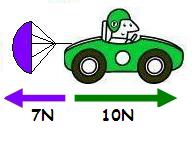
What is the net force?

a)

3 N

b)

3 N, right

c)

17 N, right

d)

3 N, left

94.
What is the net force?
a)
20 N 
b)
0 N 
c)
400 N 
d)
40 N 
95.

What is the unit to MEASURE force?

a)

Kilogram

b)

Meter

c)

Pounds

d)

Newton

96.

A ____________ is a push or a pull on an object.

a)

friction

b)

force

c)

magnet

d)

gravity

97.
What is the acceleration of a 50 kg object pushed with a force of 500 newtons? To solve this problem you must do - 
a)
500 ÷ 50
b)
50 ÷ 500
c)
500 x 50
98.
A 50 kg skater pushed by a friend accelerates 5 m/s2.  How much force did the friend apply? To solve this problem you must do - 
a)
50 ÷ 5
b)
5 ÷ 50
c)
50 x 5
99.
A skier needs to apply a force of 132 N to accelerate at a rate of 2 m/s2. What is the mass of the skier? To solve this problem you must do - 
a)
132 ÷ 2
b)
2 ÷ 132
c)
132 x 2
100.
If you travel 10 miles in 5 minutes, what is your speed?
a)
10 mi/min
b)
15 mi/min
c)
50 mi/min
d)
2 mi/min
101.

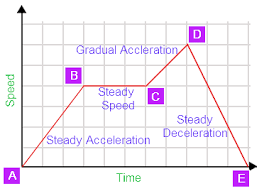
At what point is the speed the greatest?

a)

C-D

b)

B-C

c)

A-B

d)

D-E

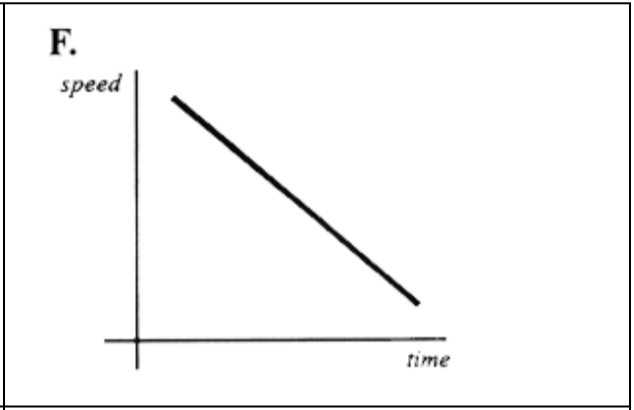
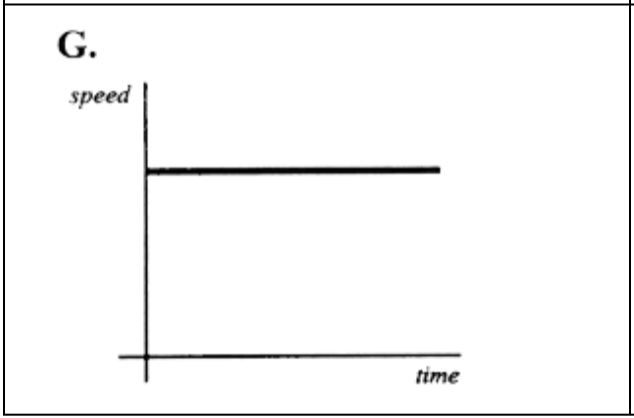
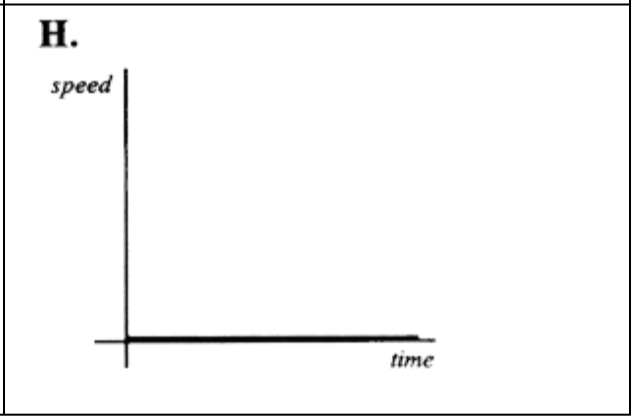
102.

Match the graph to the description:

"The car is slowing down."
a)
b)
c)
d)
103.

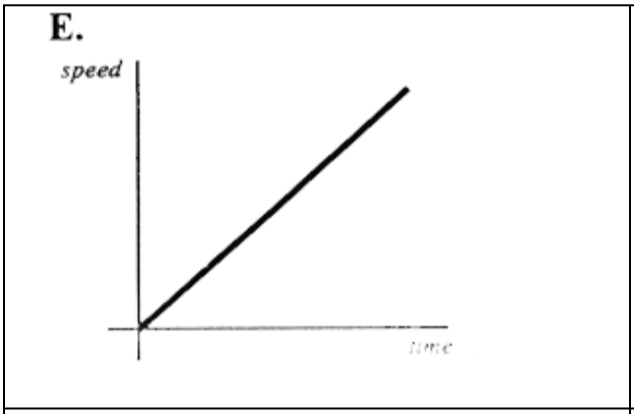
What is this graph showing?

a)

Gradually slowing down

b)

Gradually speeding up

c)

Constant speed

d)

Stopped

104.

D = 10 meters

Time = 2 seconds

What is the Speed?

Hint: S = D÷TS\ =\ D\div T  

a)

10 m/s 

b)

5 m/s 

c)

 2 m/s

d)

 20 m/s

105.

Speed = 20 miles/hour

Time = 2 hours

Distance = ?

Hint:  Use the Density Triangle.

a)

40 miles

b)

 0.1 miles

c)

20 miles 

d)

 10 miles

106.
This symbol represents
a)
a cold front
b)
an occluded front 
c)
a stationary front
d)
a warm front
107.
What direction is the cold front moving?
a)
Northwest
b)
Southeast
c)
Northeast
d)
Southwest
108.

What front does this symbol represent?

a)

warm front

b)

cold front

c)

stationary front

d)

occluded front

109.

What type of front does this symbol represent?

a)

warm front

b)

cold front

c)

stationary front

d)

occluded front

110.

The cold front is moving

a)

east and southeast

b)

west and northwest

c)

north

d)

south

111.
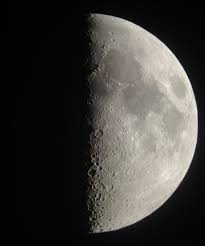
What Moon phase is this?
a)
Old Moon
b)
Far Side of the Moon
c)
New Moon
d)
Waxing Gibbous
112.
What Moon phase is this?
a)
Waning Crescent
b)
Waxing Crescent
c)
Waxing Gibbous
d)
Waning Gibbous
113.
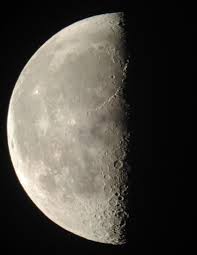
What Moon phase is this?
a)
Full Moon
b)
Waxing Gibbous
c)
New Moon
d)
Half Moon
114.
What Moon phase is this?
a)
Waxing Crescent
b)
Waning Gibbous
c)
Waning Crescent
d)
Waxing Gibbous
115.
Name the moon phase
a)
waning crescent
b)
waxing crescent
c)
waning gibbous
d)
waxing gibbous
116.
Name the moon phase
a)
First Quarter
b)
Last Quarter
c)
New Moon
d)
Full Moon
117.
Name the moon phase
a)
First Quarter
b)
Last (3rd) Quarter
c)
New Moon
d)
Full Moon
118.
Which moon phases are "crescents"?
a)
1 and 5
b)
2 and 8
c)
4 and 6
d)
3 and 7
119.
Which moon phases are "gibbous"?
a)
1 and 5
b)
2 and 8
c)
4 and 6
d)
3 and 7
120.

The cycle of the moon lasts about ___________.

a)

15 days

b)

7 days

c)

27-28 days

d)

30-31 days

121.
What moon phase would be seen from Earth when the moon is at position 5? 
a)
new moon
b)
first quarter
c)
full moon
d)
third quarter
122.
Define Full Moon
a)
None of moon is visible
b)
Half moon phase is visible
c)
Complete moon face is visible
d)
Less Than half of moon is visible
123.
Define New Moon
a)
None of moon is visible from Earth
b)
All of moon visible from Earth
c)
Moon is 1/2 visible from Earth
d)
Moon is more than Half Visible from Earth
124.
What is the highest elevation on this map?
a)
Over 320 meters
b)
Over 450 meters
c)
Over 220 meters
d)
Over 380 meters
125.
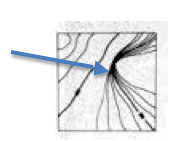
What feature is at the arrow?
a)
volcano
b)
mountain
c)
cliff
d)
river
126.
If contour lines are close together, then the slope is
a)
gentle
b)
steep
c)
flat
d)
going up and down
127.
What do contour lines that are farther apart represent?
a)
waterfall
b)
steep area
c)
gentle slope
d)
river
128.
What is the elevation of point B?
a)
800 ft
b)
850 ft
c)
900 ft
d)
1000 ft
129.

Which side is steeper?

a)

The left side of the hill

b)

The right side of the hill

130.
Determine the contour interval:
a)
5 m
b)
10 m
c)
15 m
d)
20 m
131.

What kind of plate boundary is shown here?

a)

Divergent

b)

Convergent

c)

Transform

d)

Strike Slip

132.

What kind of plate boundary is shown here?

a)

Divergent

b)

Convergent

c)

Transform

d)

Submergent

133.

What kind of plate boundary is shown here?

a)

Divergent

b)

Convergent

c)

Transform

d)

Strike Slip

134.

What geologic feature/event will most likely be found at a transform boundary?

a)

Earthquakes

b)

Volcanoes

c)

Mountains

d)

Rift Valleys

135.

What geologic feature/event would most likely occur at a divergent boundary between two oceanic plates?

a)

Rift Valley

b)

Mid-Ocean Ridge

c)

Island Arc

d)

Flat Land

136.

What geologic feature would most likely be found at a convergent boundary between two continental plates?

a)

Volcano

b)

Rift Valley

c)

Mountain

d)

Island Arc

137.

A subduction zone is formed...

a)

when a more dense plate sinks below a less dense plate

b)

at EVERY type of convergent boundary

c)

at EVERY type of divergent boundary

d)

when a less dense plate sinks below a more dense plate

138.

What is the "magic" that is happening in the mantle that helps move the lithospheric plates?

a)

Convection

b)

Radiation

c)

Condensation

d)

Conduction

139.

Aside from Earthquakes, what is the only other thing you will find at transform boundaries?

a)

Volcanoes

b)

Subduction Zones

c)

Folded Mountains

d)

Fault Lines

140.
In the diagram given, what happens as we move to the left?
a)
Stars Get Larger
b)
Stars get Colder
c)
Stars get hotter
141.
Which of these stars is hottest?
a)
Red Star
b)
Yellow Star
c)
Orange Star
d)
Blue Star
142.
Which star is the coldest?
a)
Yellow Star
b)
Red Star
c)
Orange Star
d)
Blue Star
143.
Which category is our Sun located in?
a)
White Dwarfs
b)
Supergiants
c)
Main Sequence
d)
Giants
144.
Red stars are the _____________.
a)
hottest
b)
coolest
c)
biggest
d)
brightest
145.
Look at the H-R diagram. Which star is
sort of cool, dim (not too much light), and red?
a)
Betelguse
b)
Sirius B
c)
Procyon B
d)
Barnard's star
146.

For a black hole to form...

a)

The gravitational force has to be stronger than the force of the supernova.

b)

The force of the supernova has to be stronger than the gravitational force.

147.

Which law of motion says that you must push or pull objects harder if they have more mass?

a)

1st

b)

2nd

c)

3rd

d)

4th

148.

Letting go of a balloon full of air is demonstrating Newton's ______ _______ ________ _________ because the air comes out of the back and the balloon moves forward.

a)

1st law of motion

b)

2nd law of motion

c)

3rd law of motion

d)

13th law of motion

149.

What law is best described by inertia?

a)

1st

b)

2nd

c)

3rd

d)

law of conservation of mass

150.

A person not paying attention while skateboarding hits a rock. The skateboard stops...they don't.

a)

The Law of Inertia (1st law)

b)

The Law of Acceleration (2nd law)

c)

The Law of Conservation of Momentum

d)

Action Reaction Law (3rd law)

151.

What is Newton's First Law

a)

F=ma

b)

Every action has an equal and opposite reaction

c)

An object at rest stays at rest, an object in motion stays in motion.

d)

Friction

152.

Newton's third law states that any action will have a(n) _______ and ______ reaction

a)

Equal and similar

b)

Equal and opposite

c)

Equal and different

d)

Greater and opposite

153.
In winter, the axis of the earth is pointed away or toward the sun?
a)
towards
b)
up
c)
down
d)
away
154.
Why is the Equator warmest?
a)
Because it is closest to the sun.
b)
Because it receives the most direct sunlight
c)
Because no clouds form here.
d)
Because it is far from the sun
155.
Which season is taking place in the Northern Hemisphere in Position 1?
a)
Winter
b)
Spring
c)
Summer
d)
Fall
156.
Which season is taking place in the Northern Hemisphere in Position 3?
a)
Winter
b)
Spring
c)
Summer
d)
Fall
157.
If its ____ in the Northern hemisphere, then its fall in the Southern hemisphere. 
a)
spring
b)
summer
c)
fall
d)
winter
158.

What quantity can you calculate if you know that a car travels 30 km in 20 min?

a)

average speed

b)

direction

c)

velocity

d)

instantaneous speed

159.

The rate at which velocity changes is...

a)

acceleration

b)

direction

c)

speed

d)

velocity

160.
What is the equation to calculate time?
a)
time = speed/distance
b)
time = distance/speed 
c)
time = speed x distance 
d)
time = distance x speed
161.
Which of the following is a unit for acceleration?
a)
km/s
b)
m/s2
c)
mi/hr
d)
ft
162.

A ___________ is a boundary separating two types of weather.

a)

storm

b)

climate

c)

front

d)

fence

163.

Low pressure systems bring _______ while high pressure systems bring ________.

a)

sunny skies, clouds

b)

wind and clouds, sunny skies

c)

snow, warm weather

d)

sunny skies, wind

164.

The formula for Speed is...

a)

Speed = distance/ time

b)

Speed = time/ distance