
 Worksheets
8th Grade Science Category 2
Total questions: 161
Worksheet time: 3hrs 41mins
A 1,100 kg car comes uniformly to a stop. If the vehicle is accelerating at2 1.2 m/s, which force is closest to the net force acting on the vehicle?
-9,600 N
-1,300 N
-900 N
-94 N

The picture shows an aerialist walking on a tightrope and holding a balancing bar.
An action–reaction pair of forces exists between —
the aerialist’s feet and the rope
the rope and the balancing bar
the two ends of the rope
the aerialist’s arms and legs

A marble is given potential energy by being placed at Location W. When the marble is released, it rolls down the track.
At which location does the marble have maximum kinetic energy?
Location W
Location X
Location Y
Location Z
Four boxes are sliding with constant speed before each box experiences an unbalanced force of 8 N. Which box would experience the greatest acceleration when the unbalanced force is applied?
The box with a mass of 2 kg
The box with a mass of 4 kg
The box with a mass of 6 kg
The box with a mass of 8 kg

A block is pulled 0.90 m to the right in 2.5 s.
What is the block’s average speed to the nearest hundredth of a m/s?
36 m/s
0.36 m/s
0.036 m/s
036 m/s

A physics teacher performed a demonstration for a science class by pulling a crate across the floor and measuring the force with a spring scale. While she pulled, a student measured the acceleration of the crate with a handheld electronic device. The results of three trials are shown below.
The teacher asked the class to calculate the acceleration of the crate based on the crate’s mass and the force she applied. What conclusion can be made about the difference between the calculated acceleration and the actual acceleration that occurred in the trials?
Another force in the direction of the motion produced a lower acceleration than calculated.
An opposing force caused by friction produced a lower acceleration than calculated.
Another force in the direction of the motion produced a higher acceleration than calculated.
An opposing force caused by friction produced a higher acceleration than calculated.

Students slid a small wood block along a flat tabletop for a distance of 1.6 m. The data show the motion of the block of wood.
Which graph displays the motion of the wood block?


The unusual strength of a glue makes it able to hold a heavy object, or load, as shown in the diagram below.
If the load exerts a strong downward force, the glue —
destroys the force
exerts a stronger downward force
causes the load to accelerate upward
exerts an upward force that is equal to the downward force
A meteor moving 468 km per minute traveling in a south-to-north direction passed near Earth in 2013. Because the meteor was only 45 m wide and was 27,700 km above Earth’s surface, it was not visible without the aid of a telescope.
Which statement describes the meteor’s motion?
Its velocity was 7.8 km/s northward.
Its acceleration was 468 km/s2.
Its speed was 468 km/s northward.
Its acceleration was 7.8 km/s2.

Two forces are applied to a 17
kg box, as shown. The box is on a smooth surface.
Which statement best describes the acceleration of the box?
The box accelerates at 1.0 m/s2 to the right because the net force is 17 N to the right.
The box accelerates at 1.9 m/s2 to the right because the greater force is to the right.
The box accelerates at 3.0 m/s2 because the combined forces cause the box to accelerate.
The box does not accelerate, because neither force is large enough to move the box.

Which law states that for every action there is an equal and opposite reaction?
1st Law
2nd Law
3rd Law

Rockets are launched into space using jet propulsion where exhaust accelerates out from the rocket and the rocket accelerates in an opposite direction.
The Law of Inertia
The Law of Acceleration
The Law of Action/ Reaction


A motorcycle traveling 35 mi/hr slows as it approaches a stop sign. This is an example of ?
Acceleration
Speed
Velocity
Velocity
A bike racer travels 17 mi/hr in a southerly direction. This is an example of...
Distance
Speed
Velocity
Acceleration

When the air is released from a balloon, the air moves out of one end of the balloon and moves in the other direction. Which statement does this situation best illustrate?
What goes up must come down
For every action there is an equal and opposite reaction
The shape and size of an object affect air resistance.
The acceleration due to Earth's gravity is 9.8 m/s2
Which graph best represents a car traveling down the freeway at a constant speed.


A spring scale is used to pull each of the four objects. Based on the information provided, which object experiences the greatest acceleration when pulled with 8N of force?
Object R
Object S
Object T
Object U

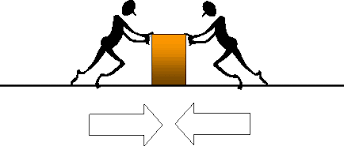
When an object is acted on by unbalanced forces, the object will
not move
accelerate
continue at the same speed
come to a stop
When Trevor jumps to the dock from his small boat, the boat dips into the water. This is an example of
Newton's 1st Law
Newton's 2nd Law
Newton's 3rd law
The universal law of gravitation
A book is sliding across a horizontal tabletop. As it slides, slows down. Which of the following statements best explains this situation?
There is a balanced force on the book caused by gravity.
There is no upward force acting on the book
There is an unbalanced force on the book caused by friction.
There are no unbalanced forces acting on the book
According to Newton’s First Law (the Law of Inertia)—
when you lean back against a chair, the chair pushes back against your back
when you kick a soccer ball, the ball pushes back against your foot.
when you push a shopping cart that is still, it rolls forward.
when you hit a baseball, the bat can vibrate and hurt your hands

The three vehicles shown below are all traveling at a speed of 15 m/s, but only the pickup truck has a changing velocity. The pickup truck has a changing velocity because the pickup truck...
can accelerate faster than the other two vehicles
is traveling in the opposite direction from the other two vehicles
is traveling on a curve in the road
needs a large amount of force to move

Two students are working together to build a birdhouse. Student 1 applies a force of 10 N to a wooden board in order to slide it across the table to Student 2. If the force of friction resisting the student's push is 4 N, what is the net force acting on the board?
4 N
6 N
10 N
14 N

A hobbyist collected data about the motion of a toy train on a straight track and then recorded the data in the graph. Which of these accurately describes the motion of the toy train?
The toy train speeds up while going forward and then slows down.
The toy train slows down while going forward and then moves backward.
The toy train moves forward at a constant speed, slows down, and then stops.
The toy train moves forward at an increasing speed, stops, and then moves forward.
When a battery is used to light a flashlight, like the one pictured below, what energy transformation occurs?
Thermal ➡ Electrical
Chemical ➡ Light
Light ➡ Thermal
Sound ➡ Light


A runner races in the 100 meter dash. It takes her 10 seconds to finish. What is her average speed?
10 m/s
1000 m/s
100 seconds
10 seconds

How much force is needed to accelerate a 3kg skateboard at 5m/s2.
8N
1.6N
0.6N
15N

How much force is needed to accelerate a 25kg bowling ball at 2m/s2.
50N
5N
12.5N
100N

If a 2kg bird is pushed by the wind with a force of 2N, what is the bird's acceleration?
1 m
2 m/s2
4m/s2
1 m/s2
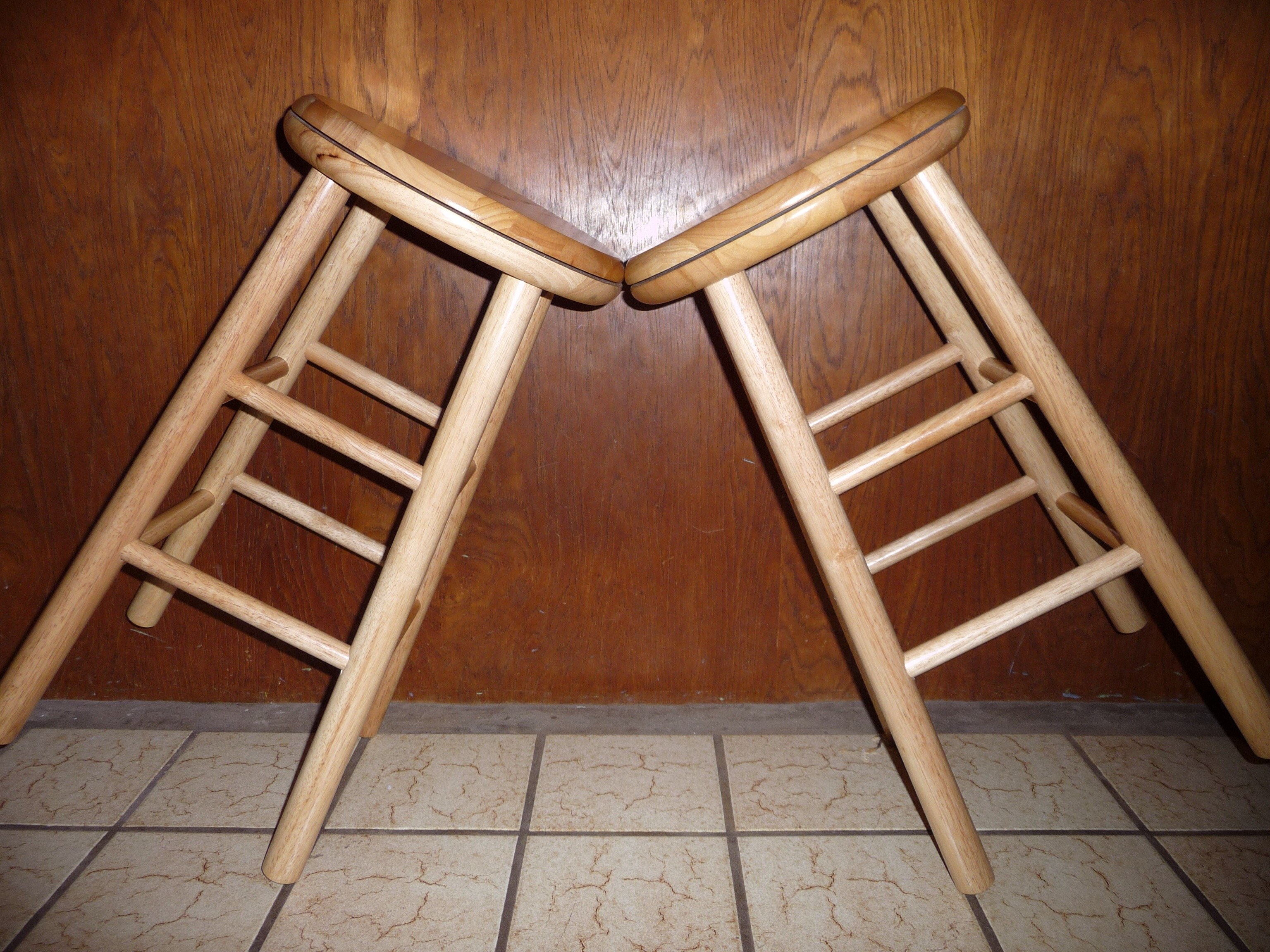
Net force=0 (zero)
Balanced force
Unbalanced force
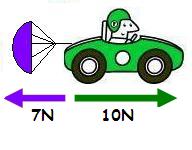
When a student runs and kicks a ball, they have applied an ___________ force to move the ball.
Balanced
Magnetic
Spring
Unbalanced
Which law of motion says that for anything to move you must apply an unbalanced force to it?
Law of Inertia (1st)
Law of F=mXa (2nd)
Law of Action-Reaction (3rd)
Letting go of a balloon full of air is demonstrating Newton's ______ _______ ________ _________ because the air comes out of the back and the balloon moves forward.
(1st) law of Inertia
(2nd) law of F=mXa
(3rd) law of action-reaction
A sledgehammer has a mass of 3.5 kilograms. What net force, to the nearest whole newton, will a person need to apply to accelerate the sledgehammer at a rate of 4.0 m/s2?
Record your answer in the boxes below. Be sure to use the correct place value.
(a)

Four students designed and built air propelled rockets that were launched into the air. Their data are recorded in the table.
Which rocket had the greatest acceleration?
Rocket 1
Rocket 2
Rocket 3
Rocket 4
A student pushes a 51.5 kilogram bookshelf across a smooth floor with a net force of 67 N.
What is the approximate acceleration of the bookshelf?
1.3 m/s2
3,450.5 m/s2
15.5 m/s2
0.77 m/s2

The diagram shows a duck swimming in a stream in the opposite direction the stream is flowing. The duck pushes against the water, so the water pushes the duck forward with 20 newtons of force. The water also exerts 15 newtons of resistive force against the duck.
Which statement best describes the resulting motion of the duck?
The duck will stop moving.
The duck will stop and then start moving again.
The duck will continue moving in its current direction.
The duck will move in the direction that the stream is flowing.
A toy truck is at rest on the floor. Which statement describes the forces acting on the toy truck?
The forces are balanced so motion occurs.
The forces are balanced so no motion occurs.
The forces are unbalanced so motion occurs.
The forces are unbalanced so no motion occurs.

A mother and daughter press their hands together and then push apart while ice skating.
Immediately after they push away from each other, how does the motion of the mother and daughter change?
The mother moves forward, and the daughter moves backward with a greater acceleration.
Both move forward, but the mother moves with a greater acceleration.
The mother moves backward, and the daughter moves forward with a greater acceleration.
Both move backward, but the daughter moves with a greater acceleration.
The net force on a vehicle that is accelerating at a rate of 1.5 m/s2 is 1,800 newtons. What is the mass of the vehicle to the nearest kilogram?
Record your answer. Be sure to use the correct place value.
(a)
A 1,100 kg car comes uniformly to a stop. If the vehicle is accelerating at -1.2 m/s2, which force is closest to the net force acting on the vehicle?
-9,600 N
-1,300 N
-900 N
-94 N

A steel ball is at one end of a box that is moving forward as shown. The box suddenly stops.
According to Newton’s first law, what happens to the steel ball just after the box stops?
Because of friction, the ball continues rolling forward at the same speed.
Because of friction, the ball rolls forward at an increased speed.
Because of inertia, the ball continues rolling forward at the same speed.
Because of inertia, the ball rolls forward at an increased speed.

A skater pushes off a wall and skates backward for a few meters before stopping.
Which statement best describes an action–reaction force pair in this situation?
The wall pushes on the skater when the skater pushes on the wall.
The wheels slow down, and the skater stops.
The skater exerts a force on the wall, and the wheels exert a force on the floor and begin to turn.
The friction of the floor decreases when the wheels roll on the floor.
A pitcher throws a ball toward a player holding a softball bat. The player uses the bat to hit the ball. The bat applies a 10-newton force to the ball.
Which statement correctly describes the reaction force between the bat and ball?
The reaction force is the force that causes the ball to move toward the bat.
The reaction force is the force applied to the bat by the player holding the bat.
The reaction force is the force that pulls the ball toward the ground.
The reaction force is the force of the ball on the bat.
Four boxes are sliding with constant speed before each box experiences an unbalanced force of 8 N. Which box would experience the greatest acceleration when the unbalanced force is applied?
The box with a mass of 2 kg
The box with a mass of 4 kg
The box with a mass of 6 kg
The box with a mass of 8 kg

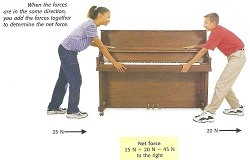
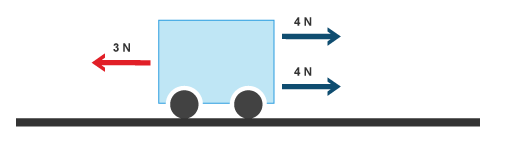
Two forces are applied to a 17 kg box, as shown. The box is on a smooth surface.
Which statement best describes the acceleration of the box?
The box accelerates at 1.0 m/s2 to the right because the net force is 17 N to the right.
The box accelerates at 1.9 m/s2 to the right because the greater force is to the right.
The box accelerates at 3.0 m/s2 because the combined forces cause the box to accelerate.
The box does not accelerate, because neither force is large enough to move the box.

Four students raced toy cars on a track. The mass and the acceleration of each car is recorded in the table below.
Which toy car had the greatest applied force?
1
2
3
4

A student investigates the motion of a toy vehicle. The student graphs 40 seconds of data from the investigation.
Which statement best describes the motion of the toy vehicle during the first 30 seconds of the investigation?
A
The vehicle was traveling at a constant speed.
The vehicle was accelerating at a constant rate.
The speed of the vehicle was increasing.
The acceleration of the vehicle was increasing.

The motion of an object is shown in the graph.
Which statements are supported by the graph?
Select TWO correct answers.
An unbalanced force acts on the object between 1 and 2 seconds.
The object's velocity increases between 4 and 5 seconds.
The object reaches its greatest acceleration between 4 and 5 seconds of motion.
The object's greatest speed occurs between 5 and 7 seconds.
An unbalanced force causes the object to increase its speed between 6 and 8 seconds.
A meteor moving 468 km per minute traveling in a south-to-north direction passed near Earth in 2013. Because the meteor was only 45 m wide and was 27,700 km above Earth’s surface, it was not visible without the aid of a telescope.
Which statement describes the meteor’s motion?
Its velocity was 7.8 km/s northward.
Its acceleration was 468 km/s2.
Its speed was 468 km/s northward.
Its acceleration was 7.8 km/s2.

The three vehicles shown below are all traveling at a speed of 15 m/s, but only the pickup truck has a changing velocity.
The pickup truck has a changing velocity because the pickup truck —
can accelerate faster than the other two vehicles
is traveling in the opposite direction from the other two vehicles
is traveling on a curve in the road
needs a large amount of force to move
Which of the following best describes the velocity of an object?
30 m/s
30 m east
30 m/s east
30m/s2
What is the difference between the velocity and the speed of an object?
Velocity is the change in distance over time, while speed is the change in velocity over time.
Velocity has a direction associated with it, while speed has no specific direction.
Velocity has no direction associated with it, while speed has a specific direction.
Velocity is the change in speed over time, while speed is the change in distance over time.

change in an object’s motion; caused by unbalanced forces
Acceleration
Speed
Velocity
Inertia
tendency of an object to resist change in motion
Acceleration
Speed
Velocity
Inertia
distance traveled by an object in a given amount of time
Acceleration
Speed
Velocity
Inertia
a measurement of an object's speed and direction
Acceleration
Speed
Velocity
Inertia
equal and opposite forces on an object that result in no change in position, direction, or motion; net force equals zero
Balanced Forces
Unbalanced force
Net force
Inertia
unequal forces on an object that may result in a change in position, direction or motion; net force does not equal zero
Balanced Forces
Unbalanced force
Net force
Inertia
measurement of the total forces exerted on an object
Balanced Forces
Unbalanced force
Net force
Inertia
for every action, there is an equal and opposite reaction
Law of action-reaction
Law of force and acceleration
Law of inertia
Law of Movement
when an object that has a constant mass is acted upon by a force, the object will accelerate in the same direction as the force applied
Law of action-reaction
Law of force and acceleration
Law of inertia
Law of Movement
the tendency of an object to resist change in motion unless acted upon by a force
Law of action-reaction
Law of force and acceleration
Law of inertia
Law of Movement
If an object is at rest or moving at a constant speed in a straight line, it will remain at rest or keep moving in a straight line at constant speed unless it is acted upon by a force.
Newton's First Law
Newton's Second Law
Newton's Third Law
Newton's Fourth Law
Force equals mass times acceleration.
Newton's First Law
Newton's Second Law
Newton's Third Law
Newton's Fourth Law
When two objects interact, they apply forces to one another that are equal in magnitude and opposite in direction.
Newton's First Law
Newton's Second Law
Newton's Third Law
Newton's Fourth Law
If it is moving, It stays moving. If it isn't moving, it won't randomly start moving unless an outside force acts on it.
Newton's First Law
Newton's Second Law
Newton's Third Law
Newton's Fourth Law
Every actions has an equal and opposite reaction.
Newton's First Law
Newton's Second Law
Newton's Third Law
Newton's Fourth Law

How will the object act in response to these forces?
The object will move upward and toward the right.
The object will move to the right only.
The object will move upward only.
The object will remain at rest.

Based on the information in the diagram, what will happen next?
The flag on the rope will be pulled to the right.
Both teams will be pulled toward the center.
The flag on the rope will be pulled to the left.
Both teams will be pushed away from the center.
Which of the following objects will experience an unbalanced force?
A bike rider on a smooth and level road, pedaling at a constant rate.
A train pulling on another train, each with the same amount of force.
A chair sitting on the floor with balanced forces acting in opposite directions.
A ball rolling across the floor with friction acting in the opposite direction.

What is the net force?
400 N Up
- 400 N Down
400 N Down
800 N Down

Which object was acted on by balanced forces during the time period shown on the graph?
A
B
C
D

The graphs show the motion of four different objects. Each object moved in a single direction during the time period shown in the graph. Which of the objects were acted on by unbalanced forces?
Only B,C, & D
Only A
Only A & B
Only D

Which object in the diagram above is acted on by a net force of 5 N to the right?
A
B
C
D

Each of these cars moved in single direction during the time shown in the graph. Which car was acted on by balanced forces for the entire time shown in the graph?
1
2
3
4
What change always indicates that unbalanced forces are acting on an object?
a change in the object's motion
a change in the object's mass
a change in the object's density
a change in the object's color
Why does a book on a table not move?
No forces are acting on the book
Gravity is the only force acting on the book
Forces of the table pushing up and gravity pulling down are balanced

Which graph shows: A car travelling at a constant speed.
A
B
C
D

Green object is moving at a faster constant speed than Red
Red object is moving at a faster constant speed than Green
Green object is moving at a slower constant speed than Red
Red object is moving 2 times faster than Green

Which graph represents slowing down?
A
B
C
D
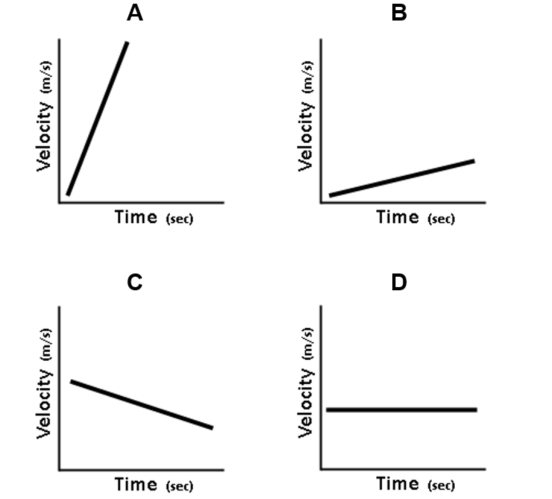
Which graph represents the greatest acceleration?
A
B
C
D

What is the person doing from 5 seconds to 10 seconds?
Walking
Running
Standing Still
Walking Fast

In which time interval was the object speeding up?
between 0 s and 2 s
between 2 s and 4 s
between 6 s and 8 s
between 8 s and 10 s

The graph below represents
Speed
Velocity
Acceleration
Deceleration
Acceleration only takes place when things speed up.
True
False
When a car goes around a corner at 20 mph, why do we say it accelerates?
The car is accelerating because of the velocity is constant
The car accelerates because it's going 20 mph
Cars always accelerate when they are in motion
The car is accelerating because it's changing direction
A description of the speed and direction of an object's motion
Velocity
Speed
Acceleration
Vector
What is velocity?
the quickness of an object
the location of an object
acceleration
speed in a specific direction

What is the speed of this object at 3 seconds?
5 m/s
45 m/s
5 s/m
45 s/m

What is this graph showing? (6.8D)
Constant Speed
Acceleration (speeding up)
Deceleration (slowing down)
No motion
The correct equation to calculate speed is
distance ÷ time
time/distance
distance x time
distance/time2

When the air is release from a balloon, the air moves out one end and the balloon moves in the other direction. Which statement does this situation best illustrate?
What goes up must come down.
For every action there is an equal and opposite reaction.
The shape and size of an object affect air resistance.
The acceleration due to Earth’s gravity is 9.8 m/s2.
A motorcycle traveling 35 mi/hr slows as it approaches a stop sign. This is an example of _____
acceleration
distance
speed
velocity

A spring scale is used to pull each of the four objects. Based on the information provided, which object experiences the greatest acceleration when pulled with 8 N of force?
Object R
Object S
Object T
Object U

Examine the table. Which of the objects is producing the greatest force?
soccer ball
tennis ball
marble
they are all the same

Two forces are applied to a 17 kg box as shown. The box is on a smooth surface. Which statement best describes the net force and direction the box will move?
17 N to the right
7 N to the left
53 N to the right
70 N to the right

A bowling ball is rolled with a certain speed and strikes a bowling pin with a force indicated by the arrow in this illustration. When the bowling ball strikes the bowling pin, the force applied by the pin to the ball -
depends on the mass of the bowling pin.
is equal to the force applied by the ball.
must be zero, since the pin is not moving.
is equal to the force of gravity on both.

The formula for Force is
F= MxW
F= MxA
F=MxT
What is Newtons 3nd law of motion?
An object will stay in motion until something acts on it
For every action there is an equal and opposite reaction
F=MxA
What is Newton's 1st law of motion?
An object at rest stays at rest and an object in motion stays in motion with the same speed and in the same direction unless acted upon by an unbalanced force
F=MxA
For every action there is an equal and opposite reaction
F=MA
An object of mass 10 kg is accelerated upward at 2 m/s2. What force is required?
20 N
2 N
5 N
0 N

Why is person B having a hard time moving down the hill?
Person B has more friction than person A.
Person B has the same friction as person A.
Person B is out of shape.
Person B has less friction has person A.
If an object is stationary (not moving) the forces acting upon it are _____________
unbalanced
weak
balanced
Hulk Smash!
What law is best described by inertia?
1st
2nd
3rd
Rockets are launched into space using jet propulsion where exhaust accelerates out from the rocket and the rocket accelerates in an opposite direction.
The Law of Inertia
The Law of Acceleration
The Law of Conservation of Momentum

Pushing a child on a swing is easier than pushing an adult on the same swing, because the adult has more mass.
Newton's 1st Law
Newton's 2nd Law
Newton's 3rd Law

A soccer ball accelerates more than a bowling ball when thrown with the same force.
Newton's first law
Newton's second law
Newton's third law

This person bought coffee and put it on the seat next to them. If they stopped quickly and the coffee spilled which law would that represent?
Newton's 1st Law
Newton's 2nd Law
Newton's 3rd Law

"For every action, there is an equal and opposite reaction."
Newton's 1st Law
Newton's 2nd Law
Newton's 3rd Law
Newton's 4th Law

"An object in motion (or at rest) will to stay in motion (or at rest) until an outside force acts upon it."
Newton's 1st Law
Newton's 2nd Law
Newton's 3rd Law
Newton's 4th Law

Force = Mass x Acceleration
Newton's 1st Law
Newton's 2nd Law
Newton's 3rd Law
Newton's 4th Law
You push on a tree with 20 N of force. If the tree doesn't move, the tree is pushing back on you with _____of force.
20N
40N
10N
70N

Balanced or Unbalanced?
Balanced
Unbalanced

If these teams are pulling with the same amount of force what will happen?
The boy in blue will win.
They will not move at all.
The boy in red will win.
Both will fall down.

What is the net force?
10 N
0 N
25 N
1 N
Pushing a child on a swing is easier than pushing an adult on the same swing, because the adult has more mass and requires more force to accelerate.
Newton's 1st Law
Newton's 2nd Law
Newton's 3rd Law

A magician pulls a tablecloth out from under dishes and glasses on a table without disturbing them.
Newton's 1st Law
Newton's 2nd Law
Newton's 3rd Law

At which point on the roller coaster does the car have the most potential energy? (6.8A)
W
X
Y
Z

The car shown above uses three different forms of energy. Which of the following identifies the energy transformation represented by the car? (6.9C)
mechanical →chemical →electrical
chemical →electrical →mechanical
electrical →radiant →chemical
radiant →electrical →mechanical

A battery is placed inside a handheld lantern. When the light is turned on, the chemical energy of the battery is changed into all of the following forms of energy except— (6.9C)
light energy
heat energy
mechanical energy
electrical energy
What happens to the potential energy of an object as it falls? (6.8A)
Potential energy increases
Potential energy is destroyed
Potential energy transforms (changes) to kinetic energy
None of the above

At which point on the roller coaster does the car have the most kinetic energy? (6.8A)
W
X
Y
Z
Potential energy is
stored energy
energy of motion
average speed
acceleration
Which of the following is NOT a form of energy? (6.9C)
electrical
chemical
radiant
wind

The images shown best represent which type of energy? (6.9C)
chemical
nuclear
electrical
mechanical
The Law of Conservation states that - (6.9C)
energy cannot be created or destroyed but can only change from one form to another.
energy can be created or destroyed and cannot change from one form to another.
The sun represents which type of energy? (6.9C)
electrical
mechanical
solar/radiant
chemical

compare the potential energy and kinetic energy ot the metal ball when it is held by her hand at the STOP position.
F The kinetic energy increases / potential energy decreases.
G The kinetic energy doesn't change / The potential energy increases.
H The kinetic energy decreases / The potential energy increases.
J The kinetic energy decreases / The potential energy decreases.

