wayground logo

Free Printable Worksheets

Font size

S
M
L
XL
Worksheets

methods of heat transfer

Total questions: 158

Worksheet time: 3hrs 1mins

Name
Class
Date
1.

Walking on the hot sand on a beach

a)

conduction

b)

convection

c)

radiation

2.

A ceiling fan forcing the warm air downward.

a)

conduction

b)

convection

c)

radiation

3.

Feeling heat from a campfire

a)

conduction

b)

convection

c)

radiation

4.

Chocolate candy melting in your hand.

a)

conduction

b)

convection

c)

radiation

5.

Air in the atmosphere rising and falling.

a)

conduction

b)

convection

c)

radiation

6.

Heat from the sun warming a swimming pool.

a)

conduction

b)

convection

c)

radiation

7.

Heat from the hood of a car when you touch it.

a)

conduction

b)

convection

c)

radiation

8.

Feeling the heat from a stove burner without touching it.

a)

conduction

b)

convection

c)

radiation

9.

Boiling water moving in a circular motion.

a)

conduction

b)

convection

c)

radiation

10.

Which method of heat transfer is energy that is transferred by electromagnetic waves?

a)

conduction

b)

convection

c)

radiation

11.

Which method of heat transfer is energy that is transferred by direct contact?

a)

conduction

b)

convection

c)

radiation

12.

Which method of heat transfer is energy that is transferred through a fluid where hot rises and cold sinks?

a)

convection

b)

conduction

c)

radiation

13.

a metal pot touching a burner

a)

convection

b)

conduction

c)

radiation

14.

putting your hand near the burner on an oven

a)

conduction

b)

convection

c)

radiation

15.

boiling water spreading heat throughout all of the liquid

a)

convection

b)

conduction

c)

radiation

16.

The people in an ocean, where their feet feel cold in the water, but their arms are warm. Why is this?

a)

convection

b)

conduction

c)

radiation

17.

Laying on the beach and feeling your face getting warm. Why is this?

a)

conduction

b)

convection

c)

radiation

18.
Water bubbles up through a hot spring in Yellowstone National Park. What method of heat transfer is this?
a)
Conduction
b)
Radiation
c)
Convection
d)
Specific Heat
19.
On a sunny day, you return to your car after a ball game. The inside of the car is very hot.  How did the car get so warm?
a)
Conduction
b)
Convection
c)
Radiation
d)
Specific Heat
20.
The inside window pane in your house feels very cold to touch on a winter night. Why does it feel cold?
a)
The cold from the outside is flowing in by convection.
b)
The warm from the inside is flowing out by convection.
c)
The cold from the outside is being conducted to the inside.
d)
The warm from the inside is being conducted to the outside.
21.
Which describes what can happen as a result of radiation?
a)
A piece of wood burns in a fire.
b)
A shirt is hot after having been ironed.
c)
A can of soup is heated in a pot on a stove.
d)
A car’s inside temperature rises to over 100 degrees on a sunny day.
22.
Which best explains why a hot air balloon floats?
a)
The heated air expands to fill the balloon. The air in the balloon is now lighter than the surrounding air, causing the balloon to rise.
b)
The heated air expands to fill the balloon. The air in the balloon is now heavier than the surrounding air, causing the balloon to rise.
c)
The heated air contracts to fill the balloon. The air in the balloon is now denser than the surrounding air, causing the balloon to rise.
d)
The heated air contracts to fill the balloon. The air in the balloon is now lighter than the surrounding air, causing the balloon to rise.
23.
A student places a cup of cold water on a counter in a hot room.   After a short time, the student notices that the water in the cup is no longer cold.  Which best explains why the water in the cup is no longer cold?
a)
The coldness of the water transferred to the air, making the water in the cup warmer.
b)
The coldness of the water was conducted to the cup, making the water in the cup warmer.
c)
The heat from the air transferred to the water in the cup, making the water in the cup warmer.
d)
The heat from the air caused the cold water in the cup to condense, making the water warmer.
24.
"Lava lamps" contain colored liquids. These liquids form globs that rise to the top due to
a)
conduction
b)
convection
c)
radiation
25.
What is the definition of CONDUCTION?
a)
When heat is transferred from objects like rays of light or electromagnetically.
b)
a  hot liquid or air that  expands, becomes less dense, and rises or becomes more dense, and sinks.
c)
When heat transfers from objects that are touching.
d)
When heat transfers through the heater or AC in your house.
26.

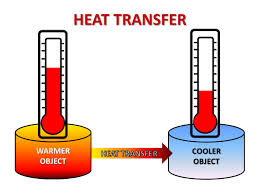
Heat is the movement of thermal energy from a substance at a higher temperature to another at a lower temperature.

a)

false

b)

true

27.

Heat always moves from a cooler place to a warmer place.

a)

false

b)

true

28.

What is the term used to describe the flowing of heat energy from a high-temperature object to a lower-temperature object.

a)

conduction

b)

radiation

c)

convection

29.

__________________ takes place when heated molecules move from one place to another, taking the heat with them.

a)

Conduction

b)

Radiation

c)

Convection

30.

___________________ is the transfer of energy by electromagnetic waves.

a)

Conduction

b)

Radiation

c)

Convection

31.

Which of the following is not a method of heat transfer?

a)

Conduction

b)

Radiation

c)

Insulation

32.

Which is the best surface for reflecting heat radiation?

a)

Dull Black

b)

Shiny White

c)

Dull White

d)

Shiny Black

33.

In which of the following are the particles closest together?

a)

Solid

b)

Liquid

c)

Gas

34.

How does heat energy reach the Earth from the Sun?

a)

Conduction

b)

Radiation

c)

Convection

35.

Which is the best surface for absorbing heat radiation?

a)

Dull Black

b)

Shiny Black

c)

Dull White

d)

Shiny Whit

36.

During Convection, what happens to the particles in a liquid or a gas when you heat them?

a)

The particles stay close together and become less dense

b)

The particles stay close together and become more dense

c)

The particles spread out and become less dense.

37.

Metals are good conductors.

a)

false

b)

true

38.

Wood is a good insulator.

a)

false

b)

true

39.

All are true about radiation, EXCEPT:

a)

travels at the speed of light

b)

travels in straight lines

c)

requires particles to travel

d)

fire, sun, and light bulbs are examples

40.

When the metal is heated, this ‘sea of electrons’ gain ____________ energy and transfer it throughout the metal.

a)

kinetic

b)

electromagnetic

c)

thermal

41.
Heat always flows from a __________________ to a cooler object.
a)
warmer
b)
cooler
c)
coolest
d)
warmest
42.
In ____________ , heat is transferred from one particle of matter to another without the movement of the matter.
a)
conduction
b)
convection
c)
convection current
d)
induction
43.
In ____________, heat is transferred by the currents within a fluid.
a)
conduction
b)
convection
c)
convection currents
d)
radiation
44.
In ___________ , energy is transferred by electromagnetic waves.
a)
convection
b)
radiation
c)
conduction
d)
induction
45.
A ______________ is a material that transfers thermal energy well.
a)
insulator
b)
protector
c)
conductor
d)
reflector
46.
A ______________ is a material that does not transfer thermal energy well.
a)
insulator
b)
conductor
c)
reflector
d)
radiator
47.
Wood, straw, and wool are materials that are good __________________.
a)
insulators
b)
conductors
c)
reflectors
d)
generators
48.
Silver, stainless steel, and copper are materials that are good _________________.
a)
insulators
b)
radiators
c)
currents
d)
conductors
49.

When hot coffee is stirred with a spoon, the spoon gets hot due to _______________.

a)

convection

b)

conduction

c)

radiation

50.

The side of the chair facing the fireplace gets warm because of_______________.

a)

convection

b)

conduction

c)

radiation

51.

A type of decorative lamp contains colored liquids. The globs rise due to _______________.

a)

convection

b)

conduction

c)

radiation

52.

Near the ceiling of a room the air is warmer. The warm air rises because of _______________.

a)

convection

b)

conduction

c)

radiation

53.

Near the ceiling of a room the air is warmer. The warm air rises because of _______________.

a)

convection

b)

conduction

c)

radiation

54.

A snowball in your hand melts.

a)

convection

b)

conduction

c)

radiation

55.

The hair curling iron curls hair by using _____________________.

a)

convection

b)

conduction

c)

radiation

56.

Sun rays warming a puddle.

a)

convection

b)

conduction

c)

radiation

57.

An egg on a hot skillet.

a)

convection

b)

conduction

c)

radiation

58.

The sun warming the surface of a rock.

a)

convection

b)

conduction

c)

radiation

59.

Pouring cold water in your hot coffee.

a)

convection

b)

conduction

c)

radiation

60.

Ironing a wrinkled shirt.

a)

convection

b)

conduction

c)

radiation

61.
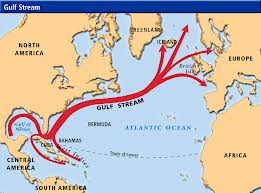
The Gulf Stream is a current that brings warm ocean water from the south to the north.
a)
conduction
b)
convection
c)
radiation
62.
Walking on the warm sand sand with your bare feet.
a)
conduction
b)
convection
c)
radiation
63.
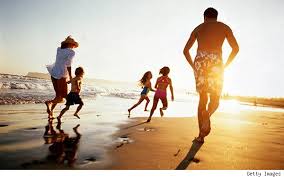
The sun shines down on this family as the play on the beach.
a)
conduction
b)
convection
c)
radiation
64.
Which direction will the heat flow while this person holds a hot cup of tea?
a)
from the cup to her hand
b)
from her hand to the cup
c)
no heat is transferred
65.
Which direction will the heat flow while this ice cap melts?
a)
there is no heat transfer
b)
from the icecap to the water
c)
from the water to the icecap
66.
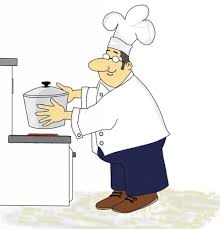
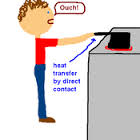
The man goes to take the hot pot off the stove with his bare hands.
a)
conduction
b)
convection
c)
radiation
67.
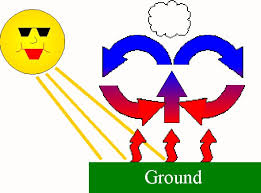
Warm air rises and the cool air sinks.
a)
conduction
b)
convection
c)
radiation
68.
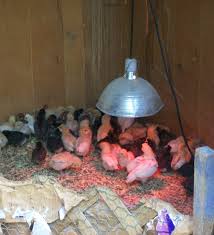
The baby chickens are kept warm from the heat lamps.
a)
conduction
b)
convection
c)
radiation
69.
In some cultures, walking on fire is the ultimate sign of strength.
a)
conduction
b)
convection
c)
radiation
70.
In this experiment, the WARM red dye and the COLD blue dye was placed in the water at the same time. The warm red dye rose to the top while the cold blue dye sank to the bottom.
a)
conduction
b)
convection
c)
radiation
71.
The warm air from this heater creates a current when the warm air rises and the cold air sinks.
a)
conduction
b)
convection
c)
radiation
72.
Johnny accidentally grabbed the handle of the hot pot.
a)
conduction
b)
convection
c)
radiation
73.
Heat transfers from an area of ____temperature to an area of ___ temperature.
a)
high to low
b)
low to high
c)
high to high
74.
The flow of energy that occurs when a warm liquid or gas rises ..
a)
Heat
b)
Conduction
c)
Convection
d)
Radiation
75.
The transfer of energy by electromagnetic waves.
a)
Heat
b)
Conduction
c)
Convection
d)
Radiation
76.

As you touch a hot stove the heat transfers -

a)

from your hand to the stove by conduction.

b)

from the stove to your hand by conduction.

c)

from your hand to the stove by radiation.

d)

from the stove to your hand by radiation.

77.

Which sentence explains why a cold metal spoon placed in a pot of boiling water becomes hot?

a)

Thermal energy is transferred from the spoon to the water by conduction

b)

Thermal energy is transferred from the water to the spoon by conduction.

c)

Thermal energy in the water is transformed into kinetic energy in the spoon by convection.

d)

Thermal energy in the spoon is transformed into kinetic energy in the water by convection.

78.
In a lava lamp, the warm part rises and the cool part sinks.  This is an example of 
a)
heat computation
b)
convection
c)
conduction
d)
radiation
79.
_________________ are observed in liquids and gases (air).
a)
convection currents
b)
radiation waves
c)
thermal conductivity
d)
conductors
80.
The movement of thermal energy from a region of _________________ temperature to a region of _____________________ temperature is called heat.
a)
higher, lower
b)
cooler, warmer
c)
lower, higher
d)
medium, medium
81.
The rubber that makes up the handle on the pan is considered a thermal ___________________ because thermal energy moves slowly through this material.
a)
conductor
b)
insulator
c)
regulator
d)
temperature
82.
Which example below is an example of conduction?
a)
Boiling macaroni
b)
The attic is warmer than the basement
c)
The Sun heating the Earth
d)
Touching hot sand with your feet
83.
Which example below is an example of convection?
a)
Standing on a hot metal bridge
b)
The attic is warmer than the basement
c)
The Sun heating the Earth
d)
Touching hot sand with your feet
84.
Which example below is an example of radiation?
a)
Standing on a hot metal bridge
b)
The attic is warmer than the basement
c)
The Sun heating the Earth
d)
Touching hot sand with your feet
85.

True or False?

Heat and temperature are different.

a)

True

b)

False

86.
The amount of thermal energy is express in______
a)
Joules
b)
Calorie
87.
_______measures the total kinetic energy of particles in an object.
a)
Heat
b)
Calorie
c)
Temperature
d)
Thermal Energy
88.
The sun warming your skin is an example of heat transfer through 
a)
conduction
b)
convection
c)
radiation
d)
thermal electricity
89.
Why does a metal lawn chair get hot in the sun when the grass sitting in the same sunlight remains cool to the touch?
a)
Heat travels easily through plants but not metals.
b)
Heat travels easily through both plants and metals.
c)
Heat travels easily through metal objects but not through plants.
90.
Conduction can only occur between two objects when –
a)
one object is less dense than the other.
b)
both objects are in physical contact with each other.
c)
one of the objects is made of a metal.
d)
both objects are exactly the same temperature.
91.
Which of the following is an example of conduction?
a)
Solar energy warming a room.
b)
Heat rising from the coils of a stove.
c)
Hot air drying a wet towel.
d)
Heat moving from a clothes iron to a shirt.
92.
Jenny poured some hot chocolate into a cup and stirred it with a metal spoon.  She noticed the spoon was really warm.  What is the best explanation for this?
a)
The spoon is a conductor.
b)
The spoon reflects heat.
c)
The spoon is an insulator.
d)
She touched the spoon first and waited to touch the cup.
93.
The way the heat is moving from the hot coffee is called...
a)
convection
b)
radiation
c)
insulation
d)
conduction
94.

A snowball in your hand is melting (a)  

95.

Warm and cold air meeting (a)  

96.

Sun rays warming a puddle (a)  

97.

An egg on a hot skillet (a)  

98.

Pouring cold water in your hot coffee (a)  

99.

Using your hair dryer (a)  

100.

A heater heating up the inside of the car (a)  

101.

The sun warming the surface of a rock (a)  

102.

A pan of boiling water on the stove (a)  

103.

Using a curling iron to curl your hair (a)  

104.

Feeling the sun’s heat on your back (a)  

105.

Butter melting on warm pancakes (a)  

106.

Adding hot water to your cold bath water (a)  

107.

Baking a cake inside the oven (a)  

108.

Ironing a wrinkled shirt (a)  

109.

Heat is always transferred from .....

a)

left to right

b)

upwards

c)

hot to cold

d)

cold to hot

110.

In order to slow heat transfer, _______ should be used.

a)

conductors

b)

insulators

c)

copper

d)

density

111.

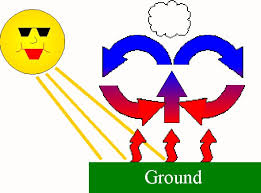
The arrows in the picture below show several ways heat is transferred from the Sun as it strikes sand on the surface of a beach. Which arrow shows convection?

a)

1

b)

2

c)

3

d)

4

112.

If you walk barefoot on hot asphalt, energy is transferred by which process?

a)

Convection

b)

Radiation

c)

Conduction

d)

Reflection

113.

Throughout the day, Matthew and Mei measure the temperature of lake water as it is warmed by the sun. The following table shows their data at four different times.

At what time was the thermal energy of the lake water the greatest?

a)

9 a.m.

b)

11 a.m.

c)

3 p.m.

d)

5 p.m.

114.

When energy from the sun reaches the air above land, the air warms and rises. Along a coastline, cooler air above the ocean flows toward the land to replace this rising air.

Which of the following best describe these processes?

a)

Conduction and convection

b)

Radiation and convection

c)

Conduction, convection, and radiation

d)

Radiation and conduction

115.

Vivian placed an ice cube in a tray of warm water. The following picture shows her investigation. Which statement describes the energy transfer that happens in Vivian’s investigation?

a)

Energy in the form of heat is transferred from the ice cube to the water by radiation.

b)

Energy in the form of heat is transferred from the water to the ice cube by radiation.

c)

Energy in the form of heat is transferred from the ice cube to the water by conduction.

d)

Energy in the form of heat is transferred from the water to the ice cube by conduction

116.

Kumar is studying how Earth is warmed by sunlight. The following illustration shows his model of the sun and Earth.

Which process is mostly responsible for warming the soil in Kumar’s model?

a)

Conduction between the lamp and the soil causes the soil to warm.

b)

Convection currents between the lamp and the soil cause the soil to warm.

c)

Expansion of particles in the soil causes the soil to warm.

d)

Radiation from the lamp reaches the soil and causes the soil to warm.

117.

Sarah is investigating the transfer of energy in the form of heat. One process that transfers energy between two objects is conduction.

Which statement is NOT true about conduction?

a)

It involves a transfer of energy in the form of heat.

b)

It can transfer energy through empty space.

c)

It requires direct contact between the objects.

d)

It results in a change of temperature in both objects.

118.

The following diagram shows water in contact with an ice cube and warmer air.

Which way will energy flow?

a)

From the air to the water

b)

From the water to the air

c)

From the ice cube to the air

d)

From the ice cube to the water

119.

A warm rock is in direct contact with the cooler ground.

Which of the following will happen?

a)

Energy in the form of heat will flow from the rock to the ground, and the temperature of the rock will increase

b)

Energy in the form of heat will flow from the ground to the rock, and the temperature of the rock will increase

c)

Energy in the form of heat will flow from the rock to the ground, and the temperature of the rock will decrease.

d)

Energy in the form of heat will flow from the ground to the rock, and the temperature of the rock will decrease.

120.

If you visit the beach on a hot summer day you will probably feel a sea breeze coming off the water onto the land.

Which of the following causes this sea breeze?

a)

During the day, solar radiation warms the land more than the water.

b)

The water is warmer than the land during the day.

c)

Earth is tilted toward the Sun, causing air to move inland from the water.

d)

Hurricanes that form in the oceans blow air into the shore.

121.
If two objects have reached the same temperature they have reached:
a)
a melting point.
b)
a boiling point.
c)
thermal equilibrium.
d)
specific heat.
122.

Energy is transferred as heat between two objects of ___________ temperatures.

a)

differing

b)

same

123.

The measure of average kinetic energy of all the particles within an object is called ____________.

a)

temperature

b)

conduction

c)

radiation

d)

heat

124.
Which direction is heat flowing in the picture?
a)
from the hand to the ice
b)
from the ice to the hand
c)
heat is not being transferred
d)
there is no way to tell
125.
Heat and temperature are the SAME thing. 
a)
Super true!, Both measure the amount of molecules
b)
Of course not, Heat measures NUMBER of molecules, while temperature measures the SPEED of molecules
126.
The temperature at which molecular energy is at a minimum (0 K on the Kelvin scale or -273.16 C) on the Celsius scale.
a)
Specific Heat
b)
Plasma
c)
Absolute Zero
d)
Conduction
127.

The total energy of all the particles in a substance is called

a)

temperature

b)

thermal energy

c)

degrees

d)

mass

128.
What happens to particles as they heat up?
a)
They slow down
b)
Nothing
c)
They don't move
d)
They speed up
129.
As you touch a hot stove the heat transfers -
a)
from your hand to the stove
b)
from the stove to your hand
c)
It doesn't transfer
130.
Hot objects begin to cool as-
a)
cooler air is transferred to the hot object.
b)
thermal energy in the object is transferred to the surrounding air.
c)
atoms in the object react with the oxygen in the air.
d)
thermal energy in the object cancels out energy in the air
131.
Which example below is an example of convection?
a)
Standing on a hot metal bridge
b)
The attic is warmer than the basement
c)
The Sun heating the Earth
d)
Touching hot sand with your feet
132.
The baby chickens are kept warm from the heat lamps.  This demonstrates what kind of heat transfer? 
a)
conduction
b)
convection
c)
radiation
133.
Energy that travels as electromagnetic waves is called ______
a)
conduction
b)
convection
c)
radiation
134.
Radiation is how energy from the sun is transferred to Earth.
a)
true
b)
false
135.
The transfer of thermal energy through a substance by direct contact is called___.
a)
conduction
b)
insulation
c)
convection
d)
radiation
136.
The transfer of thermal energy from one place to another by the the movement of fluids is
a)
convection
b)
conduction 
c)
radiation
d)
thermal energy
137.
The Gulf Stream is a current that brings warm ocean water from the equator to the north. What type of heat transfer is this?
a)
conduction
b)
convection
c)
radiation
d)
Insolation 
138.
______ occurs when a cooler, denser mass of a liquid or gas replaces a warmer, less dense mass of a gas or liquid
a)
Convection
b)
Conduction
c)
Radiation
139.
On a cold rainy day a baby is touching a cold window.  It feels so cold. Which way is the heat moving moving? 
a)
Cold is moving from the window to the hand.
b)
Heat is moving from the hand to the window.
c)
Heat doesn't move.
d)
It moves in currents
140.
When you use a microwave, what is the main way that heat is transferred?
a)
Convection
b)
Conduction
c)
Radiation
141.
Warm air rises and the cool air sinks demonstrates this type of heat transfer. 
a)
conduction
b)
convection
c)
radiation
d)
Insolation 
142.
An iron bar is placed in a flame, as shown, and is heated until the end glows.The other end of the iron bar soon becomes hot, too.  Which of the following statements best describes why the iron bar becomes hot to the touch?
a)
a convective flow of energy is set up inside the iron bar.
b)
energy is conducted from atom to atom along the length of the iron bar.
143.
Which material is the best conductor of heat?
a)
glass
b)
styrofoam
c)
metal
d)
wood
144.
What materials would be good insulators for a handle on a pan or pot that would be used on the stove?
a)
wood or plastic
b)
metal or rubber
c)
wood or rubber
d)
copper or steel
145.
Jenny poured some hot chocolate into a cup and stirred it with a metal spoon.  She noticed the spoon was really warm.  What is the best explanation for this?
a)
The spoon is a conductor.
b)
The spoon reflects heat.
c)
The spoon is an insulator.
d)
She touched the spoon first and waited to touch the cup.
146.
Is a measure of how hot or cold something is 
a)
Cold
b)
Heat
c)
Temperature
d)
Thermal Energy 
147.
The sun shines down on this family as the play on the beach.
a)
conduction
b)
convection
c)
radiation
148.
Walking on the warm sand sand with your bare feet.
a)
conduction
b)
convection
c)
radiation
149.
Warm air rises and the cool air sinks.
a)
conduction
b)
convection
c)
radiation
150.
The baby chickens are kept warm from the heat lamps.
a)
conduction
b)
convection
c)
radiation
151.
In this experiment, the WARM red dye and the COLD blue dye was placed in the water at the same time. The warm red dye rose to the top while the cold blue dye sank to the bottom.
a)
conduction
b)
convection
c)
radiation
152.
The man goes to take the hot pot off the stove with his bare hands.
a)
conduction
b)
convection
c)
radiation
153.
Which is the best choice for the handle of a frying pan?
a)
Metal, because it conducts heat.
b)
Wood, because it conducts heat.
c)
Metal, because it does not conduct heat.
d)
Wood, because it does not conduct heat.
154.
Which substance will conduct the least amount of heat?
a)
glass
b)
plastic
c)
aluminum
d)
copper
155.
Heat transfers from an area of ____temperature to an area of ___ temperature.
a)
high to low
b)
low to high
c)
high to high
d)
It can travel high to low and low to high. 
156.
Transfer of thermal energy through "flow"
a)
conduction 
b)
convection
c)
radiation
157.
Transfer of thermal energy through "touch"
a)
conduction
b)
convection
c)
radiation
158.
Near the ceiling of a room the air is warmer.  The warm air rises because of
a)
conduction
b)
convection
c)
radiation