
 Worksheets
Earth/Space Science CFE Review 2023
Total questions: 164
Worksheet time: 3hrs 24mins
What is the purpose of a scientific law?
to show how something works
to describe a relationship in nature
to explain why something nature happens
to provide rules that scientists should follow
Which phrase defines a scientific theory?
an untested idea
an educated guess
an accepted description
a well-supported explanation
The theory of Plate Tectonics is the idea that the Earth's crust has many plates that move because of changes in temperature deep below the Earth's surface. It has changed over time. What would cause the theory to change?
The addition of new empirical evidence.
It was a bad theory to begin with.
If the news ran a story about why it should be changed.
If a famous scientist said it should be changed.
Which of the following is an example of a scientific experiment?
observation of plants or animals in their natural environment
Physical or mathematical representation of an object or process
an organized procedure to study something under controlled conditions
collection of data from the unregulated world for comparative purposes
The independent variable
Changes due to other factors
The change that you are making on purpose
Is an individual step of the experiment
Can be different when repeating the same experiment
The dependant variable
Is the thing you measure
Depends on the people/place doing the experiment
Must not change during the experiment
Is the thing you change on purpose
A controlled variable
The thing you change on purpose
Can be measured to test your hypothesis
Something in an experiment that can change but we keep the same
Is the thing that determines how the experiment is run, in control of the experiment
The control group
The parts of the experiment you keep the same
The only group you collect data from
The group you change on purpose
Does not have the independent variable and is used for comparison
The process of obtaining informations by using the five senses is called _____________.
model
data
observation
hypothesis
__________occurs when an activity is repeated by the same person.
repetition
observing
replication
copying
When an activity is repeated by a different person, is called______________.
repetition
replication
data
hypothesis

What do you do to test a hypothesis?
make a guess
design an experiment
publish a research paper
create a graph and plat the data

A student hypothesized that the amount of sunlight a sunflower plant receives determines the number of sunflower seeds the plant produces. In her experiment, the number of seeds produced is the _____.
controlled variable
dependent variable
independent variable
manipulated variable
A drug company tested a new medication before putting it on the market. Pills without medication were given to 500 test subjects in group A and pilling containing medication were given to 500 test subjects in group B. In this experiment, the individuals in group A served as
the
Control
Hypothesis
Data
Dependent Variable

Indira tested whether a tomato plant grew faster in part shade or full sun. The table below shows the height of each plant after 0, 10, 20, and 30 days. What is ONE CONCLUSION Indira can draw from her data?
The tomato plants grew taller in full sun than they did in part shade.
All plants grow taller in full sun than they do in part shade.
Tomato plants grown in full sun will produce more tomatoes.
Tomato plants need to be placed in full sun in order to grow.
. Scientists can use many strategies during investigations, including fieldwork, surveys, models, and experiments. Which of these phrases best describes an experiment?
mathematical analysis of data
observation of animals in their natural world
collection of data from an uncontrolled environment for comparative purposes
procedure with controlled conditions and test and outcome variables
Controlled scientific experiments include variables. One kind of variable is an independent variable and the other kind is a dependent variable. Which statement describes the difference between an independent variable and a dependent variable?
The dependent variable does not change and the independent variable does change
The independent variable does not change and the dependent variable does not change
The dependent variable is the control and the independent variable is the result
The dependent variable changes based on the independent variable
Simon is presenting a project on scientific laws and theories. Which of the following statements should he include to explain the differences between the two?
Scientific theories requires scientific evidence but scientific laws do not
Scientific theories are based on observations and scientific laws are based on opinions
Scientific theories explain why something happens, and scientific laws describe what happens
Scientific theories are rarely changed and scientific laws are modified frequently

divergent boundary
convergent boundary
transform boundary

divergent boundary
convergent boundary
transform boundary

divergent boundary
convergent boundary
transform boundary
New crust is formed at this type of boundary
divergent
convergent
transform
This type of boundary creates mountains.
transform
divergent
continental-continental convergent
continental-oceanic convergent
This feature can be found along a divergent boundary
mid-ocean ridge
folded mountains
deep sea trench
Volcanoes are formed when which type of crust subducts under another plate?
continental
oceanic
magma
When oceanic and continental crust collide what feature would form?
volcanic island arc
folded mountain
volcanoes on the continent
Subduction means.....
one plate goes under another plate
two plates slide past each other
two plate collide and form folded mountains
The process that causes the tectonic plates to move is called.....
subduction
transform
convection
How is the outer core of Earth different from the inner core?
The outer core is solid, and the inner core is liquid.
The outer core is made of iron, and the inner core is made of nickel.
The outer core is liquid, and the inner core is solid.
The outer core is made of nickel, and the inner core is made of iron.
Earth's lithosphere movement is driven by convection currents. Which of the following best describes how these convection currents are formed?
Lithosphere generates its own heat to make the movement
The most dense layer from the mantle radiates heat towards the lithosphere.
As the mantle is heated from the core, the more dense material rises to the top and the less dense sinks to the bottom.
As the mantle is heated from the core, the less dense material rises to the top and more dense sinks to the bottom.

Oceanic crust is _____ than continental crust.
denser
less dense
What is the theory of plate tectonics?
Earth’s outer layer is made up of large, moving pieces called plates
Cracks in the Earth's crust cause volcanoes
The Earth was created by meteors crashing into each other

A region, known as the Ring of Fire, follows the border of the Pacific Ocean basin. Why do so many earthquakes and volcanoes occur in this region?
Transform boundaries completely surround this region of the Pacific Ocean
Only powerful convergent plates are located along the Ring of Fire.
Two plates are diverging in the center of the Pacific Ocean basin.
Numerous tectonic plate boundaries are located along the edges of this region.
Each year the southern California area has about 10,000 earthquakes. Which of the following best describes why earthquakes are a common occurrence in California?
The two plates form a transform boundary because earthquakes are caused by plates
sliding past each other.
The two plates form a subductive boundary because earthquakes are caused by plates
sliding past each other.
The two plates form a transform boundary because earthquakes are caused by the Pacific plate subducting under the North American plate.
The two plates form a subductive boundary because earthquakes are caused by the
Pacific plate subducting under the North American plate.
The Mayon Volcano is located on a convergent oceanic-continental boundary which creates a subduction zone. Which option best explains how the interaction between these two plates are able to cause a volcanic eruption?
The two equally dense tectonic plates collide and both push upward, which causes friction
to heat up and melt the crust between the two rising plates.
The two equally dense tectonic plates separate, allowing magma from the crust to flow upward and out of the opening that formed between the two plates.
The more dense oceanic crust is forced under the less dense continental crust, which
causes the oceanic crust to heat up, melt and flow upward as magma.
The less dense oceanic crust is forced under the more dense continental crust, which
causes the continental crust to heat up, melt and flow upward as magma.
How does folding affect Earth's surface?
Folding causes the crust to buckle, and over time, to rise up and form mountains.
Folding causes the crust to sink.
Folding causes the crust to bend in half.
Folding has no effect on Earth's surface.
Why is it dangerous to live along a fault line?
It's not dangerous at all!
The plates are sliding past each other here and this can cause serious changes to the landscape, including a fracture in the crust.
In Earth Science, what is a fault?
It is who is to blame.
It is a fracture where pieces of earth move up, down and sideways.
It is a break in Earth's crust where pieces don't move.
At one time, several kinds of camels lived in Florida. The evidence comes from fossils found in Florida. Which of these objects would be a fossil that shows that camels once lived in Florida?
Sinkhole formed by a retreating glacier
sedimentary rock that formed a long time ago
crystal formation suspended from the ceiling of a cave
remains of an organism preserved by geologic processes
Radioactive dating measures the rate of decay of radioactive materials in rocks. A geologist determines the age of a rock by comparing the amount of radioactive material with the amounts of its decay products. How could a geologist best use information from one rock to learn about the time period over which a canyon formed?
The geologist could compare the age of one rock with the ages of rocks from another canyon.
The geologist could compare the age of one rock with the ages of many living plants.
The geologist could compare the age of one rock with the age of Earth.
The geologist could compare the age of one rock with the ages of many nearby rocks.
In 1997 a team of scientists discovered three fossilized skulls and other artifacts at a dig site in Ethiopia, Africa. Since it is difficult to determine the age of once-living organisms, the scientists used radioactive dating on the igneous rocks that surrounded the remains to determine their age. Why would scientists use radioactive dating in order to determine the age of the fossil they discovered?
Radioactive dating is an easier and less expensive method than applying the law of superposition for approximating the age of igneous rocks.
. Radioactive dating is specific and gives the exact date that a rock was formed while the law of superposition gives an approximate estimate of ages.
Radioactive dating gives an approximate estimate of the age of the igneous rocks, while the law of superposition will only reveal which is younger or older.
Radioactive dating determines whether the igneous rocks are older or younger than deeper layers of rocks, while the using the law of superposition depends on tectonic events.
A geologist was exploring a deep cave in the desert, and discovered a fossilized school of fish. Which option below most likely explains why the geologist would find fish fossils in a desert cave?
Local wildlife went into the cave and had brought the fish to eat and then left, the fish scraps left behind in the cave became fossilized.
A few hundred years ago the lake that was there was used to irrigate the local farm lands and the lake was drained leaving the fish in the lake to be fossilized in the rock.
During the recent rainy season fish were able to swim in the flood waters to the cave, once trapped, they died and were fossilized in the rock.
Millions of years ago the desert was a lake that had fish, over time the Earth changed, the lake became a desert, and the fish in the lake were fossilized.
Trilobites are a species of invertebrate fossils commonly found in places such as the Grand Canyon, a large landform made of many rock layers and coastal Florida. Trilobites lived in shallow marine environments and varied widely in size.
Trilobite fossils are in both rocky and marine areas proving that Earth has changed by natural processes.
Trilobite fossils are only in marine areas, showing how Earth has not been changed by natural processes.
Trilobite fossils are found in rock layers that were laid down by natural processes which no longer occurs today.
Trilobite fossils are found in marine areas under the Earth's surface compressed by natural processes over time.
Which provides the best evidence to support continental drift?
Coastlines are constantly changing shape due to erosion.
Earthquakes are frequently felt in many regions of the world.
Glaciers currently exist in areas considered too warm for glaciers to form.
Fossilized remains of the same plants and animals are found on different continents.
Which best explains why species living in Australia are found nowhere else on Earth?
Australia has an ecosystem different from any other area on Earth.
Humans have genetically altered many Australian species in laboratories.
Australian species were genetically altered after a comet hit the landmass.
Australia separated from other continents and species there evolved independently.
Humans, chimpanzees, whales, and bats all have the same bones in their arms, fins, or wings. How does this provide evidence that supports evolution?
It demonstrates that they share the same DNA.
It proves that they independently evolved similar structures.
It provides evidence they evolved from a common ancestor that had these bones.
It explains how bones may have been functional in an ancestral species but are now nonfunctional.
What is the approximate age of Earth?
4.6 billion years
4.6 million years
46,000 years
4600 years


Which features are commonly formed at the plate boundaries where continental crust converges with oceanic crust?
long chains of mid-ocean volcanic islands perpendicular to the coast
large volcanic mountain ranges parallel to the coast at the center of the continents
a deep ocean trench and a continental volcanic mountain range near the coast
an underwater volcanic mountain range and rift valley on the ocean ridge near the
coast
The difference between mechanical and chemical weathering
the length of time each takes to break up a rock
the way they affect the composition of a rock
that each occurs only in certain parts of the world
that only chemical weathering involves water

Scientists believe that 6 million years ago the area known as the Grand Canyon was flat. What weathering agent and process was the most influential in cutting down the rock over a million years to form this canyon?
water flow and erosion
wind and erosion
melting glaciers and deposition
water flow and deposition

According to the law of superposition, which layer is the oldest?
A
B
C

According to the law of superposition which layer is the oldest?
A
B
C
D

This picture shows animal fossils that can be found in continents that are separated. This means...
All fossils contain the same DNA, showing a common ancestor among them.
All fossils change the area they lived in, showing their rapid changes over time.
Fossils of the same type of organism can be found on continents that are not connected, showing that all continents were once together.
Fossils of the same type of organism can be found only on the same continent, showing that the continents have always been separated.
Florida is not close to the edge of a tectonic plate. Therefore, which one of the following features does not exist in or beneath Florida?
mantle
tectonic plate boundary
crust
tectonic plate
Why is Earth's inner core solid?
The metals in the core are very heavy.
The chemicals in the core are very reactive.
The pressure at the core is very high
The temperature of the core is very low
Scientist have determined that the temperature at Earth's inner core is approximately 6,000 degrees Celsius (11,000 Fahrenheit). The heat generated by the core is then passed to the mantle by conduction. Which option below best describes how the flow of heat through the mantle affects the movement of the Earth's tectonic plates?
In the mantle heated material cools and becomes less dense as it rises to the surface forming a heated cell with causes the crust to harden and move the plates
Earth's tectonic plates move due to the gravitational pull at the Earth's core and the flow of heat due to conduction in the mantle
In the mantle heated material expands and rises towards the crust where it then cools, becomes denser and sinks, forming a convection current which causes plate motion
Heat is transferred from the mantle to the crust by radiation which then causes the plates to move on the surface

Which is the best description of the characteristics of the asthenosphere?
Solid, but flowing
Liquid, but dense
Hot, but solid metal
Brittle, but shifting
The lithosphere is composed of rock that can be described as being
Liquid
Solid
Dense
Flowing
The lithosphere consists of the –
upper mantle and the crust
lower mantle and the outer core
inner and outer core.
crust and the entire mantle.
Armando is studying the difference between weather and climate. Which statement best describes weather?
Jacksonville, Florida gets 50 inches of rain, on average, per year.
The yearly rainfall average for Tallahassee, Florida is 155 centimeters.
Panama City has short mild winters and long, hot and humid summers.
The temperature was 31°C (88°F) in Jacksonville, Florida on Saturday.
The climate of an area can be different from its weather. Which of the following statements describes the climate of an area?
There should be heavy rains tomorrow morning.
The rains next week are expected to cause some flooding.
The average temperature from 1930- 1996 was 23°C (74°F).
The high temperature on September 4, 2009, was 32°C (89°F).
Some coastal regions of the world have cooler summers and warmer winters than inland regions at the same latitude. What accounts for this difference in climates?
Coastal areas receive more sunlight.
Coastal areas are always flat.
Prevailing winds moderate the weather.
The ocean moderates air temperatures.
Which of the following factors would affect the weather patterns of a region?
nearby bodies of water
altitude
latitude
all of these
Which of the following best describes the difference between weather and climate?
Weather happens in your state, and climate happens in your country.
Weather includes the wind and rainfall, whereas climate only describes the temperature.
Weather can be predicted but climate cannot.
Weather describes conditions such as wind and rain at a particular time, whereas climate describes typical seasonal conditions.
What is the main cause of deepwater ocean currents?
freshwater rivers and streams flowing into the ocean.
wind, caused by variations in air pressure, blowing on water.
differences in water density because of variations in water temperature and salt concentration.
the Coriolis effect: Earth's rotation causing the water in the oceans to move.

Which of the following best describes the movement of heat energy in the global ocean?
Heat energy is transported to the equator from the continents.
Heat energy in warm surface currents is transported to areas near Earth’s poles.
Heat energy in deep currents is transported to the ocean’s surface.
Heat energy is transported from areas of lower temperature to areas of higher temperature.
If an air mass comes from a cold region of earth and over water, it is called a_______________ air mass.
martime polar
martime tropical
continental polar
continental tropical
In areas of _________, air is rising and moist leading to cloudy skies.
high pressure
low pressure
warm front
cold front
Which type of air is more dense?
warm air
cold air
tropical air
When a warm air mass moves up and over a cold air mass, a ________ occurs.
cold front
warm front
stationary front
tropical front

What is the energy source that drives the water cycle?
The moon T
The heat from our home in the winter all around the world
The sun
he heat generated solely from the core of the earth
Water in its gas form is called ____________________,
water vapor
precipitation
ice
air
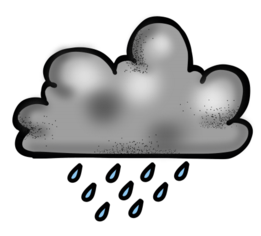
What causes wind?
differences in elevation
condensation in the atmosphere
ocean currents
the uneven heating of the Earth by the sun
Whether you live in a tropical climate, a temperate climate, or a polar climate, you share something with the rest of the world—your climate is influenced by the latitude where you live. Which best describes why latitudes closer to the equator have warmer climates?
Latitudes closer to the equator receive more solar energy than latitudes away from the equator.
Latitudes closer to the equator are at lower elevations than latitudes away from the equator.
Latitudes closer to the equator get more wind carrying energy in the form of heat than latitudes away from the equator.
Latitudes closer to the equator are nearer to ocean currents than latitudes away from the equator.
Condensation is part of the water cycle and also plays a role in the weather. Which of the following directly results from condensation?
Clouds form.
Ice forms.
Strong winds develop.
Dew evaporates.
Visitors to Florida sometimes complain about the high humidity. What does high humidity indicate?
a high amount of water vapor in the air
a high-pressure system
a cool temperature
an approaching cold front
Large bodies of water store thermal energy. This causes temperature differences and surface currents, which affect climate and weather. What are surface currents?
slow mixing of warm and cold water near the surface of the ocean
water that empties from rivers into the ocean
daily changes in the level of ocean water
stream-like movements of water that happen near the surface of the ocean
Condensation is part of the water cycle and also plays a role in the weather. Which of the following illustrates condensation?
water turning into water vapor in an ocean or lake
water turning from a vapor into rain droplets
water turning from a liquid into ice on a winter road
water turning from ice to liquid as salt is applied to a road
Photosynthesis occurs in the leaves of plants. The transfer of energy from radiant solar energy to chemical energy involves which of the following parts of the Earth system?
biosphere and geosphere
cryosphere and hydrosphere
geosphere and cryosphere
atmosphere and biosphere


In heat transfer, heat always flows from the _______________ substance to the _______________ substance.
Hotter to colder
Colder to hotter
Hotter to hotter
Colder to colder


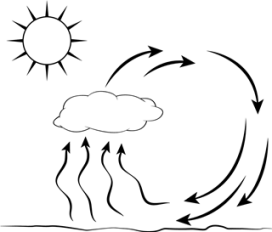
What are the two ways that rocks are broken down into smaller pieces?
abrasion and erosion
chemical weathering and dissolving
physical weathering and precipitation
chemical weathering and physical weathering
Weathering and erosion are two processes that shape Earth’s surface. Which of the following sets of factors causes both weathering and erosion?
moving water, plant roots, wind
acid rain, plants, ice wedging
glaciers, ocean waves, wind
acid rain, tree roots, waves


Which of the following lists the steps an igneous rock undergoes in order to become a sedimentary rock, in the correct order?
Deposition, erosion, melting, cooling
Erosion, weathering, eruption, cooling
Dissolving, deposition, cooling, fracture
Weathering, erosion, deposition, cementation

what is the rock cycle.
molten rock that is stored underground.
rock material that forms where rocks are broken down into smaller pieces.
a process that changes one type of rock into another type of rock.

______ rock can melt and cool to form igneous rock.
Soft
Hard
Metamorphic
Large

Sedimentary Rocks form in
Layers
the desert only
underground
on top of water
The global movement of air occurs in convection cells. What reasoning explains how air moves, in general?
from areas of higher temperature to areas of lower temperature
from areas of lower temperature to areas of higher temperature
from areas of higher pressure to areas of lower pressure
from areas of lower pressure to areas of higher pressure
Different areas of Earth’s oceans receive different amounts of energy in the form of heat, resulting in ocean currents and weather patterns. What is the main source of this energy?
kinetic energy from tides
kinetic energy from ocean currents
energy transfer within Earth’s crust
electromagnetic radiation from the sun

Which statement explains why wind direction changes from day to night?
The land quickly heats up during the day and stays warm at night
The water quickly heats up during the day and stays warm at night.
The land quickly heats up during the day and the water stays warmer at night.
The water quickly heats up during the day and the land stays warmer at night.

During a typical summer afternoon, Orlando experiences significantly higher temperatures than Tampa. Which statement best explains why this occurs?
The cool breeze from the ocean cools down the temperature in Orlando.
The warm breeze from the ocean cools down the temperature in Orlando.
The cool breeze from the ocean cools down the temperature in Tampa
The warm breeze from the ocean cools down the temperature in Tampa
•Earth’s _________ results in differences of temperature, which causes different seasons.
elliptical orbit
distance from the sun
position in the solar system
axial tilt
How does Earth’s tilt on it’s axis cause seasons?
It doesn’t.
Earth’s tilt causes seasons because when Earth is tilted on its axis toward the Sun, there is summer, and when it is tilted away from the Sun, it is winter.
Earth is not tilted.
Earth’s tilt causes seasons because when Earth is tilted on its axis toward the Sun, there is winter, and when it is tilted away from the Sun, it is summer.

When the Northern Hemisphere of Earth is Leaning away from the Sun, What season is the Southern Hemisphere experiencing?
Summer
Winter
Spring
Fall

SC.6.E.7.4
A polar bear walks across the Arctic ice. Which two spheres do the bear and ice represent in this interaction?
biosphere and cryosphere
biosphere and geosphere
biosphere and hydrosphere
cryosphere and geosphere
When marine life dies, the remains settle on the ocean floor. The remains of bones, teeth, and shells over time are compacted and transformed into sedimentary rock. This event represents an interaction between:
the hydrosphere and biosphere
the biosphere and geosphere
the biosphere and atmosphere
the geosphere and atmosphere
SC.6.E.7.4
The Florida Everglades is a large, warm wetland with many plants, animals, and microscopic organisms. Which part of the Earth system includes the water in the Everglades?
Geosphere
Cryosphere
Atmosphere
Hydrosphere
Sometimes fires burn down large areas of forests that are part of the biosphere. Other than the biosphere, which of Earth’s other systems is a forest fire most likely to affect?
geosphere
cryosphere
atmosphere
hydrosphere

SC.6.E.7.4
Humans cut down trees in a location. This caused an increase in temperature and decrease in rainfall in that location. Which of these Earth systems interacted to produce this difference in climate?
biosphere, cryosphere, and geosphere
atmosphere, hydrosphere, and geosphere
biosphere, atmosphere, and hydrosphere
cryosphere, atmosphere, and hydrosphere

All the water contained on Earth is called __________.
the hydrosphere
groundwater
surface water
the atmosphere


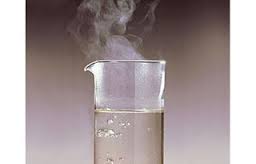
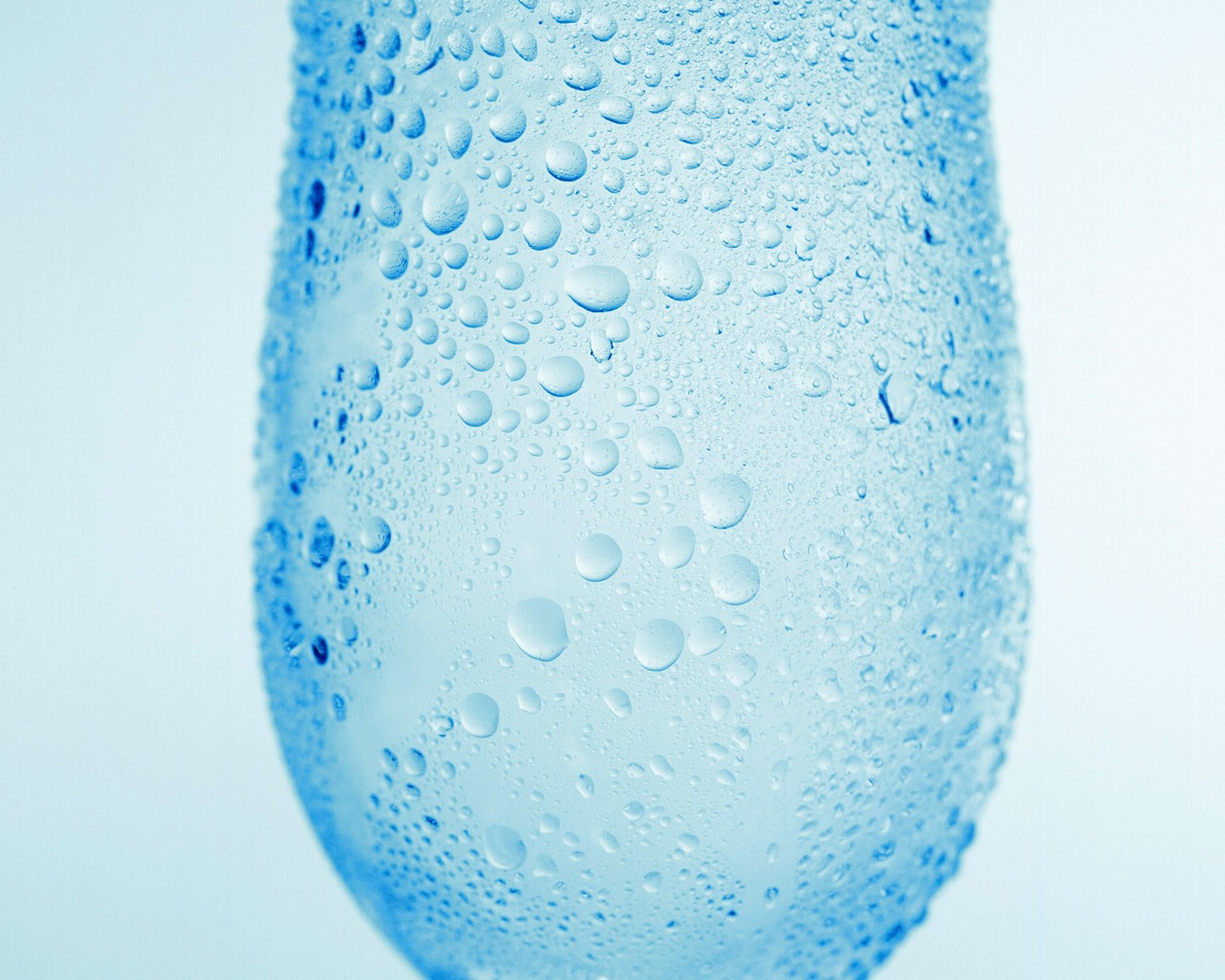
Which of the following is an example of condensation?
clouds forming
ocean water changing to water vapor
water flowing down a river
underground water soaking into soil
How can water vapor in the atmosphere return to Earth?
evaporates and blown by the wind
evaporates and forms clouds
condenses then precipitates
sticks to any warm surface

What is it called when solid water transforms to water vapor without becoming a liquid first?
EVAPORATION
PRECIPITATION
TRANSPIRATION
SUBLIMATION

How does this occur?


What process is shown by letter B in the diagram?
condensation
transpiration
evaporation
precipitation

What step of the water cycle is shown in this picture?
Condensation
Runoff
Precipitation
Evaporation

The movement caused within a fluid by the tendency of hotter and therefore less dense material to rise, and colder, denser material to sink under the influence of gravity, which consequently results in transfer of heat. ____________________
Evaporation
Convection
Precipitation
Transpiration
Sarah is investigating the transfer of energy in the form of heat. One process that transfers energy between two objects is conduction.
Which statement is NOT true about conduction?
It involves a transfer of energy in the form of heat.
It can transfer energy through empty space.
It requires direct contact between the objects.
It results in a change of temperature in both objects.

The arrows in the picture below show several ways heat is transferred from the Sun as it strikes sand on the surface of a beach. Which arrow shows convection?
1
2
3
4
When energy from the sun reaches the air above land, the air warms and rises. Along a coastline, cooler air above the ocean flows toward the land to replace this rising air.
Which of the following best describe these processes?
Conduction and convection
Radiation and convection
Conduction, convection, and radiation
Radiation and conduction

Vivian placed an ice cube in a tray of warm water. The following picture shows her investigation. Which statement describes the energy transfer that happens in Vivian’s investigation?
Energy in the form of heat is transferred from the ice cube to the water by radiation.
Energy in the form of heat is transferred from the water to the ice cube by radiation.
Energy in the form of heat is transferred from the ice cube to the water by conduction.
Energy in the form of heat is transferred from the water to the ice cube by conduction

Kumar is studying how Earth is warmed by sunlight. The following illustration shows his model of the sun and Earth.
Which process is mostly responsible for warming the soil in Kumar’s model?
Conduction between the lamp and the soil causes the soil to warm.
Convection currents between the lamp and the soil cause the soil to warm.
Expansion of particles in the soil causes the soil to warm.
Radiation from the lamp reaches the soil and causes the soil to warm.

Which statement below explains how energy from the Sun causes the movement of air on Earth?
The sun heats the air particles which then collide with each other and forms wind.
The sun heats the earth unevenly creating warm and cool masses. The warm air rises and cooler air moves in to replace it which forms wind.
The sun heats the Earth unevenly creating warm and cool air masses. The cooler air rises and warm air moves in to replace it which forms wind
The sun heats the earth’s atmosphere which creates warm air and as the earth rotates the air moves to different locations on earth

When air heats up, molecules spread out, causing warm air to rise and cold air to sink. This creates:
A conduction current
A convection current
Radiation
Even heating of the air

