
 Worksheets
6th ADV QSE 2 2526 Review
Total questions: 168
Worksheet time: 4hrs 46mins

Which picture shows more biodiversity?
Left one
Right one

Which picture has higher sustainability?
Left one
Right one

What % of energy travels from level to level?
100%
10%
5%
0%

High biodiversity is
having a lot of the same organism.
having a few of the same organism.
having a lot of variety of different organisms.
only having one of each organism.

This picture is a great example of ____________ biodiversity.
high
moderate
low
hhhmmmm there is no way to know without counting.
Which of the following most likely supports the most sustainable ecosystem?
The habitat with the greatest number of predators
The habitat with the greatest variety of living things
The habitat with the warmest average temperature
The habitat with the greatest number of consumers
The greater a habitat’s biodiversity, the greater will be that habitat’s
sustainability over time
consumption of energy in the form of sunlight
temperature ranges across the seasons
distance to the nearest water source.

When biodiversity decreases
Sustainability also decreases
Sustainability remains the same
Sustainability increases
Sustainability is not impacted

When biodiversity increases
Sustainability decreases
Sustainability remains the same
Sustainability also increases
Sustainability becomes greater by 2
A hurricane hit a tundra and a forest. A tundra is less biodiverse than the forest. Which biome would be impacted the most?
The forest because it has more species and it wouldn't be able to sustain itself as well as the tundra
They would be impacted the same
The forest because it has more producers
The tundra because it has less species and it wouldn't be able to sustain itself as well as the forest

Which of the following would cause biodiversity to DECREASE?
Water
Forest Fires
Sunlight
Producers
A certain area of the Indian ocean is expected to dry up and become a desert over thousands of years. What will happen to the sustainability of this ocean?
Sustainability would increase because the number of species would increase
Sustainability would remain the same
Sustainability would decrease because the number of species would decrease
Not enough information is given
The ocean ecosystem has a high sustainability because of -
strong, persistent currents
predator/prey relationships
the large variety of different organisms, producers, and water
None of the above
How do lichens contribute to primary succession?
Lichens decompose organic matter from animals and plants
Lichens begin to break down rock to form soil
Lichens are nitrogen fixing bacteria
Lichens convert carbohydrates into fossil fuels.
What is formed during primary succession that doesn't need to be formed during secondary succession?
pioneer species
soil
climax community
lichens

After a forest fire, an ecosystem would start regrowth through -
primary succession
secondary succession
climax community
limiting factors
Which experiences the least change over time?
Pioneer Species
Primary Succession
Aquatic Succession
Climax Community
Which of the following best describes primary succession?
Volcano wipes out ecosystem that gradually grows back from ash covered soil
Volcano creates a new island of rock that must break down to form an ecosystem
Forest fire burns down forest that must bounce back over time
Tornado destroys a crop that must slowly grow back over time.
If farmers use a controlled burn to prevent forest fires, what would most likely be the first plants to return?
trees
shrubs
mosses
grasses

What is the order of succession shown in this figure?
A, B, C, D
B, A, D, C
C, D, A, B
D, A, B, C
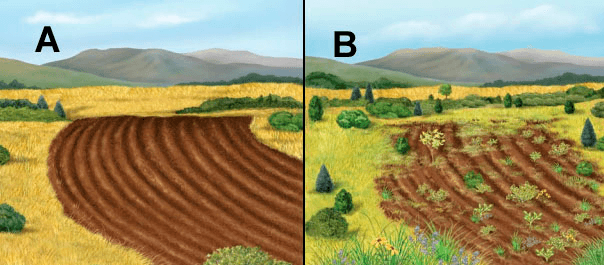
What type of succession is shown going from figure A to figure B?
primary succession
ecological succession
secondary succession
intermediate
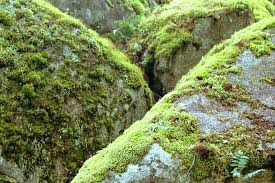
What are examples of pioneer species in a primary succession?
Bushes and Shrubs
Oak trees
Mossess and Lichens
A rose Bush
After a volcanic eruption, lava covers the land. What is the order that plants grow to repopulate the area?
Lichens → Shrubs → Grasses → Trees
Lichens → tree → shrubs→Grasses
Grasses → Lichens → Shrubs → Trees
Lichens → Grasses → Shrubs → Trees

What is the most important function of pioneer species?
To create rocks
To create soil and add nutrients to the environment
To look nice
Food for animals

This is the process that forms a new ecosystem where no organisms lived before.
resource
invasive (non- native) species
primary succession
competition
What is an example of a disturbance that could bring about secondary succession?
Humans cut down many trees in a small region
A volcanic eruption covers a village in lava.
What is ecological succession?
A rapid change in non-living environments
A gradual change in living communities following a disturbance
The process by which new species evolve from old species
A method of conserving endangered species

The final stable state of succession is called
primary succession
secondary succession
pioneer species
climax community

What are examples of pioneer species in a primary succession?
Bushes and Shrubs
Oak trees
Mossess and Lichens
A rose Bush

A pioneer species is...
a large organism
the first organisms to adapt to a new environment
The best organism
Abiotic organisms
What is the most important function of pioneer species?
To create rocks
To create soil and add nutrients to the environment
To look nice
Food for animals
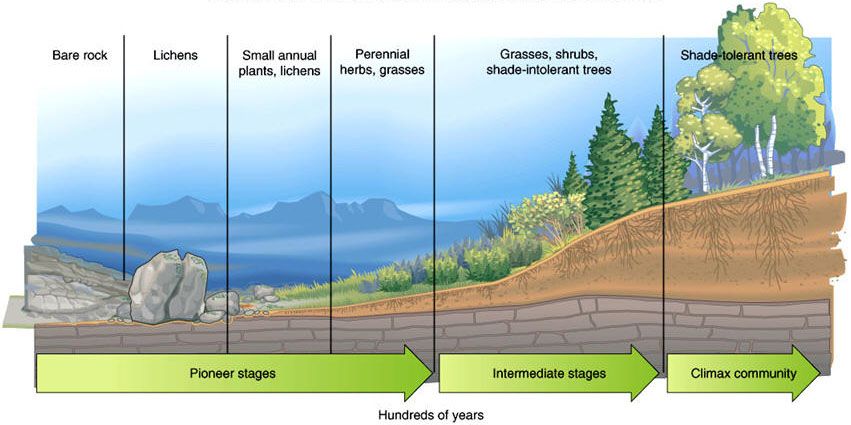
The picture shows what type of succession?
primary
secondary
tertiary
quadanary
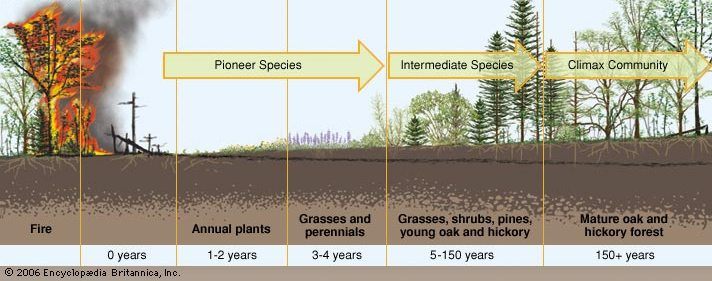
The picture shows what type of succession?
primary
secondary
tertiary
quadanary
Large oval organelle that is the Cell’s control center
Vacuole
Mitochondria
Cell membrane
Nucleus

In what organelle is the genetic material found inside?
Endoplasmic Reticulum
Golgi Complex
Nucleolus
Nucleus

What organelle is called the "powerhouse" of a cell?
Endoplasmic Reticulum
Nucleus
Mitochondria
Nucleolus

Using this image, what organelle is C?
Cell Wall
Mitochondria
Large Cell Vacuole
Chloroplast
What is the function of the mitochondria?
Structure that manufactures ribosomes
Structures that converts nutrients to energy
Stack of membranes that packages chemicals
Structure that contains DNA and directs the cell

Where does photosynthesis occur?
mitochondria
stomata
xylem
chloroplast

I store water in both plant and animal cells. What am I?
cytoplasm
ribosomes
vacuole
lysosomes

I make proteins for the cell. What am I?
ribosome
mitochondria
chloroplast
lysosome
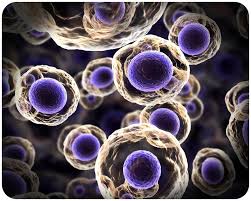
The two kinds of cells are Prokaryotes and Eukaryotes. How are they different?
Prokaryotes have a nucleus.
Eukaryotes have a nucleus.
Prokaryotes are plant cells.
There is no difference.
What can only be found in plant cells?
Cell membrane
Vacuole
Chloroplast
Mitochondrion

What cell part is NOT found in all cells?
Cell Wall
Cell Membrane
Cytoplasm
Genetic Material

Which part of the cell is often called "the brain of the cell"?
nuclear membrane
endoplasmic reticulum
nucleus
mitochondria

What is the structure labeled #5?
Vacuole
Chloroplast
Mitochondria
Lysosome

What is the structure labeled #10?
Cell membrane
Cell wall
Cytoplasm
Centriole
Asexual reproduction has
1 parent
2 parents
Sexual reproduction has
1 parent
2 parents
Asexual reproduction creates offspring that are
genetically identical to the parent
different from the parent
different from each other
formed by 2 parents
Budding, vegetative propagation, regeneration, and binary fission are all types of
sexual reproduction
asexual reproduction
The egg cell of a koala contain 12 chromosomes. How many chromosomes does a normal cell contain?
6
12
24
36
A hydra has 32 chromosomes and reproduces by budding. How many chromosomes does its offspring have?
8
16
32
64
Gametes are made in
skin cells
stomach cells
reproductive systems
the circulatory system

Robert Hooke, Anton van Leeuwenhoek, Theodor Schwann, Rudolf Virchow, and Matthias Schliden were all responsible for what theory?
The Theory of Gravity
The Theory of Relativity
The Cell Theory
The Theory of Continental Drift

What tool do you use to view the cells?
metric ruler
centrifuge
microscope
telescope
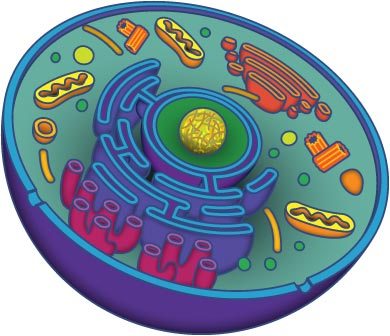
All living things are made up of...
cells
cell tissues
organ
organ systems
All cells come from___________ cells.
pregnant
pre-existing
paternal
pin size
Rocks are not living because
they never move
they aren't needed for humans
they are not made of cells
they don't break down
what is a cell classified as?
a basic unit of structure and function of all living organisms
a unit based on only plants and animals that are living
Why are microscopes important when studying most cells?
Most cells are very large.
Most cells are very small.
Most cells move very quickly.
Most cells are dead.
All organisms are made of:
organelles
cytoplasm
DNA
cells
Who looked at cork and named the cell?
Robert Hooke
Van Leeuwenhoek
Robert Brown
Francesco Redi
What is the basic structural and functional unit of all living things?
atom
cell
bacteria
animalcules
All cells -----
come from other dead cells
come from other living cells
crystallize out of the air

Cells are often called "the ____ of life."
bread
road map
building blocks
meaning
A plant and an animal are both living things. According to the Cell Theory, what can you conclude about these two very different organisms?
Plants have cells but animals do not.
They are both made of one or more cells.
They both come from the same kind of cell.
They both come from a non-living organism.

The 3 parts of the Cell Theory are...?
All living things are composed of cells
Cells are the basic units of structure and function in living things
All cells are produced from other cells
All living things are composed of cells
Cells are the basic units of dance and vibes in living things
All cells are destroyed from other aliens
All living things are composed of Jell-O
Cells are the basic units of structure and function in living things
All cells are produced from factories in Canada
All living things are composed of cells
Cells do karate and practice eating whole pies in their free time
All cells are produced from other cells
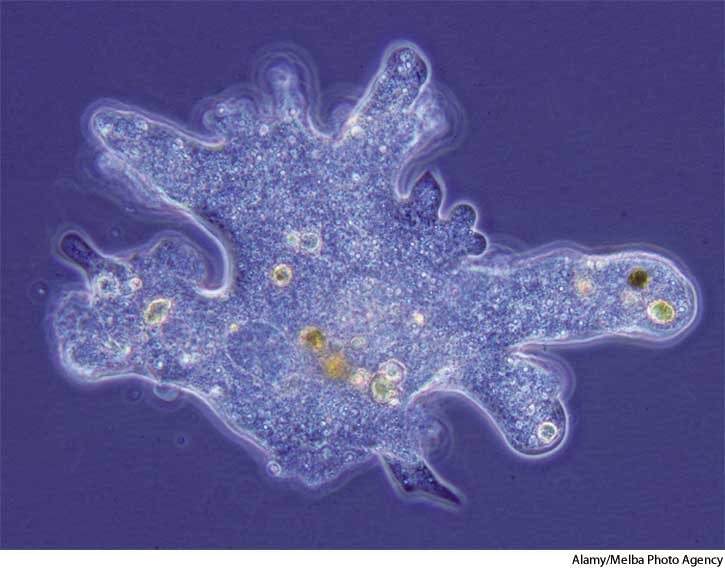
An Amoeba is a unicellular, animal-like protist that lives in ponds and streams. According to cell theory, where did this cell come from?
another pre-existing amoeba cell.
energy from sun that allowed the protist to reproduce.
a multicellular organism.
the nonliving environment.

Which of the following is NOT a cell theory.
All non-living things are made of cells
All cells come from pre-existing cells
Cells are the basic unit of structure and function of all living things
Rocks are not living because
they never move
they aren't needed for humans
they are not made of cells
they don't break down
What is the basic structural and functional unit of all living things?
atom
cell
molecule
human
All cells are produced ____________.
From pre-existing and deceased cells
from other pre-existing cells
Cells can come from anywhere, as long as there is the sun.
An organism made of one cell is called
unicellular organism
multicellular organism

What is one way in which all living things on Earth are alike?
All living things have hair.
All living things are made of cells and come from other cells.
The cells of all living things have chloroplast.
All living things can move.
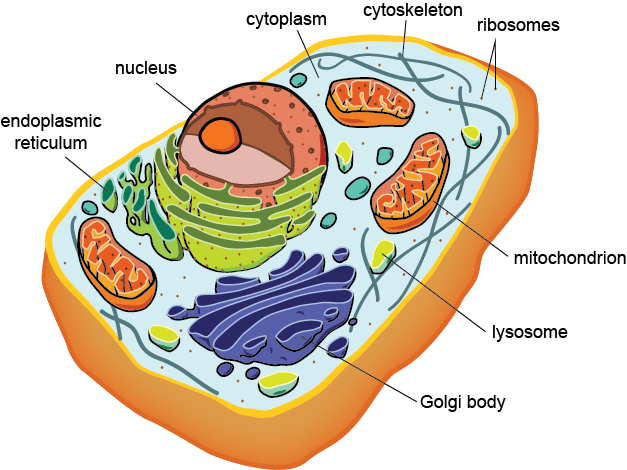
Which of the following statements is not part of the cell theory?
Cells are the basic unit of structure and function in all living things.
All cells are produced from other cells.
Only animal cells are composed of cells.
All living things are composed of cells.
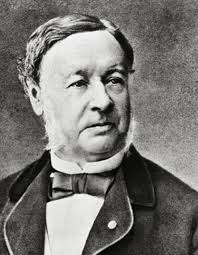
Which of the following scientists concluded that all animals are made of cells?
Rudolf Virchow
Matthais Schleiden
Robert Hooke
Theodor Schwann
what is a cell classified as?
a basic unit of structure and function of all living organisms
a unit based on only plants and animals that are living
Which is NOT part of the Cell Theory
New cells are produced from existing cells
All living things are composed of cells
Only eukaryotic cells have a nucleus
Cells are the basic unit of structure & function in living things
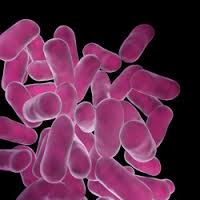
How are unicellular organisms different from multicellular organisms?
There are no differences.
They are made of many cells.
They are only classified as prokaryotes.
They are made of only one cell.
If an organism reproduces asexually, its offspring will most likely be:
produced as a result of fertilization
Genetically identical to the parent
Genetically different from each other
Produced from specialized cells known as gametes
Which statement below is correct about asexual reproduction and sexual reproduction?
Asexual reproduction and sexual reproduction both involve one parent
Sexual reproduction involves making clones and asexual reproduction creates diverse/different offspring
Asexual reproduction creates clones and sexual reproduction creates diverse/different offspring
Genetic Variation means
genetic differences in a population or species
genetic similarities between a population or species
What are some of the facts about asexual reproduction?
Takes only one mate to reproduce and takes a longer time to reproduce
Takes a shorter amount of time to reproduce and it takes two mates to reproduce
Reproduces diverse offspring and takes a longer time to reproduce
Takes only one mate to reproduce and takes a shorter time to reproduce
What are some of the facts about sexual reproduction?
Takes two mates to reproduce and takes a longer time to reproduce
Takes one mate to reproduce and takes a shorter amount of time to reproduce
Takes two mates to reproduce and takes a shorter amount of time to reproduce
Takes one mate to reproduce and takes a shorter amount of time to reproduce
What is an advantage of sexual reproduction?
Allows genetic variation
Only needs one parent
Offspring are exact copies of parent
What is one disadvantage of sexual reproduction?
Only one parent needed
Offspring are exact copies of parents
Happens very quickly
Needs two parents
When a starfish grows a new body off a broken arm, what kind of reproduction is this?
Sexual
Differentiation
Asexual
Specialization
What is a gamete?
sex cell
human cells
plant cells
plant and animal cells
Asexual reproduction happens faster than sexual reproduction.
true
false
How many parents are required for asexual reproduction?
none
1
2
4
How many parents are involved with sexual reproduction?
none
1
2
4
Which type of reproduction tends to produce more offspring?
Sexual
Asexual
They occur at the same rate
Which type of reproduction tends to be a longer process?
Sexual
Asexual
They occur at the same rate
Both are slow processes
Budding, vegetative propagation, regeneration, and binary fission are all types of
sexual reproduction
asexual reproduction
Which body system protects the organs of the body?
digestive
respiratory
skeletal
muscular
This organ is part of the digestive system.
lung
heart
brain
stomach
What is the function of the respiratory system?
To digest your food
To remove waste from the body
To take in oxygen and remove carbon dioxide
To fight disease
What is the function of the digestive system?
It transports blood and oxygen to your cells
It breaks down food so the nutrients can be absorbed by your body
It helps you breathe by taking in oxygen and transporting carbon dioxide out of your body
It helps you move
Which system in the human body includes the heart, blood, arteries, and veins?
cardiovascular
muscular
digestive
respiratory
Which statement best describes the relationship between the nervous system and the muscular system?
The nervous system controls the muscular system.
The muscular system controls the nervous system.
The nervous system provides nutrients for the muscular system.
The muscular system provides nutrients for the nervous system.
In what way are the digestive and circulatory systems alike?
Both protect organs in the body.
Both control movement of the body.
Both absorb gases or nutrients into the body.
Both provide structural support for the body.
Which two body systems work together to support the body and allow the body to move?
circulatory and respiratory
digestive and nervous
skeletal and muscular
circulatory and digestive
This system includes the skin, hair, and nails.
integumentary
nervous
skeletal
muscular
This system filters and removes liquid wastes from the body.
endocrine
digestive
circulatory
excretory
This system receives and proccesses information.
respiratory
immune
nervous
endocrine
This system is the body's defense against attack.
endocrine
excretory
muscular
immune
This system secretes chemical messages (hormones) to different parts of the body.
excretory
endocrine
digestive
immune
Which of the following is a component of the circulatory system?
heart
blood vessels
blood
all answers
From the smallest functional units to the largest, the body is organized as follows:
cell, system, organ, tissue, body.
organ, cell, tissue, system, body.
system, organ, tissue, cell, body.
cell, tissue, organ, system, body.
Which one of the following systems DO NOT absorb nutrients or get rid of wastes?
Respiratory System
Digestive System
Nervous System
Circulatory System
What function do the endocrine system and nervous system have in common?
Both relay messages to cells throughout the body.
Both produce electrical signals that are carried by neurons
Both produce hormones which are chemical messengers
both remove wastes and toxins from the body
A woman running in a marathon requires a constant supply of oxygen to her muscles.Which cells carry oxygen to muscle tissue?
nerve cells
lung cells
red blood cells
artery cells
Sac within the cytoplasm that is full of fluid; plants have one large; stores food, water, etc.
vacuole
cell wall
lysosome
ribosome
Gives the cell a rigid, box-like shape; outside of the cell membrane; in plants.
cytoplasm
chromatin
cell wall
cell membrane
Consists of a jellylike substance that contains many organelles.
ribosomes
cytoplasm
chloroplasts
cell wall
Which organelle uses energy from sunlight to make sugar?
mitochondria
nucleus
chloroplasts
vacuoles
Which part of the cell is often called "the brain of the cell"?
nuclear membrane
endoplasmic reticulum
nucleus
ribosomes

I am the outer most layer of an animal cell. What am I?
cell wall
nucleus
cell membrane
cell skin

I make proteins for the cell. What am I?
ribosome
mitochondria
chloroplast
lysosome

I store water in both plant and animal cells. What am I?
cytoplasm
ribosomes
vacuole
lysosomes
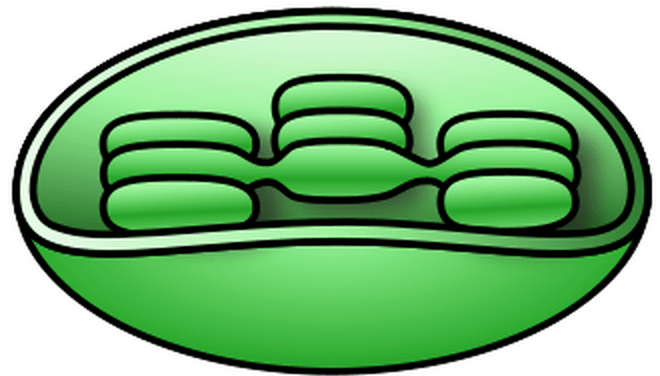
I am only found in a plant cell. What am I?
cell wall
mitochondria
cytoplasm
chloroplast

What does this structure do?
supports the cell
cell's control center
converts energy to food
makes proteins

What is the picture
ribosome
nucleus
cell wall
mitochondrion
Which organelle is only found in a plant cell?
nucleus
chloroplast
mitochondria
cell membrane

Directs all cell activities through the DNA located there.
Lysosomes
Nucleus
ribosomes
Mitochondria
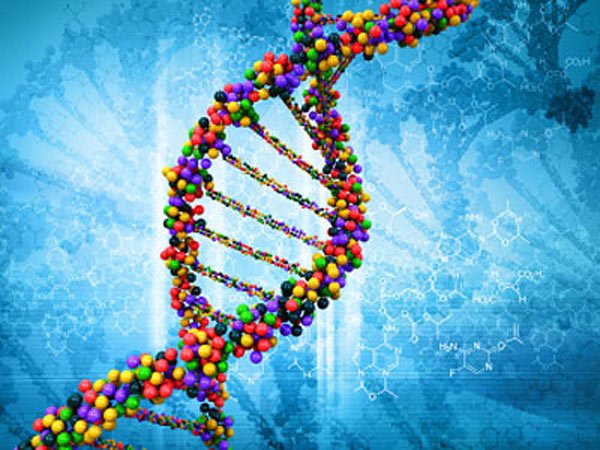
What is the name of the genetic material inside the nucleus when it is in its compressed form?
Chromosomes
Chromatin
RNA
ATP
Which part of the cell is often called "the brain of the cell"?
nuclear membrane
endoplasmic reticulum
nucleus
mitochondria
What organelle stores large amounts of water in plant cells?
Nucleus
Mitochondria
Chloroplast
Vacuole
Where are proteins made?
Golgi body
Mitochondria
Chromosomes
Ribosomes
This organelle takes food and turns it into ENERGY for plant and animal cells.
Chloroplast
Mitochondria
Lysosome
Ribosome
The organelle where photosynthesis takes place in plant cells?
ribosome
mitochondria
chloroplast
nucleus
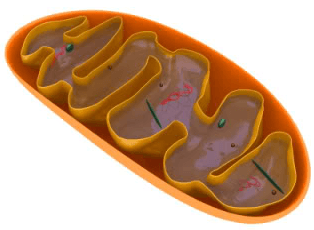
What are tiny organelles that convert glucose into ATP?
Ribosomes
Vesicles
Cytoskeleton
Mitochondria
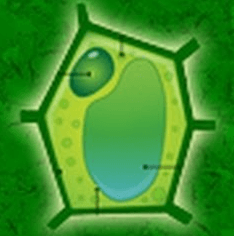
A rigid layer that lies outside the cell's membrane is...
Cytoskeleton
Cilia
Cell Wall
Flagella
What organelle is called the "powerhouse" of a cell?
Endoplasmic Reticulum
Nucleus
Mitochondria
Nucleolus
The ___________ is the basic unit of life in all organisms.
organ
cell
atom
tissue
A group of tissues that work together to perform a similar function is called_____. (Examples include the heart, lungs or stomach)
cells
tissues
organs
organ system
A group of cells working together to perform a function?
cells
tissues
organs
atoms
Organs that work together to perform a related function is called _____________?
cells
tissues
organ system
organs
When many organ systems work together it can form an...?
organ
cells
organ system
organism

This is a example of........
organ system
cells
organ
tissue

This is a example of ........
cell
organ system
organ
tissue
The brain is a part of which organ system?
nervous
skeletal
muscular
digestive
The lungs and the kidneys are examples of
cells
organs
tissues
organ systmes

This cell is simple. It only has genetic material, cytoplasm and ribosomes inside. What is it?
Eukaryotic cell
Prokaryotic cell
Plant cell
Animal cell

Complex cell. Can be plant or animal. Contains membrane bound organelles.
Eukaryotic Cell
Prokaryotic Cell
Bacterial cell
Blood cell
This function of this organelle is to break down glucose to make cell energy.
Chloroplasts
Mitochondria
Nucleus
ATP
This is a green pigment found in plants.
Chloroplasts
Chlorophyll
Cytoplasm
MItochondria
This specialized cell does not contain a nucleus to allow for transport of oxygen
Nerve Cell
Red Blood Cell
White Blood Cell
Palisade cell
The role of these specialized cells is to help fight off infection and foreign bodies.
Palisade Cells
Nerve Cells
White Blood Cells
Red Blood Cells

What do scientists call the parts of a cell?
Pieces
Sections
Organelles
None of the above

Which of these is a unicellular organism?
Fish
Worm
Amoeba
Ant

Which part of an onion root cell gives it a brick-like structure?
Cell membrane
Cell wall
Vacuole
Chloroplast

The DNA of a cell is found in the __________.
mitochondria
lysosome
nucleus
vacuole

What do you call the gooey liquid in a cell?
Lysosome
Mitochondria
Chloroplast
Cytoplasm

Which of these organelles do animal cells not have?
Nucleus
Chloroplasts
Cell membrane
Lysosome

This organelle is often referred to as the power house of the cell.
Mitochondria
Lysosome
Chloroplast
Vacuole

This organelle is where plants do photosynthesis.
Mitochondria
Lysosome
Chloroplast
Vacuole
Which of the following is the smallest unit of life that can carry out all life functions?
the mitochondria
the vacuoles
the nucleus
the cell
Which structures are found in every living cell?
cell membrane and cytoplasm
chloroplasts and mitochondria
a cell wall and nucleus
chloroplasts and cell wall
Which cell structure is found in plant and animals cells and controls what can come into or leave a cell?
cell membrane
cytoplasm
nucleus
vacuole
What is the function of the cell nucleus found in both plant and animal cells?
to produce energy
to control cell activity
to remove waste products
to allow molecules to enter the cell
Chloroplasts in plant cells allow the plant to perform a function that animal cells cannot do. What is the main function of the chloroplasts found in plant cells?
to absorb light energy and manufacture food
to remove waste materials by active transport
to manufacture chemical energy from food
to control the shape of the cell
What is the function of a cell wall?
to protect and support the cell
to perform different functions in each cell
to prevent water from passing through it
to prevent oxygen from entering the cell
In what part of the plant cell does the process of photosynthesis take place?
nucleus
mitochondria
chloroplasts
vacuoles
Cells with a nucleus and membrane-bound organelles are called ____________________.
prokaryotes
eukaryotes
bacteria
protists
He discovered that all plants are made of cells:
Anton van Leeuwenhoek
Theordor Schwann
Robert Hooke
Mattias Schleiden
Who was the first person to see cells under the microscope and give them their name?
Mattias Schleiden
Robert Hooke
Theordor Schwann
Anton van Leeuwenhoek

