wayground logo

Free Printable Worksheets

Font size

S
M
L
XL
Worksheets

Electromagnetism Exam Review

Total questions: 165

Worksheet time: 14hrs 58mins

Name
Class
Date
1.
A student has designed an investigation to test the concept that electrically charged objects exert force on each other even when the objects do not touch, and that this is possible because an electric field exists between the two objects. The student places two oppositely charged objects 1 meter apart and hypothesizes that they will attract each other. However, to the student’s surprise, the student does not observe any discernable movement between the two objects. What two changes should the student make to the design in order to test the hypothesis?
a)
Move the objects farther apart in specified intervals.
b)
Move the objects closer together in specified intervals.
c)
Replace one object so that both objects have like charges.
d)
Increase the magnitude of the charge on both objects.
2.
A student has created an electric generator to power some extra-bright bike lights. The student notices that the lights are not working when taking the bike for a spin around the block. The student suspects that a stronger current is needed. What can the student do to test this idea? (mark all that apply).
a)
Pedal the bike more quickly.
b)
Turn the magnets parallel to the coils.
c)
Reduce the number of coils in the wire.
d)
Replace the magnet with a stronger one.
3.
A student is doing a project on magnetic levitation (maglev) trains. The student wants to develop a simple model to illustrate magnetic potential energy using a pencil and two ring magnets. Which procedure would provide the best model to demonstrate magnetic potential energy using these materials?
a)
Place the two magnets so that they stick together. Hold the pencil straight up. Place the magnets at the top of the pencil and time their fall to the bottom.
b)
Hold the pencil sideways. Place a magnet on each end of the pencil. Place your finger near the center of the pencil to balance it.
c)
Place a magnet on the pencil. Hold the pencil straight up with the magnet at the bottom. Slide the second magnet down the pencil until it hovers over the first magnet.
d)
Place the two magnets so that they stick together. Hold the pencil sideways. Place the magnets on the pencil and spin the magnets around the pencil.
4.
Two plastic cups are placed 25 cm apart. What factors determine the strength of the electric field between these two cups? (Mark all that apply).
a)
The charge on cup A
b)
The charge on cup B
c)
The distance between the cups
d)
whether the cups are insulators or conductors
5.
Which statement best explains how the magnets interacted with each other even though they were separated by one centimeter of space? The magnets produced a field of
a)
force that extends beyond each magnet.
b)
gravity that extends beyond each magnet.
c)
electrical current that attracts and repels objects near them.
d)
potential energy that attracts and repels objects near them.
6.
The poles on a magnet point to the ______________ poles on the earth.
a)
same
b)
oposite
c)
north
d)
south
7.
When you break an iron magnet into two pieces, you get ___________
a)
two north poles
b)
two south poles
c)
two north poles and two south poles
d)
a piece of iron that is no longer magnetic
8.
Same poles on a magnet
a)
attract
b)
repel
c)
equilize
d)
balence
9.
Alice is investigating whether she can show magnetic field lines, using iron filings and two bar magnets. She arranges the magnets so that the north pole of one magnet is close to the south pole of the other magnet. Alice lays a transparent sheet of plastic on top of the magnets and sprinkles iron filings on it. She taps the plastic sheet gently to see whether the iron filings will form a pattern showing magnetic field lines. Which statement describes a conclusion that would be supported by this investigation?
a)
A magnetic field forms only when two magnets are touching.
b)
A magnetic field forms only when the north pole of a magnet is close to the south pole of another magnet.
c)
Forces from a magnetic field can act on an object without touching the object.
d)
Forces from a magnetic field are stronger when the magnets are closer together.
10.
As the amount of charge on either of two charged objects increases, the electric force between the objects decreases.
a)
True
b)
False
11.
A material through which electrons can move easily is a _____.
a)
conductor
b)
charge
c)
insulator
d)
magnet
12.
Each of the following is an example of an insulator EXCEPT _________.
a)
copper
b)
glass
c)
rubber
d)
wood
13.
An object with equal amounts of positive and negative charge is electrically ___________.
a)
charged
b)
negative
c)
neutral
d)
positive
14.
When an object has more negative charge than positive charge, the object is called ____________ .
a)
electric discharge
b)
magnetic domain
c)
electric field
d)
electrically charged
15.
An electric field gets stronger as you ____________.
a)
get closer to a charge
b)
get farther from a charge
c)
add negatively charged particles to a positively charged object
d)
remove negatively charged particles from a negatively charged object
16.
Normally, materials are electrically neutral because there are ___________.
a)
more positively charged particles than negatively charged particles
b)
more negatively charged particles than positively charged particles
c)
equal numbers of positively charged particles and neutrally charged particles
d)
equal numbers of positively charged particles and negatively charged particles
17.
A student builds a circuit that lights a lightbulb. A second bulb is added to the same loop between the first bulb and the battery. Which statement describes the brightness of each bulb?
a)
Each bulb will be as bright as the first bulb was.
b)
The first bulb will be the same brightness, and the second bulb will be dimmer.
c)
Each bulb will be dimmer than the first bulb was.
d)
The first bulb will be dimmer than it was, and the second bulb will not light.
18.
Which statement best describes an electric current?
a)
Energy transfers inside of an electric device.
b)
Charged particles move through a conductor.
c)
Type of conductor or insulator.
d)
The measurement of the electric potential energy in a circuit.
19.
A light bulb is powered by a single D-cell. What happens if two D-cells connected end-toend are used?
a)
The light bulb burns brighter because the current will be larger.
b)
The light bulb burns brighter because the current will be smaller.
c)
The light bulb burns dimmer because the current will be larger.
d)
The light bulb burns dimmer because the current will be smaller.
20.
An electric ___________ is the movement of electrically charged particles.
a)
current
b)
insulator
c)
pole
d)
stopper
21.
What are the four layers of the earth, from outer to inner?
a)
crust, mantle, outter core, inner core
b)
inner core, outter core, crust mantle
c)
mantle, inner core, outer core, crust
d)
crust, outer core, mantle, inner core
22.
The earth's magnet poles ____________ every so many millions of years.
a)
flip
b)
gets stronger
c)
weakens
d)
ends
23.
The earth's magnet field results from the __________.
a)
inner and outer core
b)
upper and lower mantle
c)
crust moving
d)
differences in temperatures on the earth
24.
The point within the earth where the earthquake originates.
a)
Epicenter
b)
Fault
c)
Focus
d)
Strike-Slip
25.
The region around a magnet where the magnetic forces act is the ____.
a)
electromagnetic pole
b)
magnetic domain
c)
magnetic field
d)
magnetic pole
26.

Which of these is not a way to increase the magnetism of an electromagnet

a)

Increase the length of the wire.

b)

Increase the thickness of the wire.

c)

Decrease the distance to the power source.

d)

Increase the distance to the power source.

27.

Which of these is not an example of an electromagnet.

a)

Refrigerator Magnet

b)

Speakers

c)

Computer Hard Drive

d)

Generators

28.

(Choose all that apply) Which of these would decrease the power of an electromagnet?

a)

Decrease the distance to the power source.

b)

Decrease the thickness of the wire.

c)

Decrease the amount of current running through the wire.

d)

Decrease the length of the wire.

29.

(True of False) An electromagnet is still a magnet when there is not current running through it.

a)

True

b)

False

30.
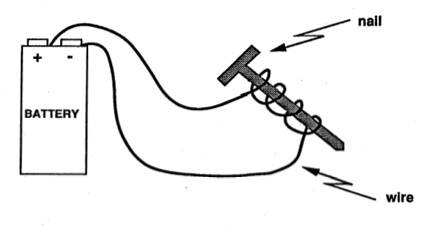
This is a picture of a simple electromagnet. How can the electromagnet be made stronger?
a)
Add more coils of wire to the nail.
b)
Use a smaller battery.
c)
Reverse the poles of the magnet.
d)
Remove all the coils and the nail.
31.
What kind of magnet can be turned on and off?
a)
refridgerator magnet
b)
electromagnet
c)
magnetite
d)
iron
32.
This is a picture of a simple electromagnet. How can the electromagnet be made stronger?
a)
Add more coils of wire to the nail.
b)
Use a smaller battery.
c)
Reverse the poles of the magnet.
d)
Remove all the coils and the nail.
33.
What kind of magnet can be turned on and off?
a)
refridgerator magnet
b)
electromagnet
c)
magnetite
d)
iron
34.
A compass needle responds to a magnetic field, because the compass needle is a
a)
A. generator.
b)
B. motor.   
c)
C. magnet.
d)
D. transformer.
35.

The area around a magnet is called the .....

a)

attraction zone

b)

work area

c)

magnetic field

d)

hot zone

36.
What is true about electricity and magnetic fields?
a)
Electricity is needed to create any magnet.
b)
Electricity always creates a magnetic field.
c)
Electricity is stronger than a magnetic field.
d)
Electricity prevents magnetic fields from occurring.
37.
How do you make an electromagnet stronger?
a)
Add a motor and/or lightbulbs
b)
Add more light bulbs and/or wire coils
c)
add more wire coils and/or a switch
d)
add more wire coils and/or batteries
38.

What happens when an electric current flows through a wire?

a)

The wire begins to spin.

b)

Nothing happens.

c)

A field of gravity is created around the wire.

d)

A magnetic field is created around the wire.

39.

Increasing the number of coils in an electromagnet will _________ the power of the magnet.

a)

decrease

b)

increase

c)

not affect

40.

What type of core is best for electromagnets?

a)

Steel

b)

Iron

c)

Plastic

d)

Copper

41.

As the strength of a magnetic field increases, the ability to attract metal objects ____________.

a)

increases

b)

decreases

c)

stays the same

42.

What conclusion can you draw from this graph?

a)

As current increases, magnetic strength decreases.

b)

As current increases, magnetic strength increases.

c)

As current decreases, magnetic strength increases.

d)

There is no relationship between current and magnetic strength.

43.

What is/are the difference(s) between a magnet and an electromagnet? (two correct choices)

a)

An electromagnet can be turned on/off.

b)

A magnet can be turned off.

c)

An electromagnet is stronger.

44.

A _______________ is a current-carrying coil of wire with many loops.

a)

magnet

b)

electromagnet

c)

solenoid

d)

compass

45.

How can a magnet be used to produce an electric current?

a)

Hold a magnet next to a piece of wire.

b)

Wrap wire around a magnet.

c)

Spin the magnet around inside a coil of wire.

46.

Which of the following is not a good conductor?

a)

Copper

b)

Silver

c)

Aluminium

d)

Plastic

47.

What must the electrons do in an object to give it a magnetic field?

a)

Flow in the same direction

b)

Flow in the opposite direction

c)

Collide into one another

d)

Equal the number of protons and neutrons

48.

What is an electromagnet?

a)

a magnet that creates an electric current

b)

a magnet created by an electric current

c)

a magnet that has an electric charge

d)

an electric charge that is magnetic

49.
Which components do you need to build an electromagnet?
a)
a wire, a conductor, a battery and some paper clips.
b)
a wire, a compass, a battery and some paper clips.
c)
wool, a conductor, a battery and some paper clips.
50.
In order for an electromagnet to be formed, an __________ current must pass through a coil of __________ wrapped around an ________ core.
a)
wire, iron, electric
b)
electric, wire, iron
c)
iron, electric, wire
51.
While electric current is flowing through a wire, what surrounds the wire?
a)
a magnetic field
b)
a glowing light
c)
neutrons
d)
protons
52.

What happens to the strength of a magnetic field as you move away from the magnet?

a)

The strength of the magnetic field increases.

b)

The strength of the magnetic field doesn't change.

c)

The strength of the magnetic field is doubled.

d)

The strength of the magnetic field decreases.

53.

Particles with opposite charges ____________ and particles with same (or like) charges ____________.

a)

attract, repel

b)

repel, repel

c)

attract, attract

d)

repel, attract

54.
How do you make an electromagnet stronger?
a)
Add a motor and/or lightbulbs
b)
Add more light bulbs and/or wire coils
c)
add more wire coils and/or a switch
d)
add more wire coils and/or batteries
55.
This is a picture of a simple electromagnet. How can the electromagnet be made stronger?
a)
Add more coils of wire to the nail.
b)
Use a smaller battery.
c)
Reverse the poles of the magnet.
d)
Remove all the coils and the nail.
56.

Which of the following is not a good conductor?

a)

Copper

b)

Silver

c)

Aluminum

d)

Plastic

57.

What happens when an electric current flows through a wire?

a)

The wire begins to spin.

b)

Nothing happens.

c)

A field of gravity is created around the wire.

d)

A magnetic field is created around the wire.

58.

What does this image show?

a)

Parallel circuit

b)

Series circuit

c)

Magnet

d)

Electromagnet

59.

The area of magnetic force around a magnet is known as its ____________.

a)

magnetism

b)

magnetic current

c)

magnetic field

d)

electric current

60.

Increasing the number of coils in an electromagnet will _________ the power of the magnet.

a)

decrease

b)

increase

c)

not affect

61.

What type of core is best for electromagnets?

a)

Steel

b)

Iron

c)

Plastic

d)

Copper

62.

As the strength of a magnetic field increases, the ability to attract metal objects ____________.

a)

increases

b)

decreases

c)

stays the same

63.

What conclusion can you draw from this graph?

a)

As current increases, magnetic strength decreases.

b)

As current increases, magnetic strength increases.

c)

As current decreases, magnetic strength increases.

d)

There is no relationship between current and magnetic strength.

64.
The center of a bar magnet is the strongest
a)
True
b)
False
65.
The lines on this image are called...
a)
magnetic field lines
b)
iron fillings
c)
graphite lines
d)
none of these
66.
Magnetic poles and electric charges are similar in that...
a)
like poles repel and opposites attract
b)
magnetic force is equal to electric force
67.
If the end of an unknown magnet sticks to a magnet pole labeled "North" the unknown end must be...
a)
North
b)
South
c)
East 
d)
West
68.
Electricity can be used to create a magnet
a)
True
b)
False
69.
You can make an electromagnet stronger by...
a)
increasing the current through the wire
b)
make the iron core bigger
c)
increase the number of loops around the core
d)
All of these
70.
Magnets have a north and a south ___________
a)
shape
b)
color
c)
pole
d)
region
71.
Which object would a magnet attract?
a)
a glass bottle
b)
a piece of paper
c)
a metal paper clip
compass
d)
a rubber eraser
magnetic field
72.
True or False: All metals are attracted to magnet.
a)
True
b)
False
73.
A device that uses a free-moving magnetic needle to show direction is a:
a)
Ruler
b)
magnet
c)
compass
d)
magnetic field
74.

The Earth produces its own ________ field.

a)

spectrum

b)

electric

c)

magnetic

d)

progressive

75.

Probably the most useful thing about electromagnets is that they can be turned ________ and ________.

a)

on, off

b)

positive, negative

c)

north, south

d)

on, negative

76.

Magnetism is generated by moving __________.

El magnetismo se genera al mover _____________.

a)

protons.

b)

electrons.

c)

neutrons.

d)

elements.

77.
If you cut a magnet in half, what happens to the poles?
a)
One half gets the North Pole, the other half gets the South Pole
b)
Both halves get only a North Pole
c)
Both halves get only a South Pole
d)
Both halves get a North pole and a South Pole
78.
What is responsible for the Magnetic Field around Earth?
a)
The Earth's crust
b)
The Earth's molton iron core
c)
The Earth's mantel
d)
The Sun
79.
Electric motors are devices that convert _____ energy into  _____ energy.
a)
electrical; mechanical
b)
mechanical; electrical
c)
chemical; potential
d)
mechanical; kinetic
80.

How can a wire become magnetic?

a)

point it north

b)

add a resistor

c)

heat it up

d)

run a current through it

81.

What device takes in mechanical energy and produces electricity?

a)

motor

b)

generator

c)

electromagnet

d)

battery

82.

A magnet will pick up an object that is made of...

a)

plastic

b)

iron or steel

c)

glass

d)

copper

83.

The strongest parts of the magnet are ...

a)

fronts

b)

backs

c)

poles

d)

middle

84.

What would happen is a north pole of a magnet came close to a north pole of another magnet?

a)

they would be attracted to each other

b)

they would be repelled from each other

85.

The area around a magnet is called the .....

a)

attraction zone

b)

work area

c)

magnetic field

d)

hot zone

86.
A north pole and a south pole will attract.
a)
True
b)
False
87.
True or False: All metals stick to magnets.
a)
True
b)
False
88.

Why does the compass needle move at different locations?

a)

Because the needle is attracted to the magnetic field produced by the magnet

b)

Because north is up

c)

Because it is being attracted to the Magnetic North Pole

d)

Because north is down

89.
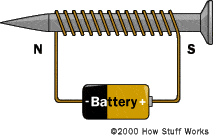
The picture is an example of an:
a)
Electric circuit
b)
Electromagnet
c)
Electric nail
d)
Electric power cell
90.
Electric current flowing through a wire produces
a)
static electricity
b)
an open circuit
c)
a permanent magnet
d)
a magnetic field
91.
A device that converts electrical energy into mechanical energy
a)
A. electromagnet
b)
B. electromagnetic induction
c)
C. electric motor
d)
D. electromagnetism
92.

Particles with opposite charges ____________ and particles with same (or like) charges ____________.

a)

attract, repel

b)

repel, repel

c)

attract, attract

d)

repel, attract

93.

What would happen with the magnets in the picture above?

a)

They would repel

b)

Nothing

c)

They would attract

d)

They would repel and then attract

94.

Protons have a ____________ charge.

a)

negative

b)

neutral

c)

positive

95.

Electrons have a ____________ charge.

a)

negative

b)

neutral

c)

positive

96.

The south ends of two magnets will _________ each other.

a)

repel

b)

attract

97.

A _____________ transforms mechanical energy into electrical energy.

a)

generator

b)

electromagnet

c)

circuit

d)

magnetic field

98.

Every magnet has both a _________ pole and a __________ pole.

a)

North, South

b)

East, West

c)

Positive, Negative

d)

Positive, South

99.
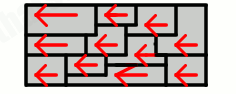
You know this substance is magnetized because
a)
all the domains have right angles
b)
the arrows are drawn in red
c)
the domains are aligned
d)
the domains are random
100.
This substance is
a)
magnetizecd
b)
unmagnetized
c)
positively charged
d)
negatively charged
101.
The closer the charges, the ___________ the force between them
a)
closer
b)
further
c)
stronger
d)
weaker
102.
What is the difference between a conductor and an insulator?
a)
An insulator allows electricity to flow through it easily and a conductor does not
b)
A conductor allows electricity to flow through it easily and an insulator does not.
c)
An insulator is magnetic and a conductor is not
d)
A conductor is magnetic and an insulator is not
103.
Generators are devices that convert _____ energy into _____ energy.
a)
chemical; mechanical
b)
mechanical; electrical
c)
electrical; mechanical
d)
potential; kinetic
104.
Any material that attracts iron and materials that contain iron
a)
maglite
b)
Magnet
c)
magnetism
d)
electricity
105.
The attraction or repulsion of magnetic materials
a)
maglite
b)
magnet
c)
mgnetism
d)
electricity
106.
The ends of a magnet are called
a)
magnetic poles
b)
north
c)
south
d)
magnetic opposites
107.
Two south magnetic poles brought near each other
a)
repel each other
b)
attract each other
c)
Cancel each other
d)
magnetize each other
108.
A north and a south pole will ______ when put together
a)
attract
b)
repel
c)
talk
d)
do nothing
109.
The area of magnetic force around a magnet is known as its 
a)
magnet
b)
magnetic area
c)
magnetism
d)
magnetic field
110.
The Earth's magnetic pole changes location
a)
True
b)
False
111.
All electric currents produces a magnetic field
a)
True
b)
False
112.
The relationship between electricity and magnetism is called
a)
scary
b)
magnet role reversal
c)
electromagnetism
d)
magneteel
113.
A coil of wire with a current is called 
a)
spring
b)
solenoids
c)
magnet
d)
current
114.
A solenoid with a ferromagnetic core is called a
a)
battery
b)
solenoid
c)
magnet
d)
electromagnet
115.
You can increase the strength of an electromagnet by
a)
change position of compass
b)
adjusting decline
c)
using a stronger ferronmagnetic material
d)
reverse pole
116.
You can increase the strength of an electromagnet by
a)
Adding elctromagnet
b)
Adding more nails
c)
not using a battery
d)
Using direct current
117.
Both solenoids and electromagnets produce magnetic fields using 
a)
Electric current and coiled wire
b)
Electric current and fields
c)
battery and coiled wire
d)
battery and a camera
118.
The energy associated with currents ia called
a)
mechanical
b)
magnetism
c)
geothermal
d)
electrical
119.
_______ magnets have a North pole and a South pole.
a)
No
b)
Some
c)
All
d)
Broken
120.
The relationship between electricity and magnetism is called
a)
electrical energy.
b)
induced current.
c)
electromagnetism.
d)
ferromagnetism.
121.
This is a picture of a simple electromagnet. How can the electromagnet be made stronger?
a)
Add more coils of wire to the nail.
b)
Use a smaller battery.
c)
Reverse the poles of the magnet.
d)
Remove all the coils and the nail.
122.
Surrounding every magnet is a(n) __________  __________.
a)
magnetic field
b)
electrical current
c)
smaller magnet
d)
funny saying
123.
What kind of magnet can be turned on and off?
a)
a refrigerator magnet
b)
an electromagnet
c)
magnetite
d)
iron
124.
When two magnetic North poles are brought close to each other, they will
a)
attract
b)
repel
c)
create sparks
d)
cancel each other out
125.
When two magnetic South poles are brought close to each other, they will
a)
attract
b)
repel
c)
create sparks
d)
cancel each other out
126.
When a magnetic South pole is brought close to a magnetic North pole, the magnets will
a)
attract
b)
repel
c)
create sparks
d)
cancel each other out
127.
When a magnet is able to move freely, its North pole will
a)
spin wildly
b)
point to the Earth's South pole
c)
point to the Earth's geographic North pole
d)
point to the Earth's magnetic North pole
128.
When magnetic field lines are drawn, how do they look?
a)
straight lines
b)
criss-crossed lines like X's
c)
curved lines from N to S pole and outwards
d)
lines extending outward in all directions like drawing the Sun
129.
Which will make an electromagnet WEAKER?
a)
more coils of wire around nail
b)
an extra battery attached
c)
thicker wire
d)
remove one of the nails from the coils
130.
A magnet is attracted to a soup can because the can has
a)
a South pole.
b)
a North pole.
c)
a magnetic field.
d)
iron in it.
131.

What happens to the strength of a magnetic field as you move away from the magnet?

a)

The strength of the magnetic field increases.

b)

The strength of the magnetic field doesn't change.

c)

The strength of the magnetic field is doubled.

d)

The strength of the magnetic field decreases.

132.

Which of the following is not a good conductor?

a)

Copper

b)

Silver

c)

Aluminum

d)

Plastic

133.

What happens when an electric current flows through a wire?

a)

The wire begins to spin.

b)

Nothing happens.

c)

A field of gravity is created around the wire.

d)

A magnetic field is created around the wire.

134.

The area of magnetic force around a magnet is known as its ____________.

a)

magnetism

b)

magnetic current

c)

magnetic field

d)

electric current

135.

Increasing the number of coils in an electromagnet will _________ the power of the magnet.

a)

decrease

b)

increase

c)

not affect

136.

What type of core is best for electromagnets?

a)

Steel

b)

Iron

c)

Plastic

d)

Copper

137.

As the strength of a magnetic field increases, the ability to attract metal objects ____________.

a)

increases

b)

decreases

c)

stays the same

138.

What conclusion can you draw from this graph?

a)

As current increases, magnetic strength decreases.

b)

As current increases, magnetic strength increases.

c)

As current decreases, magnetic strength increases.

d)

There is no relationship between current and magnetic strength.

139.

What is an electrical circuit?

a)

a whole bunch of wires

b)

a broken path that electric charges can flow

c)

a circuit board

d)

a complete, unbroken path through which electric charges flow

140.

When a switch is open...

a)

the circuit is working and gives energy

b)

the circuit is broken and charges cannot flow

c)

the circuit is turning lights on

d)

I don't know...ask Ms. Cednick

141.

What is resistance

a)

repelling against something

b)

a STAR WARS reference

c)

the measure of how difficult current to flow

d)

how long the wire is

142.

Will the light bulbs light up in this image?

a)

Yes, both of them will

b)

Yes, but only the one on the right

c)

No, neither of them will

d)

Yes, but only the one on the left

143.

Will this circuit light the bulbs?

a)

Yes, both will light up

b)

Yes, but only the one on the right

c)

Yes, but only one on the left

d)

No, neither of the bulbs will light up

144.

What makes up an electric circuit?

a)

Bulb and battery

b)

Bulb, battery and switch

c)

Bulb, battery and wire

145.

Why is a battery important in an electrical circuit?

a)

As a source of energy.

b)

As a path for electricity to flow through.

c)

As a connector to connect all parts of a circuit.

146.
This is the symbol for a _____?
a)
an AC current source
b)
a DC current source
c)
a battery
d)
a single cell
147.
This is the symbol for a _____?
a)
Lamp
b)
Water wheel
c)
Loudspeaker
d)
Motor
148.
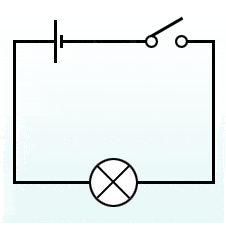
this circuit is .....?
a)
open
b)
parallel
c)
closed
d)
The cutest little circuit evah!
149.

What unit is used to measure current?

a)

Ohms

b)

Omega

c)

Volts

d)

Amps

150.

What is a circuit?

a)

A rate of charges flow through a cross-sectional area of a wire

b)

A closed path that a current can flow along

151.

What are electrons?

a)

Negatively charged subatomic particles

b)

Positively charged subatomic particles

c)

Neutrally-charged subatomic particles

d)

Negatively charged atoms

152.

What is the function of a power source in a circuit?

a)

It provides a steady source of static electricity.

b)

It provides a way for the circuit to be broken.

c)

It provides a path along which the electricity can flow.

d)

It provides a steady flow of electrons.

153.

How does rubber differ from most metals?

a)

Rubber is a good conductor. Most metals are good insulators.

b)

Rubber conducts electrons. Most metals conduct protons.

c)

Rubber is a good insulator. Most metals are good conductors.

d)

Rubber is a good power source. Most metals are good conductors.

154.

What device opens and closes an electric circuit?

a)

a switch

b)

a power source

c)

a load

d)

a current

155.

What happens if you disconnect a circuit from its positive terminal?

a)

The electrons shoot out from the negative terminal.

b)

The electrons stop flowing, and the current stops.

c)

The current reverses direction.

d)

Nothing happens.

156.

Erik built a circuit. His light bulb did not light up. Which of these could NOT be the cause?

a)

Open switch

b)

dead battery

c)

closed circuit

d)

loose connection

157.

Rebecca makes a circuit with a battery, wires, and a light bulb. What is the function of the light bulb?

a)

It opens or closes the circuit.

b)

It provides electrical energy to the battery.

c)

It changes electrical energy to light energy.

d)

It increases the strength of the electricity.

158.

Lisa turned off a switch. What does turning off a switch do?

a)

Open a circuit, stopping electricity from flowing.

b)

Close a circuit, allowing electricity to flow.

c)

Open a circuit, allowing electricity to flow.

d)

Close a circuit, stopping

electricity from flowing.

159.

There is a circuit that includes a battery, wires, a bulb, and a switch.


What is the function of the switch?

a)

It opens or closes the circuit.

b)

It provides electricity to the bulb.

c)

It provides

electricity to the battery.

d)

It changes electricity to light energy.

160.

The following instructions explain how to make a circuit that will power a buzzer:


1.Connect a wire from the positive pole of the

battery to the switch.

2. Connect a wire from the switch to the buzzer.

3. ?

4. Close the switch.


What is the missing step in #3?

a)

Connect a wire from the buzzer to the positive pole of the battery.

b)

Connect a wire from the switch to the negative pole of the battery.

c)

Connect a wire from the buzzer to the negative pole of the battery

d)

Connect a wire from the positive pole to the negative pole of the battery.

161.

You should not touch an electric appliance, such as a toaster, with a wet hand. Which of the following best

explains why?

a)

The toast is a resistor

b)

Water is a good insulator of electricity

c)

The metal in the toaster is an insulator

d)

Water and your body are good conductors of electricity

162.

Mei does not have any wire to connect a battery and the bell. Which of the following materials can she use to make a connector?

a)

Newspaper

b)

Plastic Wrap

c)

Wax paper

d)

Aluminum foil

163.

Debora has a young sister. Her parents put covers on the electrical outlets so that her sister will not accidentally get a shock. What material were the covers most

likely made of?

a)

aluminum

b)

copper

c)

plastic

d)

steel

164.

An electrician stripped (took off) the plastic off the end of this wire. Why did he do this?

a)

because the plastic is too difficult to connect to other parts of the circuit

b)

so the metal can be used to make a connection to create a circuit

c)

because electricity can’t flow through wires surrounded by plastic

d)

so the wires can be used to resist an electric current

165.

Anthony is classifying some objects as conductors or insulators. What is the difference between conductors and insulators?

a)

A conductor allows electrical current to flow through it easily, while an insulator does not.

b)

An insulator allows electrical current to move through it easily, while a

conductor does not.

c)

A conductor has a static charge, while an insulator does not.

d)

An insulator is a metal, while a conductor is not a metal.