wayground logo

Free Printable Worksheets

Font size

S
M
L
XL
Worksheets

Revision Grade 8 Final Term1

Total questions: 160

Worksheet time: 3hrs 40mins

Name
Class
Date
1.

What is the definition reflection?

a)

The bending of waves as they enter a new medium

b)

Bouncing back of waves from a surface that it can’t pass through

c)

The bending of waves as they pass through openings or around corners

d)

When two interfering waves have a displacement in the same direction, two crests and two troughs overlap. Increased amplitude.

2.

What is the definition of Refraction?

a)

The bending of waves as they enter a new medium

b)

When two interfering waves have a displacement in the opposite direction, crest and trough overlap. Zero amplitude.

c)

When two interfering waves have a displacement in the same direction, two crests and two troughs overlap. Increased amplitude.

3.

Rainbows are made by...

a)

water

b)

rain

c)

Water droplets act as prisms to separate white light into the ROYGBIV spectrum

4.
Which of the figures represents reflection?
a)
A
b)
B
c)
C
d)
D
5.
Which of the following represents refraction?
a)
A
b)
B
c)
C
d)
D
6.
Refraction occurs when _____________
a)
the wave's speed changes by entering a new medium
b)
a wave bounces off of a boundary
c)
waves parts meet each other
d)
waves bend around a barrier
7.
When a sound wave experiences reflection, we hear
a)
a louder sound
b)
an echo
c)
a quieter sound
d)
nothing
8.
When standing in the sun this behavior allows you to warm up as light and other waves hit your clothes. 
a)
Reflection
b)
Refraction
c)
Absorption
d)
Transmission
9.
Which object would be the best at reflecting light waves?
a)
windows
b)
mirrors
c)
notebooks
d)
tables
10.

As light travels through a lens it causes an object to appear larger, this is due to which behavior?

a)

Transmission

b)

Reflection

c)

Absorption

d)

Refraction

11.

Which of the pictured is responsible for us being able to see objects?

a)

Transmission

b)

Reflection

c)

Refraction

d)

Scattering

e)

Absorption

12.
This is an example of a __________ mirror.
a)
Concave
b)
Convex
c)
Plane
d)
Magnifying
13.
The point where the rays meet is known as....
a)
Fire
b)
the focal point
c)
refraction
d)
Plane of the lens
14.
This is an example of a _____________ mirror
a)
Concave
b)
Convex
c)
Plane
d)
Magnifying
15.
Convex mirrors cause light to spread out.
a)
True
b)
False
16.
A mirror with a flat surface is a plane mirror.
a)
true
b)
false
17.
Which of the mirrors is used as rear view mirror in vehicles?
a)
Concave
b)
Convex
c)
Plane
18.
Which window is opaque?
a)
Window 1
b)
Window 2
c)
Window 3
d)
None
19.
........... – the angle between the normal and the reflected ray.
a)
Angle of incidence
b)
Angle of reflection
c)
Angle of coincidence
d)
Angle of direction
20.
Law of reflection state that - The angle of incidence is .................. to the angle of reflection.
a)
equal
b)
double
c)
half
21.
What is B?
a)
Angle of incidence
b)
Angle of reflection
c)
Incident ray
d)
Reflected ray
22.
What is C?
a)
Angle of incidence
b)
Angle of reflection
c)
Incident ray
d)
Reflected ray
23.
A converging lens is also known as a ____ lens.
a)
convex
b)
concave
c)
double
d)
refracted
24.
_____ is a lens that is thicker in the middle and makes an object appear bigger.
a)
prism
b)
convex lens
c)
concave lens
d)
mirror
25.

When light continues to pass through an object without changing its path

a)

reflect

b)

transmit

c)

absorb

d)

refract

26.

An object that allows SOME light to pass through, but not all of it. Objects appear fuzzy/blurry on the other side

a)

translucent

b)

transparent

c)

opaque

d)

optical

27.

An object that allows NO light to pass through which creates a shadow behind the object

a)

opaque

b)

transparent

c)

translucent

d)

translated

28.

An object that allows ALL light to pass through clearly and easily

a)

translucent

b)

opaque

c)

transparent

d)

reflect

29.

The bending of waves around a barrier.

a)

refraction

b)

diffraction

c)

resonance

30.

Which diagram represents specular reflection?

a)

A

b)

B

31.

Which diagram represents diffuse reflection?

a)

A

b)

B

c)

C

d)

D

32.

what waves do we not see?

a)

all

b)

none

c)

all but visible

d)

uv rays only

33.
Which electromagnetic waves have the highest frequencies and the shortest wavelengths?
a)
microwaves
b)
visible light
c)
gamma rays
34.
Which electromagnetic waves are used in ovens and cell phone communications?
a)
Infrared rays
b)
ultraviolet rays
c)
microwaves
35.
Which type of waves are used in broadcasting?
a)
radio waves
b)
infrared rays
c)
x-rays
36.
Electromagnetic waves that help your body produce vitamin D are called?
a)
ultraviolet rays
b)
x-rays
c)
gamma rays
37.
For waves in any medium, as the wavelength decreases, what happens to the frequency?
a)
It also decrease
b)
It stays the same
c)
It increases
38.
Which of the following has wavelengths longer than microwaves?
a)
Infrared waves
b)
Radio waves
c)
Visible light
39.
Which electromagnetic waves help doctors detect broken bones inside your body?
a)
gamma rays
b)
x-rays
c)
ultraviolet rays
40.
Which of the following lists the electromagnetic waves in order of increasing wavelength?
a)
X-rays, visible light, radio waves
b)
gamma rays, microwaves, UV rays
c)
infrared rays, radio waves, x-rays
41.
Which electromagnetic waves are used in devices such as heat lamps & TV remote controls?
a)
ultraviolet rays
b)
microwaves
c)
infrared rays
42.
Which of the following lists the electromagnetic waves in order of decreasing frequency?
a)
X-rays, microwaves, infrared rays
b)
UV rays, visible light, x-rays
c)
infrared rays, microwaves, radio waves
43.
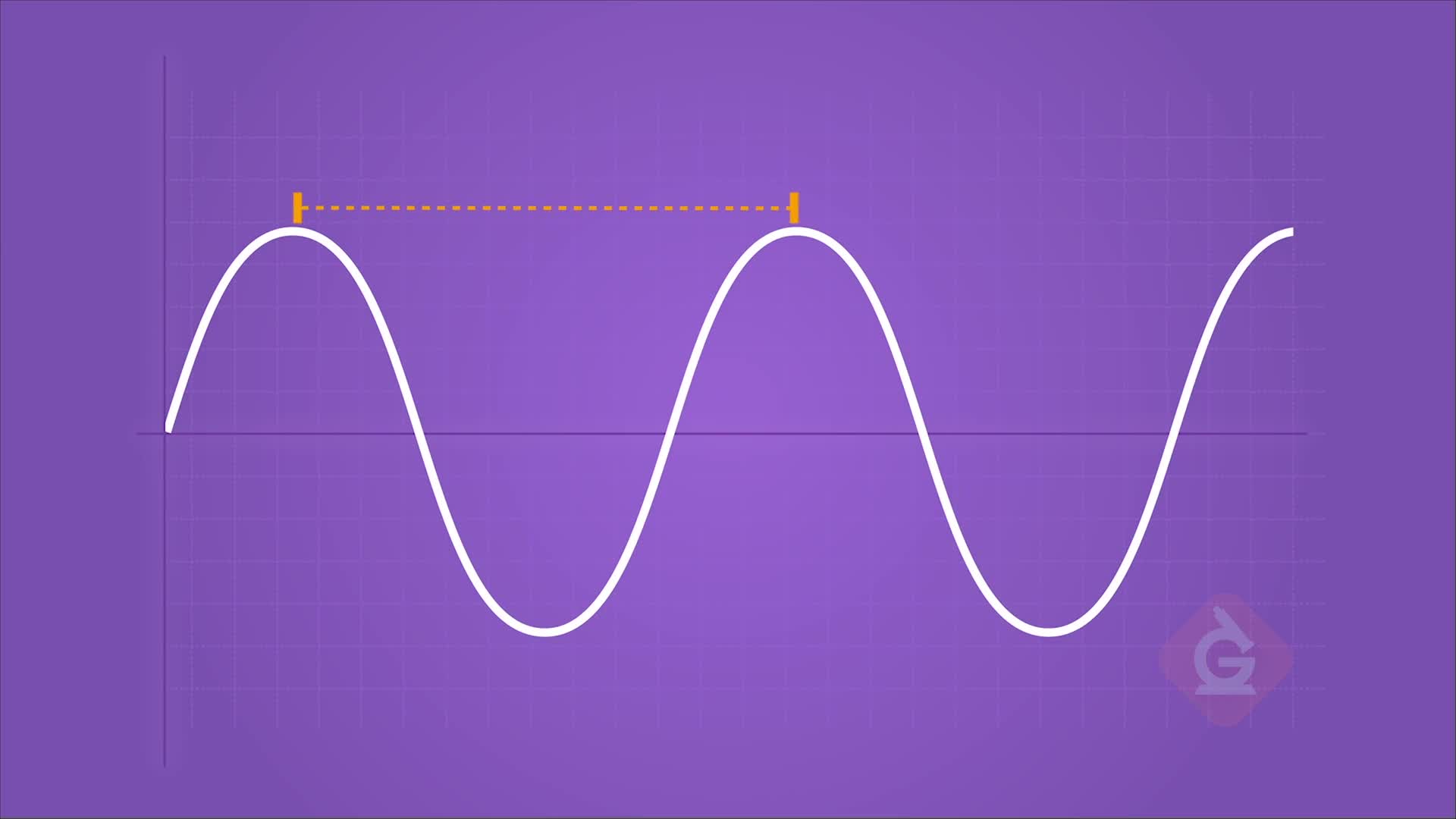
What is the distance from the peak of one wave to the next peak?
a)
Amplitude
b)
Frequency
c)
Period
d)
Wavelength
44.
These waves from the sun cause sunburn.
a)
Gamma
b)
Microwaves
c)
Radio
d)
Ultraviolet
45.
Select the correct order of waves on the EMS 
a)
Radio, Micro, Infra, Visible, Ultra, X-ray, Gamma
b)
Gamma, X-ray, Ultra, Vis, Infra, Micro, Radio
c)
Vis, Micro, Infra, Ultra, X-ray, Gamma, Radio
d)
Micro, Radio, Vis, Infra, Ultra, X-ray, Gamma
46.
Which has the LONGEST wavelength and, therefore, the lowest frequency/energy
a)
Gamma Rays
b)
Radio Waves
c)
Visible Light
d)
Infrared rays
47.
As the frequency of an electromagnetic wave increases, the amount of energy in that wave...
a)
increases.
b)
decreases.
c)
stays the same.
48.
If you want to change the pitch of a sound, you have to change the ___
a)
frequency
b)
amplitude
c)
speed
d)
volume
49.
This is the unit used to measure the volume of a sound. 
a)
Decibel
b)
Medium
c)
Vibration
d)
Oscilloscope
50.
This is what you get when sound waves are reflected, or bounce back, off of a hard surface.
a)
Amplitude
b)
Pitch
c)
Volume
d)
Echo
51.
The speed of a sound wave depends on
a)
the frequency
b)
the medium
c)
both air temperature and medium
d)
the air temperature
52.
What is a pitch?
a)
highness or lowness of a sound
b)
the intensity of a vibration
c)
the amplitude of the sound wave
d)
volume of sound
53.

Bats use ________ to locate mosquitoes in the air.

a)

solar

b)

ecology

c)

echolocation

d)

refraction

54.
The number of wavelengths that pass a point each second
a)
frequency
b)
wavelength
c)
pitch
d)
amplitude
55.
A part in a longitudinal wave where the particles are spread apart
a)
compression
b)
rarefaction
c)
crest
d)
trough
56.
The part of a longitudinal wave where the particles of the medium are close together.
a)
rarefaction
b)
compression
c)
crest
d)
trough
57.
A disturbance that travels through a medium as a longitudinal wave
a)
sound
b)
wavelength
c)
pitch
d)
frequency
58.
Material (matter) through which a wave travels
a)
medium
b)
Doppler Effect
c)
sound
d)
pitch
59.
When a sound is louder what measurement gets bigger?
a)
Frequency 
b)
Amplitude 
c)
Wavelength 
d)
Crest
60.
travels through solids fastest because the molecules are closer together
a)
speed of sound
b)
wavelength
c)
frequency
d)
amplitude
61.
How high or low a sound is; depends on the frequency (greater frequency= higher pitch)
a)
pitch
b)
frequency
c)
sound
d)
medium
62.
When the sound source moves, the frequency changes
ex. police car siren sounding lower pitch after the car passes
a)
pitch
b)
frequency
c)
Doppler Effect
d)
medium
63.
A wave in which the vibration is in the same direction as that in which the wave is traveling; sound waves
a)
longitudinal wave
b)
ocean wave
c)
transverse wave
d)
mechanical wave
64.
A wave that requires a medium through which to travel
a)
mechanical wave
b)
chemical wave
c)
electromagnetic wave
d)
pitch
65.

Sound waves travel as __________ waves.

a)

transverse

b)

electromagnetic

c)

longitudinal

d)

surface

66.

In which of these types of media will sound travel fastest?

a)

solid

b)

liquid

c)

gas

d)

vacuum

67.

The amount of energy a sound wave carries per second through a unit of area is its ______________.

a)

pitch

b)

intensity

c)

loudness

d)

frequency

68.

Loudness of waves is measured in ______________.

a)

hertz

b)

decibels

c)

watts

d)

meters/second

69.

The maximum safe level for loudness is __________.

a)

0 dB

b)

60 dB

c)

85 dB

d)

130 dB

70.

The highness or lowness of a sound is its ____________.

a)

pitch

b)

volume

c)

amplitude

d)

frequency

71.

What is transported by a wave?

a)

air

b)

energy

c)

matter

d)

particles

72.

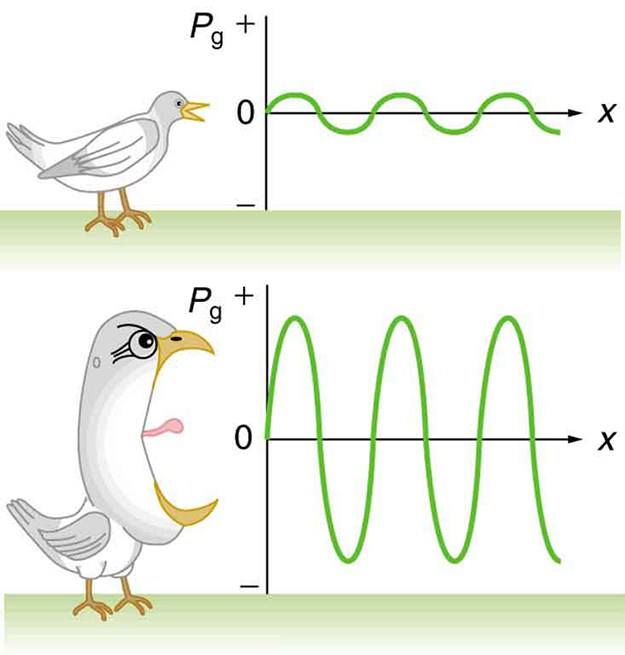
The diagram shows a cartoon of a sound wave produced while a student is speaking.


What happens to the sound wave when the student speaks louder?

a)

The amplitude increases

b)

the wavelength will double

c)

the speed will increase

d)

the amplitude will decrease

73.

Through which medium is it impossible to transmit sound waves?

a)

space

b)

rock

c)

air

d)

water

74.

Sound waves travel as ________ waves.

a)

Transverse

b)

Longitudinal

c)

Surface

75.

The ear is a ...

a)

digestive organ

b)

sense organ

c)

system

76.

Inner ear includes:

a)

pinna and ear canal

b)

ossicles

c)

eardrum

d)

cochlea - auditory nerve

77.

The pinna and ear canal belong to:

a)

outer ear

b)

middle ear

c)

inner ear

78.
Which part of the ear acts as the sound collector?
a)
outer ear
b)
ear canal
c)
middle ear
d)
inner ear
79.
What happens in the inner ear? 
a)
Sound waves are captured.
b)
Sound waves move deeper into the ear. 
c)
Sound waves are reflected.
d)

Sound waves are converted into electrical signals.

80.
When sound waves cause the eardrum to vibrate, these vibrations are immediately passed on to the_________.
a)
outer ear and ear canal
b)
inner ear
c)
tiny hairs
d)
three small bones in the middle ear
81.

Name part A

a)

Pinna

b)

Auditory canal

c)

Ear

d)

Eardrum

82.

Place the following events in sequence: A) Your eardrum begins vibrating; B) Electrical impulses travel along nerve fibers; C) The hammer, anvil, and stirrup begin moving

a)

B, C, A

b)

A, B, C

c)

B, A, C

d)

A, C, B

83.

If your inner ear lacked nerve fibers, what might happen?

a)

Sound would be unable to travel to your brain.

b)

Your eardrum would be unable to vibrate.

c)

Your hammer could not tap against your anvil.

d)

Sound waves could not enter your ear.

84.

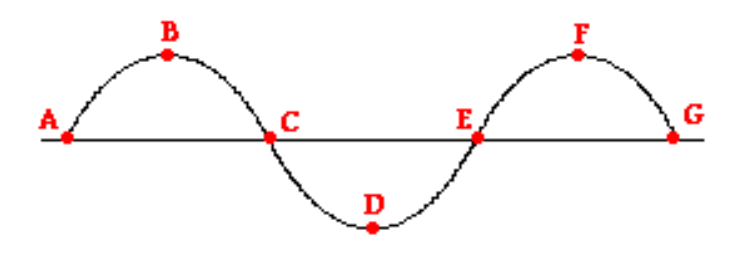
Which letter(s) represent the wavelength?

a)

A to B

b)

B to D

c)

B to F

d)

C to E

85.
High frequency waves have _________ wavelength.
a)
varying
b)
high
c)
the same
d)
low
86.

Sound is a form of __________________ energy.

a)

Radiant

b)

Electrical

c)

Mechanical

d)

Thermal

87.

B represents ______________________ of the wave.

a)

compression

b)

rarefaction

c)

amplitude

d)

wavelength

88.

What application of sound is pictured?

a)

Sonar

b)

Echolocation

c)

Radar

d)

Ultrasound

89.

Ultrasound...

a)

is used to detect objects underwater

b)

uses radio waves

c)

is sonar

d)

is used to create images of the inside of the body

90.

__________ uses sound waves to detect objects underwater such as sunken ships, icebergs, or even the ocean floor.

a)

Sonar

b)

Radar

c)

Echolocation

d)

Ultrasound

91.

What application of sound is seen in this picture?

a)

sonar

b)

ultrasound

c)

frequency

d)

pitch

92.

Due to the Doppler effect, a person standing in behind the car would hear a low pitched sound because..

a)

the frequency is high behind the car

b)

the frequency is low behind the car

c)

they would hear the same sound as someone in front of the car

d)

none of these answers are correct

93.

What type of energy does a sound wave have?

a)

Mechanical

b)

Radiant

c)

Electrical

d)

Sound

94.

Sound is produced by -----

a)

Heat energy

b)

Low temperatures

c)

Vibrations

d)

Friction

95.

True or False: Sound waves are faster than light.

a)

False

b)

True

96.

Spread out areas or areas of decreased pressure on a sound wave are known as a ---

a)

Rarefaction

b)

Amplitude

c)

Compression

d)

Hertz

97.

The number of wavelengths that pass a fixed point each second is known as ----

a)

Hertz

b)

Amplitude

c)

Frequency

98.

The unit for measuring frequency is the ---

a)

Joule

b)

Hertz

c)

Gram

d)

Newton

99.

The measure of the height of a wave and the amount of energy in a wave is ----

a)

Wavelength

b)

Hertz

c)

Frequency

d)

Amplitude

100.

Sound waves travel the fastest through ---

a)

Liquids

b)

Gases

c)

Solids

101.

The speed of sound depends on these two things:

a)

The type of medium and the temperature of the medium

b)

Speed of the medium and temperature of the medium

c)

Temperature of the medium and sound of the medium

d)

None of the above

102.

The Tacoma Narrows Bridge, musical instruments, and crystal stemware are examples of -----

a)

Frequency

b)

Resonance

c)

Interference

d)

Speed

103.
Sound waves are what kind of wave?
a)
Longitudinal
b)
Transverse
c)
Surface
d)
Electromagnetic
104.
This is what you get when sound waves are reflected, or bounce back, off of a hard surface.
a)
Amplitude
b)
Pitch
c)
Volume
d)
Echo
105.
True or False: Sound travels better through solids than through liquids
a)
True 
b)
False
106.

_____ is a method of locating things underwater using sound waves.

a)

trees

b)

solar

c)

sonar

d)

turpentine

107.
Which is a tool that is used in medicine to view internal organs and pregnancy.
a)
radar
b)
doppler
c)
ultrasound
d)
sonar
108.
Why is sound able to travel faster through a solid than a gas?
a)
Gas molecules are packed tightly.
b)
Sound does not travel faster through a solid than a gas.
c)
Solid molecules are packed tightly.
d)
Gas molecules move slowly.
109.

Examine the wave.


Which region on this wave would correspond to rarefaction?

a)

W

b)

X

c)

Y

d)

Z

110.

Which transverse wave has the highest frequency?

a)

1

b)

2

c)

3

d)

4

111.
What kind of wave is pictured below?
a)
compressional wave
b)
transverse wave
c)
sound wave
d)
mechanical wave
112.
Which vocabulary term is used to identify the distance between points C & G?
a)
Amplitude
b)
Crest
c)
Frequency
d)
Wavelength
113.
Bottom of the wave
a)
Crest
b)
Trough
c)
Frequency
d)
Wavelength
114.
Top of the wave
a)
Wavelength
b)
Amplitude
c)
Trough
d)
Crest
115.
The matter (solid, liquid, or gas) through which waves can travel
a)
Medium
b)
Object
c)
Transverse Wave
d)
Wavelength
116.

Which one shows the amplitude of a wave?

a)
b)
c)
117.

Which one shows the wavelength of a wave?

a)
b)
c)
118.

What is the frequency of the wave pictured?

a)

5 Hz

b)

6 Hz

c)

7 Hz

d)

8 Hz

119.

What is the frequency of the wave pictured?

a)

2 Hz

b)

3 Hz

c)

4 Hz

d)

5 Hz

120.

What is the amplitude of the wave pictured?

a)

3

b)

4

c)

5

d)

6

121.

What is the amplitude of the wave pictured?

a)

1

b)

2

c)

3

d)

4

122.

What is the amplitude of the wave pictured?

a)

1

b)

2

c)

3

d)

4

123.
What occurs when vibrations traveling through an object match the object's natural frequency?
a)
reflection
b)
diffraction
c)
resonance
d)
refraction
124.

The singer is able to break the glass because....

a)

He shook the glass

b)

His voice was the same amplitude as the glasses natural amplitude

c)

His voice was the same frequency as the glasses natural frequency

d)

He didn't break the glass, it was a trick

125.

The Tacoma Narrow's bridge collapsed because of...

a)

resonance, the wind matched the bridge's natural frequency

b)

the doppler effect, the wind matched the bridge's natural frequency

c)

resonance, the bridge builders used poor materials

d)

the doppler effect, the frequency increased

126.

When something resonates, it causes in an increase in....

a)

wavelength

b)

frequency

c)

compression

d)

amplitude

127.
A part in a longitudinal wave where the particles are spread apart
a)
compression
b)
rarefaction
c)
crest
d)
trough
128.
The part of a longitudinal wave where the particles of the medium are close together.
a)
rarefaction
b)
compression
c)
crest
d)
trough
129.

What does a sound wave need to travel?

a)

a medium

b)

natural frequency

c)

a vacuum

d)

a gas

130.
What state of matter allows sound to travel the slowest?
a)
Solid
b)
Liquid 
c)
Gas
d)
Doesn't Matter
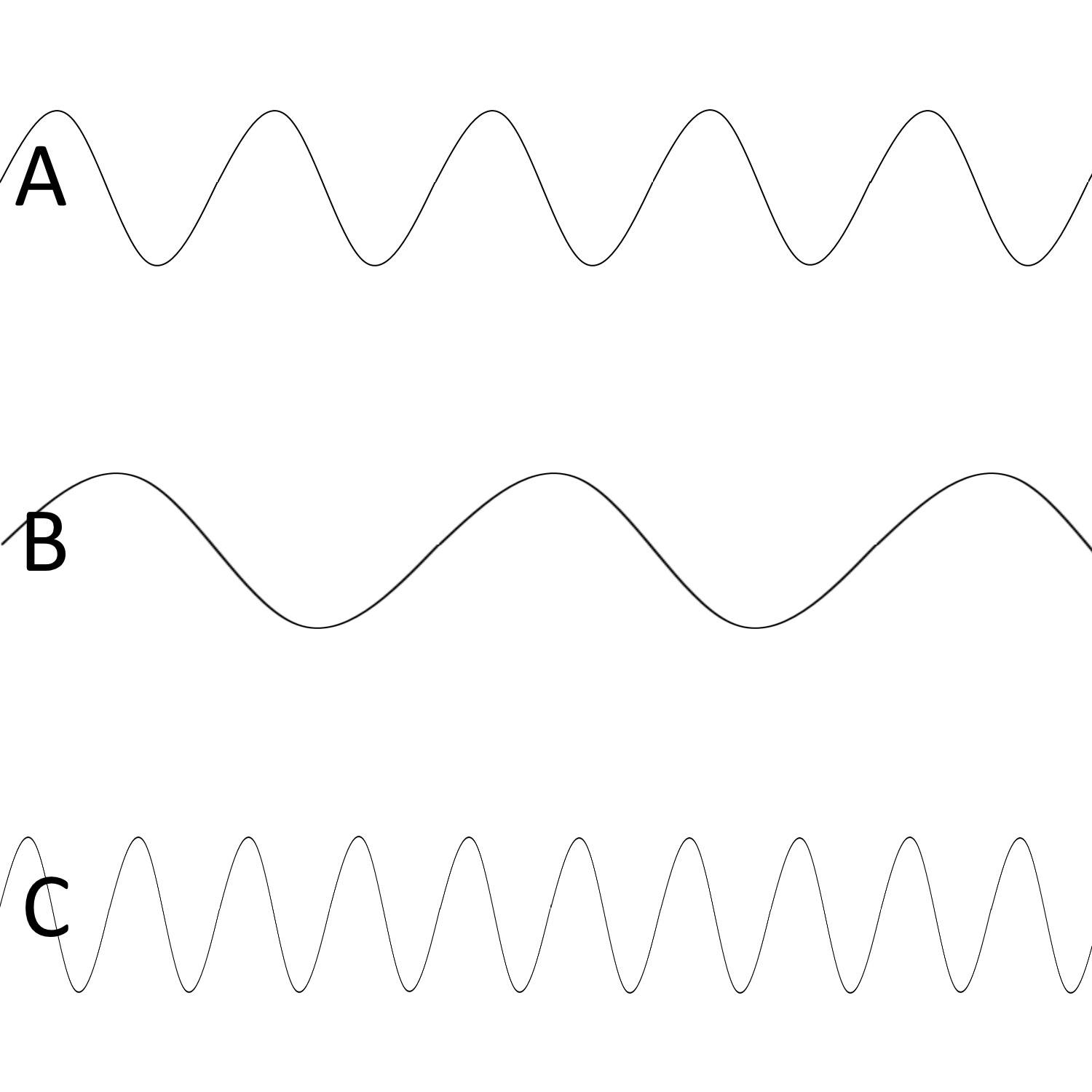
131.
Which wave has the largest wavelength?
a)
A
b)
B
c)
C
d)
None (same wavelength)
132.

Which wave has the highest frequency?

a)

A

b)

B

c)

C

d)

None (same frequency)

e)

none of these are correct

133.

Due to the Doppler effect, a person standing in front of the car would hear a high pitched sound because..

a)

The sound waves would be high frequency

b)

The sound waves would be low frequency

c)

The person would hear the same sound as someone behind the car

d)

None of these answers are correct

134.

Due to the Doppler effect, a person standing in behind the car would hear a low pitched sound because..

a)

the frequency is high behind the car

b)

the frequency is low behind the car

c)

they would hear the same sound as someone in front of the car

d)

none of these answers are correct

135.
When the sound source moves, the frequency changes
ex. police car siren sounding lower pitch after the car passes
a)
pitch
b)
frequency
c)
Doppler Effect
d)
medium
136.

For a mechanical/longitudinal wave, A represents...

a)

rarefaction

b)

compression

c)

wavelength

d)

amplitude

137.

For a mechanical/longitudinal wave, B represents...

a)

rarefaction

b)

compression

c)

wavelength

d)

amplitude

138.

What application of sound is seen in this picture?

a)

sonar

b)

ultrasound

c)

frequency

d)

pitch

139.

What application of sound is seen in this picture?

a)

sonar

b)

ultrasound

c)

frequency

d)

pitch

140.

What is a reflected sound.

a)

Vibration

b)

Echo

c)

Pitch

d)

Volume

141.

__________ uses sound waves to detect objects underwater such as sunken ships, icebergs, or even the ocean floor.

a)

Sonar

b)

Radar

c)

Echolocation

d)

Ultrasound

142.

Ultrasound...

a)

is used to detect objects underwater

b)

uses radio waves

c)

is sonar

d)

is used to create images of the inside of the body

143.

Some animals use this to navigate and hunt

a)

frequency

b)

ecolocation

c)

vibration

144.

Bats use _______________to fly at night.

a)

echolocation

b)

mammals

c)

roost

d)

nocturnal

145.

Echolocation helps bats, dolphins and whales locate prey and avoid obstacles

a)

True

b)

False

146.

What application of sound is pictured?

a)

Sonar

b)

Echolocation

c)

Radar

d)

Ultrasound

147.

A sound that bounces off a surface and travel back is called a(n) ________.

a)

loud sound

b)

echo

c)

repeat

d)

quiet sound

148.

A represents _________________ of the wave.

a)

compression

b)

rarefaction

c)

amplitude

d)

wavelength

149.

B represents ______________________ of the wave.

a)

compression

b)

rarefaction

c)

amplitude

d)

wavelength

150.

Sound is a form of __________________ energy.

a)

Radiant

b)

Electrical

c)

Mechanical

d)

Thermal

151.

Sound is a form of mechanical energy because..

a)

it travels via vibrations (movement) of particles

b)

it is not a form of mechanical energy

152.
Sound waves are ALWAYS what type of wave?
a)
Transverse
b)
Longitudinal 
c)
Depends 
d)
always different
153.
Which type of wave does sound travel in?
a)
Transverse
b)
Longitudinal
154.

In which of these types of media will sound travel fastest?

a)

Solid

b)

Liquid

c)

Gas

155.

A wave that requires a medium through which to travel

a)

mechanical/longitudinal wave

b)

chemical wave

c)

electromagnetic wave

d)

pitch

156.

Sound can travel through space (a vacuum)

a)

True: Sound does not require a medium or particles to travel

b)

False: Sound requires a medium or particles to travel

157.
High frequency waves have _________ wavelength.
a)
varying
b)
high
c)
the same
d)
low
158.

Which letter(s) represent the wavelength?

a)

A to B

b)

B to D

c)

B to F

d)

C to E

159.

A wave with large wavelength will have ______ frequency

a)

high

b)

low

160.
A cut piece of clear glass or plastic in the form of a triangle or other geometric shape.
a)
Person
b)
Prison
c)
Prism
d)
Preacher