
 Worksheets
Friday- 1/21/22 heat and layers of earth
Total questions: 167
Worksheet time: 6hrs 34mins
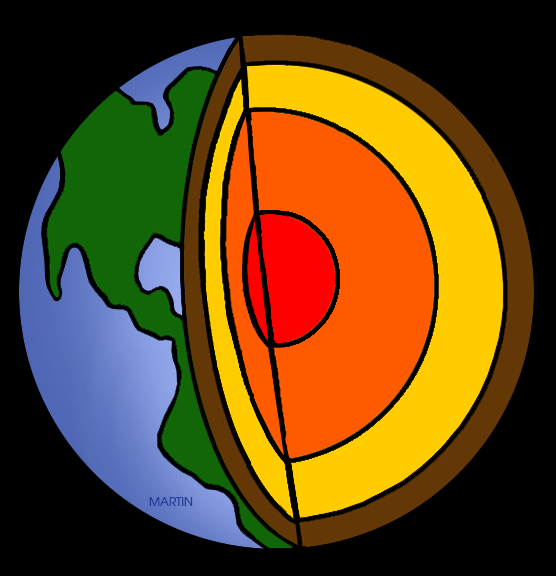
Which layer is shown in red?
crust
mantle
outer core
inner core
Which layer is made (mostly) of LIQUID iron and nickel?
crust
mantle
outer core
inner core
Sally is researching the differences that exist in each layer of the Earth. Which of the following best describes Earth's crust?
Solid, rocky
Liquid, metallic
Semisolid, convecting
Dense, extremely hot
Which of the following is true regarding the composition of the lithosphere?
The lithosphere is mostly liquid, with some medium-density materials, such as silicon.
The lithosphere is more plastic and flows slowly compared to the solid crust of Earth.
The lithosphere includes the core and the lower portion of the mantle.
The lithosphere includes the crust and the uppermost portion of the mantle, which is sold and rigid.

Which layer of the Earth is the THINNEST?
crust
mantle
outer core
inner core

Which layer of the Earth is the THICKEST?
crust
mantle
outer core
inner core
Which layer is the hottest?
crust
mantle
outer core
inner core
Which layer is the coolest?
crust
mantle
outer core
inner core
Tectonic plates are made up of the upper rigid mantle, the continental crust, and ________ crust.
continental
oceanic
plates
mantle
What two layers make up the core?
Lithosphere and
Asthenosphere
Inner and Outer core
Lithosphere and Outer Core
Inner core and Mantle
What part of the mantle is solid (partially molten) rock, that moves like putty?
Asthenosphere
Mantle
Lithosphere
Crust
What layer is made of mostly iron?
Mantle and crust
Mantle and core
Inner core and outer core
Crust only
Which of Earth's layers is best described as liquid metal?
crust
mantle
outer core
inner core
Which of the following correctly lists the layers from innermost to outermost?
inner core, outer core, lower mantle, upper mantle, crust
lower mantle, upper mantle, crust, inner core, outer core
lower mantle, inner core, upper mantle, outer core, crust
crust, inner core, lower mantle, upper mantle, outer core

As you travel from the crust to the core, how would temperature, pressure and density of the material change?
They would all increase
They would all decrease.
Nothing, the layers are made of the same material throughout
Temperature would decrease, but pressure and density would increase
Which layer is shown in red?
crust
mantle
outer core
inner core
Which layer is shown in orange?
crust
mantle
outer core
inner core

Which shows the order of the layers from COOLEST to HOTTEST?
crust, mantle, outer core, inner core
inner core, outer core, mantle, crust
crust, outer core, inner core, mantle
Trick question! All of the layers are the same temperature!
The asthenosphere is part of which layer
inner core
outer core
mantle
crust
What layer is solid and has plasticity?
Lithosphere
Mantle
Asthenosphere
crust
The layer of the Earth that can "flow" is the
asthenosphere
lithosphere
inner core
crust
Which layer of Earth contains the tectonic plates?
outer core
inner core
asthenosphere
lithosphere
Which layer of the Earth is made up of both crust and mantle
outer core
lithosphere
asthenosphere
oceanic crust
Which layer is broken into seperate sections called plates
inner core
outer core
lithosphere
asthenosphere
The lithosphere is _________ than the crust.
thicker
thinner
less dense
cooler
The Earth is divided into layers based on ________ and _______.
density, temperature
heat, pressure
what they are made of, how they act
their depth and what they are made of
The outer core is thicker than the mantle.
True
False
We live on the ________ layer of the Earth.
hottest
dentist
thinnest
softest
Scientist use evidence from ___________ to determine what is going on deep inside the Earth.
crust
seismic waves
iron
erosion
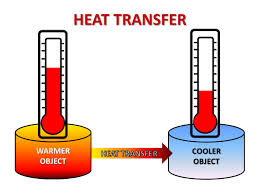
How does heat travel?
they don't travel
hot to cold
cold to hot
All of the above

Thermal energy always moves from hot to cold.
true
false
Which has more thermal energy?
teaspoon of boiling water
bowl of boiling water
bathtub of boiling water
You put a metal spoon and a wooden spoon into a pot of boiling water. One will become too hot to touch. Why?
Metals conduct heat better than wood.
Wood conducts heat better than metals.
Metals are insulators.
Wood is more dense than metal.

What type of thermal energy transfer is occurring at point B?
Convection
Conduction
Radiation
Kinetic
Particles in motion have ___________ energy.
thermal
kinetic
potential
sound

What type of thermal energy transfer is occurring when you are warmed by the sun?
Convection
Conduction
Radiation
Solar
How do you increase the kinetic energy of molecules?
Decrease the temp
change the energy input
increase the thermal energy
expand the molecules and increase the density

What type of thermal energy transfer is occurring at point C?
Convection
Conduction
Radiation
Heat

Uneven heating and cooling of the Earth's surface forces the air to circulate in an attempt to find equilibrium or balance. This type of heat transfer is an example of ______.
Convection
Conduction
Radiation
Solar energy

In this example, explain the movement of thermal energy in the glass.
Heat is moving from the lemonade to the glass
Heat is moving from the lemonade to the ice
Cold is moving from the ice to the lemonade
Cold is moving from the ice to the glass
Thermal energy always moves from areas of ______ heat to areas of ______ heat.
low -- high
high -- low
high -- high
low -- low

An iron transfers heat to clothing through ___________.
Conduction
Convection
Radiation
Electricity


What type of thermal energy transfer is occurring from the steam rising from the hot coffee?
Conduction
Convection
Radiation
Gas



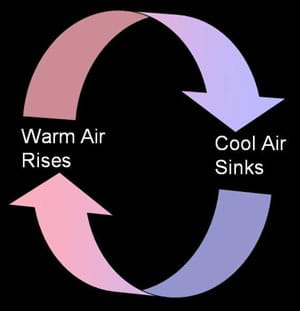
Warm air rises and the cool air sinks demonstrates this type of heat transfer.
conduction
convection
radiation
Insolation

What is heat?
a gaseous substance
thermal energy
electricity
light energy
Heat will always transfer from the ___________ object to the ________ object.
The hottest object to the coolest object.
The coolest object to the hottest object.
The solid object to the liquid object.
The liquid object to the solid object.

Thermal energy transfer through electromagnetic rays or waves is...
Conduction
Convection
Radiation
There will always be heat transfer between two objects that are touching if...
the temperatures are the same in each sample
there is a difference in temperature between samples
Kinetic energy is the energy of...
electricity
potential movement
motion
If we can't travel to the center of the Earth, how do we know so much about it?
Seismic waves, made by earthquakes and man-made explosions
special camera scopes sent through all the layers of the earth
very long thermometers that can reach to the inner core
super powerful x-rays
What layer is a shell of liquid iron nickel that creates the Earth's magnetic field?
Outer Core
Mantle
Crust
Inner Core

Identify the layer of the earth labeled # 6
crust
mantle
outer core
inner core
Which layer is shown in yellow?
crust
mantle
outer core
inner core

What layer of the Earth is represented by the letter A?
Crust
Mantle
Outer Core
Inner Core

What layer of the Earth is represented by the letter B?
Crust
Mantle
Outer Core
Inner Core

What layer of the Earth is represented by the letter C?
Crust
Mantle
Outer Core
Inner Core

What layer of the Earth is represented by the letter D?
Crust
Mantle
Outer Core
Inner Core
The layers of Earth are in the order they are in because:
It keeps us safe
It holds the Earth together
Its pretty
The different layers have different densities
Which best describes heat transfer by radiation?
A slice of bacon frying in a pan.
A pot on a stove boiling water.
Cooking a hotdog in a microwave.
A hot air balloon.
What is the original source of the most of the energy that people use?
By radiation from the sun.
By convection from the sun.
By radiation from the Earth's core.
Conduction from Earth's core.
Which of the following best describes CONVECTION?
When heat is transferred through waves.
When heat is transferred through objects that are touching.
The movement of gas or liquid in which warmer parts move up and the colder parts moves down.

Warm air rises and the cool air sinks demonstrates this type of heat transfer.
Conduction
Convection
Radiation
The ______ air rises and the cold air sinks in convection heat transfer.
warm
cold
same
very cold
Clark accidentally grabbed the handle of the hot pt. This shows ______________.
radiation
conduction
convection
You and your friends gathered around a campfire to keep warm. How heat is being transferred?
conduction
convection
radiation

This is the transfer of thermal energy through "space".
conduction
radiation
convection
spaceship
A huge rock at the park really gets hot during the day because of ____________.
conduction.
convection.
radiation.
Which of the following is NOT a type of heat transfer?
Conduction
Convection
Radiation
Transformation
Radiation is heat transfer by
touch.
current.
waves.
Hot air balloons work using what type of heat transfer?
Convection
Conduction
Radiation
An attic feeling warmer than the basement is an example of what type of heat transfer?
Convection
Conduction
Radiation
What are the main 3 states of matter?
California, New York, Nevada
Ice, air, water
happy, sad, mad
Solid, liquid, gas
When molecules of a liquid or gas are heated up, they will
move slower and less
move faster and more
remain in the same state
become solid
Hot chocolate is stirred with a spoon and the spoon gets hot is an example of
Conduction
Convection
Radiation
Plasma
A metal hammer heats up sitting outside on a sunny day is an example of
Conduction
Convection
Radiation
Condensation
Three ways that heat is transferred in thermal energy are:
conduction, convection, and radiation
temperature, heat, density
Near the ceiling of a room the air is warmer. The warm air rises because of
conduction
convection
radiation

A chair is placed several feet from a fireplace. The fireplace has a glass screen. The side of the chair facing the fireplace gets warm because of
conduction
convection
radiation

Which of the following is the best example of conduction?
A light bulb warming a lampshade
An egg cooking in a frying pan
Water boiling in a pot
Gases circulating in the atmosphere

A pot is placed directly on a stove. The pot gets hot due to
conduction
convection
radiation

You get sunburned due to __________ from the sun.
conduction
convection
radiation

The heat from a lamp allows a lizard to remain warm. This is an example of which type of heat transfer?
radiation
conduction
convection
insulation
What happens when a cold drink sits in a hot room?
It remains cold
It gets warmer
It starts boiling
It starts to freeze

Ben is boiling water to make pasta. He leaves his metal stirring spoon in the boiling water for a few minutes. What will most likely happen to the temperature of the metal spoon?
The temperature of the metal spoon will
decrease because cold energy from the boiling
water will transfer to the spoon.
The temperature of the metal spoon will
increase because heat energy from the boiling
water will transfer to the spoon.
The temperature of the metal spoon will
decrease because heat energy from the spoon
will transfer to the water.
The temperature of the metal spoon will
increase because cold energy from the spoon
will transfer to the water.
Rose makes a cup of hot tea. She places the cup
of tea on the kitchen table and waits for it to cool
off. When she picks up the cup a few minutes
later, she notices the kitchen table is warm where
the cup used to be. Which best explains the flow
of energy between the cup and the table?
Cold transferred from the table to the cup, and
heat was exchanged between both.
Heat transferred from the cup to the table to
warm the table.
Heat transferred from the cup to the table, and
cold was exchanged between both.
Cold transferred from the table to the cup to cool
the tea.

The table shows the results of the experiment
Amy did where she placed three samples, with a
starting temperature of 75°F, outside in the direct
sun, and recorded the temperatures over six
minutes. What is the best conclusion Amy can draw from
her results?
The dark sand absorbs heat the fastest.
The water absorbs more heat than the sand
samples.
The light sand absorbs the most amount of heat.
The water absorbs heat the fastest.

Heat will continue to transfer until it reaches
maximum heat
minimum heat
thermal equilibrium
abosolute zero

The mantle in the Earth is heated by...
conduction
convection
radiation

The lithosphere combines which two layers?
Asthenosphere & Crust
Crust & upper part of mantel
Mantel & Asthenosphere

Which layer of Earth is the thickest layer?
the inner core
the crust
the mantle
the outer core
Earth's crust is the thickest layer.
True
False
Earth's crust is the hottest layer.
True
False

Earth's crust is the least dense layer.
True
False
The name of the innermost layer is
the crust
the mantle
the outer core
the inner core
The innermost layer is under the greatest amount of pressure.
True
False
The outer core is mainly composed of
solid iron and nickel
liquid iron and nickel
semi-solid magma
granite and basalt
Which of the following is true?
Earth's crust is made of liquid.
Earth's crust is the hottest layer.
Earth's crust is the thickest layer.
Earth's crust is the least dense layer.
The temperature DECREASES from the
crust to the inner core.
inner core to the crust.
Which layer can be described as either Oceanic or Continental?
crust
mantle
outer core
inner core
Which layer is responsible for creating Earth's magnetic field?
crust
mantle
outer core
inner core
Which layer causes the lithospheric plates to move?
asthenosphere
inner core
crust
basalt
Which layer is described as plastic-like and slowly flowing?
lithosphere
asthenosphere
crust
inner crust
Which layer can be compared to the shell of a hard-boiled egg?
crust
mantle
outer core
inner core
Which of the following statements are true?
As you go deeper into Earth, pressure increases.
As you go deeper into Earth, temperature increases.
As you go deeper into Earth, the particles are packed tighter together (increasing density).
All of the above.
Which two types of evidence have scientists used to learn about Earth's interior?
maps and satellites
minerals and elements
rock samples and seismic waves
drills and maps
Oceans, and other bodies of water, are found on which layer of Earth?
Outer Core
Mantle
Inner Core
Crust
Which of the following would be an accurate feature to include in a model of Earth?
A crust that is the thickest layer.
An inner core that contains oceans.
A thin mantle in the center of the model.
A liquid outer core below the mantle.
The layer of Earth that is found directly below the lithosphere is called the -
crust
asthenosphere
inner core
outer core
Which layer of Earth is broken up into giant moving plates?
Asthenosphere
Lithosphere
Inner Core
Outer Core
Earth’s crust would be best modeled by using a material that is -
liquid and hot
dense and smooth
soft and flexible
thin and solid

The materials available to make a model of Earth are shown. To make the most accurate model, which of the materials would best represent the asthenosphere?
Modeling clay
Ping pong ball
Ball bearing
Water
Which of earth's layers have the lowest density?
crust
inner core
mantle
outer core
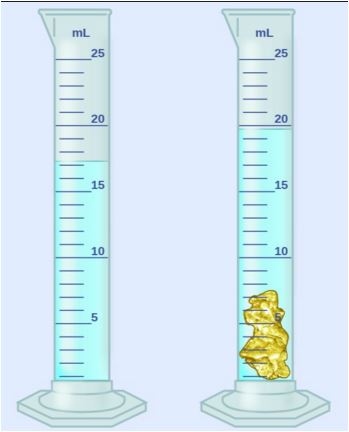

Calculate the density in the following question: A flower pot has a mass of 95 g and a volume of 92 mL.
1.03 g/mL
0.97 g/mL
1.01 g/mL
0.99 g/mL

