wayground logo

Free Printable Worksheets

Font size

S
M
L
XL
Worksheets

Fall EOC Quizziz Review

Total questions: 158

Worksheet time: 3hrs 0mins

Name
Class
Date
1.
Steve wanted to see if the type of fertilizer made sunflowers grow larger. What is the independent variable 
a)
Type of fertilizer
b)
Size of sunflower
c)
type of sun flower
2.
Stacy measured the speed of 5 birds that lived around her house. What is the dependent  variable?
a)
Type of Bird
b)
Speed of Bird
c)
weather outside
3.
In a controlled experiment, how many variables can be worked with at a time? 
a)
one
b)
none
c)
two or more
d)
how ever many makes sense.
4.

What is the BEST title for this graph?

a)

The Relationship between Time Spent Studying and Test Grades

b)

The effect of Time Spent Studying and Test Grades

c)

Time Spent Studying

d)

Test Grades

5.

What what type of relationship is displayed in this graph?

a)

inverse (indirect) releationship

b)

direct relationship

c)

no relationship

d)

not applicable

6.

What is the relationship shown in this graph?

a)

direct relationship

b)

inverse (indirect) relationship

c)

no relationship

d)

not applicable

7.
CLICK ON THE QUESTION TO SEE THE GRAPH AND CLICK AGAIN TO RESTORE IT!

What type of correlation does this graph have?
a)
Negative 
b)
no correlation
c)
positive 
8.
What is the speed of a car that travels 400 m in 20 minutes?
a)
20 mi/hr
b)
20 m/min
c)
800 m/min
d)
200 mi/hr
9.

A ladybug moves from 2 cm to 7 cm in 25 seconds. What is the speed of the ladybug?

a)

5 cm/sec

b)

0.2 cm/sec

c)

12 cm/sec

d)

3.57 cm/sec

10.
Soccer ball A goes 15 feet in 3 seconds, and ball B goes 12 feet in 2 seconds. Which ball moved the fastest?
a)
Soccer ball A
b)
Soccer ball B
c)
Their speeds are equal.
11.
How long did it take this object to travel 10 m?
a)
0 s
b)
10 s
c)
15 s
d)
20 s
12.
What does this graph represent?
a)
Constant Speed
b)
Acceleration
c)
Decceleration
d)
Not moving
13.

Paul swims at a speed of 5 km/h for 1.5 hours. Find the distance traveled in km.

a)

7.5km

b)

125km

c)

120km

d)

80km

14.

According to the graph what was the average speed?

a)

0 m/s

b)

1.2 m/s

c)

0.8 m/s

d)

12 m/s

15.
What is the equation to calculate speed?
a)
speed = distance/time
b)
speed = time/distance
c)
speed = time x distance 
d)
speed = speed/time 
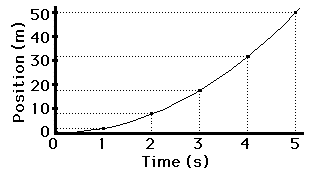
16.
The picture of the position vs. time graph shows an object that is...
a)
accelerating/speeding up
b)
moving at a constant speed 
c)
not moving 
d)
accelerating/slowing down. 
17.

A force is ____.

a)

a push or pull that can cause movement

b)

a magnet

c)

when someone does not work

18.

Gravity is ____.

a)

a force that attracts objects towards each other

b)

a force that moves objects away

c)

a push or pull

19.

What is the name of the units that we measure force in?

a)

Einsteins

b)

Newtons

c)

Kilograms

d)

Metres

20.
In which direction does gravity act?
a)
Downwards
b)
Upwards
c)
In all directions
d)
Towards the centre of the Earth
21.

State Newtons First Law

a)

the rate change of momentum

b)

the rate change of velocity

c)

an object will remain at rest or move along a straight line with constant speed, unless it is acted upon by a force

22.
What type of force is shown in the picture?
a)
The Cat force
b)
Star Wars Force
c)
Unbalanced force
d)
Balanced  force
23.
Forces that have a net force of zero ( the object is still).
a)
Balanced force
b)
Unbalanced force
24.

What is the magnitude and direction of the force in the free body diagram shown?

a)

35 N right

b)

17 N right

c)

11 N right

d)

5 N right

25.

What is the magnitude and direction of the force in the free body diagram shown?

a)

20 N, no change in motion

b)

20 N right

c)

20 N left

d)

0 N , no change in motion

26.

What is the magnitude and direction of the force in the free body diagram shown?

a)

5 N down

b)

0 N, no change in movement

c)

15 N up

d)

15 N down

27.
Acceleration is produced when a force acts on a mass. The greater the mass (of the object being accelerated) the greater the amount of force needed (to accelerate the object).
a)
Newton's 1st Law
b)
Newton's 2nd Law
c)
Newton's 3rd Law
d)
None of them
28.
This law is often called "the law of inertia."
a)
Newton's 1st Law
b)
Newton's 2nd Law
c)
Newton's 3rd Law
d)
None of them
29.
A soccer ball accelerates more than a bowling ball when thrown with the same force.
a)
Newton's 1st Law
b)
Newton's 2nd Law
c)
Newton's 3rd Law
d)
None of them
30.
A student leaves a pencil on a desk and the pencil stays in the same spot until another student picks it up.
a)
Newton's 1st Law
b)
Newton's 2nd Law
c)
Newton's 3rd Law
d)
None of them
31.
The swimmer moves her hand down and to the left and her body goes forward to the right.
a)
Newton's 1st Law
b)
Newton's 2nd Law
c)
Newton's 3rd Law
32.
For every action there is an equal and opposite reaction.
a)
Newton's 1st Law
b)
Newton's 2nd Law
c)
Newton's 3rd Law
d)
None of them
33.
If there are two forces going in the same direction how would you find the net force?
a)
Subtract
b)
Add
c)
Neither
d)
Multiply
34.
8 N to the left , and 4 N to the right. Find the net force. Is this balanced 
a)
12 N Right  No
b)
4 N Left  No
c)
12 N Right  Yes
d)
4 N Left  Yes
35.
Find the net force: 15 N to the right, and another 15 newtons to the right.
a)
0 N Right
b)
0 N Left
c)
30 N Left
d)
30 N Right
36.
With unbalanced forces, the object will move in the direction of the _______ force.
a)
larger 
b)
smaller 
c)
equal 
37.
What famous scientist was the SI units of Force named after?
a)
Isaac Newton
b)
Galileo Galilei
c)
Albert Einstein
d)
Charles Darwin
38.
Which one is balanced?
a)
top
b)
bottom
c)
both
39.
What is the net force?
a)
5000 N right
b)
4000 N right
c)
40 N left
d)
4000 N left
40.
Friction and gravity are both examples of a force.
a)
True
b)
False
41.
The center of a bar magnet is the strongest
a)
True
b)
False
42.
Electricity can be used to create a magnet
a)
True
b)
False
43.
What will happen when these magnets are brought close together?
a)
They will attract each other.
b)
They will repel each other.
c)
Both magnets will turn to the left
d)
Both magnets will turn to the right
44.
Magnets have a north and a south ___________
a)
shape
b)
color
c)
pole
d)
region
45.
Iron, Nickel and cobalt are all __________________ materials
a)
Shiny
b)
poles
c)
magnetic
d)
cold
46.
Where is the strongest attraction force of the magnet?
a)
at the poles
b)
in the middle
c)
above the magnet
d)
below the magnet
47.
A magnet will attract scissors if the scissors contain: 
a)
copper
b)
aluminum
c)
gold
d)
nickel
48.
True or False: All metals are attracted to magnet.
a)
True
b)
False
49.

The Earth produces its own ________ field.

a)

spectrum

b)

electric

c)

magnetic

d)

progressive

50.

At what distance will magnetism be the strongest?

a)

5mm

b)

6mm

c)

9mm

d)

20mm

51.

Which form of energy do windmills (molinos) use to generate electricity?

a)

Thermal energy

b)

Light energy

c)

Kinetic energy

d)

Gravitational potential energy

52.

What type of energy is being transformed when you use a hairdryer?

a)

From thermal energy to electrical energy

b)

From electrical energy to kinetic energy

c)

From electrical energy to thermal energy

d)

From kinetic energy to thermal energy

53.

Energy can't be created or destroyed. It can only be transfered

a)

True

b)

False

54.

Energy is found in many different forms, but it can be classified into two distinct categories: kinetic energy and ________________ energy.

a)

electrial

b)

potential

c)

radiant

d)

thermal

55.

_________________ energy is stored in the bonds of compounds.

a)

Electrical

b)

Heat

c)

Radiant

d)

Chemical

56.

Potential energy is energy of position and is also sometimes called ______________ energy.

a)

stored

b)

chemical

c)

radiant

d)

elastic

57.
What is energy from the sun?
a)
electrical energy
b)
solar energy
c)
mechanical energy
d)
potential energy
58.
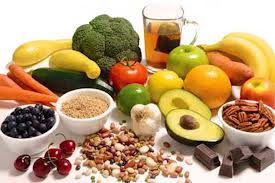
What kind of energy is represented in the picture?
a)
Thermal
b)
Chemical
c)
Sound
d)
Nuclear
59.
Energy of motion is which type of energy?
a)
Potential
b)
Kinetic
c)
Sound
d)
Gravitational
60.
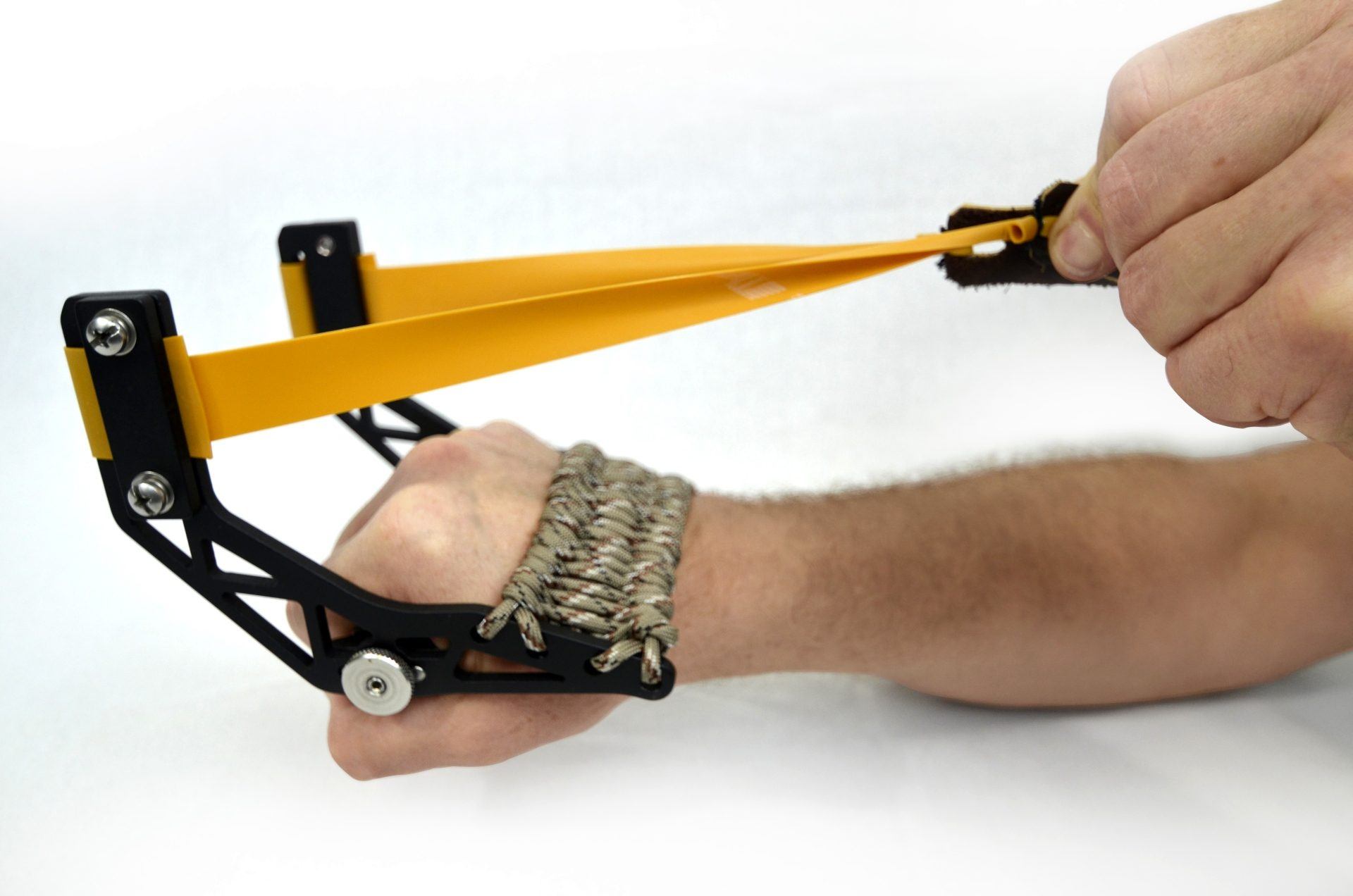
What type of energy is in this picture?
a)
Kinetic
b)
Potential
c)
Chemical
d)
Sound
61.
Energy that is stored in the nucleus of an atom is called _________ energy.
a)
Chemical
b)
Nuclear
c)
Gravitational
d)
Elastic
62.

A car at the top of the drop on a roller coaster has ________ energy.

a)

potential

b)

kinetic

c)

chemical

d)

sound

63.

energy cannot be created or destroyed, only transferred

a)

Law of conservation of matter

b)

Law of conservation of energy

c)

Law of energy transfer

d)

Law of the universe

64.

the standard international unit for energy

a)

newton

b)

joule

c)

kilogram

d)

m/s/s

65.
Changes in the moon's appearance are
a)
phases
b)
eclipses
c)
stages
d)
cycle
66.

What causes the moon's phases

a)

Where you are standing on Earth

b)

the amount of sunlight reflected onto the moon from the sun

c)

The tilt of Earth

d)

how fast the moon is moving

67.
Define Waxing
a)
Moon is increasing and light part appears to be growing
b)
Completely illuminated
c)
dark side is facing earth
d)
Moon is decreasing and light part appears to be shrinking
68.
How many phases does the moon go through?
a)
4
b)
8
c)
10
d)
16
69.
As the moon's shape appears to get smaller, we say that the moon is _.
a)
swelling
b)
waxing
c)
waning
d)
disappearing
70.
The cycle of the moon lasts about a _.
a)
day
b)
year
c)
week
d)
month
71.

The spinning of the earth on its axis that causes day and night is called

a)

orbit.

b)

axis.

c)

rotation.

d)

revolution.

72.

The path of an object in space around another object is a(n)

a)

orbit.

b)

axis.

c)

rotation.

d)

revolution.

73.

It takes about _____ for the earth to complete one rotation.

a)

28 days

b)

24 hours

c)

365 hours

d)

365 days

74.
If the last full moon was on April 4th, when can you expect to see the next full moon? 
a)
April 29th
b)
July 4th
c)
May 4th
d)
September 12th
75.
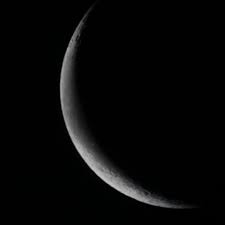
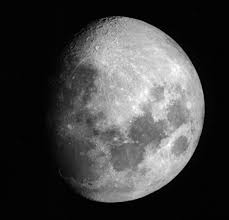
Name the moon phase
a)
waning crescent
b)
waxing crescent
c)
waning gibbous
d)
waxing gibbous
76.
Name the moon phase
a)
waning crescent
b)
waxing crescent
c)
waning gibbous
d)
waxing gibbous
77.
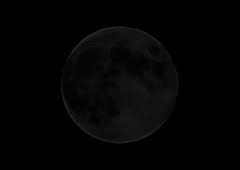
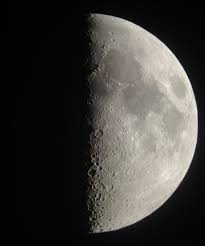
Name the moon phase
a)
First Quarter
b)
Last Quarter
c)
New Moon
d)
Full Moon
78.
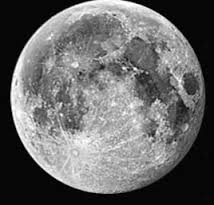
Name the moon phase
a)
First Quarter
b)
Last Quarter
c)
New Moon
d)
Full Moon
79.
Name the moon phase
a)
First Quarter
b)
Last Quarter
c)
New Moon
d)
Full Moon
80.
Name the phase of the moon for letter a
a)
First Quarter
b)
Last Quarter
c)
Waxing Gibbous
d)
Waning Gibbous
81.
Name the phase of the moon for letter a
a)
First Quarter
b)
Last Quarter
c)
Waxing Gibbous
d)
Waning Gibbous
82.
What is illuminating the Moon?
a)
Nuclear Fusion
b)
Sunlight
c)
Mirrors
d)
Flood Lights
83.
Name the moon phase
a)
waning crescent
b)
waxing crescent
c)
waning gibbous
d)
waxing gibbous
84.
Which moon phase is when you can't see the moon at all?
a)
Waning crescent
b)
Full moon
c)
Waxing gibbous
d)
New moon
85.
Which of the following words describe the phases of the moon?
a)
none, quarter, half, three quarters, full
b)
new, crescent, quarter, gibbous, full
c)
dark, light, half, quarter, blue
d)
first quarter, second quarter, third quarter, fourth quarter
86.
Name the moon phase that would come AFTER this moon.
a)
waning crescent
b)
waxing crescent
c)
waning gibbous
d)
waxing gibbous
87.

The name of our galaxy is _______________.

a)

Luna

b)

Triton

c)

Milky Way

d)

Snickers

88.
How long does it take to the Earth to do the ROTATION MOVEMENT?
a)
365 days
b)
24 hours
c)
24 hours + 6 hours
d)
28 days
89.
What is the Moon?
a)
It is a planet
b)
It is a satellite
c)
It is a star
d)
It is a comet
90.
What is the Sun?
a)
It is a satellite
b)
It is a Star
c)
It is a comet
d)
It is a planet
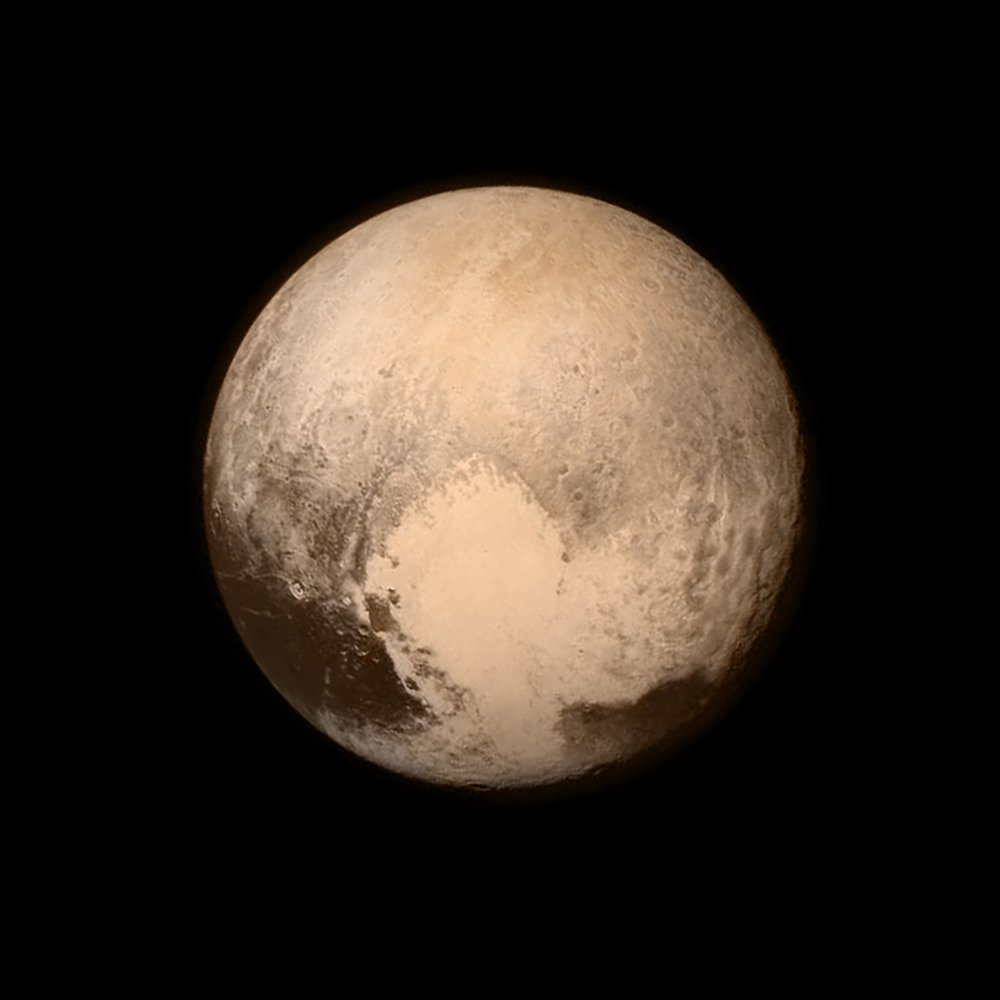
91.
What is Pluto?
a)
An asteroid
b)
A planet
c)
A dwarf planet
d)
It doesn't exist
92.

Galaxies are:

a)

gropus of Asteroids

b)

Groups of planets

c)

Groups of stars, gas and dust.

d)

Group of satellites

93.

The types of planets are

a)

Rock, liquid and solid

b)

Gas, terrestrial and solid.

c)

Gas, terrestrial and dwarf.

d)

Gas, terrestrial and rock.

94.

What´s the red planet ?

a)

Mars

b)

Saturn

c)

Venus

95.

Mercury is the smallest planet in the Solar System.

a)

True

b)

False

96.

Earth is colder than Mars.

a)

True

b)

False

97.
There is one star in our solar system.
a)
True
b)
False
98.
Venus is called Earth's twin because they are about the same size
a)
True 
b)
False
99.
The inner planets are called terrestrial planets because they are composed of
a)
water
b)
gas
c)
frozen surfaces
d)
rocks
100.
Which planet is tipped on its side nearly 90 degrees?
a)
Jupiter
b)
Saturn
c)
Uranus
d)
Neptune
101.
Which planet is the hottest planet because of its clouds?
a)
Venus
b)
Earth
c)
Mars
d)
Pluto
102.
Put the planets in order from the sun.
a)
Mercury, Venus, Mars Earth, Jupiter, Saturn, Uranus, Neptune, Pluto
b)
Mercury, Venus, Earth, Mars, Jupiter, Sarturn, Neptune, Uranus, Pluto
c)
Mercury, Venus, Earth, Mars, Jupiter, Sarturn,  Uranus, Neptune,Pluto
d)
Mercury, Venus, Earth, Mars, Sarturn, Jupiter, Neptune, Uranus, Pluto
103.
The outer planets are...
a)
Rocky and small
b)
Very large and made of ice
c)
Small and made of ice
d)
Very large and made of gases
104.
Which two planets are out of order in this list of our solar system?
Mercury-Earth-Venus-Mars-Jupiter-Saturn-Uranus-Neptune-Pluto.
a)
Mercury and Earth
b)
Earth and Venus
c)
Saturn and Jupiter
d)
Uranus and Neptune
105.
A light year is the 
a)
distance that light travels in one year
b)
Speed at which light travels 
106.
The average distance between the earth and the sun is the 
a)
astronomical unit 
b)
Light year
107.
darkest, innermost part of the shadow
a)
penumbra
b)
umbra
108.
lighter, outer part of the shadow
a)
penumbra
b)
umbra
109.
What type of eclipse occurs when the moon blocks the sun's light and cast a shadow on earth?
a)
solar
b)
lunar
110.
What type of eclipse occurs when the earth's shadow is cast on a full moon?
a)
solar
b)
lunar
111.
What moon phase occurs during a solar eclipse?
a)
Full moon
b)
new moon
c)
1st quarter
d)
waxing gibbous
112.
What moon phase occurs during a lunar eclipse?
a)
full moon
b)
new moon
c)
3rd quarter
d)
waxing crescent
113.
What type of eclipse is occuring inthe diagram?
a)
solar
b)
lunar
114.
What type of eclipse is being shown in the diagram?
a)
Total solar eclipse
b)
Total lunar eclipse
c)
partial solar eclipse
d)
partial lunar eclipse
115.

This model is showing us a...

a)

lunar eclipse

b)

solar eclipse

c)

phases of the moon

d)

earth eclipse

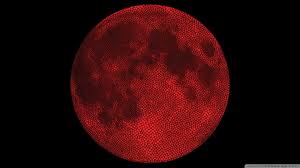
116.

This image is an example of

a)

Lunar Eclipse

b)

Full Moon

c)

New Moon

d)

Solar Eclipse

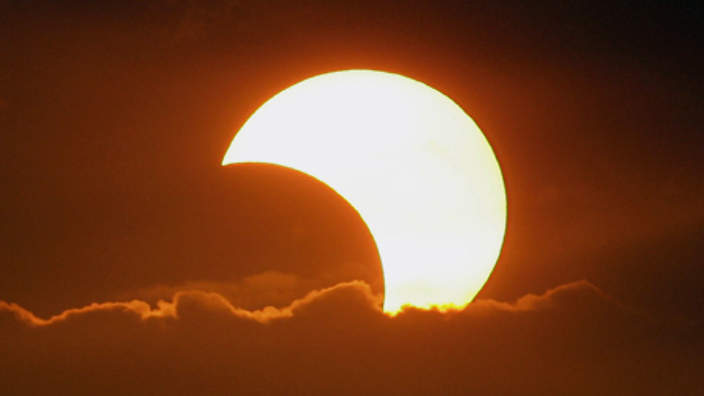
117.
This image is an example of 
a)
Lunar Eclipse
b)
New Moon
c)
Solar Eclipse
d)
Full Moon
118.
A golf pro swings his driver which weighs 0.75Kg at a velocity of 60 m/s. Calculate the kinetic energy of the club.
a)
2700 J
b)
16.9 J
c)
1350 J
d)
45 J
119.
What is the KE of a football which has a mass of 0.8 kg and is kicked at a velocity of 10m/s.
a)
80 J
b)
3.2 J
c)
160 J
d)
40 J
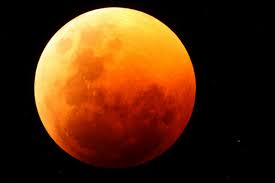
120.
You serve a volley ball with a mass of 2.1 kg. The ball leaves your hand with a speed of 30m/s. The ball has ____ kinetic energy. Calculate it.
a)
1890 J
b)
3780 J
c)
945 J
d)
31.5 J
121.
What is the kinetic energy of a 4kg shotput thrown with a velocity of 13m/s
a)
676 J
b)
3.25 J
c)
17J
d)
338 J
122.
An 8kg dog chases a cat. if the dog has 400J of kinetic energy. What is the speed of the dog?
a)
10 m/s
b)
5 m/s
c)
1 m/s
d)
100 m/s
123.

A science student holds a 55g egg out a window. Just before the student releases the egg, the egg has 8.0J of gravitational potential energy with respect to the ground. ow far is the students arm fro the ground in meters?

a)

15m

b)

17m

c)

8m

d)

19m

124.

A diver has 3400J of gravitational potential energy after stepping up onto a diving platform that is 6 meters above the water. What is the divers mass in kilograms?

a)

85kg

b)

64m

c)

58kg

d)

None of the answers are correct

125.

1. Determine the gain in gravitational potential energy when a 4.00 kg block is raised 18.000 m.


Gravity is 9.8m/s.

ROUND TO THE WHOLE NUMBER.

NO COMMAS

(a)  

126.

A leopard with a mass of 55.00 kg climbs 12.0 m up a tree. What is its gain in GPE?


Gravity is 9.8m/s.

ROUND TO THE WHOLE NUMBER.

NO COMMAS

(a)  

127.

1. An aircraft is taking a group of skydivers up into the air. Evan is dressed in his parachuting gear, which brings his mass to a total of 90.0 kg. The aircraft takes the group to a height of 5000.00 m before the jump. How much GPE does Evan gain?


Gravity is 9.8m/s.

ROUND TO THE WHOLE NUMBER.

NO COMMAS

(a)  

128.

1. An owl has a mass of 4.00 kg. It dives to catch a mouse from a height of 20m How much GPE does the owl gain?


Gravity is 9.8m/s.

ROUND TO THE WHOLE NUMBER.

NO COMMAS

(a)  

129.

One of the tallest radio towers is in Fargo, North Dakota. The tower is 629 m tall. If a bird lands on top of the tower with a mas of 0.3kg. What is the birds GPE?


Gravity is 9.8m/s.

ROUND TO THE WHOLE NUMBER.

NO COMMAS

(a)  

130.

Which of the following is not a subatomic particle that makes up an atom?

a)

neutron

b)

proton

c)

nucleon

d)

electron

131.

Protons have a ____________ charge.

a)

negative

b)

neutral

c)

positive

132.

Electrons have a ____________ charge.

a)

negative

b)

neutral

c)

positive

133.

A current is produced when _______________ flow in a circuit.

a)

protons

b)

neutrons

c)

electrons

d)

nucleons

134.

What happens when an electric current flows through a wire?

a)

The wire begins to spin.

b)

Nothing happens.

c)

A field of gravity is created around the wire.

d)

A magnetic field is created around the wire.

135.

Electric current is measured in ____________.

a)

Newtons (N)

b)

Amperes (A)

c)

Hertz (Hz)

136.

The south ends of two magnets will _________ each other.

a)

repel

b)

attract

137.

________________ are the attractive and repulsive forces between two poles.

a)

Magnetic forces

b)

Electric forces

c)

Magnetic charges

d)

Electric charges

138.

What does this image show?

a)

Parallel circuit

b)

Series circuit

c)

Magnet

d)

Electromagnet

139.

Opposite charges do what?

a)

Attract

b)

Repel

140.

The area of magnetic force around a magnet is known as its ____________.

a)

magnetism

b)

magnetic current

c)

magnetic field

d)

electric current

141.

How do you increase the strength of an electromagnet?

a)

Add a motor and/or light bulbs

b)

Add more light bulbs and wire coils

c)

Add more wire coils

d)

Increase the voltage

142.

What is/are the difference(s) between a magnet and an electromagnet?

a)

An electromagnet can be turned on/off.

b)

A magnet can be turned off.

c)

An electromagnet is stronger.

143.

A _______________ is a current-carrying coil of wire with many loops.

a)

magnet

b)

electromagnet

c)

solenoid

d)

compass

144.

How can a magnet be used to produce an electric current?

a)

Hold a magnet next to a piece of wire.

b)

Wrap wire around a magnet.

c)

Spin the magnet around inside a coil of wire.

145.

Increasing the number of coils in an electromagnet will _________ the power of the magnet.

a)

decrease

b)

increase

c)

not affect

146.

What three minerals are attracted to a magnet?

a)

Gold, copper, cobalt

b)

Cobalt, aluminum, silver

c)

Iron, copper, aluminum

d)

Iron, nickel, cobalt

147.

You can increase the strength of an electromagnet by:

a)

Decreasing the battery charge

b)

Decreasing the amount of loops in the solenoid

c)

Winding the coils more closely

d)

Winding the coils more loosely

148.

Electromagnetic Induction is a technical way to say that we can create a magnetic field using electricity.

a)

True

b)

False

149.

Particles with opposite charges ____________ and particles with same (or like) charges ____________.

a)

attract, repel

b)

repel, repel

c)

attract, attract

d)

repel, attract

150.

What does this image show?

a)

Parallel circuit

b)

Series circuit

c)

Magnet

d)

Electromagnet

151.

What type of core is best for electromagnets?

a)

Steel

b)

Iron

c)

Plastic

d)

Copper

152.

Probably the most useful thing about electromagnets is that they can be turned ________ and ________.

a)

on, off

b)

positive, negative

c)

north, south

d)

on, negative

153.

The Affect of Electric fields surrounding particles become stronger the _______________ they are from each other.

a)

Farther

b)

Closer

154.

The relationship between electricity and magnetism is called _____________.

a)

Electricity

b)

Law of Conservation of Energy

c)

Electromagnetism

d)

Magnetism

155.

A _______________ is a coil that carries an electric current. 

a)

Solenoid

b)

Simple Electric Motor

c)

Electromagnet

d)

Generator

156.

What can be done to increase the number of magnetic objects that an electromagnet picks up?

a)

Make the wire longer

b)

Remove the nail from the center of the wire

c)

Increase the number of coils in the solenoid

d)

Spread the coils out across the nail

157.

Which of these is not an example of an electromagnet.

a)

Refrigerator Magnet

b)

Speakers

c)

Computer Hard Drive

d)

Generators

158.

How can you increase the magnetic field strength in an electromagnet?

a)

Increase the number of coils.

b)

increase the voltage

c)

increase the current by reducing the resistance of the coil

d)

all of the above