Worksheets
Fall Benchmark Mega Review
Total questions: 160
Worksheet time: 5hrs 18mins
Which statement was NOT included in cell theory?
All living things are composed of cells.
Living cells come only from other living cells.
Each cell contains a cell membrane, cytoplasm, nucleus, mitochondria, and endoplasmic reticulum.
Cells are the smallest structure of living things that can perform the functions necessary for life.
Which instrument is credited for helping scientists develop cell theory?


This early cell theory scientist looked in a microscope and discovered "animalcules" in the gunk from his teeth and pond water.
Schleiden
Leeowenhoek
Hooke
Virchow
Schwann
Who discovered and named cells while looking at cork?
Captain Hook
Robert Hooke
Matthais Schleiden
Rudolf Virchow
What was Schleiden convinced of?
All plants are made of cells
All animals are made of cells
All cells are prokaryotic
None of the above
Who noted that all animals are made of cells and helped write the first two parts of cell theory?
Rudolf Virchow
Anton van Leeuwenhoek
Theodor Schwann
Robert Hooke
Who discovered that all cells come from other living cells and had research that lead to the last major principle of cell theory?
Matthias Schleiden
Theodore Schwann
Robert Hooke
Rudolf Virchow
These three scientists together helped come up with the second part of the cell theory (all living things are made of one or more cells). CHOOSE 3 ANSWERS
Schleiden
Leeowenhoek
Hooke
Virchow
Schwann

Robert Hooke, Anton van Leeuwenhoek, Theodor Schwann, Rudolf Virchow, and Matthias Schliden were all responsible for what theory?
The Theory of Gravity
The Theory of Relativity
The Cell Theory
The Theory of Continental Drift
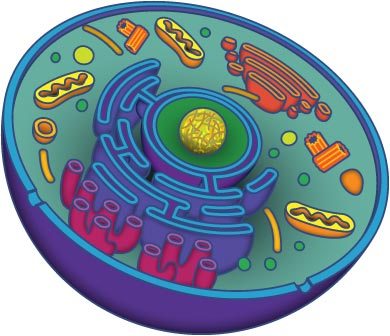
All living things are made up of...
cells
tissues
organ
organ systems
What is the basic structural and functional unit of all living things?
atom
cell
bacteria
animalcules
All cells -----
come from other dead cells
come from other living cells
crystallize out of the air
What organelle directs all cell activities and contains the DNA?
nucleus
mitochondria
chloroplast
cell membrane
What organelle makes RNA into protein? It also floats freely throughout the cell.
ribosomes
chloroplast
mitochondria
nucleus
What organelle is the "jelly-like" substance that keeps all other organelles in place? It also helps keep the shape of the cell.
cytoplasm
cell membrane
ribosomes
cell wall
What organelle decides what goes in and out of the cell and also offers protection to the cell?
cell membrane
nucleus
cytoplasm
chloroplast
What organelle is the outer layer of a plant cell and offers protection to the cell?
cell wall
cell membrane
cytoplasm
mitochondria
What organelle is the "powerhouse" of the cell and creates energy through cellular respiration?
mitochondria
ribosome
chloroplast
nucleus
What plant organelle uses photosynthesis to convert sunlight into ATP energy?
chloroplast
ribosomes
mitochondria
nucleus
What organelle is the storage container for food, water, and waste material?
vacuole
ribosomes
mitochondria
chloroplast
Which one of the following organelles is only found in a plant cell?
large central vacuole
cell membrane
mitochondria
cytoplasm
Which one of the following organelles is only found in plant cells?
chloroplast
ribosomes
vacuoles
mitochondria
Which one of the following organelles is only found in plant cells?
cell wall
cell membrane
mitochondria
nucleus
A simple cell with no nucleus is a ______________ cell.
eukaryotic
prokaryotic
A complex cell with membrane bound organelles and a nucleus is called a ____________________ cell.
prokaryotic
eukaryotic

An organism that can make its own food
autobot
heterotroph
autotroph
heterobot

An organism that cannot make its own food.
autobot
heterotroph
autotroph
heterobot

The raw materials of a chemical reaction. Located on the left side of a chemical equation.
water
energy
resources
reactants

The 'outputs' of a chemical reaction. Located on the right side of a chemical equation.
products
produce
consumers
detritis

Small openings on the underside of a leaf through which oxygen and carbon dioxide can move. Where gas exchange occurs in a plant.
nodules
stomata
chloroplasts
chlorophyll

Location inside of a plant cell where the process of photosynthesis occurs.
nodules
stomata
chloroplasts
chlorophyll

Pigment which 'fills' chloroplast. This pigment absorbs sunlight.
nodules
stomata
chlorine
chlorophyll

A simple sugar that is an important energy source in living organisms
stevia
fructose
glucose
glycerin

A process plants use to turn sunlight into food: Conversion of light energy from the sun into chemical energy (stored in glucose).
toxoplasmosis
photosynthesis
aqua-synthesis
homeosynthesis

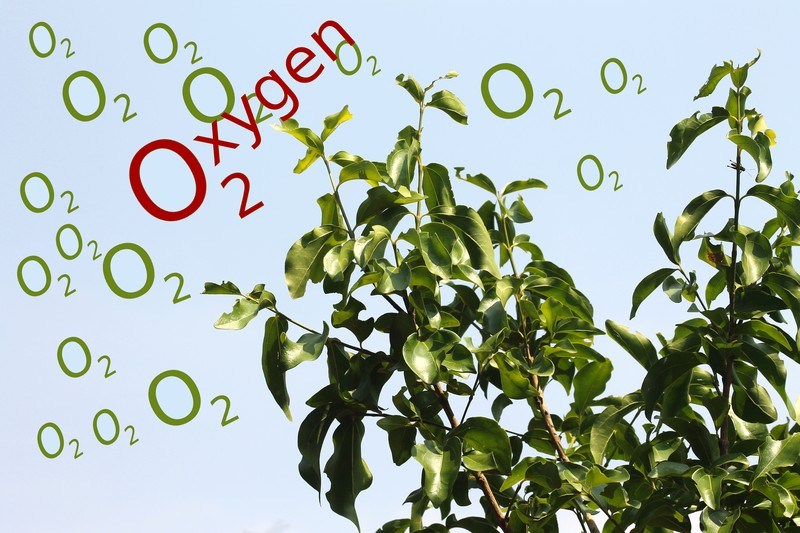
A gas that plants release during photosynthesis
oxygen
methane
propane
carbon dioxide

A gas that plants take in through small holes in their leaves for the process of photosynthesis.
oxygen
methane
propane
carbon dioxide

Taken in by the leaves of the plant to give the chloroplasts energy for food production.
chlorophyll
oxygen
water
sunlight

A product in photosynthesis
CO2
O2
H2O
heat

A reactant in Photosynthesis
PB
NACL
H20
CO2

glucose, also known as sugar
ARETMIS1
fructose
C6H12O6
C3POR2D2
A physical change...
changes the physical properties of an object, but does not create a new substance.
creates a new substance and cannot be undone.
A chemical change
changes the physical properties of an object, but does not create a new substance.
creates a new substance and cannot be undone.

Is this an example of a physical or chemical change?
physical
chemical

Is this an example of a physical or chemical change?
physical
chemical

Is this an example of a physical or chemical change?
physical
chemical

Is this an example of a physical or chemical change?
physical
chemical

Is this an example of a physical or chemical change?
physical
chemical

Is this an example of a physical or chemical change?
physical
chemical

Is this an example of a physical or chemical change?
physical
chemical

Is this an example of a physical or chemical change?
physical
chemical

Is this an example of a physical or chemical change?
physical
chemical

Is this an example of a physical or chemical change?
physical
chemical

Is this an example of a physical or chemical change?
physical
chemical

Is this an example of a physical or chemical change?
physical
chemical

Is this an example of a physical or chemical change?
physical
chemical

Is this an example of a physical or chemical change?
physical
chemical

Is this an example of a physical or chemical change?
physical
chemical

Is this an example of a physical or chemical change?
physical
chemical

Is this an example of a physical or chemical change?
physical
chemical

Is this an example of a physical or chemical change?
physical
change
When energy is released, it dissappears.
True
False
What are the most common types of inefficiency?
Radiant
Thermal
Electrical
Sound
GPE
List one type of inefficiency in a flashlight.

What is the energy transformation in an electric blender?

What is the energy transformation in a star?

What is the energy transformation in an electric toaster?

What is the energy transformation in a person running?

What is the energy transformation in a person skydiving?

What is the energy transformation in a solar panel?

What is the energy transformation in a person swimming?

What is the energy transformation in apple trees growing in an orchard?

What is the energy transformation in an gas stove?

What is the energy transformation in an gas powered car?

What is the energy transformation in a drummer drumming?
Fox squirrels are common in Texas. Fox squirrels primarily eat acorns and nuts from trees but also eat insects. Some predators of fox squirrels include owls, snakes, and bobcats.
Which diagram best represents how energy would flow to and from the fox squirrel?


The diagram below shows an energy pyramid. In a marine ecosystem, algae carry out photosynthesis. Barracuda eat snapper fish. Reef sharks eat barracuda.
Which organism would be at the top of the energy pyramid?
algae
reef shark
barracuda
snapper fish

The figure below shows a food chain that might exist in a meadow.
Which of the following best describes what the food chain represents?
how an organism might change over time
the movement of organisms throughout the ecosystem
the increase in size among organisms in the ecosystem
the path of energy transfer from producers to consumers

The food web below shows some of the feeding relationships among organisms in Arctic waters.
Which organism would be least affected by overfishing for cod in Arctic waters?
seals
shrimp
baleen whales
toothed whales

This global food web shows how parts of a meadow ecosystem interact with parts of a marsh ecosystem.
Which of these is a food chain that is part of the global food web?
meadow grass → rabbit → fox → hawk
marsh grass → snail → small fish → hawk
marsh grass → grasshopper → mouse → fox
meadow grass → grasshopper → praying mantis → small fish

A student researching a northern forest ecosystem learns the following information about feeding relationships in the ecosystem.
Which food web best represents the flow of energy in these feeding relationships?


In order for an organism to move, which of the following energy transformations must happen in its cells?
Sound energy is transformed into light energy.
Mechanical energy is transformed into solar energy.
Chemical energy is transformed into kinetic energy.
Light energy is transformed into chemical energy.
What happens to MOST of the energy an organism takes in?
It is used for life processes.
It is lost the the environment as heat.
It is stored in the organism's body.
It is transferred to other organisms.
What happens during an energy transformation in a living thing?
Energy is created.
Energy is destroyed.
Energy is permanently stored.
Energy changes from one form to another.
What is the difference between a food web and an energy pyramid?
There is no difference; food webs and energy pyramids show the same types of relationships between organisms.
Food webs show all the feeding relationships between organisms, while energy pyramids show how energy moves from producer to consumer.
Food webs show an animal at the top of the energy pyramid, while energy pyramids show only how producers get their energy.
Energy pyramids show how energy flows between organisms, while food webs show only the different organisms in an ecosystem.

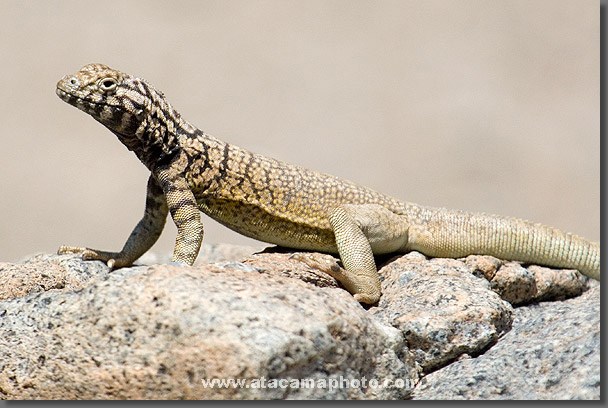
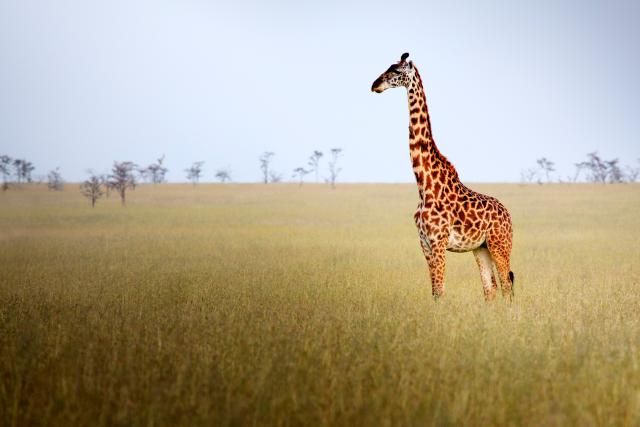






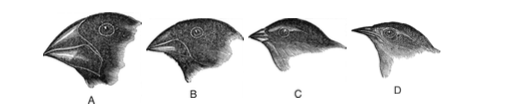
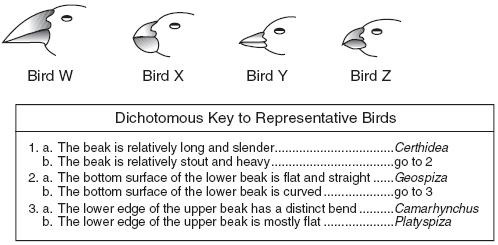
The four different types of beaks shown are most likely the result of
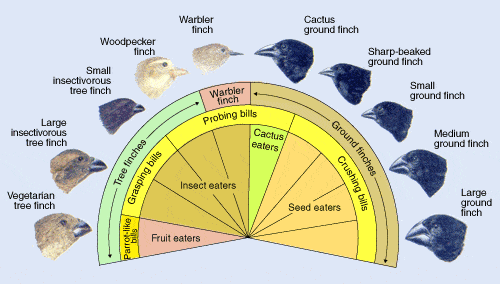
A detectable change in the internal or external environment of an organism is called a...
stimulus
response
tropism
turgor pressure
Any change an organism makes because of a change in the environment is a...
stimulus
response
tropism
turgor pressure
The turning of all or part of an organism in a particular direction in response to an external stimulus is called a...
stimulus
response
tropism
turgor pressure
When the organism moves toward the stimulus, it is a...
negative tropism
positive tropism
turgor pressure
stimulus
When the organism moves away from the stimulus, it is called a...
stimulus
turgor pressure
positive tropism
negative tropism
When organisms respond to light as a stimulus, we call it...
thigmotropism
hydrotropism
phototropism
geotropism
When organisms respond to gravity as a stimulus, we call it...
thigmotropism
hydrotropism
phototropism
geotropism
When organisms respond to water or moisture as a stimulus, we call it...
thigmotropism
hydrotropism
phototropism
geotropism
When organisms respond to touch as a stimulus, we call it...
thigmotropism
hydrotropism
phototropism
geotropism
The pressure that water-filled vacuoles exert on the cell wall of plant cells is called...
stimulus
thigmotropism
turgor pressure
tropism

Take your time and read carefully!
A student discovers an arachnid with a segmented abdomen, long legs, and a tail with no stinger. The student uses the dichotomous key below to identify it. Which arachnid has the student found?
Whip Scorpion
Wind Scorpion
Tick
Scorpion