
 Worksheets
End of Year Review
Total questions: 150
Worksheet time: 4hrs 42mins
What theory explains how chemical reactions occur and why rates differ for different reactions?
Thermochemical equation
Collision Theory
Gibbs Free Energy
Entropy
What is the energy transferred between objects due to a temperature difference?
Internal energy
Heat
Entropy
Enthalpy
The First Law of Thermodynamics states...
energy can't be created or destroyed.
energy is always created.
energy is always destroyed.
The Second Law of Thermodynamics states...
whenever there is an opportunity for energy dispersal, the energy spreads out.
the energy disappears.
the energy stays in place.
Entropy is....
a measure of energy dispersal, "chaos".
when the energy disappears.
when the energy is created.
Three substances are added to a mug to make coffee: the coffee, which is 65°C , the milk, which is 65°C , and the sugar, which is in thermal equilibrium with the coffee. Describe the thermal state of the sugar.
Heat will be transferred from the sugar to the coffee to reach equilibrium.
Heat will be transferred from the coffee to the sugar to reach equilibrium.
The sugar is 65°C , based on the second law of thermodynamics
The sugar is in equilibrium with the milk, based on the zeroth law of thermodynamics.
The _____ Law of Thermodynamics says that heat always flows from an object with a higher temperature to an object of lower temperature naturally
1st law of thermodynamics
2nd law of thermodynamics
3rd law of thermodynamics
Zeroth Law
The _____ Law of Thermodynamics says that heat always flows from an object with a higher temperature to an object of lower temperature naturally
1st law of thermodynamics
2nd law of thermodynamics
3rd law of thermodynamics
Zeroth Law
the law of conservation of energy is the bases of...
1st law of thermodynamics
2nd law of thermodynamics
3rd law of thermodynamics
Zeroth Law
What do we call the relationship between thermal energy, heat and work?
states that if the mechanical energy of a system is constant, the increase in the thermal energy of the system equal the sum of the thermal energy transferred into the system and the work done on the system
1st Law of Thermodynamics
2nd law of thermodynamics
thermodynamics
thermal insulator
law of heat
energy that is transferred between objects due to temperature difference between those objects.
temperature
thermal energy
heat
solar collector
convection
states that energy spontaneously spreads from higher concentrations to regions of lower concentrations.
1st Law of Thermodynamics
2nd law of thermodynamics
themal insulator
heat engine
thermodynamics
device that converts some thermal energy into mechanical energy.
thermal insulator
heat engine
enegine
internal combustion engine
solar collector

A steady force pushes in the piston
of a well-insulated cylinder. In this
process, the temperature of the gas
Increases
Stays the same
Decreases
Not enough info
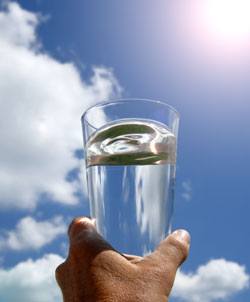
The temperature of a glass of cold water will eventually...
Match the temperature of the surrounding environment.
Always be colder than the surrounding environment.
Become warmer than the surrounding environment.
Never change temperature.
Which law of thermodynamics states that energy cannot be created or destroyed, only transformed from one form to another?
1st Law of Thermodynamics
2nd Law of Thermodynamics
3rd Law of Thermodynamics
Zeroth Law of Thermodynamics
What is the primary implication of the second law of thermodynamics in terms of entropy?
Entropy of an isolated system always decreases
Entropy of an isolated system always increases
Entropy remains constant
Entropy is irrelevant
In a heat engine, which law of thermodynamics is primarily applied to determine the efficiency of the engine?
1st Law of Thermodynamics
2nd Law of Thermodynamics
3rd Law of Thermodynamics
Zeroth Law of Thermodynamics
Which law of thermodynamics is often associated with the concept of absolute zero temperature?
1st Law of Thermodynamics
2nd Law of Thermodynamics
3rd Law of Thermodynamics
Zeroth Law of Thermodynamics
The zeroth law of thermodynamics is fundamental in defining which of the following concepts?
Temperature
Heat
Work
Energy
In an endothermic reaction, heat is ...
taken in
given out
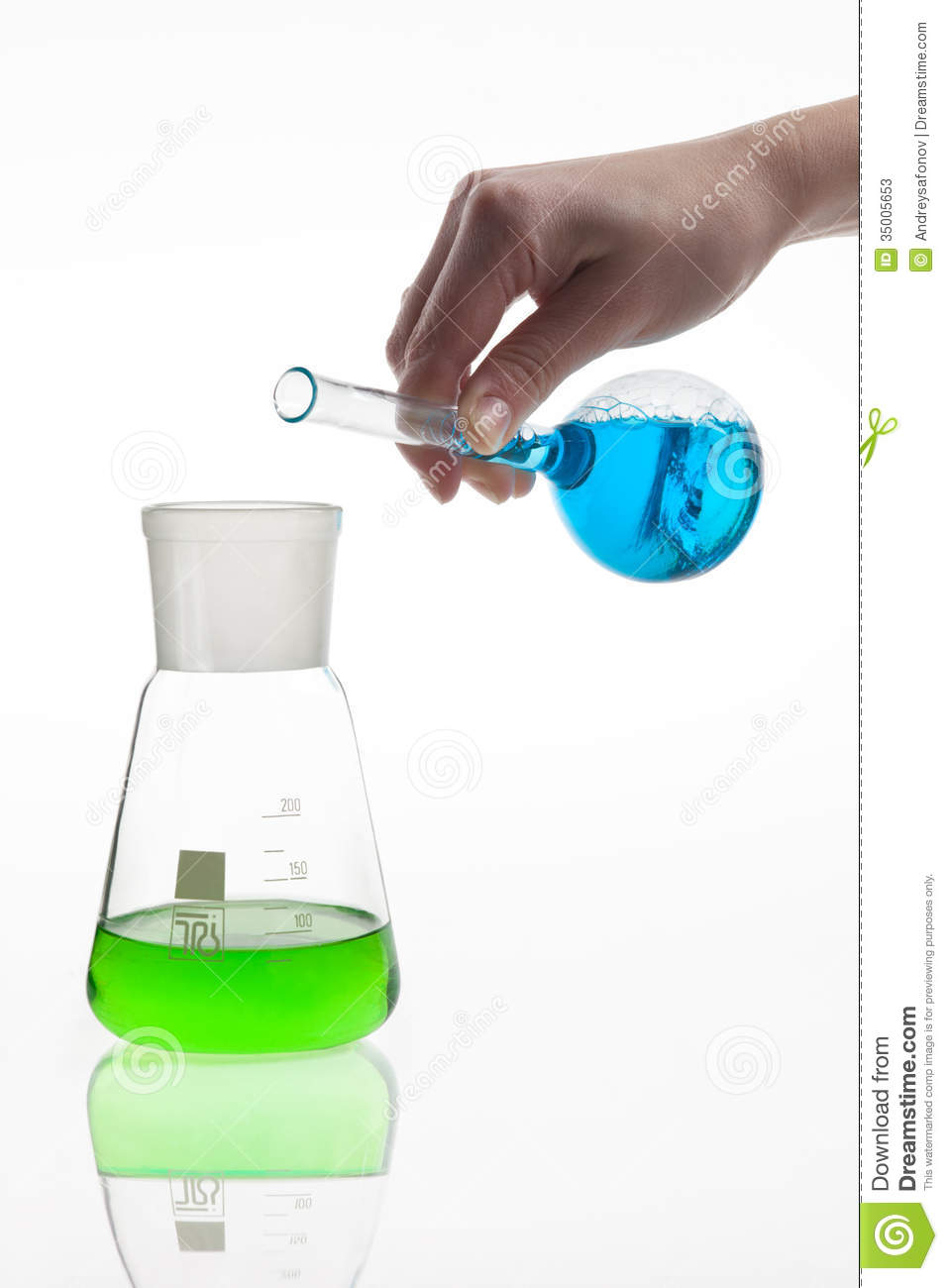
A student mixed two chemicals to allow them to react. The temperature before the reaction was 25 ° C. The temperature after the reaction was 18° C. Which of the following is true?
It is an exothermic reaction
It is an endothermic reaction

What type of reaction is this?
Exothermic
Endothermic
Kinetic
Potential
When a substance changes from a solid to a liquid, the particles move
Faster
Slower
When a substance changes from a solid to a liquid, it is an
Exothermic Change
Endothermic Change
Organize these options into the correct types of energy use.
absorbs energy
releases energy
splitting a molecule
forming a molecule
melting ice
NH4NO3 (s) + H2O(l) + 23.8 kJ → NH4OH(aq) + HNO3
6SOCl2 + CoCl2⋅6H2O → CoCl2 + 6SO2 + 12HCl ΔH=+
H2SO4 (aq) + 2NaOH (aq) → Na2SO4 (aq) + H2O (l) ΔH = −

Match the following
a molecule made of at least two different elements in a fixed ratio
compound
a group of two or more atoms bonded together
molecule
simplest form of matter
element
elements and compounds
pure substances
two or more substances NOT chemically combined
mixture
As you move across the periodic table, from left to right, the metallic character of the elements________
increases
decreases
stays the same
Which of the following has a larger radius than Zinc
Gallium
Magnesium
Strontium
Aluminum
Which has a lower ionization energy: Lithium or Potassium?
Lithium
Potassium
Which atom has the most valence electrons
Ca
C
Cl
Si
As you move across the periodic table, from left to right, ionization energy is __________________.
decreasing
increasing
As you move across a period, do the atoms get smaller or larger?
smaller
larger
How many valence electrons does a neutral atom of nitrogen have?
2
4
5
6
Which atom is more electronegative?
K
Rb
Cl
B
As atoms in Group 15 are considered in order from top to bottom, the electronegativity of each successive element....
increases
decreases
remains the same
none of the above
As you move down the periodic table, atoms tend to get bigger because...
They have more mass
They have more protons
They have more energy levels
They have more mass
As you move across the periodic table, atoms tend to get smaller. This is because...
The atoms have more mass
The atoms have more neutrons
The atoms have less mass
They have more protons
Electronegativity is
the ability of an atom to accept/ attract electrons
the energy required to remove an electron from an atom in a gaseous or ion state
a life philosophy (the glass is half empty)
the ability of an atom to lose electrons
Ionization energy is ....
the energy required to add an electron to an atom
the energy required to shield the outer electrons from the nucleus
a measure of the ability of an atom to attract electrons
how much energy it takes to remove an electron from an atom
The atom with the largest atomic radius in Group 18 is....
He
Xe
Ne
Rn
Metals have the largest...
atomic radius and electronegativity
electronegativity and ionization energy
ionization and atomic radius
atomic radius only
Which statement correctly and completely identifies a trend?
Atomic radius decreases across a period, and increases down a group
Electronegativity decreases across a period and decreases down a group
Ionization energy increases across a period and increases down a group
What metalloid is in the fourth period and in the same group as carbon?
boron
tin
silicon
germanium
An element has similar chemical properties as oxygen and selenium. It has an atomic number greater than krypton but less than iodine. Use the periodic table to identify the element
selenium
polonium
tellurium
sulfur
Vertical columns of elements (families) on the periodic table with similar properties
period
row
groups
quadrants
Which atom has the largest radius
Mg
B
S
Br
How are anhydrous compounds different from hydrates?
Anhydrous compounds contain more water molecules than hydrates
Anhydrous compounds and hydrates are the same
Anhydrous compounds do not contain water molecules, unlike hydrates
Anhydrous compounds use Greek letters to indicate the number of water molecules present
What is a hydrate?
A compound without water
A compound that contains water molecules in its structure
A gas at room temperature
A liquid that does not mix with water
Which of the following is an example of a hydrate?
NaCl
CuSO₄·5H₂O
H₂O
CO₂
What happens to a hydrate when it is heated?
It gains water
It loses water of hydration
It melts
It becomes a gas
What is a non-polar covalent bond?
transfer of electrons
is a bond where electrons are shifted to the more electronegative atom
Sea of electrons
is a bond where electrons are shared equally
Ionic Bonds involve the….
Sharing of Valence Electrons
Sea of Valence Electrons
Transfer of Valence Electrons
no valence electrons
Metallic bonds involve…..
Sharing of Valence Electrons
Mobile Sea of Valence Electrons
Transfer of Valence Electrons
no valence electrons
What type of bond is formed between nitrogen and oxygen?
Metallic
No bond will form
Ionic
Covalent
What type of bond is formed between sodium and bromine?
Metallic
No bond will form
Ionic
Covalent
What set of elements is most likely to form a covalent compound?
Na and O
Na and K
O and C
What is happening to the electrons during a covalent bond?
The electrons are being shared
One element is taking electrons, another is giving away electrons
The electrons don't move
Both atoms give away electrons
What is the empirical formula for C4H6?
CH
CH3
C2H3
C4H6
A hypothetical gas that perfectly fits all the assumptions of the kinetic molecular theory is known as
real gas
ideal gas
imaginary gas
perfect gas
Which of the following is not true about the volume of a gas?
Most of the volume is empty space.
The volume is occupied by particles in continuous, rapid, random motion.
The volume is about 10 times greater than that occupied by an equal number of particles in the liquid or solid state.
Generally, the volume can be easily changed
Which of the following is an assumption of the kinetic-molecular theory of gases?
Collisions between gas particles are inelastic.
Gases consist of closely spaced particles.
Gas particles move around in an orderly manner.
The temperature of a gas depends on the average kinetic energy of the gas particles.
Which of the following is the equation needed to calculate the kinetic energy, KE, of a moving particle?
KE = 1/2 mv2
KE = 2mv
KE = mv
KE = 1/2 m2v
If a gas has the same temperature throughout, which gas molecule has the highest average velocity?
O2
H2O
H2
Xe
Which of the following is not a physical property of gases?
absence of definite volume
large density
high compressibility
fluidity
Which states of matter are fluid?
gases and liquids
liquids and solids
gases only
liquids only
For a fixed amount of gas at a constant temperature, the volume increases as the pressure...
remains steady.
increases.
decreases.
fluctuates.
How is pressure explained in the kinetic molecular theory?
As a result of temperature only
From gravitational forces between particles
As a result of volume changes
From gas particles colliding with container walls
What relationship does Boyle’s law describe?
Pressure and volume are inversely proportional
Volume and temperature are directly proportional
Temperature and volume are inversely proportional
Pressure and temperature are directly proportional
According to Charles’s law, what happens when temperature increases?
Pressure increases
Pressure decreases
Volume decreases
Volume increases
What type of collisions do gas particles have according to the kinetic molecular theory?
Inelastic
Elastic
Partial
Non-colliding

How do gas molecules move?
in a circular motion
in straight line paths
in an orderly fashion
constantly and randomly
The more energy that particles have, the ___ they move.
faster
slower
Mg(s) + HCl(aq) --> MgCl₂(aq) + H₂(g)
What is the mass in grams of H₂ gas when 4.0 moles of HCl is added to the reaction?
Mg(s) + HCl(aq) --> MgCl₂(aq) + H₂(g)
How many grams of HCl are consumed by the reaction of 2.50 moles of magnesium?
Mg(s) + HCl(aq) --> MgCl₂(aq) + H₂(g)
What is the mass in grams of H₂ gas when 4.0 moles of HCl is added to the reaction?
How many liters of carbon dioxide are produced from 10L of carbon monoxide?
4NH3+6NO --> 5N2 + 6H2O
2Al + 6HCl --> 2AlCl3 + 3H2
Aluminium reacts with hydrochloric acid. How many grams of aluminum are necessary to produce 11 L of hydrogen gas at STP?
13
8.8
0.99
1.0
1Mg + 2H2O --> Mg(OH)2 + H2
What volume of hydrogen will be produced at STP by the reaction 67.3 g of magnesium?
62.0 L
0.12 L
2.77 L
1.15 L
2Al + 6HCl --> 2AlCl3 + 3H2
Aluminium reacts with hydrochloric acid. How many grams of aluminum are necessary to produce 11 L of hydrogen gas at STP?
13
8.8
0.99
1.0


1-JJ Thomson
2-Erwin Schrodinger
3-John Dalton
4-Niels Bohr
5-Ernest Rutherford

Divided
Destroyed
In a famous experiment conducted by Ernest Rutherford, positively charged alpha particles were scattered by a thin gold foil. Which of the following is a conclusion that resulted from this experiment?
The nucleus is negatively charged
The atom is a dense solid and is indivisible
The mass is conserved when atoms react chemically
The nucleus is very small and the atom is mostly empty space
What subatomic particle was discovered in the cathode ray tube experiment?
Proton
Neutron
Electron
Nucleus

This helped prove the existence of:
Proton
Neutron
Electron
Nucleus
Subatomic particles with a negative charge
Electrons
Neutrons
Protons
Quarks


Elements in the same group or family have _____________.
the same number of valence electrons and different properties.
the same number of valence electrons and similar properties
different number of valence electrons and similar properties.
different number of valence electrons and different properties.
Which class of elements are malleable, ductile, shiny when clean and polished, good conductors of heat and electricity, and reacts with acids to form hydrogen gas?
metals
nonmetals
metalloids
ions
What is the name of the elements that are unreactive and have a full octet?
Halogens
Noble Gases
Alkali Metals
Transition Metals
The Halogen group has an oxidation number of -1. Why?
The Halogen group will gain one electron, therefore have an oxidation number of -1.
The Halogen group will lose one electron, therefore have an oxidation number of -1.
The Halogen group will lose seven electrons, therefore have an oxidation number of -1.

Which of the following halogens has the greatest electronegativity?
Chlorine (Cl)
Bromine (Br)
Iodine (I)
Astatine (At)


This is a correct dot diagram for neon (Ne)
true
false
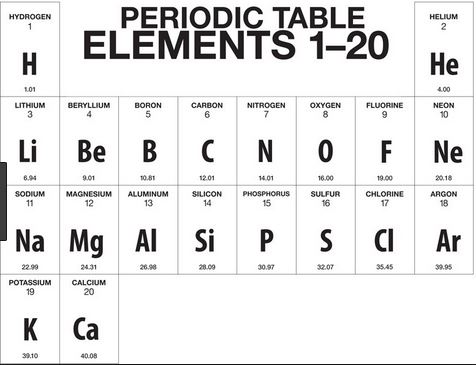
How many valence electrons does Aluminum Have?
1 Valence electron
2 Valence electron
3 Valence electron
4 Valence electron
5 Valence electron


Why do carbon, silicon, and tin all react similarly?
They are located in the same period
They have an even atomic number
They have the same number of energy levels
They are located in the same group

Match the correct term with its definition
Produce H+ as the only positive ion
Produce Oh- as the only negative ion
Proton donor
Proton Acceptor
Electrolyte
Conducts electricity when dissolved
Bases, also known as (a) will turn litmus paper (b) . This is because they have a pH (c) . They taste (d) .
Acid formulas start with (a) , while base formulas end with (b) . Salts contain (c) .
Organize these options into the right categories.
sour taste
bitter taste
pH = 8.2
pH = 1.8
turns blue litmus paper red
turns red litmus paper blue
slippery
increase hydroxide ions
increase hydrogen ions
pH = 5.4
What is pH based on?
The pOH.
The dissociation of water.
The concentration of hydroxide ions.
The formation of water.

How much C12H22O11 solute is saturated at 40 degrees?
240
220
230
250

