wayground logo

Free Printable Worksheets

Font size

S
M
L
XL
Worksheets

9th Grade Midterm Review

Total questions: 148

Worksheet time: 2hrs 12mins

Name
Class
Date
1.
You have been injured in the laboratory (cut, burn, etc.). First you should
a)
apply first aid yourself
b)
tell the science instructor at once
c)
see a doctor after school
d)
visit the school nurse after class
2.
 If you do not understand a direction or part of a lab procedure, you should 
a)
skip it and go on to the next part.
b)
ask the instructor before proceeding
c)
try several methods until something works
d)
figure it out as you do the lab
3.
Approved eye protection devices (such as goggles) are worn in the laboratory
a)
 to avoid eye strain
b)
to improve your vision
c)
only if you don’t have corrective glasses
d)
 any time chemicals, heat or glassware are used
4.
Approved eye protection devices (such as goggles) are worn in the laboratory
a)
 to avoid eye strain
b)
to improve your vision
c)
only if you don’t have corrective glasses
d)
 any time chemicals, heat or glassware are used
5.
When gathering glassware and equipment for an experiment, you should
a)
 All of the choices
b)
clean any glassware that appears dirty
c)
examine all glassware to check for chips or cracks
d)
read all directions carefully to know what equipment is necessary
6.
In a laboratory, the following should not be worn. 
a)
all of the answers
b)
dangling jewelry
c)
sandals
d)
loose clothing
7.
 The following footwear is best in the laboratory. 
a)
shoes appropriate for the weather
b)
open-toed shoes
c)
closed-toed shoes
d)
sandals
8.
 Horseplay or practical jokes in the laboratory are 
a)
okay if you are working alone
b)
not dangerous
c)
okay
d)
always against the rules
9.

What is the part of the experiment that normal conditions, and is used to compare back to?

a)

Independent Variable

b)

Dependent Variable

c)

Control Group

d)

Experimental Group

10.
What is a factor that the experimenter has full control over and changes to see what happens?
a)
Dependent Variable
b)
Independent Variable
c)
Control group 
d)
Hypothesis
11.
Nick wanted to see how high an ice cube would float in different temperatures of water. Identify the DEPENDENT variable
-Amount of water
-Height of Ice cube
-Temperature the ice cube was at its highest height
-Temperature of the water
-Size of the ice cube
a)
Amount of water 
b)
Height of Ice cube
c)
Temperature the ice cube was at its highest height 
d)
Size of the ice cube
12.
Mario studied how far room temperature water would spurt out of a plastic milk carton when 3mm holes were punched at different heights from the bottom of the container. Identify the DEPENDENT variable
-3mm holes
-Distant water traveled out of carton
-Different heights of the holes in the container
-Ice water from Iceland
a)
3mm holes
b)
Distant water traveled out of carton
c)
Different heights of the holes in the container 
d)
Ice water from Iceland
13.
The following statement is a hypothesis formed about marsh grass: 
If the amount of nitrogen marsh grass receives is increased, then the height of the grass will increase, because nitrogen is an essential nutrient needed for marsh grass to grow.
What is the independent variable of the statement above? 
a)
Height of grass
b)
Amount of nitrogen
c)
Essential nutrient
d)
Amount of growth
14.
A series of steps used by scientists to solve a problem or answer a question. 
a)
scientific method
b)
recipe
c)
data collection
d)
metric system
15.
Dependent variable means
a)
the scientist controls what to test
b)
educated guess
c)
ask a question
d)
what is being measured
16.
What is the first step in the scientific method?
a)
Ask a question
b)
Conclusion
c)
No Horse Play
d)
Observe
17.
If I study for my scientific method test, then I will have a better test score. What is the dependent variable?
a)
Scientific Method
b)
Studying
c)
Independent variable
d)
Test score
18.
If I read this question carefully, then I will answer it correctly. What is the independent variable?
a)
I hope so
b)
Yes
c)
Reading or not reading carefully
d)
Likelihood of a correct answer
19.
What are the first two steps of the scientific method in order?
a)
1, 2
b)
Observation, Ask a question
c)
Ask a question, For a hypothesis
d)
Make a plan, Experiment
20.
A possible explanation to a problem that has not yet been tested. 
a)
data
b)
theory
c)
hypothesis
d)
fact
21.
There are two types of data. Which type of data involves numbers that are obtained by counting or measuring?
a)
quantitative
b)
qualitative
22.
There are two types of data. Which type of data involves descriptions that cannot be counted or measured?
a)
qualitative
b)
quantitative
23.

Most scientists believe the Big Bang Theory explains which of the following questions?

a)

How our planets and moons formed

b)

How our universe began

c)

How the sun turns hydrogen into helium

d)

How fast light travels through space

24.

Which statement is true?

a)

The galaxies are moving toward us.

b)

The galaxies are moving away from us.

c)

The universe remains static or unchanged in motion.

d)

None of the above

25.

Light emitted from a star or galaxy can be separated into a band of colors, called a ________.

a)

Red Shift

b)

Wave Length

c)

Line emission Spectrum

d)

Microwave

26.

Cosmic Microwave Background Radiation is a form of _________.

a)

Matter

b)

Energy

c)

Visible Light

d)

Water

27.

Which elements are most

abundant in the visible

universe?

a)

Hydrogen and Carbon

b)

Carbon and Helium

c)

Hydrogen and Oxygen

d)

Hydrogen and Helium

28.

As galaxies move away from our galaxy

a shift on the electromagnetic spectrum

(EMS) is noticed. This phenomena is

called _____________.

a)

redshift

b)

blueshift

c)

unshift

d)

blackshift

29.
Which of the following is NOT true about the Big Bang Theory?
a)
It is the scientific explanation of how life began on Earth and evolved over time.
b)
It is the scientific explanation for the origin of the universe.
c)
It states that the universe expanded from a single point and is still expanding today.
d)
It states that the universe used to be much hotter and smaller.
30.
What does the Big Bang theory suggest?
a)
The universe was just there
b)
The Milky Way is the only solar system
c)
The universe is continually expanding
d)
The universe started as a point and is moving towards each other
31.
According to the Big Bang Theory how old is the universe?
a)
Thousands of years.
b)
Millions of years.
c)
Billions of years.
d)
Eternal.
32.
The change in wavelength of light or sound that is due to the relative motion of the source towards or away from an observer.
a)
Radar Effect
b)
Doppler Effect
c)
Light Effect
d)
Reflection
33.

The three pieces of evidence for our current theory of the universe are:

a)

blueshift, Cosmic Background radiation, moon landing.

b)

redshift, International Background Microwaves, Andromeda galaxy.

c)

redshift, Cosmic Background radiation, Helium and Hydrogen Ratio.

d)

doppler effect, light spectra, fusion.

34.
Hotter stars appear to be what color? 
a)
Red
b)
Blue
c)
Yellow
d)
Green
35.
What determines the color of a star? 
a)
It's size
b)
It's temperature
c)
It's composition
d)
They are all the same color 
36.
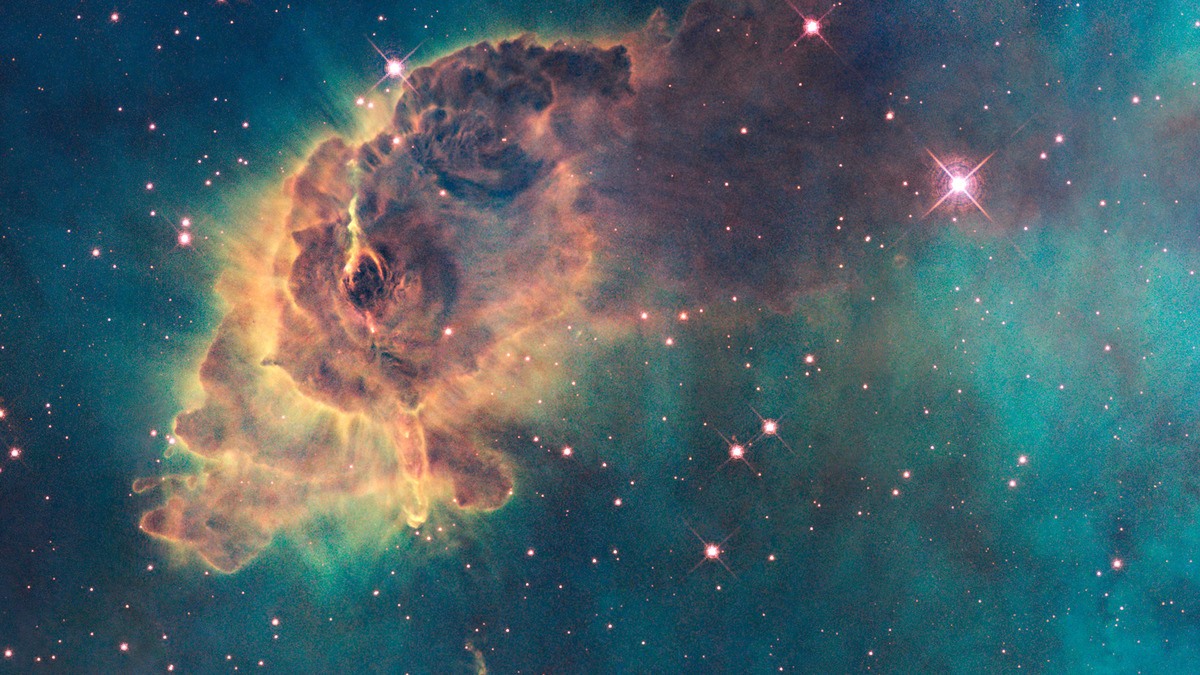
A star at the stage in its life cycle when it stops burning hydrogen, begins burning helium, and expands to a large, low-density star.
What stage in the life cycle does this describe? 
a)
Supernova
b)
Black Hole
c)
Main Sequence
d)
Red Giant or Red Supergiant
37.
What fuel do stars use? 
a)
Oxygen
b)
Hydrogen
c)
Carbon
d)
Iron
38.
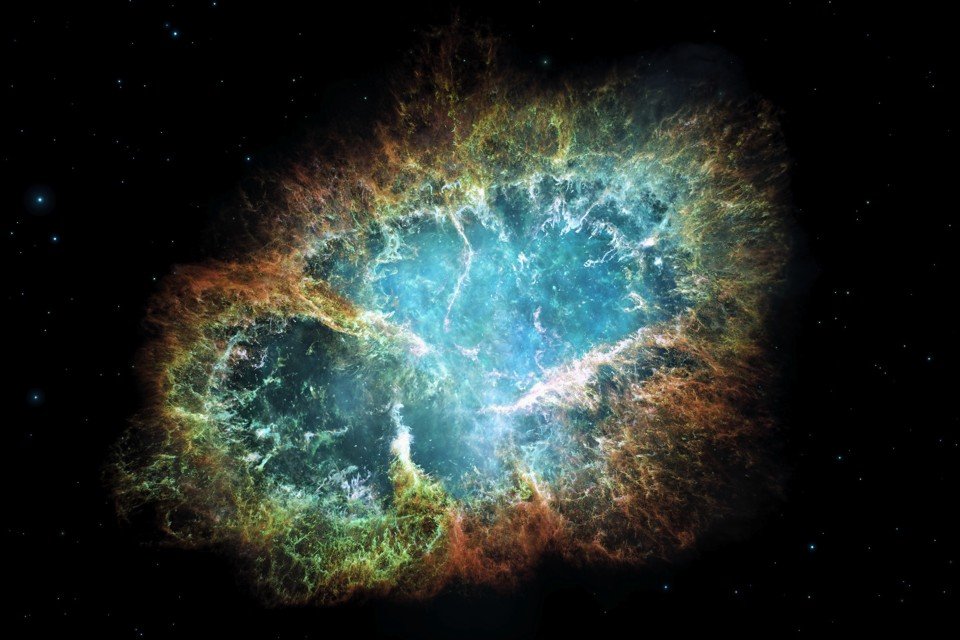
A relatively small, dense star at the end of its life cycle, which generates little or no energy and has contracted to its densest state.
What stage in the life cycle does this describe? 
a)
Black Hole
b)
Nebula
c)
White Dwarf
d)
Red Giant
39.
In the death of a large mass star gravitational collapse is so complete that no energy or matter can escape. This is called a... 
a)
Neutron Star
b)
Black Hole
c)
Black Dwarf
d)
Supernova
40.
What is the name of the gas/dust clouds that form stars?
a)
Nebulas
b)
Protostars 
c)
Supernova
d)
Neutron Star
41.
What is the name of the explosion at the death of a massive star?
a)
Supergiant
b)
Supernova
c)
Black Hole
d)
Nebula
42.
The remains from its supernova will form a rapidly spinning, highly magnetic star called a... 
a)
Neutron star
b)
Black Hole
c)
White Dwarf
d)
Supernova
43.

What happens in the first stage of star formation

a)

The hydrogen gets hotter and starts to glow

b)

Gravity pulls together lots of dust and hydrogen gas into a nebula (cloud of gas).

c)

Fusion reactions start.

44.
What is the first stage of the life cycle of a star for all stars?
a)
nebula
b)
protostar
c)
main-sequence
d)
red giant
45.
Low mass stars expand into what after using up the hydrogen in their core
a)
red giants
b)
supergiants
c)
white dwarfs
d)
protostars
46.
A low mass star ends its life as a 
a)
Supernova
b)
Black hole
c)
White dwarf
d)
Nebula
47.
When a star's gravitational pull is so strong that not even light can escape, it's called a what?
a)
Black hole
b)
Supernova
c)
White dwarf
d)
Nebula
48.
A star is born when ________________ begins to happen.
a)
nuclear fusion
b)
nuclear abrasion
c)
crying
d)
nuclear fission
49.
Everything you see around you was made inside ________.
a)
the earth
b)
factories
c)
stars
d)
an oven
50.
What is the color of the coolest stars?
a)
blue
b)
Yellow
c)
Red
d)
Orange
51.
All stars the main sequence are middle aged. That is, they are fusing ________ into ________ in their cores.
a)
hydrogen into helium
b)
helium into carbon
c)
oxygen into iron
d)
helium into hydrogen
52.
What is the relationships between the size of a star and its lifetime?
a)
The larger the star, the shorter the lifetime.
b)
The larger the star, the longer the lifetime.
53.
What is the correct life cycle of a star like our Sun?
a)
Nebula, main sequence, red supergiant, supernova, black hole, neutron star
b)
nebula, main sequence, red giant, planetary nebula, white dwarf, black dwarf 
c)
Main sequence, white dwarf, red giant, red supergiant, nebula
d)
Nebula, main sequence, brown dwarf, white dwarf, black dwarf
54.

When a Red Giant's outer atmosphere drifts away it is known as a ____________.

a)

planetary cloud

b)

White Dwarf cloud

c)

planetary nebula

d)

expanding nebula

55.
How did the elements we have on Earth get here?
a)
They are all man-made.
b)
They were formed in stars that eventually exploded in supernova.
c)
The sun created all of our elements through fusion.
d)
Elements blew to earth through solar wind.
56.
Which stage do stars spend the majority of their lives in?
a)
Nebula Stage
b)
Main Sequence
c)
Red Giant Stage
d)
Dying stage
57.
Why won't our sun ever become a black hole?
a)
It is too massive
b)
It is too old
c)
It is too young
d)
It is too small
58.
Planets orbit the Sun in a shape called a(n)
a)
circle
b)
ellipse
c)
focus
d)
perihelion
59.
An ellipse is drawn around two points called
a)
aphelion
b)
perihelion
c)
foci
d)
axis
60.
The place where a planet is closest to the Sun as it orbits the Sun is called the
a)
perihelion
b)
aphelion
61.
The place where a planet is farthest away from the Sun in its orbit around the Sun is called the
a)
aphelion
b)
perihelion
62.
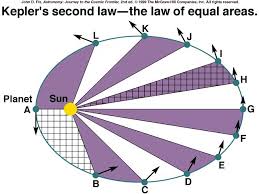
Where is the planet moving faster
a)
Position A to B
b)
Position B to C
c)
Position H to I
d)
Position I to J
63.
What is true about the area between points A, B and the Sun, and the area between points H, I and the Sun?
a)
The area between A, B and the Sun is the largest.
b)
The area between H, I and the Sun is the largest
c)
Both areas are equal in size
d)
There is not enough information to determine the areas
64.
What has an eccentricity of zero
a)
a straight line
b)
a large ellipse
c)
a circle
d)
a small ellipse
65.
Kepler's 2nd Law deals with 
a)
the shape of the planets' orbits
b)
the speed/area the planet travels 
c)
the length of time it takes the planet to orbit the sun
66.
A planet moves __________ when it is farthest from the sun.
a)
faster
b)
slower
67.
The farther away a planet is from the sun, the _______ it takes it to orbit the sun once. 
a)
longer
b)
shorter
68.
The path a planet travels around the sun is called its 
a)
orbit
b)
ellipse
c)
barycenter
d)
precession
69.
What are the two types of crust?
a)
continental and oceanic
b)
ocean and basin
c)
lower and upper
d)
thick and thin
70.
What drives tectonic plate movement? 
a)
gravity
b)
coriolis effect
c)
convection currents
d)
the earth's magnetic core
71.
When an oceanic plate and a continental plate collide, which one will subduct? 
a)
oceanic
b)
continental
c)
neither
d)
both
72.
Two tectonic plates collide at a ___ plate boundary.
a)
convergent
b)
divergent
c)
transform
d)
transformer
73.
This land form can occur at a divergent plate boundary.
a)
trench
b)
mid-ocean ridge
c)
folded mountains
d)
fault
74.

What do scientists know about an undisturbed sequence of rocks based on superposition?

a)

Older rocks are on top of younger

b)

Younger rocks are on top of older

c)

Older rocks have eroded away

d)

Younger walks get deposited and do not stay

75.
Which of the following correctly lists the layers in order from oldest to youngest?
a)
A, B, C, D, E
b)
E, B, C, D, A
c)
E, D, C, B, A
d)
C, B, A, D, E
76.
Used to determine whether an object is older or younger than other objects
a)
Superposition
b)
Relative Dating
c)
Fossil
d)
Unconformity
77.
What is the law of superposition?
a)
The age of sedimentary rock not found in the original layers.
b)
Metamorphic rock is younger than the nearby igneous rock.
c)
Sedimentary rock in it's original position is older than layers above it.
d)
Metamorphic rock is older because it was deposited to nearby sedimentary rock.
78.
How do scientists use fossils to determine the relative ages of rock layers?
a)
by comparing all the fossils in one rock layer
b)
by comparing fossils in many different rock layers
c)
by determining the positions of fossils in many different rock layers
d)
by locating other areas of the world where the same fossils are found
79.
Relative Dating dates rocks __________
Absolute Dating dates rocks __________
a)
exact age; sequence
b)
sequence; exact age
c)
exact age; parent isotopes
d)
Laws; Isotopes
80.
The length of time required for half of the radioactive atoms in a sample to decay is its...
a)
era
b)
age
c)
half-life
d)
eon
81.
The original element that undergoes radioactive decay is known as the...
a)
daughter element
b)
half-life
c)
parent element
d)
carbon-14
82.
what's the half life of this substance?
a)
1 day
b)
5 days
c)
3 days
d)
9 days
83.
If the half-life of a radioactive group of atoms is 100 years, then how old is the rock if the parent decays to 25%?
a)
25 years
b)
200 years
c)
400 years
d)
800 years
84.
The Earth is estimated to be how old?
a)
4.6 Million years old
b)
6,000 years old
c)
4.6 Billion years old
d)
Who knows
85.
Why are isotopes with short half-lives not useful for dating very old rocks?
a)
because not enough of the parent isotope remains to measure accurately
b)
because not enough of the daughter product has formed to be detectable
c)
because neither the parent isotope nor the daughter product will be detectable
d)
because very old rocks would never have contained these isotopes
86.

How much of the parent isotope is left after 3 half lives?

a)

100%

b)

50%

c)

25%

d)

12.5%

87.
Scientists use radioactive decay to measure...
a)
relative time
b)
absolute time
c)
half-lives
d)
time of day
88.
The process by which water, wind, ice, and changes in temperature break down rock into fragments called sediments.
a)
Deposition
b)
Erosion
c)
Weathering
d)
Igneous Rock
89.
Rock that forms when minerals form from solutions or sediment from older rocks get pressed and cemented together.
a)
Sedimentary Rock
b)
Metamorphic Rock
c)
Igneous Rock
90.
Rock that forms when pressure, temperature, or chemical processes change existing rock.
a)
Igneous Rock
b)
Sedimentary Rock
c)
Metamorphic Rock
d)
Rock Cycle
91.
The process by which metamorphic rocks are formed...
a)
heat and pressure
b)
compaction and cementation
c)
melting and cooling
92.
The process by which igneous rocks are formed...
a)
heat and pressure
b)
melting and cooling
c)
compaction and cementation
93.
A metamorphic rock can become ______.
a)
igneous
b)
metamorphic
c)
sedimentary
d)
all of these
94.
The name rock is given when it is broken down into smaller pieces.
a)
texture
b)
weathering
c)
sediment
d)
erosion
95.
What does it mean for a rock to be extrusive
a)
Have layers
b)
Have Rounded Edges
c)
Form from Lava
d)
Form By Sediment
96.
This rock was formed by lots of fossils that settled on top of each other over time. What type of rock is this?
a)
Sedimentary
b)
Igneous
c)
Metamorphic
97.
This rock cooled on the outside of a volcano and contained air bubbles when it was forming. What type of rock is this?
a)
Sedimentary
b)
Igneous
c)
Metamorphic
98.
This rock was another type of rock that was heated and compressed over time. What type of rock is this?
a)
Sedimentary
b)
Igneous
c)
Metamorphic
99.
This rock was molten lava that cooled quickly as it came out of a volcano. What type of rock is this?
a)
Sedimentary
b)
Igneous
c)
Metamorphic
100.
This rock was molten magma that slowly cooled under the ground. What type of rock is this?
a)
Sedimentar
b)
Igneous
c)
Metamorphic
101.

Which of these factors most affects the crystallization of igneous rock?

a)

the rate of cooling

b)

the amount of pressure

c)

the speed of the wind

d)

the color of the rock

102.
The color of a mineral in powder form is called the mineral's 
a)
hardness
b)
specific gravity
c)
luster
d)
streak
103.
How light reflects off of a mineral is called the mineral's 
a)
luster
b)
streak
c)
cleavage
d)
fracture
104.
The following image shows what mineral property?
a)
Hardness
b)
Streak
c)
Cleavage
d)
Density
105.
Diamond has a hardness of ___ on Mohs Hardness Scale.
a)
1
b)
5
c)
8
d)
10
106.
By definition, a mineral has which of the following characteristic(s)?
a)
definite chemical composition
b)
crystal structure
c)
naturally occuring
d)
all of the above
107.
A naturally occurring, inorganic solid with a crystal structure and a definite chemical composition is referring to
a)
density
b)
streak
c)
mineral
d)
non silicate mineral
108.
The solid, geometric form of a mineral produced by a repeating pattern of atoms
a)
crystal
b)
density
c)
element
d)
fracture 
109.
What mineral is the softest mineral on Moh's Hardness Scale and the main ingredient in baby powder?
a)
feldspar
b)
talc
c)
gypsum
d)
kaolinite
110.
The mineral halite is formed by 
a)
hot water solutions
b)
cooling of magma
c)
cooling of lava
d)
evaporation
111.
This narrow channel of gold intruding into the surrounding rock is called a 
a)
sill
b)
dike
c)
volcanic neck
d)
vein
112.
The five characteristics that all minerals share are:
a)
Definite Chemical Composition, Color, Density, Igneous, and Solid
b)
Definite Chemical Composition,  Crystal Structure, Inorganic, Naturally Occurring, and Solid
c)
Cleavage, Faces, Hardness, Metamorphic, and Streak
d)
Cleavage, Crystal Structure, Density, Igneous, and Solid
113.
Means that a mineral cannot come from something that was once living.
a)
Inorganic
b)
Organic
c)
Naturally Occurring
d)
Not Living
114.
This is measured on  the Mohs Scale.
a)
Cleavage
b)
Density
c)
Hardness
d)
Luster
115.

The _________ of a mineral is the least helpful property when identifying the type of mineral.

a)

Chemical Composition

b)

Color

c)

Hardness

d)

Streak

116.
_______ is a property that describes a mineral  that splits evenly along flat surfaces.
a)
Cleavage
b)
Fracture
c)
Inorganic
d)
Organic
117.
This describes how a mineral looks if it breaks in an irregular way.
a)
Cleavage
b)
Fracture
c)
Inorganic
d)
Organic
118.
"Mountains are constantly being washed into the sea" ... this statement refers to the effects of
a)
Weathering and erosion
b)
Folding and faulting
c)
Fossil formation
119.
Deltas forming at the mouths of rivers
a)
Weathering
b)
Erosion
c)
Deposition
120.
When water, ice and wind move particles of rock and soil from one place to another
a)
sediment
b)
weathering
c)
erosion
121.
Water, wind, gravity, ice, plants are all part of this kind of weathering
a)
Chemical
b)
Mechanical
c)
Humid
122.
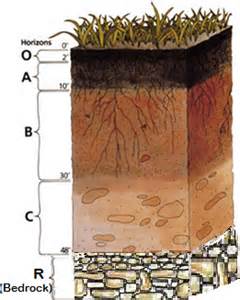
The layer of soil which the topsoil is found.
a)
Horizon A
b)
Horizon B
c)
Horizon C
d)
Horizon D or R
123.
The MAIN  thing decomposers do for the the soil is the following:
a)
Store moisture
b)
Burrow deep in the soil
c)
Make space for air and water
d)
Break down and digest dead organisms
124.
Decayed organic material in soil is called______.
a)
Litter
b)
Silt
c)
Humus
d)
Clay
125.
The two main factors that determine the rate of weathering are the TYPE of rock and_____.
a)
Music
b)
Climate
c)
Size of rock
d)
Weight of rock
126.
Which horizon is made up of partially weathered rocks?
a)
Horizon A
b)
Horizon B
c)
Horizon C
d)
Horizon D or R
127.
Name the soil horizon: B Horizon
a)
parent material
b)
topsoil
c)
subsoil
d)
bedrock
128.

Rain washing away soil from a hillside is an example of what?

a)

Weathering

b)

Erosion

c)

Deposition

d)

Compaction

129.

Caves being formed by acid rain dissolving underground limestone are examples of what?

a)

Chemical Weathering

b)

Erosion

c)

Deposition

d)

Mechanical Weathering

130.

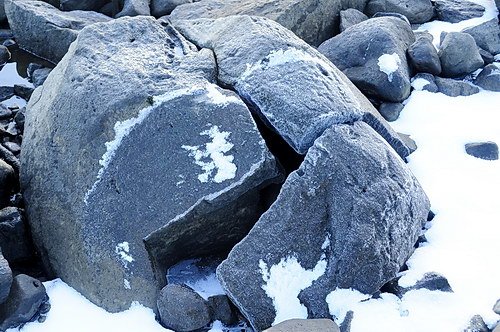
Water getting into cracks, freezing, and breaking the rocks or pavement apart is an examples of what?

a)

Mechanical Weathering

b)

Erosion

c)

Deposition

d)

Chemical Weathering

131.
How does freezing water cause the weathering of rocks?  The freezing water—
a)
keeps the rocks in place.
b)
makes the rocks last longer.
c)
expands cracks and breaks rocks.
d)
causes rocks to fall in landslides.
132.
How do plants weather rocks?
a)
During photosynthesis
b)
When roots grow into cracks of rocks and expand the rock breaks.
c)
When the plant moves water from the roots to the leaves, the rock breaks.
d)
Plants don't weather rocks.
133.
This force causes the movement of glaciers
a)
pressure
b)
ice age
c)
gravity
d)
firn
134.
What is a bowl-shaped depression formed by glacial erosion?
a)
cirque
b)
arrete
c)
ice pack
d)
kettle
135.
A sharp, jagged ridge formed by a glacier is called a(n)...
a)
arrete
b)
cirque
c)
erratic
d)
drumlin
136.
Glaciers form when _____.
a)
less snow falls than melts 
b)
more snow falls than melts 
c)
less rain falls than freezes 
d)
more rain falls than freezes 
137.

___________ glaciers are formed in mountainous areas.

a)

Valley

b)

Continental

138.
How do glaciers erode land?
a)
By picking up soil and rocks and depositing them in new location
b)
By picking up water from lakes and streams and carrying it to the ocean
c)
By causing rain and snow in an area
d)
By lowering the atmospheric pressure, causing intense windstorms
139.
What type of glacier forms over large, flat, land masses and is shaped like a dome?
a)
an iceburg
b)
a crevasse
c)
a continental glacier
d)
an alpine glacier
140.
A loop like bend in the course of a river.
a)
meander
b)
oxbow lake
c)
alluvial fan
d)
delta
141.
A calcite deposit that hangs from the roof of a cave.
a)
stalagmite
b)
stalactite
c)
Stretchy hanging rock
d)
Slim Jim
142.
A cone-shaped calcite deposit that builds up from the floor of a cave.
a)
stalagmite
b)
stalactite
c)
Irrigators
d)
Potato
143.
The stream that flows into a larger stream.
a)
gully
b)
tributary
c)
stream
d)
rill
144.
A meander cut off from a river.
a)
alluvial fan
b)
delta
c)
flood plain
d)
oxbow lake
145.
Deposits of sediment that run along the shore are called...
a)
aquifer
b)
cave
c)
beaches
d)
meander
146.
Wind blasting sand at rock and carving out arches
a)
Weathering
b)
Erosion
147.
offshore columns of resistant rock that were once connected to the mainland
a)
sea stacks
b)
sea arches
c)
sea caves
d)
sea cliffs
148.
form when wave action continues to erode a sea cave, cutting completely through the rock
a)
sea arches
b)
sea caves
c)
headlands
d)
sea cliffs