wayground logo

Free Printable Worksheets

NEW

Font size

S
M
L
XL
Worksheets

GMHS Physical Science 18-19 Midterm review

Total questions: 42

Worksheet time: 46mins

Name
Class
Date
1.

Determine whether each material below is a pure substance- element, pure substance- compound, a homogeneous mixture, or a heterogeneous mixture.

C2H2

a)

pure substance, element

b)

pure substance, compound

c)

homogeneous mixture

d)

heterogeneous mixture

2.

Determine whether each material below is a pure substance- element, pure substance- compound, a homogeneous mixture, or a heterogeneous mixture.

raisin bran cereal

a)

pure substance, element

b)

pure substance, compound

c)

homogeneous mixture

d)

heterogeneous mixture

3.

Determine whether each material below is a pure substance- element, pure substance- compound, a homogeneous mixture, or a heterogeneous mix

salt water

a)

pure substance, element

b)

pure substance, compound

c)

homogeneous mixture

d)

heterogeneous mixture

4.
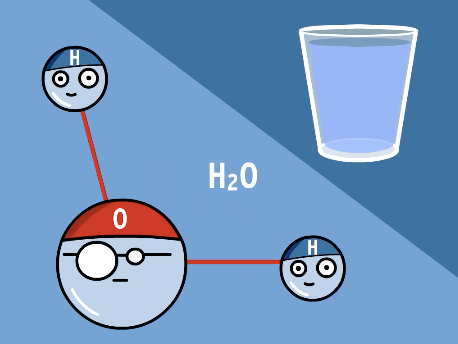
Why do ice cubes float in a  glass of water?
a)
the ice cubes are more dense than the water
b)
the water is more dense than the ice cubes
c)
the water is more dense than the glass
d)
the ice is more dense than the glass
5.
Which property of matter is determined by dividing its mass by its volume?
a)
elasticity
b)
buoyancy
c)
density
d)
viscosity
6.
At higher temperatures
a)
particles in an object have less energy
b)
particles in an object move faster
c)
a gas contracts
7.
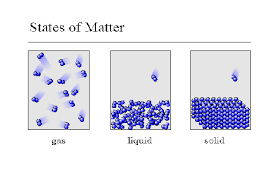
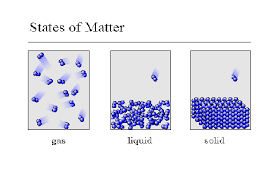
A gas
a)
has a definite shape but no definite volume
b)
has a definite volume but no definite shape
c)
has fast-moving particles
8.
Change from gas to liquid...
a)
condensation
b)
evaporation
c)
expansion
d)
movement
9.
change from liquid to gas is called....
a)
expansion
b)
evaporation
c)
condensation
d)
sublimation
10.

4 grams of hydrogen and 32 grams of oxygen will combine to form:

a)

36 grams of water

b)

28 grams of hydroxide

c)

32 grams of oxygen

d)

36 grams of deuterium

11.
Cake batter baked in an oven
a)
Chemical Change
b)
Physical Change
12.
Boiling water
a)
Chemical Change
b)
Physical Change
13.
all matter is made of what 
a)
energy 
b)
atoms 
c)
electrons 
d)
compounds 
14.
The positive particles of an atom are 
a)
electrons 
b)
positrons 
c)
neutrons 
d)
protons 
15.

The middle region of an atom where its neutrons and protons are is its

a)

nucleus

b)

electron cloud

c)

core

d)

center

16.
Which of the following is a negatively charged subatomic particle?
a)
Electron
b)
Proton
c)
Neutron
d)
Quark
17.
What is the atomic number for an element with three protons?
a)
2
b)
1
c)
3
d)
6
18.
Most of the mass in an atom is concentrated in the...
a)
electrons
b)
nucleus
c)
protons
d)
empty space
19.

Isotopes are atoms of the same element but can have different numbers of ____________.

a)

protons

b)

neutrons

c)

electrons

d)

quarks

20.
If a sulfur atom has 16 protons, 16 electrons, and 16 neutrons, its atomic mass is:
a)
16
b)
32
c)
48
d)
64
21.
An atom has 10 protons, 15 neutrons and 10 electrons what is its mass number.
a)
20
b)
10
c)
5
d)
25
22.
Why are ions formed?
a)
To make our lives difficult
b)
Because atoms want 8 valence electrons
c)
Because atoms have the same number of protons and electrons
d)
Because atoms gained neutrons
23.
Cations are...
a)
Positive
b)
Negative
c)
Neutral
d)
Purring
24.
An atom becomes _________ when it gains electrons.
a)
Positive
b)
Negative
c)
Neutral
d)
Invinsible
25.
When metals form ions:
a)
they lose electrons and form cations
b)
they gain electrons and form cations
c)
they lose electrons and form anions
d)
they gain electrons and form anions
26.
What is the charge on a chloride ion?
a)
-1
b)
1
c)
+2
d)
+1
27.

This family/group are highly reactive metals because they only have 1 valence electron to get rid of so they react with everything. Even reacting violently with water.

a)

Alkali Metals

b)

Alkaline Earth Metals

c)

Halogens

d)

Transition Metals

28.
What two types of atoms make a covalent bond?
a)
2 Nonmetals
b)
1 Nonmetal and 1 Metal
c)
2 Metals
d)
2 Noble Gases
29.
Magnesium bromide is an ionic compound with the chemical formula MgBr₂.  What does the "2" tell you?
a)
There are 2 bromide ions for every magnesium ion
b)
Bromide has a 2- charge
c)
Bromide has a 2+ charge
d)
There are 2 magnesium ions to every bromide ion
30.
Ionic bonds form between metals and ____.
a)
metalloids
b)
metals
c)
nonmetals
31.
Is the following equation balanced?...
Al + O2 --> 2Al2O3
a)
Yes!
b)
No!
32.
What is the number before a chemical formula called?
Ex: 2H2 + O2 --> 2H2O
a)
Coefficient
b)
Subscript
c)
Atom
d)
Equation
33.
Is the following equation balanced?
4Fe + 3O2 --> 2Fe2O3
a)
yes
b)
no
34.
A girl turned the light off and went to bed.  She remembered she had accidentally left her glass of ice water on the counter.  When she got up the next morning, the ice had melted. What form of energy caused the ice to melt?
a)
Sound energy
b)
Light energy
c)
Thermal energy
d)
Mechanical energy
35.
Energy stored in the bonds of atoms and molecules. 
a)
Chemical Energy
b)
Radiant Energy
c)
Stored Mechanical Energy
d)
Gravitational Energy
36.
Energy of place or position. 
a)
Gravitational Energy
b)
Mechanical Energy
c)
Thermal Energy
d)
Chemical Energy
37.
Motion Energy
a)
Stored Mechanical Energy
b)
Potential Energy
c)
Electrical Energy
d)
Kinetic Energy
38.

Compressed springs and stretched rubber bands are examples.

a)

Potential Energy

b)

Elastic Potential Energy

c)

Radiant Energy

d)

Kinetic Energy

39.
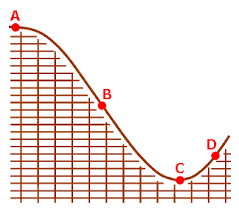
At which point(s) on the roller coaster is the gravitational potential energy at its maximum?
a)
A
b)
B
c)
C
d)
D
40.
A cheetah can run briefly with a speed of 31m/s.  Suppose a cheetah with a mass of 47 kg runs at this speed.  What is the cheetah’s kinetic energy?
a)
22583.5 J
b)
728.5 J
c)
1457 J
d)
0.75 J
41.
A cheetah can run briefly with a speed of 31m/s.  Suppose a cheetah with a mass of 47 kg runs at this speed.  What is the cheetah’s kinetic energy?
a)
22583.5 J
b)
728.5 J
c)
1457 J
d)
0.75 J
42.
With an elevation of 5334m above sea level, the village of Aucanquilca, Chile is the highest inhabited town in the world.  What would be the gravitational potential energy associated with a 64kg person in Aucanquilca?
a)
3345484 J
b)
5407.8 J
c)
816.76 J
d)
72.31 J