
 Worksheets
Ex Science Unit 1.1 - Human Evolution
Total questions: 20
Worksheet time: 10mins
Enlargement of muscles after several weeks of weight training would be a(n)
Chronic Exercise Response
Acute Exercise Response
Reduction in resting heart rate after 3 months of training for a marathon would be a(n):
Chronic Exercise Response
Acute Exercise Response
Increased heart rate during a 100m race would be a(n):
Chronic Exercise Response
Acute Exercise Response
Sweating while playing in a soccer game would be a(n):
Chronic Exercise Response
Acute Exercise Response
The study of the structure of body parts and their relationship to one another is:
Physiology
Anatomy
Philosophy
Microbiology
Which of the following best describes the environmental transition taken by human ancestors?
Moved from desert to ocean
Moved from savanna to forest
Moved from forest to savanna
Moved from land to water
How did the human diet change when our ancestors moved out of the forest?
They joined weight watchers
Less meat, more honey
Less fruit, more meat
More fruit and meat
Which of the following is a likely hunting technique that early human ancestors (~2 million years ago) used to kill large animals?
Use of high powered rifles.
Attacking from afar using a bow and arrow.
Chasing animals into exhaustion.
Steel tipped spears.
This large muscle functions in humans to extend the hip and stabilize the body during upright locomotion.
Pectoralis major
Gastrocnemius
Gluteus maximus
Latissimus dorsi
The nuchal ligament functions to:
Attach the calf muscles to the heel bone
Attach the pelvis to the sacrum
Attach the vertebral column to the back of the head
Support the arch of the foot
True or False: Chimpanzees lack a distinct medial longitudinal arch in their foot.
True
False
Which if the following is associated with physical inactivity in humans:
Obesity
Heart Disease
Type II Diabetes
All of the above are associated with physical inactivity.
The study of the function of body parts is:
Physiology
Anatomy
Philosophy
Microbiology

Bipedalism is...
The ability to kick a ball
The ability to ride a bike and move its pedals
The ability to walk upright on both feet
The ability to dance well
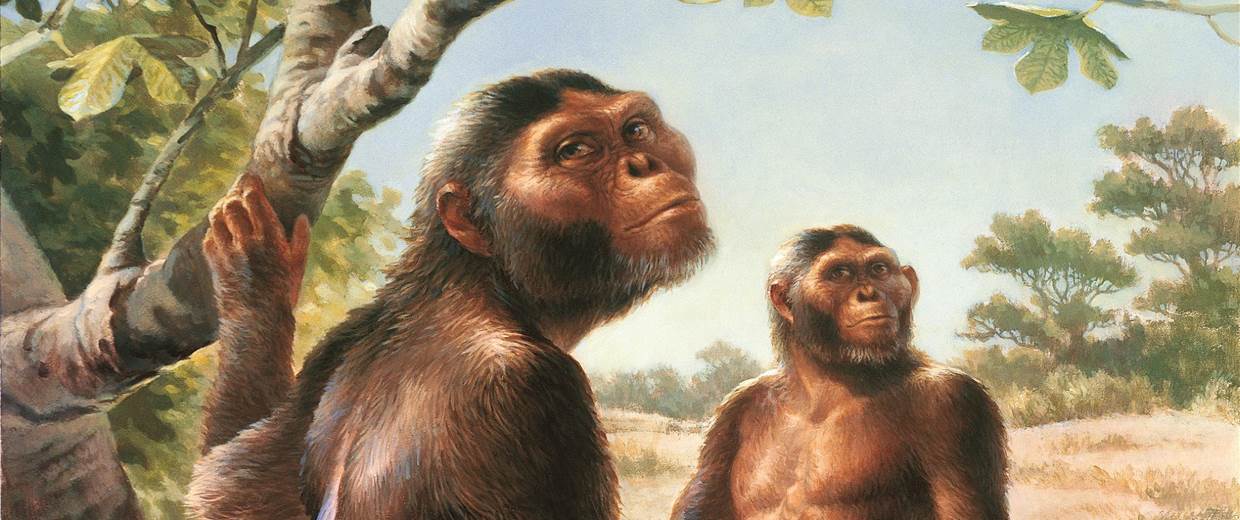
All of these are advantages of bipedalism EXCEPT:
Hands are free to carry food.
Save energy when walking long distances.
Hands are free to use tools.
Easier to climb trees
Which of the following modifications allowed humans to become better able to cool themselves while active on a hot day:
Loss of fur/body hair
Sweat glands distributed widely over the body
Hand free to carry water while walking upright
All of the above allowed humans to keep cool
For a running animal, the primary advantage to having legs with thin distal components is
Uses more energy when running
Uses less energy when running
Decreases stride length
Makes legs easier to break
This tendon connects the calf muscles to the heel bone.
Patellar tendon
Quadriceps tendon
Itliotibial band
Achilles tendon
True or False: Though not a major part of their diet, Chimpanzees are known to hunt and eat meat on occasion.
True
False
True or False: Humans are generally less active on a daily basis than we were hundreds/thousands of years ago.
True
False

