wayground logo

Free Printable Worksheets

Font size

S
M
L
XL
Worksheets

Weathering Pt. I

Total questions: 20

Worksheet time: 12mins

Name
Class
Date
1.

Weathering is

a)

the movement of rock particles by wind, water, ice or gravity

b)

rain, sleet, snow and hail

c)

the process that breaks down rocks and other substances on Earth's surface.

d)

frost wedging

2.

Which is NOT an agent of chemical weathering?

a)

Water

b)

Oxygen

c)

Carbon Dioxide

d)

Neon

3.

Carbon dioxide mixes with rain water to form

a)

marble

b)

limestone

c)

carbonic acid

d)

snow

4.

The movement of rock particles by wind, water, ice or gravity is called

a)

Chemical Weathering

b)

Physical Weathering

c)

Erosion

d)

Gravitational Pull

5.

The most important agent in chemical weathering is

a)

Carbon

b)

Oxygen

c)

Hydrogen

d)

Water

6.

What is another name for physical weathering?

a)

chemical weathering

b)

mechanical weathering

c)

physical weathering

d)

none of the above

7.

How does water affect physical weathering?

a)

Water can affect the physical weathering of rocks through much faster means

b)

Water erodes and weathers the water

c)

The water does not effect physical weathering

8.

What are 3 examples of physical weathering?

a)

Swiftly Moving water

b)

Composition

c)

Process of cementation

d)

Ice wedging

e)

Plant roots

9.

What are 2 of the agents of physical weathering?

a)

Water

b)

Weathering

c)

Heat and Pressure

d)

Wind

10.

Physical and Chemical weathering are 2 different weathering

a)

True

b)

False

11.
The natural chemical or physical processes that breaks down rock on Earth's surface.
a)
weathering
b)
erosion
c)
deposition
d)
jackhammering
12.
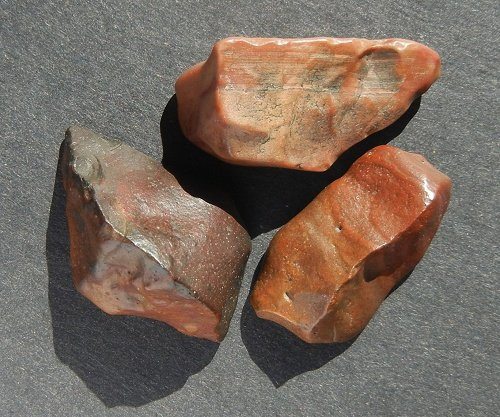
These rocks were made smooth by wind blowing smaller rock particles across their surface.  This is an example of:
a)
ice wedging
b)
chemical weathering
c)
acid rain
d)
abrasion
13.
These rocks were broken apart from the continuous freeze/thaw of water in the cracks of the rocks. This is an example of:
a)
ice wedging
b)
acid rain
c)
permeability
d)
abrasion
14.
How might a weathered mountain appear different than an unweathered mountain?
a)
Weathered mountain would be taller.
b)
Weathered mountain would be rounder and less jagged.
c)
Weathered mountain would be more jagged and less rounded.
d)
Weathered mountain would have no trees.
15.

Weeds growing into the cracks in a sidewalk and the sidewalk begins to crumble is an example of:

a)

physical weathering

b)

chemical weathering

16.

Potholes forming in the road after a cold winter is an example of:

a)

physical weathering

b)

chemical weathering

17.
How does freezing water cause the weathering of rocks?  The freezing water—
a)
keeps the rocks in place
b)
makes the rocks last longer
c)
expands cracks and breaks rocks
d)
causes rocks to fall in landslides
18.
All of the following are causes of physical weathering except...
a)
plant growth
b)
wind
c)
acid rain
d)
running water
19.
What type of Weathering is caused by animal actions?
a)
Chemical Weathering 
b)
Erosion 
c)
Mechanical Weathering 
d)
Animals 
20.
3.  Which types of changes are included in the process of weathering?
a)
A.  physical
b)
B.  chemical
c)
C.  both