wayground logo

Free Printable Worksheets

NEW

Font size

S
M
L
XL
Worksheets

Cell Biology Unit Test

Total questions: 50

Worksheet time: 38mins

Name
Class
Date
1.

The diffusion of water is called through a semi-permeable membrane is called

a)

active transport

b)

osmosis

c)

endocytosis

d)

exocytosis

2.
Which of the following is found in plant cells but not in animal cells? 
a)
Cytoplasm
b)
Mitochondria
c)
Cell Wall 
d)
Ribosomes 
3.
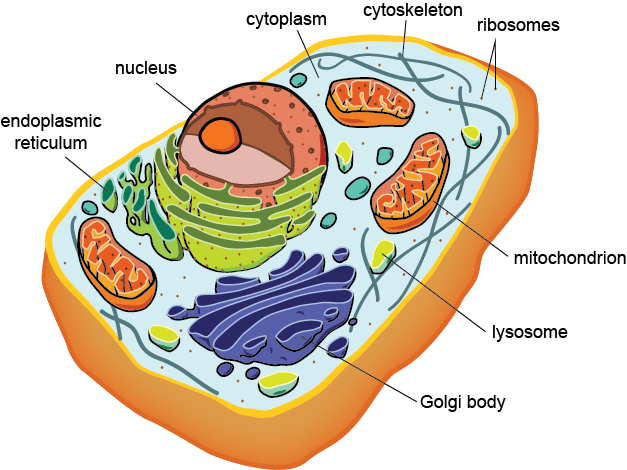
What type of cells are pictured 
a)
Muscle Cells
b)
Cells of the Immune System 
c)
Human Cheek Cells
d)
Plant Cells 
4.

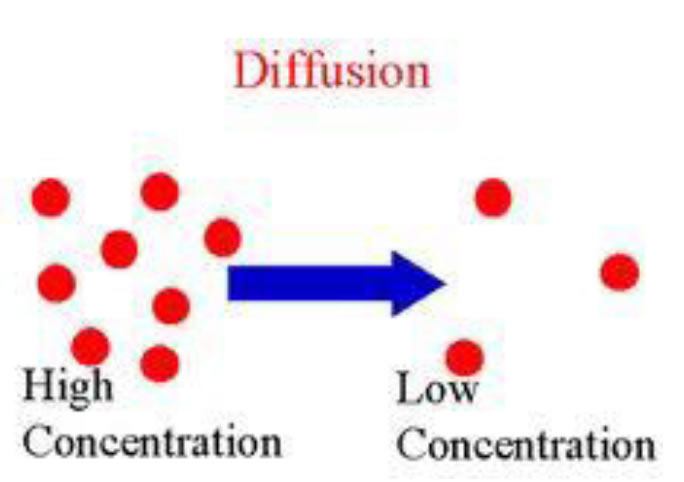
What process moves gases such as oxygen "randomly" through the cell membrane as shown in the drawing?

a)

Active Transport

b)

Osmosis

c)

Diffusion

d)

Protein Channel

5.

If an egg is placed into a beaker of salt water, what happens to the salt water solution and egg?

a)

Loss of egg shell through active transport

b)

Loss of egg shell through diffusion

c)

Gain of salt water through exocytosis

d)

Gain of salt water through osmosis

6.

The cell membrane consists of mainly of

a)

Phospholipids & protein

b)

Crunchy celery like structure

c)

Carbohydrates & sugars

d)

Cellulose & lactose

7.

Which structure is not present in animal cells?

a)

Chloroplast

b)

Cell membrane

c)

Cytoplasm

d)

Nucleus

8.

What is the primary function of the cell's selectively permeable membrane?

a)

Regulate energy production

b)

Keeps the cell's shape

c)

Control what enters and leaves the cell

d)

Maintain a free flow of molecules

9.

In the Dialysis Tubing Experiment, why did the water turn blue?

a)

Starch went into the dialysis tubing through osmosis

b)

The long chained carbohydrate was too large to get into the dialysis tubing.

c)

The iodine osmosed through the tubing and a chemical reaction occurred between the iodine and the corn starch

d)

The iodine diffused through the tubing and a chemical reaction occurred between the iodine and the corn starch

10.

This organelle supports, protects and gives plant cells protection.

a)

Cytoskeleton

b)

Cell Wall

c)

Cell membrane

d)

Cytoplasm

11.
This structure controls what can enter and leave a cell.
a)
Nucleus
b)
Cytoplasm
c)
Cell Membrane
d)
Golgi Body
12.
This is the cell's "control center."
a)
Endoplasmic Reticulum
b)
Golgi Body
c)
Nucleus
d)
Cell Wall
13.

This is the "powerhouse" of the cell that converts food to energy.

a)

Mitocondria

b)

Endoplasmic Reticulum

c)

Nucleus

d)

Lysosome

14.
In plant cells, this structure captures energy from the sun to produce food.
a)
Ribosomes
b)
Cell Wall
c)
Vacuoles
d)
Chloroplasts
15.
This structure is a storage area for the cell.
a)
Lysosome
b)
Vacuole
c)
Ribosome
d)
Golgi Body
16.
This is a liquid region in which cell structures are found.
a)
Nucleus
b)
Cell Membrane
c)
Vacuoles
d)
Cytoplasm
17.
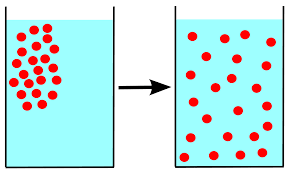
The picture below is an example of _________________.
a)
osmosis
b)
isotonic
c)
diffusion
d)
active transport
18.
Osmosis is the movement of _____ across a membrane.
a)
food
b)
energy
c)
oxygen
d)
water
19.
During osmosis
a)
water moves from high to low concentration
b)
large or oddly shaped molecules move across a cell membrane
c)
water moves when energy is used
d)
proteins are built
20.
Permeable means
a)
things can pass through
b)
the concentration levels are different
c)
it is permanent
d)
things are stuck
21.
The diffusion of water through a semi-permeable membrane is called?
a)
Osmosis
b)
Cell wall
c)
Diffusion
d)
Respiration
22.
Where is there a low concentration of perfume?
a)
in the bottle
b)
on the hand
c)
in the room
d)
in the top
23.
What is the definition of  Selective Permeability?
a)
The movement of materials across the cell membrane that requires NO ENERGY from the cell.
b)
The movement of materials through (or across) the cell membrane
c)
The ability of the cell membrane to allow some things to pass through while preventing other things from passing through.
d)
The movement of molecules from an area of high concentration to a area of low concentration 
24.

What a cell needs to transport large particles by active transport?

a)

Sun

b)

Wind

c)

Energy

d)

Channels

25.

When both inside and outside of a cell have the same amount of water it is said that the cell has reached a state of

a)

Osmosis

b)

Diffusion

c)

Isotonic

d)

Hypertonic

26.

A person should never drink salty water because their cells would become ________________, and they would die of dehydration.

a)

Hypertonic

b)

Hypotonic

c)

Isotonic

d)

Exocytosis

27.
Passive transport requires no
a)
concentration gradients
b)
osmosis
c)
motion
d)
energy
28.
Sometimes, energy is required for ____ molecules to go in or out of the cell because they cannot fit into the membrane.
a)
big
b)
small
c)
crunchy
d)
water
29.

Movement of particles from high to low concentration.

a)

Passive Transport

b)

Active Transport

30.
what type of solution causes the blood cells to swell and burst.
a)
hypotonic solution
b)
hypertonic solution
c)
isotonic solution
d)
active transport
31.
Which of the following functions does the cell wall not perform for a cell?
a)
give it shape
b)
gives it strength
c)
allows things to enter and leave
32.
Oldest type of cell
a)
Prokaryote
b)
Eukaryote
c)
both
33.
Smaller
a)
Prokaryote
b)
Eukaryote
c)
both
34.
Bacteria
a)
Prokaryote
b)
Eukaryote
c)
both
35.
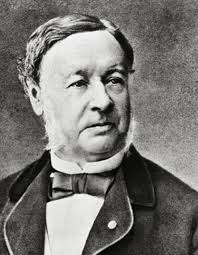
Which of the following scientists concluded that all animals are made of cells?
a)
Rudolf Virchow
b)
Matthais Schleiden
c)
Robert Hooke
d)
Theodor Schwann
36.
Which of the following scientists was the first to observe bacteria?
a)
Anton van Leuwenhoek
b)
Matthais Schleiden
c)
Robert Hooke
d)
Theodor Schwann
37.
Which of the following statements is not part of the cell theory?
a)
Cells are the basic unit of structure and function in all living things.
b)
All cells are produced from other cells.
c)
Only animal cells are composed of cells.
d)
All living things are composed of cells.
38.
The invention of the microscope made it possible for people to discover and learn about
a)
Plants
b)
Skin 
c)
Animals 
d)
Cells
39.
What is one way in which all living things on Earth are alike?
a)
All living things have hair.
b)
All living things are made of cells and come from other cells.
c)
The cells of all living things have chloroplast.
d)
All living things can move. 
40.
What structures distinguish a plant cell from an animal cell?
a)
Plant cells have cell walls and ribosomes.
b)
Plant cells have cell walls and chloroplasts.
c)
Plant cells have chloroplasts and ribosomes.
d)
Plant cells have chloroplasts and mitochondria.
41.

T or F : cells are only made up of one cell

a)

True

b)

False

42.

T or F : Living things respond to stimuli in their environment

a)

True

b)

False

43.

T or F: Living things do no not reproduce

a)

False

b)

True

44.

T or F: living things do develop but not grow

a)

True

b)

False

45.
A group of tissues that perform a similar function is called_____. (Examples include the heart, lungs or stomach)
a)
cells
b)
tissues
c)
organs
d)
organ system
46.

A group of cells that have similar functions? Examples are nervous, epithelial, muscle and connective

a)

cells

b)

tissues

c)

organs

d)

atoms

47.
What is the correct order of organization
a)
tissues-cells-organs-organ systems-organism
b)
cell-tissue-organs-organ systems-organism
c)
organism-cells-tissues-organ systems-organism
d)
tissues-cells-organs-organ sytems-organism
48.
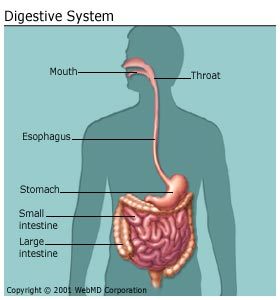
This is a example of........ 
a)
organ system
b)
cells
c)
organ
d)
tissue
49.

What's the correct order for the Level of Organization?

a)

cells, organs, organ system, tissues

b)

cells, tissues, organs, organ systems

c)

organs, organ systems, cells, tissues

d)

organ systems, organs, cells, tissues

50.
How are unicellular organisms different from multicellular organisms? 
a)
There are no differences.
b)
They are made of many cells. 
c)
They are only classified as prokaryotes.
d)
They are made of only one cell.