wayground logo

Free Printable Worksheets

NEW

Font size

S
M
L
XL
Worksheets

Ecology quiz review

Total questions: 47

Worksheet time: 2hrs 34mins

Name
Class
Date
1.
How many levels of organization are ecologists concerned with?
a)
9
b)
7
c)
6
d)
5
2.
The smallest unit of life that can sustain itself is called...
a)
an organism.
b)
the biosphere.
c)
a population.
d)
a community.
3.
What is it called when a group of the same organisms living together in the same place at the same time?
a)
An organism
b)
A population
c)
A community
d)
A biome
4.
What are groups of different populations living togther in the same place at the same time called?
a)
An organism
b)
A population
c)
A community
d)
A biosphere
5.
What is it called when you have groups of different populations along with their abiotic factors?
a)
An organism
b)
A population
c)
A community
d)
An ecosystem
6.
When all the ecosystems on Earth are combined it is called...
a)
a community.
b)
a biome.
c)
a biosphere.
d)
an Earthsphere.
7.

The temperate deciduous forest, the tropical rain forest, the desert, and the tundra are all examples of...

a)

the biopshere.

b)

biomes.

c)

ecosystems.

d)

communities.

8.
A duck, a dragonfly, a morel mushroom and a bobcat are all examples of...
a)
organisms.
b)
populations.
c)
communties.
d)
ecosystems.
9.

Andrea is on the girls cross country team. She is heading out for a run when she comes across 20 Canadian geese. What level of organization is this group of Canadian geese?

a)

organism

b)

population

c)

community

d)

biome

10.

Jacob is going out to his grandparents farm. On the farm is a stream that he likes to fish at. When he is fishing he sees many different species of fish as well as maple and oak trees and dragonflies. What Jacob is seeing is an example of what level of organization?

a)

organism

b)

population

c)

community

d)

ecosystem

11.

Abby is walking to school with her best friend Jaylyn. They begin talking about everything they see including the ash trees, grass, weeds, ants, and people. They also notice how cold it is, how there are several large puffy clouds out, and how the sun is just starting to come up. What level of organization are they discussing?

a)

community

b)

ecosystem

c)

biome

d)

biosphere

12.
What is a group of ecosystems that share similar climates and types of organisms called?
a)
A community
b)
A biome
c)
An ecosystem
d)
A biosphere
13.
Antonio and Javier are astronauts in space looking back at Earth and discussing how all the life on Earth interacts with each other as well as the nonliving things. What level of organization are they discussing?
a)
A community
b)
A biome
c)
An ecosystem
d)
A biosphere
14.
All of the student, faculty and staff at Hazelwood West high school are considered what level of organization?
a)
A population
b)
A community
c)
A biome
d)
An ecosystem
15.
What are the ecological levels of organization from smallest to the largest?
a)
organism, population, community, ecosystem, biome, biosphere
b)
organism, community, population, ecosystem, biome, biosphere
c)
organism, population, community, biome, ecosystem, ecosphere.
d)
organism, community, population, biome, ecosystem, ecosphere
16.
Temperature, light, air, water, and soil are all  _____  parts of the environment
a)
alive
b)
biotic 
c)
abiotic
d)
living
17.
Is a deer an abiotic or biotic factor? 
a)
abiotic
b)
biotic
18.
Is a fern an abiotic or biotic factor? 
a)
abiotic
b)
biotic
19.
Is sunlight an abiotic or biotic factor? 
a)
abiotic
b)
biotic
20.
A living or once-living organisms in an ecosystem is a
a)
population
b)
biotic factor
c)
abiotic factor
d)
community
21.
Which of the following is not an abiotic factor?
a)
sun
b)
temperature
c)
soil
d)
grass
22.
A nonliving element in an ecosystem is an 
a)
animal
b)
abiotic factor
c)
biotic factor
d)
organism
23.

Which of the following is NOT a biotic factor?

a)

mushroom

b)

air

c)

elephant

d)

coyote

24.
Which of the fallowing has only abiotic factors?
a)
Sunlight, algae, and temperature
b)
Guppy, crab, oxygen
c)
Sunlight, soil, and weather
d)
Algae, temperature, and dog
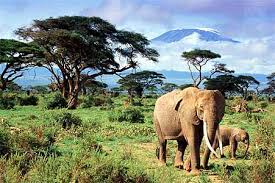
25.
What are the biotic factors in this image?
a)
sunlight, elephants, and grasses
b)
sunlight, water,  and air
c)
elephants, plants, trees 
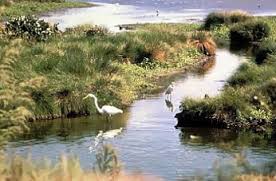
26.
What are the abiotic factors in this image? 
a)
water, sunlight, dirt, air
b)
birds and plants
c)
water, plants, and birds 
27.
A certain plant needs moisture, carbon dioxide, oxygen, light, and minerals to survive. This scenario shows that this particular living organism depends on .
a)
Biotic and Abiotc Factors
b)
Biotic Factors 
c)
Abiotic Factors 
d)
None of the Above
28.
Which of the following lists has ONLY biotic factors?
 
a)
snail, algae, guppy, sunlight
b)
temperature, Daphnia (water flea), snail, guppy (fish)
c)
snail, guppy (fish), Daphnia (water flea), algae
d)
temperature, pH, conductivity, nitrite concentration
29.
The factors in an ecoysystem that have never had the ability to live.
a)
Biotic Factor
b)
Abiotic Factor
c)
Biome
d)
Community
30.
The study of relationships between biotic and abiotic factors interacting in the same area.
a)
Ecology
b)
Biology
c)
Zoology
d)
Botany
31.
What is the main factor that separates the biomes?
a)
Land
b)
Water
c)
Climate
d)
Longitude
32.
A large ecosystem is called a ______
a)
Ecosystem
b)
Habitat
c)
Biome
d)
Niche
33.

Which biome has the least amount of biodiversity? (the least different kinds of organisms)

a)

tropical rain forest

b)

savanna

c)

grassland

d)

desert

34.

Which biome is the driest? It receives less than 10 inches of rain a year.

a)

desert

b)

grassland

c)

deciduous forest

d)

tropical rain forest

35.

In which biome would you find permafrost? This is the layer of soil that is frozen all the time.

a)

coniferous forest (taiga)

b)

desert

c)

tundra

d)

grassland

36.

Which biome has a dry season and a wet season?

a)

tundra

b)

tropical rain forest

c)

desert

d)

savanna

37.

Which biome is the largest land biome?

a)

coniferous forest (taiga)

b)

desert

c)

tundra

d)

tropical rain forest

38.
The biome known for trees with broad leaves that fall off the trees in the winter.
a)
Coniferous Forests
b)
Deciduous Forests
c)
Deserts
d)
Tropical Rain Forests
39.
The kangaroo rat is able to get all of the water it needs through it's food and therefore, never needs to drink liquid. This animal has adapted to survive in which biome that rains less than 2 inches a year?
a)
Forest
b)
Tundra
c)
Desert
d)
Grassland
40.
The taiga:
a)
a cold, treeless, desert-like biome found near the North and South Poles
b)
found mostly in Africa
c)
a forest biome dominated by coniferous trees, such as pine, fir, and spruce
d)
a dry, rocky biome found in the central part of South America.
41.
Name the biome that has cold winters, warm summers, moderate seasonal precipitation, fertile soils and occasional wildfires.
a)
Tropical Dry Forest
b)
Tropical Grassland
c)
Temperate Grassland
d)
Temperate Woodland/Shrubland
42.
Regions of Earth that are defined by their climate and the unique plants & animals that live there
a)
biome
b)
ecosystem
c)
environment
d)
niche
43.
Choose the correct order of organization from smallest to largest
a)
Species--> Population--> Community--> Ecosystem-->Biosphere
b)
Community--> Species--> Population--> Biosphere --> Ecosystem
c)
Ecosystem--> Community--> Species--> Population--> Biosphere 
d)
Population-->Species--> Community--> Ecosystem-->Biosphere
44.
Which major biome is home to cacti, mesquite, white thorn, pack rats, small reptiles, and coyotes?
a)
desert
b)
taiga
c)
tundra
d)
grassland
45.
One characteristic feature of tundra is that only the surface thaws in the summer and refreezes in the winter, leaving a layer of permanently frozen subsoil.  This characteristic is known as
a)
glaciation
b)
permafrost
c)
crystallization
d)
soilfrost
46.
Which biome is characterized by low temperatures and low amounts of rainfall?
a)
tundra
b)
desert
c)
temperate deciduous forest
d)
tropical rain forest
47.
The greatest biodiversity on earth is found in the __________ biome.
a)
taiga
b)
grassland
c)
temperate deciduous forest
d)
tropical rainforest