
 Worksheets
PS CH 7 - Electricity Test Review
Total questions: 57
Worksheet time: 38mins


What voltage is needed to cause a 50A current flow through a 10Ω resistor?
15V
500V
500 kV
0.2V
A voltmeter is used
to measure current
in series with the circuit
in parallel with the circuit
to measure charge
unit of resistance
ohm
ampere
volt
joule
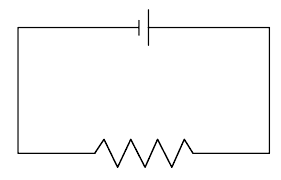
With the engine running the charging system produces 14.5 Volts what would the current flow be if a resistance of 6 Ohms was present
2.41 A
2.52 A
2.1 A
0.3333 A
What is a safety device that consists of a small wire that melts when too much current passes over it?
Resistance
Dry Cell
Fuse
Circuit Breaker
This is when a material allows electricity to flow through it, but converts a small amount into other types of energy.
Resistance
Dry Cell
Fuse
Circuit Breaker
A safety device that consists of a small piece of metal that changes shape (bends) when too much current passes over it.
Resistor
Battery
Fuse
Circuit Breaker
This type of circuit does not allow for the flow of electricity.
Phase Circuit
Parallel Circuit
Series Circuit
Open Circuit
A circuit that has two or more branches is called what?
Phase Circuit
Parallel Circuit
Series Circuit
Open Circuit
Electric Charge that has accumulated on an object is called what?
Current Electricty
Past Electricity
Alternating Current (AC)
Static Electricity
What does a kWh measure?
Electrical Power
Voltage
Electrical Energy
Resistance
What is the device that consists of a conductive probe attached to two metal leaves that separate when a charge is present?
A leafoiscope
Voltmeter
Electric Tester
Electroscope
If the reading on a meter in December was 2345 kWh and the reading in January was 3456 kWh, how much energy was used in the one month period between the readings?
1,111 kWh
33,330 kWh
13,332 kWh
92.6 kWh
If electricity costs $.10 per kWh, how much would 555 kWh cost?
$555.00
$55.50
$5.55
$5,550
An object becomes positively charged when it ___________. (Charges)
Loses Electrons
Gains Electrons
Loses Protons
Gains Neutrons
A device that can detect if a charge is present, but cannot determine whether it is positive or negative. (Charges)
Van DeGraph Generator
Electrolysis Gel
Electroscope
Geiger counter
How do two negative charges react when they are brought near each other? (Charges)
They don't react
They repel each other
They will both move in the same direction at the same time (their both negative)
They are drawn towards each other
Which of the following is an insulator?
Copper
Plastic
Silver
Salt Water
Which of the following is a good conductor?
Distilled Water
Aluminum
Dry Air
Rubber
Would people be considered an insulator or a conductor?
Insulator
Conductor
Neither
Why are Van DeGraph generators made out of conductive materials?
Conductive materials allow the negative charges to flow out and the static charge to build up
Conductive materials tend to be much cheaper than insulators
When plugging it in, if it had too much insulation it might catch on fire
It looks cooler when its shiny and all conductors are shiny
This is the unit for Electrical Power as measured in the United States.
Voltage Difference
Calories
Kilowatts
Joules
The process of connecting an object with the Earth via a conductor is called what? (Conductor/Insulator)
Charging
Draining
Grounding
Induction
Fusing
What is essential in order for lightning to form?
Electrified Birds
Ionized Gasses in the atmosphere
Charged Salt Water in clouds
Thunder
Strong upward movement in clouds called "updrafts"
The process of giving an object a partial charge by bringing it near another charged object.
Static Electricity
Law of Conservation of Charge
Conductor
Charging by Contact
Charging by Induction
Material through which electrons can move through easily.
Static Electricity
Law of Conservation of Charge
Conductor
Insulator
Electricity generated when an uneven number of charges are present in or on an object.
Static Electricity
Law of Conservation of Charge
Charging by Contact
Charging by Induction
Process of transferring charge between objects by touching.
Conductor
Insulator
Charging by Contact
Charging by Induction
Charge can be transferred from one object to another but cannot be created or destroyed.
Static Electricity
Law of Conservation of Charge
Charging by Contact
Charging by Induction



