wayground logo

Free Printable Worksheets

NEW

Font size

S
M
L
XL
Worksheets

Ecology Test

Total questions: 66

Worksheet time: 41mins

Name
Class
Date
1.
What are plants called in a food chain?
a)
Producers
b)
Consumers
c)
Decomposers
d)
Scavengers
2.
What are animals called in a food chain?
a)
Producers
b)
Consumers
c)
Decomposers
d)
Plants
3.
What are the organisms that break down dead stuff?
a)
Producers
b)
Consumers
c)
Decomposers
d)
Organisms
4.
Where does the energy start in this food chain?
a)
Plant
b)
Sun
c)
Deer
d)
Wolf
5.
What is the role of a producer?
a)
Use sunlight to make food
b)
Gain energy from eating other organisms
c)
Keep other species from overpopulating
d)
Breaking down dead stuff 
6.
What is the role of decomposers in a food chain?
a)
Use sunlight to make food
b)
Eat other organisms to gain energy
c)
Make the food for the whole food chain
d)
Break down dead organisms and add nutrients to the soil
7.
Which of these organisms would receive energy from the snake?
a)
Plant
b)
Rabbit
c)
Mouse
d)
Hawk
8.
Which type of consumer eats plants only?
a)
Herbivores
b)
Omnivores
c)
Carnivores
d)
Scavengers
9.
Which type of consumer eats meat only?
a)
Producers
b)
Herbivores
c)
Carnivores
d)
Omnivores
10.
Which type of consumer eats meat and plants?
a)
Herbivores
b)
Carnivores
c)
Omnivores
d)
Plants
11.
Mushrooms often grow around dead plants such as decomposing trees.  They break down these dead organisms and put energy that stores in the plant back into the ground for other plants to use.  What type of consumer are mushrooms? 
a)
decomposer
b)
herbivore
c)
carnivore
d)
omnivore
12.
Giraffes have long necks that help them reach leaves high up in trees.  They get all the energy they need from plants such as this.  What type of consumer are giraffes. 
a)
decomposer
b)
herbivore
c)
omnivore
d)
carnivore
13.
Sharks are fish that eat many other types of fish as well as animals such as seals.  What type of consumer are sharks? 
a)
decomposer
b)
herbivore
c)
omnivore
d)
carnivore
14.
A monkey eats bamboo, small bugs, and vegetables such as lettuce.  Which type of consumer is a monkey? 
a)
decomposer
b)
herbivore
c)
omnivore
d)
carnivore
15.
Scientists found a fossil of an animal with flat teeth that were used for grinding plants, and sharp teeth that are used for tearing meat.  What type of consumer does the fossil belong to? 
a)
decomposer
b)
herbivore
c)
omnivore
d)
carnivore
16.
Snakes hunt and eat mice, rats, rabbits, and eggs.  What type of consumer are snakes. 
a)
decomposer
b)
herbivore
c)
omnivore
d)
carnivore
17.
A connection of food chains with many food energy paths in an ecosystem is a ____________.
a)
ecosystem
b)
food web
c)
environment
d)
population
18.
True or False. In this Food Web Pyramid the consumers on each level only get about 10 percent of energy that the plants have stored.
a)
True
b)
False
19.
What does a Primary Consumer eat?
a)
Tertiary Consumers
b)
Secondary Consumers
c)
Producers
20.
The rabbit in this food web would be considered a:
a)
Decomposer
b)
Producer
c)
Secondary Consumer
d)
Primary Consumer
21.
The fox in this food web would be considered a:
a)
Tertiary Consumer
b)
Producer
c)
Secondary Consumer
d)
Primary Consumer
22.
The mouse in this food web would be considered a:
a)
Primary Consumer
b)
Producer
c)
Tertiary Consumer
d)
Secondary Consumer
23.
All energy on Earth ultimately comes from what source?
a)
Water
b)
Sun
c)
Consumers
d)
Oxygen
24.
In the energy pyramid here, how much of the energy in the producers gets passed to the herbivores?
a)
10%
b)
20%
c)
80%
d)
90%
25.
If there is 1000 Kcal available in the producers in trophic level 1, how much energy is available in the herbivores in trophic level 2?
a)
10 Kcal
b)
1 Kcal
c)
100 Kcal
d)
1000 Kcal
26.
A relationship between two organisms in which one organism benefits and the other is unharmed...
a)
Mutualism 
b)
Competition
c)
Parasitsm 
d)
Commensalism 
27.
Cattle egrets forage (feed) in fields among cattle. The egret gets easy access to flying insects stirred up by the cattle, and the cattle don't care if they are there or not.
a)
mutualism
b)
commensalism
c)
competition
d)
parasitism
28.
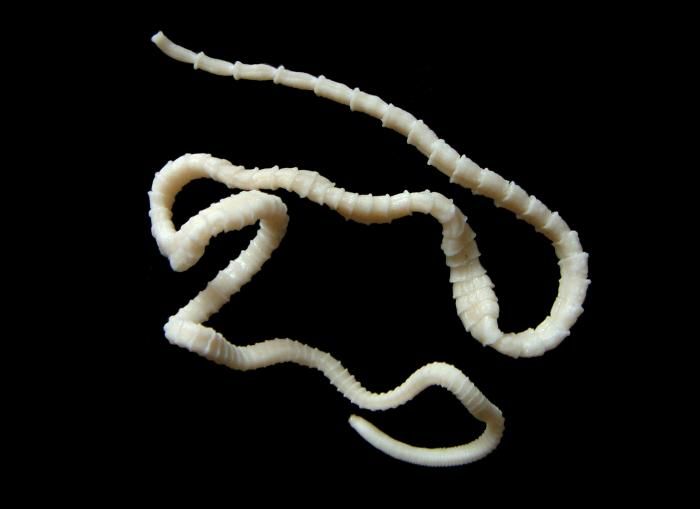
A tapeworm and a cat have this type of relationship.
a)
mutualism
b)
parasitism
c)
commensalism
d)
competition
29.
A relationship between two organisms in which both organisms benefit. 
a)
Mutualism 
b)
Competition
c)
Parasitsm 
d)
Commensalism 
30.
Two male Giraffes are fighting over the last green leaf of a tree that is dying.  
a)
Competition
b)
Mutualsim
c)
Predation
d)
Commensalism
31.
A tick and a dog have this type of relationship.
a)
mutualism
b)
commensalism
c)
neutralism
d)
parasitism
32.
A frog eats a fly. The frog and fly are demonstrating ________.
a)
mutualism
b)
competition
c)
predator/prey
d)
parasitism
33.
The stork uses its saw-like bill to cut up the dead animals it eats.  As a result, the dead animal carcass is accessible to some bees for food and egg laying.  
a)
Commensalism
b)
Mutualism
c)
Parasitism
d)
Predation
34.
Barnacles create home sites by attaching themselves to whales. This neither harms nor benefits the whales.  What kind of relationship is this?
a)
Mutualism 
b)
Parasitism 
c)
Commensalism 
35.
Honey guide birds alert and direct badgers to bee hives.  The badgers then expose the hives and feed on the honey first.  Then the honey guide birds eat.  
a)
mutualism
b)
commensalism
c)
predation
d)
competition
36.
Yucca flowers are pollinated by yucca moths. The moths lay their eggs  in the flowers where  the larvae hatch and eat some of the developing seeds. Both species benefit.  
a)
Mutualism 
b)
Parasitism 
c)
Commensalism 
37.
Silverfish live and hunt with army ants. They share the prey.  They neither help nor harm the ants. 
a)
Mutualism 
b)
Parasitism 
c)
Commensalism 
38.
A relationship between two organisms in which one organism benefits and the other is unharmed...
a)
Mutualism 
b)
Competition
c)
Parasitsm 
d)
Commensalism 
39.
A symbiotic relationship between 2 species in which one species is harmed and the other species benefits.
a)
Commensalism
b)
Parasitism
c)
Mutulaism
d)
Coexistence
40.
A symbiotic relationship in which one organism benefits and the other is unaffected. 
a)
Commensalism
b)
Parasitism
c)
Mutualism
d)
Coexistence
41.
A symbiotic relationship between 2 species in which both species benefit
a)
Commensalism
b)
Parasitism
c)
Mutalism
d)
Coexistence
42.
When 2 or more individuals or populations try to use the same resource such as food, water, shelter or sunlight. 
a)
Coexistence
b)
Competition
c)
Cooperation
d)
Carrying Capacity
43.

What abiotic factors might a student study in an ecosystem?

a)

Herbivores, carnivores, and omnivores

b)

Algae and invertebrates

c)

Predators and prey

d)

Water, temperature, and sunlight

44.

What abiotic factors might a student find in Alaska?

a)

Eskimos and eagles

b)

Pine trees and spruce trees

c)

Polar bears and wolves

d)

Temperature and snow

45.

Which of the following is an example of a biotic part of an ecosystem?

a)

Boulder

b)

Cactus

c)

Sand

d)

Sunlight

46.

In the picture of the coral reef ecosystem, which of the following is an example of an abiotic component?

a)

Coral

b)

Fish

c)

Sunlight

d)

Algae

47.

Gray wolves live in cold, forested areas. Which of the following is an abiotic part of the gray wolves’ environment?

a)

Pine Tree

b)

Snow

c)

Rabbits

d)

Mosquito

48.

__________ are consumers that eat left over bodies after they start to rot.

a)

omnivores

b)

carnivores

c)

scavengers

d)

decomposers

49.

Which animal is a scavenger?

a)

squirrels

b)

hawk

c)

termites

d)

vultures

50.

Which animal is a decomposer?

a)

squirrels

b)

bobcats

c)

termites

d)

vultures

51.

Which animal is an omnivore?

a)

squirrels

b)

hawks

c)

raccoons

d)

termites

52.

_______________ are non-living things in an environment.

a)

community

b)

population

c)

abiotic factors

d)

biotic factors

53.

Which animal is a herbivore?

a)

squirrels

b)

termites

c)

bobcats

d)

raccoons

54.

Feeds on waste produced by animals that would

otherwise accumulate in the environment

a)

Detritivore

b)

Seed Disperser

c)

Pollinator

d)

Decomposer

55.

Helps transfer pollen from the male part of a flower to the female part of the flower

a)

Detritivore

b)

Decomposer

c)

Pollinator

d)

Seed Disperser

56.

Recycle nutrients in an ecosystem, break down dead organisms into simple nutrients and then recycle these nutrients into the soil.

a)

Detritivore

b)

Decomposer

c)

Seed Disperser

d)

Pollinator

57.

Spread seeds away from the parent plant, helping a plant reproduce in new locations.

a)

Seed Disperser

b)

Decomposer

c)

Detritivore

d)

Pollinator

58.

Ecology is the study of the

a)

environment

b)

animals

c)

plants

d)

the earth

59.
The role or function or job of a species in a community.
a)
habitat
b)
diet
c)
niche
d)
ecosystem
60.

A collection of ecosystems with the same climate and similar communities

a)

Biome

b)

Biosphere

c)

Ecosystem

d)

Population

61.

A community of living things interacting with the nonliving parts of their environment.

a)

Ecosystem

b)

Biome

c)

Biosphere

d)

Species

62.

the assemblage of two or more different populations living in the same area. The populations usually interact with each other

a)

Population

b)

Community

c)

Individual

d)

Species

63.

a single organism

a)

Individual

b)

Species

c)

Population

d)

Community

64.

includes all life, land, water and air on Earth

a)

Biosphere

b)

Biome

c)

Ecosystem

d)

Community

65.

a group of individuals of the same species that live in the same area.

a)

Population

b)

Species

c)

Community

d)

Individual

66.

The Sun is important to life on earth because it...

a)

Gives Visible Light

b)

Provides Heat

c)

Provides Energy

d)

All of the above