wayground logo

Free Printable Worksheets

NEW

Font size

S
M
L
XL
Worksheets

Circular Flow Model Review

Total questions: 24

Worksheet time: 8mins
Name
Class
Date
1.
Businesses provide government with...
a)
taxes
b)
sales
c)
private goods & services
d)
interest
2.
What do governments provide for the market?
a)
private goods & services
b)
public goods & services
3.
In terms of resources, what do households provide for businesses?
a)
loans
b)
savings
c)
labor
d)
private goods
4.
In terms of resources, what do businesses provide for households?
a)
income
b)
sales
c)
taxes
d)
private goods
5.
In the circular flow model, the product market describes _____.
a)
stores that sell goods and services to households
b)
the government paying for public goods
c)
households selling their labor to businesses
d)
households receive income from businesses
6.
In this market, businesses buy resources they need to produce goods and services.
a)
factor market
b)
stores
c)
product market
d)
 businesses
7.

What do households provide to the resource market?

a)

land, labor, capital, and entrepreneurship

b)

money

c)

people

d)

income

8.
What do businesses provide for consumers according to the circular flow model?
a)
goods and services
b)
only goods
c)
only services
d)
taxes
9.
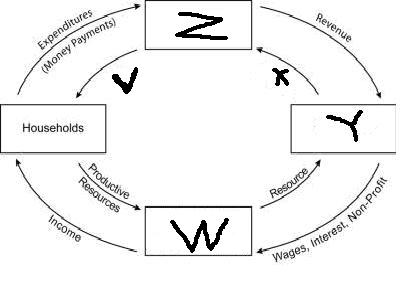
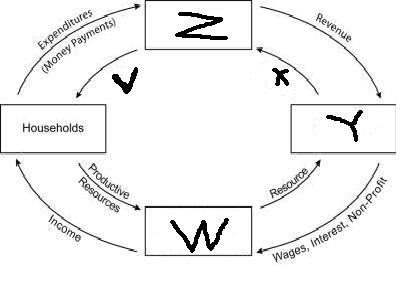
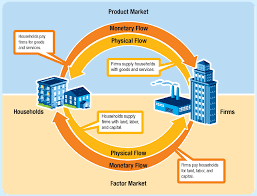
IN the picture, what should replace Z?
a)
Factor Market
b)
Firms
c)
Product Market
d)
Consumers
10.
In the picture, what should replace W?
a)
Factor Market
b)
Product Market
c)
Consumers
d)
Firms
11.
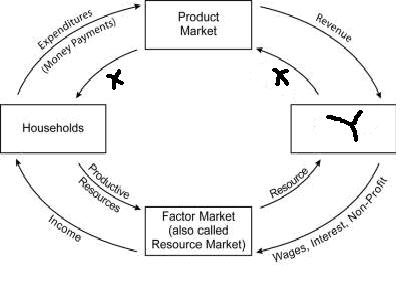
Look at the picture.  What should replace Y?
a)
Consumers
b)
Firms
c)
Factors
d)
Revenue
12.

What does government provide with the revenue it takes in from taxes?

a)

Headaches

b)

Public goods and services

c)

More Congressmen

d)

Greater control of the media

13.
In the products market
a)
firms buy goods and services from households
b)
firms sell goods and services to households
c)
firms sell resources to households
d)
firms buy resources from households
14.
Which statement is true about the circular flow diagram?
a)
Households are demanders in the product market and suppliers in the factor market
b)
Business are demanders in the product market and suppliers in the factor market.
c)
Households are demanders in the factor market and suppliers in the product market.
d)
 A  Businesses and households are not components of the circular flow diagram.
15.
Place where buyers and sellers meet to exchange goods and services for money
a)
Market
b)
Factor of production
c)
Money
d)
Interdependent
16.
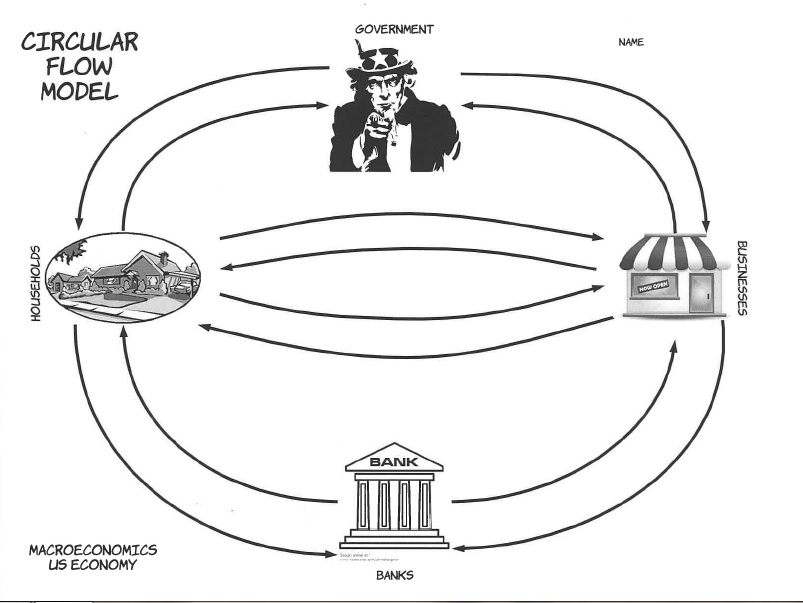
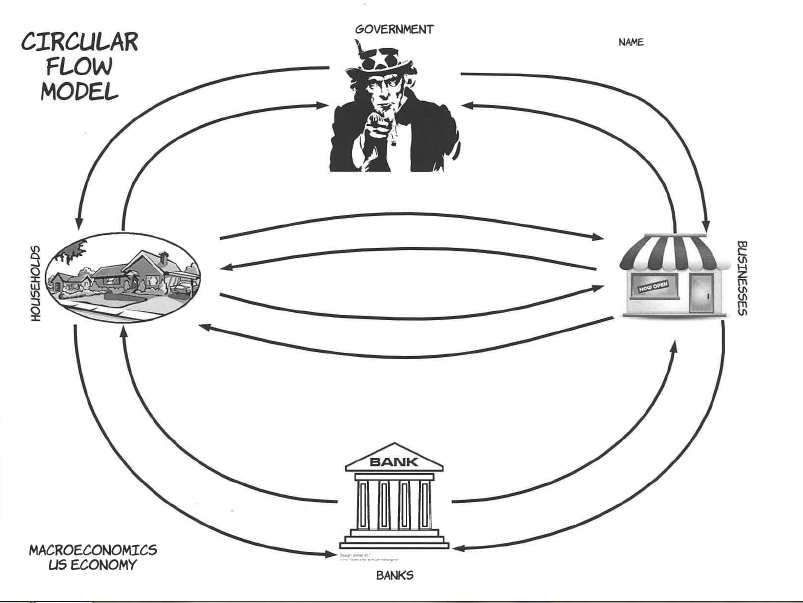
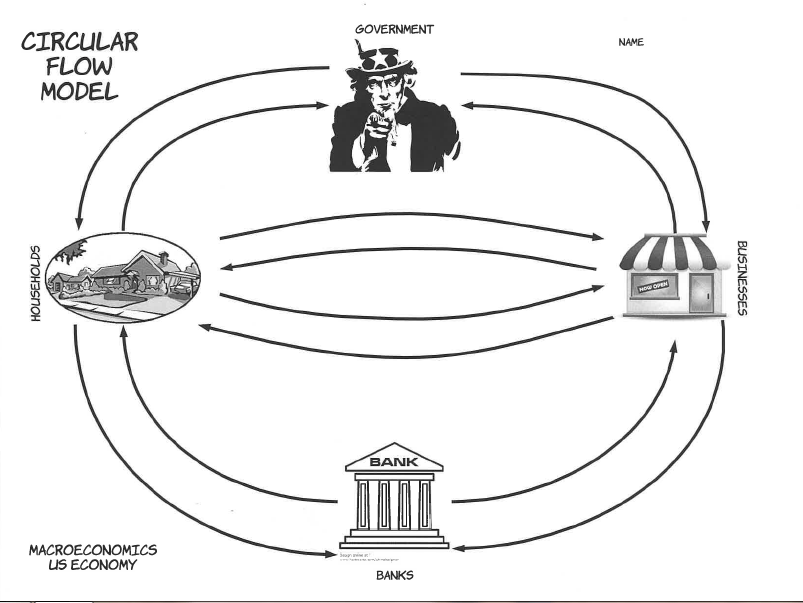
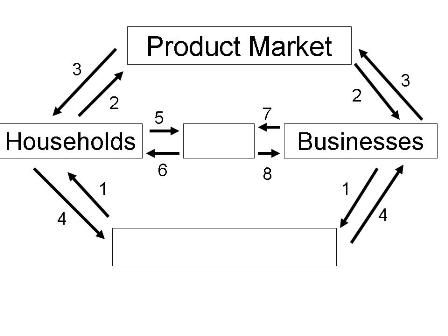
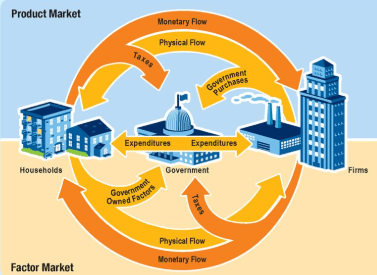
Which term belongs in the empty box near the bottom of the picture?
a)
Government
b)
Resource market
c)
taxes
d)
goods and services
17.

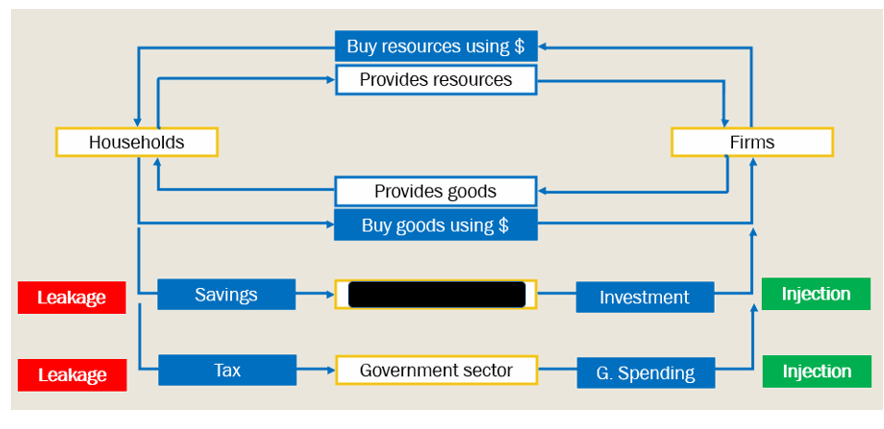
The missing label in the CFI diagram is...?

a)

Government Sector

b)

Financial Sector

c)

Households

d)

Firms

18.

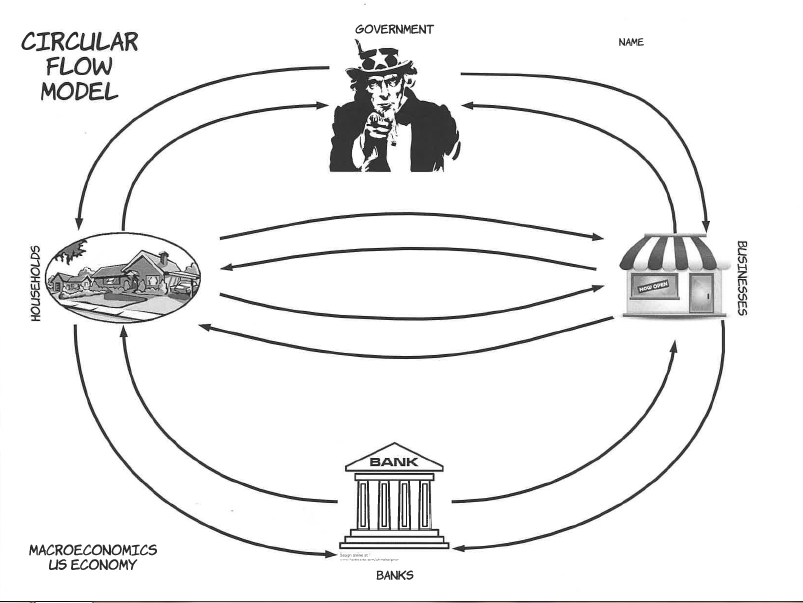
This diagram is called a:

a)

Production Possibilities Curve

b)

Supply and Demand Curve

c)

Circular Flow Model

d)

Circular Motion Equation

19.

This circular flow model would be for a __________ economy

a)

Traditional

b)

Planned/Command

c)

Free Market

d)

Mixed Economy

20.

This circular flow model would be for a __________ economy

a)

Traditional

b)

Planned/Command

c)

Free Market

d)

Mixed Economy

21.
Which of the following is not an injection into the circular flow of national income?
a)
Government expenditure
b)
Government salaries paid to civil servants
c)
Government taxation
d)
The purchase of a domestically produced good by a foreign company
22.
Which one of the following items constitutes a withdrawal/leakage from the circular flow of income of an economy?
a)
The purchase of a domestically produced good by a domestic company
b)
The purchase of a domestically produced good by a foreign company
c)
The payment of value added tax on goods sold in the domestic market
d)
Government aid to companies in financial difficulties
23.
Which one of the following is an injection into the circular flow of income?
a)
Personal income tax
b)
Government purchases of factor services
c)
Imports
d)
Business tax
24.

1. Which statement best explains the roles of businesses and households in the Resource (factor) market?

a)

Households sell resources, while businesses buy resources.

b)

Households buy resources, while businesses sell resources.

c)

Both households and businesses buy resources.

d)

Both households and businesses sell resources.