
 Worksheets
6th Ancient Egypt Review
Total questions: 61
Worksheet time: 47mins
Name
Class
Date
1.

who was the youngest Egyptian king
a)
hatshepsut
b)
king tut
c)
randy
d)
khfu
2.

An Egyptian king was called a ___________
a)
scribe
b)
servant
c)
papyrus
d)
pharaoh
3.

What the major river that was in Ancient Egypt?
a)
Amazon
b)
Mississippi
c)
Nile
d)
Tiber
4.
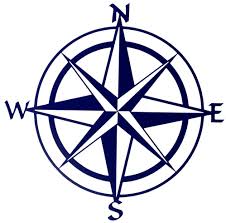
Which way did the Nile flow?
a)
North to South
b)
South to North
c)
East to West
d)
West to East
5.
True or False? There was an Upper and Lower Egypt.
a)
True
b)
False
6.

Egyptians had a written language using pictures. It was called ____________.
a)
cuneiform
b)
English
c)
hieroglyphics
d)
Cursive
7.
How did the yearly flooding of the Nile River affect the people of Egypt and Kush?
a)
It isolated the settlements.
b)
It left silt that improved the soil.
c)
It spread diseases that destroyed whole empires.
d)
It attracted hunters and gatherers looking for wildlife.
8.

How did the desert help the people of Egypt and Kush?
a)
It had fertile land for crops.
b)
It made trade and travel easier.
c)
It was grassy for grazing sheep.
d)
It gave protection from invaders.
9.
What was a MAJOR purpose for building the pyramids?
a)
temples for religious worship
b)
storehouses for reserves of grain
c)
homes for the pharaohs' servants
d)
tombs for pharaohs when they died
10.
Which period is often called the Golden Age, a time when Egypt had reached the height of its power?
a)
the Old Kingdom
b)
the Middle Kingdom
c)
the New Kingdom
d)
after the New Kingdom
11.
Hatshepsut was the FIRST pharaoh was was
a)
a god.
b)
a child.
c)
a priest.
d)
a woman.
12.
Of these four groups, which one had the LOWEST social status?
a)
priests
b)
scribes
c)
artisans
d)
government officials
13.
How did most people in Egypt earn a living?
a)
trade
b)
fishing
c)
farming
d)
metal working
14.
During the ____________, the Egyptians began to build pyramids.
a)
Old Kingdom
b)
Middle Kingdom
c)
New Kingdom
d)
Newest Kingdom
15.
What was an effect of increased farming and trade in early Egypt?
a)
A complex writing system was formed
b)
An organized government developed
c)
Geometry was developed
d)
The deserts became populated
16.
In what two ways are Mesopotamia and Egypt the same?
a)
Farming surpluses meant people could become artisans and traders. Both economies grew as a result.
b)
Both civilizations had the same religion and government
c)
Both had the same natural defense and flooding schedules
d)
Both had major rivers and dependable floods
17.
How did the Egyptians take advantage of the Nile's yearly spring flooding?
a)
They became successful farmers
b)
They created hieroglyphics
c)
They grew papyrus
d)
They irrigated during the dry season
18.
a line of rulers from one family
a)
delta
b)
papyrus
c)
hieroglyphic
d)
dynasty
19.

A decorative coffin used for the Pharaohs and the wealthy in Egypt was called a
a)
tomb
b)
sarcophagus
c)
grave
d)
mummy
20.

A reed plant that grows long the Nile River. Ancient Egyptians made baskets, sandals, river rafts, and PAPER from it.
a)
cataract
b)
delta
c)
papyrus
d)
embalming
21.

The writing system of Ancient Egypt
a)
hieroglyphics
b)
embalming
c)
delta
d)
papyrus
22.

A line of rulers from one family
a)
theocracy
b)
pharaoh
c)
dynasty
d)
shadoof
23.

Ruler of ancient Egypt
a)
pharaoh
b)
delta
c)
savanna
d)
cataract
24.

A great stone tomb built for an Egyptian pharaoh
a)
shadoof
b)
dynasty
c)
pyramid
d)
dynasty
25.

What is a cataract?
a)
strong rapids
b)
waterfalls
c)
strong animals
d)
Strong mountains
26.

What continent is Egypt on?
a)
South America
b)
Asia
c)
North American
d)
Africa
27.

What is a Delta?
a)
A triangle shaped area of land
b)
food
c)
A multitude
d)
Money
28.

What was the Rosetta Stone used for?
a)
Paper Weight
b)
Translating Languages
c)
Wall Decoration
d)
Building Pyramids
29.

What system of writing did the Ancient Egyptians use?
a)
Hieroglyphics
b)
Greek
c)
English
d)
Cueniform
30.

The process of preserving a body for the afterlife
a)
Cremation
b)
Mummification
c)
Autopsy
d)
Surgery
31.

The region of Egypt closest to the Mediterranean Sea; Northern Egypt
a)
Upper Egypt
b)
Lower Egypt
c)
Fertile Crescent
d)
Mesopotamia
32.

The region of Egypt located in the South; has higher elevation
a)
Upper Egypt
b)
Lower Egypt
c)
Mesopotamia
d)
Fertile Crescent
33.
Who would the people blame if crops did not grow or if disease struck?
a)
the farmers
b)
the mummies
c)
the pharaoh
d)
the dynasty that was in power
34.
Which of the following beliefs was central to Egyptian religion?
a)
the afterlife
b)
the pyramids
c)
the pharaohs
d)
the heavens
35.
Describe the burial practices of Egyptians?
a)
They used a funeral pyre for the dead.
b)
They carried the dead to a nearby country.
c)
They preserved bodies as mummies.
d)
They were buried in the river.
36.
Why were tombs filled with art, jewelry, etc.....?
a)
Tombs were museums.
b)
Tombs were private storage for the pharaoh.
c)
Tombs were the safest place in the kingdom.
d)
They believed the dead enjoyed their materials in the afterlife.
37.
The first pharaoh and rulers after him wore a double crown to symbolize
a)
their rule of the queens
b)
their rule over upper and lower Egypt
c)
the Nile flowed 2 ways
d)
both farming and herding were important
38.
How was Egypt able to build pyramids and temples?
a)
The pharaohs family paid the cost.
b)
Egypt collected taxes from the people.
c)
Egypt collected taxes from Sumer.
d)
The priests held religious festivals.
39.
Whose tomb was discovered in 1922?
a)
King Tutankhamen
b)
Ahmose
c)
Ramese
d)
Queen Hatsheput
40.
What was learned through studying King Tut's tomb?
a)
He was a king.
b)
The burial practices of Egyptians.
c)
He was wealthy.
d)
He had many wives.
41.
The worship of many gods.
a)
monotheism
b)
irrigation
c)
polytheism
d)
epic
42.
Pharaoh means
a)
great king
b)
great house
c)
great family
d)
great friend
43.
Who would write and record information?
a)
slaves
b)
scribes
c)
farmers
d)
craftspeople
44.
What is papyrus?
a)
mud used in building
b)
plant from which paper is made
c)
rock used to make tools
d)
animal skin
45.
Where is the most fertile soil in Egypt?
a)
Nile Delta
b)
desert
c)
far south
d)
cataracts
46.
Why was the Rosetta Stone so important?
a)
It helped archaeologists decipher Egyptian writing?
b)
It gave clues about building.
c)
It was a book of the dead.
d)
It told how pharaoh's rules.
47.
Rich soil carried and mixed with water is
a)
pebbles
b)
silt
c)
dust
d)
clouds
48.
Who united upper and lower Egypt and is considered to be the first pharaoh?
a)
Menes
b)
Ahmose
c)
Hatshepsut
d)
queen Nefertiti
49.
How often did the Nile River flood?
a)
Every now and then
b)
Every 3 months
c)
Every year at some time
d)
Every year at about the same time
50.
How did the Egyptians feel about Nile River flooding?
a)
They were sad because the flood caused great problems
b)
They were happy because the flood caused crops to grow
51.
Lower Egypt is located in southern Egypt
a)
True
b)
False
52.

In the Egyptian social order, which class was a part of the bureaucracy which helped the pharaoh run the government and temples?
a)
nobles
b)
scribes
c)
craftspeople
d)
servants
53.
What effect did a surplus of food have on the people of the Nile River valley?
a)
Egyptians could specialize in jobs other than farming.
b)
Egyptian trade decreased.
c)
The population of Egypt decreased.
d)
Egyptian specialization in jobs other than farming decreased.
54.

Given that the Nile generally flows in a northward direction, which statement is MOST accurate?
a)
It flows into the Red Sea.
b)
It flows into Lake Victoria.
c)
It flows into the Suez Canal.
d)
It flows into the Mediterranean Sea.
55.
One of Egypt’s most important defenses against enemy invaders was
a)
the large city walls
b)
its natural envioronment
c)
their superior weapons
d)
the protection of gods
56.
Ancient Egyptians had
a)
1 god
b)
many gods
57.
Method of bring water to a field is called ______________
a)
Irrigation
b)
Agriculture
c)
Domestication
58.
The Middle Kingdom came to an end when
a)
Ramses was defeated by the Sumerians
b)
The Nobles challenged the power of the pharaoh and the Hyksos invaded
59.
people from rich and powerful families
a)
Pharaoh
b)
Artisans
c)
Nobles
d)
Priests
60.
imaginary creatures with the bodies of the lions and the heads of other animals or humans
a)
Pyramids
b)
Sphinx
c)
Centaur
d)
Griffins
61.
a tall, four sided pillar that is pointed on the top
a)
Pyramid
b)
Temple
c)
Obelisk
d)
Delta
100 %

