Wayground logo

Free Printable Worksheets

Font size

S
M
L
XL
Worksheets

7th Grade M-STEP

Total questions: 57

Worksheet time: 36mins
Name
Class
Date
1.
Which of these is NOT one of the five pillars of Islam?
a)
There is no god but god.
b)
The pilgrimage to Mecca must be made.
c)
Fasting must be done every day.
d)
Donations to charity must be made annually.
2.
What is a Region
a)
Tells us ways in which the places in an area are alike
b)
Tells us what makes an area special and what makes it different from every other area
c)
Tells us where people and places are
3.
What is movement?
a)
Tells us how people, goods, recourses, and ideas move from one place to another
b)
Tells us what makes an area special and what makes it different from every other area
c)
Tells us ways in which the places in an area are alike.
4.
What is location?
a)
Tells us where people and places are
b)
Tells us what makes an area special and what makes it different from every other area.
c)
Tells how people, goods, resources, and ideas move from one place to another.
5.
Latitude lines run
a)
East/West
b)
North/South
6.
Longitude lines run _________.
a)
East/West
b)
North South
7.
What is another name for the Neolithic Age?
a)
New Stone Age
b)
Old Stone Age
c)
Prehistoric Period
d)
The Ice Age
8.
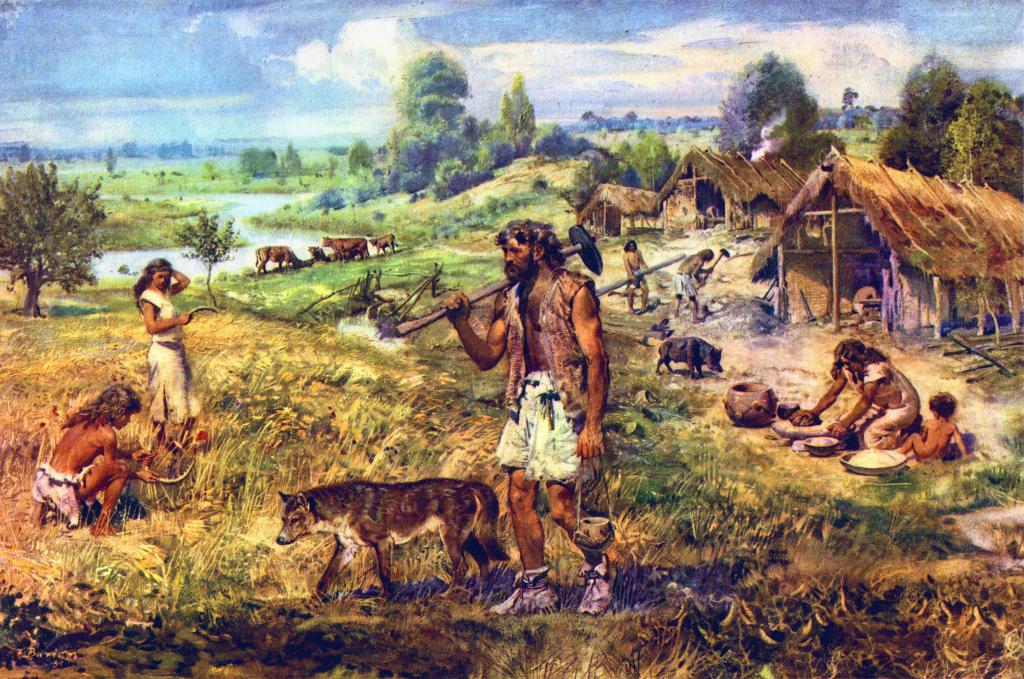
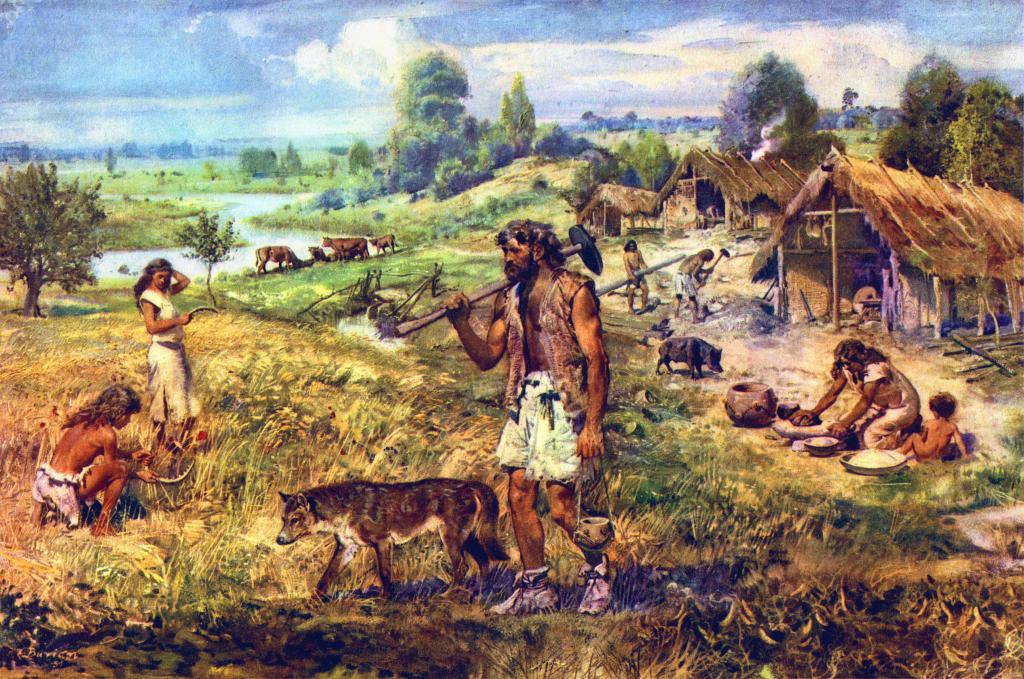
What change marked the beginning of the Neolithic Revolution? 
a)
beginning of hunting and gathering
b)
man learned to write
c)
man began farming
d)
man built towns and cities
9.
Which of the following happened when man began to farm?
a)
There were communities where people could do jobs other than farming jobs 
b)
They had more meat in their diet
c)
They were constantly attacked by wild animals
d)
They had to move from place to place following crops
10.
What is another word for farming?
a)
industry
b)
Paleolithic
c)
agriculture
d)
migration
11.
What happened when people began to trade during the Neolithic Age?
a)
Man invented the bicycle.
b)
Many new materials and ideas were spread from town to town. 
c)
Shopping centers were built.
d)
Man used paper money for the first time.
12.
What did Emperor Qin build that allowed no one to leave, or invade, for thousands of years?
a)
a statue of himself
b)
a fortress
c)
The Great Wall
d)
a model of a dinosaur
13.
What was the natural border of China that was an ocean?
a)
Atlantic Ocean
b)
Pacific Ocean
c)
Arctic Ocean
d)
Indian Ocean
14.
What was the natural border of China that was a desert?
a)
Sahara
b)
Gobi
c)
Death Valley
d)
Antarctica
15.
What was the natural border of China that was a mountain range?
a)
Rocky Mountains
b)
Himalayan Mountains
c)
Appalachian Mountains
d)
Sierra-Nevada Mountains
16.
Confucius a very famous ____________, in Ancient China
a)
emperor
b)
philosopher
c)
army leader
d)
god
17.
What were the four main dynasties of Ancient China?
a)
Shang, Zhou, Qin, Han
b)
Hand, Mouth, Foot, Head
c)
Shoe, Chin, Hand, Shang
d)
Tavs, Lodas, Kohlmann, Hoeft
18.
What is contribution from the Ancient Chinese?
a)
wheelbarrow
b)
fireworks
c)
gunpowder
d)
All of them
19.
What is a contribution from Ancient China?
a)
silk
b)
spices
c)
bronze
d)
all of them
20.
What is contribution of Ancient China?
a)
schools
b)
libraries
c)
universities
d)
all of them
21.
What is the major religion in China?
a)
Buddhism
b)
Hinduism
c)
Christianity
d)
Judaism
22.
Buddhism is ...
a)
polytheistic
b)
monotheistic
c)
non-theistic
d)
all of them
23.
Who is the founder of Christianity?
a)
Abraham
b)
Paul
c)
Peter
d)
Jesus
24.
Where did Christianity originate (begin)?
a)
Africa
b)
Asia
c)
Europe
d)
South America
25.
What do Christians believe?
a)
Jesus is the son of God
b)
God sent Jesus to save people from their sins by his death on the cross
c)
Like Jesus, people can be resurrected after death and join God in eternal life
d)
All of the above
26.

Which of these text details supports the idea that the Code of Hammurabi still influences our legal system?

a)

"The Code was discovered in 1902 by archaeologists"

b)

"this concept of equal protection under the law has been passed down through the ages and is especially evident in the US justice system."

c)

"Hammurabi reigned over Babylonia, a huge empire with dominion over many Mesopotamian territories, from 1792 to 1750 BCE."

27.

Where were Hammurabi's laws posted?

a)

a stone stele

b)

clay tablets

c)

a large book

d)

on a ziggurat

28.

What is a Command Economy?

a)

CAPITALISTIC economy in which there is free competition and prices are determined by interaction of supply and demand

b)

An economic system COMBINING private and public enterprise.

c)

When production, investment, price, and income are determined centrally by a GOVERNMENT.

d)

A system that relies on customs, history, and time-honored beliefs.

29.

What countries have a Command Economy?

a)

Iceland, Sweden, France, Australia

b)

United States, Russia, Africa, Haiti

c)

India, United Kingdom, Brazil

d)

North Korea, Cuba, Soviet Union, China, Vietnam

30.
Cultural diffusion is best described as...
a)
sharing music from one culture to another
b)
Cultural margarine
c)
the spreading of religion
d)
the spreading of ideas, languages, and traditions from one culture to another
31.
Which of the following is NOT a part of culture?
a)
History
b)
Weather
c)
Language
d)
Food
32.

What statement is an example of cultural diffusion?

a)

Venezuela has large reserves of oil

b)

Texas has large amounts of oil

c)

students in China learn Chinese in school

d)

young people dance to rock music in Japan

33.
Democracy originated in which society?
a)
Greek
b)
Roman
34.
What is a problem with a direct democracy?
a)
People aren't mature enough to govern themselves
b)
People don't have the time to participate so actively
c)
They tend to favor the wealthy
d)
Women don't have rights
35.
How did an Athenian democracy differ from a Roman republic?
a)
Athens elected representatives; Rome people voted directly on laws.
b)
Athens people voted directly on laws; Rome had elected representatives
36.
Define Civilization.
a)
A group of people who wear the same clothing and hunt the same food.
b)
People who speak the same language.
c)
Objects made by people.
d)
A group of people with the same way of life, religion and learning.
37.
How did the first people arrive in North America?
a)
One theory is they crossed a bridge of land connecting Asia and Europe.
b)
One theory is they crossed a bridge of land scientist called BERING STRAIT
c)
One theory is they crossed a bridge of land scientist called BERINGIA.
d)
One theory is they crossed a bridge of land connecting North America and Africa.
38.
Early people gathered wild foods such nuts, plants, and roots. They were now known as ____________________.
a)
Hunters and Farmers
b)
Hunters and Gatherers
c)
Farmers and Gatherers
d)
Indians
39.
How did farming change life for early people?
a)
Hunting gave people a reason to settle.
b)
Agriculture, gave people a reason to migrate.
c)
Agriculture, gave people a reason to settle.
d)
Farming gave people a reason to seek new land.
40.

Fertile land between the Tigris and Euphrates Rivers in the Middle East

a)

Gilgamesh

b)

Hammurabi

c)

Egypt

d)

Mesopotamia

41.

Two main rivers in Mesopotamia

a)

Euphrates

b)

Tigris

c)

Gilgamesh

d)

Hammurabi

42.
What religion originated in the Indus Valley around 1400 BCE?
a)
Buddhism
b)
Hinduism
c)
Islam
d)
Sikhism
43.
What is the system that is a class society and is a way to become closer to god?
a)
Hinduism
b)
Vishnu
c)
Caste
d)
Moksha
44.
___________ is considered to be the founder of Judaism.
a)
Abraham
b)
Jesus
c)
David
d)
Muhammad
45.

The ______ is the Jewish holy book.

a)

Torah

b)

Synagogue

c)

Monotheism

46.

What does Pastoralism mean?

a)

A Way of life focused on grazing herds

b)

An art movement

c)

A type of design

d)

Ancient Weaponry

47.

What is a Pastoral Nomad?

a)

The Genus for Humans

b)

A Person who raises cattle and moves with them

c)

An artist

d)

None of the above

48.

What are steppes

a)

Part of a Stairway

b)

A geographic area in South America

c)

A geographic area in Central Asia

d)

A desert

49.

Pastoral Nomads are hard to study because of the lack of what?

a)

Steppes

b)

Secondary Sources

c)

Evidence

d)

None of the above

50.
Which emperor made Christianity the official religion of Rome?
a)
Caesar
b)
Augustus
c)
Diocletian
d)
Constantine
51.
Which group most heavily influenced Roman art and architecture?
a)
Babylonians
b)
Greeks
c)
Egyptians
d)
Persians
52.
Who were the two main characters in the story that tells the beginnings of Rome?
a)
Romulus & Remus
b)
Zeus & Hera
c)
Ronulus & Roman
d)
Bill & Ted
53.
The __________________________ civilization rose in the rainforests of the Yucatan Peninsula.
a)
Aztec
b)
Maya
c)
nomadic
54.
Where did the Mayan civilizations exist?
a)
modern day Guatemala
b)
modern day Mexico
c)
Yucatan Peninsula
d)
all of these are correct
55.
The capital city of the Aztec Empire, Tenochtitlan, was an island in the middle of Lake
a)
Texcoco
b)
Mesoamerica
c)
Chichen Itza
d)
Gulf of Mexico
56.
The Aztec Empire lived in central ___________.
a)
America
b)
Mexico
c)
Panama
d)
Cuba
57.
What connected all of the Inca cities?
a)
Causeways
b)
Roads
c)
Canals
d)
Tunnels