wayground logo

Free Printable Worksheets

Font size

S
M
L
XL
Worksheets

MA Y11 PT FEB 2019

Total questions: 125

Worksheet time: 1hrs 26mins

Name
Class
Date
1.
What will the output be from the following code?
print(Hello world!)
a)
Hello world!
b)
SyntaxError
c)
Hello world
d)
print(Hello world!)
2.
What will the output be from the following code?
print("Hello world!")
a)
SyntaxError
b)
Hello world!
c)
"Hello world!"
d)
print(Hello world!)
3.
What will the output be from the following code?
Print("Hello world!")
a)
NameError
b)
Hello world!
c)
"Hello world"
d)
Print(Hello world!)
4.
What will the output be from the following code?
print("3+4")
a)
7
b)
3+4
c)
34
d)
SyntaxError
5.
To create a newline at the end of prompt, you can use which of the following expressions?
a)
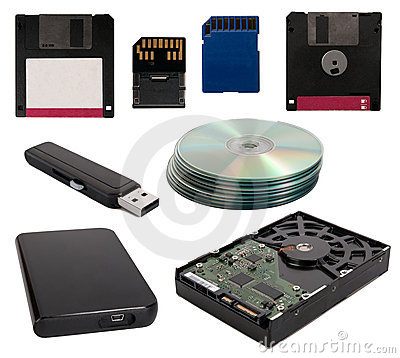
\new
b)
\n
c)
\break
d)
\return
6.
What is a variable?
a)
A box(memory location) where you store values
b)
a type of graphics
c)
Data type
d)
a type of memory
7.
A syntax error means your code has a 'grammar' mistake or you used symbols/operations incorrectly
a)
True
b)
False
8.
What will be the output?
name = 'Dave'
greeting = "Good morning" + name
print (greeting)
a)
Good moning 'Dave'
b)
Good morning Dave
c)
Good morning name
d)
Good morning + Dave
9.
When you have an error in your code what is the term to summarise finding and fixing that error?
a)
Error checking
b)
Debugging
c)
Syntax finder
d)
Error finder
10.
Which of these would work as a piece of code?
a)
IF answer == "Yes":
b)
if answer == "Yes"
c)
if answer == "Yes":
d)
if answer = "yes":
11.

people = ["John", "Rob", "Bob"]

print (people[1])

what would this result be?

a)
John
b)
Rob
c)
Bob
12.

people = ["John", "Rob", "Bob"]

print (people[-1])

what would this result be?

a)
John
b)
Rob
c)
Bob
13.

people = ["John", "Rob", "Bob"]

print (people[4])

what would this result be?

a)
John
b)
Rob
c)
Bob
d)
Error
14.

x=10

if x>11 or x==10:

print ("hello")

a)

error

b)

x is less than 11

c)

hello

d)

10

15.
How does clock speed affect computer performance?
a)
The higher the clock speed the slower the computer will run.
b)
It improves the amount you can store on the computer.
c)
The higher the clock speed the better the performance.
d)
It will make loading program slower
16.
Clock speed is:
a)
Number of times the computer is used
b)
Number of instructions a computer can handle per second
c)
Time on a computer
17.
Bob has a 1GHZ dual core CPU, Amy has a 2GHZ single core CPU. Which can process more instructions per second?
a)
Bob
b)
Amy
c)
Equal
d)
Neither can process anything
18.
What happens if you increase the number of cores
a)
CPU can process instructions quicker
b)
CPU can process more instructions at the same time
c)
CPU will explode
d)
CPU processes too fast for the cache to handle
19.

This computer component keeps all of the computer's operations synchronized:

a)

CPU bus

b)

CPU clock

c)

CPU CMOS

d)

CPU battery

20.

Cache memory is...

a)

Faster than main memory but less expensive

b)

Faster than main memory and more expensive

c)

Slower than main memory and less expensive

d)

Slower than main memory but more expensive

21.
Which transfer is faster
a)
data between the cache and the CPU
b)
data between the RAM and cache
c)
data between the RAM and CPU
d)
data between the hard drive and CPU
22.
The larger the cache, the slower the CPU will fetch instructions
a)
FALSE
b)
TRUE
23.
A CPU cache is the same as a website cache
a)
FALSE
b)
TRUE
24.
In order of fastest to slowest with the fastest on the left and slowest on the right, name each type of memory in order.
a)
Cache > RAM > Hard Drive
b)
Hard Drive > RAM > Cache
c)
RAM > Cache > Hard Drive
d)
RAM > Hard Drive > Cache
25.
The Accumulator is a type of what?
a)
Register
b)
Buffer
c)
RAM
d)
Cache
26.
Von Neumann computers use two processors
a)
True
b)
False
27.
Von Neumann processors fetch blocks of instructions, decodes them and then executes them. It has been designed like this because it is the most efficient way of executing a program
a)
True
b)
False
28.
The Memory Address Register (MAR) is located in RAM.
a)
True
b)
False
29.
Instructions are fetched and decoded under the management of the ALU
a)
True
b)
False
30.
What does ALU stand for?
a)
Arguable Logic Unit
b)
Arithmetic Larger Unit
c)
Arithmetic Logic Unit 
d)
Arithmetic Logic Utility
31.
Select the correct CPU cycle:
a)
Execute -> Decode -> Fetch
b)
Fetch -> Execute -> Decode
c)
Decode -> Fetch -> Execute
d)
Fetch -> Decode -> Execute
32.
What are the three main components of a CPU?
a)
Hardware, Software, Memory
b)
Memory, Control, ALU
c)
ALU, Memory Unit, Control Unit
d)
Fetch, Decode, Execute
33.
Which of the following affects the performance of a CPU?
a)
Number of cores
b)
Hard Drive capacity
c)
Number of applications stored
d)
Number of Hard Drives used
34.
What is the purpose of a 'Bus' in a computer system?
a)
Carry data to and from internal components
b)
execute user's instructions
c)
control flow of data
d)
connects the CPU to motherboard
35.
Which of these is not a step in the FDE cycle?
a)
Instructions are fetched from main memory
b)
Instructions are decoded in the control unit
c)
The decoded instruction is executed
d)
The ALU decodes the instructions
36.
Clock speed measures what?
a)
Speed at which instructions are fetched from main memory
b)
Time taken to perform a single Fetch-Decode-Execute cycle
c)
Number of Fetch-Decode-Execute cycles that can be completed in 1 sec
d)
Speed at which instructions are decoded 
37.
What is the purpose of the memory address register?
a)
It memorises everything
b)
It keeps track of the instructions
c)
It holds the instructions to be carried out by the CPU
d)
It allows you to input something
38.
What is the purpose of the Memory Data Register (MDR)?
a)
Holds the location of where the data is to be stored / read from
b)
Holds memory
c)
Holds instructions
d)
It does nothing
39.
Which component is the Von Neumann Design concerned with?
a)
The CPU and RAM
b)
The CPU
c)
The RAM
d)
Secondary storage
40.
What does the RAM store?
a)
Operating system, programs and data which are currently being used
b)
A program used to start the computer called the �boot program� or BIOS
c)
All programs and documents stored on the computer
41.
My job is to load up the computer. What am I?
a)
RAM
b)
ROM
42.
The computer can take programs out of the RAM and store them in virtual memory, this frees up the RAM to be used to open more programs.
a)
TRUE
b)
FALSE
43.
If the RAM is upgraded from 512MB to 4GB, what will be the biggest benefit?
a)
More programs and data can be opened at the same time
b)
The operating system will be faster
c)
There will be more hard drive space
d)
The computer will be quicker if you open a document
44.
Which of these items are NOT stored in RAM
a)
Instructions to load up the computer
b)
Data
c)
Programs
d)
Applications
45.
An example of what is stored on RAM is:
a)
Instructions
b)
The Operating System
c)
Calculations
46.
Why is there a short delay before a program opens?
a)
Because the RAM is slow
b)
Because the RAM is not working
c)
Because the RAM has a virus
d)
Because the RAM is loading the module
47.
If your programs are loading REALLY slow - what could a reason be?
a)
The RAM isn't working
b)
The RAM is full
c)
The RAM is frozen
48.
Where is data stored when it is Virtual Memory?
a)
It is stored on a area of a secondary storage device e.g. hard disk drive.
b)
It is stored in the RAM.
c)
It is stored in the ROM.
d)
It is stored in an optical drive e.g. CD.
49.
What is a disadvantage of Virtual Memory?
a)
Read/Write speed of a hard disk drive is slower than RAM. If the computer has to rely on this, the system is much slower.
b)
Read/Write speeds of a hard drive are faster than RAM, meaning the system is much faster.
50.
In terms of computer memory, what is meant by the term 'volatile'?
a)
It retains its content when power is cut
b)
It loses its contents when power is cut
c)
It is not stable and should not be used
d)
Memory chips can overheat
51.
What is the term commonly used to describe the constant swapping in-and-out of programs between the RAM and Virtual Memory?
a)
Swapping
b)
Paging
c)
Disk thrashing
d)
Over-clocking
52.
a)
01111011
b)
01101111
c)
01111101
d)
01101101
53.
a)
01011010
b)
10011010
c)
10010101
d)
10100010
54.
Convert 65 to binary
a)
01100001
b)
00100001
c)
01000001
d)
00100101
55.
How many bits are used in (standard) ASCII? (1-4)
a)
16
b)
1
c)
7
d)
8
56.
A character set is... (4-6)
a)
What language can be used in a computer system.
b)
The fonts that a computer has installed.
c)
The possible characters that can be represented by a computer system.
57.
1010 0011 (to Hex)
a)
63
b)
93
c)
B3
d)
A3
58.
FFBC (to binary)
a)
1111 1111 1100 1011 
b)
1111 1111 1011 1100
c)
1111 1111 1011 1101
d)
1111 1111 1011 1100
59.

Select all the components of the CPU

a)

ALU

b)

Control Unit

c)

Registers

d)

RAM

60.

Choose all the registers found in a typical processor?

a)

Current Instruction

b)

Accumulator

c)

Memory Data

d)

Memory Address

61.

Choose all the secondary storage mediums ...

a)

HDD

b)

SSD

c)

DVD

d)

Cloud

e)

RAM

62.

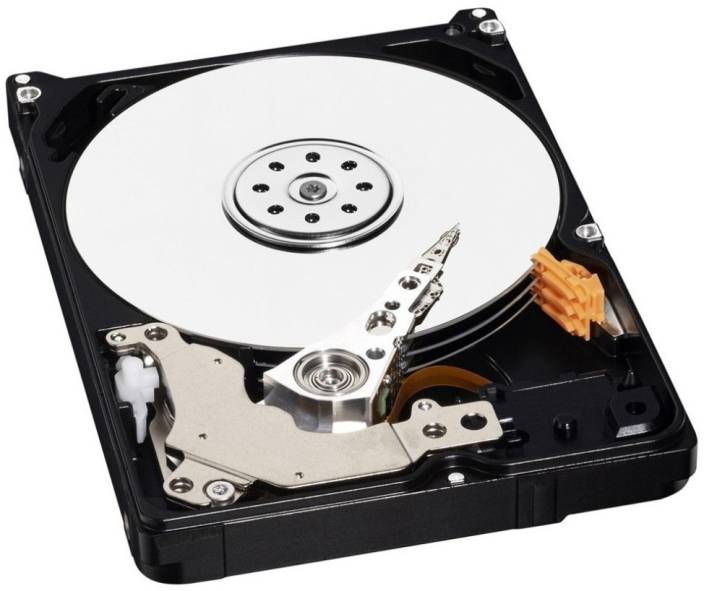
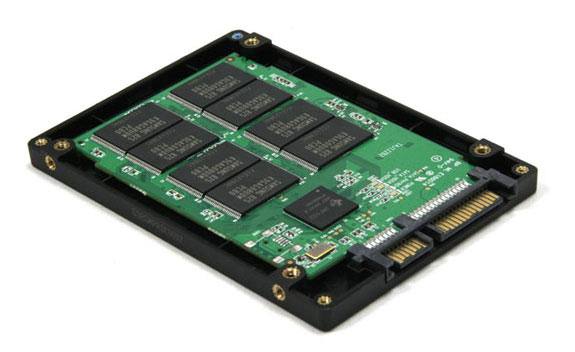
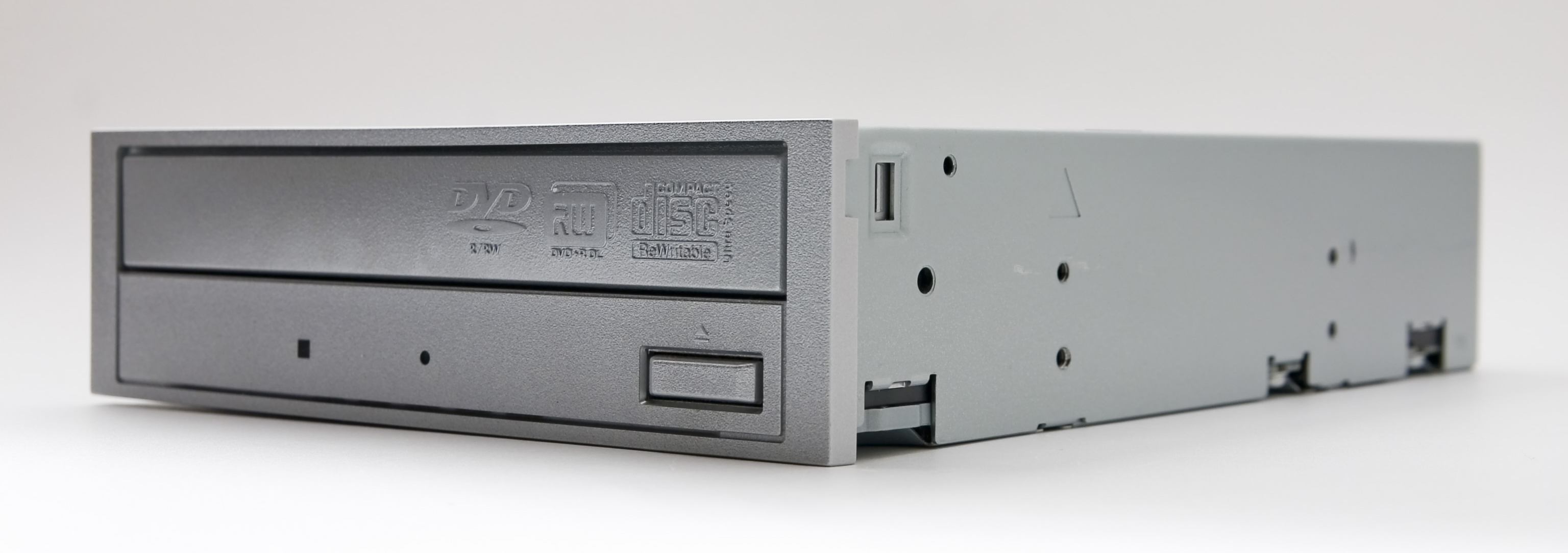
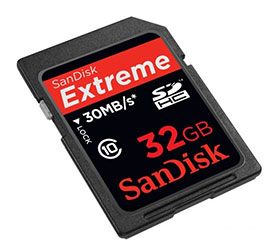
What type of storage does this device use?

a)

Magnetic

b)

Optical

c)

Electrical

d)

Cloud

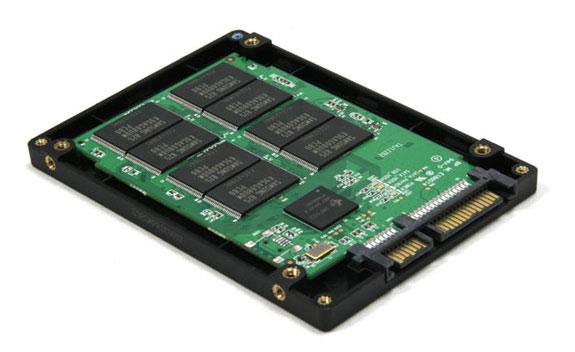
63.

What type of storage does this device use?

a)

Magnetic

b)

Optical

c)

Electrical

d)

Cloud

64.

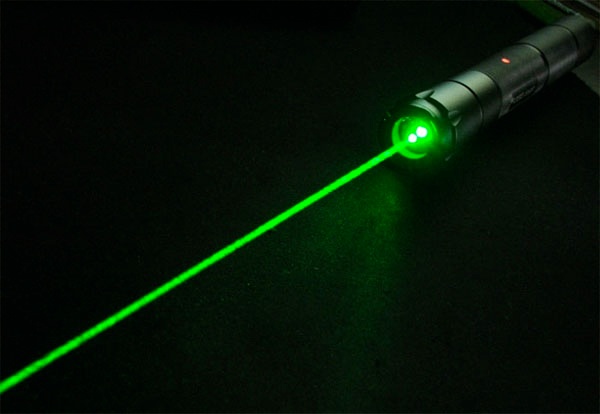
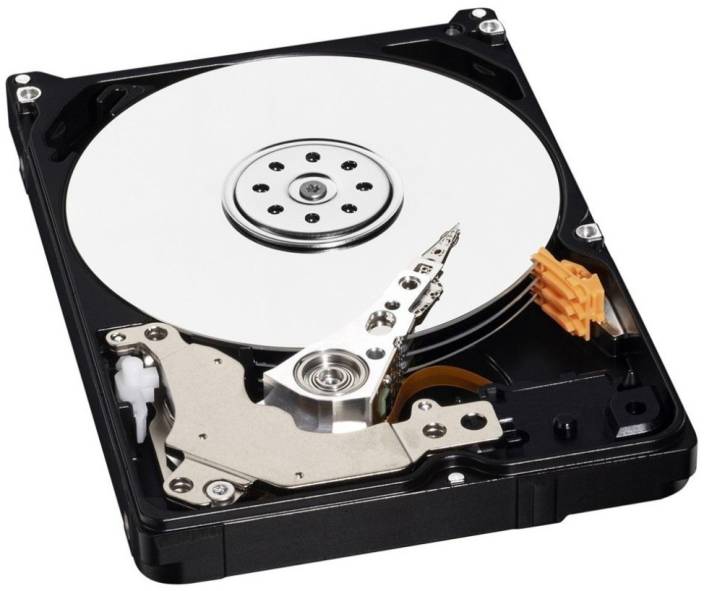
Which secondary storage device make use of a laser light?
a)
b)
c)
d)
65.
what is tcp/ip
a)
protocol
b)
internet
c)
harbir
d)
layer
66.
What does Protocol mean?
a)
Security
b)
Rules
c)
Orders
d)
Services
67.
What does TCP stand for?
a)
Total control port
b)
Transmission control protocol
c)
Transmission control protocol
68.
Which protocol would you use to transfer hypertext?
a)
FTP
b)
SMTP
c)
POP3
d)
HTTP
69.
Which protocol would you use to transfer files?
a)
FTP
b)
SMTP
c)
POP3
d)
HTTP
70.
What is an IP address?
a)
A way of sending information
b)
A way of indicating the location of a device
c)
A way of deleting viruses 
d)
A secure communication method. 
71.

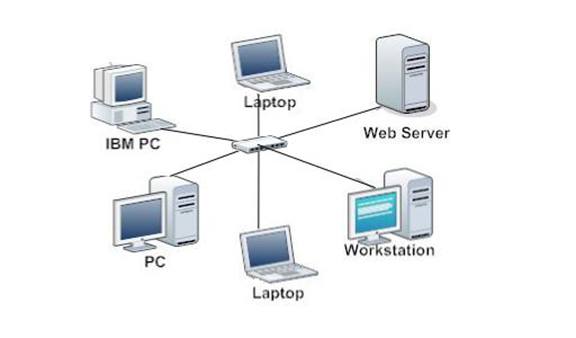
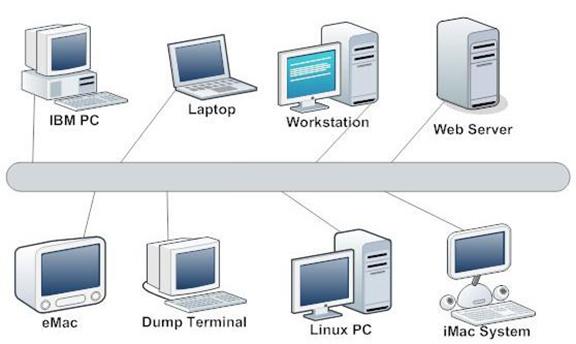
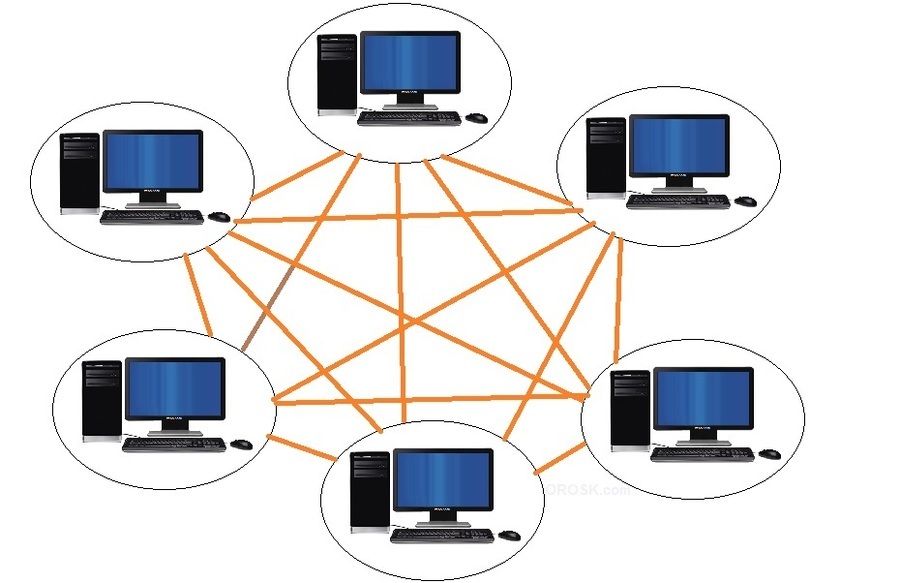
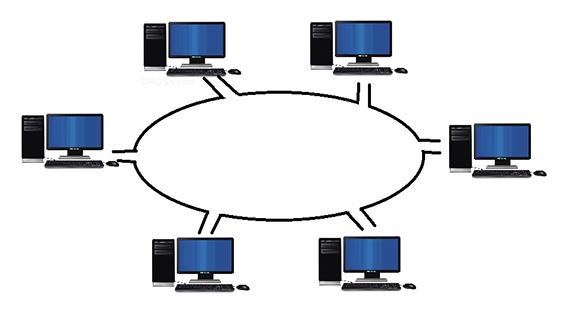
In my network, computers and devices are connected to one another. Messages travel around the connected devices until they arrive at the intended destination.


If one computer goes down, the entire network goes down.


What network topology am I?
a)
b)
c)
d)
72.

The main node is in the center. All other computers and devices are connected to the main node. Messages are sent from the main node to the destination computer, without passing through other computers.


What network topology am I?

a)
b)
c)
d)
73.

In this network type, each computer can be both a server and a client. What type of network am I?

a)

Wide Area Network

b)

Peer to Peer Network

c)

Metropolitan Area Network

d)

Wireless Local Area Network

74.
It is a software code that is deliberately created by an attacker. 
a)
Virus
b)
worm
c)
Trojan
d)
Rootkit
75.
Protect an internal network from external attacks
a)
Antivirus 
b)
VPN
c)
Firewall
d)
AVIRA
76.
Firewalls remove viruses
a)
False
b)
True
77.

Which of the following statements about a network is FALSE?

a)

Viruses can spread to other computers throughout a computer network

b)

Resources such as printers can be shared

c)

Files cannot be shared between users

d)

You can communicate with other users using e-mail and messaging

78.

Which of these statements is TRUE about a LAN?

a)

A LAN connects computers in a small area such as an office or a small site

b)

A modem is needed to connect a computer to a LAN

c)

A LAN consists of only one computer

d)

A LAN can connect geographically distant sites together

79.

What is an advantage of a LAN?

a)

You can share peripherals like printers.

b)

It is more secure than a standalone computer

c)

Data and information cannot be easily shared

d)

Expensive to setup.

80.

What is an advantage of using VPN?

a)

Your communications over the internet are more secure

b)

Your communications over the internet are less secure

c)

Your internet traffic can be seen by your Internet Service Provider

d)

It is generally faster

81.

What is an advantage of a peer to peer network?

a)

Security can be managed centrally

b)

Cheap and easy to set up

c)

Will stop working if one of the peers goes down

d)

You need high end computers to keep everything working

82.

What is a disadvantage of a client-server network?

a)

Cheap to set up

b)

If the server goes down, the network goes down

c)

Each client manages its own security

d)

The network can be managed centrally

83.

Which of the following is true of a WAN?

a)

It connects LANs via the public infrastructure (internet)

b)

It is wireless

c)

It only covers a limited area

d)

It will only support a small number of users

84.
Which device routes a data packet to the specific node to which it is addressed?
a)
A Switch
b)
A Bridge
c)
A Hub
d)
A Server
85.
What is the name for any device connected to a network? 
a)
Node
b)
Server
c)
Workstation
d)
Hub
86.
Before sending data over a network it is divided into small chunks named?
a)
Packets
b)
Blocks
c)
Bytes
d)
Packages
87.

Which of these is not a function of an OS:

a)

Provide a user interface

b)

Communicate with hardware

c)

Allow the computer to multi-task

d)

Improves CPU performance

88.

What do device drivers do?

a)

Allows the OS to communicate with hardware

b)

Drives around the motherboard

c)

Increases the amount of storage

89.

What does GUI stand for?

a)

Genuine Umpire Impressions

b)

Graphical User Interface

c)

Graphic Up Industry

90.

Which of these is an advantage to using a command-line interface over a GUI?

a)

More interactive

b)

Easier to use

c)

Less resource heavy

91.

What does the OS manage to allow multi-tasking?

a)

Hard disk

b)

Memory and CPU

c)

Motherboard

92.

What type of operating system is Windows 10?

a)

Single-user OS

b)

Multi-user OS

93.

How can the OS help manage security of the system?

a)

The OS can hire backup

b)

User accounts may be password protected

c)

Files can self destruct after a set time

94.

How does the OS handle file management?

a)

Deals with movement, editing and deletion of data

b)

Colour codes data

c)

Translates data into binary

95.
A truth table lists every possible combination of input and the resulting output
a)
True
b)
False
96.
Which gate does this symbol represent? 
a)
AND
b)
NOT
c)
OR
97.
Which gate does this symbol represent? 
a)
NOT
b)
AND
c)
OR
98.
Which gate does this symbol represent? 
a)
OR
b)
AND
c)
NOT
d)
ORR
99.
The logic in used in computer systems is called Boolean logic because there are only 3 possible values.
a)
False
b)
True
100.
A AND B = Q, If A=1 and B=1 what does Q equal?
a)
1
b)
0
101.
NOT A = Q, if A equals 1 what does Q equal?
a)
0
b)
1
102.
(NOT A) AND B = Q, If A=0 and B = 1, what does Q equal?
a)
1
b)
0
103.
NOT(A OR B) = Q, if A=0 and B=0, what does Q equal?
a)
1
b)
0
104.
(C AND D) OR (NOT(A OR B)) = Q, If A=1, B=1, C=0 and D=1, what does Q equal?
a)
0
b)
1
105.
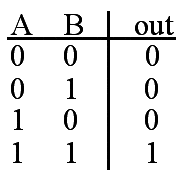
What gate is this table for?
a)
AND
b)
OR
c)
NOT
d)
NOR
106.
What gate is this table for?
a)
AND
b)
XOR
c)
OR 
d)
NOT
107.
Logic gates are digital ...
a)
.. Switches
b)
.. Footprints
c)
.. Binary
d)
.. RAM
108.
What is the correct definition of an algorithm?
a)
An algorithm is a step by step instructions to solve a problem.
b)
An algorithm is a process of baking bread.
c)
An algorithm is a software used to compute numbers.
d)
An algorithm is the process of breaking problems.
109.
Decomposition is a term used to define...
a)
The process of assigning value to a variable.
b)
The process of taking out unnecessary details from problems.
c)
The process of breaking down problems into smaller problems.
d)
The process of coding a problem.
110.
Abstraction is.....
a)
The process of drawing abstract pictures.
b)
The process of assigning values to variables.
c)
The process of breaking down problems.
d)
The process of removing unnecessary details from a problem.
111.
What is a flowchart?
a)
A textual representation of algorithms.
b)
A graphical representation of algorithms.
c)
A cluster of different shapes.
d)
A program code written in Logo.
112.
How many linear searches will it take to find the value 7 in the list [1,4,8,7,10,28]?
a)
2
b)
3
c)
4
d)
5
113.
How many binary searches will it take to find the value 10 in the list [1,4,9,10,11]?
a)
0
b)
1
c)
2
d)
3
114.
Which of the following is the best description of the linear search algorithm?
a)
Put the elements in order, then go through them one by one until target is found or the end of the list is reached.
b)
Put the elements in order, compare with the middle value, if not the target: continue to the left or right of the middle and repeat. 
c)
Elements do not need to be in order. Go through them one by one until target is found or the end of the list is reached.
d)
Elements do not need to be in order, compare with the middle value, if not the target: continue to the left or right of the middle and repeat. 
115.
Which of the following is the best description of the binary search algorithm?
a)
Put the elements in order, then go through them one by one until target is found or the end of the list is reached.
b)
Put the elements in order, compare with the middle value, if not the target: continue to the left or right of the middle and repeat. 
c)
Elements do not need to be in order. Go through them one by one until target is found or the end of the list is reached.
d)
Elements do not need to be in order, compare with the middle value, if not the target: continue to the left or right of the middle and repeat. 
116.
What is the maximum number of comparisons a linear search algorithm could make while searching a 100 item list?
a)
50
b)
51
c)
100
d)
101
117.
As the data set grows in size, linear search becomes more efficient than binary search. 
a)
True
b)
False
118.
What is the maximum number of comparisons required to find a value in a list of 20 items using a binary search?
a)
20
b)
5
c)
6
d)
21
119.
What is an algorithm?
a)
A problem
b)
A solution to a problem
c)
The steps that are taken to solve a problem
d)
The words to enter when typing
120.
What is Lossless Compression?
a)
No information is lost but file size is increased
b)
There is no loss of information at all after compression
c)
Files which have the exact same data after compression
d)
Compression involves an algorithm
121.
What does Lossy Compression do to files?
a)
Increases the file size and keeps the same quality
b)
Eliminates no information at all
c)
Decreases the file size and keeps the same quality
d)
Eliminates unnecessary information in a file to reduce file size
122.
When Lossy compression is used data is lost?
a)
True
b)
False
123.
The audio file format MP3 is:
a)
Lossy
b)
Lossless
124.
The video file format MP4 is:
a)
Lossy
b)
Lossless
125.
Makes the file smaller by deleting parts of the file permanently (forever)
a)
Lossy Compression
b)
Lossless Compression