wayground logo

Free Printable Worksheets

NEW

Font size

S
M
L
XL
Worksheets

Gravity, Frictional Force, and Energy Conversion

Total questions: 35

Worksheet time: 24mins

Name
Class
Date
1.
Any object with mass has a/an _________ pull on the objects around it
a)
gravitational
b)
frictional
c)
inertial
d)
strong
2.
________ is a force that opposes the motion between two objects in contact
a)
friction
b)
gravity
c)
inertia 
d)
weight
3.

The main force that slowed down our cars was ________

a)

friction

b)

gravity

c)

inertia

d)

small straw

4.
Friction can be categorized into two types, ______ and ________
a)
rolling, sliding 
b)
fluid, kinetic
c)
kinetic, static 
d)
rolling, static
5.
What is a force?
a)
a push or pull
b)
speed or acceleration 
c)
potential or kinetic energy
d)
balanced or unbalanced force
6.
What is the force that causes everything to be pulled down to the Earth?
a)
friction
b)
gravity
c)
balanced
d)
unbalanced
7.
Force is measured in....
a)
Galileos 
b)
Newtons
c)
Di Vincis
d)
Einsteins 
8.
Friction helps objects to move easier.
a)
true
b)
false
12.
Some things have A LOT of mass, while other have FEW mass. 
a)
TRUE
b)
FALSE
10.
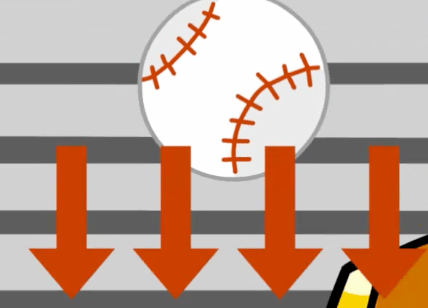
Which object has a GREATER force of gravity?
a)
Ball
b)
Earth
11.
Why a ball falls to the ground?
a)
Earth's force of gravity is GREATER than the ball's, so the ball gets attracted to the ground. 
b)
Earth's force of gravity is LESS than the ball's, so the ball gets attracted to the ground. 
12.
Some things have A LOT of mass, while other have FEW mass. 
a)
TRUE
b)
FALSE
13.
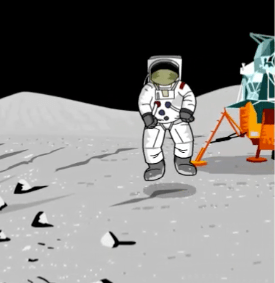
Why can astronauts jump and float a little on the Moon?
a)
Because the Moon's gravity is NOT that STRONG.
b)
Because the Moon's gravity is VERY STRONG. 
14.
What is weight?
a)
The measure of how HEAVY something is.
b)
The measure of how much GRAVITY is pulling on an object.
c)
BOTH answers are correct.
d)
None of them.
15.

What is a force that works against motion ?

a)

Force

b)

Motion

c)

Gravity

d)

Friction

16.
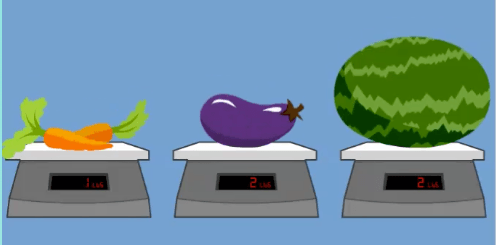
How is gravity affected by mass?
a)
the larger the mass of the object, the greater the gravity
b)
small objects have no gravity
c)
gravity is not affected by mass of objects, whether large or small
17.

A boy rides a skate board down a hill. Eventually the skate board stops. Which is most responsible for causing the skateboard to stop?

a)

gravity acting on the skateboard

b)

friction acting on the skateboard

c)

the mass of the skateboard

d)

the mass of the boy

18.
What type of energy is in this picture?
a)
Kinetic
b)
Elastic Potential
c)
Chemical
d)
Gravitational Potential 
19.
Energy of motion is which type of energy?
a)
Potential
b)
Kinetic
c)
Sound
d)
Gravitational
20.
When plants convert the sun's energy into food, which type of energy is it?
a)
kinetic
b)
chemical
c)
thermal
d)
radiant
21.
What kind of energy is represented in this picture?
a)
Thermal
b)
Potential
c)
Nuclear
d)
Mechanical
22.
A battery converts what type of energy to another?
a)
sound to kinetic
b)
light to heat
c)
mechanical to electrical
d)
chemical to electrical
23.
What machine changes electrical energy into light and sound energy?
a)
battery
b)
lightbulb
c)
alarm clock
d)
apple
24.
What is the energy transformation for this battery powered car?
a)
Chemical-sound-thermal-light
b)
Chemical-electrical-mechanical-sound
c)
mechanical-electrical-sound 
d)
light-sound-mechanical
25.
The ability to do work 
a)
Law of Conservation of Energy
b)
Radiation
c)
Fission
d)
Energy
26.
This type of potential energy depends on an object's height and mass
a)
gravitational potential energy
b)
kinetic potential energy
c)
elastic potential energy
d)
nuclear potential energy
27.
According to which law of energy, energy can't be created or destroyed?
a)
First law of motion
b)
The law of tacos
c)
Laws of Energy
d)
law of conservation of energy
28.
Which type of energy is represented by a rubber band. 
a)
Thermal
b)
Elastic 
c)
Gravitational 
d)
Sound 
29.
Which energy transformation is shown?
a)
electrical > radiant
b)
chemical > electrical > radiant
c)
mechanical > radiant
d)
electrical > thermal
30.

The picture showing the energy conversion

Chemical → heat

is:

a)
b)
c)
d)
31.

The picture showing the energy conversion

Kinetic → mechanical

is:

a)
b)
c)
d)
32.

The picture showing the energy conversion

Chemical → kinetic

is:

a)
b)
c)
d)
33.

The picture showing the energy conversion

Chemical → light & heat

is:

a)
b)
c)
d)
34.

The picture showing the energy conversion

electrical → heat and light

is:

a)
b)
c)
d)
35.

The picture showing the energy conversion

Light → electrical

is:

a)
b)
c)
d)