
 Worksheets
Ocean
Total questions: 63
Worksheet time: 1hrs 3mins
What is the name of an underwater mountain formed by a volcano?
Trench
Rift Zone
Seamount
Mid Ocean Ridge
Which of the following is the corresponding continental land form for the Abyssal Plain.
Valley & Continental Slope
Continental Shelf & Mountains
Mid-Ocean Ridge & Trench
Volcano & Seamount
Mountains - Mid-Ocean Ridge
Trench - Canyon
Plains - Abyssal Plains
Volcano - Seamount


Walking down the shore into the ocean you would be on the continental ___.

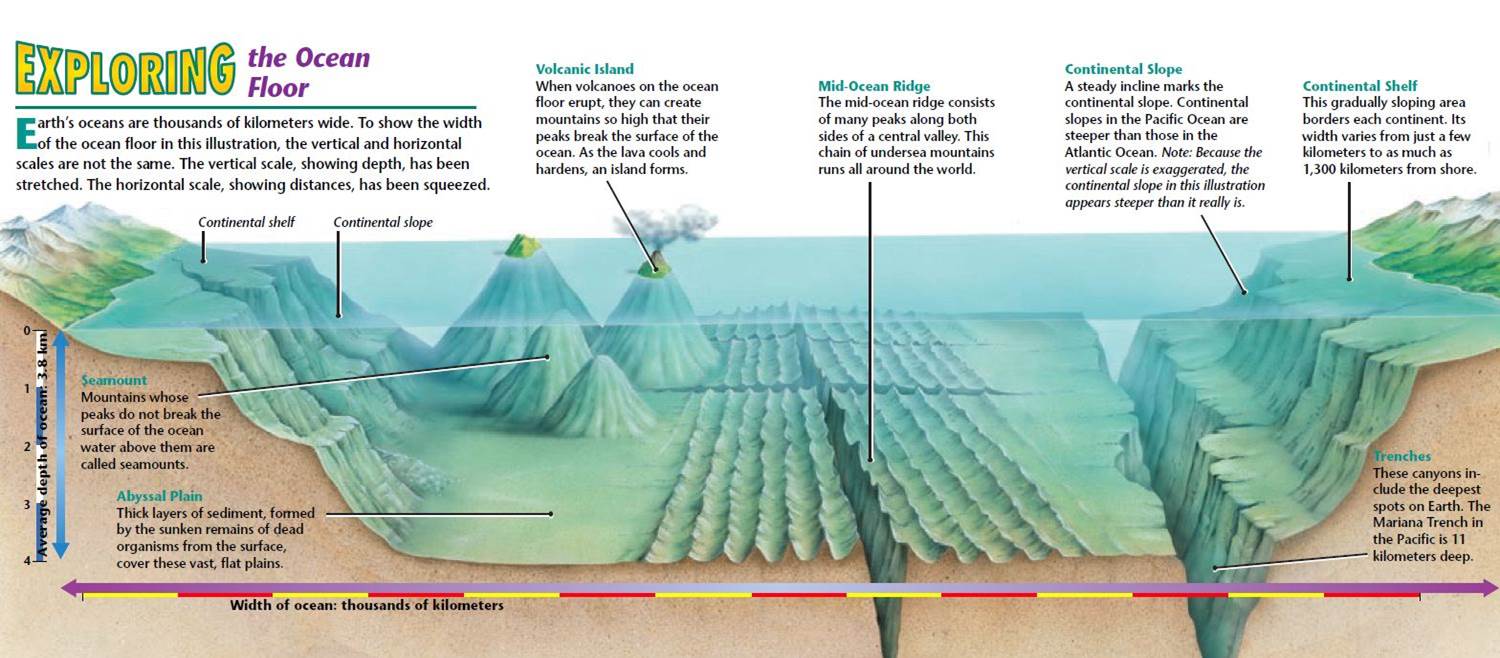

Which ocean floor feature is labeled "F"?
Continental Shelf
Abyssal Plain
Ocean Trench
Continental Slope

A shallow area of sediment near the shore...
Continental Shelf
Ocean Trench
Continental Slope
Abyssal Plain
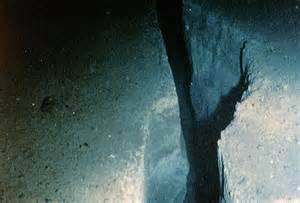
Which of these are the deepest parts of the oceans?
Continental Shelf
Abyssal Plain
Ocean Trench
Continental Rise

"A" on the diagram labels the...
Continental Shelf
Abyssal Plain
Continental Slope
Ocean Trench
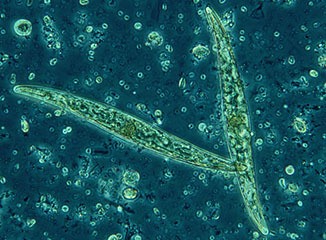
Plant-like plankton is called...
Photosynthesis
Phytoplankton
Decomposer
Consumer
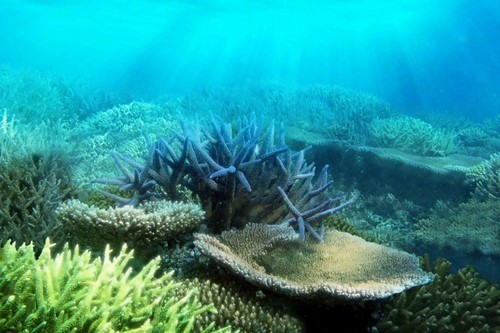
As the depth of the ocean water increases, the temperature...
increases (warmer)
decreases (colder)
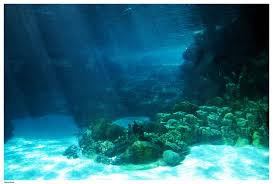
Which would you find covering the ocean floor?
Mud
Ice
Rocks
Sand
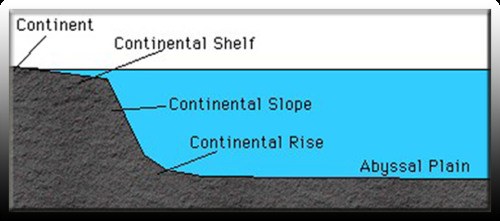
Which ocean floor feature is the steep cliff-like drop beyond the continental shelf?
Continental Shelf
Continental Slope
Abyssal Plain
Ocean Trench

Which part of the ocean floor is labeled "D"?
Mid-Ocean Ridge
Continental Slope
Blue-Ridge Mountains
Abyssal Plain

Phytoplankton provides much of the Earth's...
Nitrogen
Carbon Dioxide
Oxygen
Helium
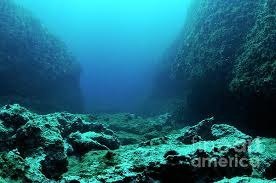
As the depth of ocean waters increases, the pressure...
increases (more pressure)
decreases (less pressure)

"C" on the Ocean Floor diagram represents the...
Continental Slope
Abyssal Plain
Continental Rise
Ocean Trench
A gently sloping area that connects the steep walls of the continental slope to the bottom of the ocean floor is called the... (sediments/deposition)
Abyssal Plain
Ocean Trench
Continental Rise
Mid-Ocean Ridges

Animal-like plankton is called...
phytoplankton
zooplankton

Where are you walking when you are wading in the ocean?
Ocean Trench
Abyssal Plain
Continental Slope
Continental Shelf

As the depth of the ocean water increases, the amount of light -
Increases (more light)
Decreases (less light)

Which ocean floor feature is labeled "G"?
Continental Slope
Ocean Trench
Continental Rise
Abyssal Plain

What do the arrows on the map represent?
Size of waves
Water density
Ocean currents
Time between tides
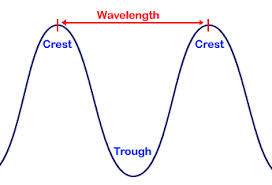
The distance between two crests or two troughs on a wave is the...
Crest
Trough
Wavelength
The shallowest part of the ocean is the ____________________
What do we call a giant sea wave caused by an underwater earthquake, volcanic eruption, or landslide?
Tsunami
barrier island
beach
breaker
What is the term we use to describe the area where land meets the ocean?
tide pool
cliff
beach
shoreline
What term best describes a flowing stream of water that moves continually through the ocean in a specific direction?
wave
tide
current
beach
A feature of the ocean shore zone, where land and ocean meet, that is made up of mostly sand is called a ________________.
barrier island
beach
tide
inlet
Pieces of land surrounded by water on all sides are called ___________________.
inlets
waves
estuaries
islands
Continental: Low land between hills or mountains is called a ____________.
trench
valley
rift
seamount
Oceanic: Low land between hills or mountains is called ________________.
valley
rift
plain
mid-ocean ridge
Continental: A deep valley with high, steep sides is called a ______________.
canyon
trench
rift
seamount
Oceanic: A deep valley with high, steep sides is called a ___________.
canyon
rift
seamount
trench
Continental: An opening in the surface from which lava flows is called a _________________
volcano
rift
valley
fault
Oceanic: An opening in the surface from which lava flows is called a ______________.
seamount or volcanic island.
trench
barrier island
mountain range
Continental: Land which rises high above the ground is called a _______________.
valley
trench
mountain range
rift
Oceanic: Land which rises high above the ground is called a _________________.
valley
canyon
mid-ocean ridge
estuary
Continental: Wide, flat areas of land are called ______________.
beaches
mountain ranges
plains
seamounts
Oceanic: Wide, flat areas of land are called ___________________.
mid-ocean ridges
abyssal plains
rift valleys
seamounts
The wise use of natural resources is called ________________.
Pollution
Conservation
Anything that harms the natural environment is called __________________.
Pollution
Conservation
To use less of something is to _________________.
reduce
reuse
recycle
To use something over and over again is to _____________.
reduce
reuse
recycle
To make something new from an old product is to ________________.
reduce
reuse
recycle
Which of the following is a common feature found on the ocean floor that is similar to a feature found on land?
Deserts
Forests
Mountains
Cities

