wayground logo

Free Printable Worksheets

NEW

Font size

S
M
L
XL
Worksheets

Earth spheres and Water cycle review

Total questions: 67

Worksheet time: 1hrs 28mins
Name
Class
Date
1.
This sphere includes the continents, the ocean floor, all the rocks on the surface, and all of the sand in the deserts. 
a)
Hydrosphere 
b)
Biosphere 
c)
Atmosphere 
d)
Geosphere 
2.
Composed of all the water on or near the earth
a)
Hydrosphere 
b)
Biosphere 
c)
Atmosphere 
d)
Geosphere 
3.
This sphere is composed of all the living things 
a)
Hydrosphere 
b)
Biosphere 
c)
Atmosphere 
d)
Geosphere 
4.
Body of air surrounding our planet. 
a)
Hydrosphere 
b)
Biosphere 
c)
Atmosphere 
d)
Geosphere 
5.
Series of steps engineers use to guide them as they solve problems. 
a)
Engineer 
b)
Engineering design process
c)
Environmental Engineer 
d)
Erosion 
6.
Engineers that are concerned with protecting people from effects of adverse environmental effects, such as pollution, as well as improving environmental quality. 
a)
Aerospace Engineer 
b)
Nuclear Engineer 
c)
Environmental Engineer 
d)
Electrical Engineer 
7.
Water evaporating from the surface of a lake moves from the...
a)
Atmosphere to the geosphere 
b)
Geosphere to the hydrosphere 
c)
Hydrosphere to the atmosphere 
d)
Atmosphere to the hydrosphere 
8.
When living things breathe, they interact with which of Earth's spheres? 
a)
Geosphere 
b)
Hydrosphere 
c)
Atmosphere 
d)
Biosphere 
9.
When dead plants decompose and nitrogen is returned to the soil, the interaction is between which two spheres? 
a)
The biosphere and atmosphere 
b)
The atmosphere and geosphere 
c)
The geosphere and atmosphere 
d)
The biosphere and geosphere 
10.
What might happen if the earth didn't have an atmosphere? 
a)
Everything would go flying off into space 
b)
The seasons would be longer 
c)
The earth's rotation would stop 
d)
We wouldn't be able to breathe 
11.
When carbon dioxide dissolves from the air into the ocean- the interaction is between...
a)
The atmosphere and geosphere 
b)
The atmosphere and hydrosphere 
c)
The atmosphere and biosphere 
d)
The atmosphere and atmosphere 
12.
The practice of tilling sloped land along lines of consistent elevation in order to conserve rainwater and to reduce soil loss from surface erosion. 
a)
Mulch Farming
b)
Mixed Farming
c)
Arable Farming 
d)
Terrace Farming 
13.
Where is terrace farming used? 
a)
Asia 
b)
America 
c)
All over the world 
d)
China 
14.
Oceans, rivers, lakes, and the moisture in the air are all part of which of Earth's spheres? 
a)
Hydrosphere 
b)
Biosphere 
c)
Atmosphere 
d)
Geosphere 
15.
When a plants takes carbon dioxide from the air which two spheres are interacting? 
a)
Biosphere and atmosphere 
b)
Geosphere and atmosphere 
c)
Hydrosphere and atmosphere 
d)
Atmosphere and atmosphere 
16.
When volcanoes erupt, dust and ash particles spread through much of the air blocking the sun.  Which two spheres are interacting? 
a)
Hydrosphere and atmosphere 
b)
Geosphere and atmosphere 
c)
Biosphere and atmosphere 
d)
Atmosphere and atmosphere 
17.
Energy from the sun is stored by plants. When animals eat the plants, they acquire the energy originally captured by the plants. Between which two spheres is the above interaction? 
a)
Hydrosphere and biosphere 
b)
Atmosphere and biosphere 
c)
Biosphere and biosphere 
d)
Geosphere and biosphere 
18.
When plants draw nutrients from the soil, the interaction is between which two spheres? 
a)
The atmosphere and the geosphere 
b)
The geosphere and the hydrosphere 
c)
The hydrosphere and atmosphere 
d)
The biosphere and the geosphere 
19.
What is one reason terrace farming is used? 
a)
Helps prevent soil erosion 
b)
Certain crops need to be planted this way to grow
c)
Produces more crops 
d)
Easier for farmers 
20.
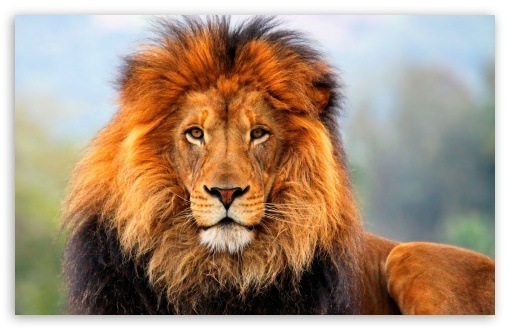
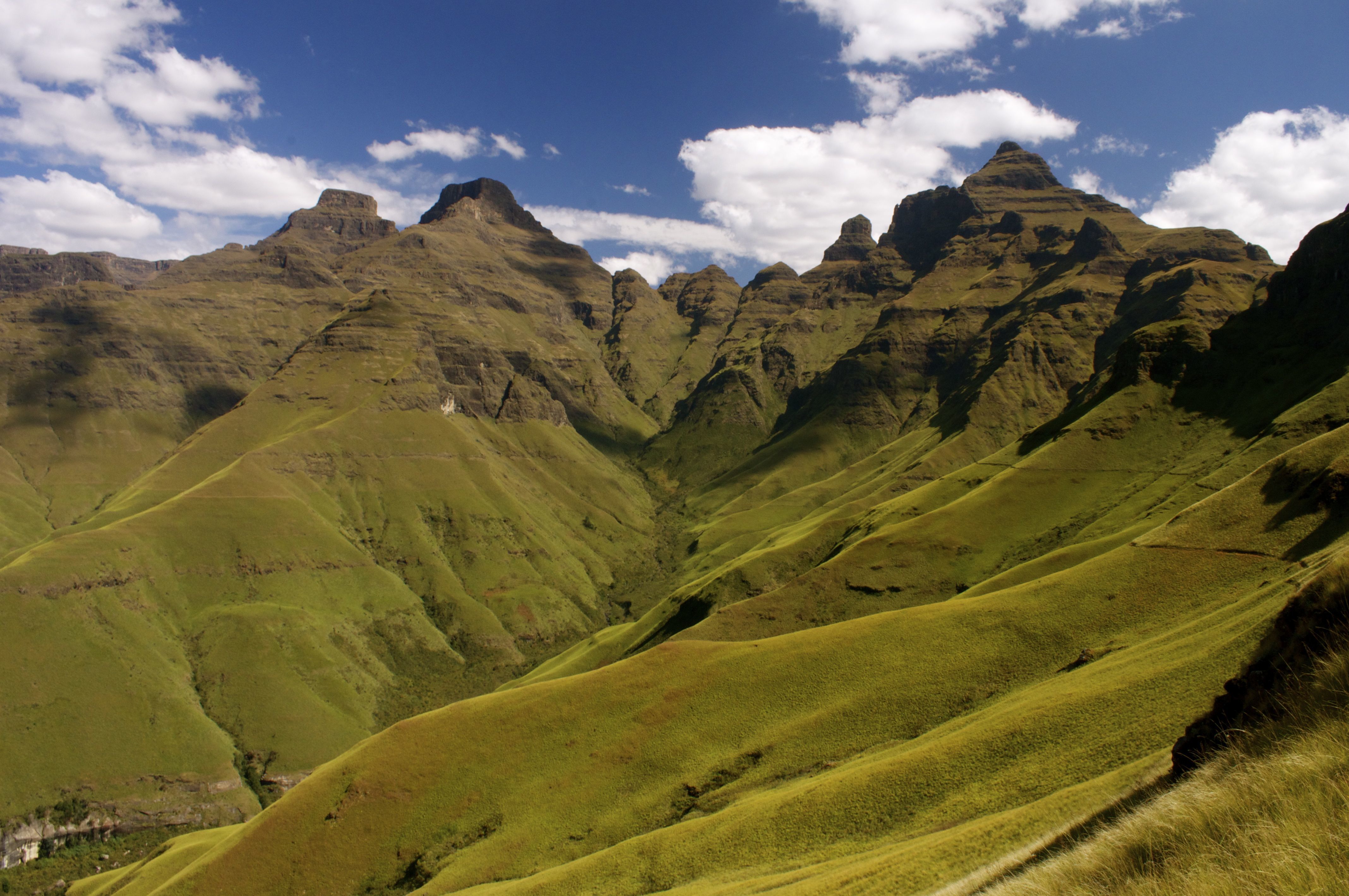
This is part of the....
a)
Geosphere
b)
Biosphere
c)
Hydrosphere
d)
Cryosphere
21.
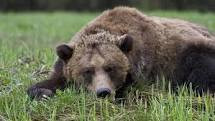
All living things on earth are part of the....
a)
Biosphere
b)
Geosphere
c)
Hydrosphere
d)
Cryosphere
22.
All frozen water on Earth is...
a)
Hydrosphere
b)
Geosphere
c)
Cryosphere
d)
Atmosphere
23.
Geo = 
a)
Earth
b)
Sphere
c)
Life
d)
Water
24.
Hydro = 
a)
Sphere
b)
Earth
c)
Life
d)
Water
25.
What main system do you interact with when you are exploring an underwater cave? 
a)
Hydrosphere
b)
Geosphere
c)
Cryosphere
d)
Biosphere
26.
This is part of the....
a)
Geosphere
b)
Atmosphere
c)
Biosphere
d)
Hydrosphere
27.
This is part of the....
a)
Geosphere
b)
Biosphere
c)
Hydrosphere
d)
Atmosphere
28.
This is part of the....
a)
Geosphere
b)
Biosphere
c)
Cryosphere
d)
Atmosphere
29.
This is part of the....
a)
Geosphere
b)
Atmosphere
c)
Hydrosphere
d)
Cryosphere
30.
This is part of the....
a)
Geosphere
b)
Atmosphere
c)
Cryosphere
d)
Hydrosphere
31.
This is part of the....
a)
Geosphere
b)
Biosphere
c)
Atmosphere
d)
Cryosphere
32.
This is part of the....
a)
Geosphere
b)
Hydrosphere
c)
Biosphere
d)
Cryosphere
33.
This is part of the....
a)
Hydrosphere and Atmosphere
b)
Cryosphere
c)
Biosphere and Geosphere
d)
Geosphere & Atmosphere
34.
What is it called when plants give off water vapor as a waste product?
a)
condensation
b)
evaporation
c)
sublimation
d)
transpiration
35.
During which stage do clouds form?
a)
condensation
b)
evaporation
c)
precipitation
36.
Which stages does liquid water from the ocean turn into water vapor?
a)
condesantion
b)
evaporation
c)
precipitation
d)
run off
37.
Which stage does ground water try to return to the ocean or soak into the ground?
a)
condensation
b)
evaporation
c)
precipitation
d)
run off
38.
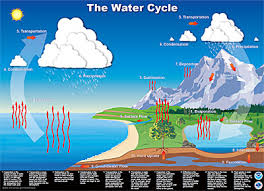
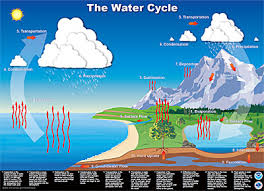
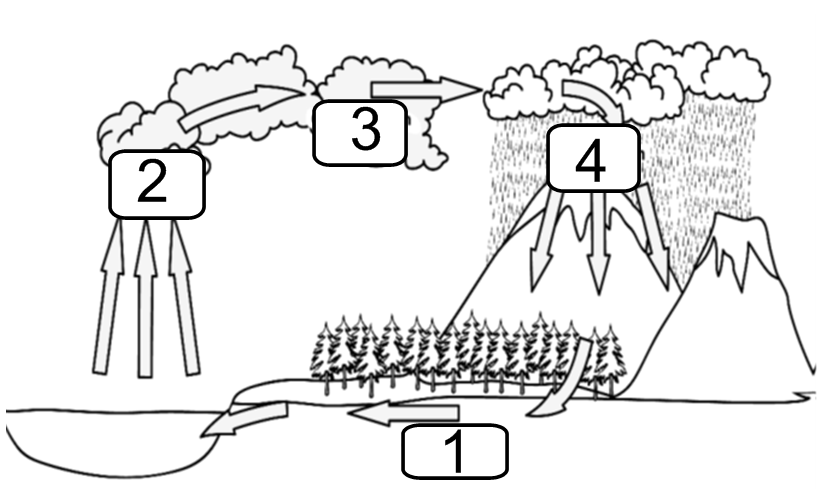
Which stage does the #2 show in the diagram?
a)
condensation
b)
evaporation
c)
precipitation
d)
run off
39.
Which stage does the #3 show in the diagram?
a)
condensation
b)
evaporation
c)
precipitation
d)
run off
40.
what does the #4 show in the diagram?
a)
condensation
b)
evaporation
c)
precipitation
d)
run off
41.
does warm water evaporate quicker than cold water
a)
true 
b)
false
42.
What is the water cycle?
a)
the 3 forms of water
b)
the movement of water on, above, or below the surface of the Earth
c)
when water melts
d)
when clouds form
43.
Which is the opposite of condensation?
a)
runoff
b)
evaporation
c)
precipitation
d)
transpiration
44.
Which best explains why runoff is important?
a)
It returns water to other locations on Earth
b)
It increases the chance of flooding
c)
It makes evaporation occur faster
d)
It increases condensation
45.
What follows evaporation during the water cycle? How does this occur?
a)
Water evaporates into water vapor
b)
Water vapor condenses and forms a  cloud
c)
Water precipitates to the ground
d)
Water runs down into the hydrosphere
46.
The sun will cause water in the puddle to change from
a)
a gas to a liquid
b)
a liquid to a gas
c)
solid to a liquid
d)
a liquid to a solid
47.
A cup of ice sits in the sun.  The ice melts. What change of state will occur NEXT?
a)
from solid to solid
b)
from liquid to solid
c)
from liquid to gas
d)
from gas to liquid
48.
The ______________is the beginning source of energy for the water cycle.
a)
sun
b)
wind
c)
geothermal
d)
volcano
49.
Water begins to evaporate when you add _______ to it.
a)
cold
b)
ice
c)
water cycle
d)
heat
50.

Which example is a form of precipitation?

a)

Dew

b)

Fog

c)

Frost

d)

Hail

51.

In which area would the rate of evaporation be the lowest?

a)

Over the ocean

b)

Over the mountains

c)

Over the rainforest

d)

Over the desert

52.

As a part of the water cycle, water from Earth's surface enters the clouds and finally falls back to the ground in the form of rain. What is the correct sequence of processes water undergoes?

a)

Evaporation, Condensation, Precipitation

b)

Precipitation, Condensation, Evaporation

c)

Condensation, Evaporation, Precipitation

d)

Evaporation, Precipitation, Condensation

53.

What would happen if the Sun is removed from the water cycle?

a)

The water cycle would not include precipitation but would continue with groundwater flow.

b)

The water cycle would no longer occur because the Sun provides the energy for evaporation and transpiration.

c)

The water cycle would no longer occur because the Sun provides energy for the formation of clouds.

d)

The water cycle would not include evaporation and transpiration but would continue with condensation.

54.

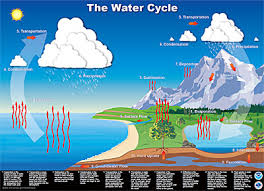
A student draws a model to represent the precesses involved in the water cycle, as shown. To which process is the formation of clouds related?

a)

Condensation

b)

Evaporation

c)

Freezing

d)

Melting

55.

The image shows various stages in the water cycle. During which stage does water flow back towards the sea as runoff?

a)

W

b)

X

c)

Y

d)

Z

56.

On Earth, what process generates most of the water vapor?

a)

Condensation

b)

Evaporation

c)

Precipitation

d)

Transpiration

57.

Rain and snow are two different forms of precipitation that fall on Earth's surface. Which factor is responsible for there being different forms of precipitation?

a)

Evaporation

b)

Run-off

c)

Temperature

d)

Transpiration

58.

What is precipitation?

a)

Sweat from our bodies on hot days

b)

Warm rain but not cold snow or sleet

c)

Gas that we use in furnaces or ovens

d)

Any form of water that falls from the sky

59.

What is another name or synonym for the water cycle?

a)

Geologic cycle

b)

Hydrologic cycle

c)

Geosphere

d)

Carbon cycle

60.

What is the energy source that drives the water cycle?

a)

The moon T

b)

The heat from our home in the winter all around the world

c)

The sun

d)

he heat generated solely from the core of the earth

61.

What are formed when water vapor condenses?

a)

Clouds

b)

Mountains

c)

Transpiration

d)

Valleys

62.

The movement caused within a fluid by the tendency of hotter and therefore less dense material to rise, and colder, denser material to sink under the influence of gravity, which consequently results in transfer of heat. ____________________

a)

Evaporation

b)

Convection

c)

Precipitation

d)

Transpiration

63.
What is it called when plants give off water vapor as a waste product?
a)
condensation
b)
evaporation
c)
sublimation
d)
transpiration
64.

Water in its gas form is called ____________________,

a)

water vapor

b)

precipitation

c)

ice

d)

air

65.
The atmosphere, the ground, and also bodies of water are all heated by the Sun's energy. How does this energy reach Earth?
a)
radiation
b)
conduction
c)
convection
d)
gravity
66.
Warm, less dense air (including vapor) rises in the atmosphere. Cool, more dense air (including vapor) sinks. This transfer is . . . .
a)
convection
b)
conduction
c)
radiation
d)
gravity
67.
What part of the water cycle does this picture show?
a)
condensation
b)
precipitation
c)
evaporation