
 Worksheets
Science Spiral Review
Total questions: 62
Worksheet time: 45mins
Name
Class
Date
1.
Light travels
a)
around corners
b)
in a straight line
2.
What does refletion mean?
a)
It is when the light changes the material and the direction of it changes as well.
b)
It is when the material is rebounding the light.
3.

Which images are opaque?
a)
A & C
b)
A,C,E, & F
c)
D, E, & F
d)
A & E
4.

When a rainbow is formed outside naturally, what causes the light to refract?
a)
A. Small raindrops
b)
B. Sunlight rays
c)
C. Tiny mirrors
d)
D. Glass prisms
5.

Which explains why the fork looks different under water?
a)
light can't pass through the glass
b)
the wavelength of light lengthens
c)
the amount of light increases when going through water
d)
light is refracted at an angle
6.
Smooth surfaces _______ a lot of light.
a)
reflect
b)
bend
c)
absorb
d)
twist
7.
Why do we see objects as white?
a)
They absorb all light
b)
They reflect all light
c)
They absorb some light and reflect some light
8.
Another name for light bending is ....
a)
Reflaction
b)
Absorbing
c)
Refraction
d)
mirror
9.
Opaque means...
a)
No light passes through it
b)
All light passes through it
c)
Some light passes through it
10.

When light passes through a prism the light is bent and breaks into the visible spectrum. What color bends the most and has the shortest wavelength?
a)
Red
b)
Yellow
c)
Blue
d)
Violet
11.
The color you see is the color that is ___.
a)
reflected
b)
absorbed
12.
___________ is a from of energy that we can see with our eyes.
a)
shadow
b)
light
c)
energy
d)
reflection
13.
Which term means to bounce off the surface of something?
a)
Refract
b)
Absorb
c)
Reflect
d)
prism
14.

Band of color in a rainbow, or from a light passing through a prism.
a)
Spectrum
b)
Space
c)
Prism
d)
Refraction
15.

The bending of waves as they pass from one substance into another.
a)
Reaction
b)
Reflection
c)
Refraction
d)
Repost
16.

The term for any wave that hits a surface and bounces off
a)
Transparent
b)
Translucent
c)
Refraction
d)
Reflection
17.

Blurs light as it passes through
a)
Transparent
b)
Translucent
c)
Opaque
d)
Refraction
18.

Allows most light through
a)
eflection
b)
Refraction
c)
Translucent
d)
Transparent
19.

Transfer of energy when a wave disappears into a surface
a)
Transparent
b)
Refraction
c)
Reflection
d)
Absorption
20.

White light is made up of _________________ colors.
a)
10
b)
3
c)
7
d)
70
21.
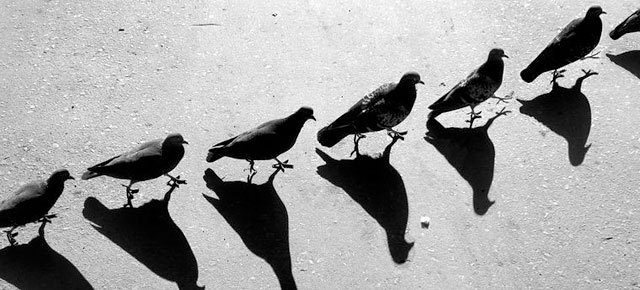
What does light do when it hits an object that it cannot pass through?
a)
It creates a shadow
b)
It passes through anyway
22.

Which color absorbs all light?
a)
White
b)
Black
c)
Orange
d)
Green
23.

Which color reflects all light?
a)
White
b)
Black
c)
Orange
d)
Green
24.
The flower part that produces pollen; located at the tip of the stamen.
a)
petal
b)
anther
c)
pistil
d)
stamen
25.
The process by which plants or other organisms change.
a)
fertilization
b)
pollination
c)
transpiration
d)
cellular respiration
26.
A green pigment in plants that allows for the absorption of sunlight and photosynthesis.
a)
glucose
b)
chlorine
c)
chlorophyll
d)
cuticle
27.
A process in sexual reproduction in which male and female reproductive cells join to form a new cell/organism.
a)
fertilization
b)
photosynthesis
c)
germination
d)
transpiration
28.
The loss of water in plants; occurs as stomata open.
a)
cellular respiration
b)
germination
c)
fertilization
d)
transpiration
29.
Small pores that allow for the exchange of gases in and out of a plant.
a)
stamen
b)
stomata
c)
pistil
d)
petal
30.
The male reproductive part of a flower.
a)
stamen
b)
stomata
c)
ovary
d)
anther
31.
A leaf-like structure that encloses the bud of a flower.
a)
sepal
b)
petal
c)
anther
d)
pistil
32.
The transfer of pollen from male reproductive structures to female reproductive structures in plants.
a)
cellular respiration
b)
photosynthesis
c)
fertilization
d)
pollination
33.
The female reproductive structure of a flower.
a)
anther
b)
sepal
c)
pistil
d)
petal
34.
The process by which plants change sunlight, water and carbon dioxide to glucose and oxygen.
a)
cellular respiration
b)
photosynthesis
c)
cuticle
d)
pollination
35.
A modified leaf of a flowering plant; forms a circular shape around the top of a flower and its reproductive parts.
a)
stomata
b)
pistil
c)
sepal
d)
petal
36.
Special cells that change the size and opening in stomata.
a)
guard cells
b)
anther
c)
cuticle
d)
sepal
37.
Flower part that contains ovules and eggs; located at the bottom of the pistil.
a)
cuticle
b)
anther
c)
ovary
d)
stamen
38.
What form of energy is being used when a person pushes heavy boxes across the floor?
a)
Electrical energy
b)
Mechanical energy
c)
Heat energy
d)
Sound energy
39.
Heat is another name for-
a)
thermal energy
b)
magnetic energy
c)
electrical energy
d)
mechanical energy
40.
The Sun produces
a)
light and heat energy
b)
sound and light energy
c)
heat and sound energy
d)
electrical and light energy
41.
Which of the following energy transformations occur when a lamp that is plugged into a wall socket is functioning correctly?
a)
Chemical to light
b)
Electrical to chemical
c)
Electrical to light
d)
Chemical to electrical
42.

The chart gives the physical properties of copper. How does the density of a 4g sample compare to that of a 12g sample?
a)
The density is one-half the density of the 12g sample.
b)
The densities are the same.
c)
It is twice as dense as the 12g sample.
d)
It is 3 times as dense as the 12g sample.
43.
Which is considered a good insulator of heat?
a)
aluminum, because it allows heat to flow easily
b)
glass, because it allows heat to flow easily
c)
plastic, because heat is unable to flow easily
d)
silver, because heat is unable to flow easily
44.
Why are there high and low tides on Earth?
a)
They are due to changes in the moon’s tilt on its axis.
b)
They are due to the gravitational pull between Earth and the moon.
c)
They are due to the magnetic force between Earth and the moon.
d)
They are due to changes in the moon’s speed every month.
45.
Which contributes to Earth’s ability to sustain life?
a)
The atmosphere allows all of the sun’s radiation to enter due to Earth’s distance from the sun.
b)
The atmosphere prevents all space debris from reaching the surface due to the ozone layer.
c)
The atmosphere is extremely thin due to the temperatures of the sun.
d)
The atmosphere is breathable due to the unique mixture of gases.
46.
How does gravity support life on Earth?
a)
by forcing Earth to continuously spin on its axis, which contributes to day and night
b)
by causing changes in the distance between Earth and the sun, which contributes to the seasons
c)
by keeping water and gases in the atmosphere close to Earth’s surface, which contributes to life processes
d)
by preventing meteors and comets from hitting Earth’s surface, which protects living organisms from space fragments
47.

The diagram below shows the composition of the surface of Earth. Which best summarizes the composition of the surface of Earth?
a)
Three-fourths of Earth’s surface is land.
b)
One-fourth of Earth’s surface is water.
c)
Earth’s surface contains more land than water.
d)
Earth’s surface contains more water than land.
48.
Which is the basic composition of Earth’s core?
a)
The solid inner core is surrounded by a liquid outer core.
b)
The liquid inner core is surrounded by a solid outer core.
c)
Both the inner core and the outer core are solid.
d)
Both the inner core and the outer core are liquid.
49.
Which best explains the movement of tectonic plates?
a)
They move several miles each year because of convection within Earth.
b)
They move several centimeters each year because of convection within Earth.
c)
They move several feet each year because of convection within Earth.
d)
They move several kilometers each year because of convection within Earth.
50.

This chart compares three different types of waves. How do the wave characteristics compare for these waves?
a)
Sound waves and P-waves are longitudinal waves, while light waves are transverse waves.
b)
Light waves and P-waves are transverse waves, while sound waves are longitudinal waves.
c)
Sound waves, P-waves, and light waves are all longitudinal waves.
d)
Light waves, P-waves, and sound waves are all transverse waves.
51.
Which best explains the relationship between parent rock and soil composition?
a)
Weathered parent rock determines the number of organisms found in the soil.
b)
Weathered parent rock determines the amount of air found in the soil.
c)
Weathered parent rock is the largest component of soil.
d)
Weathered parent rock is the smallest component of soil.
52.

This illustration shows the reaction of a plant when placed near a light source. What would happen to the plant if it were turned away from the light source?
a)
The plant would stop growing.
b)
The plant would be unaffected.
c)
The plant would move away from the light source.
d)
The plant would bend towards the light source.
53.
Tulips are flowers that typically bloom in the spring. How could tulips be forced to bloom in winter?
a)
by limiting pruning and trimming of the tulips
b)
by reducing water levels and nutrient uptake by the tulips
c)
by elevating oxygen levels and supplying organic matter to the tulips
d)
by increasing temperature and lengthening daylight for the tulips
54.
How does sound usually travel?
a)
An object vibrates, and those vibrations travel through the air in one direction as transverse waves.
b)
An object vibrates, and those vibrations carry air in one direction as longitudinal waves.
c)
An object vibrates, and those vibrations carry air in all directions as transverse waves.
d)
An object vibrates, and those vibrations travel through the air in all directions as longitudinal waves.
55.
Which is true for every atom of an element?
a)
It can be seen with a magnifying glass.
b)
It is joined together with another atom.
c)
It has mass and volume.
d)
It is weightless.
56.
A student has two pieces of aluminum foil. Each piece can be folded and rolled into a wire. Why do both pieces of aluminum foil behave the same way?
a)
They are composed of the same types of atoms.
b)
They are composed of different types of atoms.
c)
They have the same physical properties, but different chemical properties.
d)
They have the same chemical properties, but different physical properties.
57.

The chart below shows the amount of sunlight and types of organisms found at different depths in the ocean. Which best summarizes the relationship between ocean depth and the availability of sunlight and ocean life?
a)
Sunlight is available only at depths of 200 m to 1,000 m.
b)
Sunlight is available for organisms at depths of 0 m to 2,000 m.
c)
Plants are found mainly at depths of 0 m to 200 m because sunlight is available
d)
Plants are found at depths of 0 m to 2,000 m because sunlight is available.
58.

This is a wave pattern diagram for two transverse waves. How do the waves compare?
a)
Both waves have the same frequency.
b)
Both waves have the same wavelength.
c)
Wave 1 has a longer wavelength than Wave 2.
d)
Wave 1 has a higher frequency than Wave 2.
59.

This table lists the density of four different substances. If water has a density of 1.0 g/cm3, which substance will float on the surface of water?
a)
Substance W, because it is less dense than water
b)
Substance X, because it is more dense than water
c)
Substance Y, because it is more dense than water
d)
Substance Z, because it is less dense than water
60.
Beaker X contains 100 g of table salt and beaker Y contains 50 g of table salt. How do the contents in beaker Y compare to those in beaker X?
a)
Both have the same weight.
b)
Both have the same solubility.
c)
Both have different elements.
d)
Both have different melting points.
61.
Why are people able to see the moon?
a)
The moon produces its own light.
b)
Light from Earth reflects off the moon.
c)
Light from the sun reflects off the moon.
d)
The moon is located between Earth and the sun.
62.

The chart below shows the relationship between plant features and precipitation in certain biomes. What best summarizes the chart?
a)
The amount of precipitation within an area has no effect on plant life and survival.
b)
Plants have traits that help them survive in areas with different amounts of precipitation.
c)
The ability to store water is important for plants living in areas with 5,000 mm of rain.
d)
Deep roots are important for plants living in areas with 200 mm of rain.
100 %

