
NEW
Font size
S
M
L
XL
 Worksheets
TIMSS - BIO 4 - Diversity, Adaptation and Natural Selection
Total questions: 20
Worksheet time: 11mins
Name
Class
Date
1.

What is this describing
a)
Behavioral adaptation
b)
natural selection
c)
structural adaptation
2.

a)
Structural adaptation
b)
behavioral adaptation
3.

a)
behavioral
b)
structural
4.

a)
behavioral
b)
structural
5.
Instincts are related to
a)
learned behavior.
b)
both inherited and learned behaviors.
c)
inherited behavior.
d)
neither inherited nor learned behavior.
6.
What is an adaptation?
a)
A feature or behavior that helps an animal survive.
b)
The food that an animal eats.
c)
How energy moves in a food web.
d)
How animals evolve throughout time.
7.
These are traits of an organism that help it survive in its environment.
a)
Adaptation
b)
Variation
c)
Mutation
d)
Diversity
8.
What is the advantage of having different shaped beaks?
a)
To look different from other species.
b)
To be able to eat the food readily available in the environment.
c)
To protect itself against predators.
d)
To protect itself against prey.
9.
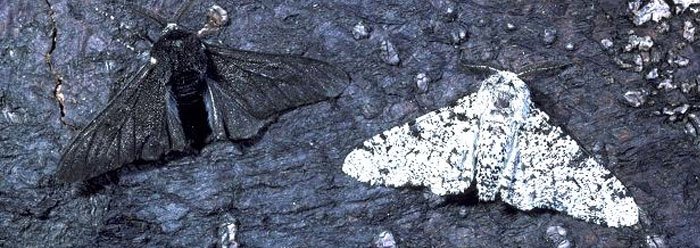
The trees these moths used to live on were white, but have been covered in soot from coal factories. Which moth will be more successful in this environment?
a)
Dark moth
b)
Light moth
c)
Both will be equally successful
d)
Neither will be successful
10.

How could this adaptation help with survival?
a)
Swim faster
b)
Store fat
c)
Insulation
d)
See farther
e)
Have direction when swimming
11.

How could this adaptation help with survival?
a)
Swim faster
b)
Store fat
c)
Insulation
d)
See farther
e)
Have direction when swimming
12.

How could this adaptation help with survival?
a)
Swim faster
b)
Store fat
c)
Insulation
d)
See farther
e)
Have direction when swimming
13.

People who study fossils are called ____.
a)
meterologists
b)
fossilologists
c)
paleontologists
d)
fossil hunters
14.
What happens when a group of animals become extinct?
a)
All of its members have died.
b)
Only a few of its members are still living.
c)
The animals can no longer lay eggs.
d)
All of its members move to another place.
15.
A fossil is any preserved _________ of an organism.
a)
evidence
b)
piece
c)
bone
d)
imprint
16.

Law of Superposition: Which rock layer is the oldest in this image?
a)
Layer A
b)
Layer B
c)
Layer C
d)
Layer D
17.

The picture below shows long and short necked giraffes and what happened to shorter necked giraffes over time. What does this demonstrate?
a)
Fossil evidence
b)
Anatomical structures
c)
Extinction
d)
Natural selection
18.

The diagram below shows fossils in different rock layers. Which of these statements about the age of these fossils is most likely correct?
a)
Fossil 1 and 3 are the same age.
b)
Fossil 2 is older than fossil 3.
c)
Fossils 2 and 4 are the same age.
d)
Fossil 4 is older than fossil 3.
19.

This picture shows a change over time in populations of related organisms, in this case the organisms are horses. What is the scientific term for this kind of change?
a)
Fossil evidence
b)
Evolution
c)
Biological evolution
d)
Extinction
20.
What is the definition of fossil?
a)
An actual body or body parts of an organism
b)
A trace or the remains of a once-living thing from long ago.
c)
a sticky substance that flows and can trap insects
Reset

