wayground logo

Free Printable Worksheets

Font size

S
M
L
XL
Worksheets

Benchmark 3 Review SOL 1-9

Total questions: 122

Worksheet time: 3hrs 54mins
Name
Class
Date
1.
What provided the major economic support for the Renaissance?
a)
wealthy patrons
b)
church officials
c)
government grants
d)
kings competing for prestige
2.
What is the artistic technique that is used to show depth and distance on a flat surface?
a)
realism
b)
perspective
c)
idealism
d)
distancism
3.
Where did the Renaissance begin?
a)
Italy
b)
France
c)
England
d)
Germany
4.
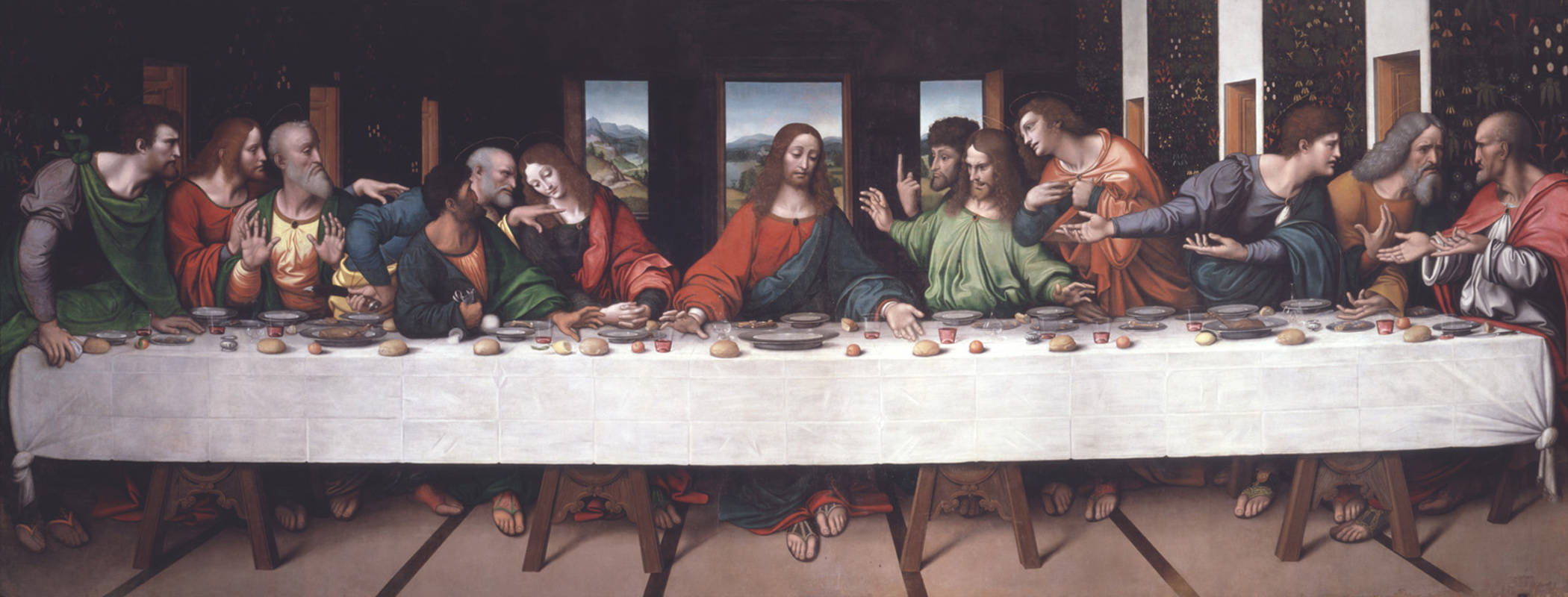
Who painted "The Last Supper"?
a)
Machiavelli
b)
Botticelli
c)
Kepler
d)
Leonardo da Vinci
5.
What was the Renaissance a "rebirth" of?
a)
Religion
b)
Classical culture
c)
Life (after the black death)
d)
Middle Ages
6.
"The end justifies the means" was a key belief of this man, who wrote "The Prince" 
a)
Machiavelli
b)
Castiglione
c)
Shakespeare 
d)
Petrarch
7.
Advantages of Johannes Gutenberg's printing press include all of the following EXCEPT:
a)
Cheaper book prices
b)
Increase in education/literacy
c)
Increase in church power
d)
Rapid spread of ideas
8.
Which of the following is a synonym best used to describe the word "secular"
a)
Worldly
b)
Religious
c)
Chivalry
d)
Rebirth
9.
Which German priest started the Reformation?
a)
John Calvin
b)
Henry VIII
c)
Pope Paul III
d)
Martin Luther
10.
What did the Catholic Church sell to forgive sins?
a)
Forgiveness
b)
Sacraments
c)
Indulgences
d)
Confession
11.
Luther's criticism of the Catholic Church was called what?
a)
Criticism of the Catholic Church
b)
95 Theses
c)
101 Problems with Catholics
d)
Chicken Soup for the Catholic Soul
12.

How did the printing press help Martin Luther?

a)

Provided mass production of fabric for his designs

b)

Provided easy distribution of his ideas

c)

Provided fast mass transportation to Church

d)

Provided a cure for the Black Death

13.
What is an indulgence?
a)
You are kicked out of the church for life and won't go to heaven.
b)
You are put on trial, tortured, and given a choice to convert or die.
c)
You can pay money to have your sins forgiven: ticket to heaven.
d)
You are brought up on criminal charges: accusing you of going against approved teachings/beliefs.
14.

Why did England break with the Church?

a)

Martin Luther's influence spread throughout country

b)

John Calvin set up his theocracy in one the towns

c)

The king wanted a divorce and Church said no

d)

The England did not break from the Catholic Church

15.

Ultimately, Henry VIII decided that (if the Pope would not grant him what he wanted) he would create his own Church. What is the name of this new branch of Christianity?

a)

Lutheran Church

b)

Calvinist Church

c)

Church of England

d)

Church of Henry VIII

16.
What was the bloodiest war of the Reformation?
a)
Thirty Years' War
b)
French Wars of Religion
c)
Calvinist Revolt in Netherlands
d)
Hundred Years War
17.

How did John Calvin contribute to the Protestant Reformation?

a)

John Calvin introduced the idea of predestination to theology and formed a theocracy in Switzerland.

b)

John Calvin developed the printing press and assisted in the spread of Reformation ideas throughout Europe.

c)

John Calvin translated the Ancient Greek texts of the Holy Bible into a German vernacular.

d)

John Calvin encouraged Henry VIII of England to ask Pope Clement VII for a divorce.

18.
Who were the Huguenots?
a)
Protestants from Germany 
b)
Followers of Martin Luther
c)
French Protestants - followers of Calvin
d)
Economic migrants from Amsterdam 
19.
Who made first contact the the Inca
a)
Francisco Pizarro
b)
Hernan Cortes
c)
Christopher Columbus
d)
Amerigo Vespuci
20.
What was the name of Aztec capitol city?
a)
Machu Picchu
b)
Chinampa
c)
Tenochtitlan
d)
Quetzalcoatl
21.
Columbus sailed for the country...
a)
Spain
b)
Portugal
c)
Italy
d)
France
22.
Magellan is credited with ________________ the globe.
a)
Flying
b)
Painting
c)
Mapping
d)
Circumnavigating
23.
Europeans in the 15th century desired goods from the Far East such as
a)
silk, plagues, and oasis
b)
silk, spices, gold
c)
silk, camels, oasis
d)
silk, chocolate, spices
24.

The first explorer to sail directly from Europe to India

a)

Bartolomeu Dias

b)

Vasco Da Gama

c)

Christopher Columbus

25.
Prince Henry's nickname was _____.
a)
Henry the Navigator
b)
Henry from Spain
c)
The Mighty Navigator
d)
Henry the Great Navigator
26.
Prince Henry was from _____.
a)
Portugal
b)
Spain
c)
England
d)
USA
27.
The ________ ship was designed at the School of Navigation.
a)
caravel
b)
cruise
c)
tugboat
d)
sailboat
28.
Drake sailed for 
a)
Spain
b)
England
c)
France
d)
New World
29.
What country sponsored Jacques Cartier?  
a)
France
b)
Spain
c)
England
d)
America
30.
Which country claims the land occupied by letter B?
a)
France
b)
England
c)
Spain
d)
Portugal
31.
An economic policy where nations increased their wealth and power by obtaining large amounts of gold and silver and by selling more goods than they bought
a)
Socialism
b)
Imperialism
c)
Mercantilism
d)
Militarism
32.
A system in which people, rather than governments, own property and make goods
a)
capitalism
b)
money exchange
c)
global interdependence
d)
nationalism
33.
Three motivations for European explorers: God, Gold, and ______.
a)
Grace
b)
Glory
c)
Greed
d)
Glaciers
34.
Which of the following helped explorers determine latitude from the position of the sun, moon, and stars?
a)
compass
b)
caravel
c)
astrolabe
35.
In 1494, the Treaty of Tordesillas created a line of ________.
a)
love
b)
demarcation
c)
money
d)
people
36.
Two things that conquistadors had that the Native Americans did not: horses and _______
a)
families
b)
gold
c)
guns
d)
land
37.
What is the term for people who are native to an area who have been conquered or dominated?
a)
Indigenous Peoples
b)
Adaptation
c)
Subsistence Farming
d)
Immigrants
38.
The Aztec Empire lived in central ___________.
a)
America
b)
Mexico
c)
Panama
d)
Cuba
39.
Cultural diffusion is BEST described as...
a)
the spreading of ideas, languages, and customs from one culture to another
b)
sharing music from one culture to another
c)
the spreading of religion from one culture to another
d)
learning a foreign language 
40.
_____________ killed over a million American Indians.
a)
Horses
b)
African Slaves
c)
Diseases
d)
Pigs
41.
A major reason European rulers sought to colonize land in North America was they 
a)
needed people from North America to settle Europe
b)
sought to expand their wealth by taking New World resources
c)
wanted to learn more about Native Americans
d)
wanted a place to send convicts who disobeyed the law
42.
The Columbian Exchange was...
a)
the exchanging of goods between the Old and New World (plants, animals, & diseases)
b)
the exchange of ideas between Christopher Columbus and Abraham Lincoln
c)
the exchange of Indian slaves for African slaves
d)
very bad for Europeans
43.
The trans-Atlantic slave trade provided labor for...
a)
Brazil's sugar plantations
b)
the Columbian Exchange
c)
the national bakery of Argentina
d)
the construction of the Panama Canal
44.
What is the most prevalent religion practiced in Latin America?
a)
Catholicism
b)
Protestantism
c)
Hinduism
d)
Islam
45.
People of mixed European and Native American ancestry are called ___________.
a)
Mestizos
b)
Mulattoes
c)
Indigenous
d)
European
46.

The belief that authority to rule comes directly from God

a)

absolute monarch

b)

balance of power

c)

divine right

d)

habeas corpus

e)

limited monarchy

47.

A distribution of military and economic power that prevents any one nation from dominating

a)

absolute monarch

b)

balance of power

c)

divine right

d)

habeas corpus

e)

limited monarchy

48.

By creating the Edict of Nantes in 1598, Henry IV of France granted religious toleration to

a)

Catholics

b)

Muslims

c)

Jews

d)

Huguenots

49.

A king or queen who has complete authority over government and the lives of the people

a)

absolute monarch

b)

balance of power

c)

divine right

d)

habeas corpus

e)

limited monarchy

50.
Who said, "I am the state?"
a)
Louis XIV
b)
Peter the Great
c)
The State Legislative
d)
Bloody Mary
51.
"Kings sit upon God's throne and rule according to God's law."
This statement would most likely have been make by a person who believed in:
a)
oligarchy
b)
absolutism
c)
democracy
d)
glasnost
52.
Where did Louis XIV move France's palace?
a)
Lyon
b)
Gordes
c)
Versailles
d)
Dinan
53.
The Ottoman Empire was ruled from ___________________. 
a)
The Atlantic.
b)
Russia.
c)
Istanbul, formerly Constantinople.
d)
The Mediterranean. 
54.
What city did the Ottoman Empire conquer in 1453 putting an end to the Byzantium Empire?
a)
Constantinople
b)
Rome
c)
Athens
d)
Vienna
55.
Nicknamed 'the Magnificent' or 'the Lawgiver', he was the leader of the Ottoman Empire from 1520-1566
a)
Mehmed the Conqueror
b)
Muhammad II
c)
Mustafa IV
d)
Suleyman I
56.
He is the Conqueror because he took over Constantinople.
a)
Suleyman I
b)
Ossman the Great
c)
Ottoman III
d)
Mehmed II
57.
What is the Middle Passage?
a)
The route taken by slaves to the New World.
b)
The route taken by raw materials to Europe.
c)
The route taken by refined materials to the New World.
d)
The route taken by refined materials to Africa.
58.
The impact of Mercantilism was that
a)
The rate of slavery in the Americas went down
b)
Trade was limited in the Atlantic
c)
The Colony grew wealthy
d)
The Mother Country grew wealthy
59.
All of the following are raw materials EXCEPT
a)
wool.
b)
ships.
c)
cotton.
d)
tobacco.
60.

Guns & beer were traded for iron & Gold between these 2 countries in the Triangle trade

a)

England & Africa

b)

England & the 13 Colonies

c)

Africa & the 13 Colonies/West Indies (America)

d)

the 13 Colonies & the West Indies

61.
The main components in the map illustrated above, involved all of the following EXCEPT
a)
Raw materials from the Americas
b)
Porcelain and silk from Asia
c)
Enslaved people from Africa
d)
Manufactured goods from Europe
62.
What religion was the ruling class of the Mughal Empire?
a)
Hindu
b)
Buddhism
c)
Christianity
d)
Islam
63.
Why did Shah Jahan build the Taj Mahal? 
a)
As a palace for his wife, Mumtaz Mahal 
b)
As a tomb for his wife, Mumtaz Mahal  
c)
To honor the common people of the Mughal Empire
d)
To match the accomplishments of his father
64.

The Mughal Empire was situated in what modern nation?

a)

Iran

b)

India

c)

Saudi Arabia

d)

Turkey

65.
During the Scientific Revolution the heliocentric view of the universe was first proposed by __.
a)
Ptolemy
b)
Francis Bacon
c)
Isaac Newton
d)
Nicolaus Copernicus
66.
The idea that the earth is the center of the universe is the ___________ theory.
a)
geocentric
b)
heliocentric
c)
earthcentric
d)
world's worst
67.
What did Galileo Improve?
a)
The astrolabe
b)
the stars
c)
The Telescope
d)
cat food.
68.
What did Kepler add to Copernicus’ heliocentric theory?  
a)
That Jupiter had four moons
b)
That the planets revolved around the earth 
c)
That the sun was the biggest star
d)
That the planets move in eliptical (oval shaped) orbits around the sun
69.
Sir Isaac Newton connected the movement of all falling things in the universe to what? 
a)
The connectedness of all living things. 
b)
The friction of air molecules
c)
Chemical reaction of gases 
d)
The law of gravity
70.

Who was William Harvey?

a)

He was a mathematician and scientist who discovered laws of motion, the law of gravity, and the law of inertia.

b)

He studied the heart and circulation of the blood through the body

c)

Wrote about the experimental science, encouraged the use of carefully organized investigation to find the truth

d)

He studied anatomy - the structure of the body - by dissecting animals and human being

71.

The 18th century movement in which thinkers attempted to apply the principles of reason and the scientific method to all aspects of society was called the

a)

Age of Absolutism.

b)

Glorious Revolution.

c)

Scientific Revolution.

d)

Enlightenment.

72.

Which political philosopher used his writing to promote toleration and freedom of speech?

a)

Hobbes

b)

Jefferson

c)

Locke

d)

Voltaire

73.

The printing press was important during the Enlightenment because it helped

a)

the rate of literacy grow

b)

the spread of ideas slow

c)

the cost of books increase

d)

the power of church leaders increase

74.

Montesquieu's ideas influenced early leaders of the USA to create a government characterized by-

a)

an amendment process

b)

a separation of powers

c)

political rights for women

d)

a powerful executive branch

75.
What did John Locke believe all people were born with? 
a)
Natural Rights
b)
Life
c)
Liberty
d)
Property
76.
Your Natural Rights include: Life, Liberty, and ...
a)
the Pursuit of Happiness
b)
Property
c)
Slaves
d)
Money
77.
What book did Hobbes write.
a)
Leviathan
b)
Harry Potter
c)
Social Contract 
d)
Boyle's Laws
78.
In which country did the Industrial Revolution begin?
a)
The United States
b)
England
c)
France
d)
Germany
79.
What product was first made using machines in factories?
a)
Steel
b)
textiles
c)
locomotives
d)
flying shuttles
80.
What are identical components that can be used in place of each other?
a)
Interchangeable parts
b)
Factories
c)
Dynamos
d)
Assembly Lines
81.
Which of the following was NOT associated with early factory working conditions?
a)
Low wages
b)
Safe working conditions
c)
Dangerous working conditions
d)
Widespread pollution
82.
Mass production led to:
a)
Products being more superior in quality
b)
goods became less expensive
c)
laborers received higher wages
d)
industries moved to rural areas
83.
All of the following caused the French Revolution EXCEPT!
a)
The Enlightenment
b)
High cost of bread
c)
Bad treatment from the king
d)
The rise of Napoleon
84.
What was the social and political structure in France before the revolution?
a)
The 3 estimates
b)
The 3 amigos
c)
The 3 doors
d)
The 3 estates
85.
Which group belonged to the 1st Estate?
a)
The King and Nobles
b)
The Church and Clergy
c)
The Common People
d)
The Lawyers
86.
Which group belonged to the 2nd Estate?
a)
The King and Nobles
b)
The Church and Clergy
c)
The Common People
d)
The Lawyers
87.
Which group belonged to the 3rd Estate?
a)
The King and Nobles
b)
The Church and Clergy
c)
The Common People
d)
The nobles
88.

The prison that was stormed for ammunition to begin the French Revolution was

a)

The Versailles

b)

The Eiffel Tower

c)

The Bastille

d)

The Coterie

89.
1. Rise of Napoleon
2. Storming of the Bastille
3. Tennis court oath
4. Reign of Terror
a)
1-4--2-3
b)
4-1-2-3
c)
2-4-1-3
d)
3-2-4-1
90.
What is the movement from rural to urban areas called?
a)
Moving
b)
colonization
c)
inflation
d)
urbanization
91.
This man used cowpox to create a vaccine for the small pox virus
a)
Louis Pasteur
b)
James Hargreaves
c)
Edward Jenner
d)
Henry Bessemer 
92.
This man discover bacteria 
a)
Louis Pasteur
b)
Edward Jenner
c)
James Watt
d)
Eli Whitney
93.
Made a process of Producing superior steel effiently 
a)
James Hargreaves
b)
James Watt
c)
Louis Pasteur
d)
Henry Bessemer 
94.
1.       American cotton production was able to skyrocket with Eli Whitney’s invention of the:
a)
Steam Engine
b)
Canals
c)
Cotton Gin
d)
Modern Railroad 
95.
 Who improved the steam engine
a)
Edward Jenner
b)
James hargreaves 
c)
Eli Whintey
d)
James Watt
96.
The Industrial Revolution happening during the _____ and the ____.
a)
1700s, 1800s
b)
1800s, 1900s
c)
1900s, 2000s
d)
1500s, 1600s
97.
Where were most factories built before the steam engine was invented?
a)
in the mountains
b)
in the desert
c)
along rivers
d)
anywhere
98.

Wrote the Wealth of Nations

a)

Karl Marx

b)

Adam Smith

99.

Laissez Faire

a)

Karl Marx

b)

Adam Smith

100.

Wrote the Communist Manifesto and Das Kapital

a)

Karl Marx

b)

Adam Smith

101.
In a "pure" communist society, who are the wealthiest and most powerful people?
a)
Intellectuals
b)
Business leaders
c)
Military leaders
d)
No One--every member of society is supposed to be equal
102.
Where government owns all property and means of production and people share equally. 
a)
Communism
b)
Socialism
c)
Capitalism
103.
Why was Great Britain the first country to industrialize?
a)
The king demanded it
b)
No other country wanted to industrialize
c)
They had all the necessary factors of production
d)
They had a political revolution
104.
Which of the following was a cause of the Industrial Revolution?
a)
Agricultural Revolution
b)
American Revolution
c)
War of 1812
d)
Socialism
105.

He became Chancellor of Prussia?

a)

King George III

b)

Otto von Bismarck

c)

Napoleon II

d)

Napoleon III

106.

Bismarck preferred a policy of _______________?

a)

guns and butter

b)

Blood and Iron

c)

Iron and steel

107.

In 1870 Bismarck stoked tensions to start which war?

a)

Franco-Prussian war

b)

Austro-Prussian war

c)

Danish-Prussian war

108.
Another word for "Emperor" would be what?
a)
Chancellor
b)
Kaiser
c)
King
d)
Wilhelm I
109.
After the reign of Napoleon, what took root in Europe?
a)
Nationalism
b)
Defeat
c)
Desperation
d)
Liberal Ideologies
110.
Politics of reality, practical considerations, "blood and Iron" describe which of the following?
a)
Nationalism
b)
Enlightenment
c)
"Realpolitik"
d)
None of These
111.
Where did Garibaldi lead uprisings?
a)
Southern Italy
b)
Northern Italy
c)
Middle Italy
d)
All of Italy
112.
Camilo Cavour help lead which part of Italy?
a)
South
b)
North
c)
East
d)
West
113.
A form of war in which soldiers make surprise attacks on enemies.
a)
Guerilla Warfare
b)
Hit and Run tactic
c)
Total Warfare
d)
None of these
114.
Giuseppe Garibaldi's army of volunteers were called the 
a)
Red Shirts
b)
Grey Coats
c)
Blue Jackets
d)
Green Pants
115.
A nationalist from this country assassinated Archduke Franz Ferdinand.
a)
Russia
b)
Germany
c)
Serbia
d)
France
116.
Which was not a cause of WW1?
a)
nationalism
b)
imperialism
c)
militarism
d)
isolationism 
117.
Militarism means....
a)
Building up armed forces and getting ready for war
b)
Having pride in your nation
c)
Trying to build an empire
d)
Agreements to help others
118.
Formal friendship between nations are called:
a)
treaties
b)
alliances
c)
clubs
d)
democracies
119.
What were the causes of WWI?
a)
Militarism, Alliances, Nationalism, Imperialism
b)
Militarism, Alliances, Nationalism, Isolationism
c)
Militarism, Against, Nice, Iguanas
d)
Militarism, Alliances, Nationalism, Impractical
120.
The Serbian Nationalist group that wanted the Archduke dead....
a)
Black Hat
b)
Black Hand
c)
Red Hand
d)
Princip's Pals
121.
Germany, Austria-Hungary, and the Ottoman Empire were all a part of the
a)
Central Powers
b)
Allied Powers
c)
Axis Powers
d)
Neutral Powers
122.
The Balkan Peninsula was called a "powder keg" because:
a)
the largest weapons factories were there
b)
it was heavily fortified/defended
c)
it was on the trade route to the powerful Ottoman Empire
d)
nationalist groups there were creating instability in the region