
 Worksheets
AP Biology Nervous System Exam Review
Total questions: 41
Worksheet time: 33mins


What number(s) on the graph represents the THRESHOLD level of stimulus?
1 and 5
2
3
6
What number on the graph represents the repolarization phase?
1
2
3
4


This is responsible for picking up color and bright light:
rods
cones
retina
lens
This is responsible for picking up dim light and peripheral vision:
rods
cones
retina
lens
Pick the correct order of structures through which light travels through the eye:
retina, cornea, lens, aqueous humor, vitreous humor, optic nerve
aqueous humor, vitreous humor, retina, lens, cornea, optic nerve
cornea, aqueous humor, lens, vitreous humor, retina, optic nerve
optic nerve, cornea, lens, aqueous humor, vitreous humor, retina


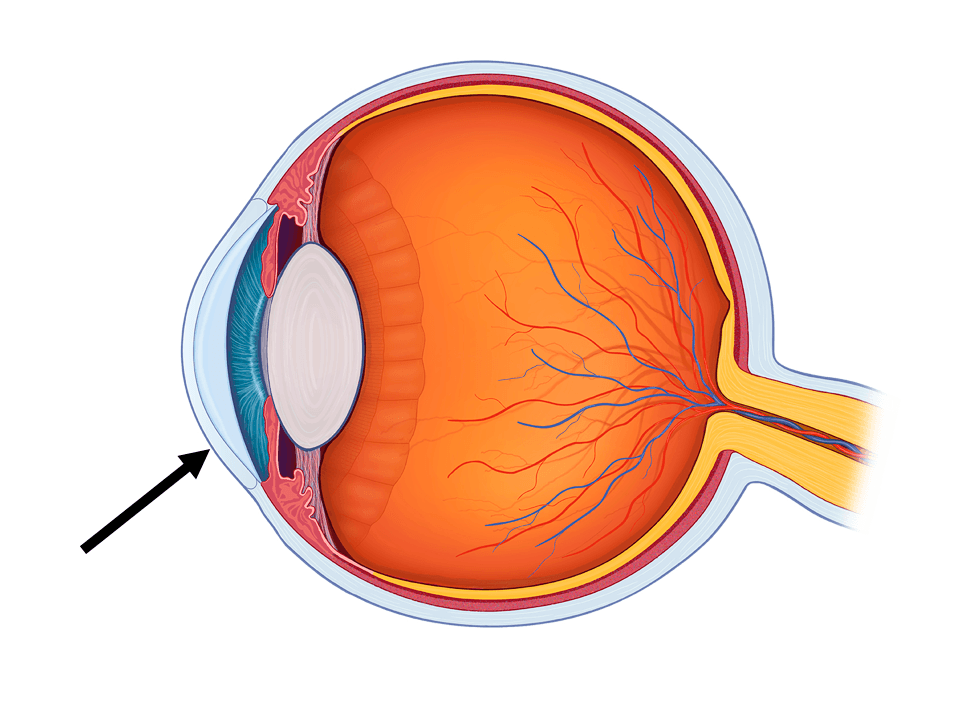
The clear part of the eye that light will first pass through.
Lens
Cornea
Sclera
Retina

Muscles and/or glands and organs:
Stimulus
Effector
Sensory Neuron
Motor Neuron
Interneuron
In which order is a signal sent from stimulus to response?
Sensory Organ (Receptor), Sensory Neuron, Interneuron, Motor Neuron, Effector
Sensory Neuron, Sensory Organ, Interneuron, Motor Neuron, Effector
Interneuron, Sensory Neuron, Sensory Organ, Motor Neuron, Effector
Motor Neuron, Effector, Interneuron, Sensory Neuron, Sensory Organ
Effector, Motor Neuron, Interneuron, Sensory Neuron, Sensory Organ

The diagram represents the components of a reflex arc. The arrows indicate the direction of information flow.
Cell B is a(n)
sensory neuron
motor neuron
effector cell
interneuron
receptor cell
The diagram represents the components of a reflex arc. The arrows indicate the direction of information flow.
Cell C is a(n)
sensory neuron
motor neuron
effector cell
interneuron
receptor cell
The diagram represents the components of a reflex arc. The arrows indicate the direction of information flow.
Cell D is a(n)
sensory neuron
motor neuron
effector cell
interneuron
receptor cell
The diagram represents the components of a reflex arc. The arrows indicate the direction of information flow.
Cell A is a(n)
sensory neuron
motor neuron
effector cell
interneuron
receptor cell
The diagram represents the components of a reflex arc. The arrows indicate the direction of information flow.
Cell E is a(n)
sensory neuron
motor neuron
effector cell
interneuron
receptor cell
The diagram represents the components of a reflex arc. The arrows indicate the direction of information flow.
Which cell is found entirely within the central nervous system?
A
B
C
D
E
The blind spot of the eye is at the
fovea of the retina
entrance of the optic nerve
periphery of the lens
periphery of the choriod
Balance and coordination are moderated by:
medulla
cerebellum
olfactory bulb
cerebrum
hypothalamus
The sense of smell is interpreted by:
medulla
cerebellum
olfactory bulb
cerebrum
hypothalamus
Secretes hormones, regulates, emotion, governs hunger, thirst and body temperature control:
medulla
cerebellum
olfactory bulb
cerebrum
hypothalamus
Vision is interpreted here:
medulla
cerebellum
olfactory bulb
cerebrum
hypothalamus
Breathing is controlled by the:
medulla
cerebellum
olfactory bulb
cerebrum
hypothalamus

The diagram represents the human brain only.
Region E is the
cerebellum
cerebrum
medulla
hypothalamus
pons
The diagram represents the human brain only.
A function of region F is:
reasoning
control of blood pressure
hearing
memory
coordination of voluntary muscles

