wayground logo

Free Printable Worksheets

NEW

Font size

S
M
L
XL
Worksheets

homeostasis

Total questions: 24

Worksheet time: 22mins

Name
Class
Date
1.

Why is the maintenance of homeostasis important to multicellular organisms?

a)

They must keep their internal environment within a narrow range of conditions.

b)

They require the ability to adjust their internal environment to match their external environment

c)

Their cells need to be able to respond rapidly to drastic changes in their external enviornment

d)

Their internal environment must provide their cells with a wide range of conditions

2.
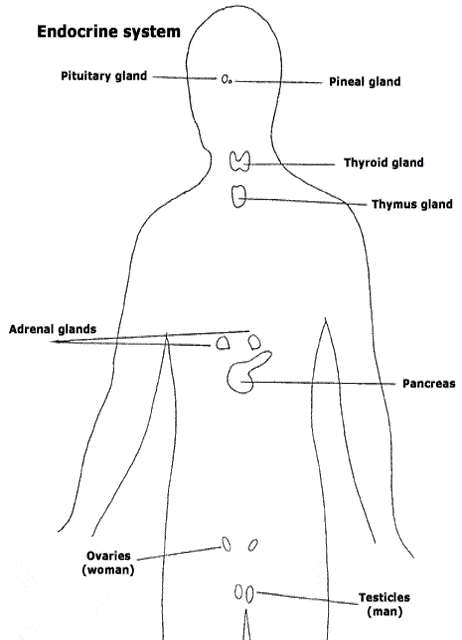
Homeostatic blood glucose controlling enzymes are produced in
a)
the islets of Langehans in the pancreas
b)
in the liver
c)
Loop of henle in the kidneys
d)
pituitary gland
3.
This organ produces the hormones that help regulate blood glucose levels.
a)
pancreas
b)
liver
c)
small intestine
d)
gall bladder 
4.
What hormone is produced in the pancreas that raises blood sugar?
a)
Insulin
b)
Glucagon
c)
Ketones
d)
Glucose
5.
a body system that controls growth and homeostasis by secreting hormones from glands.
a)
skeletal system
b)
nervous system
c)
endocrine sytem
d)
integumentary system
6.

Which body system controls the body to maintain homeostasis?

a)

excretory

b)

nervous

c)

circulatory

d)

skeletal

7.
The "cause" for something to happen is the
a)
response
b)
effect
c)
stimulus
d)
homeostasis
8.
The "effect" of a given stimulus is the...
a)
response
b)
stimulus
c)
cause
d)
result
9.
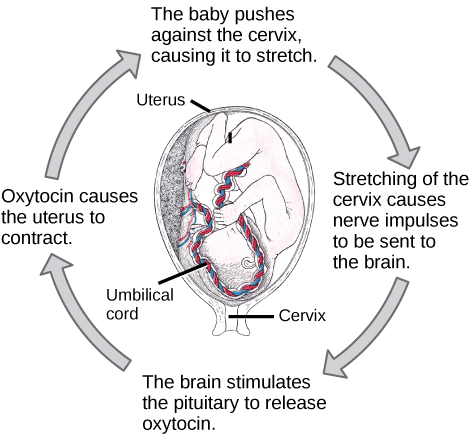
What type of feedback loop is shown?
a)
Positive
b)
Neutral
c)
Negative
10.
What type of feedback loop is shown?
a)
negative
b)
neutral 
c)
positive
11.
Negative Feedback Loops:
a)
amplify processes
b)
prevent small changes from getting larger
c)
are initiated during childbirth
d)
are found only in plants
12.
The two types of feedback systems that help organisms maintain homeostasis are:
a)
positive and negative 
b)
receptor and effector
c)
static and dynamic
d)
minor and major
13.
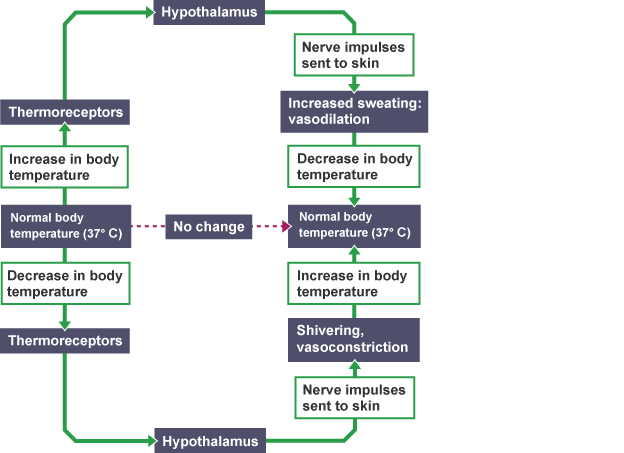
Maintaining body temperature is an example of a:
a)
negative feedback loop
b)
positive feedback loop
14.
The name for a chemical made by glands that tell cells to make something or respond in some way.
a)
acid
b)
enzyme
c)
perspiration
d)
hormone
15.
When you get cut, your skin cells release hormones that signal platelets to come and stop the bleeding. Platelets then release more hormones that signal even more platelets to help stop bleeding. The hormone signals continue until the cut is closed.
a)
Positive Feedback Response
b)
Negative Feedback Loop 
16.
When glucose levels in the blood rise, your brain sends a signal to your pancreas. The pancreas releases insulin, which opens channels in cell membranes to allow glucose to enter the cell, lowering blood sugar levels. 
a)
Positive Feedback Response
b)
Negative Feedback Loop 
17.
Rapid growth during puberty causes your body to release more and more growth hormones. As you grow, more and more growth hormones are released until puberty is reached, and then the hormones stop.
a)
Positive Feedback Response
b)
Negative Feedback Loop 
18.
This is an example of ______________ feedback
a)
Positive
b)
Negative
c)
Middle 
d)
None of the above
19.

responds to the output from the control center

a)

control center

b)

receptor

c)

thermoregulation

d)

effector

20.
a body system that controls and coordinates all body activities through electric impulses/messages between brain, spinal cord and nerves.
a)
endocrine system 
b)
nervous system
c)
nerve
d)
neuron
21.

What is the function of the Thyroid gland

a)

Hormones that are used to change the metabolic rate of a person's body

b)

Hormones that are used to help you run

c)

Hormones to help you swallow

d)

Penguin

22.

Why do you get warmer when exercising?

a)

You are creating more ATP from glucose which releases heat as a byproduct

b)

blood is flowing faster through your body

c)

it's warm where you're working out

23.

These are responses when body temperature rises

a)

vasoconstriction, shivering

b)

vasoconstriction, sweating

c)

vasodilation, shivering

d)

vasodilation, sweating

24.

These are responses when body temperature drops

a)

thyroid releases TSH to increase metabolic rate, shivering, hairs stand up, vasoconstriction

b)

pancreas releases insulin, shivering, hairs flatten, vasodilation

c)

thyroid releases TSH to decrease metabolic rate, shivering, hairs flatten, vasoconstriction

d)

pancreas releases insulin, sweating, hairs flatten, vasodilation