Wayground logo

Free Printable Worksheets

Font size

S
M
L
XL
Worksheets

8th Ch. 12 L3 Endo/ Exothermic reactions

Total questions: 41

Worksheet time: 34mins
Name
Class
Date
1.
In an endothermic reaction, heat is ...
a)
taken in or absorbed
b)
given out or released 
2.
Exothermic reactions...
a)
Absorb energy
b)
Release energy
c)
Release Color
d)
Absorb Color
3.
Is photosynthesis an exothermic or endothermic reaction?
a)
Endothermic
b)
Exothermic
c)
Neither
4.
If a chemical reaction is EXOTHERMIC, the temperature would....
a)
Stay the same
b)
Increase
c)
Decrease
5.
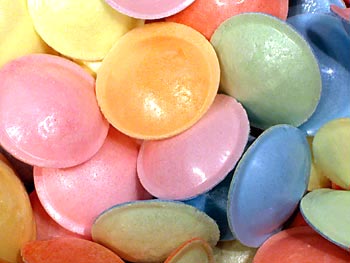
Have you ever eaten sherbet sweets candy? They fizz in your mouth and your tongue feels cold. Why do you think that is?
a)
It is an exothermic reaction
b)
It is an endothermic reaction
c)
It is made of ice
d)
It is dissolving your mouth
6.
Alka-seltzer in water is an example of a 
a)
Endothermic reaction
b)
Exothermic reaction
c)
Dissolving a salt
d)
physical change 
7.
Do reactants in an endothermic reaction have a higher or lower energy than the products? 
a)
Higher
b)
Lower
8.
Do the reactants in an exothermic reaction have a higher or lower energy than the products?
a)
Higher
b)
Lower
9.
If they energy required to break the bonds is less than the energy given out by making new bonds the reaction is
a)
Exothermic
b)
Endothermic
c)
Neutralisation
10.
What is true of this reaction?
a)
Equal amounts of energy were released and absorbed
b)
The reaction released more energy than it absorbed
c)
The reaction absorbed more energy than it released
11.
How do you know that energy is being absorbed during a chemical reaction?
a)
Temperature increases
b)
Temperature decreases
12.
Sydnee mixes a solution of baking soda and water. The initial temperature of the solution is 22⁰C. She adds 10mL of vinegar and takes the temperature again. The final temperature is 17⁰C. Which of the following is true?
a)
The reaction is exothermic
b)
The reaction is endothermic
c)
ΔH is negative
d)
The reaction lost heat to the environment.
13.

A fireworks sparkler burning

a)

Endothermic

b)

Exothermic

14.

A reaction produces carbon dioxide and water only. What type of reaction is this?

a)

Oxidation

b)

Combustion

c)

Thermal decomposition

d)

Displacement

15.

When a candle is lit hydrocarbons are combusting. An exothermic reaction is occuring. Energy is being _________________ .

a)

absorbed

b)

frozen

c)

destroyed

d)

released

16.
The rate of a reaction increases as temperature__________________.
a)
Decreases
b)
Increases
c)
Stays the Same
17.
Products will form faster if____________
a)
the particle size of the reactants are larger.
b)
temperature is decreased.
c)
concentration of the reactants are increased.
d)
the reaction is not stirred.
18.
A ______________ is a substance that increases the rate of a reaction without being used up during the reaction. 
a)
catalyst
b)
product
c)
reactant
d)
solute
19.

Grains of sugar have a greater _______ than a solid cube of

sugar of the same mass, and therefore will dissolve quicker in water.

a)

Surface Area

b)

Catalyst

c)

Temperature

d)

Concentratrion

20.

Pick the TWO (2) options that will INCREASE the rate of a reaction.

a)

Reducing Heat

b)

Adding Catalyst

c)

Adding Heat

d)

Removing Catalyst

21.

What is the name given to a catalyst in the human body?

a)

Biology

b)

Catalyst

c)

Chemical

d)

Enzyme

22.
Increase in temperature of the reactants can do one of the following
a)
Slow collision frequency
b)
Allow less effective collision between the particles
c)
Cause particles to lose speed
d)
Increase collision between the particles thus increasing the rate.
23.
The amount of a substance in a given volume.
a)
concentration
b)
temperature
c)
surface area
d)
catalyst
24.
Grinding a seltzer tablet into powder increases the rate of reaction due to increased
a)
concentration
b)
surface area
c)
temperature
d)
reactants
25.
Which factors increase the rate of a reaction.
a)
increasing temperature
b)
increasing concentration
c)
increasing surface area
d)
all of these
26.
Which of the following slows down the rate of a chemical reaction?
a)
Place the reactants in hot water
b)
Place the products in ice bath
c)
Place the reactants in a ice bath
d)
Keep stirring the reactants with a stirring rod
27.
B represents
a)
energy absorbed
b)
energy released
c)
activation energy
28.
This slows down or even stops a chemical reaction.
a)
de-activator
b)
catalyst
c)
enzyme
d)
inhibitor
29.
Why does a higher temperature increase the rate of a reaction?
a)
it increases both the frequency and energy of particle collisions
b)
it only increases the frequency of particle collisions
c)
it only increases the energy of particle collisions
d)
it reduces the activation energy of the reaction
30.
What is meant by the term reaction rate?
a)
amount of product formed
b)
speed of reaction
c)
concentration of reacting particles
d)
combining reactants with products
31.
If two substances react and the temperature of the mixture increases, the reaction is
a)
Endothermic
b)
Not one that produces anything new
c)
One that needs a catalyst
d)
Exothermic
32.
What is the activation energy?
a)
The energy of the products
b)
The energy of the reactants
c)
The minimum energy needed by the reactants to form the products.
d)
The energy lost in the reaction
33.
What is an endothermic reaction
a)
A reaction where energy is realesed to its 
b)
 A reaction where energy is absorbed from its surroundings 
34.
What is an exothermic reaction
a)
A reaction where energy is released to its surroundings
b)
A reaction where energy is absorbed from its surroundings 
35.
What is involved in a chemical reaction
a)
The breaking of chemical bonds in the product
b)
The breaking of chemical bonds in the reactant
c)
The forming of chemical bonds in the reactant
36.
What is Conservation of Energy 
a)
The total amount of product used before and after the reactant 
b)
The total amount of energy before and after the product
c)
The total amount of energy before and after the reaction
d)
The total amount of reactant used before and after the product 
37.
Which of the following is a sign that a chemical reaction has occurred?
a)
change in shape
b)
melting
c)
bubbles of gas appear
d)
dissolving
38.
Surrounding temperature gets warmer
a)
endothermic
b)
exothermic
39.
If they energy required to break the bonds is greater than the energy given out by making new bonds the reaction is
a)
Exothermic
b)
Endothermic
c)
Neutralisation
40.
If they energy required to break the bonds is less than the energy given out by making new bonds the reaction is
a)
Exothermic
b)
Endothermic
c)
Neutralisation
41.

C25H52 +O2 --> H2O + CO2

a)

Decomposition

b)

Double replacement

c)

Combustion

d)

Single Replacement