

wayground logo

Free Printable Worksheets

NEW

Font size

S
M
L
XL
Worksheets

Chapter 14 Review

Total questions: 38

Worksheet time: 29mins
Name
Class
Date
1.
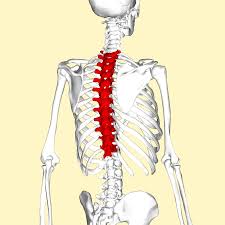
The bones in your back are made up of what?
a)
fingers
b)
phalanges
c)
vertebrate
d)
toes
2.
What is the place where two bones meet?
a)
hinge
b)
bone
c)
spot
d)
joint
3.
What is the name for the connector that attaches muscle to bone?
a)
ligament
b)
tendon
c)
patella
d)
string
4.
What is the name for the connector that attaches bone to bone?
a)
ligament
b)
tendon
c)
patella
d)
string
5.
Ligaments connect:
a)
Bone to bone
b)
Muscle to bone
c)
Joint to joint
d)
Bone to joint
6.

Which of the following is NOT a function of bones?

a)

Protection

b)

Blood cell formation

c)

Storage

d)

Absorption

7.
The adult skeletal system is composed of how many bones?
a)
216
b)
371
c)
206
d)
199
8.
Tissue found in some bones that makes blood cells
a)
red marrow
b)
yellow marrow
c)
canaliculi
d)
lamellae
9.

Which term best describes the joints at the top of your skull?

a)

immovable

b)

flexible

c)

rubbery

d)

elastic

10.

The joints in your knees and elbows are:

a)

gliding joints

b)

ball and socket joints

c)

pivot joints

d)

hinge joints

11.
What are the 3 types of muscle tissue?
a)
Thigh, Calf, & Shoulder
b)
Traps, Forearm, & Abs
c)
Hamstring, Biceps, & Triceps
d)
Smooth Muscle, Cardiac Muscle, & Skeletal Muscle
12.
Which muscle type is found in your stomach, bladder, and intestines?
a)
Skeletal
b)
Smooth
c)
Cardiac
d)
Straight
13.
Which type of muscle is found in your heart?
a)
Skeletal
b)
Smooth
c)
Cardiac
d)
Straight
14.
Which muscles are involuntary?
a)
skeletal
b)
cardiac
c)
smooth
d)
smooth and cardiac
15.
When a muscle contracts, it _______
a)
gets longer
b)
gets shorter
c)
gets thinner
d)
grows hair
16.
Which types of muscle tissue are voluntary?
a)
Cardiac
b)
Skeletal
c)
Smooth
d)
Cardiac and Smooth
17.
Skeletal muscles are attached to the _________.
a)
Stomach
b)
Lungs
c)
Bones
d)
Involuntary Muscles
18.
Cardiac muscles are ONLY located in the heart
a)
TRUE
b)
FALSE
19.
Muscles always work in _____
a)
pairs
b)
groups of 3
c)
bones
d)
joints
20.
Voluntary muscle is
a)
muscle that has to be told when to move
b)
muscle that moves automatically
c)
muscle that needs to be stretched regularly
d)
muscle that makes up the heart and stomach
21.
What is an example of an involuntary muscle? 
a)
Heart
b)
Arms 
c)
Legs
d)
Shoulders
22.
The cardiac muscle is 
a)
Voluntary 
b)
Involuntary 
23.
What is a voluntary muscle?
a)
You have control over the muscle 
b)
You have no control over the muscle
c)
Muscle works automatically
d)
Muscles fuse together
24.

What is an overstretched muscle/tendon/ligament called?

a)

contraction

b)

fractured

c)

broken

d)

sprain

25.

An animals reaction to a stimulus.

a)

A trigger

b)

A neuron

c)

A response

d)

A stimulus

26.

A signal that causes an animal to react.

a)

A response

b)

A stimulus

c)

A trigger

d)

A neuron

27.
What are the two parts of the nervous system? 
a)
The brain and spinal cord
b)
The central nervous and peripheral nervous system 
c)
The neurons and the dendrites
d)
The cerebrum and the medulla
28.

What are the two main parts of the central nervous system?

a)

brain and spinal cord

b)

patella and phalanges

c)

heart and lungs

d)

stomach and pancreas

29.

Which part of the body is the "control center"?

a)

brain

b)

spinal cord

c)

nerve endings

d)

vertebrae

30.
What is the top layer of the skin called?
a)
Dermis
b)
Hypodermis
c)
Epidermis
d)
Subcutaneous
31.

Which layer of the skin contains lots of fatty tissue?

a)

Dermis

b)

Epidermis

c)

Keratin

d)

Hypodermis

32.
Which of the following is NOT part of the integumentary system?
a)
Skin
b)
Cartilage 
c)
Nails
d)
Hair
33.
When your body temperature rises, these secrete water to the surface where heat is removed by evaporation.
a)
Sweat pore
b)
Sweat gland and duct
c)
Hair shaft
d)
Hair follicle 
34.
If the environment gets cold, we will often shiver in order to:
a)
keep body temperature the same as the external temperature
b)
decrease body temperature
c)
increase body temperature
d)
regulate blood pressure
35.

A pigment that protects your skin and gives it color; found in the epidermis of your skin.

a)

Sebaceous Gland

b)

Melanin

c)

Follicle

36.

How many cells rub off of your eidermis every time you take a shower?

a)

one

b)

ten

c)

one hundred

d)

thousands

37.

When you get a cut the _________ produces new cells and the ___________ repairs tears.

a)

epidermis, dermis

b)

dermis, hypodermis

c)

dermis, epidermis

d)

hypodermis, dermis

38.

Which joint is used the most in your body?

a)

ball and socket

b)

gliding

c)

pivot

d)

hinge
