Wayground logo

Free Printable Worksheets

Font size

S
M
L
XL
Worksheets

NCSO All My Events

Total questions: 77

Worksheet time: 55mins

Name
Class
Date
1.

What is the job of the Circulatory System

a)

To pump blood around the body and give the body nutrients

b)

To help the body breathe

c)

To move the body

d)

To eat food

2.
Label This Part
a)
Esophagus
b)
Mouth
c)
Tonsils
d)
Colon
3.

The main purpose of the ____________ system is to break food particles into pieces that can be used.

a)

circulatory

b)

respiratory

c)

digestive

d)

skeletal

4.

A(n) _________ is made of small parts connected together to make a whole.

a)

system

b)

problem

c)

evidence

d)

illustration

5.

Which of the following body systems work together for support, protection, and movement?

a)

respiratory and cardiovascular

b)

skeletal and muscular

c)

skeletal and integumentary

d)

digestive and respiratory

6.

Which of the following shows the levels of organization of an organism from LEAST to MOST complex.

a)

cells-tissues-systems-organs

b)

organs-cells-systems-tissues

c)

systems-organs-tissues-cells

d)

cells-tissues-organs-systems

7.
A constellation is a group of visible ____ that form a pattern when viewed from Earth.  
a)
planets
b)
stars
c)
patterns
d)
creatures
8.
The constellation pattern may take the shape of an ___, ___, ____, ___, or object such as a crown or compass.
a)
planets, stars, animals, people
b)
stars, animals, people, man
c)
man, animals, stars, planets
d)
animal, mythological creature, man, woman, 
9.
The stars we see in each constellation are very close to us.
a)
True
b)
False
10.
As the earth rotates on its axis, the constellations and stars in them appear to _________.  
a)
move across the sky
b)
stand still in the sky
c)
move around each other
d)
rotate
11.
The stars in a constellation appear to be close to each other in the shape, but may be ______  in space.
a)
very close
b)
some are close
c)
great distances apart
d)
some are great distances apart
12.
At the equator, the stars move in a ______ across the sky.  
a)
circle
b)
straight line
c)
rotating motion
d)
slow motion
13.
 At the equator, the stars rise in the ___ and set in the ___.
a)
north, south
b)
east, east
c)
east, west
d)
north, east
14.
Near the poles, the stars appear to rotate in a circle in the sky and never set.
a)
True
b)
False
15.
People in the Northern Hemisphere do see the same constellations as the people in the Southern Hemisphere.
a)
True
b)
False
16.
Constellations may be only visible during certain seasons due to the Earth’s orbit around the____.  
a)
Earth
b)
Mars
c)
Planets
d)
sun
17.
What are the three important constellations?
 
a)
Ursa Major, Ursa Minor, Orion  
b)
Ursa Major, Big Dipper, Orion  
c)
Ursa big, Ursa small, Orion 
d)
Polaris, Ursa Minor, Orion  
18.
Ursa Major is also called “Great Bear” and is one of the largest constellations.  
a)
True
b)
False
19.
Ursa Minor means “Little Bear” in Latin and is commonly known as the Big Dipper.
a)
True
b)
False
20.
Orion is visible during the winter night sky and is one of the most recognizable constellations – it contains some of the____stars that we can see and is named for the hunter from Greek mythology.
a)
biggest
b)
brightest
c)
smallest
d)
darkest
21.
Which constellation is best known because it contains the “big dipper,” which looks like a ladle.
a)
Ursa Major
b)
Ursa Minor
c)
Orion
d)
Polaris
22.
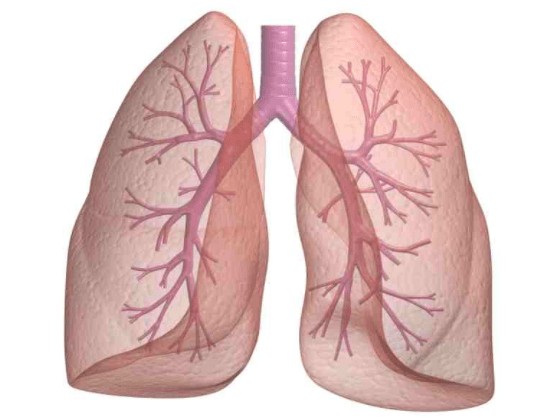
1. Which system are the lungs in?
a)
respiratory
b)
digestive
c)
excretory
d)
muscular
23.
 Which system is the stomach in?
a)
respiratory
b)
digestive
c)
nervous
d)
excretory
24.
 Which system is the esophagus in?
a)
digestive
b)
urinary
c)
integumentary
d)
skeletal
25.
Which organ is part of the respiratory system?
a)
tongue
b)
stomach
c)
esophagus
d)
lungs
26.
 What is the main function of the respiratory system?
a)
take in oxygen and exhale waste like carbon dioxide
b)
move nutrients throughout the body
c)
take in carbon dioxide and exhale oxygen
27.
Where does digestion start?
a)
stomach
b)
mouth
c)
esophagus
28.
 What is the main job of the digestive system? 
a)
break down foods into nutrients that can be used by the body
b)
take in oxygen and exhale waste like carbon dioxide
c)
pump blood throughout the body
d)
makes the body hungry
29.
Which systems main function is to allow movement of the body?
a)
muscular
b)
digestive
c)
skeletal
d)
excretory
30.
One lung is bigger than the other lung.
a)
true
b)
false
31.
The smallest units or parts of living things; the body's building blocks.
a)
cells
b)
organs
c)
tissues
d)
system
32.
Your large and small intestines are part of this body system.
a)
nervous
b)
digestive
c)
muscular
d)
skeletal
33.
A collection of the same kinds of cells working together to do the same job.
a)
cells
b)
tissues
c)
organs
d)
systems
34.
Your body systems work separately and do not effect each other.
a)
true
b)
false
35.
 Organs are body parts that have specific jobs.  Your body systems are made up of organs.
a)
True
b)
False
36.
The nutrients in food that supply the human body with energy.
a)
carbohydrates
b)
fats
c)
minerals
d)
proteins
37.
Roles, jobs, or purposes.
a)
function
b)
cells
c)
stimulus
d)
microscope
38.
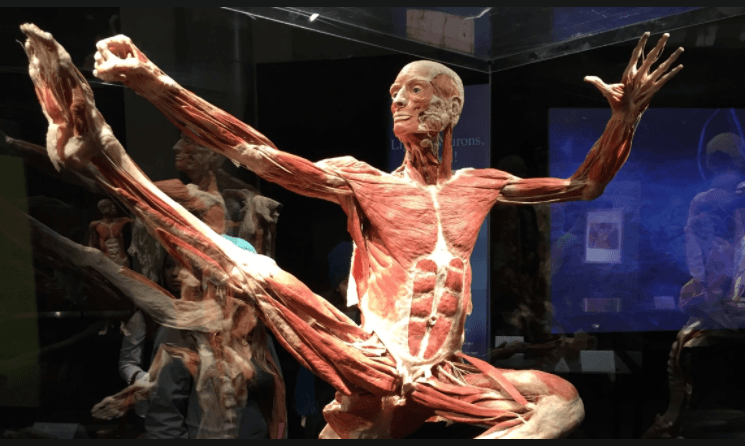
Which system enables the body to move, moves food through the digestive system, and keeps the heart beating?
a)
skeletal
b)
muscular
c)
digestive
d)
nervous
39.
Which system provides shape and support, enables you to move, protects your internal organs, and stores minerals?
a)
skeletal
b)
muscular
c)
digestive
d)
nervous
40.
Which system takes food into the body, breaks down food, and absorbs the digested materials?
a)
respiratory
b)
circulatory
c)
digestive
d)
excretory
41.
Which system includes the mouth, esophagus, and the small and large intestines?
a)
nervous
b)
excretory
c)
respiratory
d)
digestive
42.
Which system enables the body to move, moves food through the digestive system, and keeps the heart beating?
a)
skeletal 
b)
muscular
c)
digestive
d)
nervous
43.
Which system provides shape and support, enables you to move, protects your internal organs, and stores minerals?
a)
skeletal
b)
muscular
c)
digestive
d)
nervous
44.
Which system takes oxygen into the body and eliminates carbon dioxide?
a)
immune
b)
nervous
c)
respiratory
d)
circulatory
45.
Which system takes food into the body, breaks down food, and absorbs the digested materials?
a)
respiratory
b)
circulatory
c)
digestive
d)
excretory
46.
Which system is made of the smooth, skeletal, and cardiac muscles?
a)
skeletal
b)
muscular
c)
nervous
d)
excretory
47.
Which system detects information from the environment and directs the way your body responds to this information?
a)
excretory
b)
circulatory
c)
respiratory
d)
nervous
48.
Which system includes bones, cartilage, and ligaments?
a)
nervous
b)
muscular
c)
skeletal
d)
excretory
49.
Which system includes the nose, trachea and the lungs?
a)
respiratory
b)
circulatory
c)
immune
d)
digestive
50.
Which system includes the mouth, esophagus, and the small and large intestines?
a)
nervous
b)
excretory
c)
respiratory
d)
digestive
51.
Which system fights disease?
a)
excretory
b)
nervous
c)
immune
d)
digestive
52.
Which system collects and removes wastes?
a)
Muscular
b)
Circulatory
c)
Digestive
d)
Excretory
53.
Which system carries needed materials to the body cells and carries wastes away from the body cells?
a)
Circulatory
b)
Digestive
c)
Nervous
d)
Excretory
54.
Which system includes the lymph, lymph nodes, white blood cells, T and B cells?
a)
Excretory
b)
Digestive
c)
Immune
d)
Nervous
55.
Which system includes the kidneys, ureters, urinary bladder, urethra, lungs and skin?
a)
digestive
b)
excretory
c)
circulatory
d)
muscular
56.
Which system includes the heart and blood vessels?
a)
respiratory
b)
circulatory
c)
nervous 
d)
skeletal
57.
Which system includes the brain, spinal cord, eyes, ears, and skin?
a)
Muscular
b)
Nervous
c)
Respiratory
d)
Skeletal
58.

Which three body systems allow you to move?

a)

muscular, skeletal, digestive

b)

nervous, respiratory, digestive

c)

nervous, muscular, skeletal

d)

Muscular, skeletal, circulatory

59.
Which two body systems deliver oxygen to your cells and take away carbon dioxide?
a)
respiratory and nervous
b)
circulatory and nervous
c)
circulatory and excretory
d)
Respiratory and circulatory
60.
Which two body systems work together to break down food and get rid of wastes?
a)
digestive and excretory
b)
digestive and circulatory
c)
excretory and respiratory
d)
nervous and digestive
61.
What is the level o organization known as a group of cells that work together?
a)
cells
b)
organ system
c)
organ
d)
tissue
62.

What are asteroids

a)

small rocky objects that orbit the sun

b)

rocks that fly in space

c)

huge balls of metal that destroy earth

63.

What is cancers alpha star

a)

altarf

b)

altraf

c)

ratlaf

64.

Why does it look like a comet has a tail?

a)

Friction and heat

b)

Light

c)

heat

d)

Movement

65.

How many layers does the earth have?

a)

five

b)

three

c)

six

d)

seven

66.

How many inner layers does the sun have

a)

three

b)

none

c)

five

d)

four

67.

How long is a day on venus?

a)

72 hours

b)

500 days

c)

365 days

d)

800 days

68.

is venus the only planet that rotates clockwise

a)

No

b)

yes

69.

What is venus,s atmosphere made out of

a)

nitrogen

b)

helium

c)

carbon dioxide

d)

oxygen

70.

How hot can mercury be

a)

800 oF

b)

10,000 oF

c)

900 oF

d)

20,000 oF

71.

How many outer layers does the sun have?

a)

three

b)

none

c)

seven

d)

two

72.

what is aquila's alpha star?

a)

Altare

b)

Altiar

c)

Arait

d)

Altair

73.

what is andromeda's alpha star?

a)

Alphertraz

b)

Alpherratz

c)

Aplahratz

d)

Alpheratz

74.

what are aquarius's two alpha stars?

a)

sadalmelick and saddaisuud

b)

sadalmeclik and sadalsuud

c)

sadalmelik and sadalsuud

75.

what is Bootes's alpha star?

a)

Arcturus

b)

Arcurus

c)

Arcuurus

76.

what is Canis Majors alpha star?

a)

sirius

b)

seriois

c)

suruis

d)

suuris

77.

what is Draco's alpha star

a)

Gamma

b)

Gomma